Can You Grow Microgreens in a LetPot? Pods vs a Plain Tray
Cal HewittPublished Checked
- growing
- equipment
- letpot
- pod gardens
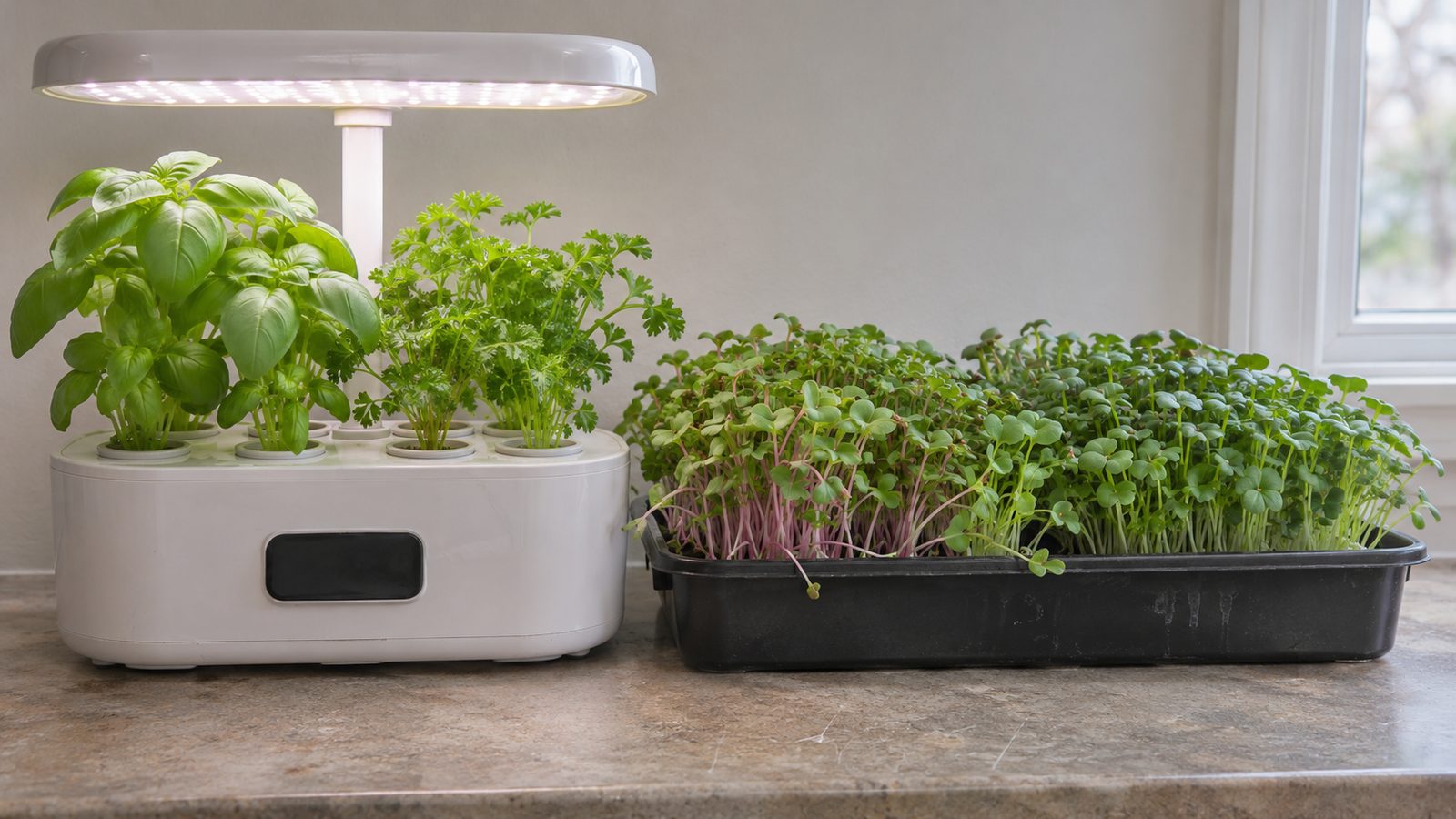
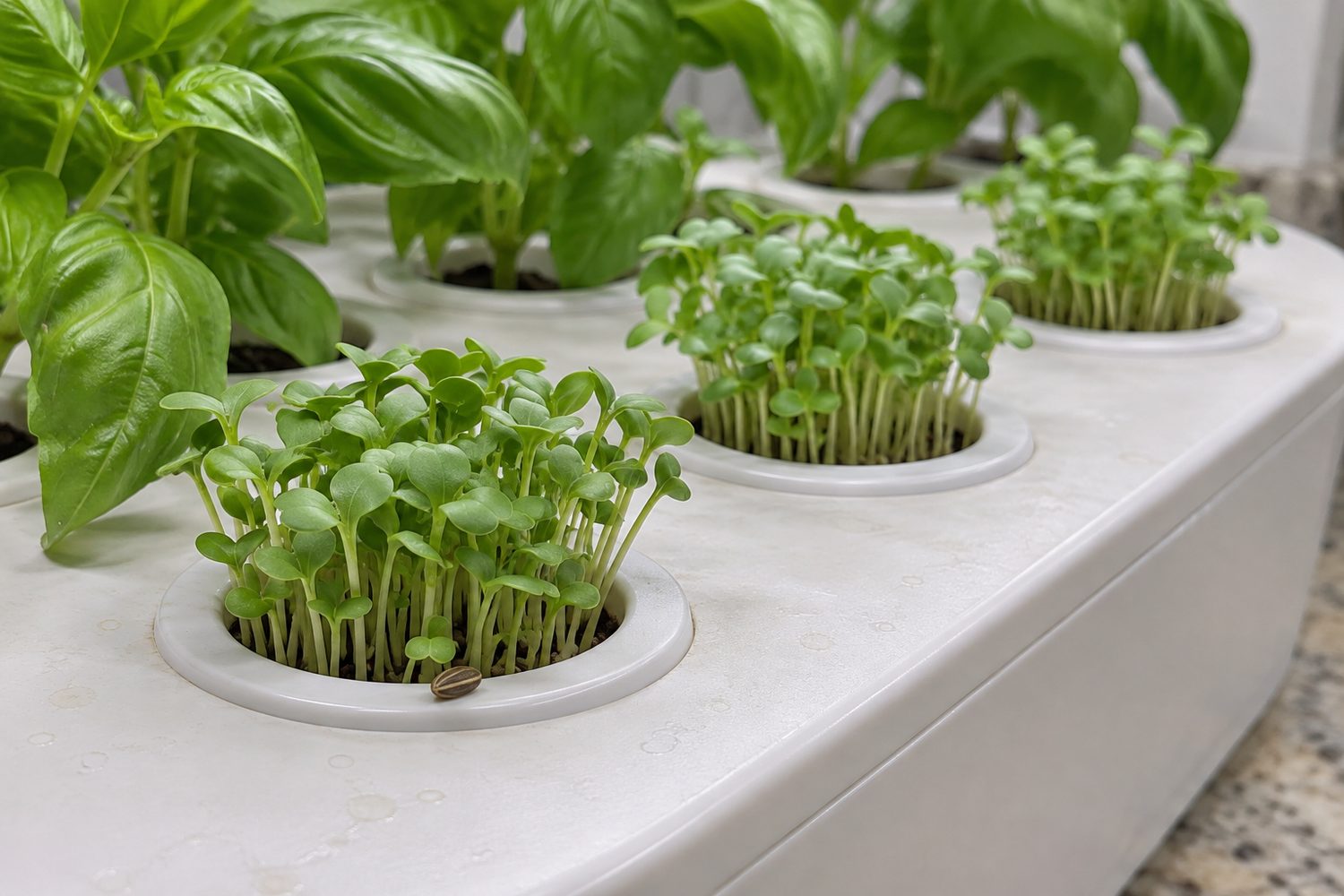
You can try it, but a LetPot is built for sponge pods, so run a small test before you count on a dense tray from it. The documented route is two or three seeds per pod. A 10 x 20 inch tray of microgreens cut at 7 to 21 days is a different crop, and your own test run is what will tell you how it behaves.
One Reddit owner with a 12-pod LetPot reports planting "a few herbs, microgreens, and a couple tomato plants and peppers" from ordinary seed. The post doesn't name the microgreen crop, the cut date or the yield. Two other owners report moldy pods and seed that failed to sprout, which is the practical worry before you spend on seed.
Disclosure: Microgreens Guru earns affiliate commissions from some retailers, and LetPot may be one of them. If you buy through a link on this site, we may earn a commission at no cost to you. It doesn't change what we write.
What LetPot sells, and what it doesn't
LetPot doesn't list a product named as a microgreens kit, a microgreen mat or a tray insert. What it does sell are replacement sponge and pod kits for four systems: the LPH-Max, LPH-SE, LPH-Lite and LPH-Air. You can see the full range on the LetPot indoor-garden collection, and the LetPot review covers the specs of each model.
There is one separate product worth knowing about. The SS-Pro Smart Seed Starter Kit includes a 40-cell tray, a humidity dome, a 24W light, a heated base and adjustable ventilation. LetPot says it supports sponges, coco coir and mixed soil. It is a seed-starting system with cells, not a documented dense microgreens tray. LetPot's seed starter collection also lists a separate SS-Tray seedling tray and 80-piece seedling sponges for it.
So, the pods are the route LetPot documents. The manuals and the LetPot FAQ say to plant 2 to 3 seeds in each pod, to keep the light about 4 to 5 inches from the plants while they germinate, and to take the germination dome off when 2 to 3 leaves appear. LetPot doesn't recommend reusing sponges, though the white baskets and clear covers can be reused after cleaning.
Which model suits a microgreen crop
If you stay with pods, the model mostly decides how many pods you get and how much room the light has. These are the figures from LetPot's own product pages:
- LPH-Max: 21 pods, 36W light, maximum light height 30 inches, $251.99.
- LPH-SE: 12 pods, 24W light, maximum light height 30 inches, $119.99.
- LPH-Lite: 12 pods, 24W light, maximum light height 16 inches, $89.99.
- LPH-Air: 10 pods, 24W light, maximum light height 14 inches on the US product page, $79.99.
Prices are what LetPot's pages showed on November 7, 2026, and they change. The distance to set at germination is the one the SE and Air manuals give as about 4 to 5 inches from the plants.
The light itself comes with a gap you can close. LetPot's product pages list wattage and maximum height for the built-in lights. If you want to know what your canopy receives, measure it at your actual canopy height with a quantum sensor, or ask LetPot for a measurement for your exact model and light setting.
Deck area next to a 10 x 20 inch tray
A standard 10 x 20 inch microgreen tray gives you 200 square inches of growing surface, about 1.39 square feet. LetPot publishes overall product sizes, not a separate planting-area measurement, so these figures use the published length and width of the whole unit. That makes it a ceiling, not a count of usable planting area.
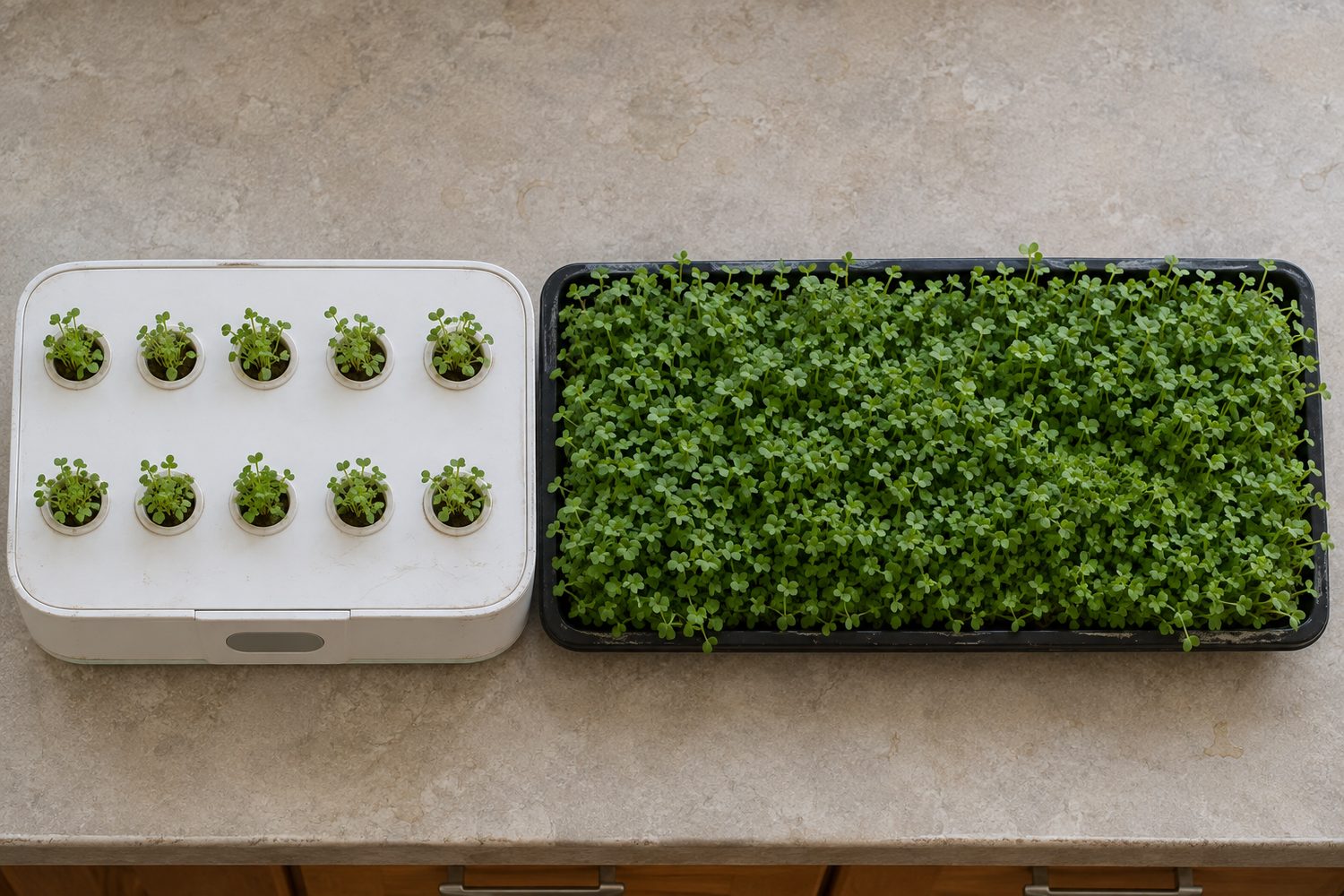
- LPH-Max: 17 x 11.5 inches is 195.5 square inches, about 97.8% of a 10 x 20 tray.
- LPH-SE: 16 x 7 inches is 112 square inches, 56% of a tray. That is the overall size on the Amazon listing, which gives 16 x 7 x 9.8 inches; it is not the planting area.
- LPH-Air: 15 x 5 inches is 75 square inches, 37.5% of a tray.
- LPH-Lite: LetPot's page gives pod count and light height but no full length and width, so there is no figure to compare.
Even for the Max, whose overall size nearly matches a tray, the exposed planting surface is what counts. Before you buy or adapt a tray, mat or insert, measure the exposed planting surface yourself. Confirm that whatever you add won't block the pump, the reservoir access or the pod openings.
Mold and weak germination in the pods
Two independent owner reports describe the problem you're probably worried about. One Reddit owner describes moldy pods and mushy seeds in a roughly 10-pod LetPot. Another describes four moldy pods in a 12-pod unit and repeated mold after reseeding, along with weak germination. Both are owner statements, and two reports don't tell you how common mold is. Treat them as a reason to watch your first pods closely, not as what to expect.
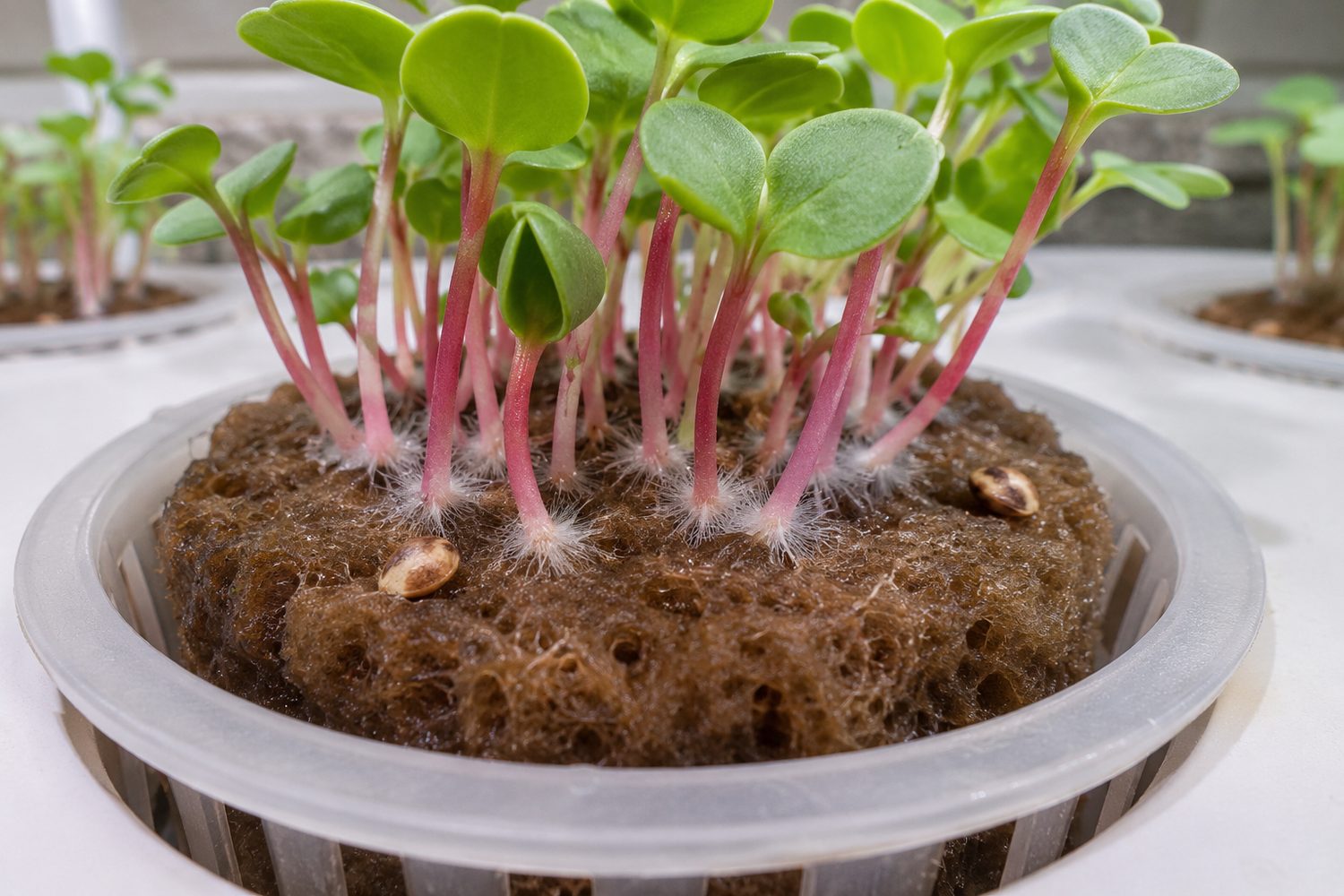
LetPot's own LPH-SE manual gives the cleanup steps for mold and algae. Drain and rinse the tank, discard any sponge or plant the mold has touched, and clean the baskets and covers. It also says to cover the sponges and basket tops with the seed pod stickers during planting and seedling stages, and to put blackout covers on unused pods so light doesn't reach the water. You can find the manuals through the LetPot user manual index.
In practice, that means your first sowing is a check, not a crop. Look at the pods every day. If a sponge looks moldy or the seed turns mushy, pull that pod, discard the sponge and don't reseed into the same one. Then follow the manual's tank and basket cleanup before you reseed.
What mat studies say
If you're thinking of laying a mat or a dense seed layer over the deck instead of using pods, the published work supports hydroponic mats in general, not on a LetPot. Virginia Cooperative Extension lists mats made from bamboo, burlap, coco coir, hemp, jute, rockwool, silicone and steel mesh. Virginia Tech reports success with carrot, broccoli, mizuna, radish and beet microgreens on hemp and burlap mats in nutrient film systems. It adds that hemp holds more water than burlap, so hemp needs less frequent watering, and that the substrate affects both yield and nutritional quality.
A Mississippi State University study of five microgreens on four hydroponic pad types found that pad type changed fresh and dry shoot weight and mineral content, with hemp mat giving the highest shoot height and fresh weight in the reported experiments. A 2025 Food Chemistry study tested radish, red cabbage, white mustard and red mizuna with different substrates and fertigation, and found that nutrient solution raised yield 30% over a distilled-water control. A 2024 Scientia Horticulturae paper reports in its abstract that a cannabis mat and plain water slowed growth, while peat gave the best yield and nutrition potential.
None of this was done in a LetPot, and Virginia Tech also notes that substrate choice involves potential plant and human pathogens, so watch any mat for mold the same way you watch a sponge. A LetPot's pump cycle and wet sponges could keep a mat or a dense seed layer wetter than a plain tray, so a mat on a LetPot is something to test with the water level under watch. The SE manual describes the pump as running 30 minutes and resting 30 minutes and can be changed in the app, which is worth keeping in mind when you decide how much water your seed layer sits in.
What it costs next to a plain tray under a light
For a plain tray, T&T Seeds listed a Bootstrap 10 x 20 tray at $12.25 (marked sold out) on November 7, 2026, with four trays for $45. That is $8.82 per square foot of tray for one tray and $8.10 for four, and it's the tray only. A shelf and a light come on top of that.
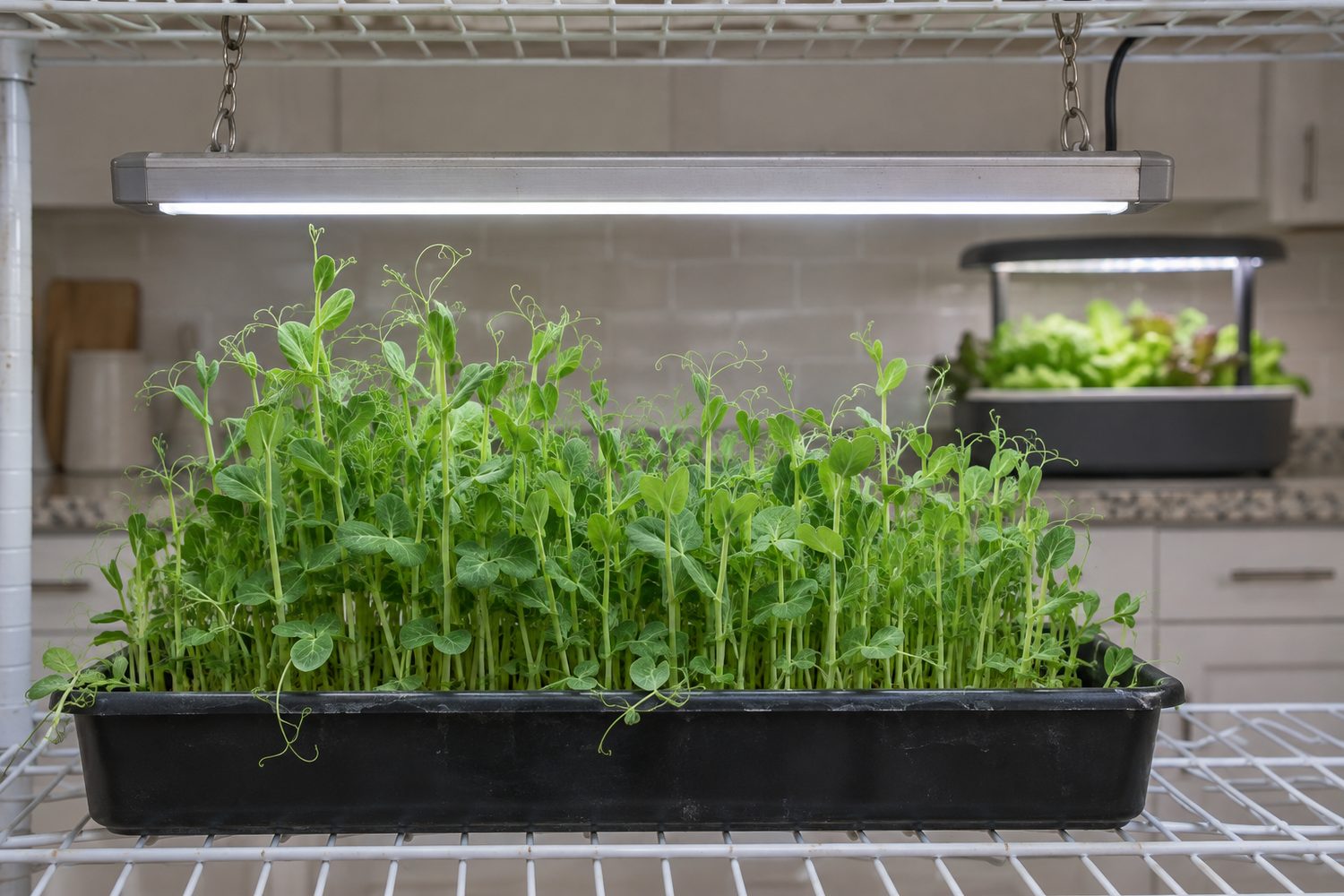
The LetPot costs more per square foot of footprint, but it also includes a tank, pump, light and app control, and the SE listing names an automatic timer, so that comparison isn't a fair one on its own. A fair comparison is a total. On the day you buy, price a shelf, a light and enough 10 x 20 trays to fill the shelf, add them up and divide by the shelf's usable tray area. Then do the same for the LetPot model you're considering, using the planting surface you measured rather than the overall size.
Your test run
The pods are the documented route, so a dense tray in a LetPot is yours to test. A marked test run gives you the missing number for your own setup, your own seed and your own light. Here's how to run it.
Sow a small batch first. Use one crop, put the seed on a scale, and record how much goes into each pod or test area. If you're trying a mat or a dense layer, start with a small area, not the whole deck. Write down the seed type, the sowing date, the water level, the light height and the model you're using.
Then run a plain tray beside it, with the same seed weight of the same crop under the same light. Record the date you cut each one, the days from sowing to cut, and the yield by weight. Note any mold in either one. After one round you'll have a days-to-cut and yield figure for your LetPot and one for a tray, and those two numbers are the comparison no product page can give you. Keep any dry, removable tray or mat away from the pump intake while you test, and keep watching the water level.
FAQ
Can I use the SS-Pro seed starter for microgreens? LetPot sells the SS-Pro as a seed-starting system with a 40-cell tray, a dome, a 24W light and a heated base, and says it supports sponges, coco coir and mixed soil. Because it is built around cells, treat a dense microgreen tray in it as something to test, the same as in the pod systems.
How many seeds go in each pod? LetPot's FAQ says 2 to 3 seeds per pod. Decide before you plant whether you're following the pod instructions or running a dense test, and write down which one you chose.
Can I reuse the sponges after a crop? LetPot doesn't recommend reusing sponges. The white baskets and clear light covers can be reused after you clean them, and replacement sponge and pod kits are sold for the LPH-Max, LPH-SE, LPH-Lite and LPH-Air.
Is a mat better than a sponge pod? Studies on hydroponic mats show that mat type changes yield and nutrient content, and results differ by crop, mat and watering schedule. The studies above used other setups, so compare the two yourself in a test run.
If you're ready to try it, start with a small batch, keep your notes, and compare the numbers with a tray. More growing guides are on Microgreens Guru.
Sources
Prices, stock and specifications are as the linked pages showed them on 2026-11-07.
- reports planting
- LetPot indoor-garden collection
- SS-Pro Smart Seed Starter Kit
- seed starter collection
- LetPot FAQ
- Amazon listing
- moldy pods and mushy seeds
- four moldy pods in a 12-pod unit and repeated mold after reseeding
- LetPot user manual index
- Virginia Cooperative Extension
- Mississippi State University study
- 2025 Food Chemistry study
- 2024 Scientia Horticulturae paper
- T&T Seeds
Keep reading
The journal
Using your own seeds in a LetPot: sponges, seed count and light
Using your own seeds in a LetPot instead of pods? See the seed count per sponge, the light height for germination, and the failures owners have reported.
Read Using your own seeds in a LetPot: sponges, seed count and lightThe journal
LetPot Review: Max, SE, Lite, Air and Mini Compared
This letpot review sets the current LetPot range side by side: pod count, light power, maximum light height, tank size, warranty and owner-reported faults.
Read LetPot Review: Max, SE, Lite, Air and Mini ComparedThe journal
LetPot vs Click and Grow: Plant Count, Pod Costs and Upkeep
LetPot vs Click and Grow on plant count, US prices and the cost of each pod you buy, plus how much upkeep each countertop garden needs from you.
Read LetPot vs Click and Grow: Plant Count, Pod Costs and UpkeepThe journal
Best hydroponic system for microgreens by scale and budget
Searching for the best hydroponic system for microgreens? Compare mat, flood and drain, NFT and countertop setups by scale, cost and crop first.
Read Best hydroponic system for microgreens by scale and budget