Can Bearded Dragons Eat Broccoli Microgreens? What Vets Say
Cal HewittPublished Checked
- bearded dragons
- reptiles
- animal feeding
- nutrition
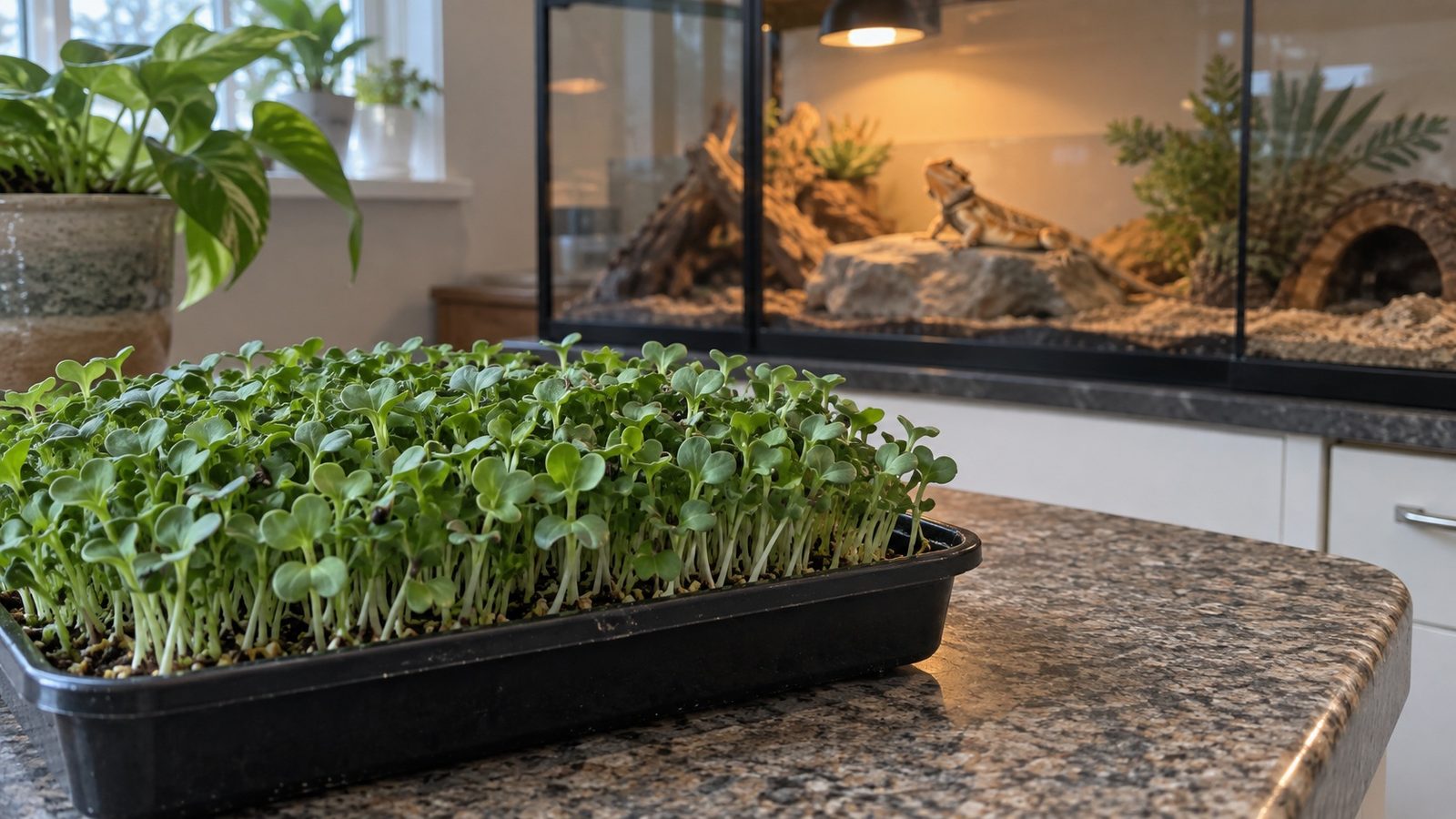
No veterinary source has published a verdict on broccoli microgreens for bearded dragons, in either direction. The guidance that does exist is about mature broccoli, and the two vet sources that name it give different instructions. VCA lists broccoli among its recommended vegetables. UC Davis puts broccoli with spinach and parsley among foods fed sparingly as occasional treats, because of goitrogens. Neither one names a microgreen, a sprout, or any particular part of the plant. So, if you offer broccoli microgreens, you're working from mature-plant advice plus a few plant measurements, and the sections below show you exactly what each of those covers. For every other crop, use our bearded dragon microgreens guide.
What VCA and UC Davis say about broccoli
Two veterinary sources mention broccoli by name for bearded dragons, and the difference between them is the reason you keep getting mixed answers.
VCA's bearded dragon feeding handout lists broccoli in its run of recommended vegetables, next to alfalfa hay, bok choy, collard greens, dandelion greens, kale, turnip greens, and watercress (VCA). VCA does carry a goitrogen caution, but the vegetables that caution names are cabbage, kale, and mustard greens. Broccoli isn't one of them.
UC Davis takes the other position. Its 2019 bearded dragon care page, written by John Gardiner, says "spinach, broccoli, and parsley are high in goitrogens which decrease thyroid function," and places those three among the foods to feed sparingly as occasional treats (UC Davis, 2019). A goitrogen is a compound that can interfere with iodine uptake and thyroid function, which is a different problem from calcium absorption.
Side by side, this is where the two line up and where they part ways:
Hover or tap a row to highlight it.
| VCA | UC Davis (2019) | |
|---|---|---|
| Where broccoli appears | Recommended vegetables | Occasional treats, fed sparingly |
| Reason given for broccoli | None | High in goitrogens |
| Amount or frequency for broccoli | None | None beyond "occasional" |
| Plant part or growth stage named | None | None |
Both sources treat mature broccoli as something a dragon may be fed. Both also put members of the cabbage family into their cautions, though only UC Davis names broccoli itself. Where they disagree is whether broccoli belongs in the regular vegetable rotation or sits outside it as a treat. Neither source settles that for you, and neither gives a number you could portion from.
Both instructions are about mature broccoli
Every word in those two lists refers to ordinary vegetables. Neither VCA nor UC Davis says leaf, floret, sprout, root, or microgreen, so the most either statement can tell you about is ordinary mature broccoli, with the exact part unstated.
The stages really are different foods. A microgreen is the young plant's stems and leaves, harvested after the first true leaves appear, which is how UConn Extension defines it (UConn Extension). A sprout is a germinated seed grown in warm, moist conditions and often eaten with the seed and root still attached. A mature leaf and a floret come from the fully grown plant. VCA does mention generic "sprouts" in a smaller-percentage vegetable group, but it doesn't say broccoli sprouts, and it doesn't mention microgreens at all.
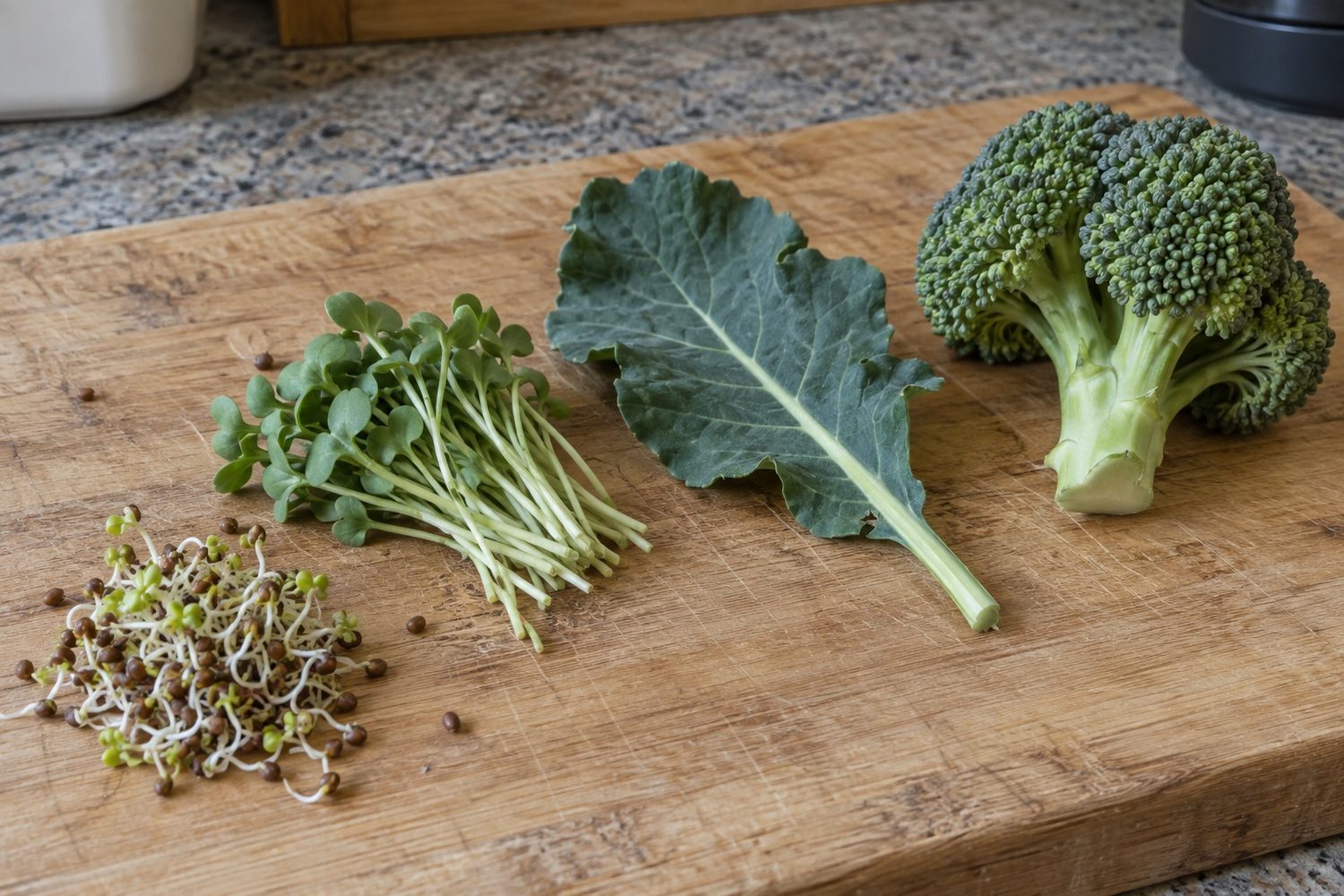
This matters because the chemistry shifts with age. USDA ARS reports that Lu et al. (2017) found broccoli microgreens had four-fold greater total aliphatic glucosinolates than mature leaves and florets, and that the dominant compounds differed: glucoerucin sat mainly in the microgreens, glucoraphanin mainly in the mature leaves and florets (USDA ARS, 2017). A seedling isn't a small floret, so neither vet's instruction carries over to it automatically, the recommendation or the caution.
What plant researchers have measured in broccoli microgreens
The numbers below come from plant composition studies. They describe particular trays grown in particular ways, and none of them was measured against a bearded dragon's needs. Read each one with its basis attached, because fresh weight and dry weight figures can't be compared directly.
Calcium and phosphorus
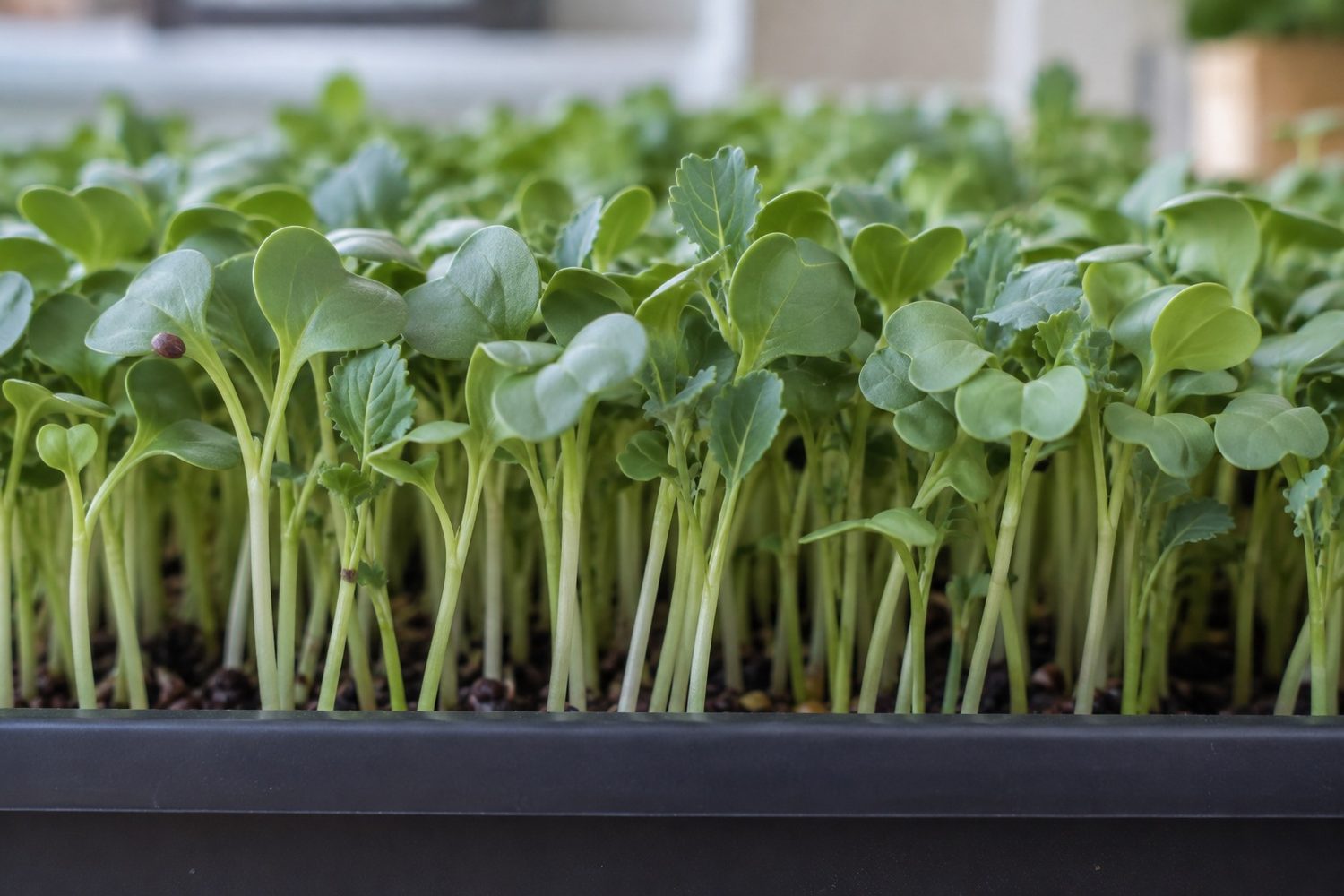
One 2025 peer-reviewed study measured 111.83 mg of calcium and 27.7 mg of phosphorus per 100 g fresh weight in its broccoli microgreen lot (Balik et al., 2025). Divide one by the other and that lot comes out at about 4.04 to 1 calcium to phosphorus.
For mature raw broccoli leaves, the USDA FoodData Central record (FDC 169329, released April 2018) lists 48 mg of calcium and 66 mg of phosphorus per 100 g, which works out to about 0.73 to 1 (USDA FoodData Central). That record is for leaves, not florets.
The Merck Veterinary Manual gives a general target for reptiles of at least 1 to 1 calcium to phosphorus, preferably 2 to 1 (Merck, reviewed Sept. 2025). The microgreen lot sits above that target and the mature leaf record sits below it, but treat that as two data points, not a pass and a fail. The microgreen figure is one lot from one growing system, the two numbers come from different datasets, and your own tray could measure differently.
Glucosinolates
Glucosinolates are sulfur-containing compounds in broccoli and its relatives that break down into biologically active products once the plant tissue is damaged. A 2022 experiment measured untreated broccoli microgreen shoots at 6,478 ± 418 µmol of total glucosinolates per 100 g dry weight, including 1,944 µmol of glucoraphanin, 1,456 µmol of glucoerucin, and 1,252 µmol of progoitrin per 100 g dry weight (Foods, 2022).
Those are dry weight figures, so don't set them beside the fresh weight calcium numbers above. UC Davis doesn't say which compound in mature broccoli its goitrogen warning refers to, and no one has published the level at which glucosinolates from any broccoli stage affect a bearded dragon's thyroid.
Oxalate and nitrate
A 2024 open-access study reported oxalic acid at 55.04 mg per 100 g fresh weight in its broccoli microgreens (2024 study). There isn't a matched figure for mature broccoli leaves to set it against. VCA's oxalate caution, meanwhile, names mature Swiss chard, spinach, and beet greens rather than broccoli.
The 2025 study also measured nitrate at 149.09 mg per kilogram fresh weight in its broccoli microgreens (Balik et al., 2025). Note that this one is per kilogram, not per 100 g. No bearded dragon source flags nitrate, sulforaphane, or other glucosinolate breakdown products in broccoli microgreens as a concern, and none clears them either.
What hasn't been studied
No feeding trial, toxicology report, or veterinary statement names broccoli microgreens or broccoli sprouts for bearded dragons (Pogona vitticeps). That leaves the question unpublished, not settled either way.
Specifically, there is no published amount or frequency for broccoli microgreens or sprouts. There isn't one for mature broccoli from VCA or UC Davis either; VCA simply lists it and UC Davis calls it an occasional treat. There's no threshold for goitrogens, oxalate, or nitrate in a dragon, no study of dragons grazing from a living tray, and no report of how dragons respond to broccoli microgreens in particular. Any exact portion or weekly schedule you come across for broccoli microgreens is someone's practice rather than a published figure.
What would answer it is a controlled feeding study in bearded dragons that reports the plant stage and cultivar, how much was eaten, calcium status, thyroid and iodine measures, clinical signs, and how long the trial ran. Until that exists, don't borrow a number. If you decide to offer some, write down the date, what you offered, whether it was eaten, and your dragon's appetite and stool afterward. That record is something a reptile vet can actually work from.
Where broccoli fits in the diet vets describe
The vet sources are far more specific about the whole diet than about any single vegetable. Everything in this section is general bearded dragon feeding guidance. None of it is a broccoli rule, and none of it converts into grams of one leaf.
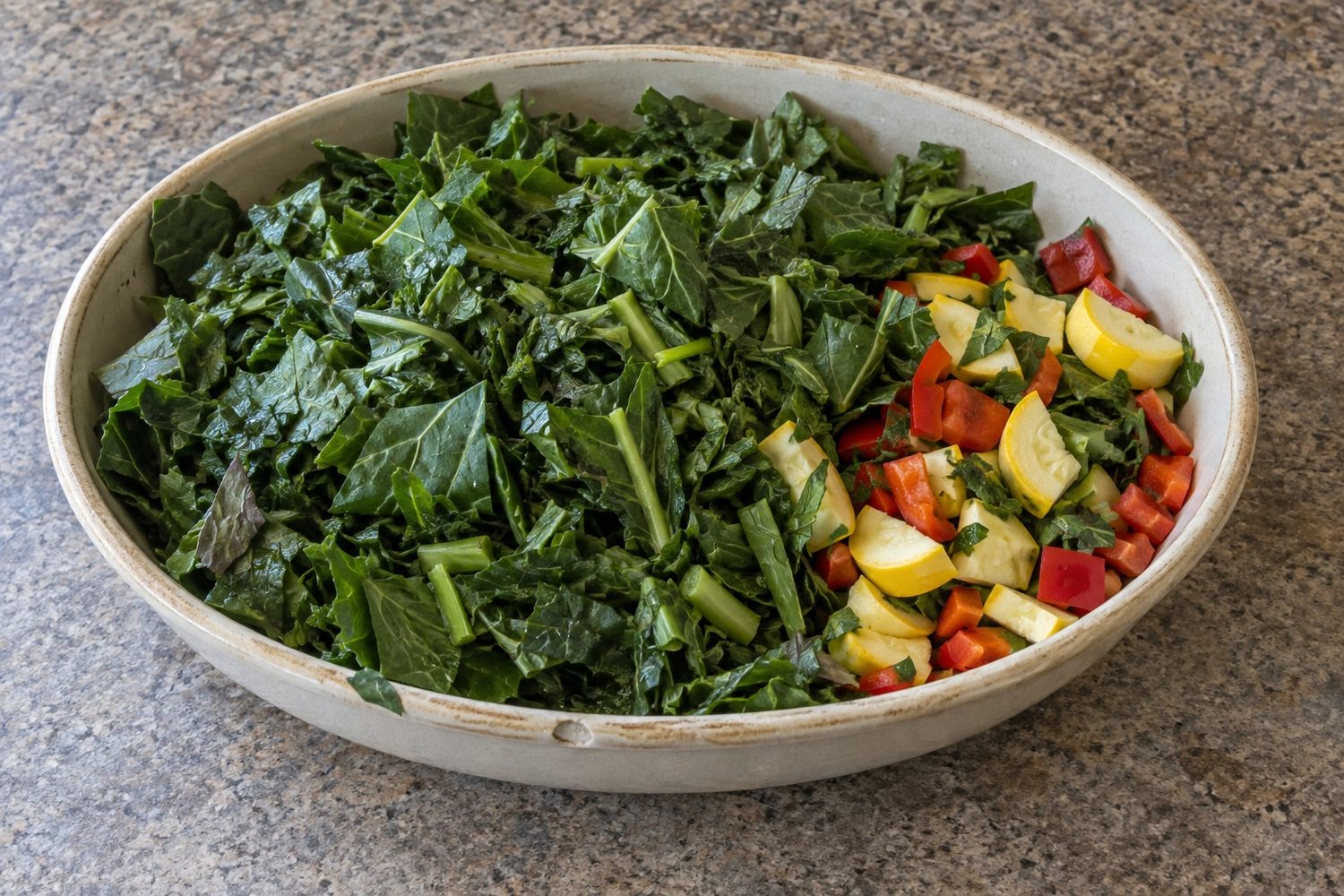
VCA says the diet should generally be about half plant material and half animal material such as insects, varying with age, and that 80 to 90 percent of the plant material should be leafy greens (VCA). NC State Veterinary Hospital gives a practical split for adults: 50% dark leafy greens, 20% chopped vegetables, 25% animal matter, and a maximum of 5% fruit (NC State).
UC Davis says a salad of calcium-rich leafy greens and vegetables should be offered daily, and that collards, dandelion greens and flowers, escarole, endive, grape leaves, mustard and turnip greens, and watercress should make up the great majority of it (UC Davis). On timing, VCA says young dragons eat once or twice a day and adults may eat every 24 to 72 hours, while NC State says adults may be fed daily or every other day.
VCA also calls for phosphorus-free calcium daily and calcium with vitamin D3 two to three times a week, and it links dietary imbalance to low blood calcium and metabolic bone disease. Your vet can tell you which supplement routine fits your dragon.
Put that together and a daily salad has a clear base, and broccoli in any form isn't part of it. If you follow the more cautious of the two sources, UC Davis, mature broccoli sits outside that base as an occasional treat, and remember that instruction was written about mature broccoli. If your dragon has metabolic bone disease, suspected thyroid or kidney disease, abnormal calcium levels, or a poor appetite, talk to a reptile veterinarian before adding anything new, broccoli microgreens included.
Preparing broccoli microgreens before you offer them
No bearded dragon source compares cut tops, roots, hulls, or a whole living tray. The steps below come from human food production guidance and general bearded dragon husbandry advice, applied to a tray you're about to cut. They're sensible handling, not evidence that roots or hulls cause harm.
- Check the seed. Penn State Extension advises against pesticide-treated seed for microgreens because the seed coats can stay on the plants and get eaten (Penn State Extension). EPA guidance on treated seed says it is for planting only: "Do not use for food, feed, or oil purposes" (EPA). If the packet says treated, that tray isn't a dragon food. If you're buying seed for this, look for packets labeled untreated and sold for microgreens or sprouting.
- Cut above the growing medium. UConn Extension describes microgreens as the stems and leaves, advises removing hulls, and says to compost the roots and substrate after harvest (UConn Extension). UC Davis notes that bearded dragons may swallow small loose particles and advises against sand, wood chips, and gravel as bedding. Taken together, that points to cutting cleanly above the soil or mat and picking off any hulls or loose medium you can see.
- Leave out anything moldy. UConn's microgreen food safety advice calls for clean medium, reputable seed, and no mold.
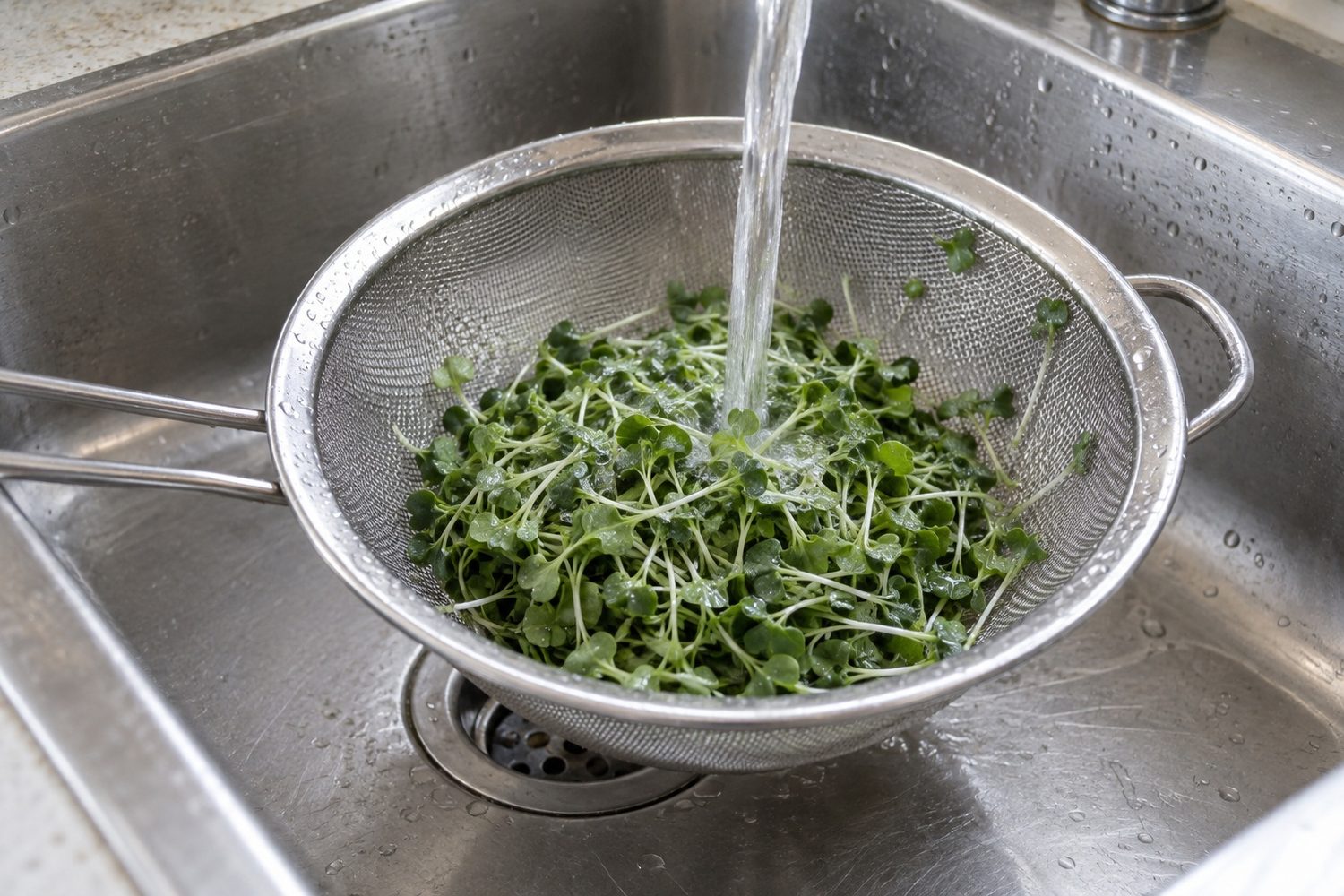
- Rinse under running water. The FDA says to wash produce, including home-grown produce, under running water without soap or detergent, and notes that washing reduces bacteria but doesn't remove all of them (FDA). That's human food safety guidance, used here for handling.
- Don't use a living tray as a feeding dish. A tray left in the enclosure means you can't tell how much was eaten, and your dragon can reach roots, hulls, medium, and any mold. Nobody has studied dragons grazing that way. Cut what you intend to offer and remove the rest.
Signs to watch for after any new food
There's no reaction profile specific to broccoli in bearded dragons, so watch for the general signs vets use. VCA's urgent care guidance says a pet needs prompt assessment for more than two vomiting events in 24 hours, loss of appetite or lethargy, multiple soft or watery stools, or blood in the stool, and emergency care if it is severely ill or can't stand or walk (VCA Urgent Care). Merck lists lethargy, poor appetite, reluctance to move, and fractures among the possible signs of bone disease in reptiles. If you suspect your dragon has eaten something harmful, the ASPCA says to contact a veterinarian or poison control immediately (ASPCA).
Frequently asked questions
Are broccoli sprouts the same thing as broccoli microgreens?
No. A sprout is a germinated seed often eaten with the seed and root attached, while a microgreen is the stems and leaves cut after true leaves form. Plant researchers have compared glucosinolate profiles across broccoli seeds, sprouts, microgreens, and baby leaves (Agronomy, 2021), but no bearded dragon source names broccoli sprouts specifically.
Does broccoli block calcium absorption in bearded dragons?
Neither VCA nor UC Davis describes broccoli that way. VCA's calcium absorption caution is about oxalates in mature Swiss chard, spinach, and beet greens, and UC Davis's broccoli caution is about goitrogens, which act on iodine uptake and the thyroid. A broccoli-specific calcium-binding effect in bearded dragons hasn't been published.
Is broccoli on the ASPCA plant list for reptiles?
The ASPCA hasn't given a verdict either way. Its reptile and amphibian hazards page names fireflies, not broccoli, and advises researching new food sources, while its plant database rates plants only for dogs, cats, and horses. A food that doesn't appear on a list hasn't been cleared for dragons; it simply hasn't been rated.
Does a juvenile dragon change the answer?
VCA says young dragons lean more insectivorous and have a higher calcium need, and UC Davis recommends calcium supplementation three times a week for juveniles versus weekly for adults. Neither source gives an age or size rule for broccoli microgreens, so the general juvenile calcium advice is the part that applies.
Is the calcium ratio in my tray the same as the study lot?
Not necessarily. The 4.04 to 1 figure came from one 2025 broccoli microgreen lot, and published microgreen values vary with growing system, harvest timing, and whether they're reported by fresh or dry weight.
Before you open the tray
The vets split on mature broccoli: VCA recommends it, and UC Davis limits it to an occasional treat because of goitrogens. Neither addressed the microgreen, and no study has tested broccoli microgreens or sprouts in bearded dragons, so the mineral and glucosinolate numbers are measurements to consider rather than a ruling. If you do offer some, start from untreated seed, cut above the medium, leave out mold and loose substrate, rinse the cut greens, keep a note of what happened, and build the everyday salad from the staple greens the vets name. For how the other microgreen crops compare, go back to our bearded dragon microgreens guide.
Sources
Prices, stock and specifications are as the linked pages showed them on 2026-09-12.
Keep reading
The journal
Can Bearded Dragons Eat Radish Microgreens?
Can bearded dragons eat radish microgreens? Before feeding any, see what UC Davis vets actually say, what the nutrient data shows, and what remains untested.
Read Can Bearded Dragons Eat Radish Microgreens?Animals and microgreens
Can Bearded Dragons Eat Microgreens?
Probably, as part of the salad. No study has fed a microgreen to a bearded dragon, the one vet-reviewed teaspoon dose has nothing behind it, and calcium to phosphorus is unmeasured for every crop.
Read Can Bearded Dragons Eat Microgreens?Animals and microgreens
Can Tortoises and Turtles Eat Microgreens?
A sulcata and a box turtle cannot share an answer: one is a fiber-fermenting grazer, the other is half carnivore. And a microgreen is close to the opposite of what a grazing tortoise is built for.
Read Can Tortoises and Turtles Eat Microgreens?Animals and microgreens
Can You Gut-Load Feeder Insects With Microgreens?
You can feed them to insects. You cannot deliver calcium that way, and calcium is the entire reason gut-loading exists. A cricket needs a 13-fold ratio change, and the best published gut-load managed three to four.
Read Can You Gut-Load Feeder Insects With Microgreens?