Can Bearded Dragons Eat Radish Microgreens?
Cal HewittPublished Checked
- bearded dragons
- reptiles
- animal feeding
- nutrition
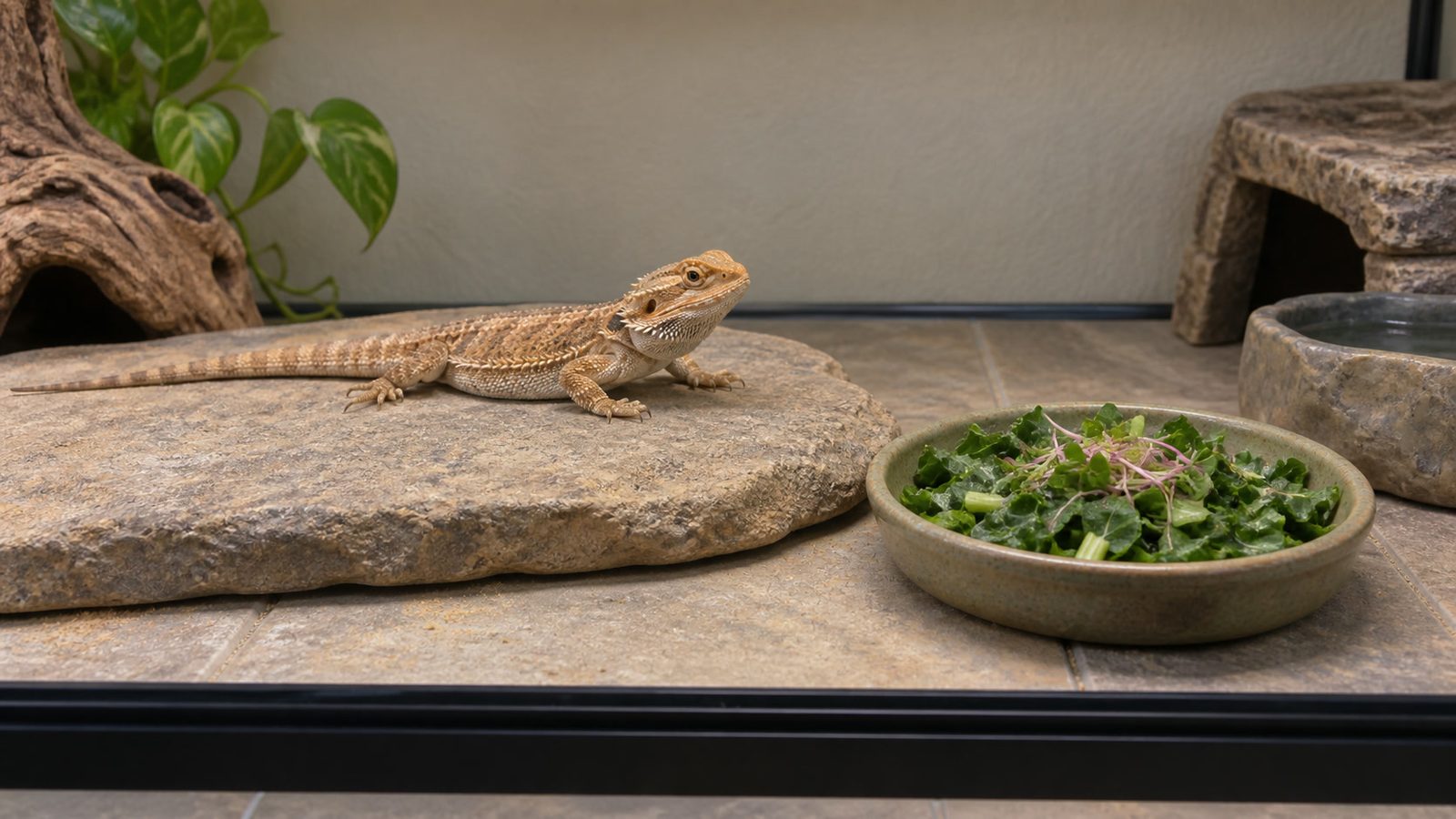
Nobody has published a study of radish microgreens fed to bearded dragons, so there is no tested amount, frequency or method to follow. The closest veterinary guidance comes from the UC Davis School of Veterinary Medicine, which puts radishes and sprouts in a group of foods that are low in nutrition and "fed sparingly as occasional treats." That page never mentions microgreens. If your dragon already goes for radish microgreens, the careful reading is to keep them in that occasional group, offer clean cut shoots grown from untreated seed, and build the rest of the bowl from the greens your vet recommends.
What UC Davis says about radishes and sprouts
The UC Davis bearded dragon care page, written by John Gardiner and dated 12 April 2019, lists corn, cucumbers, radishes, sprouts and zucchini as low in nutrition and says they should be fed sparingly as occasional treats (UC Davis Bearded Dragon Care). It is guidance written for this species by a university veterinary school, and it is the only institutional source that names radish for bearded dragons at all.
Read it closely before you apply it to your tray, though. The page says "radishes" without saying whether it means the root, the leafy tops, or both. It says "sprouts" without naming which plant they come from. And it never uses the word microgreen. It is also a statement about how much a food contributes to the diet, not a poison classification. The ASPCA's plant lists rate plants for dogs, cats and horses, not bearded dragons, so they give no verdict on Raphanus sativus either way, and a plant's absence from a general list does not clear it for a reptile.
What UC Davis does give you is a clear place for radish in the diet: at the edges, not in the daily salad. That is a sensible starting point for radish microgreens, even though the page was not written about them.
Four radish foods, not one
Radish reaches a dragon's dish in four forms, and they are not nutritionally interchangeable. Keep them separate whenever you read a feeding claim.
A microgreen is a young seedling cut above the growing medium after its seed leaves (cotyledons) open, and often after the first true leaves appear. A sprout is earlier, and is usually eaten with the seed and cotyledons still attached. A mature leaf is the full-sized radish top. A mature root is the familiar red or white radish.
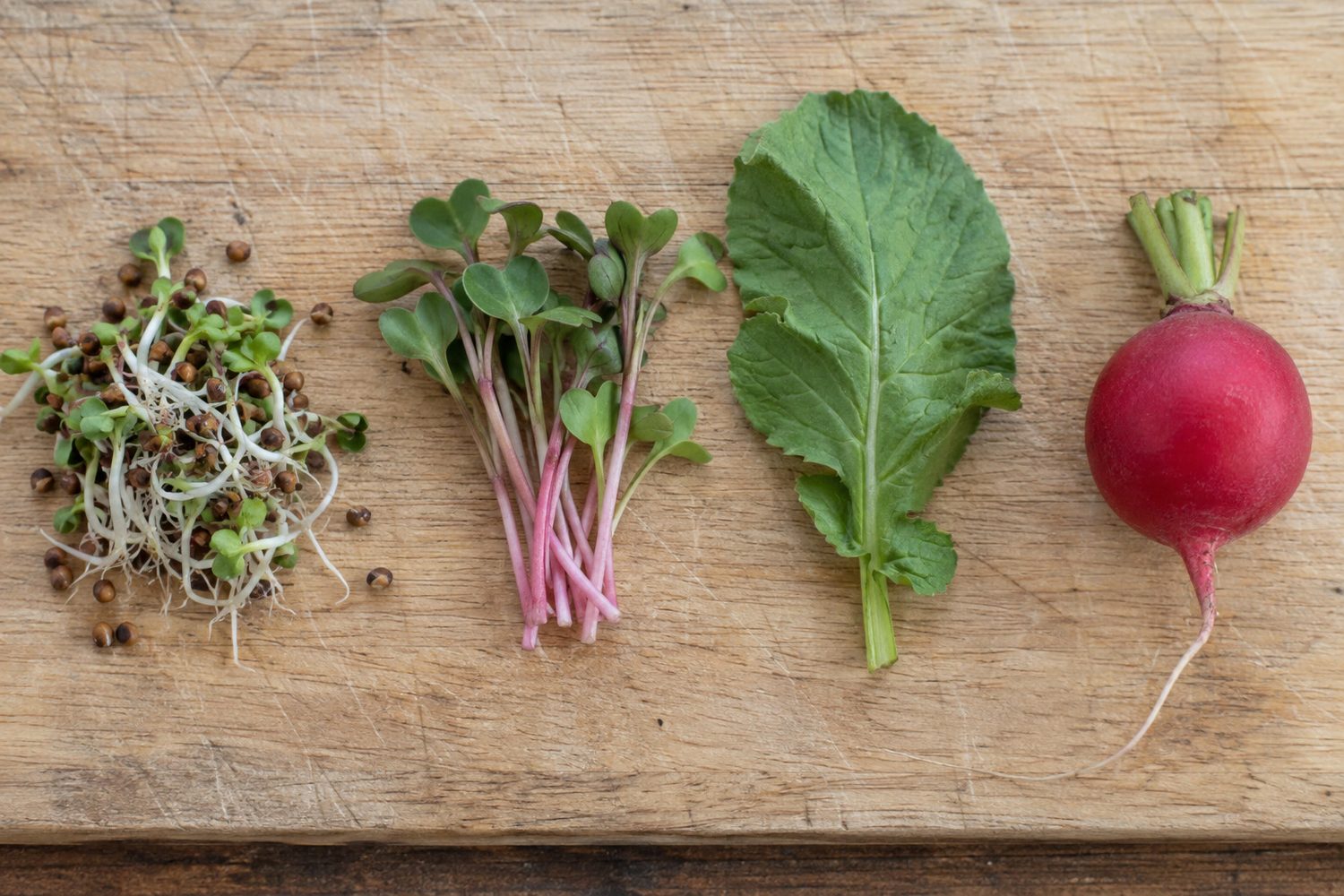
The difference between stages is measurable. In a 2011 study of eight radish varieties, sprouts had 3.8 times the total glucosinolates, 8.2 times the isothiocyanates and 6.9 times the phenolics of their own mature taproots (Hanlon & Barnes, 2011). That compared sprouts with roots, not microgreens with anything, and it was lab chemistry rather than an animal study. It does show why a figure for one stage should never be carried over to another.
What the calcium and phosphorus numbers show
Bearded dragons need more calcium than phosphorus, particularly while young, and an imbalanced diet can lead to low blood calcium and metabolic bone disease (VCA Feeding Bearded Dragons). That is why keepers ask about the calcium to phosphorus ratio of every green.
For radish microgreens, one measured sample exists. Balik and colleagues (2025) reported a black radish microgreen at 93.94 mg calcium and 31.3 mg phosphorus per 100 g fresh weight, which works out to a ratio of about 3 to 1 (Balik et al., 2025). The same sample had 33.37 mg vitamin C per 100 g and 391.75 mg nitrate per kg, both on a fresh weight basis. That is one cultivar under one set of growing conditions, not a number every radish microgreen will match. The paper did not report water, fiber or vitamin A for black radish, so leave those blanks empty rather than filling them with mature radish data.
For mature radish leaves, a 2025 review's food composition table lists 238 mg calcium and 32 mg phosphorus per 100 g, a ratio of about 7.4 to 1 (radish leaf review, 2025). For the mature root, a general animal nutrition handout gives 1.2 to 1, and names 1.5 to 1 up to 2 to 1 as an ideal dietary ratio (calcium and phosphorus handout). That handout is not a reptile study, and no reptile veterinary source gives a single required ratio for bearded dragon greens.
Three stages, three very different results. The spread is the useful part, because it shows that a verdict on the root cannot decide anything about the microgreen. It also does not prove the microgreen is better or worse than the leaf. The two figures come from separate studies and cultivars, not a side-by-side test. Keep in mind, too, that a ratio is simply calcium mass divided by phosphorus mass in one sample. It does not tell you how much of that calcium your dragon absorbs, and neither paper was written as feeding advice.
Oxalates, goitrogens and the cabbage family
Veterinary warnings about oxalates and goitrogens name specific foods. VCA says to feed spinach, Swiss chard and beet greens sparingly because oxalates can prevent calcium and mineral absorption, and to be cautious with cabbage, kale and mustard greens because goitrogens can affect iodine uptake and thyroid function when fed in excess (VCA). UC Davis lists cabbage, chard and kale as occasional foods because of calcium oxalates, and spinach, broccoli and parsley as occasional because of goitrogens (UC Davis).
Radish is not on either list. It does belong to the same plant family as cabbage and kale, which is why it tends to come up in these discussions. Family membership is a reason for caution, but it does not answer the radish question on its own, and neither source bans the whole family.
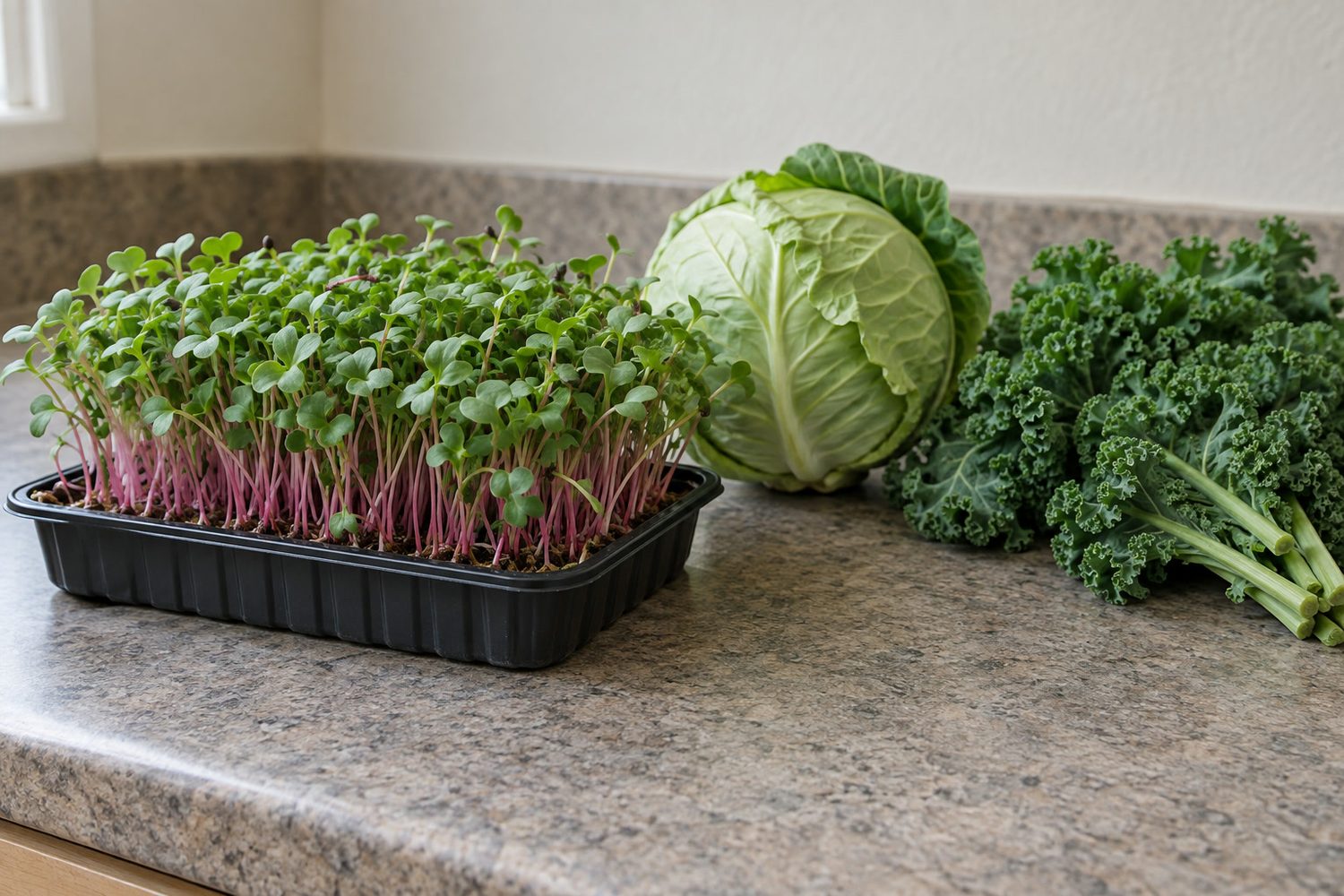
The plant studies add some detail without settling anything. A 2024 study of microgreens grown in soilless media measured Sango radish microgreens at 58.94 mg oxalic acid per 100 g fresh weight, the highest of its seven samples, and noted that the growing medium changes those levels (Gunjal et al., 2024). A study of five radish microgreen cultivars harvested at day 10 reported glucoraphasatin from 14.21 to 31.53 µg/g and glucoraphenin from 1.50 to 16.17 µg/g, on a dry weight basis (radish microgreen glucosinolate study). Dry weight figures cannot be compared with fresh weight figures without moisture data, and the cultivar spread means there is no single glucosinolate level for radish microgreens.
None of these papers studied reptiles, and none established a harmful dose. No bearded dragon veterinary source flags radish nitrate or isothiocyanates specifically. So, the plant chemistry tells you radish microgreens are not a blank slate, and it stops there.
How much and how often
No published source gives grams, bites or a schedule for radish microgreens, for any age of dragon. Do not borrow a number from a mature root recommendation or from a sprout, and do not treat a figure you find online as tested unless it names its study.
What does exist is general whole-diet guidance, and it helps you see how little room a treat occupies. These figures describe the overall diet, not radish:
- UC Davis calls for a varied diet with a daily salad whose great majority is calcium-rich dark greens, other vegetables mixed in, and substantial insects (UC Davis).
- VCA says 80 to 90% of plant material should be leafy greens, that young dragons eat once or twice daily, and that adults eat every 24 to 72 hours (VCA).
- PetMD, in a veterinarian-authored guide published 9 July 2026, gives juveniles about 70% insects and 20 to 30% vegetables, adults about 20 to 30% insects and 70 to 80% vegetables, and fruit at 5% or less (PetMD).
Age changes the margin for error. UC Davis recommends calcium supplementation three times a week for juveniles and weekly for adults, and metabolic bone disease matters more in a growing dragon. If your dragon is young, or already has bone disease, kidney disease, poor appetite or abnormal stools, ask a reptile vet before adding any new food. No source sets a special radish microgreen amount for those animals.
The practical approach, then, is to let your vet approve the introduction, keep radish microgreens out of the daily greens slot, and write down what you offered, on which day, and how your dragon's appetite and stool looked afterward. That record is more useful at a vet visit than any number copied from a forum.
Preparing radish microgreens for a dragon
The one handling point with real support behind it is what goes in the dish. Offer clean shoots cut above the growing medium. Do not deliberately feed roots, seed hulls or the medium itself, because no reptile data support any of them.
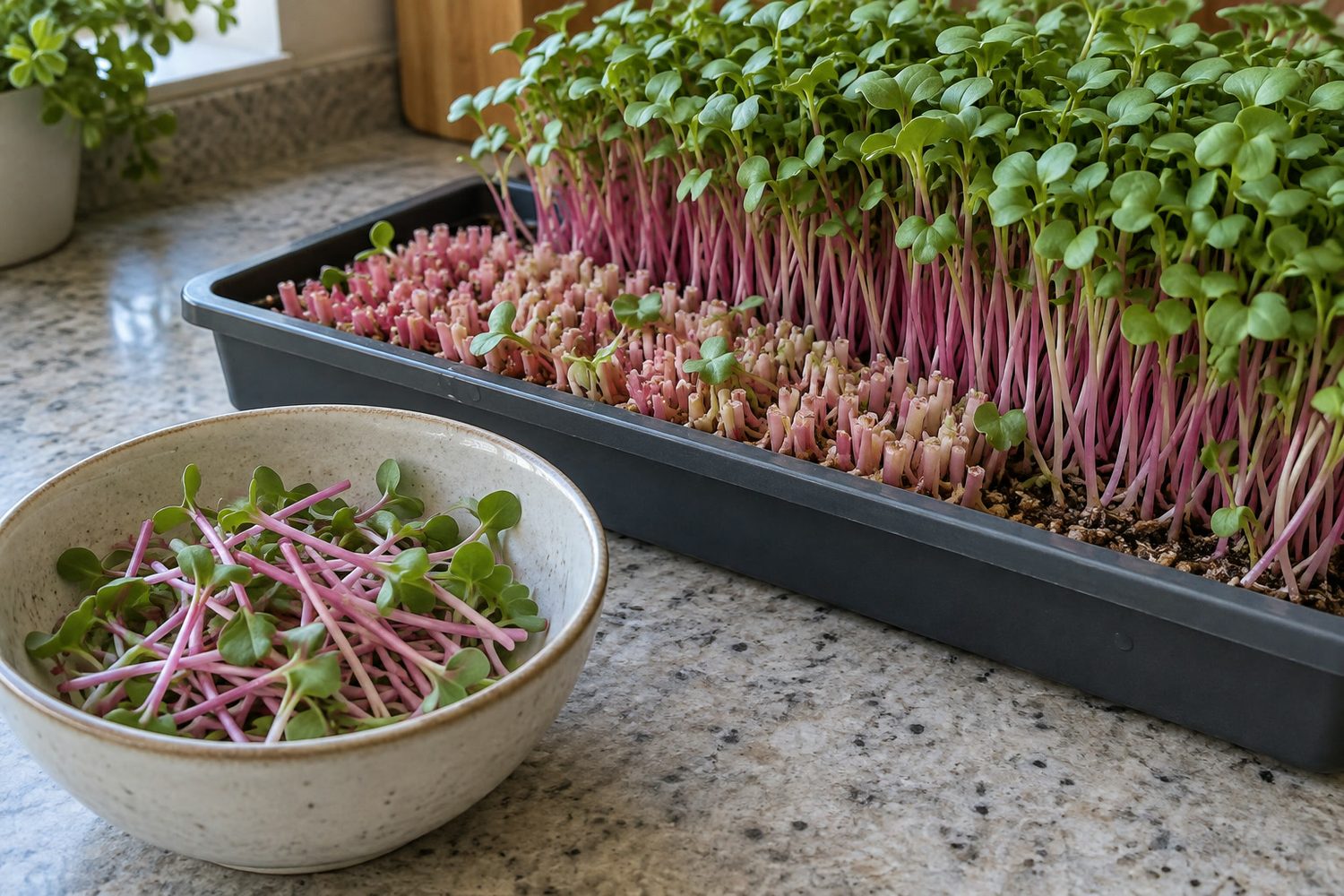
Seed matters more than anything else here. The National Pesticide Information Center says: "Never consume treated seeds or use them for animal feed" (NPIC treated seed guidance). Treated seed may carry a pesticide coating, and seed coat can stay on young shoots. If you grow your own, buy seed sold untreated for sprouting or microgreens, as Penn State Extension advises (Penn State Growing Microgreens). If you buy a clamshell at the store, you usually cannot confirm the seed history, which is one more reason to keep it occasional.
Wash the shoots under running water with clean hands, and skip soap, detergent and commercial produce wash. FDA advice applies whether the produce is home-grown or bought, and it notes that washing reduces bacteria but does not eliminate them. Throw out anything rotten (FDA produce guidance). Sprouts and microgreens are moist crops, and FDA counted 52 sprout-associated outbreaks and more than 2,700 illnesses in people between 1996 and 2020, with seed a likely source in many of them (FDA seed guidance update). Those are human figures, but they are a good reason not to assume a home tray is sterile.
Do not set a living tray in the enclosure for grazing. No study compares a tray with cut shoots, and a tray adds roots, hulls, wet medium, anything in the watering, and unlimited access.
What to watch after a new food
After you offer anything new, compare your dragon against its normal appetite, activity, stool, weight and hydration. VCA says loose stool can come with gut disease, that profuse diarrhea, foul stool or weight loss need a vet's assessment, and that any change from normal should be evaluated promptly. It also lists loss of appetite, depression and lethargy as general signs of illness (VCA Bearded Dragon Diseases).
A veterinary hospital handout adds a list of reasons to call a reptile vet promptly: reduced growth, poor appetite, depression, swelling of the face or limbs, weight loss, regurgitation, fractures and spasms (Spartan Animal Hospital handout). If your vet suspects metabolic bone disease, VCA says treatment depends on calcium, phosphorus and kidney tests and requires correcting the diet and UVB.
Where radish fits among other greens
The staple greens in veterinary guidance are mature greens. UC Davis names collards, dandelion greens and flowers, escarole, endive, grape leaves, mustard greens, turnip greens and watercress as the great majority of the daily salad. VCA's recommended list includes collards, dandelion, escarole, kale, mustard, turnip greens and watercress. Neither source says the microgreen forms of those plants match the mature greens, and neither names a microgreen as a proven replacement for radish.
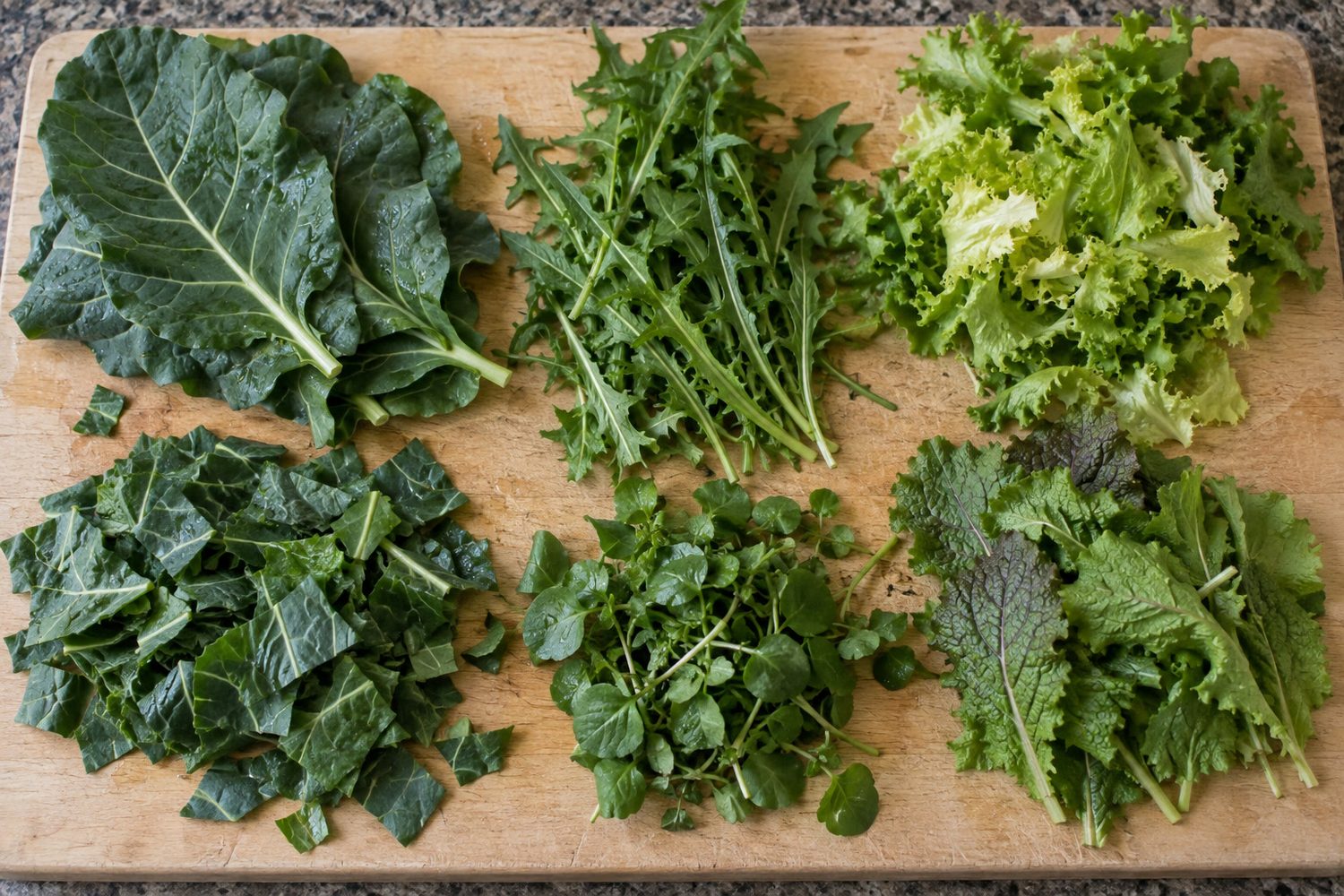
Keepers do report dragons picking radish microgreens out of a mixed salad first. One Reddit keeper wrote in 2019 that their dragon always went for them (Reddit post), with no amount or health outcome given. That tells you dragons like the taste, not what the food does over time.
For how other microgreen crops compare, the bearded dragon microgreens guide has the full crop by crop table.
Frequently asked questions
These cover the questions that come up once a keeper has a tray or a bag in hand.
Are radish sprouts the same as radish microgreens?
No. Sprouts are harvested earlier and eaten with the seed and seed leaves attached, while microgreens are cut above the growing medium once the seed leaves have opened. UC Davis mentions sprouts as a low-nutrition occasional treat but does not name a species or address microgreens.
Does black radish give a better calcium ratio than other radishes?
One 2025 black radish microgreen sample came out near 3 to 1, but that is a single cultivar grown under one set of conditions. Treat the figure as one data point, not a rule for choosing seed.
Can I compare the glucosinolate numbers with the calcium numbers?
Not directly. The calcium figures are per 100 g fresh weight, which includes the water in the shoots, while the glucosinolate figures are per gram of dry weight. Without moisture data for the same sample, the two cannot be put on one scale.
What would it take to get a real answer?
A veterinary-supervised feeding study in bearded dragons, using a named radish cultivar, known seed treatment and harvest day, and both juvenile and adult groups with proper UVB and calcium care. It would need to track intake, body weight, stool, blood calcium and phosphorus, thyroid measures and bone density against a group fed recommended mature greens. No such study has been published.
The short answer for your next salad
UC Davis places radishes and sprouts among low-nutrition foods to feed sparingly as occasional treats, and that is the only veterinary line that names radish for bearded dragons. The nutrient numbers for radish microgreens come from single plant samples, not feeding trials, and there is no published amount or schedule. If your vet agrees to include them, keep them occasional, cut clean shoots from untreated seed, wash them, and watch your dragon's appetite, stool and energy afterward.
Sources
Prices, stock and specifications are as the linked pages showed them on 2026-09-12.
- UC Davis Bearded Dragon Care
- Hanlon & Barnes, 2011
- VCA Feeding Bearded Dragons
- Balik et al., 2025
- radish leaf review, 2025
- calcium and phosphorus handout
- Gunjal et al., 2024
- radish microgreen glucosinolate study
- PetMD
- NPIC treated seed guidance
- Penn State Growing Microgreens
- FDA produce guidance
- FDA seed guidance update
- VCA Bearded Dragon Diseases
- Spartan Animal Hospital handout
- Reddit post
Keep reading
The journal
Can Bearded Dragons Eat Broccoli Microgreens? What Vets Say
Can bearded dragons eat broccoli microgreens? VCA lists broccoli as recommended while UC Davis flags it for goitrogens; the microgreen form stays unstudied.
Read Can Bearded Dragons Eat Broccoli Microgreens? What Vets SayAnimals and microgreens
Can Bearded Dragons Eat Microgreens?
Probably, as part of the salad. No study has fed a microgreen to a bearded dragon, the one vet-reviewed teaspoon dose has nothing behind it, and calcium to phosphorus is unmeasured for every crop.
Read Can Bearded Dragons Eat Microgreens?Animals and microgreens
Can Tortoises and Turtles Eat Microgreens?
A sulcata and a box turtle cannot share an answer: one is a fiber-fermenting grazer, the other is half carnivore. And a microgreen is close to the opposite of what a grazing tortoise is built for.
Read Can Tortoises and Turtles Eat Microgreens?Animals and microgreens
Can You Gut-Load Feeder Insects With Microgreens?
You can feed them to insects. You cannot deliver calcium that way, and calcium is the entire reason gut-loading exists. A cricket needs a 13-fold ratio change, and the best published gut-load managed three to four.
Read Can You Gut-Load Feeder Insects With Microgreens?