Is That Recall Real? How to Check Before You Throw Food Out
Cal HewittPublished Updated Checked
- food safety
- evidence
- recalls
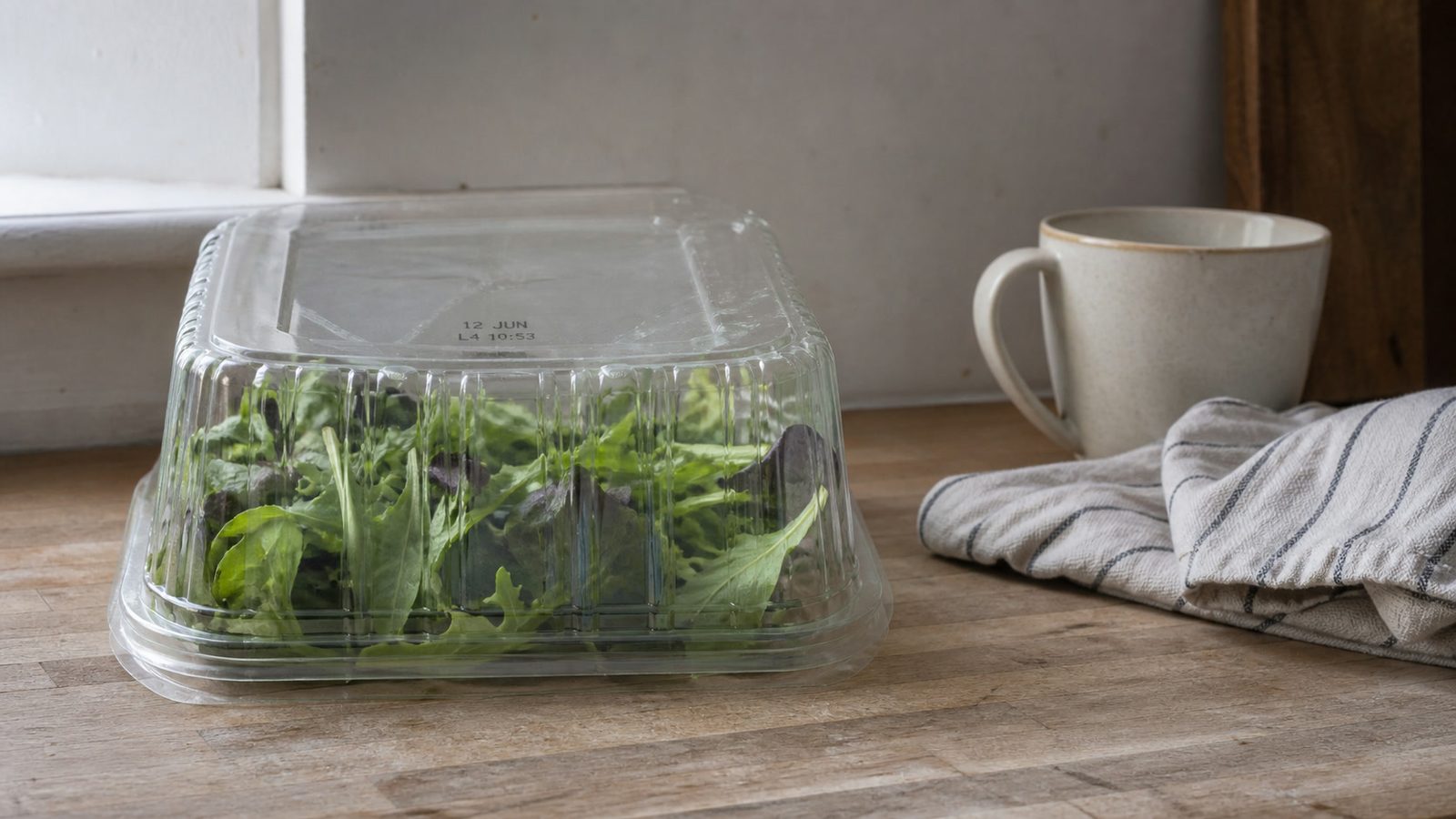
Some of the recall posts going around are years old. Two of the bagged salad recalls that spread widely in August 2026 are real recalls from December 2021 and April 2023, and both are closed. The people sharing them are not lying. The dates just fell off on the way.
This is the check that settles it, and it takes about two minutes.
The two minute check
Go to the agency, not to the post. For an ordinary packaged food, that is the FDA's recalls page, which is searchable, filterable and ordered newest first. Every entry shows the date, the brand, the product description, the reason, the company, and whether the recall has been terminated.
If it is meat, poultry or a processed egg product, you are at the wrong agency. Those are USDA, and they have their own recalls page. The package tells you which: a USDA inspected product carries the inspection mark and an establishment number, something like EST. or P- followed by digits, which may be inside the mark, elsewhere on the pack, or on a tray closure. A bag of salad is usually an FDA check. A salad with inspected chicken in it may be USDA. When you cannot tell, search both.
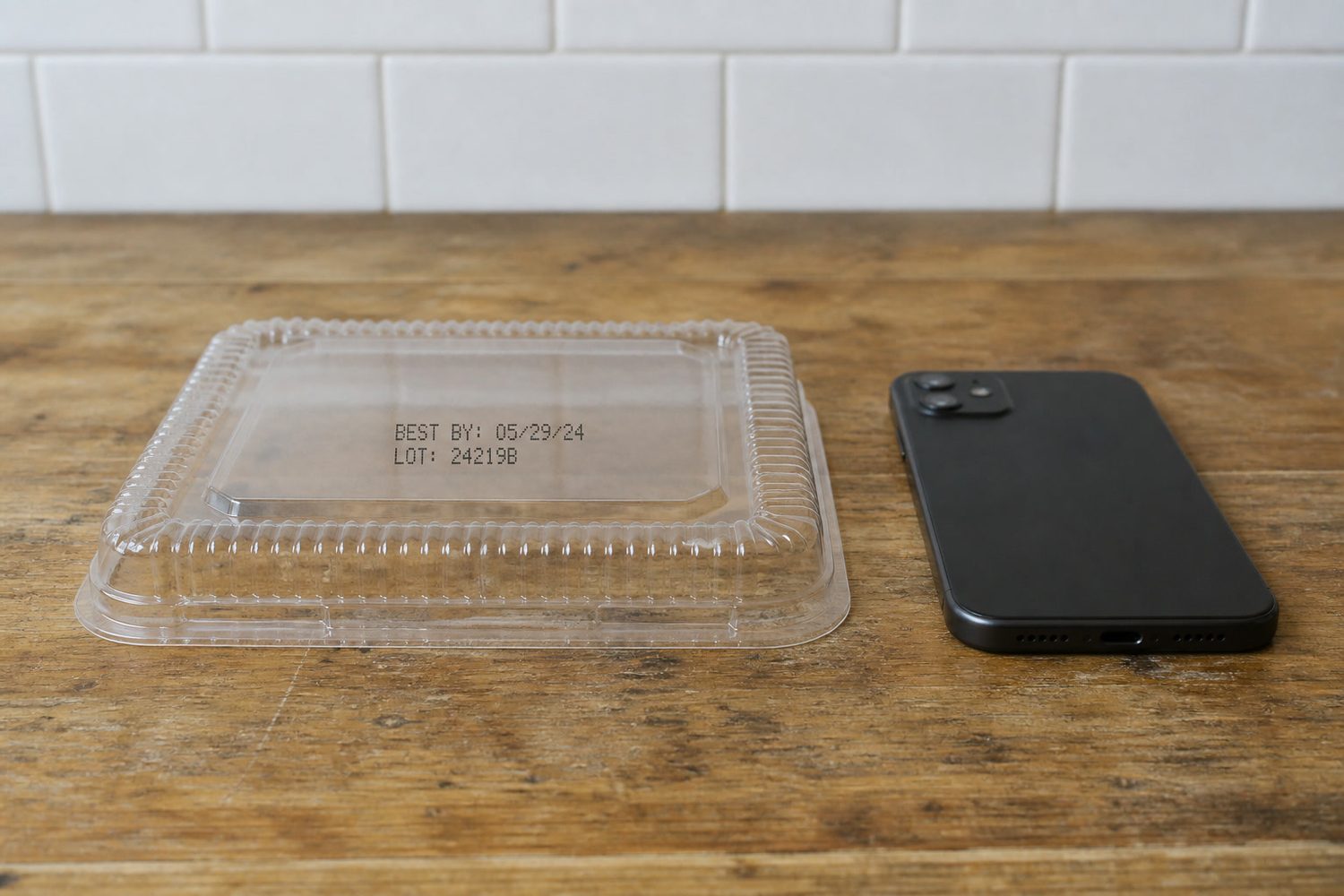
Then match the package, not the name. This is the step people skip. Recall notices identify a specific production run, and "I have the same brand" is not enough.
Hover or tap a row to highlight it.
| Detail | Where it hides |
|---|---|
| Brand and exact product name | Front of pack |
| Package size | Front of pack |
| UPC | Barcode. Identifies the retail item, not the affected run |
| Lot or production code | The awkward one. A seal, the underside, an inkjet stamp, an inner bag, or the retailer's case label |
| Use by, best by or sell by date | Often an identifying field, but not a substitute for a lot code |
Photograph the package before you do anything with it. If the notice turns out to apply, you will need those codes, and if you have already binned the packaging you cannot check.
What that list does not include, which matters
The FDA's recalls page is a public warning list, not a complete database. FDA says so plainly: it gathers certain information from press releases and other public notices, and "not all recalls have press releases or are posted on this page." The fuller picture, after recalls have been classified, is the weekly Enforcement Report.
It only holds three years. Older entries are archived. So, a search that comes back empty does not prove a claim is invented; it may just be old. If you are checking something from a few years back, search the FDA archive with the product or company name and the year.
"Terminated" does not mean the warning was fake. It means FDA decided all reasonable efforts were made to remove or correct the product and it was properly disposed of. It is the closure of the recall action. An entry with nothing in that field is ongoing or completed, which is not the same as unresolved.
Why old recall news keeps coming back
Here are the two that circulated most widely, with their real dates off the agency record.
Hover or tap a row to highlight it.
| Revolution Farms | Fresh Express | |
|---|---|---|
| Actual date | Company 2023-04-06, FDA 2023-04-07 | 2021-12-20 |
| What it covered | All products and date codes, after a positive Listeria result and an epidemiologic link | Specified branded and private label salads from one Illinois facility, product codes Z324 to Z350 |
| Where | MI, OH, IN, IL, KY, WI | Specified items only, no other Fresh Express products |
| Status now | Terminated | Outbreak declared over 2022-03-08 |
| Final toll | Not published in the notice | 10 illnesses, 10 hospitalizations, 1 death |
Both are genuine. Neither is happening now. And neither belongs on today's FDA list, because that list only carries three years.
A recent looking date on a search result is not the date of the event. Google explains that its systems estimate when a page was published or meaningfully updated, using several signals including dates shown on the page and the publisher's own metadata. A real old recall can be linked in a new post, republished, or updated, and end up wearing a fresh looking label. Treat the post time and the search result date as the date that item was circulating. Read the event date off the agency record.
Nobody has published a study measuring how often food recalls specifically get recycled on social platforms, or why particular ones resurface. The research that exists on recall communication is about trust and how people respond, not about stale posts. So, the mechanism above is documented and the frequency is not.
And if you already threw out lettuce because of one of these, you did a sensible thing with bad information. The fix is not to stop believing recalls. It is to check the package and the date first.
What a recall notice actually means
Four words get used as though they mean the same thing.
- Recall. A firm removes or corrects a product that violates the law. It can start with the company, with an FDA request, or with an FDA order. For food, FDA says these are usually started voluntarily by the manufacturer or distributor.
- Market withdrawal. A minor issue that would not be subject to legal action. FDA's own example is a tampering case with no manufacturing problem. Not a recall.
- Public health alert. A USDA warning issued when there is a health concern but a recall is not requested, often because the product is no longer on sale. It is a warning, not evidence that something is still in shops.
- Safety alert. In FDA's formal definitions this is a medical device term. The website heading uses it more loosely, so do not read every notice as a recall.
The class number describes the hazard, not how many people got sick. Class I means a reasonable probability of serious harm or death. Class II means temporary or reversible effects are possible, or serious ones are remote. Class III means harm is unlikely.
⚠️ Class II does not mean safe to eat. If your package matches, follow the notice. The classification is FDA's assessment of the risk, not permission to ignore it.
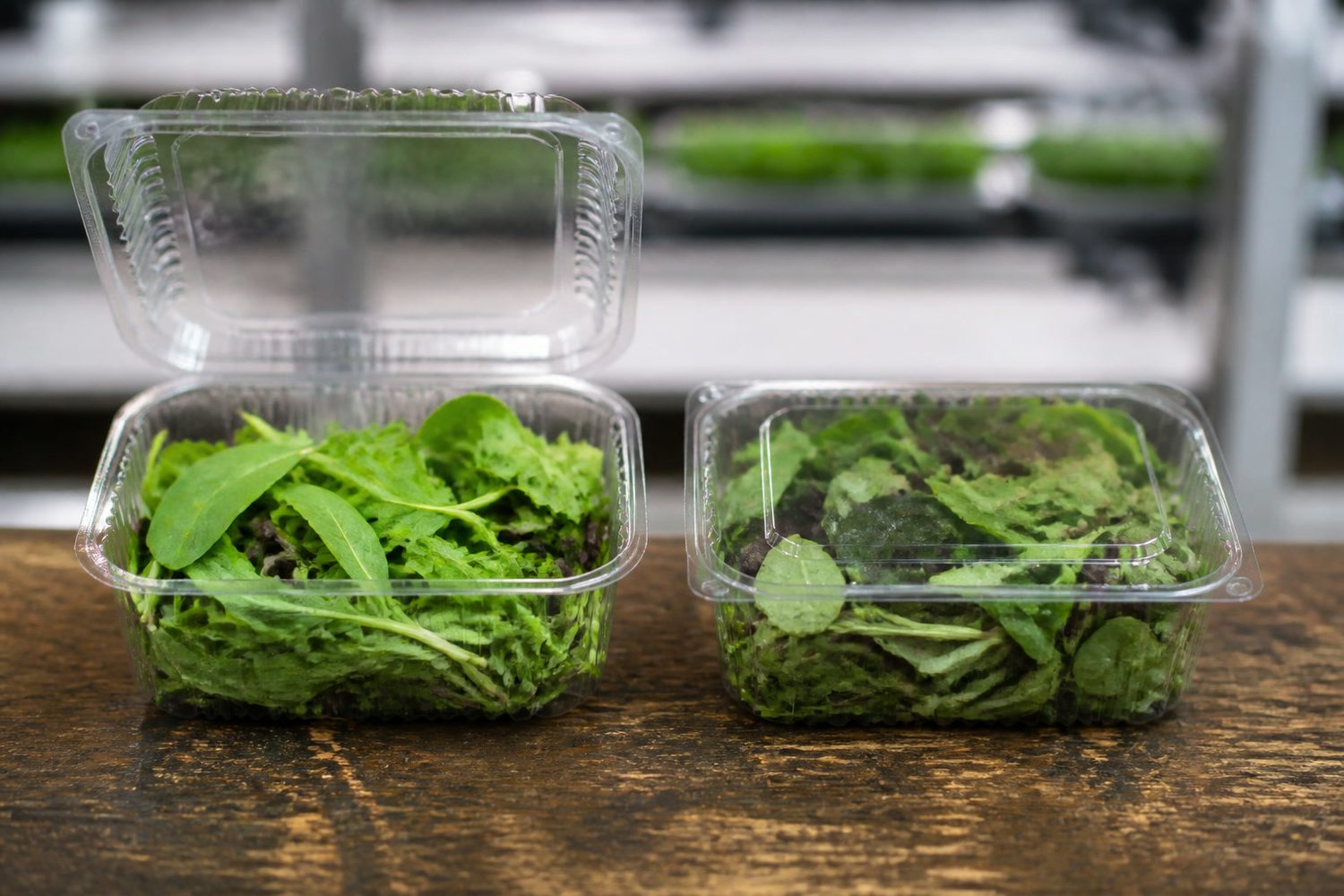
A recall is also not an illness count. The two are separate things and either can happen without the other. In December 2022 Wegmans recalled organic microgreens, a kale and spinach product, and cat grass across seven states after supplied soil tested positive for Salmonella. No illnesses were associated with it. That is a real recall of a real product with a real hazard and a zero in the illness column, and it is the clearest example of why one number does not imply the other.
If it does match
Read the notice first, because it may give specific instructions.
Usually you return it for a refund. If you cannot, FDA says dispose of it properly: wrapped or contained securely so that people and animals cannot get at it. Do not give it to a food bank, to another person, or to a pet. And do not bin a product that does not match just because the name looks similar.
For a Listeria recall there is a cleaning step people miss. FDA's guidance is to wash the refrigerator's interior walls and shelves, plus any cutting boards, counters and utensils the food may have touched, then sanitize with 1 tablespoon of chlorine bleach to 1 gallon of hot water, dry with a clean unused cloth or paper towel, and wash your hands afterward.
The microgreen recalls on record
At least eight microgreen recall events are documented across the FDA and CFIA records, and no count of them claims to be exhaustive.
Hover or tap a row to highlight it.
| Product | Organism | Date | Illnesses |
|---|---|---|---|
| Greenbelt Greenhouse, BC | Listeria monocytogenes | 2018, FDA posting 2020-04-06 | None reported |
| GoodLeaf, Nova Scotia | Possible Listeria | 2018 | None reported |
| Broadwood Farm, Ontario | Salmonella | CFIA 2021-11-09 | None reported |
| Prairie Microgreens, Alberta | Salmonella | CFIA 2021-11-12 | Class 2 notification |
| Arcadia, Ontario | Salmonella | CFIA 2022-02-14 | Class 2 notification |
| Wegmans Organic, 7 US states | Salmonella, in supplied soil | FDA 2022-12-23 | None associated |
| Kyan Culture and Farm Boy, ON/QC | Pathogenic E. coli | CFIA 2026-05-15 | None reported, Class 1 |
| Micro Verdure, Quebec | Pathogenic E. coli | CFIA 2026-05-20 | None reported, Class 1 |
Counting them is genuinely awkward, and that is the point. Two careful passes over the same two agency records can come back with different lists. There is no single query that spans both agencies, the two use different words for the same kind of event, and FDA states outright that its public warning page is not complete. If a count is this hard to get right deliberately, a number in a social post deserves the check described above.
Two things in that table are worth reading twice. There are two Class 1 events, both from May 2026, which is the serious end of the scale rather than the notification end the earlier ones sat at. And the illness column reads the same way down every row: not one of these events reported an associated illness. That is not the same as no risk, and both halves are true at once.
⚠️ One of these has a documented route, and it is the growing medium. The FDA notice for the Wegmans recall says plainly that some of the soil the crop was grown in, supplied by a named company, tested positive for Salmonella by the supplier. So, the medium is not a theoretical route on this record. It is a documented one, in the only US recall on the list.
If you bought alfalfa seed this year
Check your seed drawer. Berlin Seeds of Millersburg, Ohio is recalling 950 lb of its Alfalfa Sprouting Seed because it may carry Shiga toxin-producing E. coli (STEC) or Salmonella. It sold the seed at its Millersburg store and through its website from February 13 to August 23, 2026, to customers in 44 states. FDA posted the notice on 2026-09-23, and it was read on 2026-09-26.
The recall covers every size of that seed sold in that window: 1/4 lb, 1/2 lb, 1 lb, 5 lb and 50 lb bags under the Berlin Seeds label. Only the 5 lb and 50 lb bags carry a lot code, SAL2-24JB, on the bottom right corner of the label. The three smaller bags carry none, so if you bought one of those from Berlin Seeds in that window, the label and your order date are what you have to go on. The company says no other Berlin Seeds sprouting seed is affected.
The notice tells you exactly what to do, and it is written for people growing at home:
- Stop using the seed. Do not sprout it, plant it or give it away.
- Do not eat sprouts already grown from it, and throw them away.
- Put the seed in the trash in a sealed bag.
- Clean and sanitize any jars, trays, sprouters or surfaces the seed or sprouts touched.
- If you have eaten something grown from it and feel ill, contact your health care provider.
Berlin Seeds takes questions and arranges replacements at 877-464-0892, Monday to Friday, 8 a.m. to 4 p.m. Eastern, or order@berlinseeds.life.
If you grew microgreens from it, the notice does not mention microgreens, but it does say not to plant the seed, and a tray is planted seed. Treat the tray the way the notice treats sprouts, which is also the advice for any recalled seed lot further down this page: do not eat it or give it away, and clean the tray before you use it again.
Why it was recalled. Berlin Seeds says its supplier traced the seed to a sprout grower whose sprouts were part of an FDA investigation into a multistate outbreak of several strains of STEC (O26:H11, O103:H25 and O168:H8) and Salmonella Agona. The supplier also found E. coli in a sample of spent irrigation water from one of its alfalfa seed lots. One illness has been reported directly to Berlin Seeds. That is the company's count, not an outbreak total.
The same lot code is on a larger recall upstream. FDA's Enforcement Report lists a Class I recall by International Sprout Holdings, started 2026-08-23 and still ongoing, of 43,799 lb of alfalfa seed in 50 lb bags labeled International Specialty Supply, lot SAL2-24JB, for potential E. coli and Salmonella. That seed went to wholesale buyers in 16 states (CA, FL, HI, IL, MA, MN, MO, MT, NY, OH, OR, PA, SC, TN, TX and UT), Puerto Rico, Canada, Mexico, Tahiti and Venezuela. Berlin Seeds' notice was the only retail one for this lot among FDA's recall press releases on 2026-09-26, and Todd's Seeds of Cookeville, Tennessee, posted its own recall notice for sprouting seed products containing lot SAL2-24JB, with the lot codes to match. So, if you bought alfalfa seed from another seller this year, ask them whether it came from lot SAL2-24JB, and keep the packet until you have an answer.
If you are here because of the broccoli sprouts recall
That one is real, it is current, and it is sprouts rather than microgreens. If you have a bag of store-bought broccoli sprouts in the fridge, check it now against the notice. If what you have is a tray of broccoli microgreens, this recall does not cover it.
Evergreen Fresh Sprouts LLC of Moyie Springs, Idaho recalled 215 cases of broccoli sprouts on 2026-09-10, in 4oz clear zip lock bags with no brand name, UPC 8 38796 00105 1, use-by dates of 9/07/26, 9/09/26, 9/11/26, 9/14/26 and 9/16/26. They went to three distributors in Washington between 8/24/26 and 9/2/26 and may have reached retail in Idaho, Montana and Washington. The company says it stopped producing and distributing broccoli sprouts on 9/4/26 and is looking for the cause. Read on 2026-09-11.
Two things make this one different from every row in the table above. A third-party lab found Salmonella in one dated lot, and the company says the product has been tied to a multistate outbreak of Salmonella Bovismorbificans that stood at 22 cases as of 9/9/26. So, unlike every microgreen recall on record, this one has illnesses attached to it.
The alfalfa seed above leads to one more sprout recall, and it is a good example of why counting these is awkward. FDA's outbreak investigation page says lot SAL2-24JB is the same seed lot used to grow the alfalfa sprouts Everything Sprouts recalled, and it lists the Berlin Seeds recall under the same outbreak. Everything Sprouts, LLC recalled alfalfa sprouts on 2026-08-22, under its own name and the Calco brand, for possible Salmonella and Shiga toxin-producing E. coli. On 2026-08-28 it expanded that same recall to cover a Robust Radish Mix in 5oz cups. Those are two rows on FDA's list and two dates, but one recall action. Count the rows and you get three sprout recalls since mid-August. Count the actions and you get two.
Why the sprout recalls are not in the microgreens table. Sprouts and microgreens are different crops with different risk profiles, and the table above counts microgreen events specifically. Sprouts are grown in warm water for days and eaten seed, root and all, which is why FDA writes separate rules for them and why their recall history is so much longer. Microgreens are grown in a medium and cut above the root. Lumping the two together would inflate the microgreen count, which is the exact counting error the rest of this page is about. It cuts the other way too, and honestly: the sprout record is the closest thing there is to a warning about what warm, wet, dense growing does to a pathogen that has already arrived, and two recall actions in three weeks is worth a grower's attention even though neither one is a microgreen.
A home grower has no recall system. There is no mechanism that tells you your seed lot was implicated. You would find out through the seller, an agency notice, an email list you happened to join, or not at all. Without the packet and the lot number you often cannot tell whether a notice applies to you. The Berlin Seeds recall above shows both halves: a buyer of a 5 lb bag can match the lot code, and a buyer of a 1 lb bag has no code to match.
FDA's traceability guidance for commercial sprout operations is not a home rule, and microgreens are legally distinct from sprouts, but the mechanism is worth stealing: keep the supplier, the variety, the receipt date, the lot numbers, and the dates you used the lot. Extension guidance for microgreen growers says the same thing in plainer terms, seed to harvest, so you can work backward if something goes wrong.
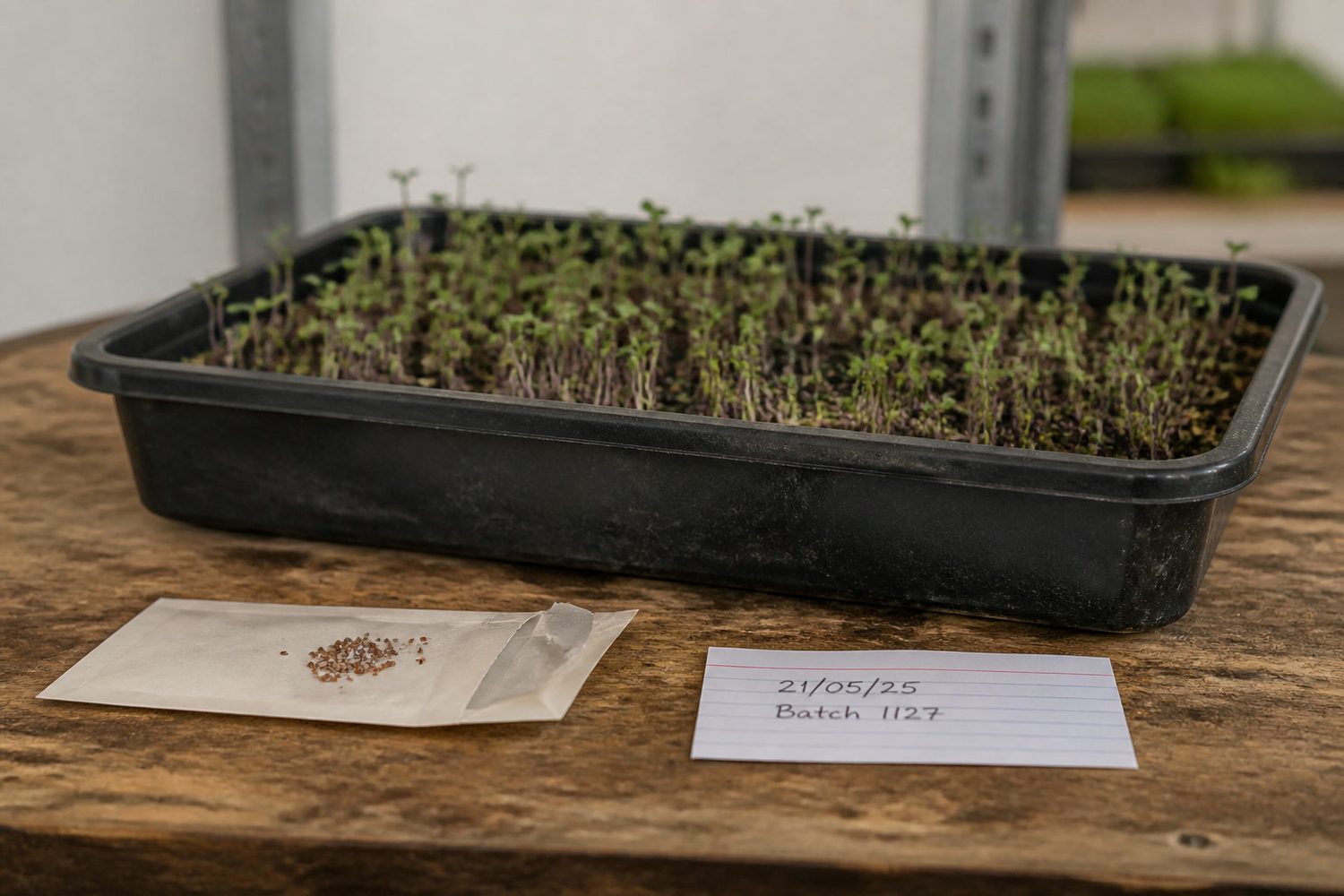
The household version takes ten seconds. Keep the seed packet, or photograph it. Note the variety, the lot or batch number, where you bought it, and which tray you sowed it in. Label the tray. That is it.
If a seed lot you have used is recalled, the conservative action, adapted from FDA's sprout rules, is: do not eat or give away the crop, stop using the remaining seed, keep the packet and supplier details, follow whatever the notice says, and clean and sanitize the tray before you use it again.
⚠️ One thing nobody has published: there is no government instruction that specifically says to discard a home microgreen tray after a seed lot recall. What there is, for sprouts, is an instruction to stop using seed from the affected lot and keep the crop out of commerce. What there is not is any evidence that harvesting, washing or trimming makes a recalled lot safe.
Terms on this page
Tap a term to see what it means.
Recall. A firm removing or correcting a product that violates the law or may be unsafe. Usually started by the company itself.
Sources
- FDA, Recalls, Market Withdrawals and Safety Alerts, read 2026-08-14 and again 2026-09-11: the live table, its columns, its filters, and the three year retention.
- FDA, Evergreen Fresh Sprouts LLC recalls broccoli sprouts, company announcement and FDA publish date both 2026-09-10, read 2026-09-11: the 215 cases, the 4oz bags with UPC 8 38796 00105 1, the five use-by dates, the Washington distribution and possible retail in ID, MT and WA, the positive third-party lab result, the halt to production on 9/4/26, and the multistate Salmonella Bovismorbificans outbreak standing at 22 cases as of 9/9/26.
- FDA, Berlin Seeds recalls alfalfa sprouting seed, FDA publish date 2026-09-23, read 2026-09-26: the 950 lb, the STEC and Salmonella hazard, sales from February 13 to August 23, 2026 at the Millersburg store and website to 44 states, the five bag sizes, lot SAL2-24JB on the 5 lb and 50 lb bags only, the one illness reported to the company, the supplier traceback and irrigation water result, the consumer instructions and the contact details.
- FDA Enforcement Report record H-1341-2026, via openFDA, read 2026-09-26: International Sprout Holdings, Class I, ongoing, initiated 2026-08-23, 43,799 lb of alfalfa seed in 50 lb bags, ISS lot SAL2-24JB, and the wholesale distribution to 16 states, Puerto Rico, Canada, Mexico, Tahiti and Venezuela.
- FDA, Everything Sprouts LLC recalls alfalfa sprouts of 2026-08-22 and the expansion of that same recall to Robust Radish Mix announced 2026-08-28 and posted by FDA on 2026-08-29, both read 2026-09-11: the two table rows that are one recall action.
- FDA, outbreak investigation of STEC and Salmonella in sprouts, August 2026: lot SAL2-24JB is the same seed lot used to grow the Everything Sprouts alfalfa sprouts, and the Berlin Seeds recall sits under the same outbreak.
- Todd's Seeds, food recall notice: the company's own recall of sprouting seed products containing lot SAL2-24JB, with lot codes to match.
- FDA, additional information about recalls: the statement that not all recalls are posted, and the pointer to the Enforcement Report.
- FDA, Enforcement Reports: the weekly post-classification list.
- FDA, recalls background and definitions: recall, market withdrawal, safety alert, and the Class I, II and III definitions.
- USDA FSIS, recalls and public health alerts: the meat, poultry and processed egg route, and the public health alert definition.
- FDA, food recalls: what you need to know: matching package identifiers, safe disposal, and the 1 tablespoon bleach to 1 gallon hot water sanitizing ratio.
- FDA, FDA.gov archive: where notices older than three years go.
- Google, helping Search know the best date for a page: how a result's displayed date is estimated, and why it is not the event date.
- FDA, Revolution Farms expanded recall: the April 2023 dates, the six states, and the terminated status.
- FDA, Fresh Express packaged salad outbreak investigation: the 2021-12-20 recall, product codes Z324 to Z350, and the final count of 10 illnesses, 10 hospitalizations and 1 death as of 2022-03-08.
- FDA, Wegmans microgreens recall: the seven state December 2022 recall with no associated illnesses.
- FDA, Greenbelt Microgreens recall: the Listeria recall dates.
- CFIA, Arcadia Microgreens, CFIA, Kyan Culture and Farm Boy, CFIA, Micro Verdure: the Canadian microgreen records, including the two Class 1 E. coli recalls of May 2026.
- FDA, sprout guidance, September 2023: the commercial seed lot traceability model and the corrective action language for an implicated lot.
- University of Nevada Reno Extension, microgreens and produce safety and Penn State Extension, the ABCs of microgreens: seed to harvest traceability, and seed lot numbers from better suppliers.
- Peer reviewed study of food recall communication: trust, risk perception and protective intention. It does not measure recycled recall posts, which is why this page does not claim a frequency.
Keep reading
The journal
Alfalfa Sprouting Seed Recall: What to Do With Your Seed Now
This alfalfa sprouting seed recall covers Berlin Seeds lot SAL2-24JB; find out what to do with your seed, trays, and any sprouts you already grew.
Read Alfalfa Sprouting Seed Recall: What to Do With Your Seed NowThe journal
Is Homegrown Safer? What the Produce Recalls Actually Change
Partly, and not for the reason people think. Growing your own does not remove contamination risk, it moves it onto seed, substrate and water, which are three things you can act on. And one tray is one to two days of one adult's vegetables, not a replacement.
Read Is Homegrown Safer? What the Produce Recalls Actually ChangeThe journal
Are Microgreens Safe From Cyclospora?
Are microgreens safe from cyclospora? Learn how the parasite spreads, what washing and cooking do and do not do, and the steps that matter at home.
Read Are Microgreens Safe From Cyclospora?The journal
Microgreens and Allergies: Four Crops Are Regulated Allergens
Sesame, mustard, buckwheat and celery are all grown as microgreens and all carry allergen labeling law somewhere. And not one published case report names a cut microgreen as the food eaten.
Read Microgreens and Allergies: Four Crops Are Regulated Allergens