Alfalfa Sprouting Seed Recall: What to Do With Your Seed Now
Cal HewittPublished Checked
- food safety
- evidence
- recalls
Disclosure: Microgreens Guru earns from some links on this site, including affiliate links. Nothing on this page is paid placement, and no link here changes what the recall notices say.
If you bought Berlin Seeds Alfalfa Sprouting Seed between February 13 and August 23, 2026, from Berlin Seeds' retail store or website, treat it as recalled. On the 5 lb and 50 lb bags, look for lot SAL2-24JB on the bottom right of the label. The 1/4 lb, 1/2 lb and 1 lb bags carry no lot code, so you match those by brand, size, seller and purchase date instead. If your seed matches, stop using it, bag it for the trash, throw out any sprouts grown from it, and clean and sanitize every jar, tray and surface it touched. The rest of this page covers how to check your package, what each agency and the company actually say, and which symptoms mean calling a doctor.
Check your package first
Berlin Seeds of Millersburg, Ohio, is recalling 950 lb of its alfalfa sprouting seed because it may contain Shiga toxin-producing E. coli (STEC) and/or Salmonella, according to the company's announcement posted by FDA on September 23, 2026. The seed was sold through Berlin's retail store and website to customers in states from Alaska to Wyoming; the notice lists each one.
Work through these checks in order:
Hover or tap a row to highlight it.
| What to check | Recalled if |
|---|---|
| Brand and product | Berlin Seeds Alfalfa Sprouting Seed |
| Where you bought it | Berlin Seeds' retail store or website |
| When you bought it | February 13 through August 23, 2026 |
| Package size | 1/4 lb, 1/2 lb, 1 lb, 5 lb or 50 lb |
| Lot code (5 lb and 50 lb only) | SAL2-24JB, bottom right of the label |
The 1/4 lb through 5 lb sizes are resealable bags; the 50 lb size is a woven poly bag that does not reseal. Berlin's notice says no other Berlin Seeds sprouting seeds are affected.
The small bags are the tricky part. A quarter-pound, half-pound or one-pound bag of Berlin alfalfa has no lot code to read, so the code cannot clear it or confirm it. If you bought one of those sizes from Berlin inside the February 13 to August 23 window, it falls inside the recall as the notice describes it. Find your order confirmation or receipt to pin down the date. If you still cannot tell, call Berlin Seeds at 877-464-0892, Monday through Friday, 8:00 a.m. to 4:00 p.m. EST, or write to order@berlinseeds.life; those are the contacts the notice lists for questions and replacements.
If you poured the seed into another container and threw away the bag, you have lost the label that could identify it. FDA's outbreak page gives a rule for a similar case: a product frozen without its original packaging that cannot be identified should be thrown away. The same reasoning is the safe one for loose seed you cannot trace.
If your seed came from another company
The same seed lot reached other sellers. Todd's Seeds LLC of Cookeville, Tennessee, posted its own company recall notice for sprouting seed products containing alfalfa seed lot SAL2-24JB, including its Alfalfa Sprouting Seeds and two sprouting mixes that contain alfalfa. Todd's says a package is affected only when its Lot No. field matches, and it lists specific downstream mix codes. That is a company notice, not an FDA one, so if you bought from Todd's, read its notice for the exact codes and contact the firm directly.
What Berlin Seeds tells you to do
Berlin's announcement gives consumers a short list. In the company's words, as posted by FDA:
- Stop using the seed immediately.
- Do not sprout it, plant it, or give it away.
- Do not eat sprouts already grown from it; throw them away.
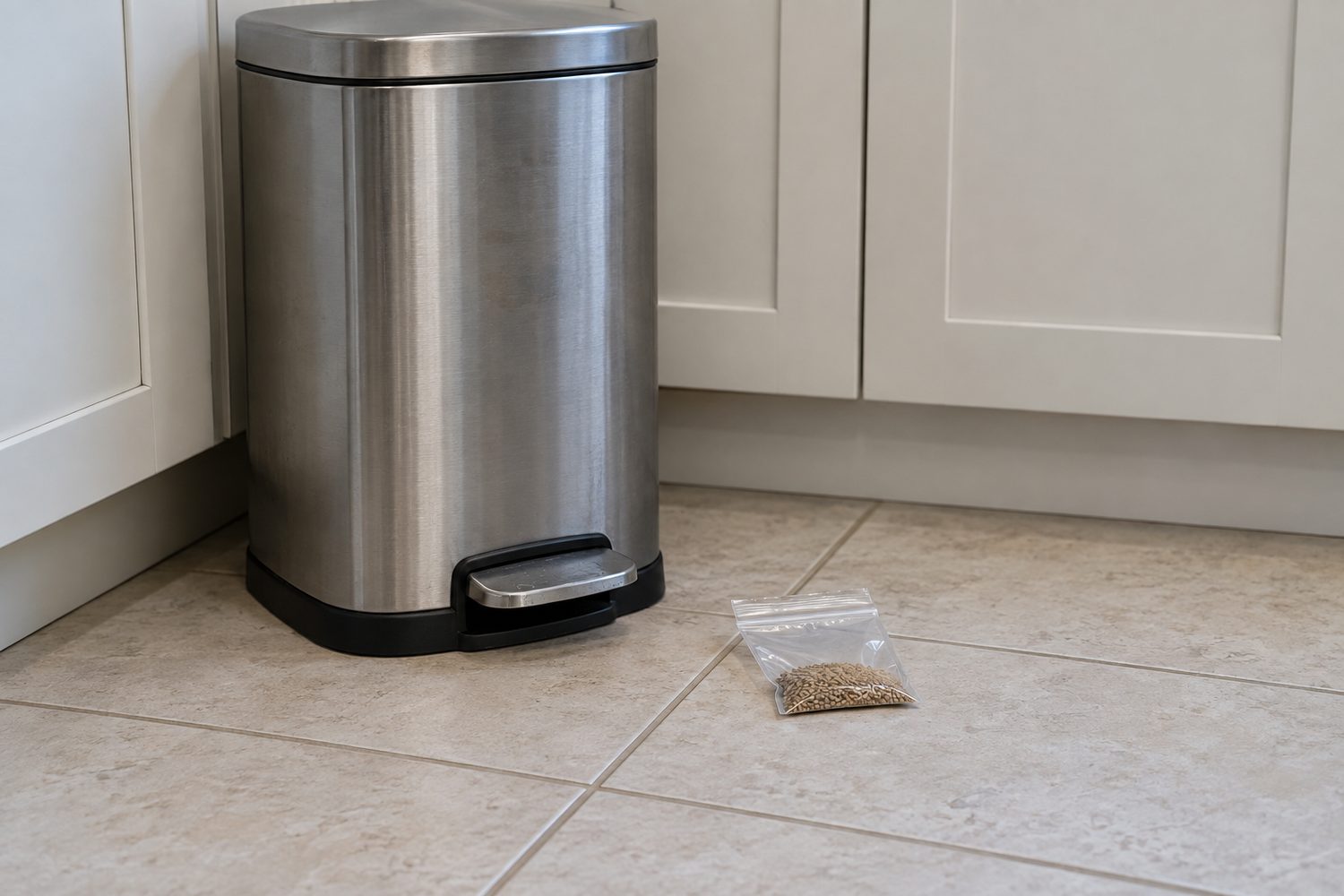
- Put the seed in a sealed bag and put it in the trash.
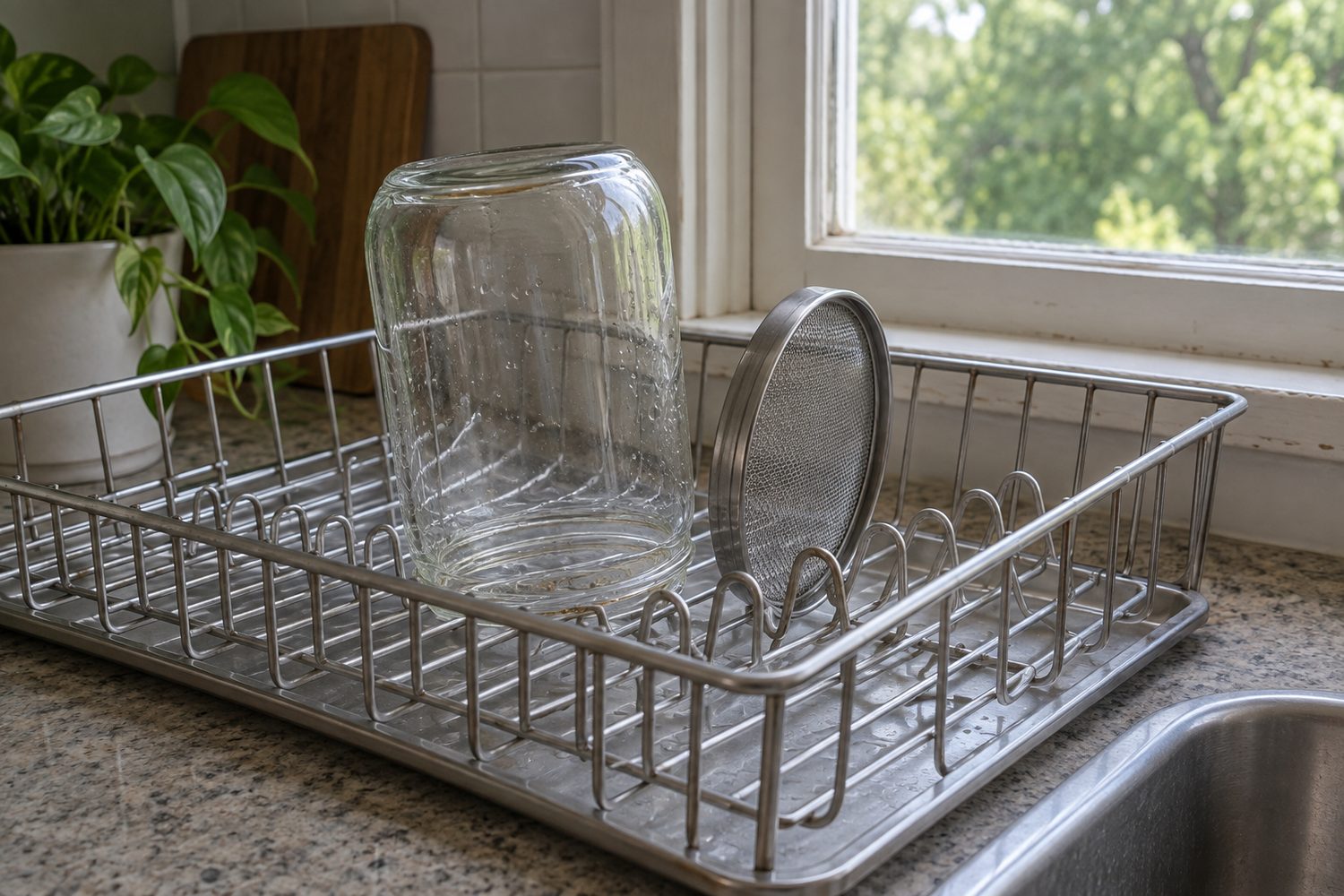
- Carefully clean and sanitize any jars, trays, sprouters and surfaces the seed or sprouts may have touched.
- If you ate the recalled product and feel ill, contact a health care provider.
Note the word "plant." The instruction covers planting the seed in soil or a tray, not only sprouting it in a jar. If you were planning to use a leftover bag for microgreens, the answer is the same: do not.
What FDA says, in its own words
FDA runs its own page for this outbreak, separate from the company's announcement. FDA's outbreak investigation page, updated September 24, 2026, tells consumers:
- Do not use or sell recalled sprouting seeds.
- Do not eat, sell or serve recalled sprouts.
- Check refrigerators and freezers for recalled seeds or sprouts, and throw them away or return them to the place of purchase.
- Carefully clean and sanitize any surfaces or containers the recalled seeds or sprouts touched.
- Consult a health care provider immediately if you ate recalled sprouts and have symptoms that resemble an STEC or Salmonella infection.
The two lists agree on the essentials. The differences are in the details: Berlin tells you to bag the seed for the trash, while FDA allows returning it to where you bought it. Either route gets the seed out of your kitchen. If you sell sprouts, FDA's "do not sell or serve" applies directly to you, and FDA tells sprout growers who received recalled seed to clean and sanitize the surfaces and containers it touched.
No agency source describes any way to disinfect recalled seed so it can be used. FDA's sprout seed guidance says contaminated seed was the likely cause of most U.S. sprout outbreaks it reviewed from 2012 to 2020, which is why the instruction is to discard the lot, not treat it.
Cleaning jars, trays and sprouters
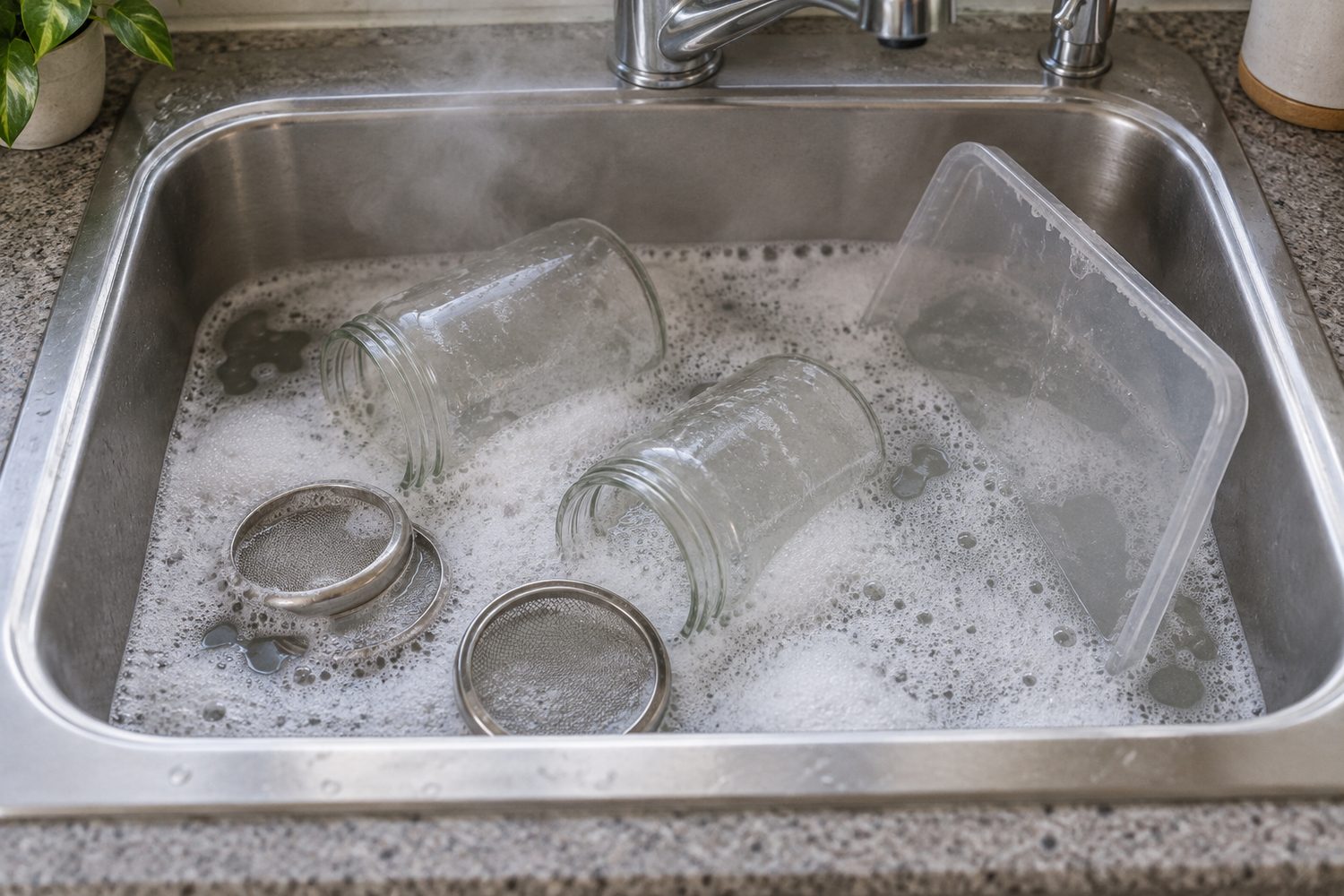
Wash everything the seed or sprouts touched: jars, lids, screens, trays, sprouting machines, colanders, counters and the shelf where the bag sat. CDC's outbreak alert says to wash items and surfaces that may have touched affected sprouts with hot, soapy water or in a dishwasher. Berlin and FDA both add "sanitize" after "clean."
No agency gives a household sanitizer strength for this recall. Berlin's notice, FDA's outbreak page and CDC's pages all say to clean and sanitize without naming a concentration or a contact time.
The only printed figure comes from a seed company. Todd's Seeds tells its own customers to wash jars, lids, trays, screens and equipment in hot soapy water, then sanitize with 1 tablespoon of unscented household bleach per gallon of water (a chlorine test strip shows what strength you mixed), wipe down counters and any surface the seed touched, and wash their hands. That is Todd's instruction to its customers, not a health agency standard, and it gives no contact time. If you use it, follow the directions on your own bleach label for sanitizing food-contact surfaces, and use unscented bleach as Todd's specifies.
The outbreak behind the recall
The figures below are as the agencies dated them.
Hover or tap a row to highlight it.
| Agency and update | Ill | States | Hospitalized | Deaths |
|---|---|---|---|---|
| CDC investigation, page updated September 1, 2026 | 55 | 15 | 4 | 0 |
| FDA outbreak page, updated September 24, 2026 | 55 | 15 | 4 | 0 |
CDC reports that of the 55 people, 46 were infected with E. coli, seven with Salmonella and two with both. Hospitalization information was available for 48 of them. Illnesses began between May 31 and August 8, 2026. CDC says the true number of sick people is likely much higher than reported, because many people recover without seeing a doctor and are never tested. The outbreak strains are E. coli O26:H11, O103:H25 and O168:H8, and Salmonella Agona. FDA lists the states with cases as Florida, Indiana, Iowa, Kansas, Michigan, Minnesota, New Hampshire, New York, North Carolina, North Dakota, Pennsylvania, South Carolina, South Dakota, Washington and Wisconsin.
CDC traced the illnesses to alfalfa sprouts distributed by Everything Sprouts, LLC, of Minneapolis. Everything Sprouts recalled its alfalfa sprouts on August 22, 2026, sold under the Calco and Everything Sprouts brands in Minnesota and Wisconsin, and on August 28 widened the recall to its Robust Radish Mix for possible cross-contamination from the alfalfa sprouts. FDA says the best-by dates on the recalled Everything Sprouts products have passed.
The seed's part in this is narrower than it might sound, so read it closely. FDA says the recalled seed lot is "the same seed lot used to grow alfalfa sprouts recalled by Everything Sprouts, LLC." That is the link FDA states, and it is about the lot. Berlin reports one illness reported directly to the company as of September 23, 2026. Berlin's announcement also says its supplier told it that traceback identified the seed as used by a sprout grower whose sprouts were part of FDA's investigation, and that a spent irrigation water sample from one alfalfa seed lot tested positive for E. coli. CDC says 26 of the 34 people it interviewed reported eating alfalfa sprouts. The 55 are people counted in the outbreak, not people who grew Berlin's retail seed at home, and FDA says its investigation is ongoing.
Symptoms, and when to call a doctor
If you or anyone in your home ate sprouts grown from this seed, these are the timelines and signs CDC gives.
STEC (E. coli): symptoms usually start 3 to 4 days after swallowing the bacteria, with severe stomach cramps, diarrhea that is often bloody, and vomiting. Most people recover without treatment in 5 to 7 days, according to CDC's E. coli symptoms page. FDA's outbreak page gives a wider window, from a few days up to nine days after eating contaminated food.
Salmonella: symptoms usually start 6 hours to 6 days after swallowing the bacteria, with diarrhea, fever and stomach cramps. Most people recover without treatment in 4 to 7 days, per CDC's Salmonella symptoms page.
CDC's outbreak notice, updated September 1, 2026, says to call a health care provider right away for:
- Diarrhea and a fever higher than 102°F
- Diarrhea for more than 2 days that is not improving
- Bloody diarrhea
- Vomiting so much that you cannot keep liquids down
- Signs of dehydration, such as not peeing much, a dry mouth and throat, or feeling dizzy when standing up
HUS warning signs
Some STEC infections lead to hemolytic uremic syndrome (HUS), a serious kidney complication. CDC calls HUS a medical emergency and lists these signs:
- Little or no peeing
- Losing pink color in the cheeks and inside the lower eyelids
- Unexplained bruising or a rash of tiny red spots
- Blood in pee
- Feeling very tired or being irritable
- Decreased awareness
If any of these appear after someone ate the sprouts, get medical care now and tell the provider about the recall.
Who is at higher risk
CDC says children younger than 5, adults 65 and older, and people with weakened immune systems are more likely to have severe Salmonella illness or need a hospital. Separately from this recall, FDA's produce safety advice says children, older adults, pregnant women and people with weakened immune systems should avoid raw or lightly cooked sprouts of any kind, including alfalfa.
Sprouts, microgreens and this recall
Sprouts and microgreens are grown and eaten differently. A 2020 review in Agronomy describes microgreens as grown on a substrate and eaten, after cutting, without the root system, while sprouts are eaten raw together with their roots. Sprouts spend their early growth in warm, wet conditions, often with the seed fully soaked, and the finished product includes the seed and root. For more on the difference, see microgreens vs sprouts.
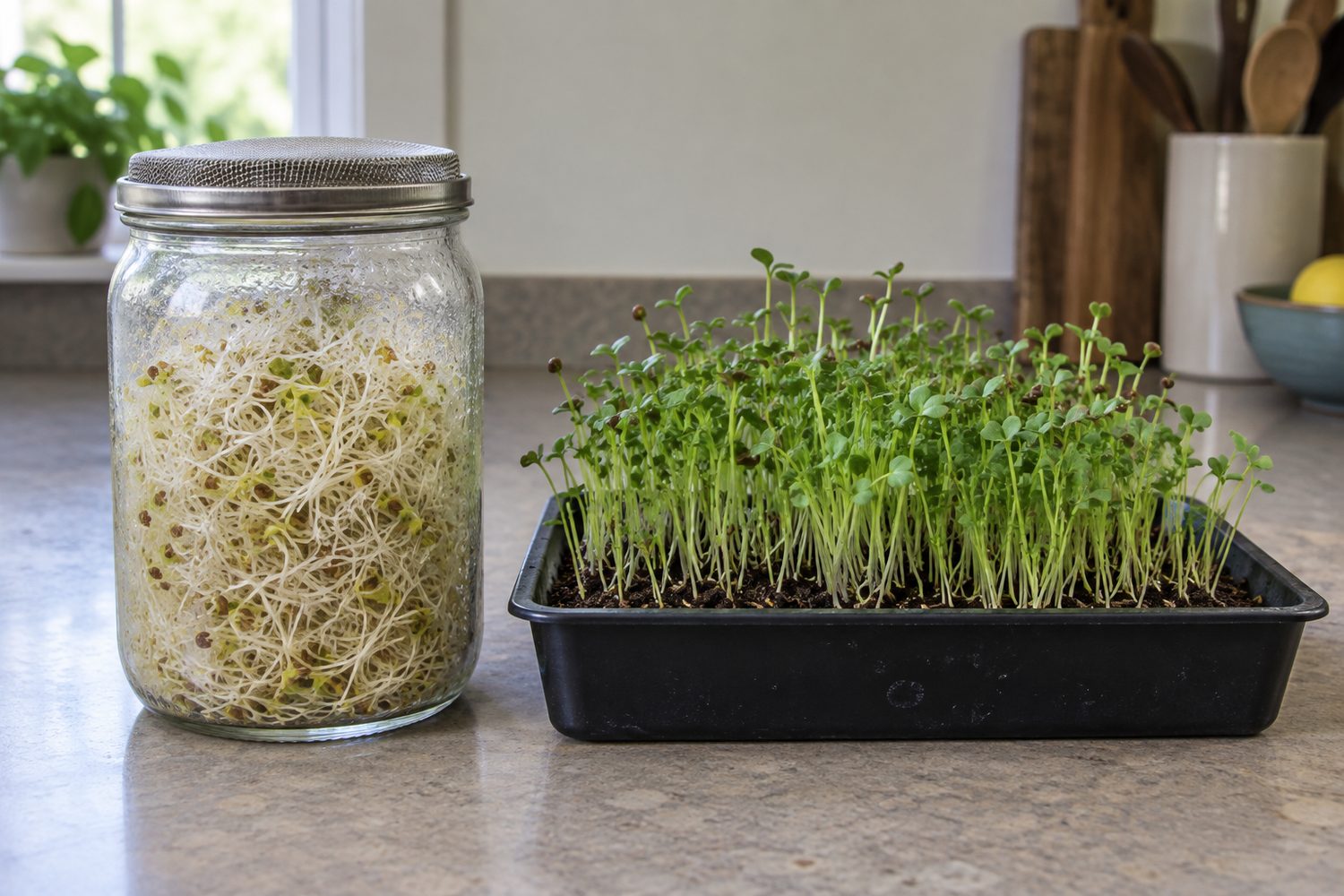
That difference does not take a recalled seed lot out of the recall. The recall applies to the seed, whether it goes into a jar or onto a tray, and Berlin's instruction is not to sprout or plant it. No study has measured whether growing this lot as microgreens changes the risk, so treat microgreens grown from recalled seed the same way you treat sprouts: throw them out and clean the tray and anything the crop touched.
Questions growers ask
My 1 lb bag of Berlin alfalfa has no lot code. Is it recalled?
The 1/4 lb, 1/2 lb and 1 lb Berlin packages never carried a lot code. If you bought one from Berlin Seeds' store or website between February 13 and August 23, 2026, it is within the recall as Berlin describes it. If you are unsure of the date, check your order history or call Berlin at 877-464-0892.
Can I cook the sprouts or rinse the seed to make it safe?
None of the instructions offer that route. Berlin says not to sprout, plant or eat sprouts from the seed, and FDA says not to use recalled sprouting seeds at all. Discard the seed and anything grown from it.
I grew sprouts from it weeks ago and nobody got sick. Do I need to do anything?
Yes: throw out any remaining seed and any sprouts still in the fridge, and clean and sanitize the jars and trays before you use them again. Watch for the symptoms above in anyone who ate the sprouts, keeping in mind that FDA gives up to nine days for STEC symptoms to appear.
Are other Berlin Seeds sprouting seeds affected?
Berlin's announcement says no other Berlin Seeds sprouting seeds are affected. The recall covers the alfalfa sprouting seed sold in the February 13 to August 23, 2026 window.
How do I know a recall notice I was sent is real?
Look for it on FDA's recall list or the company's own site before acting on a link in an email or text. How to check whether a recall is real walks through that step by step.
Once the seed is gone
After the seed is bagged and binned and the equipment is clean, you can start fresh with seed from an unaffected lot. If recalls like this have you thinking about where your food comes from, produce recalls and growing your own looks at what home growing does and does not change, and how to grow sprouts at home covers the routine for your next batch, from rinsing to storage.
Sources
Prices, stock and specifications are as the linked pages showed them on 2026-09-26.
- the company's announcement posted by FDA on September 23, 2026
- its own company recall notice
- FDA's outbreak investigation page, updated September 24, 2026
- CDC's outbreak alert
- CDC investigation
- recalled its alfalfa sprouts on August 22, 2026
- widened the recall to its Robust Radish Mix
- CDC's E. coli symptoms page
- CDC's Salmonella symptoms page
- CDC's outbreak notice
- FDA's produce safety advice
- 2020 review in Agronomy
Keep reading
The journal
Is Homegrown Safer? What the Produce Recalls Actually Change
Partly, and not for the reason people think. Growing your own does not remove contamination risk, it moves it onto seed, substrate and water, which are three things you can act on. And one tray is one to two days of one adult's vegetables, not a replacement.
Read Is Homegrown Safer? What the Produce Recalls Actually ChangeThe journal
Is That Recall Real? How to Check Before You Throw Food Out
A recall post going around may be years old, and two of the salad recalls that spread in 2026 are really from 2021 and 2023. Here is the two minute check, on the agency record, before anything goes in the bin.
Read Is That Recall Real? How to Check Before You Throw Food OutThe journal
Are Microgreens Safe From Cyclospora?
Are microgreens safe from cyclospora? Learn how the parasite spreads, what washing and cooking do and do not do, and the steps that matter at home.
Read Are Microgreens Safe From Cyclospora?The journal
Microgreens and Allergies: Four Crops Are Regulated Allergens
Sesame, mustard, buckwheat and celery are all grown as microgreens and all carry allergen labeling law somewhere. And not one published case report names a cut microgreen as the food eaten.
Read Microgreens and Allergies: Four Crops Are Regulated Allergens