Buying a Microgreens Business for Sale: What to Check First
Cal HewittPublished Checked
- business planning
- economics
- selling microgreens
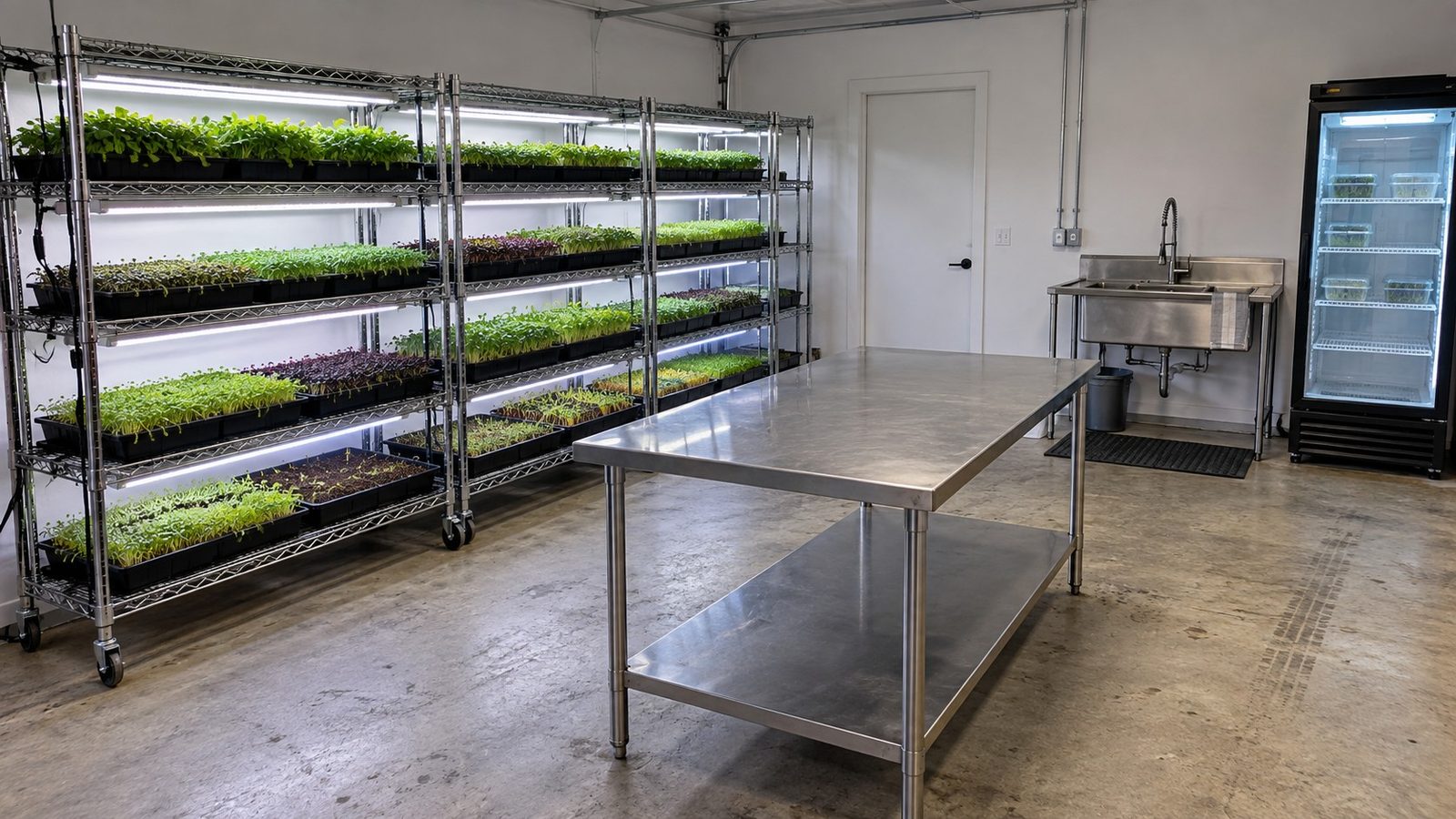
Treat every number in a microgreens business listing as the seller's claim until documents back it up. Before you pay a deposit, divide the asking price by the stated revenue or cash flow so you know what ratio you are actually being quoted, and ask whether that cash flow still has the owner's own wage inside it.
Then ask for three to five years of financial statements and tax returns, reconcile them to bank deposits, work out how much of the sales sit with the top five accounts, and get written confirmation of which lease, market stall, permits and customers really move to you.
If you plan to borrow through an SBA 7(a) loan, budget at least 10 percent of total project costs as your own equity.
Start with what the listing says, and when it said it
A listing is an advertisement. BizBuySell says on its own pages that it has not independently verified the information sellers post, so the useful habit is to write each figure down with the marketplace and the date beside it. Five microgreens listings were accessible on 12 September 2026, and they make good practice material because they disclose different things.
Hover or tap a row to highlight it.
| Listing and marketplace | Asking price | What the seller states | Date |
|---|---|---|---|
| Gypsum, Colorado, BizBuySell | $150,000 | $360,000 annual revenue; $120,000 FF&E included; $75,000 inventory not included | Not published; accessed 12 Sep 2026 |
| North Carolina, BizBuySell | $150,000 | No historic revenue or SDE; a projection of $600,000 to $750,000 yearly earnings | Not published; accessed 12 Sep 2026 |
| North Carolina, DealStream | $150,000 | $275,000 to $450,000 sales; $110,000 cash flow; no seller financing | Listed 10 Mar 2025, renewed 19 Aug 2026 |
| Oliver, British Columbia, BusinessesForSale | On request | CAD $100,000 to $250,000 revenue; under CAD $50,000 cash flow | Not published; accessed 12 Sep 2026 |
| London, UK, BusinessesForSale | £29,999 | £18,000 turnover; about £1,000 monthly net profit | Not published; accessed 12 Sep 2026 |
Two things in that table change how you use it. The North Carolina BizBuySell figure is a projection of future earnings, not a record of past ones, so leave it out of any arithmetic. And the two North Carolina listings share the same $150,000 ask and similar wording about a local brand and loyal customers, while neither page names a legal entity, so treat them as possibly one opportunity until a seller tells you otherwise. The North Carolina and Colorado state guides cover the selling rules you would operate under after the purchase.
Turn the asking price into a ratio you can read
Divide the asking price by whatever measure the seller gave, then name the result: price divided by revenue is a price-to-revenue ratio, and price divided by stated cash flow is a price-to-cash-flow ratio. Neither one is a sale price, and neither is an audited earnings multiple, because the number underneath is the seller's own until you verify it.
Hover or tap a row to highlight it.
| Listing | Arithmetic | Result |
|---|---|---|
| Colorado, BizBuySell | $150,000 ÷ $360,000 stated revenue | 0.42x price to revenue |
| North Carolina, DealStream | $150,000 ÷ $110,000 stated cash flow | 1.36x price to stated cash flow |
| North Carolina, DealStream | $150,000 ÷ $275,000 to $450,000 stated sales | 0.33x to 0.55x price to revenue |
| London, BusinessesForSale | £29,999 ÷ £18,000 turnover | 1.67x price to revenue |
| London, BusinessesForSale | £29,999 ÷ £12,000 (stated £1,000 a month, annualized) | 2.50x price to stated net profit |
The DealStream sales range alone moves the ratio from 0.33x to 0.55x, which gives you the first question for that seller: which figure, for which year. Oliver withholds its price and the North Carolina BizBuySell listing withholds historic earnings, so ask each for the missing figure in writing and work from what they send. A low ratio is not a bargain yet; it is a low price against a number you have not yet confirmed.
What seller's discretionary earnings includes, and what it leaves for you
Most small-business listings quote cash flow as seller's discretionary earnings, or SDE. BizBuySell's SDE explainer describes it this way: start from net profit, then add back items such as owner compensation, travel, health insurance, certain one-time expenses, interest, depreciation and amortization. It is the preferred cash-flow measure for owner-operated businesses, because it shows the total financial benefit available to one working owner.
Owner compensation is one of the add-backs, so SDE is the money available before anybody is paid to do the seeding, harvesting, packing and delivery. If you plan to hire someone for that work, take a market wage out of the SDE before you decide how much debt the business can carry. The same explainer says disputable add-backs need support in tax returns and income statements, so ask for a written schedule of every add-back and the document behind each one.
One former grower's Reddit AMA describes 8 to 14 hour days, six days a week, plus watering on Sundays. That is one anonymous account, not a typical figure, but it shows how much labor a cash-flow number can carry. How much of a microgreens business's value depends on its owner differs from deal to deal, so measure it for yours: ask for time logs, who does each task, written growing procedures, and which accounts the seller handles personally. The guide to labor and time per tray will help you price those hours.
Why agriculture-industry multiples do not fit a one-owner farm
BizBuySell publishes agriculture valuation benchmarks from reported transactions between 2021 and 2025: a median earnings multiple of 2.72x and a median revenue multiple of 0.66x, with averages of 3.27x and 0.86x. Its 2025 transaction tables show 19 "other agriculture" sales with an average cash-flow multiple of 2.68x and an average revenue multiple of 0.88x.
Those are a reference point, not a formula. BizBuySell's agriculture multiples come from businesses with a 2025 median revenue of 1.4 million dollars, far larger than a typical one-owner microgreens operation, and they cover broad categories. The 2025 greenhouse row has one reported sale, too thin to lean on. So, rather than multiplying a listing's cash flow by 2.72, build the value from the verified cash flow after a replacement wage, the assets you can count, and the customers you can confirm will stay.
What transfers, and what you have to win again
"Turnkey" and "included" need to become a closing schedule. The IRS instructions for Form 8594 sort an asset purchase into classes, including inventory, equipment and fixtures, intangibles such as customer-based intangibles and licenses, and goodwill. The listings show why that separation matters: Colorado says its $120,000 of furniture, fixtures and equipment (FF&E) is inside the $150,000 ask but its $75,000 inventory is not, and Oliver separately states CAD $50,000 in fixtures and CAD $4,000 in stock. Equipment can be counted and inspected. Goodwill is whatever is left of the price after that, and it is only worth paying for if the demand behind it actually continues.
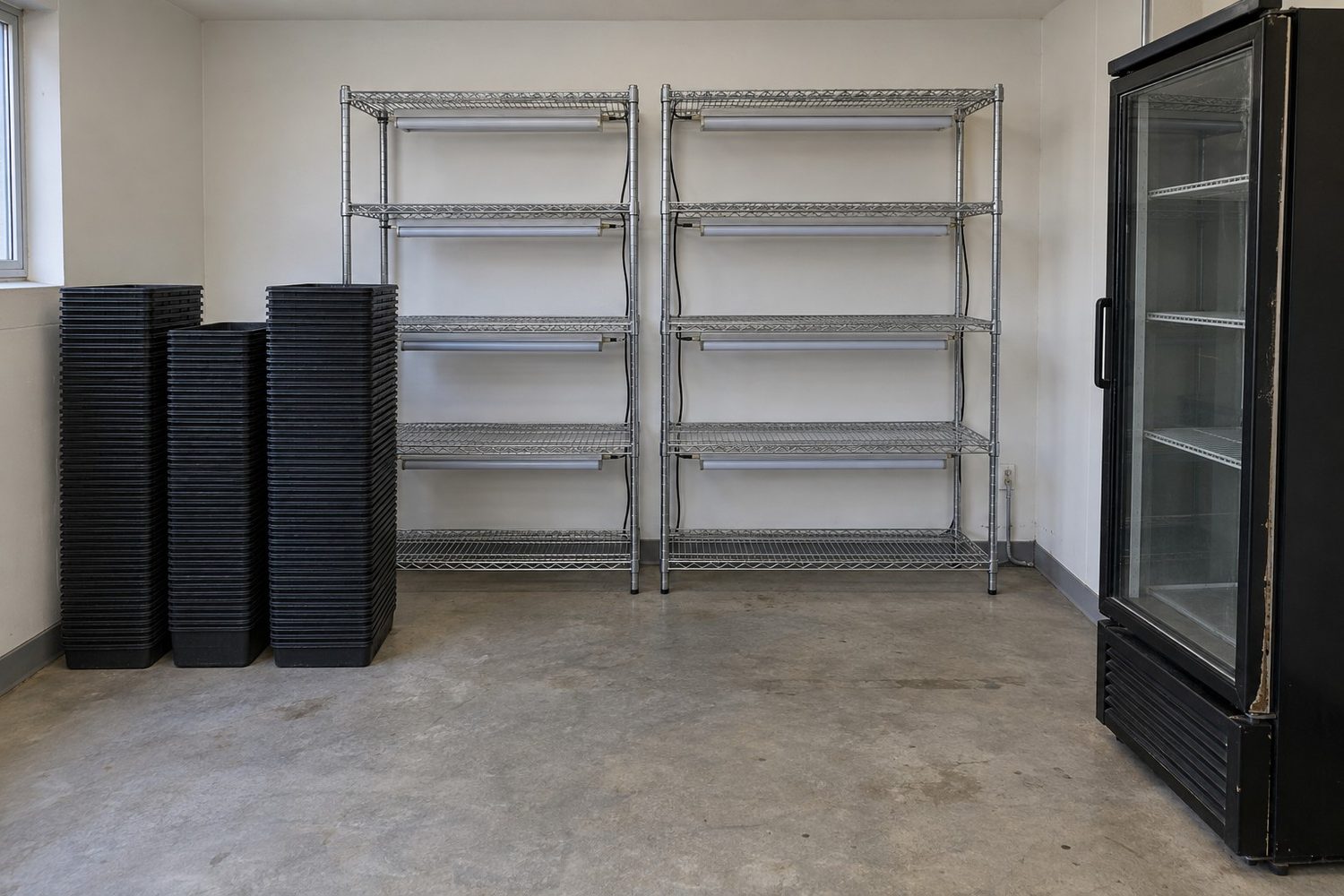
For scale, a new Johnny's commercial LED cart holding 16 trays was advertised at $1,395 on 12 September 2026, and a Bootstrap Farmer 1020 tray at $5.99. That cannot tell you whether a listing's equipment is fairly priced, because no listing publishes rack counts, light models, age or condition. Ask for an itemized asset list with condition, then get current quotes for the same items.
Several things you might assume come with the business usually do not move on their own:
- Permits. Illinois says in its 2026 manufactured-food FAQ that permits do not transfer between owners or locations, and Houston Health says a food-dealer permit becomes void at sale. Those are general food rules in two places, not a ruling on your crop. Identify your product, address, entity and sales channel, and get the regulator's answer in writing before closing.
- Market stalls. The North Carolina Department of Agriculture's Piedmont Triad Farmers Market 2026 guidelines state that selling spaces are not transferable between vendors. Treat a stall as a new application unless that market's manager confirms otherwise in writing.
- Leases. A lease is a contract with a landlord. The Colorado listing gives the buyer an option to assume its lease or relocate. Get the landlord's written consent to assignment and renewal before you value the site.
- Customers. A customer list does not make anybody order. For a restaurant route, ask each account whether its order is under contract, whether it needs to consent to a new owner, what it ordered over the last 12 to 24 months, and whether it will meet you with the seller.
- Name and accounts. Domains, websites, social handles and grow recipes need to be listed in the purchase agreement and signed over, with registrar access to prove it.
The documents to ask for before an offer
The SBA's guidance on buying a business recommends a thorough, objective investigation with an accountant and an attorney, and lists the core documents: contracts and leases, financial statements, tax returns, the sales agreement, and purchase-price adjustment terms. For an established business it calls for three to five years of income statements, balance sheets and cash-flow statements. Its management guidance adds that the sales agreement should list inventory, assets and liabilities and be reviewed by an attorney.

Microgreens are perishable, so ask for the food-safety records too. An agribusiness due-diligence primer from K&L Gates calls for reviewing crop health, supply contracts, food-safety and transport compliance records, and recall history, and USDA's farm food-safety guidance recommends visiting the farm to watch harvesting and sanitizing and checking insurance. Ask for inspection reports, sanitation and traceability logs, the complaint and recall log, and certificates of insurance with claims history.
Checking the sales against the money
A profit-and-loss statement is something the seller prepares. The work is tying it to things the seller does not control. Reconcile the tax returns to the P&Ls, then reconcile both to bank deposits, merchant-processor reports, invoices and sales-tax filings. If the numbers only agree in the documents the seller wrote, you have not checked anything yet.
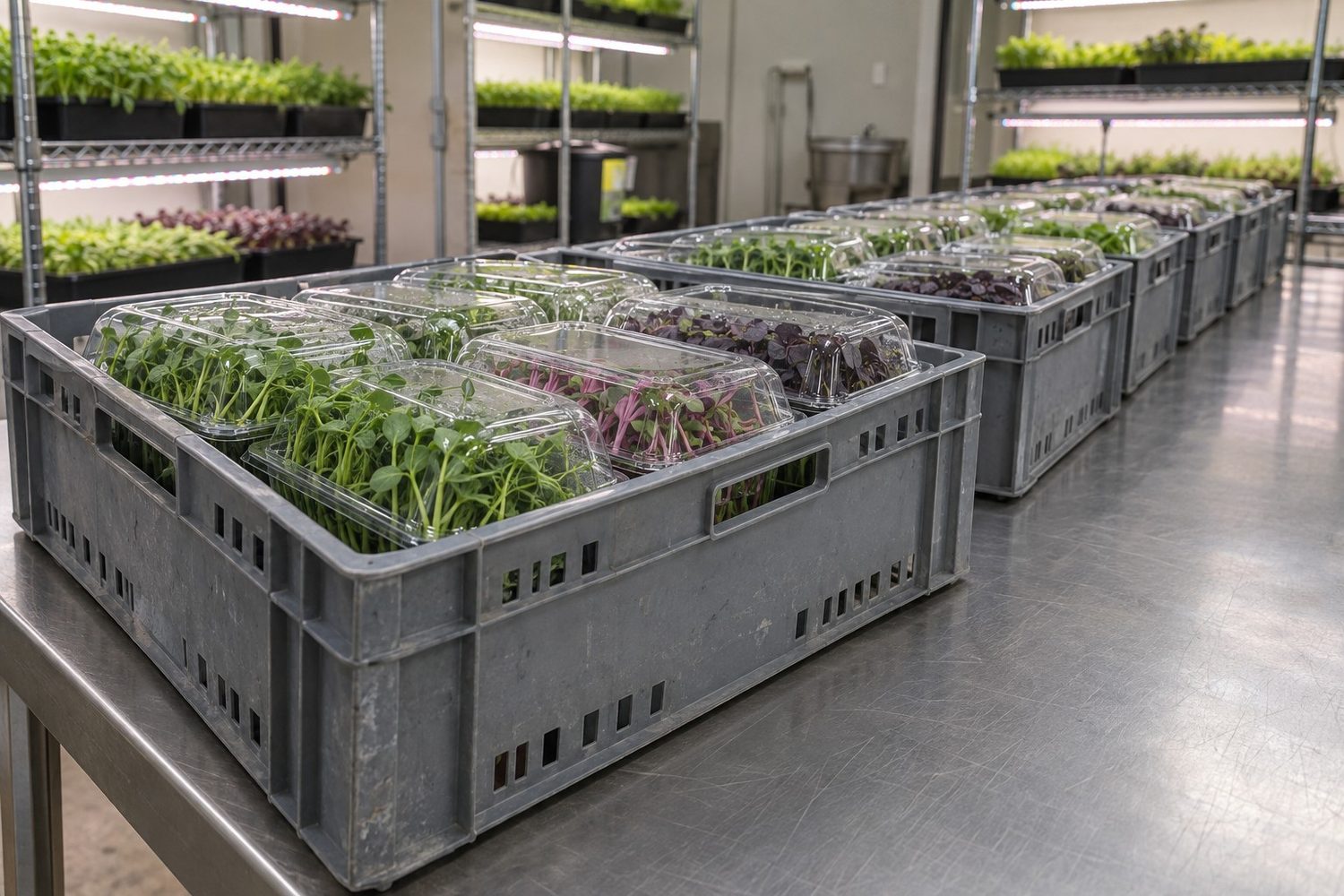
Then ask for weekly sales by customer, route and market for at least the last year. Add up what the top five accounts bought and divide by total sales. A wholesale or restaurant-route microgreens business can look healthy on paper while one or two buyers carry most of it, and a missed delivery or a chef who leaves can take that share with it. There is no SBA threshold for customer concentration; it is your own check, and the share you find should shape both the price and how much of it you are willing to pay up front.
For a business with a market stall, cash is the hard part. Match each market-day close sheet and receipts to bank deposits, card-processor and POS reports, seed and supply usage, and market fee records. Cash that never reached a bank cannot be proven from a listing, so value the business on the sales you can trace. Compare the traced figures against this site's guides on profit and margins and the most profitable microgreens to see whether the crop mix supports the margins claimed.
Financing a purchase with an SBA 7(a) loan
SBA 7(a) loans can be used for a change of ownership. The rules that matter most sit in SBA SOP 50 10 8, in force since June 1, 2025.
For a complete change of ownership, you need an equity injection of at least 10 percent of total project costs, whatever the size of the loan. A seller note can count toward that 10 percent only if it takes no payments for the life of the SBA loan, and even then it can cover no more than half of the required equity. The DealStream North Carolina listing states it offers no seller financing, so on that one the whole injection would have to come from you.
The SOP also limits the seller's role after closing. Under an SBA-financed purchase, the seller cannot stay on as an employee; they can stay only as a paid consultant for up to 12 months. That period becomes 24 months once SOP 50 10 8.1 takes effect October 1, 2026, and that update keeps the 10 percent minimum. Compare that with what the listings offer: 1 to 2 weeks of training in the North Carolina BizBuySell ad, 3 to 4 weeks in Oliver, and a negotiable amount in Colorado. Write the handover into the agreement with its length, hours, pay, and the order in which the seller introduces you to each account.
Lenders on 7(a) loans, apart from SBA Express and Export Express, must obtain IRS tax return transcripts and reconcile the financial data to them. If you borrow, the lender will do a version of the reconciliation above anyway. Eligibility, collateral and underwriting are decided by the lender for your specific deal.
Frequently asked questions
These tend to come up once the documents start arriving.
How long do agriculture businesses take to sell?
BizBuySell's 2021 to 2025 agriculture benchmark reports 206 median days on market, and its 2025 "other agriculture" row reports 238 median days from 19 reported sales. Those figures describe businesses that sold on that platform, not the chance that any given microgreens listing sells. No microgreens-specific selling time is published.
Is a projected earnings figure the same as cash flow?
No. A projection describes what a seller expects a business could earn, while cash flow or SDE describes what it earned in past years. Only historic figures you can reconcile to tax returns and bank deposits belong in your valuation.
How do I protect myself if customers leave after the sale?
One approach from other industries is tying part of the price to retention. A Journal of Accountancy article notes that most accounting-firm mergers link at least part of the payment to the share of clients who stay through a set period. Discuss with your attorney whether a similar term fits your deal, and remember that an SBA-financed purchase has its own rules on seller notes.
Before you make an offer
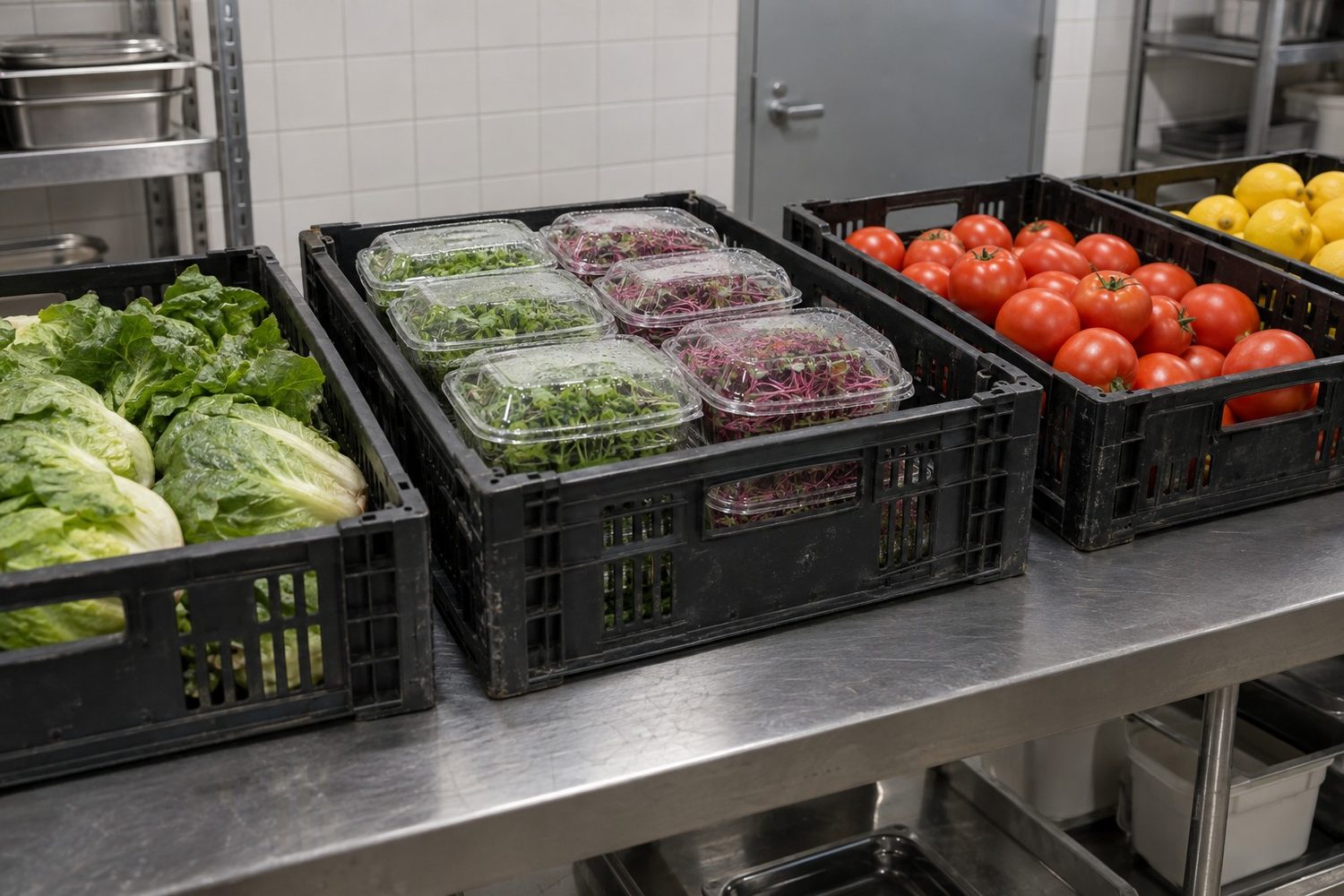
Write each listing figure down with its marketplace and date, and turn the asking price into a ratio you can name. Take a wage out of any SDE for work you will not do yourself. Tie the statements and tax returns to deposits and sales-tax filings, find out what the top five accounts carry, and get written answers from the landlord, the market and the regulator on what transfers. If the verified business is smaller than the listing suggested, price the pieces you actually need against the cost of starting a microgreens business from scratch, and make your offer on whichever holds up.
Sources
Prices, stock and specifications are as the linked pages showed them on 2026-09-12.
- Gypsum, Colorado, BizBuySell
- North Carolina, BizBuySell
- North Carolina, DealStream
- Oliver, British Columbia, BusinessesForSale
- London, UK, BusinessesForSale
- SDE explainer
- Reddit AMA
- agriculture valuation benchmarks
- 2025 transaction tables
- instructions for Form 8594
- Johnny's commercial LED cart
- Bootstrap Farmer 1020 tray
- 2026 manufactured-food FAQ
- Houston Health
- Piedmont Triad Farmers Market 2026 guidelines
- guidance on buying a business
- management guidance
- agribusiness due-diligence primer from K&L Gates
- farm food-safety guidance
- SBA SOP 50 10 8
- Journal of Accountancy article
Keep reading
The journal
Growing Microgreens for Profit: A Weekly Production Plan
Plan growing microgreens for profit with tray counts per crop, a buffer from your own records, and a weekly sowing and harvest schedule you can repeat.
Read Growing Microgreens for Profit: A Weekly Production PlanThe journal
How to Write a Microgreens Business Plan Step by Step
Build your microgreens business plan section by section, from executive summary to financial plan, with startup costs itemized by scale and source.
Read How to Write a Microgreens Business Plan Step by StepThe journal
Microgreen Growers Insurance: Costs, Limits and Markets
Selling microgreens at a market or restaurant? See what microgreen growers insurance covers, who requires it, and what policies cost by limit, state and year.
Read Microgreen Growers Insurance: Costs, Limits and MarketsThe journal
Microgreens Business Startup Costs Before Your First Sale
Microgreens business startup costs, from extension enterprise budgets to insurance rates and per-tray supplies, broken down by starter and commercial scale.
Read Microgreens Business Startup Costs Before Your First Sale