How to Write a Microgreens Business Plan Step by Step
Cal HewittPublished Checked
- business planning
- selling microgreens
- economics
A microgreens business plan has six sections, written in this order: an executive summary, a business description, an operations section, a marketing plan, a management and organization section, and a financial plan. That is the structure Penn State Extension recommends for a microgreens operation
(updated September 27, 2025). It asks for projections covering at least three years, a monthly cash flow, and startup costs kept apart from projected income. Draft each section in turn, attach a startup cost list sized to the trays you plan to grow, and give your cash reserve its own line.
Decide how much plan you need
The SBA describes two kinds of plan. A lean plan is typically one page covering your partners, activities, resources, customers, channels, costs and revenue, and the SBA says it can take as little as one hour. A traditional plan is the longer document lenders and investors normally ask for.
Write the lean version first and use it to test whether your intended customers will buy. Then write the full plan before you take on a loan, sign a lease or buy major equipment. Penn State points growers to AgPlan, a free University of Minnesota web tool with section-by-section prompts and financial spreadsheets, and the SBA offers free traditional and lean sample plans.
Section 1: Executive summary
Penn State says the executive summary covers your mission, your products, your target market and your key projections. Keep it to what a lender, partner or grant reviewer needs to decide whether to read on. Because it repeats numbers from the financial plan, write a rough version now and fill in the figures once Section 6 is done.
Section 2: Business description
Penn State's general farm business plan guide (updated September 22, 2023) places a mission statement, goals and objectives, and background information in the body of a plan. Cover who owns the operation, its legal form, where it runs, and what you want it to look like in three years. Any LLC filing fee goes in your startup cost list.
Section 3: Operations
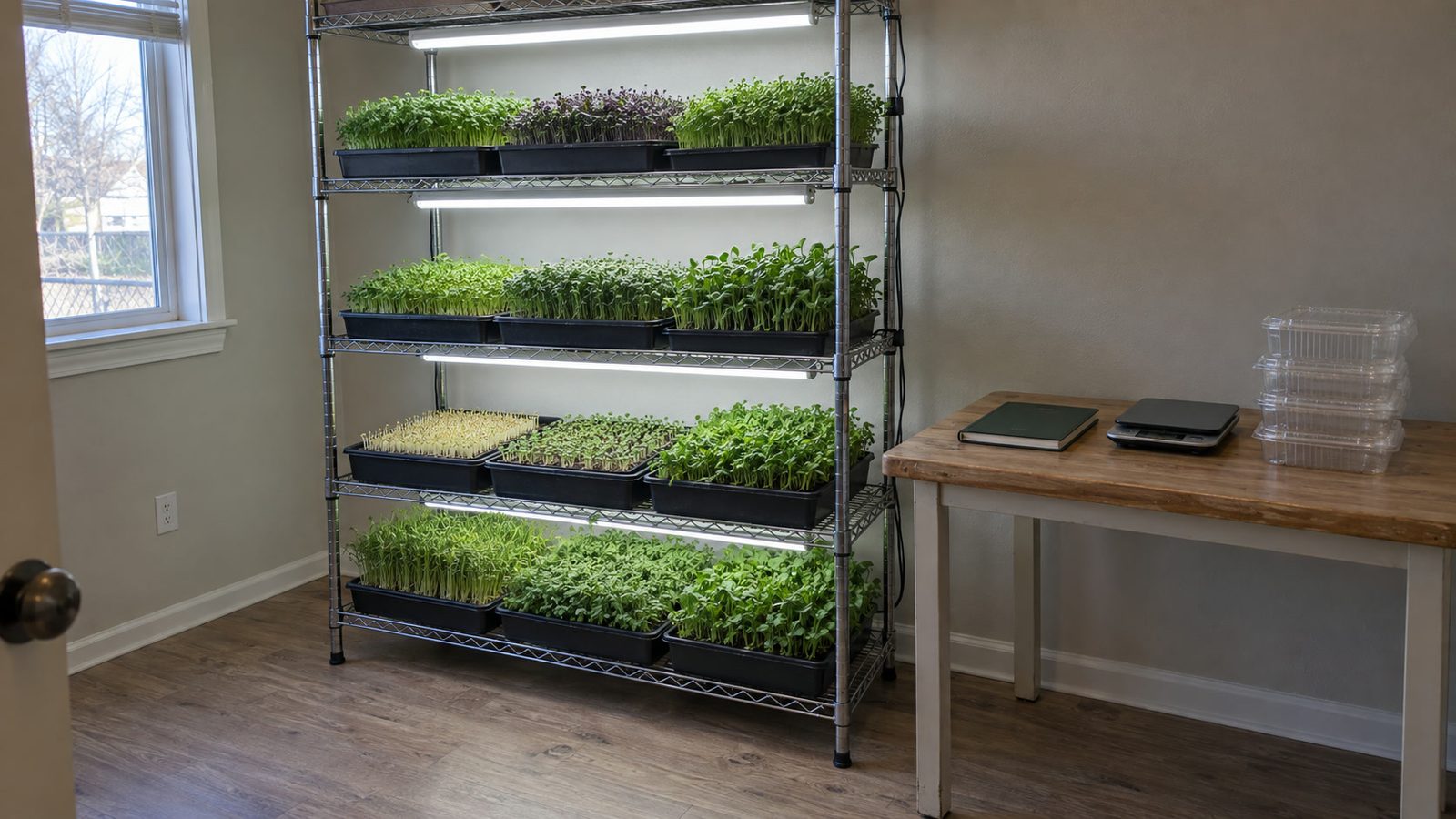
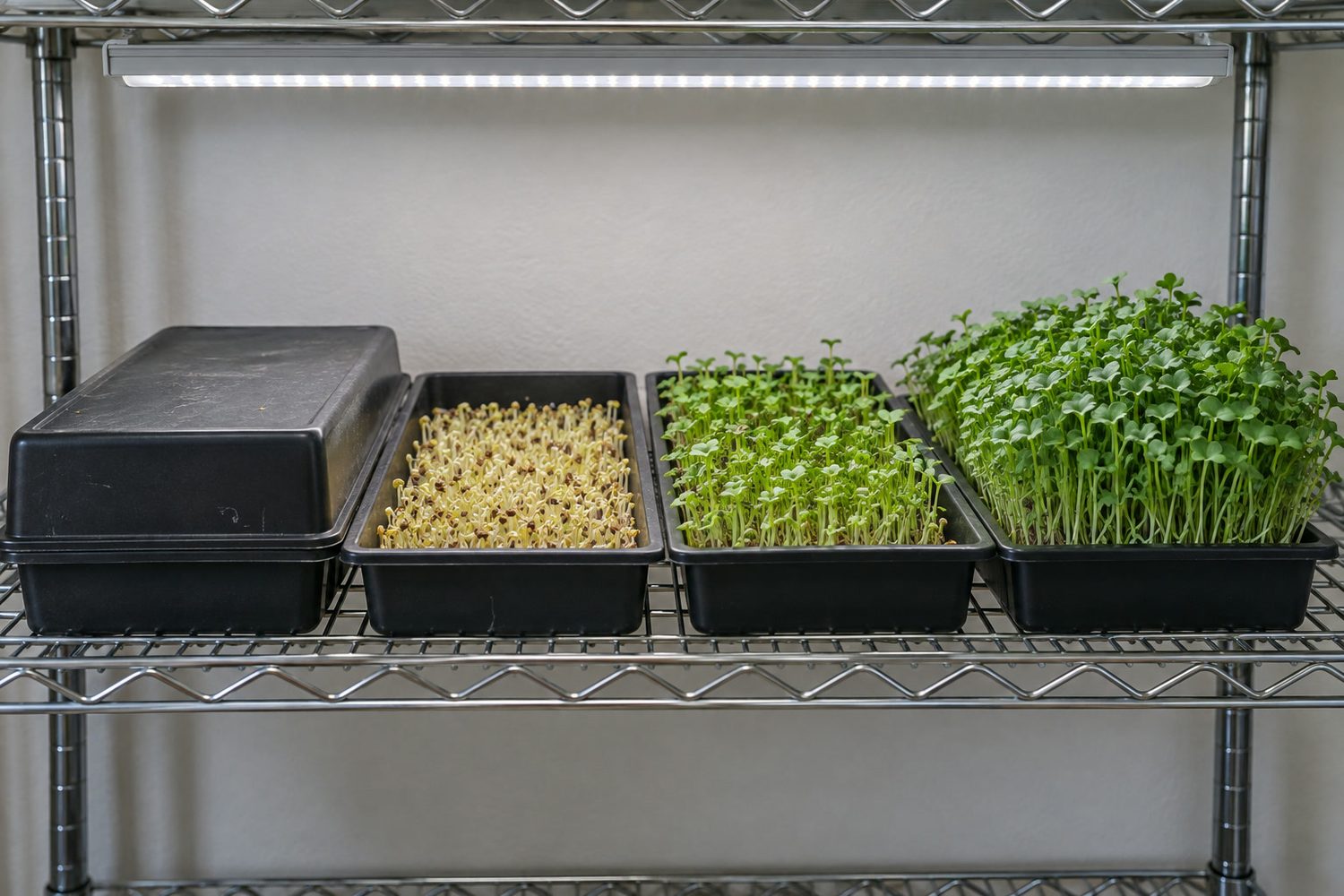
Operations describes how trays turn into sold product. Penn State says it should specify your products, growing system, customer service, inventory, compliance, risk, quality control and timeline. Name the crops and package sizes you will sell, describe your racks, lights and medium, and lay out the weekly schedule from seeding to delivery.
Penn State's microgreens plan also covers food safety, licenses and permits, insurance, risk management and a harvest and packing space you can sanitize. The rules for selling are covered in starting a microgreens business, and coverage in microgreens business insurance. Write down which office decides each authorization in your area and what it told you.
Section 4: Marketing plan
Penn State's market research guidance (updated January 13, 2026) names three things to research: your target market, your competition and the industry. The target market has to be identified, evaluated and selected before you develop a strategy, so start with who will buy.
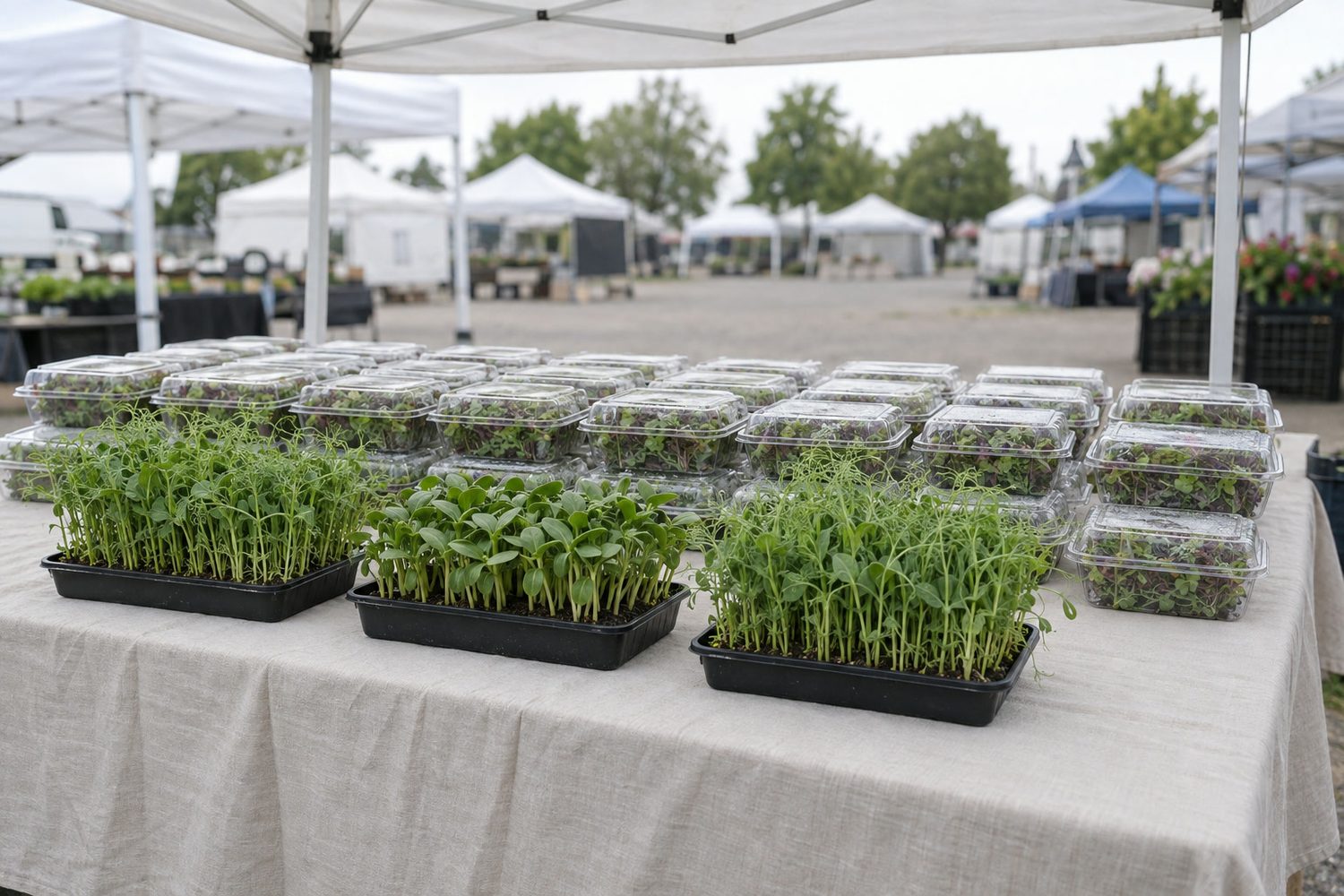
Build year-one sales from named channels. For each product and package, list the buyers, the units each takes per delivery period, the price, the start date and when you expect payment. Each price and volume should trace back to a conversation with a buyer, a check of competitor prices, or a signed or recurring order. Pre-orders, chef samples and letters of intent all count, so attach whatever you can get in writing. For setting prices, see pricing and what to charge.
Section 5: Management and organization
Even as the only person in the business, Penn State asks you to describe your experience and skills and how you will cover gaps such as bookkeeping or marketing.
Show your own labor hours here too. A lender needs to know whether the projections pay you a wage or draw, or assume your time is unpaid, because the same cash flow means something different in each case. Pick one, label it, and use your measured time from labor and time per tray. If you are keeping another job while you grow, the questions in running microgreens alongside other work belong here as well.
Section 6: Financial plan
Penn State's microgreens guidance keeps startup costs (shelving, lights, trays, a first stock of seed and soil, registration fees and changes to the space) separate from projected income, a monthly cash flow and a balance sheet, over at least three years. Its general guide recommends projections of at least two and ideally five years, with several production and price scenarios, and separate statements for the business and your household.
The cash flow statement predicts cash in and out over one year, month by month, so you can see when you will run short and when you can repay debt. If you are seeking financing, keep that monthly first-year schedule alongside three years of annual statements.
A break-even calculation needs your price per unit, variable costs, fixed costs and a stated volume, so build it from your own packages and customers. The per-tray math is worked through in profit and margins.
Put a cash reserve on its own line. Penn State's microgreens article gives cash for at least two months of operating expenses as an illustrative target. Size yours from the lowest month in your cash flow, and keep it out of the equipment total.
Startup costs by scale
These prices were observed on seller pages on September 12, 2026, before freight, tax, installation and permitting. Each is one listing for one item, so quantities come from your own production plan. Everything in these tables is a one-time cost.
A few shelves in a spare room
Hover or tap a row to highlight it.
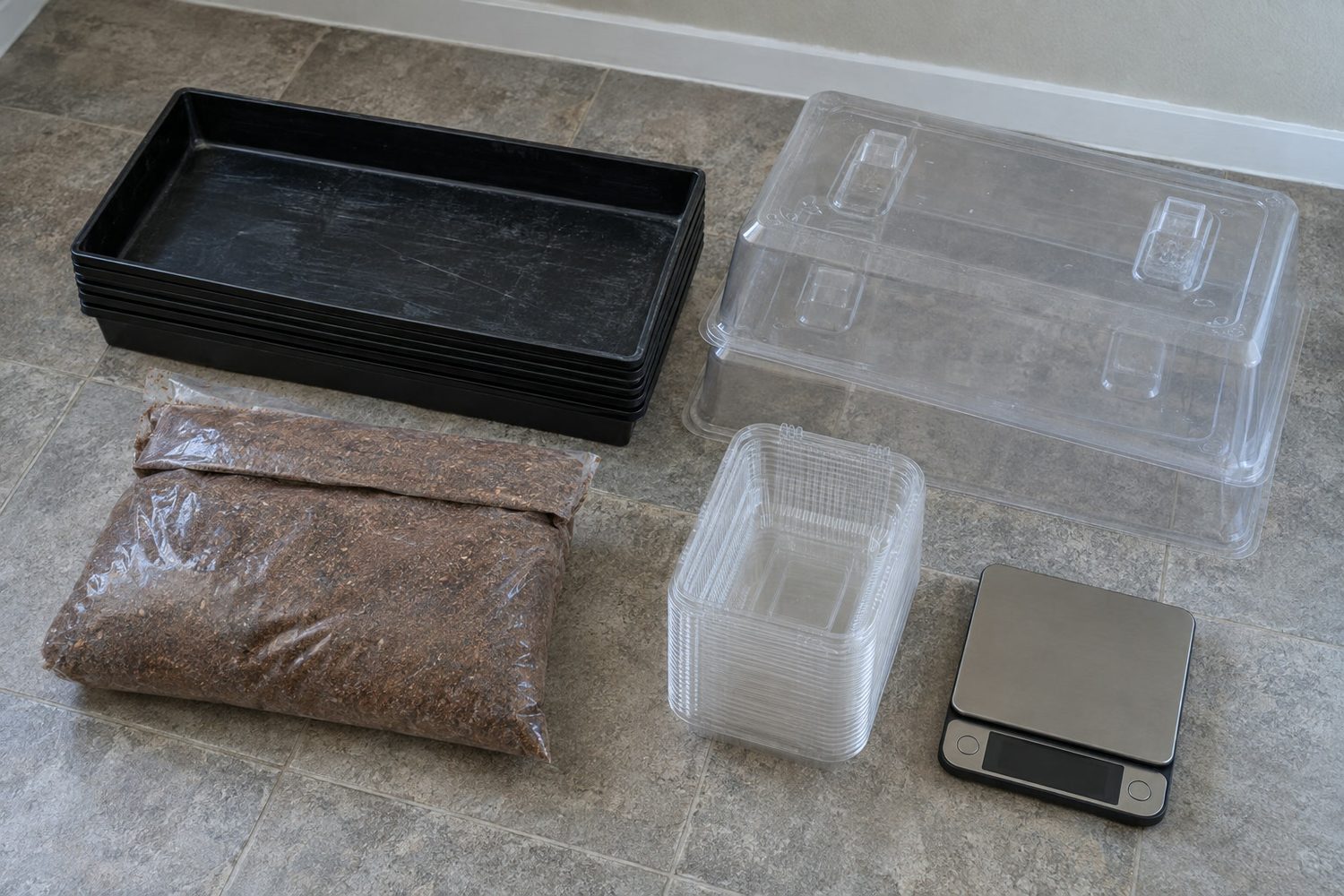
| Item | Price observed | Seller |
|---|---|---|
| 24 x 48 x 64-inch four-shelf chrome wire rack | $152.49 | Regency at WebstaurantStore |
| Shallow 1020 tray | $5.99 each (matching options $5.95 to $6.89) | Bootstrap Farmer |
| Humidity dome | $8.19 | Bootstrap Farmer |
| Broccoli microgreen seed, 5-lb bag | $69.26, listed as $0.87 per oz | True Leaf Market |
| 11-lb digital portion scale | $21.99 | Galaxy at WebstaurantStore |
| 4-oz recycled PET hinged containers | $37.99 for 400 ($0.09 each), or $10.99 for 50 | Choice at WebstaurantStore |
Price seed by the bag. The same True Leaf page sells a 1-oz packet at about 6.9 times the bulk per-ounce price, which would inflate every seed line in your projections.
Lights, a fan and growing medium still need a price. Choose the exact product, record the SKU, the quantity your shelves need and the date, and enter that. For labels, get a vendor quote stating material, dimensions, number of colors, quantity and shipping.
A rack room growing 50 to 200 trays a week
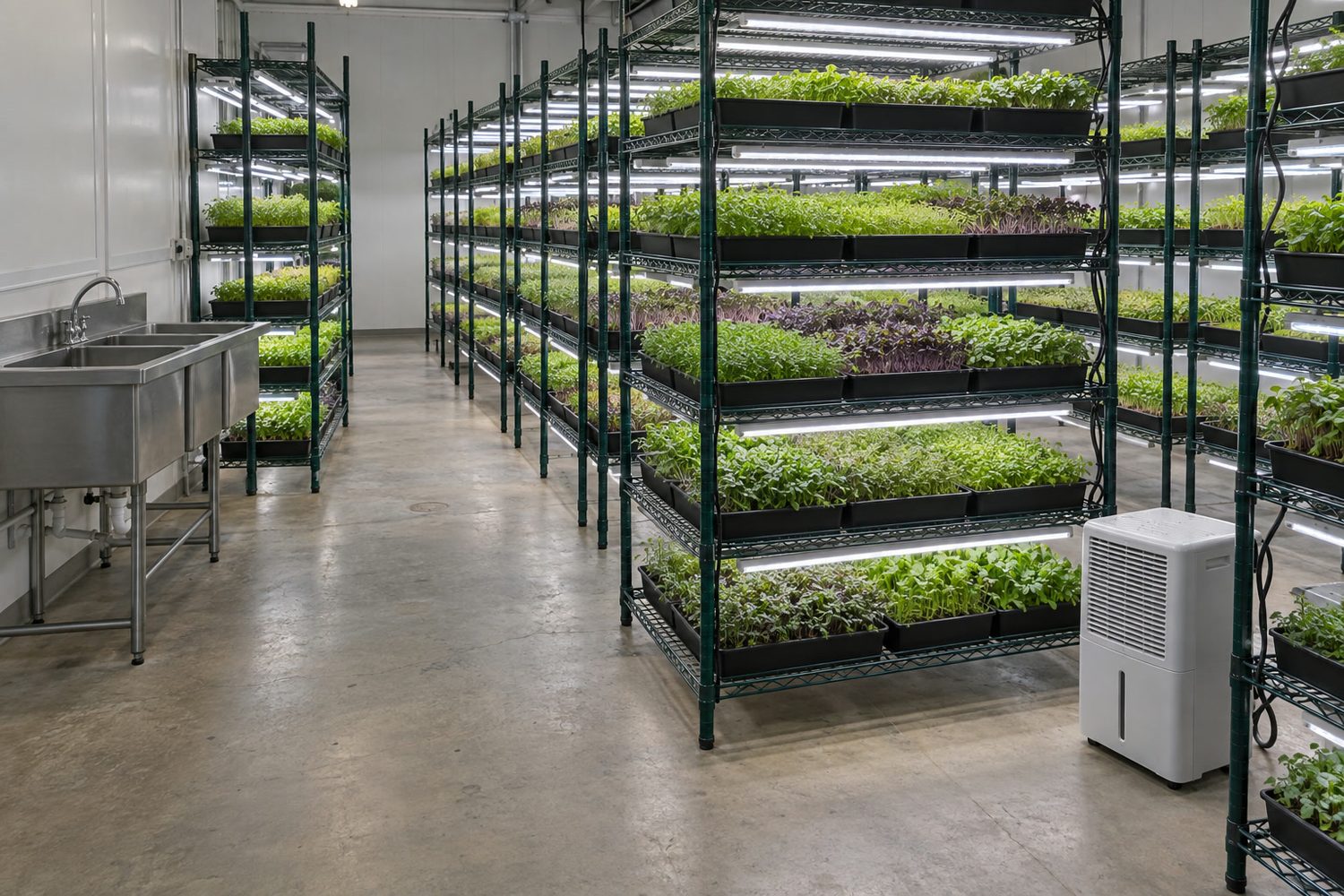
This scale usually adds more racks and lights, dedicated electrical work, humidity and temperature control, a washable work and sink area, cold storage and a harvesting tool. Your weekly tray count sets how many of each.
Hover or tap a row to highlight it.
| Item | Price observed | Seller |
|---|---|---|
| 24 x 60 x 74-inch four-shelf epoxy rack | $184.49 | Regency at WebstaurantStore |
| 50-pint dehumidifier with pump (GE ADSE50XWT) | $299 | Home Depot |
| 51-inch three-compartment stainless sink | $733.99 ($257.96 off a $991.95 list price) | Koolmore at Home Depot |
| Flood-and-drain rack, 3-tier (12 flats) | $2,670.99 | Bootstrap Farmer |
| Flood-and-drain rack, 4-tier | $2,880.99 | Bootstrap Farmer |
| Flood-and-drain rack, 5-tier (20 flats) | $3,054.99 | Bootstrap Farmer |
Each flood-and-drain variant is listed with 6500K T-5 LED lights (four per shelf), a pump, 2 x 4-ft flood trays, timers, cooling fans, aerators and a 38-gallon reservoir, so compare it against a wire rack plus lights and trays. Whether your local rules call for a three-compartment sink is a question for your regulator; it is listed here as a price, not a requirement.
For cold storage, WebstaurantStore's reach-in catalog listed a 29-inch MainStreet BMR-23-R at $999, a 25-inch Avantco A-12R-HC at $1,179 regular ($1,059 member price) and a 54-inch MainStreet BMR-49-R at $1,469 regular ($1,319 member price). The CoolBot Pro controller for a walk-in was $409 on sale, $449 regular. Store It Cold's own comparison page prices an 8 x 8 x 8-ft panel cooler with a CoolBot and 15K-BTU air conditioner at $7,975 plus shipping against $9,750 plus shipping for self-contained refrigeration, but those are older figures: a Store It Cold list price from November 17, 2022, against a competitor quote from March 20, 2023.
Both include the insulated box and floor, and neither includes the electrical contractor the page tells buyers to hire. For a used reach-in, price it from dated local listings that state age, condition, freight and warranty.
Electrical work, HVAC, installation and a harvester need local numbers. Get a licensed contractor's written quote specifying amperage, circuits, drainage and ventilation, and put it in your appendix.
A leased space
Leasing adds a deposit and rent, permitted build-out, washable food-contact finishes, sinks where local rules call for them, refrigeration, utility upgrades, and inspection or plan review fees. Price these from each site: collect the landlord's written rent and NNN terms, a utility estimate, a contractor's build-out quote and the regulator's plan review requirements. Doing this for three locations gives you a comparison a lender can follow.
Registration fees
Formation fees are set by each state. As two examples checked September 12, 2026, a Texas LLC certificate of formation is $300 and a Pennsylvania domestic LLC certificate of organization is $125. Look up your own state's fee and any authorization that applies to you, and list each with its date and the office that set it.
Ongoing production costs go in a separate list
Seed, medium, containers, labels, electricity, water, labor and insurance recur every month, so they belong in your operating budget and cash flow. Use the bulk seed rate ($0.87 per ounce) and your per-container price as starting points, and pull the rest from electricity and water costs, labor and time per tray and profit and margins.
Where plans commonly fall short
Penn State names under-funding at start-up as one common mistake, including personal living expenses when you have no off-farm income. If your household depends on this business, those months belong in the cash flow.
A single startup total borrowed from elsewhere cannot be checked against your trays; an itemized list with sellers and dates can. A reserve folded into equipment disappears the first time a purchase runs over. Sales figures without buyer conversations behind them leave the financial plan resting on a guess.
Plans also go stale. Penn State's general guide says plans should be reviewed and updated every year or if an opportunity for change presents itself. Set a date to compare the plan with your monthly sales, harvests, waste, labor time, cash flow and equipment invoices.
Where to look for financing
The SBA says lenders and investors normally ask for the traditional plan, so a partner or investor conversation uses the same six sections as a loan application.
For a loan, expect to show several years of projections. RBFCU says a startup needs a plan with three years of projections. Access CDFI, a Las Vegas, Nevada lender, asks startups for two years of personal tax returns, bank statements if applicable, a plan, at least three years of cash flow projections, and any lease or contracts. Each lender sets its own list, so ask yours.
The USDA Farm Service Agency's microloan program is designed for small, beginning and niche farms and names hydroponic, aquaponic, organic and vertical growing methods. The maximum is $50,000 for an operating or ownership microloan. Applicants still have to meet eligibility and repayment requirements and show management capacity, credit history and repayment ability, so your operations, management and cash flow sections carry the application. Confirm the forms with your local FSA office.
Grants fund specific purposes rather than general startup spending. USDA's Value-Added Producer Grants offer planning grants up to $50,000 and working capital grants up to $200,000 with a 1:1 match, for producers who own and produce more than 50% of the raw commodity. The FY2026 window ran February 17 to April 22, 2026, and has closed.
If you want to aim for a future round, the FY2026 notice scored business plan or feasibility study summaries, so keep your plan current and watch the program page for the next notice. NCR-SARE Farmer/Rancher grants fund on-farm research, demonstration and education projects, up to $15,000 for individuals and $30,000 for teams. State specialty crop and beginning farmer programs vary by state and cycle, so read your state agency's current notice.
Frequently asked questions
What will a lender ask for besides the plan?
It depends on the lender. BECU lists examples including identification, a business license, personal and business bank statements and tax returns, a lease, a balance sheet, projections, entity documents, collateral and a repayment explanation. Gather these before the first meeting.
What interest rate does an FSA microloan carry?
FSA's current rates effective September 1, 2026, were 5.250% for an operating microloan and 6.000% for an ownership microloan. Rates change, so use the figure posted when you apply and enter the repayment schedule in your cash flow's debt lines.
Who can review my plan for free?
SCORE offers free, confidential mentoring for US businesses, including business planning and financial management, though some workshops and programs charge a fee shown before you register. Penn State also suggests having an extension educator, consultant or accountant review a microgreens plan.
Is there a published microgreens case to learn from?
Red Stick Farms: Planning for the Future (2020) is a university teaching case about a small urban farm growing vegetables, microgreens and edible flowers, whose operators compare building a CSA customer base with adding land and capacity. It is useful for seeing how owners test a strategy against their mission and risks.
Putting your plan together
Start lean, test it with the buyers you have in mind, then work through the six sections in order and attach a startup list priced from your own sellers, with dates. Keep the reserve separate, show your own labor, and set the date for your first annual review. If you are considering taking over an existing grow instead, buying a microgreens business covers what to check first.
Sources
Prices, stock and specifications are as the linked pages showed them on 2026-09-12.
- Penn State Extension recommends for a microgreens operation
- as little as one hour
- free traditional and lean sample plans
- general farm business plan guide
- market research guidance
- Regency at WebstaurantStore
- Bootstrap Farmer
- True Leaf Market
- Galaxy at WebstaurantStore
- Choice at WebstaurantStore
- Regency at WebstaurantStore
- Home Depot
- Koolmore at Home Depot
- Bootstrap Farmer
- reach-in catalog
- CoolBot Pro controller
- comparison page
- $300
- $125
- RBFCU
- Access CDFI
- microloan program
- maximum is $50,000
- Value-Added Producer Grants
- FY2026 notice
- NCR-SARE Farmer/Rancher grants
- BECU
- current rates
- SCORE
- Red Stick Farms: Planning for the Future
Keep reading
The journal
Buying a Microgreens Business for Sale: What to Check First
Thinking about a microgreens business for sale? Learn how sellers state cash flow, what SBA loans require in 2026, and what to check before you buy.
Read Buying a Microgreens Business for Sale: What to Check FirstThe journal
Growing Microgreens for Profit: A Weekly Production Plan
Plan growing microgreens for profit with tray counts per crop, a buffer from your own records, and a weekly sowing and harvest schedule you can repeat.
Read Growing Microgreens for Profit: A Weekly Production PlanThe journal
Microgreen Growers Insurance: Costs, Limits and Markets
Selling microgreens at a market or restaurant? See what microgreen growers insurance covers, who requires it, and what policies cost by limit, state and year.
Read Microgreen Growers Insurance: Costs, Limits and MarketsThe journal
Microgreens Business Startup Costs Before Your First Sale
Microgreens business startup costs, from extension enterprise budgets to insurance rates and per-tray supplies, broken down by starter and commercial scale.
Read Microgreens Business Startup Costs Before Your First Sale