Do I Need a License to Sell Microgreens?
Cal HewittPublished Checked
- selling microgreens
- business planning
- food safety
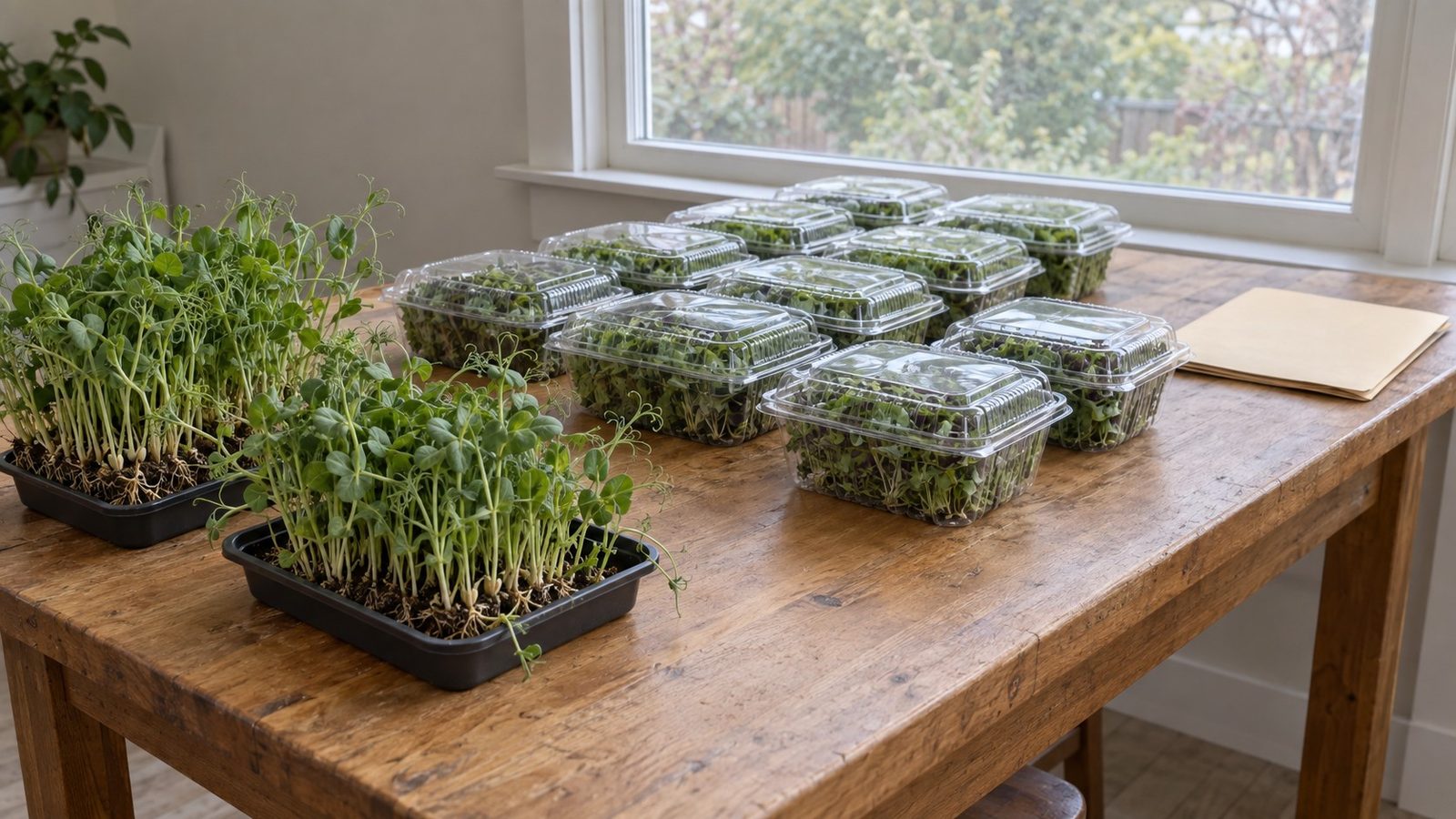
It depends on your state and on what you do to the crop before it changes hands.
Across the 50 states, Washington, D.C. and Puerto Rico, 31 say no for your own raw crop, usually with a condition attached; 12 say yes or usually yes to a license or permit; 4 ask for a registration or certificate instead of a license; and 5 leave it to the county, the city, where you sell or where you pack.
The conditions are ordinary ones: the greens stay uncut or whole, they stay raw, you sell them direct to the person who eats them, or you grew them yourself. A few of the no answers carry no condition at all. Alaska exempts microgreens by name in its food code, and that exemption survives cutting.
The four registration and certificate states are Connecticut, Delaware and Rhode Island, which ask for a registration, and Nevada, which asks for a certificate. The five local answers belong to Missouri, Ohio, Pennsylvania, Tennessee and Texas. Whichever group your state is in, there is also a federal layer underneath it, and that layer is the same in every state. It is a separate question from the license, and it gets its own section further down.
Find where your state stands
Every state lands in one of four places. Find yours below, note the condition that comes with the answer, and then open your own state's page from the state-by-state hub to see which office decides and what text it relies on.
No, for your own raw crop, with a condition
These 31 say no for a grower selling their own raw microgreens: Alabama, Alaska, Arizona, Arkansas, Colorado, Florida, Idaho, Illinois, Indiana, Kansas, Kentucky, Louisiana, Maine, Maryland, Michigan, Minnesota, Mississippi, Nebraska, New Hampshire, New Mexico, North Carolina, North Dakota, Oklahoma, Oregon, South Carolina, South Dakota, Utah, Vermont, Washington, D.C., Wisconsin and Wyoming.
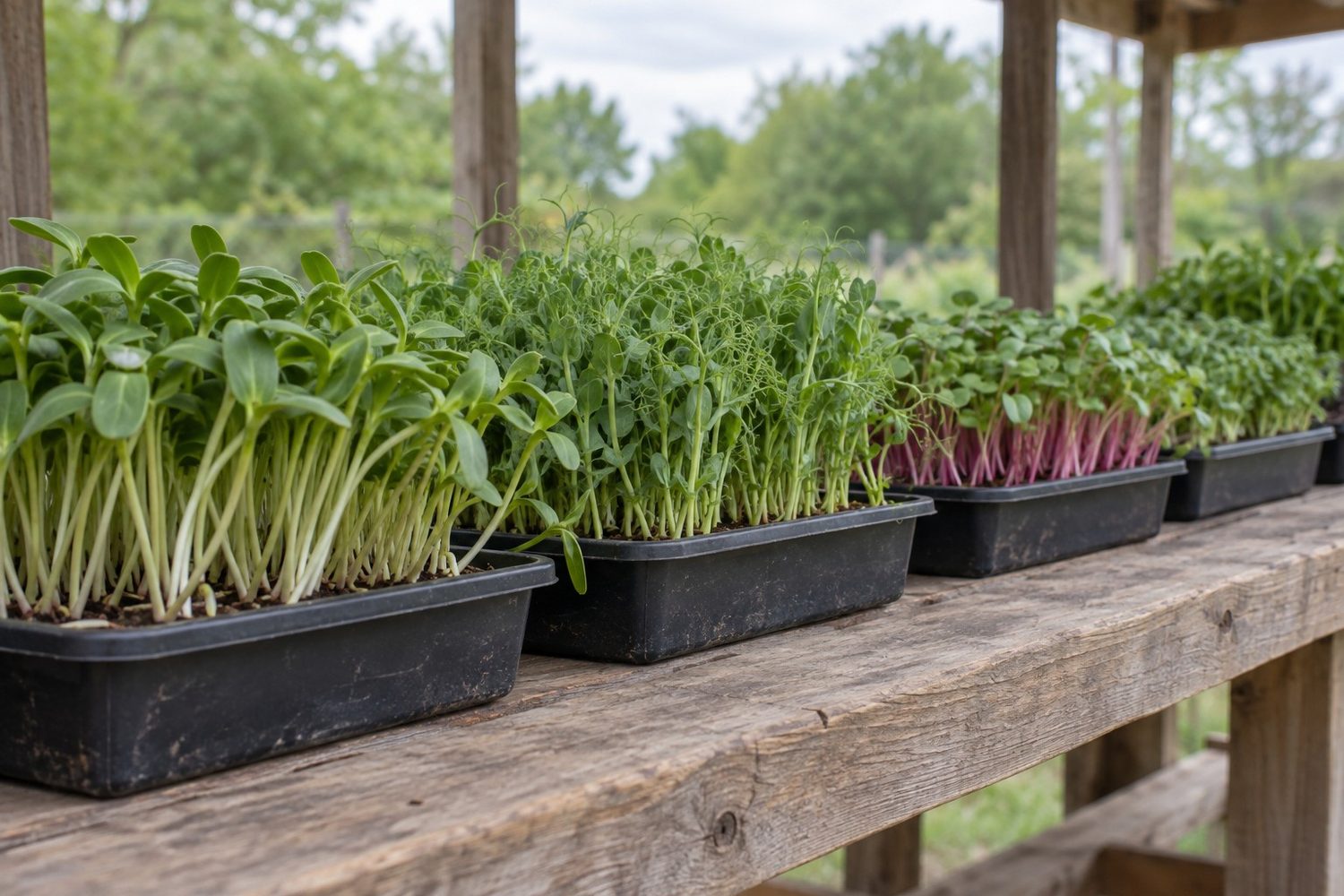
The condition is where the real answer lives. Arizona's no covers your own whole, uncut microgreens sold direct to consumers. Colorado's covers greens sold raw and unwashed for the customer to wash. Kansas says no if you grew them, they are still uncut, and they never leave your hands before the sale. Indiana says no if you sell direct to the person who eats them, under a law it rewrote on 1 July 2026.
Illinois says no license, and for greens you cut only to harvest and sell raw, no registration either; a registration is the route for anything past that. Idaho's answer is "not automatically," because it turns on whether the greens count as TCS food, a food safety category its state page explains.
A handful draw the line in unusual places. Arkansas says no provided the greens have true leaves and you cut them once, and it treats greens sold with the roots attached as sprouts. Minnesota ties its no to greens grown on land you occupy and cultivate, and it does not care who buys them. Oregon wrote a law for precisely this seller, with no cap, as long as you grew what you sell.
Yes, or usually yes, a license or permit
These 12 say yes or usually yes: California, Georgia, Hawaii, Iowa, Massachusetts, Montana, New Jersey, New York, Puerto Rico, Virginia, Washington and West Virginia.
Even here, the yes usually has a trigger. Iowa, Washington and West Virginia say yes once you cut the greens. Virginia says yes once you cut and pack them, and the permit comes through an inspection rather than a form. New York counts packing as processing, so its trigger sits earlier than most. Hawaii is the plainest yes: a Department of Health food establishment permit, because its definition never carved farms out.
Massachusetts says yes, and the office that issues it depends on who is going to eat the greens. Georgia says yes, most likely, for greens you cut and pack, while its Department of Agriculture's farmers market toolkit says unaltered fresh produce needs no license. Puerto Rico is a probable yes, since it has never published a sentence that would support a confident no.
Washington adds a detail worth knowing if you like the idea of selling living trays. Sell the tray alive and you stay outside the license, but you have to collect a signed assurance every year that your buyer will cut above the soil line.
A registration or a certificate instead of a license
Four states ask for paperwork that is not a license. Connecticut asks for a registration, and only once the federal Produce Safety Rule actually covers you. Delaware requires every farm that grows, harvests, packs or holds produce for sale to file an annual Produce Safety registration with its Department of Agriculture, at any size, even if the farm claims a federal exemption; April 30 is the date. Rhode Island says probably not a license, but definitely a registration, with a filing window from 1 January to 28 February, and no sales figure gets you out of it. Nevada asks for a farm certificate that costs $50, then $30, and that certificate waives local license and health permit fees.
Your county, your city, or where you sell or pack
In the last five, the state hands the decision to someone closer to you. Missouri does not answer the question; your county does, through its local public health agency, and that agency can be stricter than the state and answer differently from the county next door. Texas requires no permit to sell whole, intact, unprocessed produce at a farmers market in the parts of the state its health department (DSHS) covers, but most Texans live under a city or county that sets its own rules.
Pennsylvania splits the question between where you sell and where you pack. Tennessee decides it by the building you pack in, not by how much you sell. Ohio has a statutory exemption that probably covers you, but only if you sell nothing outside a short list of permitted items, and roadside stands are handled separately.
What changes the answer
A state's answer describes one version of your operation. Change the version and the answer can change with it, often without any paperwork telling you so. Five things do most of the changing.
Cutting, washing or packing
The knife is the most common trigger. Iowa, Washington and West Virginia all move from no to yes at the cut, while Alaska's exemption survives it and Utah's state page tells you exactly where the knife goes. Washing splits the states: Colorado's no is written around unwashed greens, Michigan says the answer stops being automatic once you cut, wash, mix or repack, and Florida and Rhode Island treat washing as fine. Packing is the quieter trigger. New York counts packing as processing, Vermont's health department counts packaging as processing, and Tennessee and Pennsylvania both look at the place where you pack.
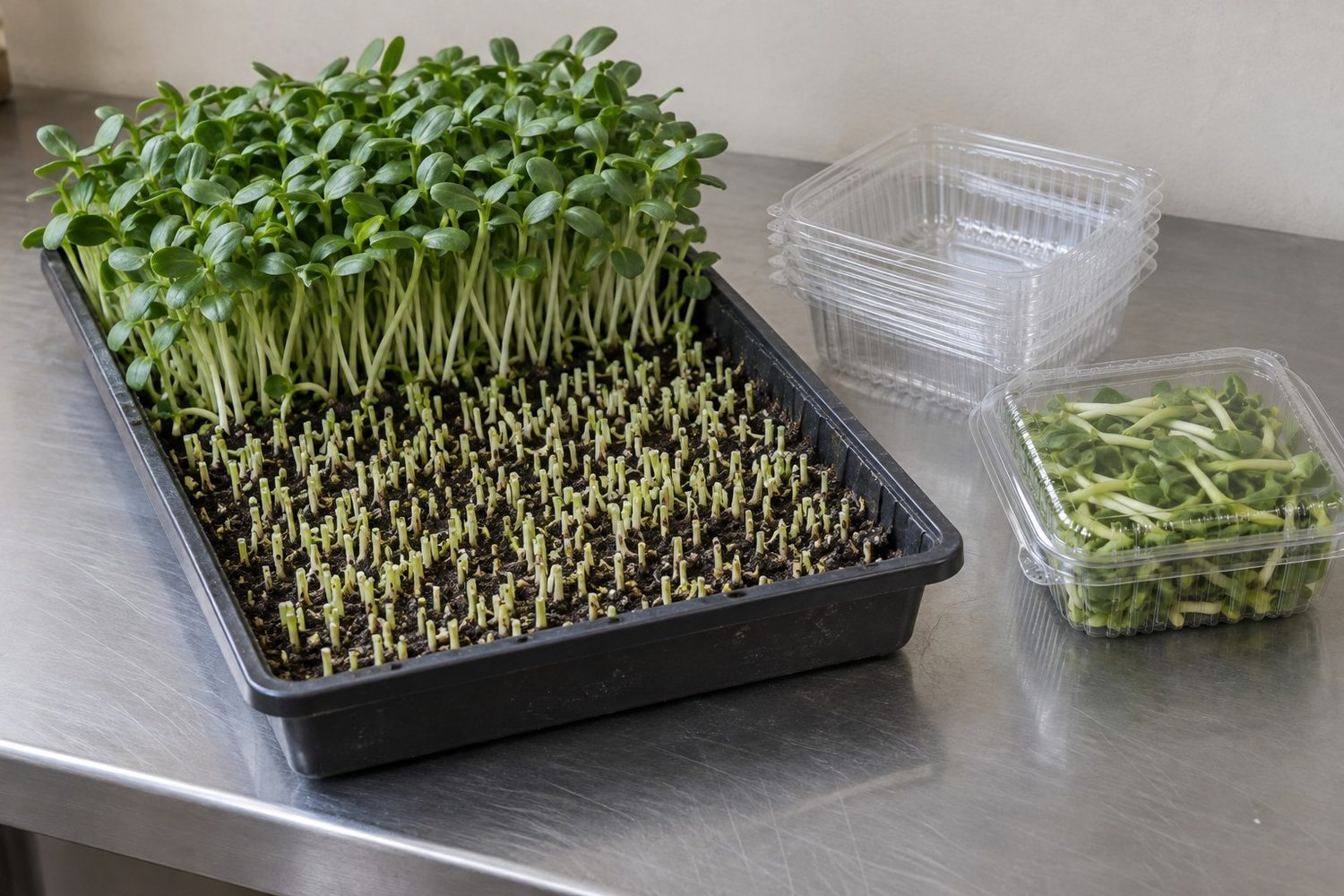
If you plan to sell cut, washed greens in a clamshell, read your state's page with that exact product in mind, not the bare harvest.
Selling wholesale instead of direct
Many of the no answers assume you hand the greens to the person who eats them. Indiana's exemption is direct to the eater or nothing. South Dakota treats wholesale, retail and online sales as indirect. Oregon does not count restaurants and grocers as the end consumer, and Arkansas's page says you cannot sell to restaurants. Other states go the other way: Minnesota's exclusion holds through a wholesale sale, Wisconsin's survives it, and Utah and Wyoming expressly allow restaurant sales. Kentucky puts its trigger at packaging for wholesale, and New Jersey treats wholesale as a different license.
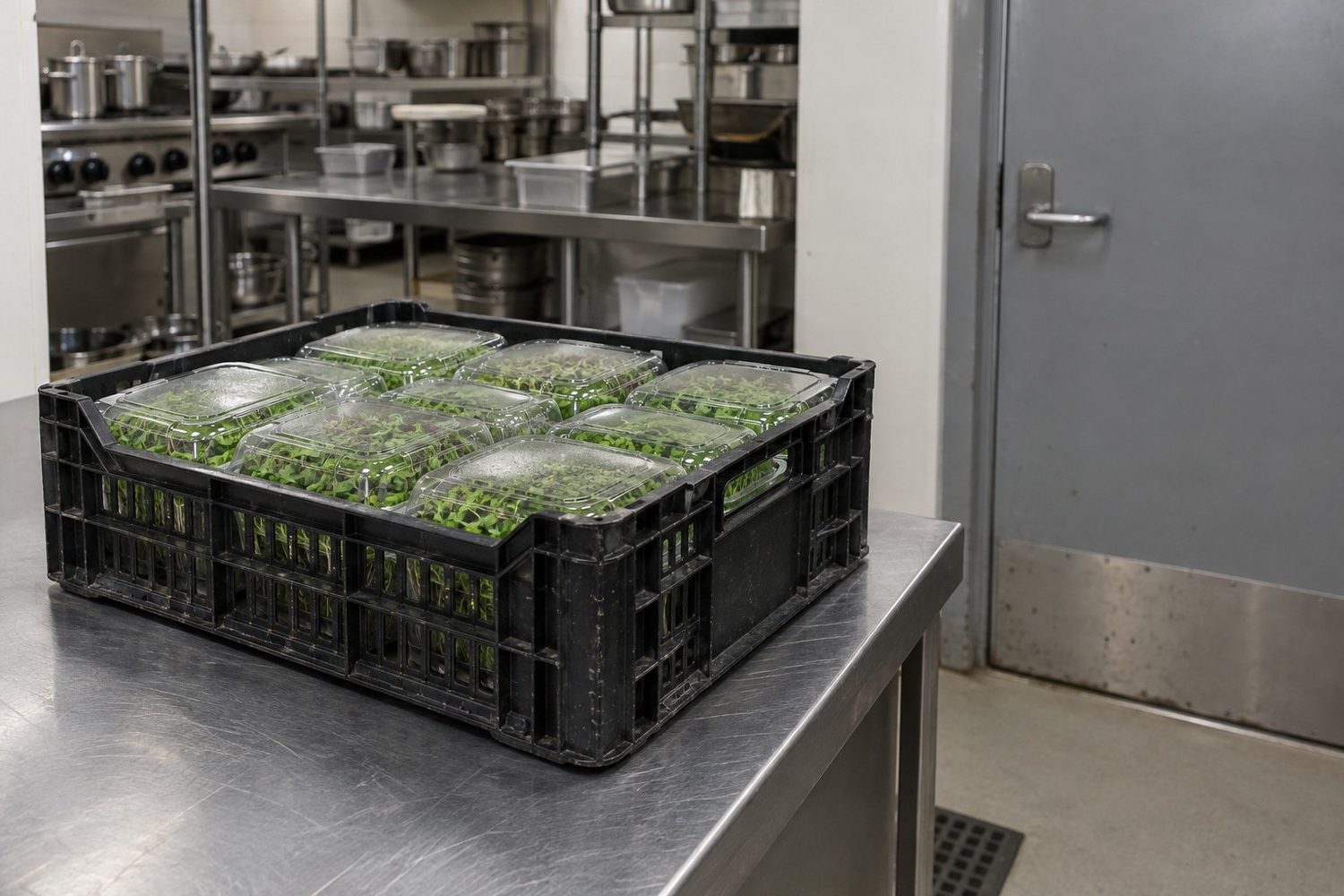
So, before you agree to that standing restaurant order, check whether your state's no was written for a market table.
A county, city or local health authority
In some states the office that decides is not in the state capital. In California the credential comes from your county, and two county offices are involved: the county environmental health office for a retail permit, and the county agricultural commissioner for the certificate you need to sell at a certified farmers market. Missouri's county health agency decides. New Jersey's permit for cut greens comes from your local health authority, not the state. In Texas it is your city or county. Several other states have local pockets too: Albuquerque sits outside New Mexico's state program, Anchorage is its own layer in Alaska, and fifteen New Hampshire towns act as their own regulator.
A county line can change your answer, so if you sell in more than one county, ask each one.
A registration standing in for a license
A no on the license question is not always a no on paperwork. Delaware and Rhode Island make every produce farm register, Connecticut does once the federal rule covers you, Pennsylvania's page lists a registration at $35 a year, and Illinois points to a registration for greens handled past the harvest cut. Mark the filing date in your calendar the day you decide to sell.
Crossing a sales figure
Most states attach no dollar figure to the answer at all. Montana is the clear exception: a license is required once your Montana retail sales of your own produce pass $25,000 a year, it costs $50 and expires December 31, and each place of business needs its own. Montana's $25,000 is a fixed state figure. It is not the federal Produce Safety Rule coverage cutoff, which for 2026 is $34,324 and which FDA adjusts for inflation every year, so the federal number moves while Montana's stays put.
Keep a simple sales log from your first sale. It is the record either number will be measured against.
The federal layer, the same in every state
Nothing about the federal layer depends on where you live, and none of it is a license. Microgreens are covered produce under the FDA Produce Safety Rule, but most small growers are under the cutoff. That cutoff is $34,324 for 2026, and it is measured as an average of your produce sales across the previous three years, not a single year and not all farm revenue.
Being under it means the rule does not apply to you, which is different from a qualified exemption. FDA also states that microgreens are not sprouts, so the stricter sprout rules do not apply to properly grown microgreens; the line is leaf stage at harvest and whether you sell the roots, which the page on sprouts and Subpart M covers.
Labels are federal too. A sealed package of cut microgreens needs three statements: what it is, the net weight, and the name and place of business of whoever is responsible for it, under FDA's Food Labeling Guide. Net quantity for solids goes by weight in ounces. If you price by weight at the table, a kitchen scale is not automatically lawful for that sale; the farmers markets guide covers the legal-for-trade scale rules. Nutrition Facts are not required for raw produce while your label, labeling and advertising stay free of nutrition claims. The microgreens label requirements page covers the rest, and some states add their own label elements on top.
USDA does not regulate the food safety of your microgreens; FDA does. USDA runs organic certification, a voluntary audit service and grant money. A primary production farm is also exempt from FDA food facility registration, and processing beyond the farm definition is where that can change. On taxes, the IRS decides farming by activity and profit motive, and a greenhouse counts as a farm, which puts most growers on Schedule F; the federal tax and business structure page walks through it.
Before you take the first payment
Start with your state. Open your state's page from the hub, find the condition attached to its answer, and write down the office it names. Then describe your actual first sale to yourself in one sentence: who is buying, whether the greens are cut, washed or packed, and where the sale happens. If that sentence matches the condition, you are working from your state's stated answer. If it does not, that office is the one to call before you sell, and many state pages list a free, voluntary readiness review you can ask for.
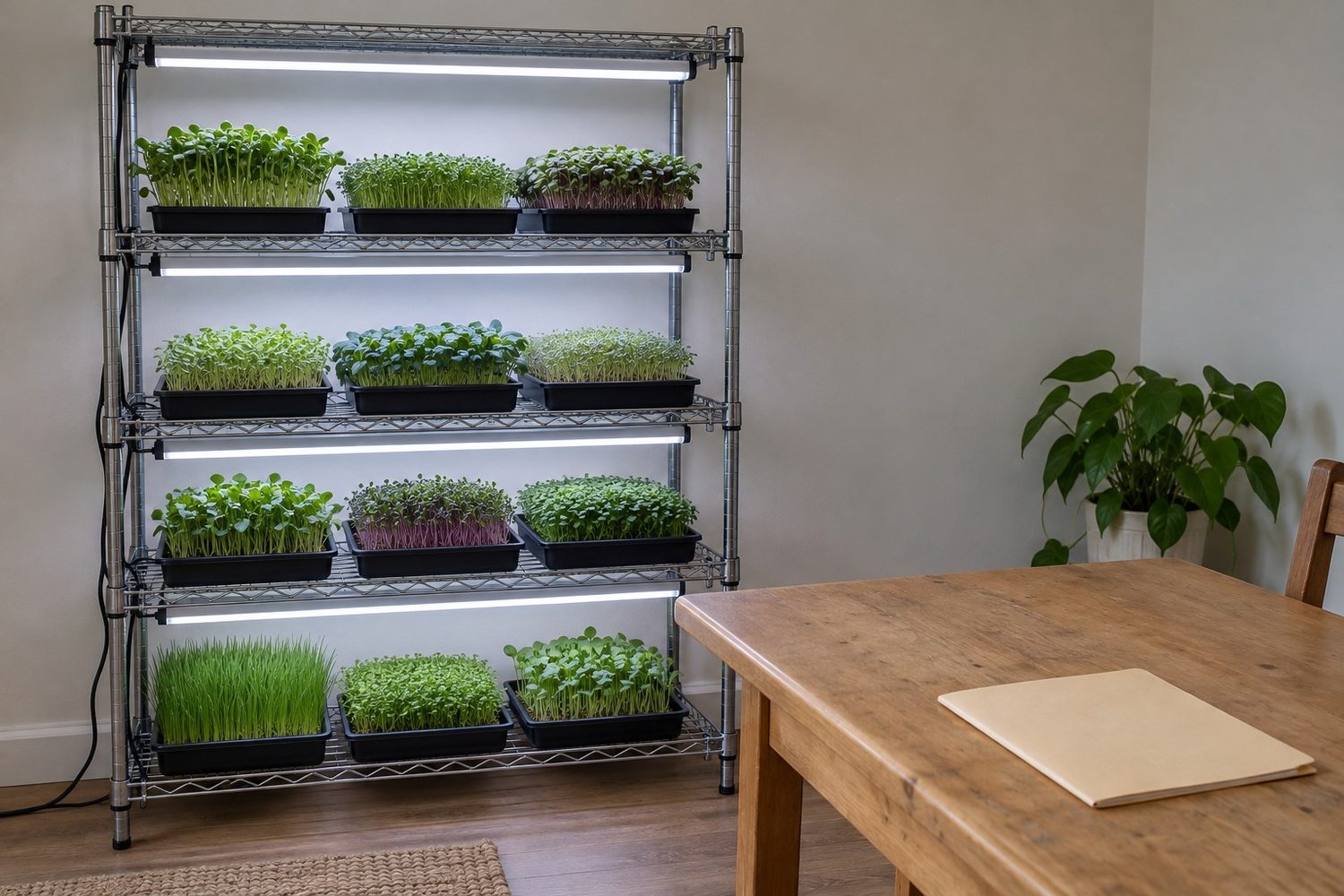
Once the legal answer is settled, the practical work begins. The guide to starting a microgreens business covers setup, and the guides to selling at farmers markets and selling to restaurants and chefs cover the two most common first buyers. If you are considering living trays, selling living microgreen trays is the place to read next, and shipping microgreens and microgreens business insurance cover what comes after the first few sales.
Questions growers ask before the first sale
Does forming an LLC count as getting licensed?
No. An LLC sets your federal tax return and business structure, but it is not a food permit. It does not change your food safety obligations, and it does not decide your FDA farm status.
Do I need a GAP audit before a restaurant or grocer will buy from me?
USDA calls its GAP and GHP audit program voluntary in its own words. When someone says a GAP audit is required, they mean that particular buyer requires it, not the law. An audit also does not replace or limit FDA's inspection authority.
Can I call my microgreens organic without certification?
Organic claims fall under USDA's National Organic Program. 7 CFR 205.101(a) exempts an operation with $5,000 or less of gross agricultural income from organic sales from certification, and unlike the federal produce safety cutoff, that $5,000 figure is fixed and not adjusted for inflation. Your state's page may add its own rules on how you use the word.
Do I need a federal permit to ship a living tray to another state?
There is no general federal permit for moving an ordinary living plant across a state line. The receiving state has the final say on what it lets in, and a mailed parcel going into a state with approved terminal inspection must be plainly marked so the contents can be read from outside. Your own state's exemption may also stop at the border: Utah's page says shipping is not covered, and Indiana's exempt product cannot be shipped out of state.
What if I start drying or blending my greens?
A microgreen powder or a dried herb blend is a processed food, not a raw crop. That is the point where a state's home food or cottage food law can become the one you register under, and your raw produce answer no longer covers the product. Read your state's page again before you sell the first jar.
Your state's answer is a starting point with a condition attached, not a permanent status. Know which condition yours carries, keep your sales log and your product in line with it, and open your state's page again whenever you add a cut, a wash, a wholesale buyer, a new county or a new product.
Sources
Prices, stock and specifications are as the linked pages showed them on 2026-09-13.
Keep reading
The journal
How to Sell Microgreens: Your First Sale, Step by Step
How to sell microgreens for your first sale: check the rules, keep records, get insurance, find a buyer, pack, price, and deliver cold, then review.
Read How to Sell Microgreens: Your First Sale, Step by StepThe journal
How to Write a Microgreens Food Safety Plan
Build a microgreens food safety plan section by section, pick a free template to start from, and know which records buyers, markets and audits expect.
Read How to Write a Microgreens Food Safety PlanThe journal
Selling Living Microgreens Trays: Classification and Care
Thinking about selling living microgreens trays? Learn how states classify them, what care instructions to give buyers, and how sellers price trays.
Read Selling Living Microgreens Trays: Classification and CareThe journal
Microgreen Powder Business Math: Yield, Price, and the Rules
Before you start a microgreen powder business, run the numbers. See the dry weight yield, a tray revenue comparison, and the rules for a processed food.
Read Microgreen Powder Business Math: Yield, Price, and the Rules