Microgreen Powder Business Math: Yield, Price, and the Rules
Cal HewittPublished Checked
- business planning
- food safety
- equipment
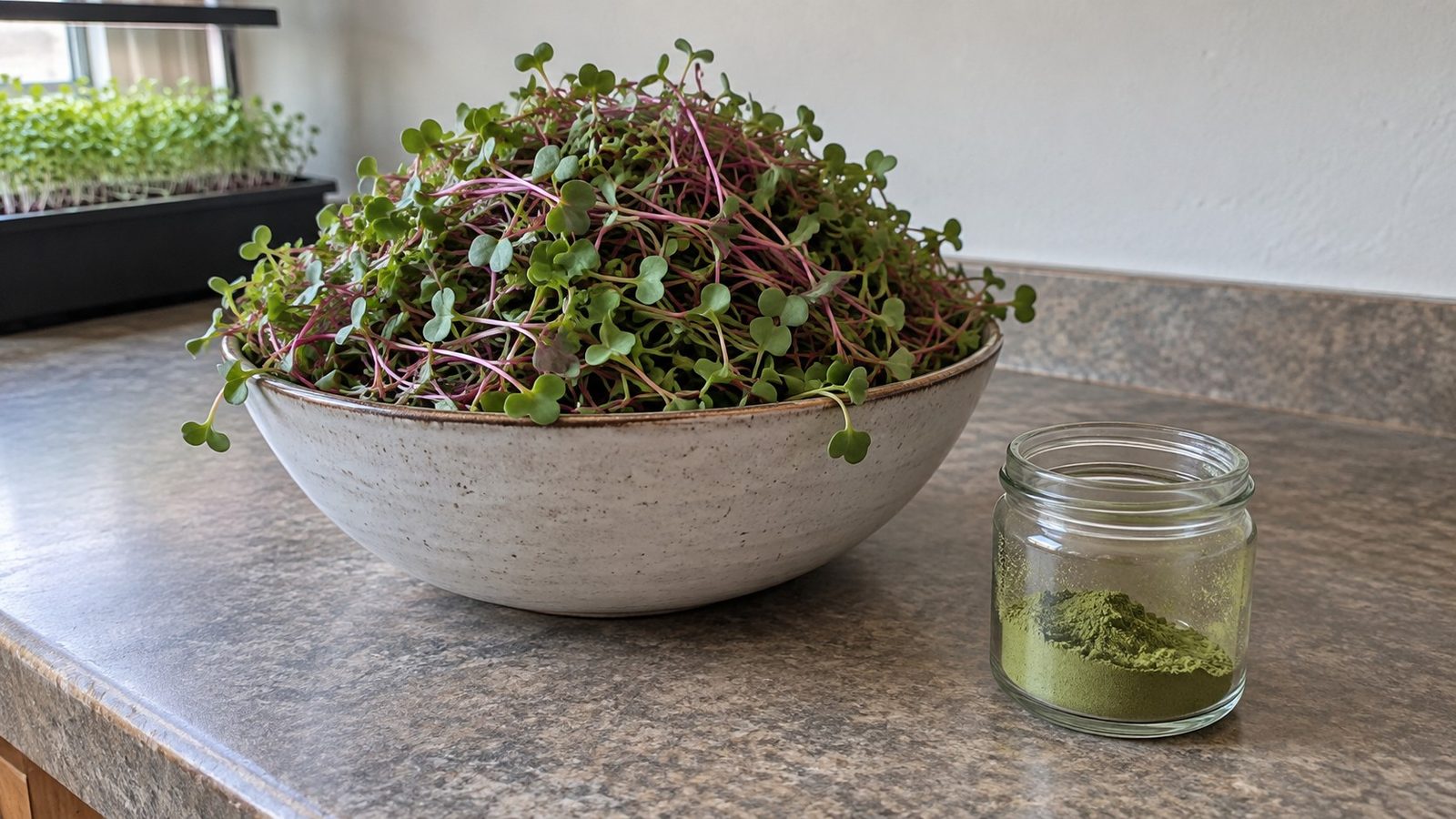
A tray of microgreens makes very little powder. Radish is 4.132 percent dry matter, so a 320 gram fresh tray comes out at roughly 13.92 grams of finished powder at 5 percent moisture. At the retail powder prices listed online, that much powder is worth $12.28 to $23.24 before any costs, while a grower practice sheet reports $37 for the same tray sold fresh.
That doesn't prove powder loses money, but it doesn't show powder winning either. And once you grind the crop, you are making a processed food, with facility, labeling and claim rules a fresh tray doesn't carry.
How much powder does a tray actually make?
Your ceiling is dry matter, the part of the greens that isn't water. Drying can only recover the solids already in the fresh crop, and a finished powder that still holds a little moisture weighs slightly more than those bare solids.
A 2023 controlled greenhouse trial measured dry matter for common microgreens across three replications (Di Gioia et al., Frontiers in Plant Science, 2023):
Hover or tap a row to highlight it.
| Crop | Dry matter (g per kg fresh) | Dry matter | Fresh weight to dry solids |
|---|---|---|---|
| Broccoli | 38.55 | 3.855% | 25.9:1 |
| Radish | 41.32 | 4.132% | 24.2:1 |
| Kale | 44.04 | 4.404% | 22.7:1 |
| Arugula | 46.19 | 4.619% | 21.6:1 |
| Mustard | 48.41 | 4.841% | 20.7:1 |
| Beet | 61.71 | 6.171% | 16.2:1 |
| Amaranth | 64.05 | 6.405% | 15.6:1 |
| Sunflower | 94.34 | 9.434% | 10.6:1 |
The last column is the one to build a plan on. You need 25.9 grams of fresh broccoli for one gram of dry solids, and even sunflower needs 10.6. In the same study radish had the highest fresh yield of these crops, 2,258.8 grams per square meter, and sunflower the highest dry matter, which makes them sensible first pilots. That is about output, not about which powder people will buy.
These percentages are the solids ceiling, not measured recovery from a dehydrator or freeze dryer. Plan around your own weigh-in and weigh-out log, by crop and drying method.
Running the numbers for your own crop
Take your fresh harvest weight in grams, multiply by the crop's dry matter as a decimal, and divide by 0.95 for a powder at 5 percent moisture. For a radish tray at 320 grams fresh, that is 320 × 0.04132 ÷ 0.95, or about 13.92 grams.
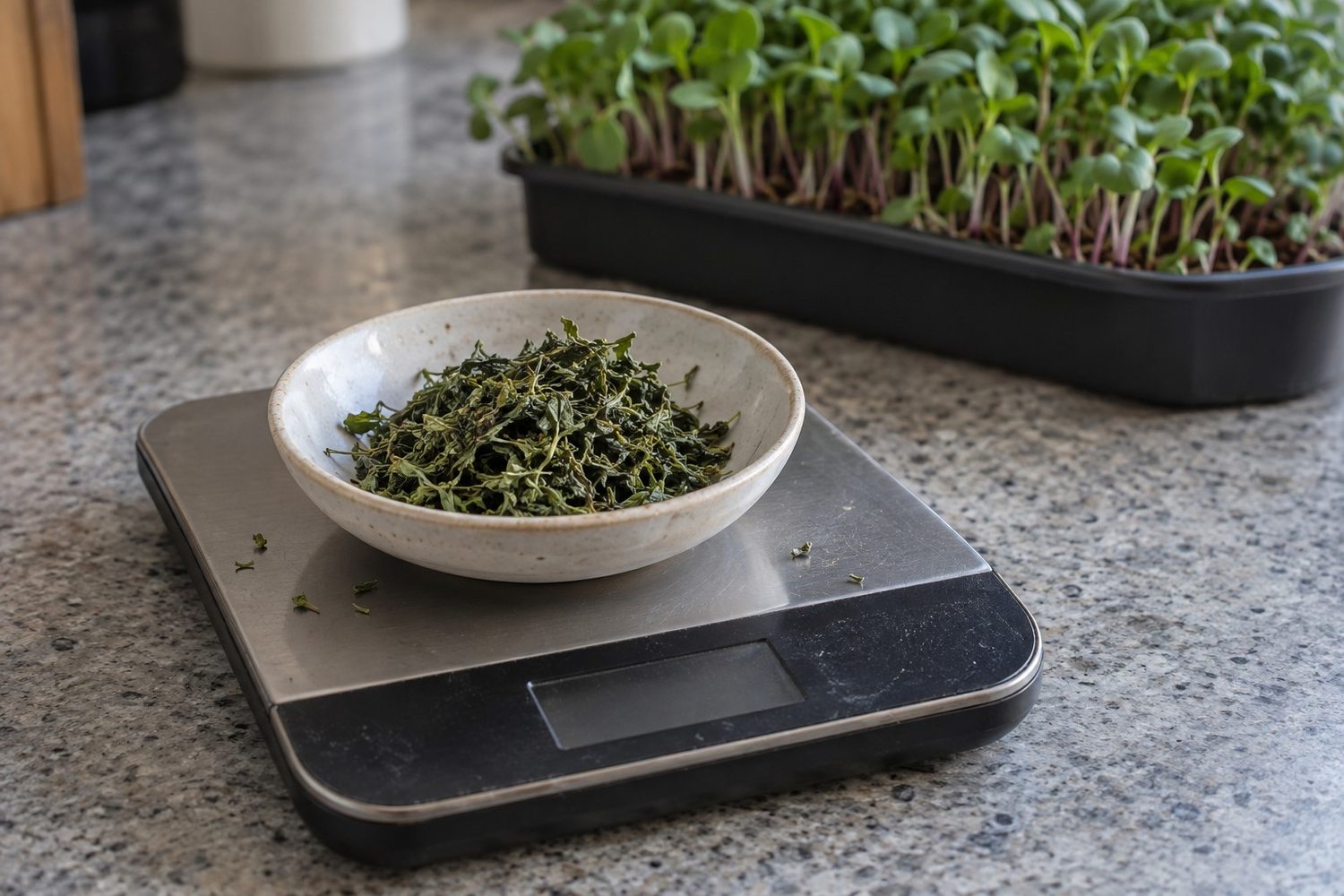
The study's own yields, applied to a standard 10×20-inch tray of 0.1290 square meters, give these dry solids per tray: broccoli 7.27 grams (0.256 oz), radish 12.04 grams (0.425 oz), kale 8.20 grams (0.289 oz) and sunflower 20.16 grams (0.711 oz). Multiply by 1.0526 for finished powder at 5 percent moisture, which takes radish to 12.67 grams (0.447 oz). The gap between that and 13.92 grams is the fresh weight going in, so start from your own tray weight.
Growing system, seeding density, harvest day, whether you cut stems out, and drying losses can all move the result a lot. Weigh the fresh cut, weigh the dried output, note the final moisture, and repeat it over several batches before you set a price on it. The drying and storage basics are in dehydrating and freezing microgreens.
What the powder prices do and do not tell you
These listings were checked on 12 September 2026:
- Top Notch Microgreens, Taco MicroDust, 1 oz: recorded at $25, or $0.882 per gram, and showing $30, or $1.058 per gram, on a live check the same date, 12 September 2026. It is a seasoning blend with other ingredients, not pure microgreen powder (Top Notch).
- Concho Valley Microgreens: 30 servings of 0.4 grams, 12 grams in total, at $20 for radish, pea or sunflower ($1.67 per gram) and $25 for broccoli ($2.08 per gram). These may be capsules, so they aren't loose powder prices (Concho Valley).
- Phoenix Farms (Canada): 60 capsules of 500 mg, 30 grams, for C$59, or C$1.97 per gram (Phoenix Farms).
Those are asking prices, not sales records, and no marketplace-wide price data has been published.
Now set them against a fresh tray. The Paperpot and Scintilla radish grower notes report a standard 1020 tray at 320 grams fresh, sold as three 105 gram units at $12 each, for $37 in revenue per tray. Dry that tray to about 13.92 grams and price it at Top Notch's recorded $0.882 per gram, and you get $12.28. At Concho Valley's $1.67 per gram, you get $23.24.
Neither powder figure deducts growing, drying, packaging, testing, shipping, marketplace fees, tax or labor, and neither is a wholesale price. So, on these examples, drying is not shown to beat the fresh tray. Cost both products line by line with the profit and margins guide, and read powder against fresh for the buyer's side of the question.
Labor is the other number you have to find yourself. The dryer runs on its own, but sorting, loading, unloading, grinding, cleaning, sieving, portioning, sealing and records don't. Time at least ten representative batches, note batch weight and rejects, and use that.
The equipment, and what drying does to the crop
Freeze dryer. Harvest Right's Home Pro bundle was listed at $2,795 on sale, $3,395 regular, on 12 September 2026 (Harvest Right). Its FAQ says small and medium units average 990 to 1,210 watts and estimates $1.25 to $2.80 per batch, the manufacturer's own estimate (Harvest Right FAQ). Utah State Extension puts typical home cycles at 20 to 40 hours (Utah State Extension). Budget pump maintenance, bags, labor and failed loads as separate lines.
Dehydrator. Excalibur listed its 10-tray Performance Digital model at $379.99 on 12 September 2026, with 16 square feet of trays, an 85 to 165°F range and an 800 watt rating (Excalibur). The manufacturer doesn't publish pounds of microgreens per batch, so load it with real greens and weigh them.
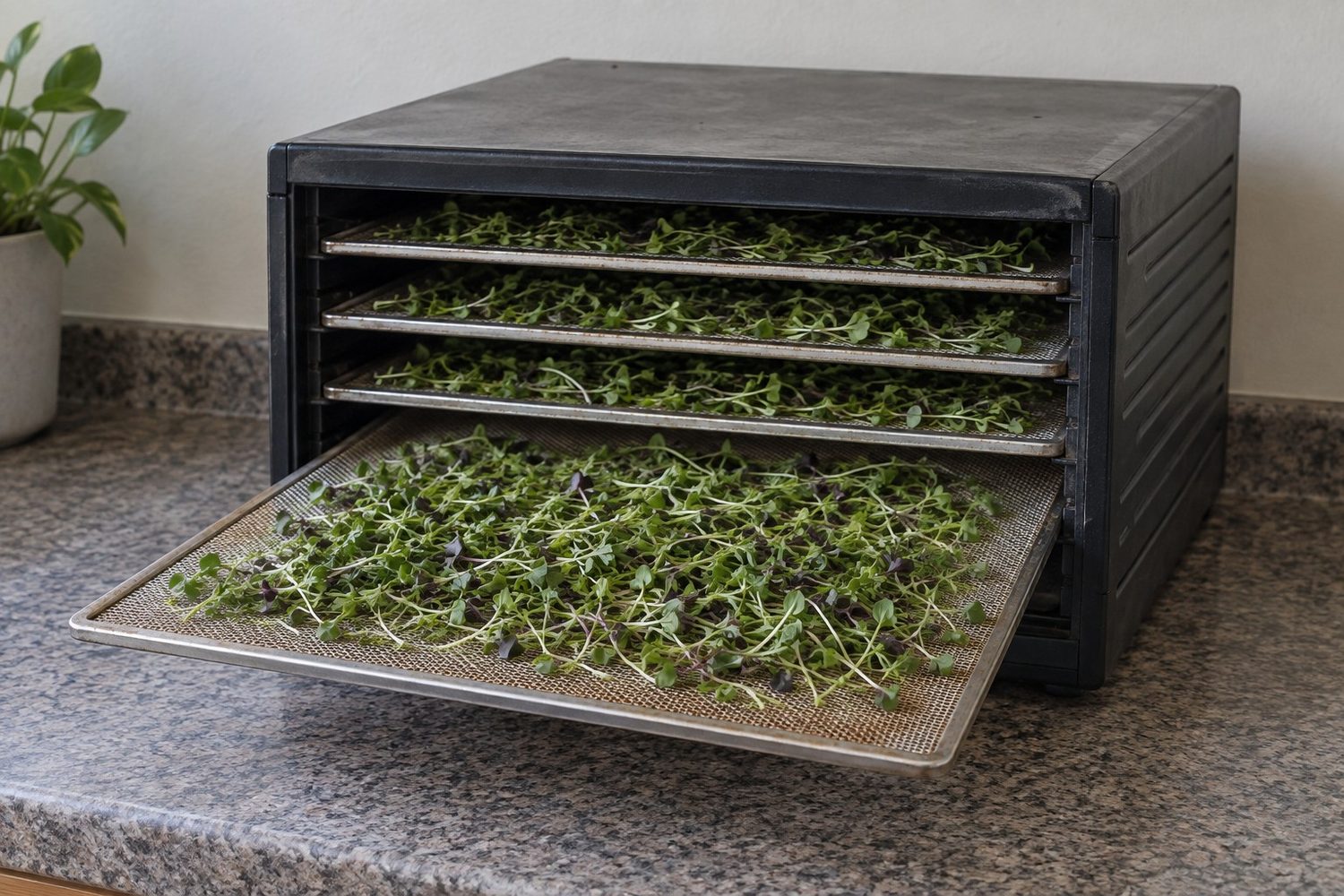
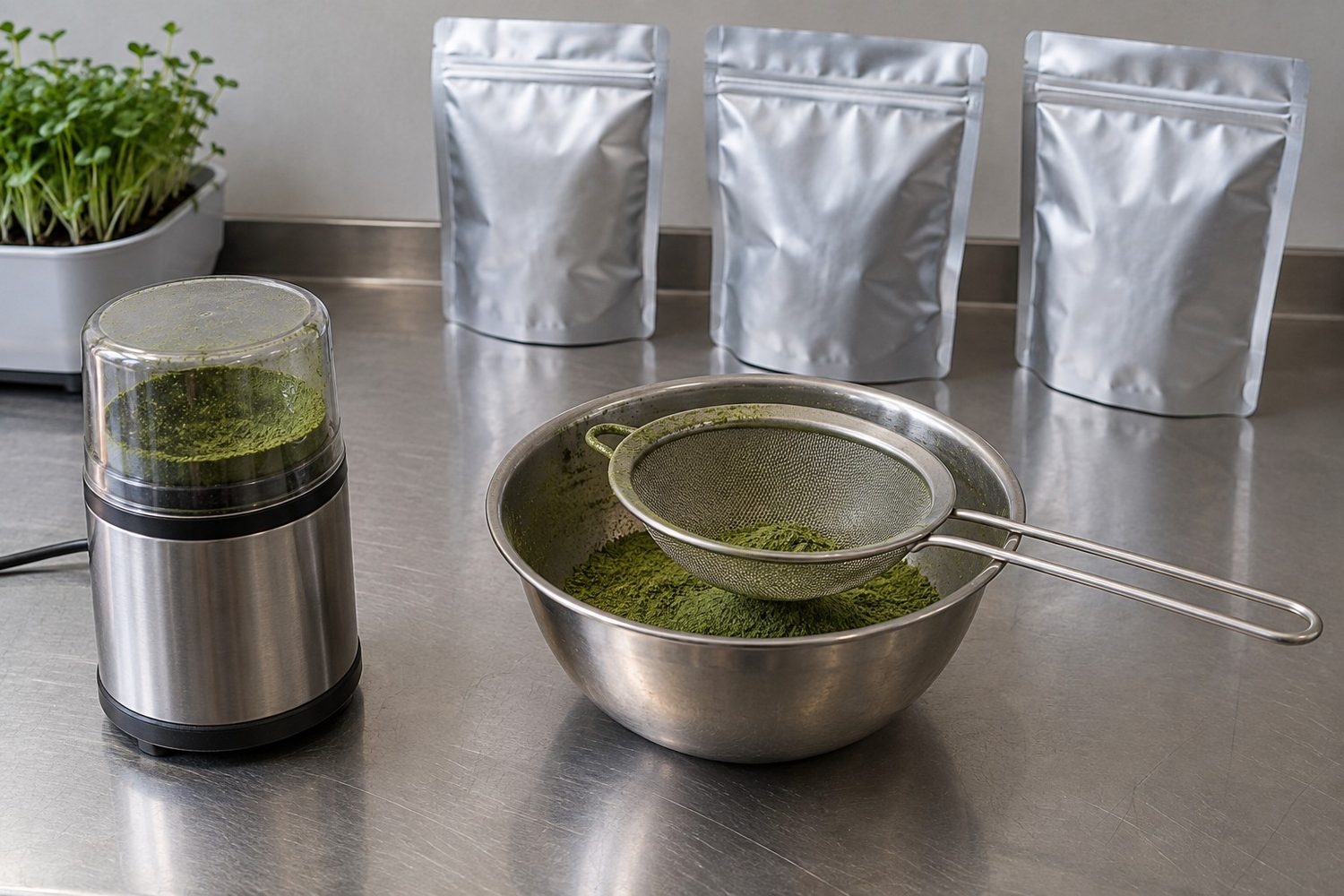
The powder line. You also need a food-contact grinder, a sieve for even particle size, a scale, a heat sealer, moisture-barrier pouches or jars, and a water activity meter or contract lab, plus a capsule machine if you go that way. No current published cost for that set exists, so get dated quotes for your planned throughput and include testing.
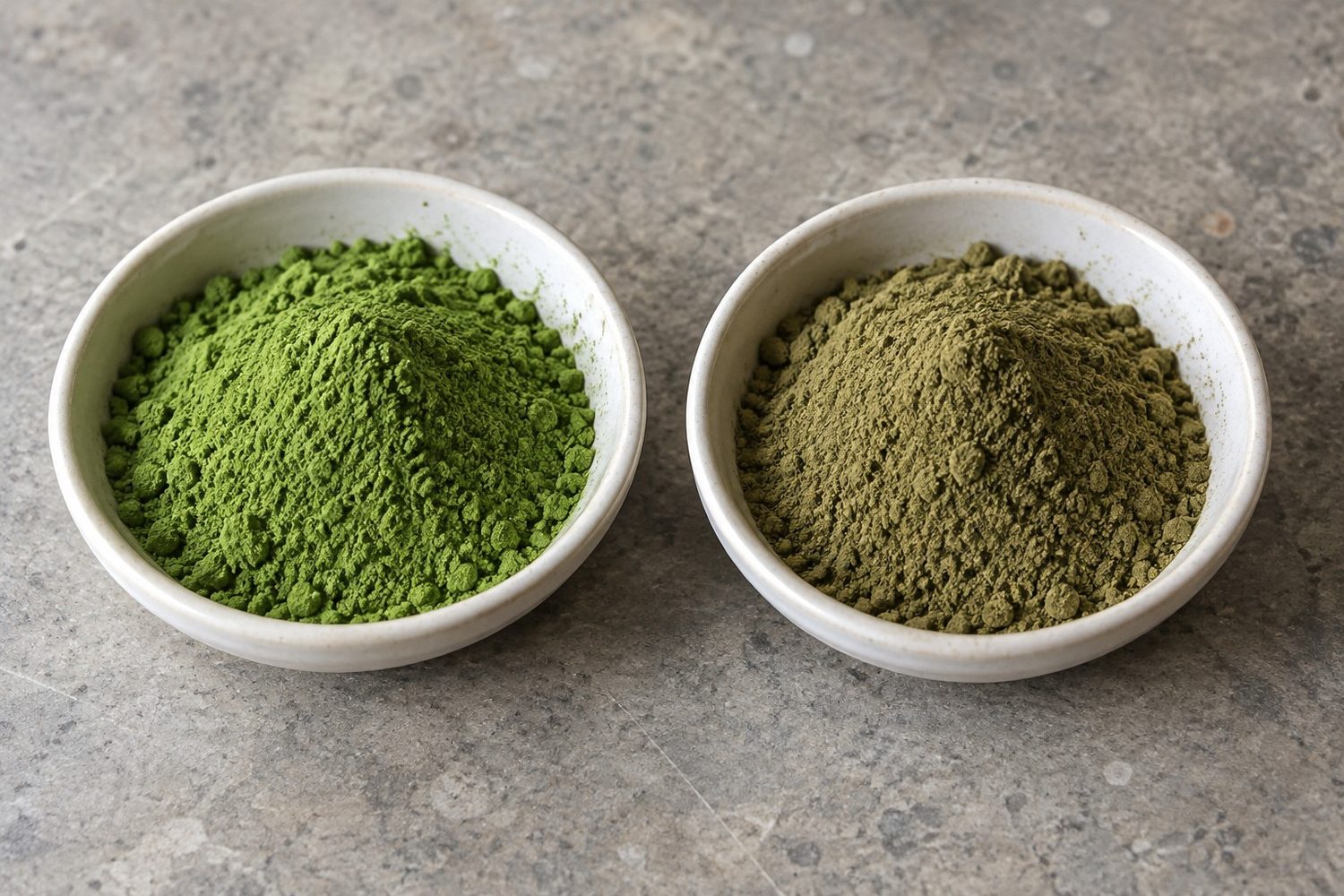
What heat does. A 2025 radish microgreen study dried samples to under 10 percent moisture with hot air at 45, 65 and 95°C in 438, 212 and 74 minutes (Jauregui et al., 2025). Against freeze-dried samples, hot air cut total phenolics 10 percent at 45°C and 21 percent at 65°C, anthocyanins 47 to 49 percent, and vitamin C 57 to 67 percent; at 95°C, vitamin C was 6.22 mg per 100 grams dry weight against 18.9 mg freeze-dried. Protein was broadly unchanged, and freeze-drying kept the brighter color. Those results belong to that crop and protocol, not to your label, but they make "keeps all the nutrients" hard to stand behind on a heat-dried powder.
Shelf life. No validated shelf life for microgreen powder has been published. Minnesota Extension's final water activity line of 0.85 or lower for some freeze-dried cottage foods is a safety eligibility threshold, not a shelf-life promise (UMN Extension). Set a sell-by date from stability testing in your final package: water activity, moisture pickup, color, taste, pathogens where appropriate, and any nutrients you declare.
Once you grind it, you are making a processed food
FDA treats drying a raw agricultural commodity into a distinct commodity as manufacturing or processing. Its farm definition lets a farm dry its crop and package and label it, without additional processing, and remain a farm; FDA's example is grapes dried into raisins. Grinding into powder is additional processing, so a farm that grows and then grinds its microgreens is generally a mixed-type facility that must register unless another exemption applies (FDA food facility registration Q&A). FDA lists private residences, farms, restaurants and retail establishments among the registration exemptions (FDA, how to start a food business), and registration does not erase state or local licensing or good manufacturing practice duties.
Most of the answer sits with your state, and there is no single national one. Whatever rules you sell fresh greens under, don't assume they carry over to a powder; the national overview of cottage food rules and microgreens shows how widely states differ. Three examples:
- Texas. The August 2021 rule text listed "dehydrated fruit or vegetables, including dried beans" (Texas Administrative Code). SB 541, effective 1 September 2025, struck that list, and a cottage food production operation now produces any food other than meat and poultry products, seafood, ice products, low-acid canned goods, cannabidiol or THC products, and raw milk products (SB 541 enrolled text). Confirm how a microgreen powder is treated with the Texas Department of State Health Services or your local health authority before you plan around it.
- Minnesota. University of Minnesota Extension says certain freeze-dried foods that aren't potentially hazardous can be cottage foods only at a final water activity of 0.85 or lower. It lists freeze-dried fruit or vegetable powder as an ingredient used before cooking or baking, not as blanket permission for vegetable powders, and it states that freeze-dried cut produce is not allowed for sale as a cottage food, which covers harvested microgreens (UMN Extension).
- California. The Approved Cottage Food List includes dried, dehydrated and freeze-dried foods, with vegetable chips and soup mixes listed. It is an approved-list system, so check a microgreen powder with your local enforcement agency rather than reading approval into it (California Department of Public Health).
Label and claim rules for a powder
The first question is whether you are selling a conventional food or a dietary supplement, because the label and claim rules differ.
For a conventional food powder, the federal basics are a statement of identity, net quantity on the principal display panel, ingredients in descending order of predominance, your name and place of business, Nutrition Facts unless a valid exemption applies, and a major allergen declaration where relevant (FDA Food Labeling Guide). The nine major allergens are milk, egg, fish, crustacean shellfish, tree nuts, peanuts, wheat, soy and sesame, which matters for blends (FDA allergens).
FDA's small business nutrition labeling exemption has routes based on $50,000 in food sales to consumers, $500,000 in total sales, and low volume, and it disappears if nutrient content claims, health claims or other nutrition information appear (FDA small business guidance). The fresh product side is covered in FDA label requirements for microgreens.
Three kinds of claim need care on a conventional food (FDA conventional food claims guidance):
- Nutrient content claims. "Good source" needs 10 to 19 percent of the daily value per reference amount, and "high" needs at least 20 percent.
- Disease claims. Saying the product treats, prevents, mitigates, cures or diagnoses a disease can make a food a drug, unless it is an authorized health claim.
- Popular words. "Antioxidant," "detox," "immune" and "heart-health" aren't safe shortcuts; context and substantiation decide how they are read.
A capsule is not automatically a dietary supplement. A supplement is intended for ingestion, contains a qualifying dietary ingredient, isn't represented as a conventional food or a sole meal item, and is labeled as a dietary supplement, with "Supplement Facts" instead of "Nutrition Facts" (FDA supplement labeling guide). The 30-day step belongs to that supplement path: a structure or function claim on a dietary supplement needs substantiation, the required disclaimer, and FDA notification within 30 days, and it still can't be a disease claim (FDA claims guide). A powder sold as a conventional food answers to the conventional food claim rules above instead.
Food safety changes with the format too
FDA says freezing and drying stop bacteria from growing but do not kill Salmonella (FDA Salmonella facts). Powder hazards include contaminated seed or greens, cross-contamination at harvest or grinding, pathogens that survive drying, allergens in blends, moisture pickup and mold, and chemical contaminants. Controls start with approved inputs and a clean harvest, then sanitation and separation, a water activity or moisture specification, protective packaging, lot traceability and a hazard analysis suited to your facility (FDA FSMA FAQ).
The format has carried an outbreak before. FDA's 2026 investigation tied contaminated moringa leaf powder in super-greens powders and capsules to Salmonella illness, and its final update on 22 July 2026 reported 131 people ill in 38 states and 36 hospitalized (FDA outbreak investigation). It was moringa, not microgreens, but it was a powder.
Drying also concentrates what doesn't evaporate. The Canadian Food Inspection Agency chose botanical powders for metals surveillance for that reason; its 2020 to 2021 survey tested 993 products, 297 of them botanical powders, and 92 percent had one or more of arsenic, cadmium, lead or mercury detected (CFIA survey). It wasn't a microgreen survey, and a detection isn't a finding of illegality. A buyer or regulator can require routine testing.
Questions growers ask about microgreen powder
These come up once the yield math is done.
Can I dry microgreens whole and skip the grinding?
FDA's farm definition lets a farm dry, package and label its own crop without additional processing and remain a farm for registration purposes; grinding goes past that. State rules are separate, and Minnesota Extension, for one, says freeze-dried cut produce, including harvested microgreens, isn't allowed for sale as a cottage food.
If I sell powder wholesale or through a co-packer, does the paperwork go away?
No, it shifts. Expect a written specification covering identity, lot, water activity or moisture, allergens, microbiological and chemical controls, package and shelf life, plus traceability and a clear owner for the label. The processor may need FDA registration, and a qualified facility has modified preventive control requirements but must attest (FDA qualified facility attestation).
Can I say a scoop of powder equals a serving of vegetables?
Some sellers do, but that line needs a defined serving mass, a nutrient assay of your finished powder, and a named comparison food behind it. Do not make the claim without them.
Where to start
Several numbers decide this for your farm, and your own pilot gives them: finished recovery by crop and drying method, labor minutes, shelf life in your package, real sell-through, and margin after testing and compliance. Collect them on a small pilot. Weigh one tray fresh, dry it, weigh the powder, and record the moisture; set the fully costed powder against what the same tray earns fresh. If powder still looks worth it, decide whether it is a conventional food or a supplement, and take the product to your state or local food regulator before the first batch is sold.
Sources
Prices, stock and specifications are as the linked pages showed them on 2026-09-12.
- Di Gioia et al., Frontiers in Plant Science, 2023
- Top Notch
- Concho Valley
- Phoenix Farms
- Paperpot and Scintilla radish grower notes
- Harvest Right
- Harvest Right FAQ
- Utah State Extension
- Excalibur
- Jauregui et al., 2025
- UMN Extension
- FDA food facility registration Q&A
- FDA, how to start a food business
- Texas Administrative Code
- SB 541 enrolled text
- California Department of Public Health
- FDA Food Labeling Guide
- FDA allergens
- FDA small business guidance
- FDA conventional food claims guidance
- FDA supplement labeling guide
- FDA claims guide
- FDA Salmonella facts
- FDA FSMA FAQ
- FDA outbreak investigation
- CFIA survey
- FDA qualified facility attestation
Keep reading
The journal
Do I Need a License to Sell Microgreens?
Do I need a license to sell microgreens at a market, to a restaurant, or to neighbors? Find your state's answer, its condition, and what would change it.
Read Do I Need a License to Sell Microgreens?The journal
How to Sell Microgreens: Your First Sale, Step by Step
How to sell microgreens for your first sale: check the rules, keep records, get insurance, find a buyer, pack, price, and deliver cold, then review.
Read How to Sell Microgreens: Your First Sale, Step by StepThe journal
How to Write a Microgreens Food Safety Plan
Build a microgreens food safety plan section by section, pick a free template to start from, and know which records buyers, markets and audits expect.
Read How to Write a Microgreens Food Safety PlanThe journal
Selling Living Microgreens Trays: Classification and Care
Thinking about selling living microgreens trays? Learn how states classify them, what care instructions to give buyers, and how sellers price trays.
Read Selling Living Microgreens Trays: Classification and Care