Selling Living Microgreens Trays: Classification and Care
Cal HewittPublished Checked
- selling microgreens
- business planning
- food safety
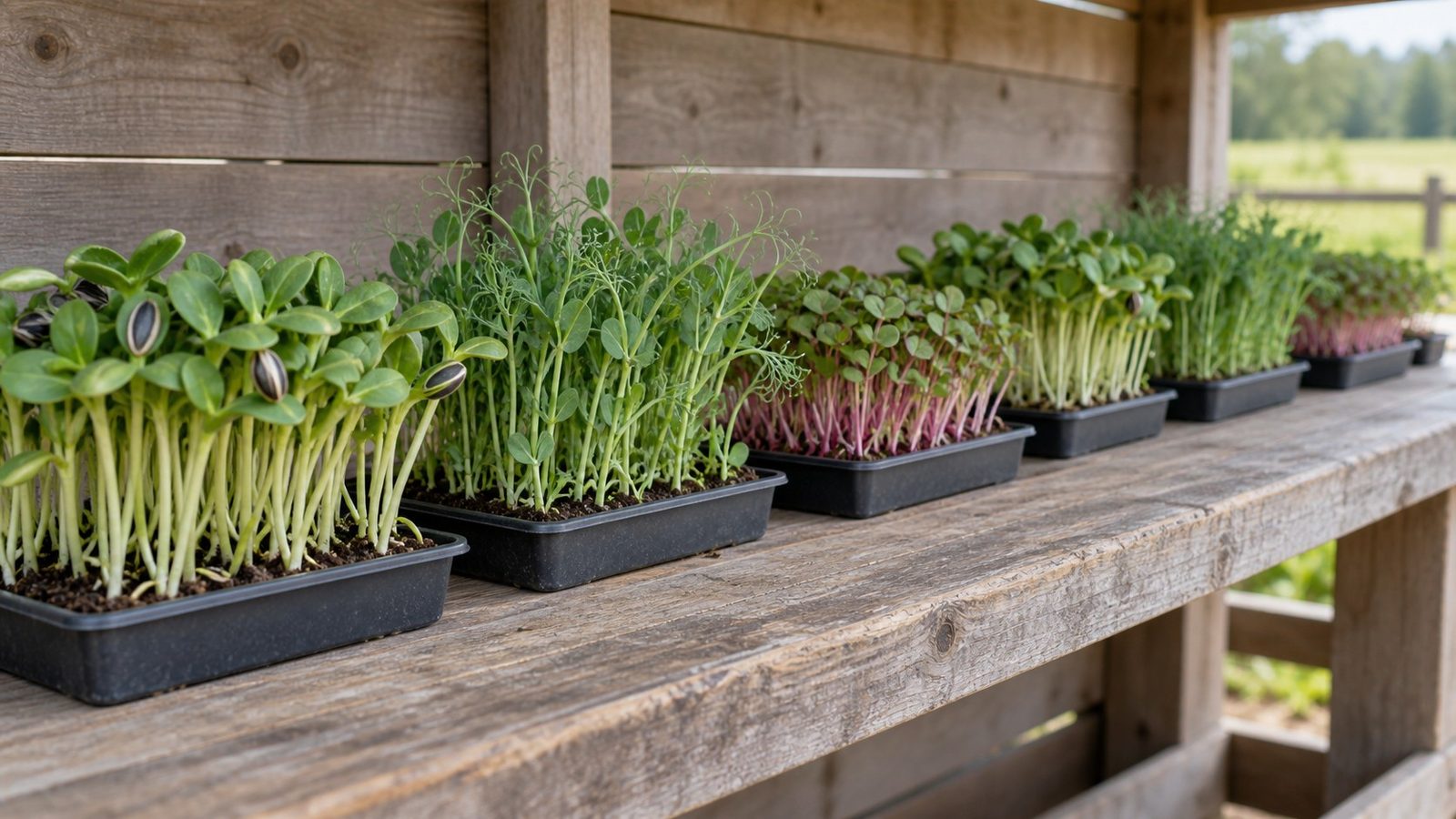
A living microgreens tray is not automatically a plant or automatically produce. The answer turns on why the tray is sold and which state you sell it in. Washington's agriculture department said in its 2019 fact sheets that trays sold for the customer to cut and eat right away, with no propagation purpose, fall outside its nursery license, while ordinary vegetable starts need one.
Most other states have not published an answer, so the licensing call belongs to your own state department of agriculture. On the food side, FDA says microgreens are not sprouts but are still covered produce, and that holds whether you cut them or the buyer does.
Plant or produce: why the roots don't settle it
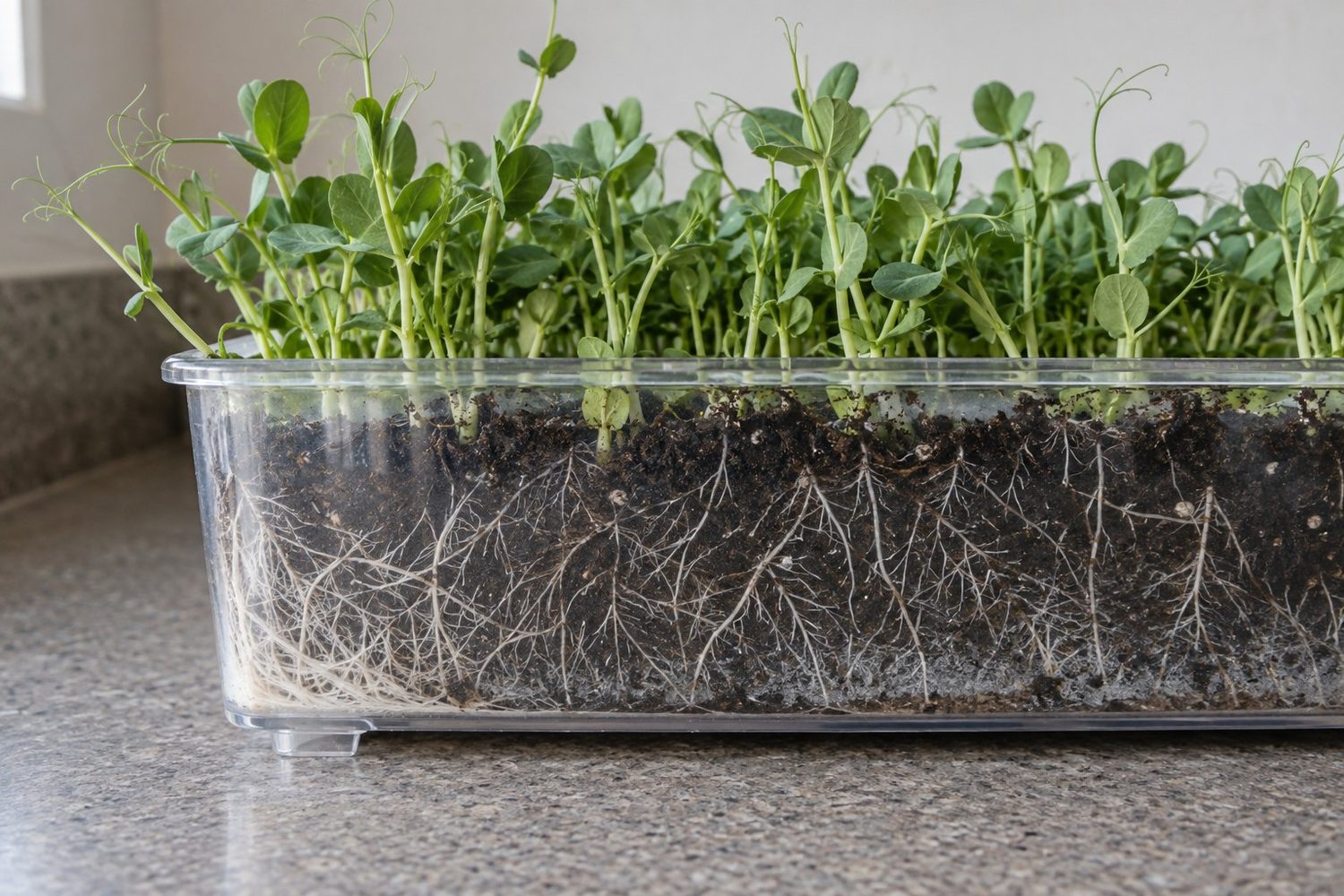
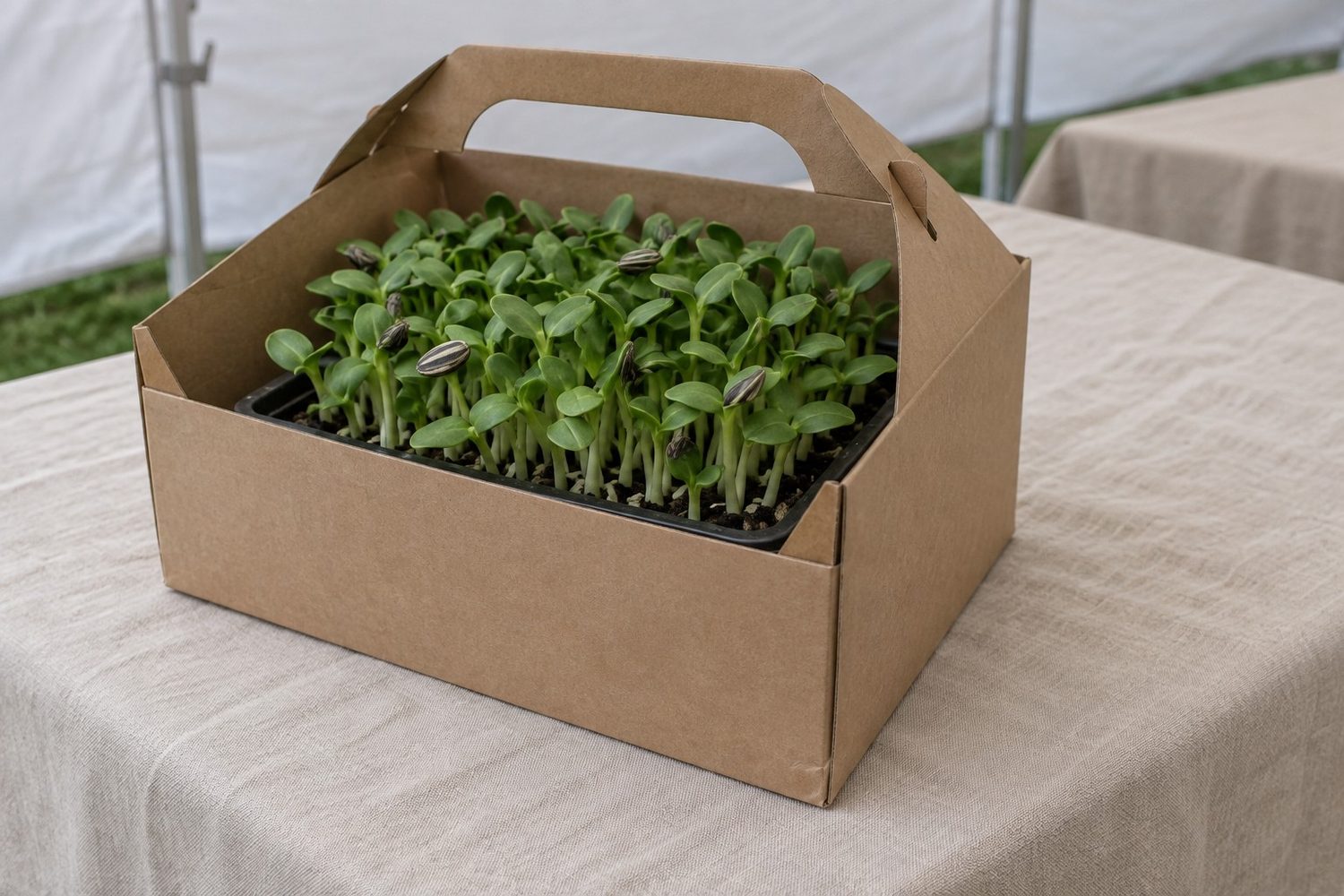
Start with what you are actually handing over. A living tray is a tray, pot or small mat of rooted microgreens sold before the customer cuts it. FDA separates a microgreen from a sprout by its later growth stage and the emergence of true leaves, and it describes microgreens as typically grown in soil or substrate and harvested above the soil or substrate line (FDA, September 2023). That guidance does not name a "living tray" product class, which is why the classification question lands on state rules written for other things.
Washington is the clearest example because its agency drew the line in writing. The Washington State Department of Agriculture (WSDA) calls normally rooted vegetable starts, such as lettuce, broccoli and cabbage starts, nursery products that require a license. The same fact sheet then classifies microgreens still in trays or pots for immediate customer cutting, with no propagation potential, as outside the nursery-license requirement (WSDA nursery-products fact sheet, 2019). Its separate microgreens sheet calls them salad greens (WSDA microgreens fact sheet, 2019). That exception removes the nursery-license trigger in Washington. It does not remove food safety or quarantine obligations, and it only speaks for Washington. The Washington state guide covers the rest of that state's rules.
California shows what the question looks like when an agency has not addressed it. The California Department of Food and Agriculture (CDFA) requires a nursery license before selling plants for planting, propagation or ornamentation. Its published minimum annual license fee is $150, and the fee-exempt path for your own production sold in the same county is limited to under $1,000 in plant sales, per its 2025 flyer (CDFA licensing information, Rev. 11/18/2025). The application form lists "F. Vegetable plants" among nursery stock types (CDFA form 64-029), but neither document addresses edible microgreen trays. If you sell in California, the California state guide is your starting point, and CDFA's nursery program is the office that decides.
New York and Idaho mention microgreens only inside their hemp programs, which says nothing about ordinary radish, broccoli or pea trays. For your own state, put the question in writing, sent to both the plant-health or nursery contact and the produce-safety contact at your state agriculture department:
"If I sell [named crop] as an intact tray or pot in [named medium] solely for the buyer to cut and eat, with no propagation purpose, is it regulated as nursery stock or a plant dealer item, covered produce or food, both, or neither, and what license, inspection, label, and intrastate or interstate movement rule applies?"
Attach a photo, the tray size, the medium, who you plan to sell to, and any states the trays will go to. A verbal answer over the phone is not a ruling, so keep the written reply with your records. Your state guide lists the agency for your state.
What FDA says, and why the cut line matters
FDA's position has two parts, and both apply to a tray. First, microgreens are not sprouts, so they are not subject to Subpart M, the sprout-specific section of the Produce Safety Rule. Second, they are covered produce unless another exclusion or exemption applies (FDA, September 2023). The site's pages on microgreens versus sprouts under Subpart M and the Produce Safety Rule go through who is covered and who is exempt.
FDA does not separately decide the status of a living microgreen tray sold to a consumer. Selling the tray uncut doesn't erase covered-produce obligations; it moves the harvest, which is where FDA draws its line, to the buyer. That same guidance has a passage about sprouts grown in soil or substrate and harvested with roots. For those sprouts, FDA describes enforcement discretion when a commercial buyer agrees each year, in writing, to cut them above the medium before use.
That passage is about sprouts, and FDA does not extend it to microgreens, so don't treat it as a microgreen rule. Washington's 2019 sprouts and microgreens sheet connects the same written-assurance idea to restaurant customers and tells sellers to keep records (WSDA). If a restaurant buyer asks what you need from them, or you want a signed note that they will cut above the medium, confirm with your state produce-safety program what it expects before you write one.
The cut instruction also has plain food safety sense behind it: a buyer who pulls roots and medium into the salad is eating the part the guidance keeps out of the food.
Food safety has to happen before the tray leaves you
Handing the scissors to the customer does not move the risk to the customer. Penn State Extension lists wet and warm production conditions, worker hygiene, irrigation water, tray and tool sanitation, and the substrate itself as food-safety risk points. It warns that growing media can carry E. coli or Listeria and says edible parts should not contact it (Penn State Extension, updated July 29, 2025). With a living tray, the medium travels with the crop all the way to the kitchen counter, so those controls matter more, not less.
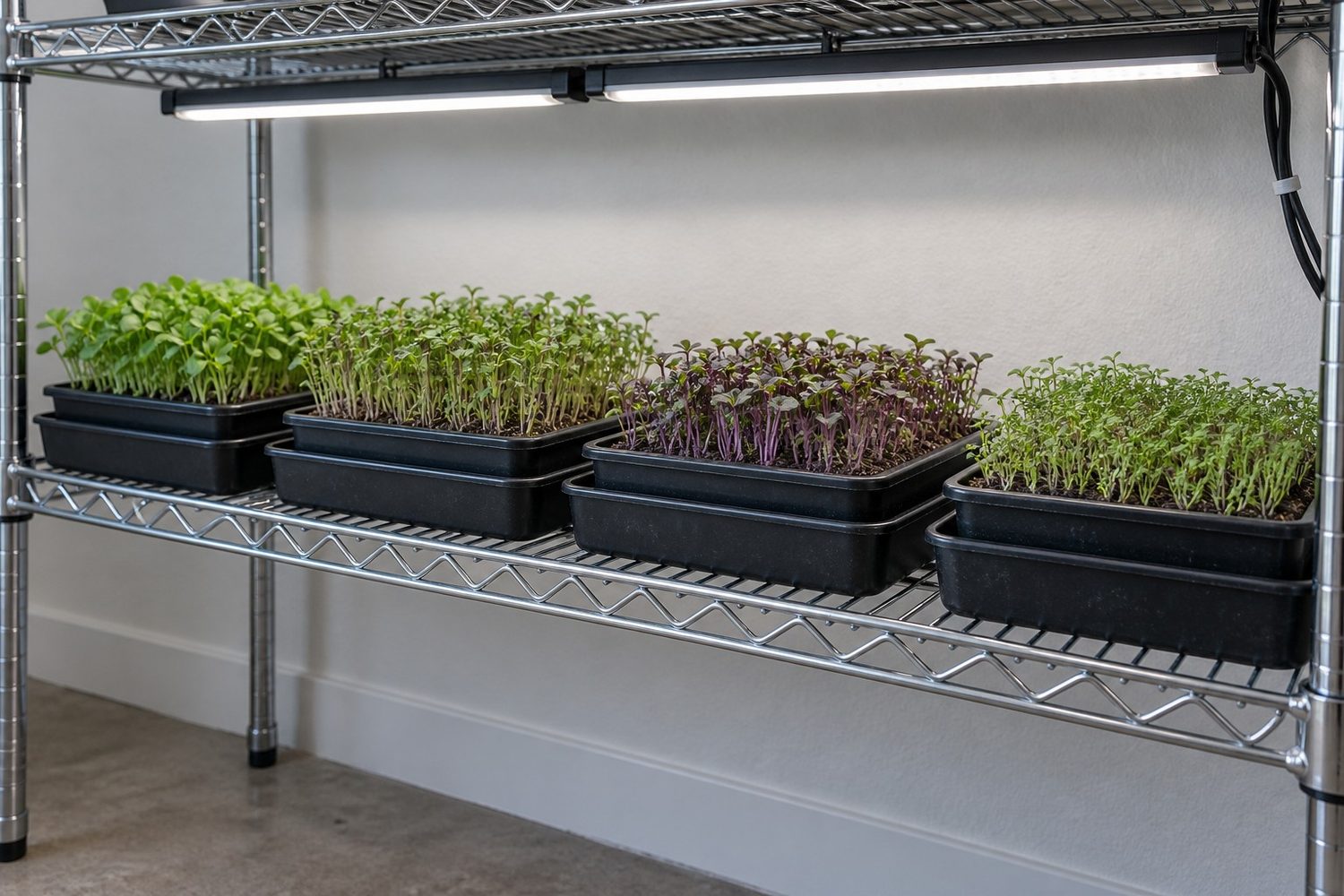
Purdue Extension advises sterile potting soil or coco peat and clean, sanitized supplies, and says never to use unsterilized garden soil indoors (Purdue Extension). UF/IFAS recommends sterile, food-grade containers 2 to 3.5 inches deep and says drainage helps (UF/IFAS). If you are buying trays for resale, food-grade is the spec to look for.
Restaurants add one more constraint. A University of Kentucky Center for Crop Diversification crop profile (Kaiser and Ernst, 2018) says restaurants may receive an intact tray, but only a rockwool slab or growing mat could be marketed that way, because loose growing media "would not be permitted in the food preparation area" (University of Kentucky CCD, 2018, in a compilation PDF). If chefs are your market, grow those trays on a mat, and see the site's guide to selling microgreens to restaurants and chefs for how accounts order.
For the trip itself, Johnny's Selected Seeds, a supplier, suggests selling live product in its tray or in clamshells so it isn't crushed (Johnny's supplier guide, November 28, 2022). Start with a leak-catching base tray and a "keep upright" label, run a few test drops on your real route, and note what shifts.
Care and cutting instructions to hand the buyer
Your buyer is about to finish the harvest you started, so the card in the bag does real work. What follows is what the sources support, and where each piece comes from.
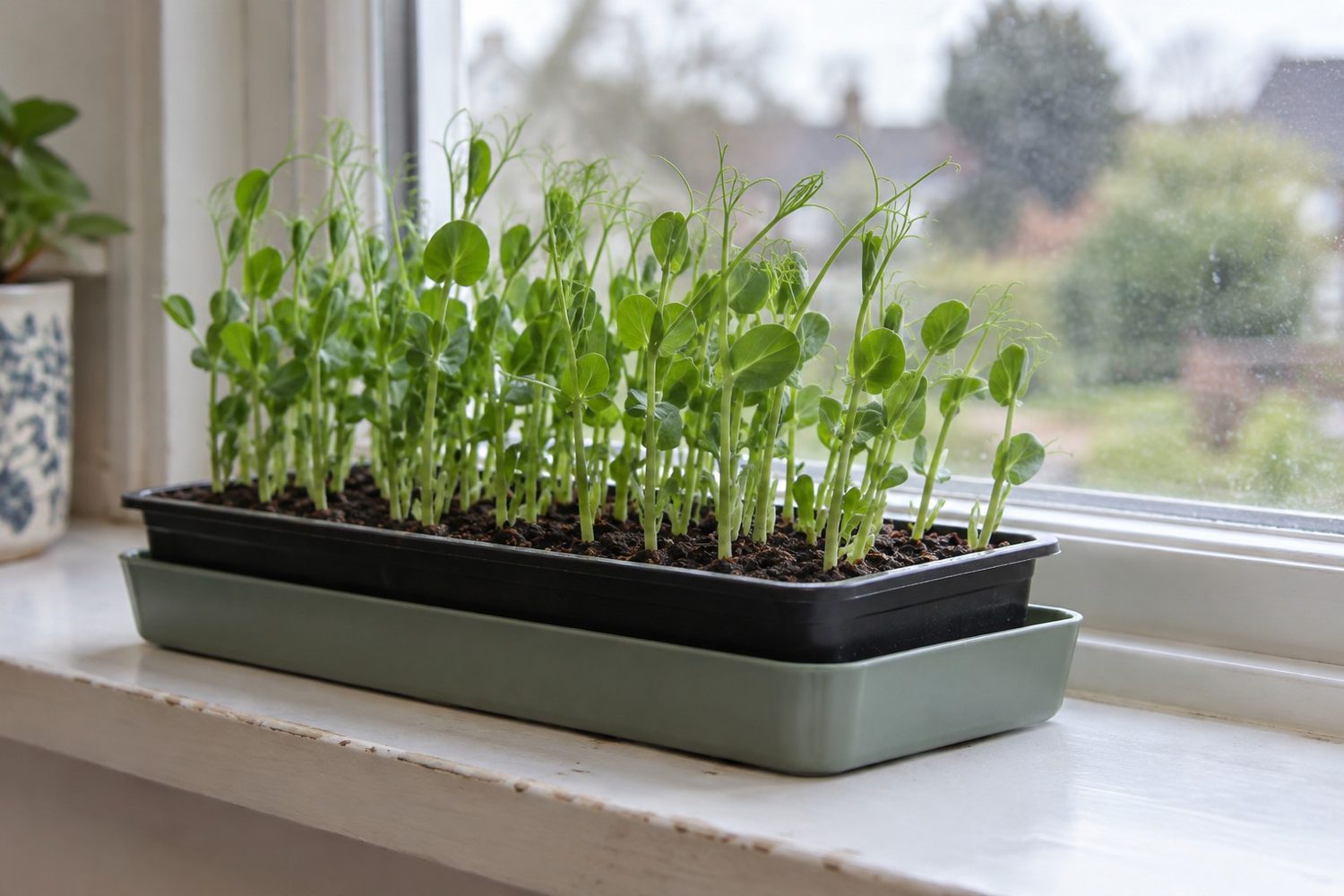
- Cut above the medium. Use clean scissors or a clean sharp knife and cut just above the soil or mat line (University of Maryland Extension).
- Do not pull roots or medium into food. This follows FDA's above-medium harvest boundary.
- Keep the medium moist, not soaked. Maryland Extension gives that as the moisture target.
- Rinse before eating if you choose to wash, then dry. Maryland Extension's home instruction is to rinse, pat dry and use. Don't suggest that washing makes contaminated greens safe.
- They won't grow back. Seedlings do not regrow after cutting, per Maryland Extension, so buyers should cut what they need.
- What to do with the tray afterward. Maryland Extension says trays can be washed and reused with fresh medium, or old and new medium blended 50:50; Purdue says most media are not reusable but may be compostable with the roots. Only promise compostability once you know exactly which tray and medium you used.
For light and watering, one seller's card is a useful model of the format. The MicroGreens Farm tells buyers to keep the tray in indirect light, add a splash of water to the base every day or two, and cut with clean scissors above the soil line (The MicroGreens Farm, observed September 12, 2026). That interval is one farm's practice, not a published standard. Watch how your own crop behaves in a customer's kitchen conditions and write your card from that, variety by variety.
Don't print a holding time you haven't tested. The site's page on storing microgreens in soil covers keeping a rooted tray going and is a good link for the card.
On the label itself, ask your state agency whether it prescribes a microgreen-tray-specific label. A practical minimum, pending your state's answer, is the plant or common name, "cut above medium; do not eat roots or medium," your farm contact, and a lot or date. Add weight only if you sell by weight. The FDA label requirements page covers packaged-food labeling in more detail.
How sellers are pricing living trays right now
These are prices individual sellers listed on September 12, 2026. They are observations of what a few farms charge, not a market average, and they will change.
Hover or tap a row to highlight it.
| Seller | Location | Tray | Listed price (September 12, 2026) |
|---|---|---|---|
| Sprouts Alive | Austin, Texas | 10-by-20 organic pea-shoot live tray | $15 |
| ChefPax | Manor, Texas | 5-by-5 live tray | $12 retail, $10 wholesale |
| ChefPax | Manor, Texas | 10-by-20 standard live tray | $30 retail, $24 wholesale |
| ChefPax | Manor, Texas | 10-by-20 live trays, full range including specialty | $28 to $48 retail; $22 to $38 wholesale for 10-plus trays |
ChefPax says restaurant accounts commonly order 15 to 30 trays a week, with a 10-tray minimum for standing weekly delivery. Its returns page says live trays aren't eligible for standard returns once delivered or picked up, but a quality problem reported within 24 hours may get a replacement, store credit or refund (ChefPax returns, checked September 12, 2026). Sprouts Alive serves Austin restaurants by the pound or by the living tray. It also lists 4 ounces of pea shoots at $5, but it doesn't say whether a tray yields a matching amount, so you can't turn those two numbers into a per-ounce comparison.
The same day, The MicroGreens Farm in Charleston listed a delivered 10-by-20 tray at $28, or $24 as a weekly subscription, and Oldsmar FreshCut listed a 5-by-5 living tray at $7.50.
One thing shapes how you use these numbers: a living-tray sale and a cut sale cost different amounts once you count the tray, medium, harvest labor, packing, delivery, cleaning, losses and yield. Johnny's says live trays can save harvest labor, but that's a supplier statement, not a cost breakdown. So, price by the tray unless you've actually harvested and weighed a matched tray of the same variety. Keep a dated batch ledger with seed, medium, tray cost spread over its reuse, labor minutes, delivery miles, returns and harvested ounces, and set your price from your own numbers. The pricing guide walks through that math, and the subscriptions and delivery guide covers standing orders.
Crossing a state line with a tray
A tray keeps its soil, and soil is where federal rules come in. For ordinary sales within one state, ask your state's agriculture department whether an APHIS inspection or certificate applies to a clean, edible microgreen tray. Across state lines it is different: APHIS regulates domestic soil movement from quarantine areas because soil can harbor plant pests and diseases, and that movement may require a compliance agreement (APHIS, modified July 3, 2025). That doesn't create a blanket permit rule for every tray, and it doesn't replace the destination state's own nursery or plant-health rules. Read the site's guide to shipping live trays across state lines before you send one out of state.
Frequently asked questions
Is a living microgreens tray taxed as food or as a plant?
It depends on the state. In California, CDTFA says a plant whose product will be food is not taxable, and Regulation 1588 exempts plants whose products ordinarily constitute food, while its grocery guide lists nursery stock among taxable sales. Ask your state revenue department for a written ruling before you choose food or plant tax treatment.
Can I sell living trays at a farmers market?
Markets often list plants and produce as separate allowed categories rather than decide what a tray is. Tukwila, Washington, for example, allows both fresh vegetables and nursery stock and plants, and asks vendors to supply nursery and food-processor licenses "where applicable" (City of Tukwila). Get your state's classification first, then ask the market manager whether it will list the tray as produce, plant or both. The farmers markets guide has more on selling at markets.
What label rules apply if I pack trays as food?
If the tray is packaged as food through a food establishment, FDA's model Food Code calls for the common name, an ingredient list when the food has two or more ingredients, net quantity, business name and place, and allergen source as applicable (FDA Food Code). For farm-packaged food reaching consumers, FDA's traceability exemptions page describes a packaging condition that requires the farm name, complete address and business phone (FDA). Nutrition labeling on raw produce stays voluntary unless you make a nutrient claim.
Does selling living trays change my insurance?
One seller, ChefPax, lists $1 million/$2 million general and product liability insurance as its own credential, which shows what one farm carries, not what is required. Ask your insurer in writing, naming rooted edible microgreens in substrate, your sales channel, delivery and state.
Before you sell the first tray
Write to your state agriculture department with the one question above, and keep the reply. Grow on sterile medium in food-grade containers, and use a mat if chefs are the buyers. Print a card that says to cut above the medium and keep roots out of the food. Then track a few batches from seed to sale, so the price on your first tray comes from your own ledger, with the prices other farms listed this September as a reference point rather than a target.
Sources
Prices, stock and specifications are as the linked pages showed them on 2026-09-12.
- FDA, September 2023
- WSDA nursery-products fact sheet, 2019
- WSDA microgreens fact sheet, 2019
- CDFA licensing information, Rev. 11/18/2025
- CDFA form 64-029
- Penn State Extension, updated July 29, 2025
- Purdue Extension
- UF/IFAS
- University of Kentucky CCD, 2018, in a compilation PDF
- Johnny's supplier guide, November 28, 2022
- University of Maryland Extension
- The MicroGreens Farm, observed September 12, 2026
- Sprouts Alive
- ChefPax
- ChefPax returns, checked September 12, 2026
- APHIS, modified July 3, 2025
- Regulation 1588
- grocery guide
- City of Tukwila
- FDA Food Code
- FDA
Keep reading
The journal
Do I Need a License to Sell Microgreens?
Do I need a license to sell microgreens at a market, to a restaurant, or to neighbors? Find your state's answer, its condition, and what would change it.
Read Do I Need a License to Sell Microgreens?The journal
How to Sell Microgreens: Your First Sale, Step by Step
How to sell microgreens for your first sale: check the rules, keep records, get insurance, find a buyer, pack, price, and deliver cold, then review.
Read How to Sell Microgreens: Your First Sale, Step by StepThe journal
How to Write a Microgreens Food Safety Plan
Build a microgreens food safety plan section by section, pick a free template to start from, and know which records buyers, markets and audits expect.
Read How to Write a Microgreens Food Safety PlanThe journal
Microgreen Powder Business Math: Yield, Price, and the Rules
Before you start a microgreen powder business, run the numbers. See the dry weight yield, a tray revenue comparison, and the rules for a processed food.
Read Microgreen Powder Business Math: Yield, Price, and the Rules