How to Store Microgreens in Soil and Keep Them Growing
Cal HewittPublished Checked
- growing
- storage
- harvest
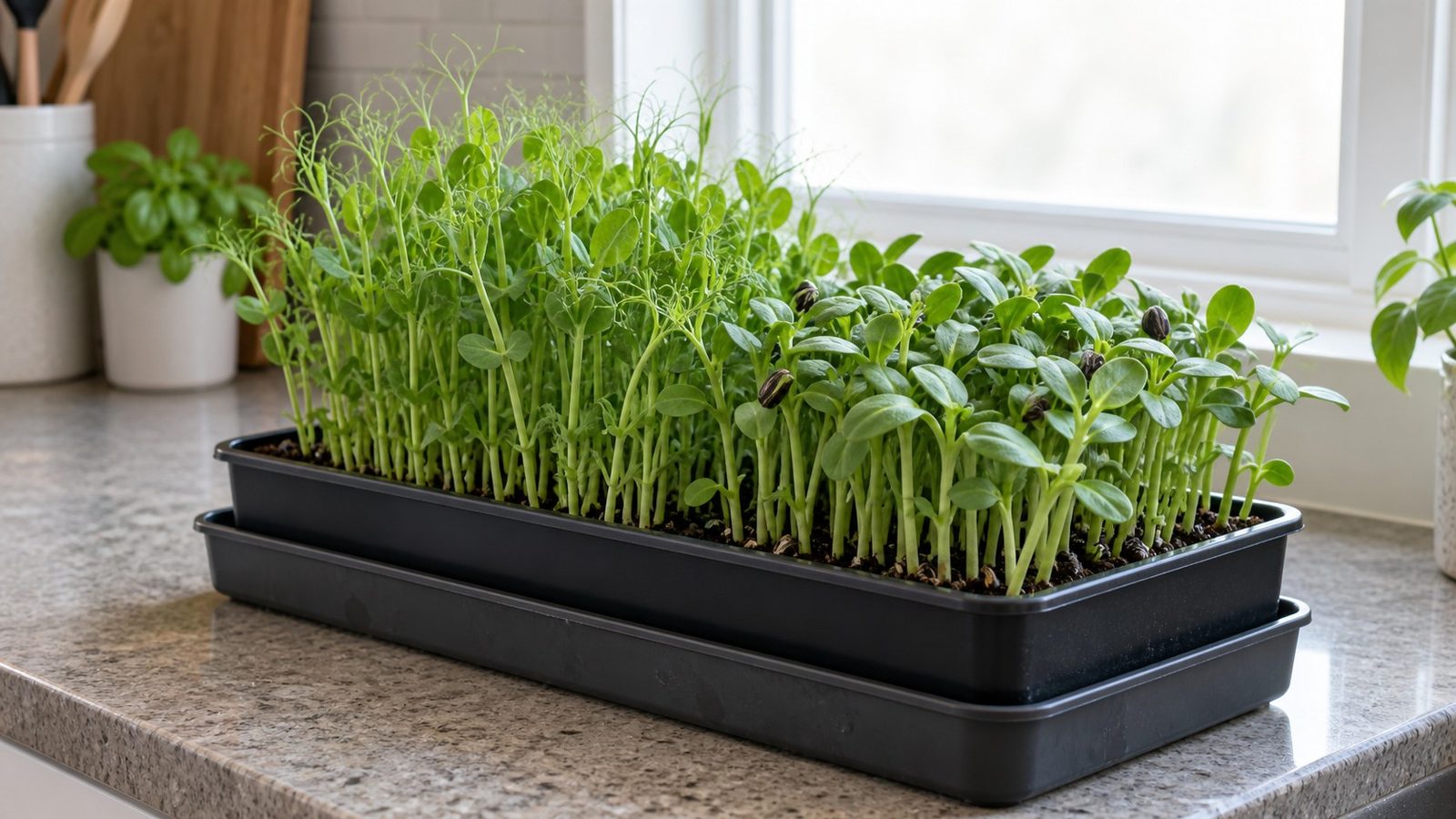
You can keep an uncut tray alive in its soil for a few more days, but it won't hold still while you wait. A rooted tray keeps growing: true leaves get bigger, stems can stretch, and flavor and texture change. What you can slow is the risk of losing it, not the growth itself.
Keep it in light rather than darkness, bottom water only as the medium starts to dry, pour off what the roots don't take up, keep air moving gently, and look at it every day. Hold a tray past harvest only while it still looks good; the tray itself is your clock.
A growing tray is held, not stored
A cut crop sits in the refrigerator and slowly declines. A rooted tray keeps putting on leaves and height, so what you liked about it at harvest stage is already moving on. The University of Maryland Extension defines microgreens as seedlings eaten at the true-leaf stage and says to cut them at the soil line at that point.
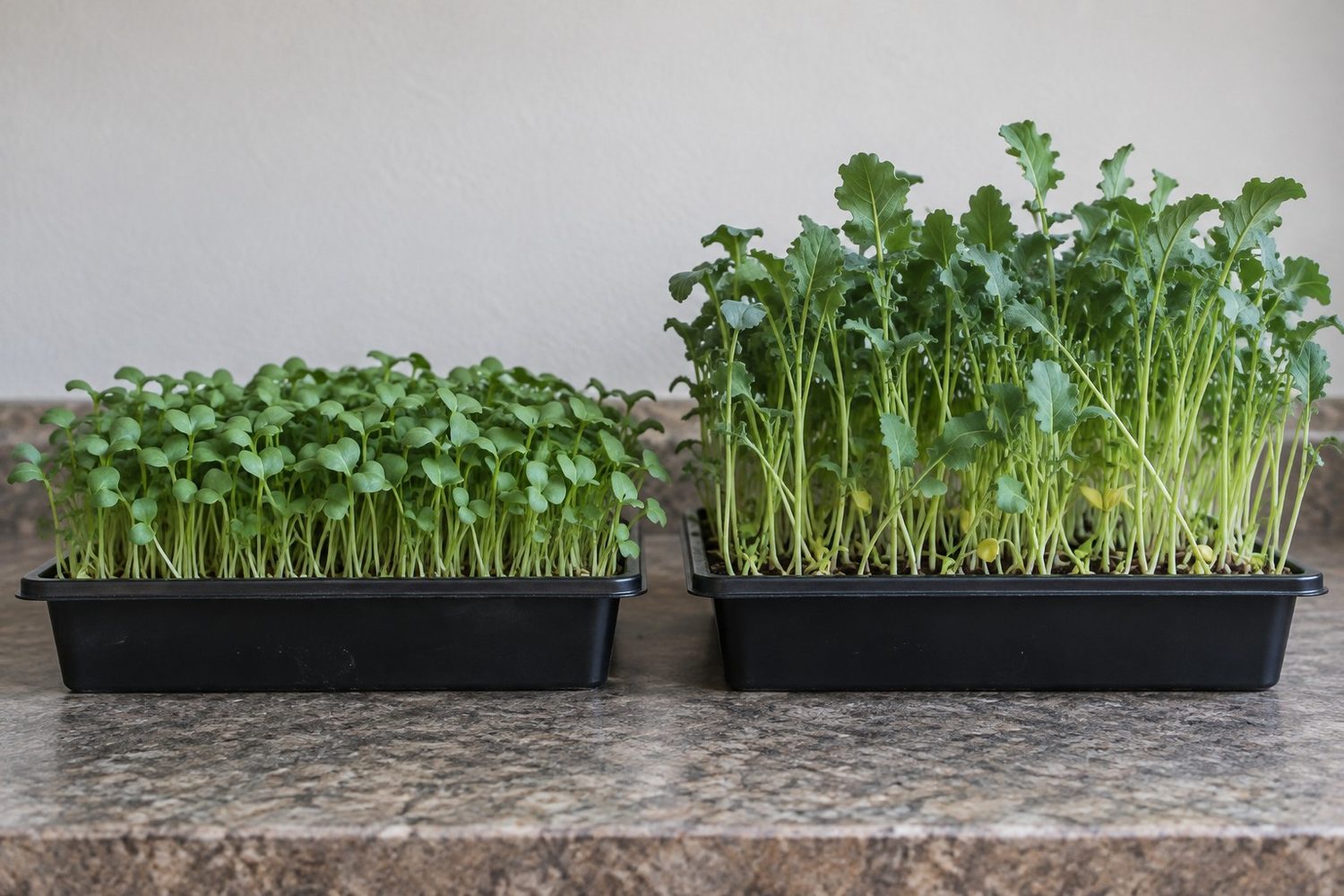
Virginia Tech places the harvest window between the first true leaves forming and those true leaves fully emerging, and its production table gives normal sow-to-harvest ranges of 8 to 13 days for broccoli, 6 to 10 days for radish, and 9 to 12 days for sunflower. Those ranges tell you when a tray is normally ready. They don't tell you how many days it has left after that.
Maryland also draws a size line. It puts microgreens at 2 to 3 inches and 7 to 21 days after sowing, and baby greens at 4 to 6 inches and 21 to 40 days. A tray you hold past its first ready day drifts toward the second group, so it's more accurate to call it overgrown microgreens than a preserved crop. If you decide to grow it on into baby greens, it needs more light, water, root space, and often nutrition, which makes it a new crop rather than a held one. For more on what changes at each harvest stage, see the stage breakdown.
If you have already cut the tray, storing cut microgreens is a different job with its own steps. Everything below is about the tray that still has roots in the medium.
How long a rooted tray will hold
A rooted tray has no tested hold time, so start from your own trays. Write down the crop, the temperature, the light level, your watering routine, and the day the tray stops being worth cutting. Virginia Tech notes that harvest timing affects yield, shelf life, and nutritional quality, but it doesn't test a living tray held beyond that point.
The figures you will run into come from growers who sell living trays and describe how their own trays behave. The MicroGreens Farm says its living trays, a range that includes peas, sunflower, radish, broccoli, and wheatgrass, keep 1 to 2 weeks on a counter with indirect light and a splash of water in the base tray every day or two. It doesn't give a counter temperature, a light level, a water amount, or days for each crop. Its FAQ adds that pea shoots and sunflower hold longest, again without a number per crop.
ChefPax says its pea, sunflower, and broccoli live trays stay harvestable for 2 to 3 weeks in a cool spot at 40 to 55°F, with indirect or low light and 1 to 2 ounces of water in the base every 1 to 2 days. It also says a tray can sit on the top rack of a walk-in refrigerator for up to 1 week. Those crops are pooled into one claim rather than compared.
Both are what those sellers say about their own trays in their own conditions. Neither is a measured shelf life, and neither transfers cleanly to a different crop, room, light, or seeding density. So, count days on your own tray instead: write down the date it first looked ready, and note what you see each day after that.
Water less often, and keep it moist rather than wet
The one watering change the research supports for a held tray is about how often you water, not what the medium should feel like. Keep it moist, not saturated, and water only as it begins to dry. Maryland recommends bottom watering and a medium that is "moist but not saturated." Illinois Extension says bottom watering keeps the shoots drier and less prone to disease, and warns against overwatering.
The reason to hold back is disease. Perennia's microgreens fact sheet says saturated medium restricts the roots' access to air spaces and contributes to damping off. Going too far the other way causes wilt, and a tray that was fine yesterday can fail from either mistake.
The crop, the medium, the tray size, the temperature, and the light all change how much water a tray uses, so find your tray's number. Maryland describes a growing tray with drainage sitting inside a second tray that catches water, and that setup makes the routine simple:
- Bottom water by adding water to the lower tray and letting the medium draw it up.
- Once the medium has taken up what it will, pour off whatever is still standing in the lower tray.
- Set the tray on a kitchen scale and write down the weight.
- Weigh it again each day. When it has dropped noticeably and the surface of the medium is starting to dry, water again and record both weights.
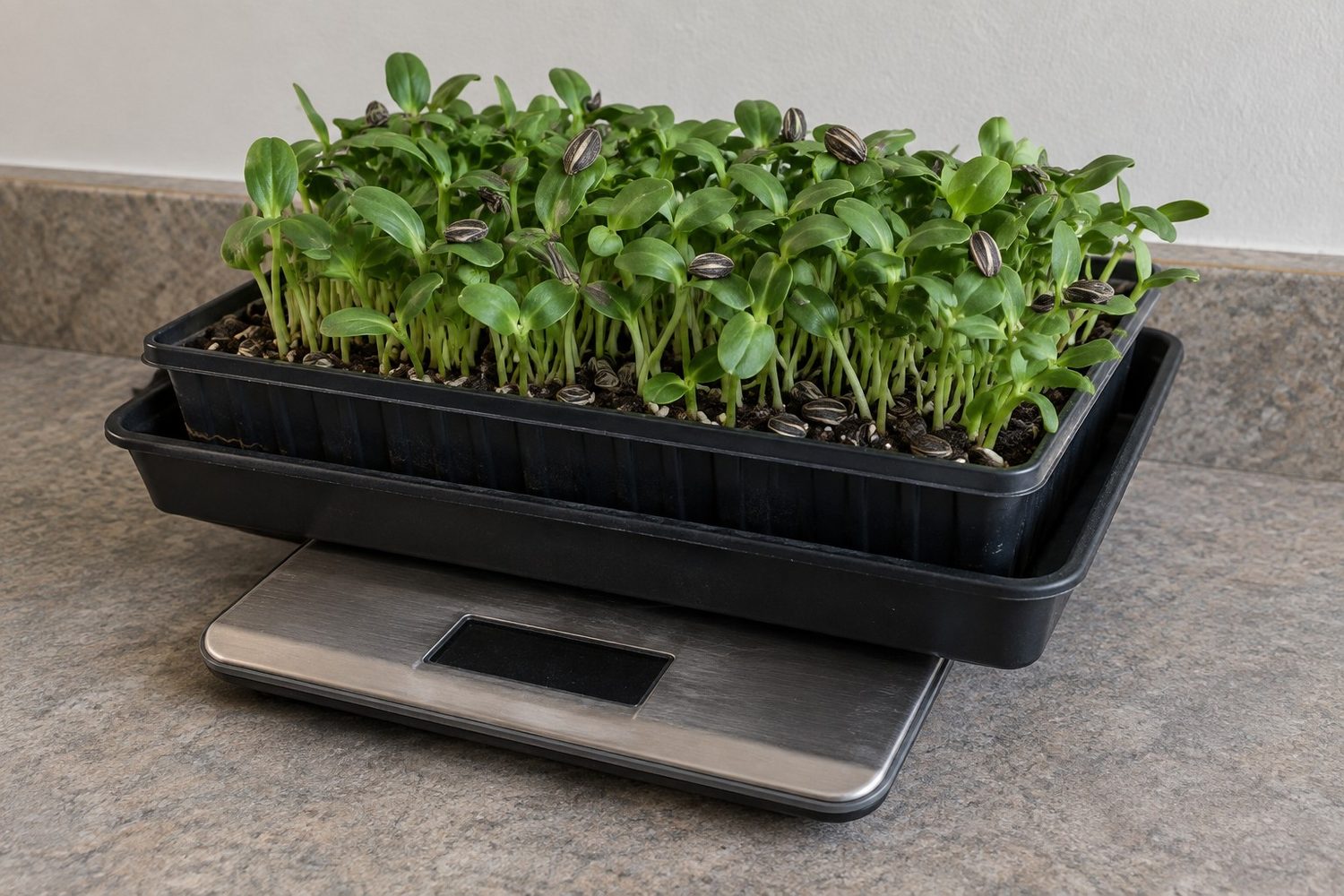
After a few days you'll know how fast your tray dries in your room. The routine for watering microgreens still applies; a held tray just needs it less often and never needs wet leaves.
Light, airflow, and temperature while you wait
Darkness is not a good way to slow a tray. Maryland notes that a few days of blackout after germination makes stems lengthen, which is a growing technique used before harvest, not a way to hold a ready tray. Marvel Farms tells buyers of its living trays to avoid total darkness because trays stretch and yellow, and recommends a bright window or a grow light, adding that direct sun isn't needed. If you try shade, compare against a tray in normal light to see whether it costs color or texture.
Air movement has better support, as disease prevention rather than as extra days. Maryland says a gentle fan breeze discourages disease in dense plantings and that any cover should be vented so moisture doesn't encourage mold. Perennia names dense planting in warm, humid conditions as a major source of damping-off pressure and says airflow reduces the risk. Aim for gentle movement, not a fan that dries the leaves out. Watch for condensation and adjust.
Temperature is where you have the most to work out yourself. The 70 to 75°F range Maryland gives is where microgreens germinate and grow well, not a holding temperature. The 41°F figure in Virginia Tech's guide is for stored microgreens and doesn't refer to rooted trays. ChefPax's 40 to 55°F for holding a living tray is seller practice rather than a tested result. If you hold a tray somewhere cooler than your usual growing spot, keep a note of the temperature alongside your daily observations.
Cutting some now and holding the rest
You don't have to choose between harvesting everything and holding everything. Cut what you need and leave the rest rooted. Marvel Farms tells buyers to harvest only what they need and not to pull up roots, because that damages the rest of the tray. The MicroGreens Farm tells buyers to cut above the soil with clean scissors and says the uncut part keeps growing.
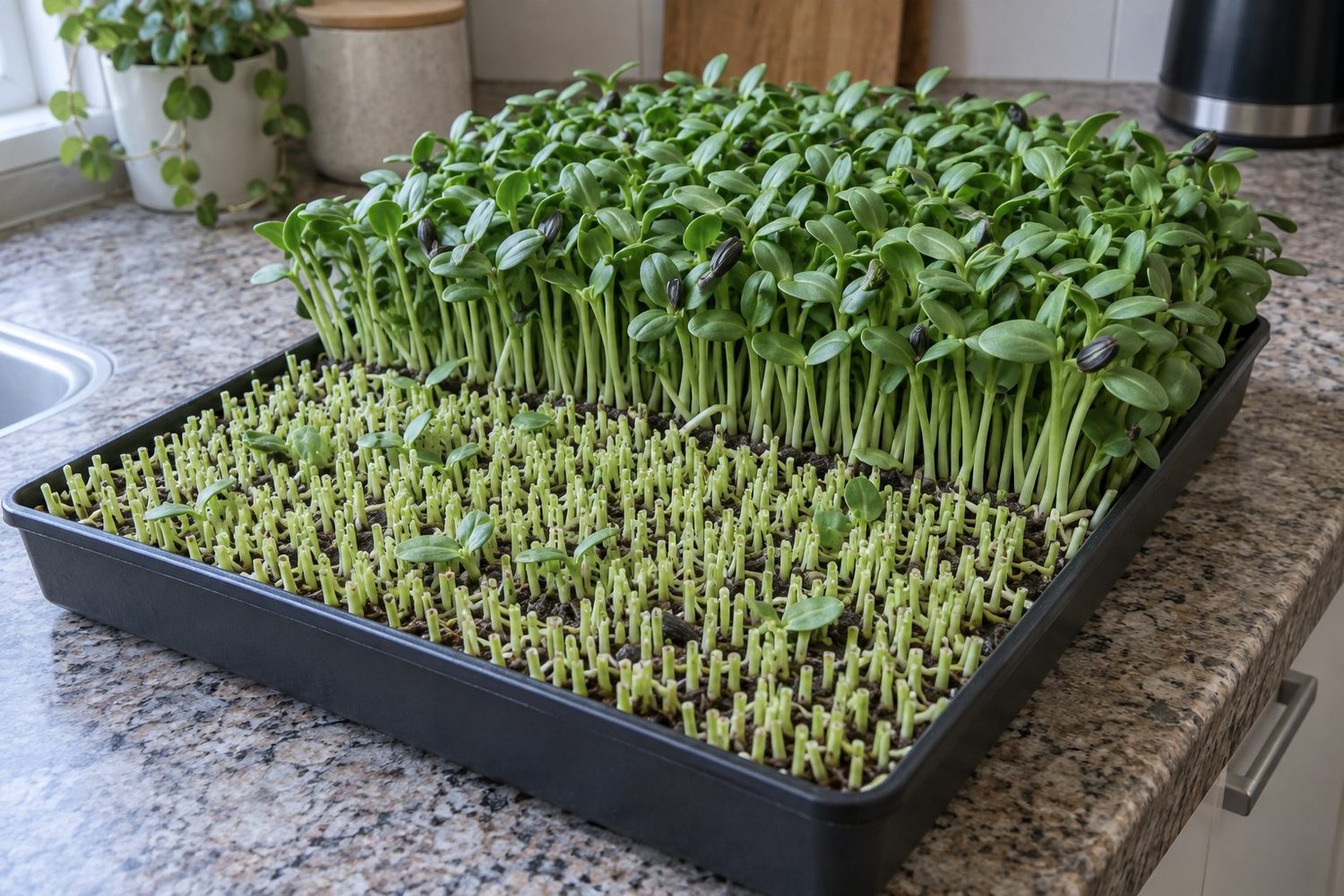
Cut high enough to keep the medium out of the harvest. The North Carolina Department of Agriculture microgreen produce safety fact sheet instructs growers to cut far enough above the medium to avoid contamination. Note how many days the uncut section lasts after a partial harvest.
Don't count the cut section as a second crop in waiting. Maryland says the seedlings will not regrow, and Perennia explains why: the growing point is removed when you cut. The MicroGreens Farm says peas often give a smaller second cut while most other crops don't, so note the size, quality, and timing of any second cut yourself. The details on whether microgreens regrow are covered on their own page.
What to check every day
Go by the tray's appearance and taste rather than the calendar. Check it at about the same time each day.
True leaves. More true leaves, or true leaves getting noticeably larger, mean the tray is moving past the microgreens target toward baby greens. It's usually still edible at that point; it is just a different product.
Height and stretch. Stems getting long and thin, or starting to bend and fall over, tell you the tray has grown beyond the microgreen target.
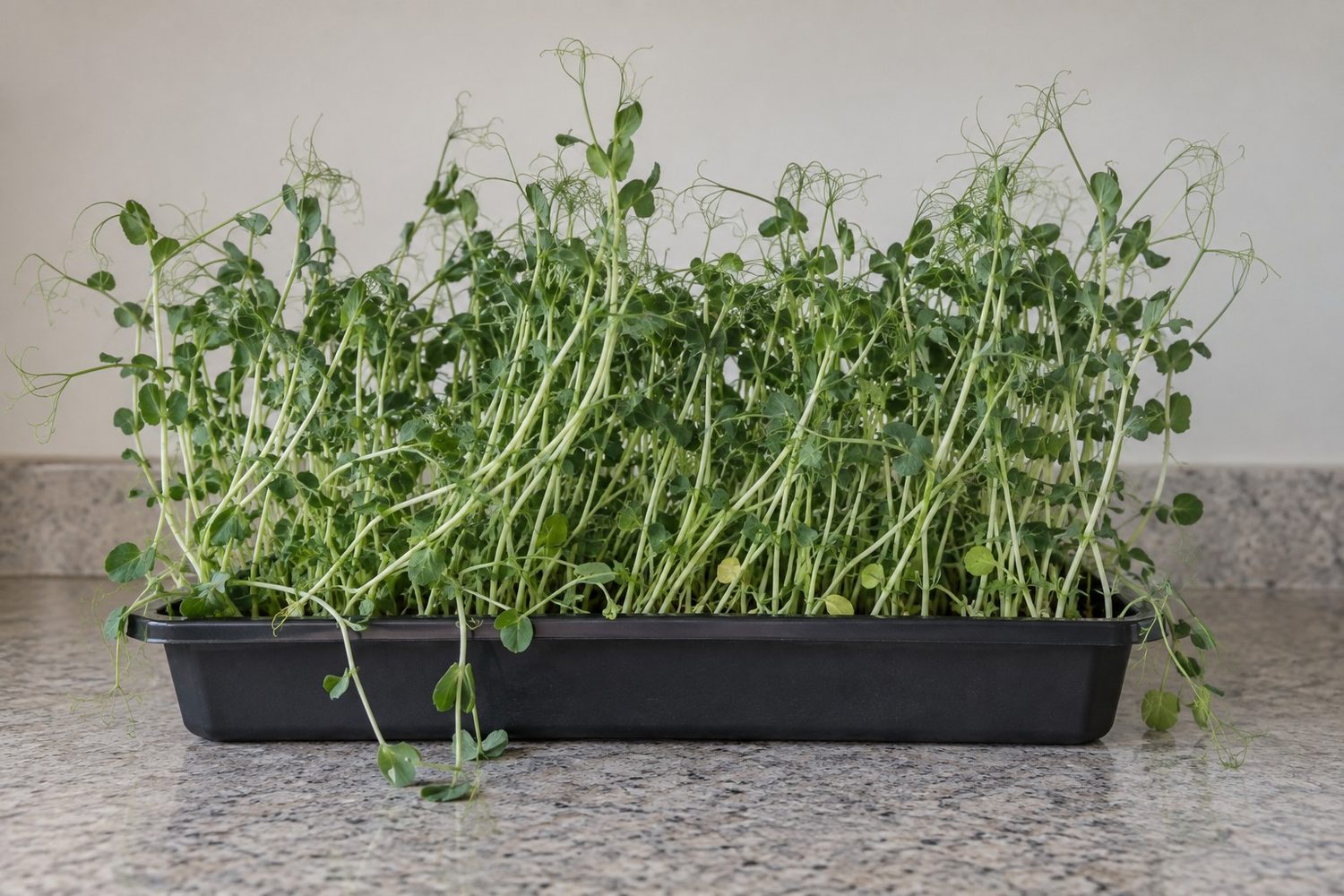
Color. Marvel Farms links yellowing, along with stretching, to trays kept in darkness, so a paling tray in a dim spot is a reason to move it into more light.
Texture and taste. Pinch off a few shoots and taste them. One grower in a Reddit thread reported harvesting sunflower at roughly day 7 and peas around day 8, then found the sunflower had turned bitter after two more days under light as its second leaves enlarged, in a room at 75 to 80°F with about 65% humidity and 12 to 14 hours of light a day. That's one setup, not a rule, but bitterness is exactly the kind of change to watch for.
Write it down as you go: the first ready date, each day's weight before and after watering, how the leaves and stems look, and a photo under the same light each time. That record tells you how long this crop lasts in your room.
When to stop holding the tray
Some changes mean the tray is finished for eating, not just past its best. Perennia describes damping off as thin, thread-like stems and cobweb-like growth on the plants, especially in high humidity, and says it can spread through a tray. Mississippi State Extension lists wilting, collapse, and dying or missing seedlings as symptoms.
Throw the tray out if you see fuzzy or cobweb-like growth, slimy or collapsing shoots, wilt that doesn't recover after appropriate watering, water pooling in the medium, or a musty or rotten smell. Don't trim away a visibly affected patch and treat the rest as safe. Smell alone can't show that a tray is safe.
A held tray keeps its edible shoots beside the medium and water for days. The North Carolina fact sheet says irrigation water must be of safe, sanitary quality and warns growers to avoid pathogens in soil, substrate, and amendments. A 2024 study summarized by the EPA found that deliberately contaminated perlite and seed could transfer Salmonella, E. coli O157:H7, and Listeria to microgreens, at levels from 1.6 to 7.7 log CFU per gram. That doesn't mean contamination is routine, but dirty inputs can reach the part you eat, so use clean scissors, trays, and water.
If you sell living trays
Selling trays uncut is an established product form. Virginia Tech notes that some markets sell microgreens with roots and substrate attached, and Alberta Agriculture's commercial microgreens guide lists living tray microgreens as a finished product and says food handling permit or facility requirements may apply. That guide is Canadian, so ask the office that regulates food sales where you sell what applies to you.
Build your own holding window for a living tray from records kept per crop and batch, and base customer care instructions and a conservative harvest window on those records rather than a general shelf life.
Common questions about keeping a tray alive
These cover the situations that come up once a tray has been held for a few days.
Can I put a living tray in the refrigerator to pause it?
Refrigerating a rooted tray hasn't been tested in published research, so there is no known safe duration, temperature, or cover for it. In a 2025 Reddit discussion, a seller reported that open refrigeration dried live trays out and that a breathable container cut down on evaporation. If you try it, use a clean cover that isn't airtight, check for condensation on the leaves, and stop at any sign of mold or odor.
How long will the tray last once it comes back out of the cold?
Note how long your own tray lasts. ChefPax says refrigeration pauses growth but doesn't say what happens after a tray returns to room temperature. Treat a tray that has been cold as a new start, and go back to checking leaves, stems, color, and taste every day.
Is a tray that has grown well past harvest still worth eating?
Often it is, as a larger and different green. In an older Reddit thread, one grower said living trays usually lasted about 2 weeks, and another said one-month-old greens were still edible but had second leaves and were only good for home use. Those are individual reports; the disease and odor signs above decide whether a tray gets eaten, not its age.
Does soil, coir, or a hemp mat change how long a tray holds?
That hasn't been established. A 2020 substrate study found that the growing medium changed yield and composition in coriander, kohlrabi, and pak choi before harvest, which can affect the condition a tray starts from. Slower growth on one medium doesn't automatically mean a longer hold.
Where that leaves your tray
A tray that is ready before you are can wait, but it keeps changing while it does. Keep it in light, bottom water only as the medium begins to dry, pour off standing water, and cut what you need while the rest stays rooted. The sellers' figures of 1 to 2 weeks on a counter, 2 to 3 weeks somewhere cool, or up to a week in a walk-in refrigerator describe their own trays, not a tested shelf life. Check yours daily for bigger true leaves, stretch, color, and taste, and cut or compost it when those signs say it's time.
Sources
Prices, stock and specifications are as the linked pages showed them on 2026-09-12.
- University of Maryland Extension
- Virginia Tech
- The MicroGreens Farm
- FAQ
- ChefPax
- Illinois Extension
- Perennia's microgreens fact sheet
- Marvel Farms
- North Carolina Department of Agriculture microgreen produce safety fact sheet
- Reddit thread
- Mississippi State Extension
- 2024 study summarized by the EPA
- Alberta Agriculture's commercial microgreens guide
- 2025 Reddit discussion
- Reddit thread
- 2020 substrate study
Keep reading
The test bench
Microgreens Storage Containers: The Package Is Not the Variable
Deli cups run 10 cents and clamshells start at 16.5 cents. What moves shelf life is how cold the fridge is and how dry the crop went in.
Read Microgreens Storage Containers: The Package Is Not the VariableThe journal
How Long Do Microgreen Seeds Last in Storage?
How long do microgreen seeds last on the shelf? Compare sourced storage ranges by crop, learn why tables disagree, and test old seed before wasting a tray.
Read How Long Do Microgreen Seeds Last in Storage?Growing guides
Day 8 against day 14: what you are actually trading by waiting
The largest yield gain in the harvest-stage literature is 80.1 percent. Divide it by the five extra days it cost and it is worth 5.1 percent. Nutrient concentration does not peak; some compounds rise, some fall, and the studies report concentration rather than the total per tray.
Read Day 8 against day 14: what you are actually trading by waitingGrowing guides
Do microgreens regrow after cutting?
A normal microgreen cut removes the growing point, so there is usually nothing left to regrow from. Roots do not make a new shoot; a surviving node does. The one documented path takes 3 to 4 weeks, about twice as long as sowing a fresh tray.
Read Do microgreens regrow after cutting?