Microgreen Growers Insurance: Costs, Limits and Markets
Cal HewittPublished Checked
- business planning
- selling microgreens
- economics
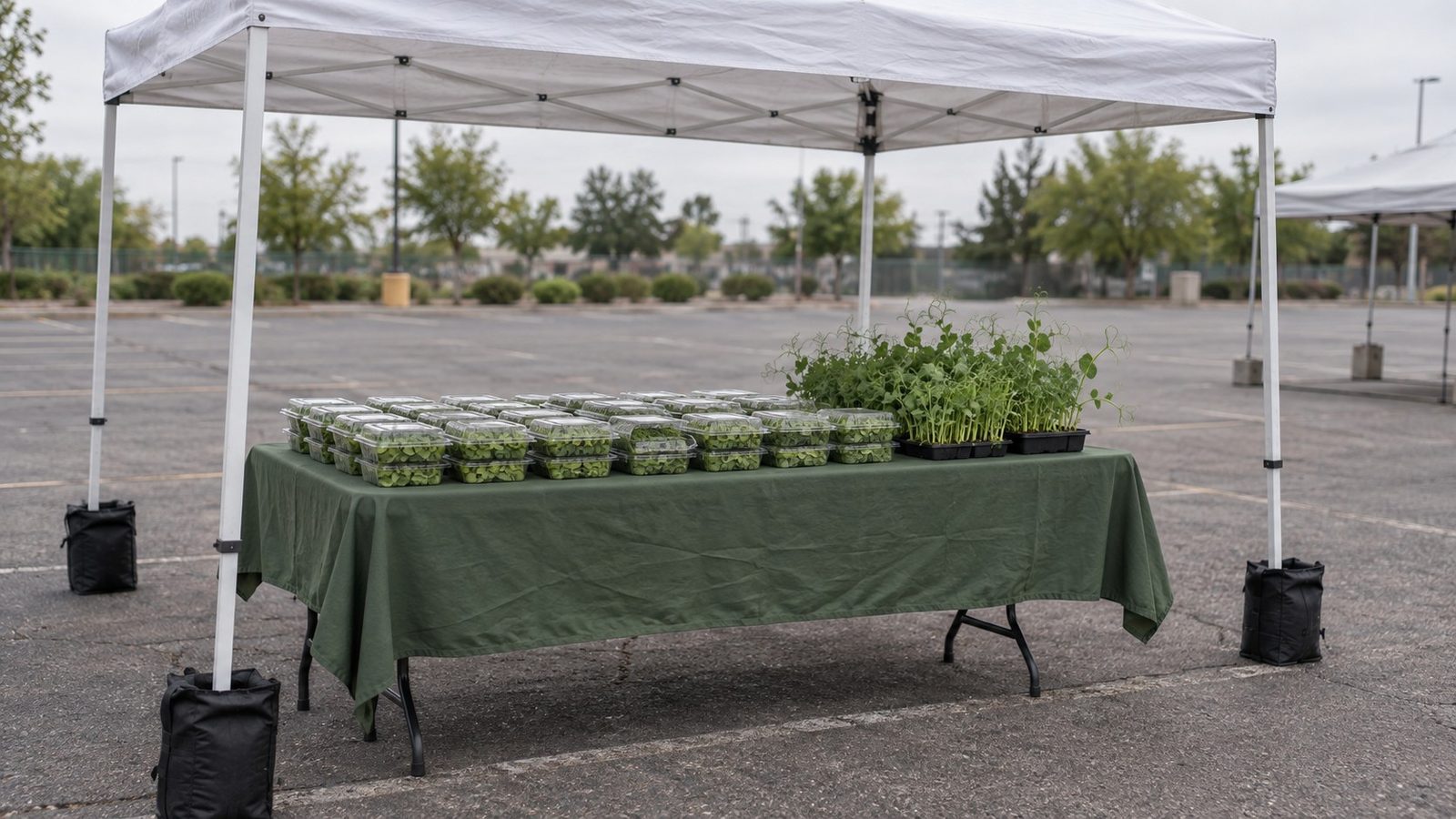
When a market manager or buyer asks you for proof of insurance, they usually mean liability coverage: a commercial general liability policy that includes products coverage, usually with a $1 million per-occurrence limit and their organization named as an additional insured. That request normally comes from the market's own vendor rules or the buyer's supplier terms, not from a state or federal law.
Published prices start at $175 a year and run to $560 a year, each tied to its own limits, source and date. Crop insurance, including USDA's Micro Farm policy, is a separate product that covers lost farm revenue, not a sick customer.
Liability insurance and crop insurance do different jobs
The policy a market or store wants is liability coverage, and it comes in two parts that are easy to blur together.
Commercial general liability, often shortened to CGL, responds when someone outside your business is hurt or their property is damaged because of your premises or operations. A shopper trips over your crate at the market, or a visitor falls over a rack in your grow room. Product liability is the part that responds when the food itself is alleged to have harmed someone, such as a customer who says a clamshell of your pea shoots made them ill.
The University of Maryland Extension's urban farm legal guide draws the line this way: a slip in the greenhouse is general liability, and food that harms a consumer is product liability. The same guide notes that a CGL policy may include products coverage and that many farmers markets require it.
That "may" matters. A sick-customer claim only lands on your policy if products coverage is actually included and no exclusion applies, so read the declarations page for the words "products-completed operations" before you assume it is there. Tell the insurer everything you plan to sell, too. UME says processed and value-added foods carry more contamination risk than raw produce, and that failing to disclose products you plan to sell may void a policy. Adding a powder or salad mix later is a change to report.
Food safety work lowers the odds of making someone sick, but UME is clear that it does not lower the odds of being sued, and it notes that foodborne illness judgments can run into the millions. Plan around the limit your market or buyer names.
Crop and revenue insurance sits somewhere else entirely. It pays a farm for eligible losses of production or revenue, and it does not defend you against a customer's illness claim. Commercial property coverage for your racks, lights and cooler, and commercial auto coverage for a delivery vehicle, are separate again.
Who is asking you for proof of insurance
The research behind this page did not find a state law that requires a small microgreens seller to carry liability insurance, although it was an insurance review rather than a state-by-state legal survey. The site's state selling guides cover the food-law side. What the research did find is that markets, co-ops and grocery buyers write insurance into their own rules, and each one sets its own limit and wording.
Farmers markets
Four published market rules show what a typical requirement looks like:
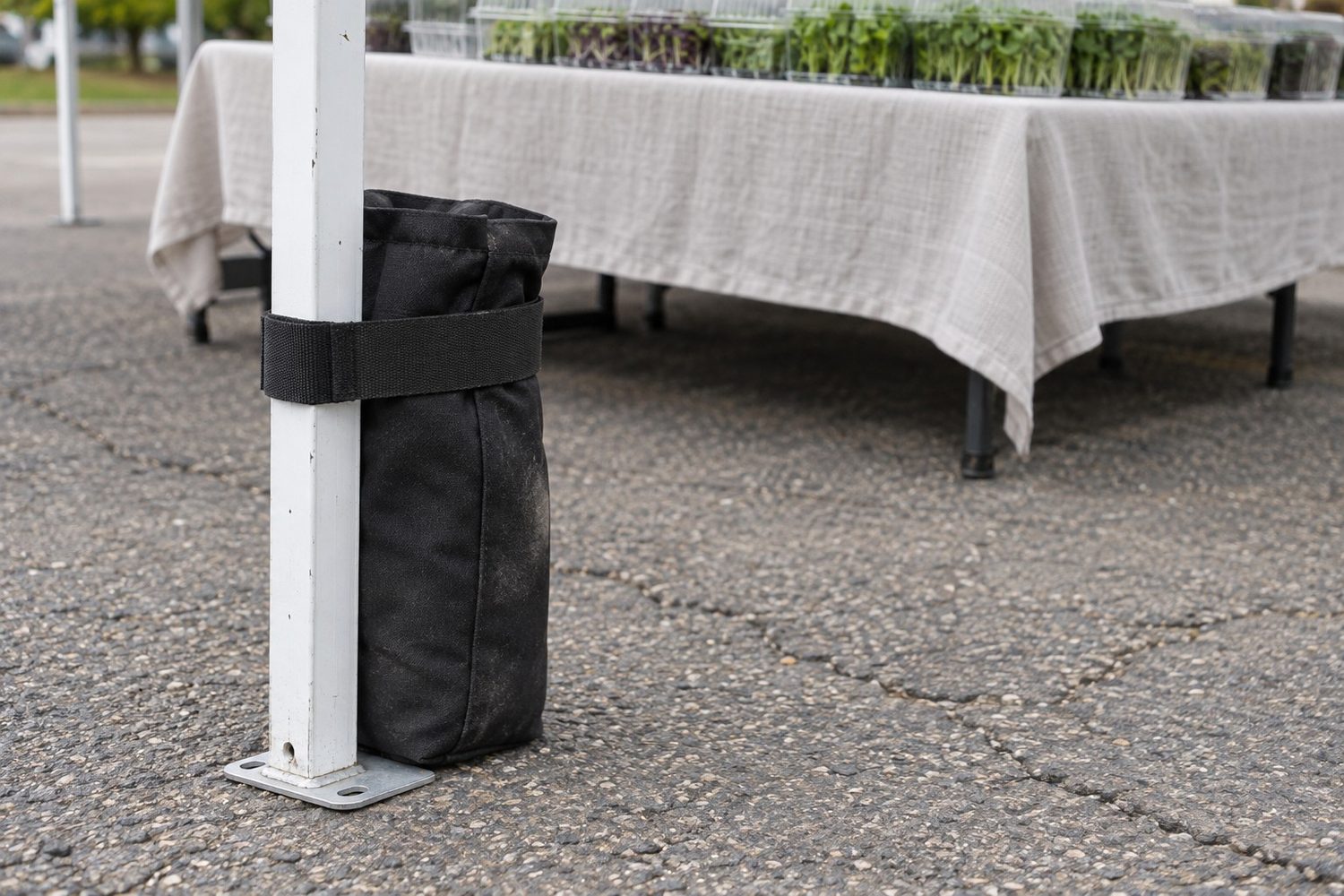
- Keller Farmers Market, Texas: the 2026 vendor handbook requires every vendor to carry business liability, with proof of $1 million in commercial general liability before participating and the market named as additional insured.
- Nashville Farmers Market, Tennessee: the merchant documents page asks farmers for a certificate showing at least $1 million, listing Metro Nashville/Davidson County and the State of Tennessee as additional insureds.
- Hillsboro Farmers' Markets, Oregon: the vendor page requires $1,000,000 in general liability, with the market as additional insured and proof before you attend.
- Urban Harvest, Houston, Texas: an undated market insurance PDF asks for $1 million in products liability and a $2 million general aggregate, with Urban Harvest as additional insured.
These are one market's rules each. They do not show that every market in Texas, Tennessee or Oregon asks for the same thing, so get the requirement from your own market's handbook or manager before you buy. The farmers markets guide covers the rest of the application process.
Stores and co-ops
Grocery buyers write similar terms into their supplier requirements. PCC Community Markets in Washington asks direct-store-delivery vendors for a certificate showing at least $1 million in general liability, with Puget Consumers Co-op as additional insured, before orders are placed. Oryana Community Co-op in Michigan wants $1 million per occurrence in general liability including products and completed operations, Oryana as additional insured, and a carrier certificate every year. Grocery Outlet's GO Brands supplier handbook, revised June 28, 2024, sets product liability at $1 million each occurrence and $5 million aggregate.
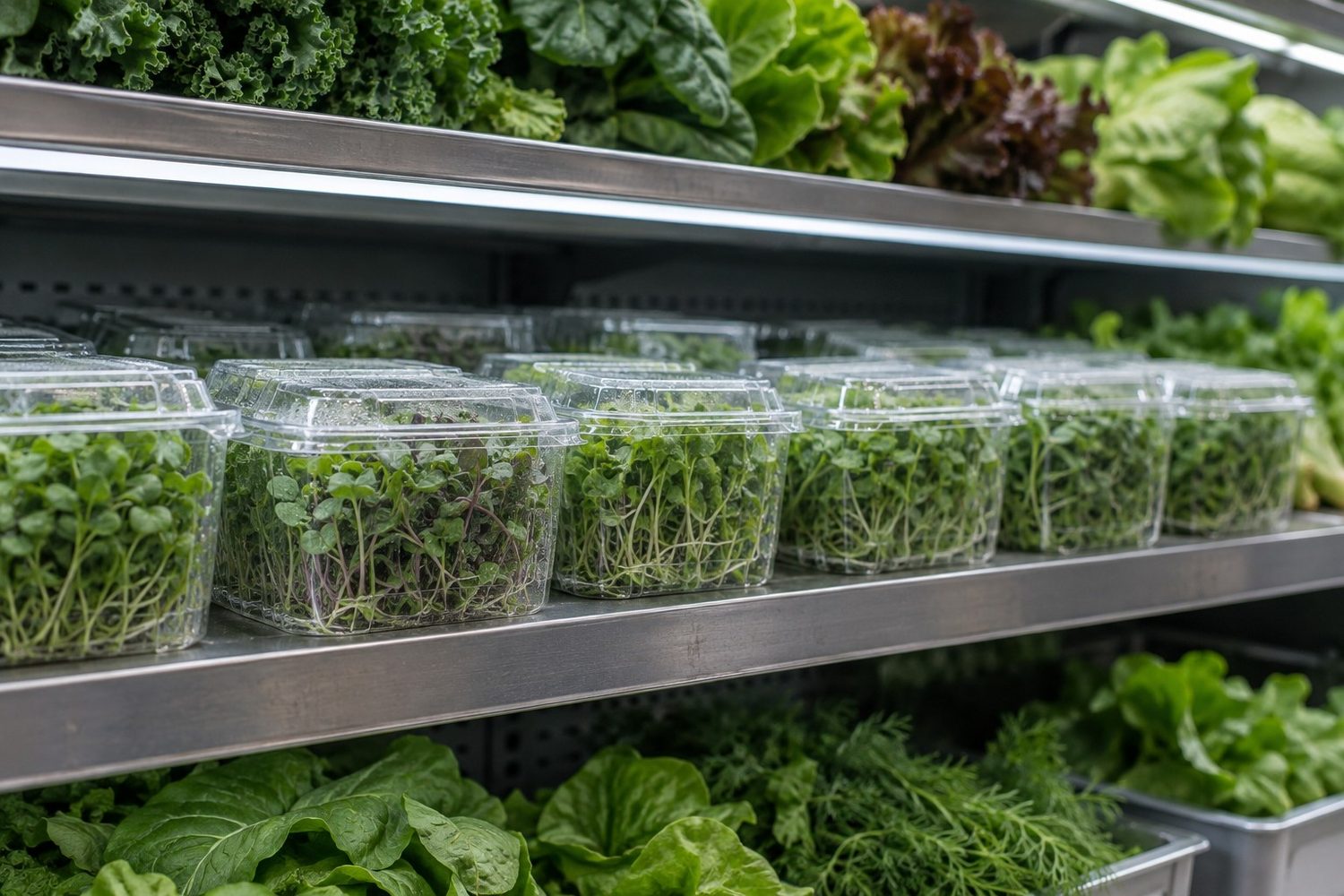
Those are contract terms for those accounts, not a legal minimum, and the numbers and wording change from buyer to buyer. The grocery and wholesale guide covers the rest of what a store account involves.
Restaurants
Ask each restaurant or distributor what it wants to see before you quote, because requirements differ. One microgreens seller, ChefPax, says Austin restaurant and hospitality accounts typically ask for a certificate, and it lists its own coverage as $1 million per occurrence and $2 million aggregate. Microgreen Manager, a farm software company, says stand-alone restaurants typically do not ask while markets and bigger distributors do. A distributor example outside microgreens, a Grocery Supply Company letter, asks suppliers for $2 million in product and general liability.
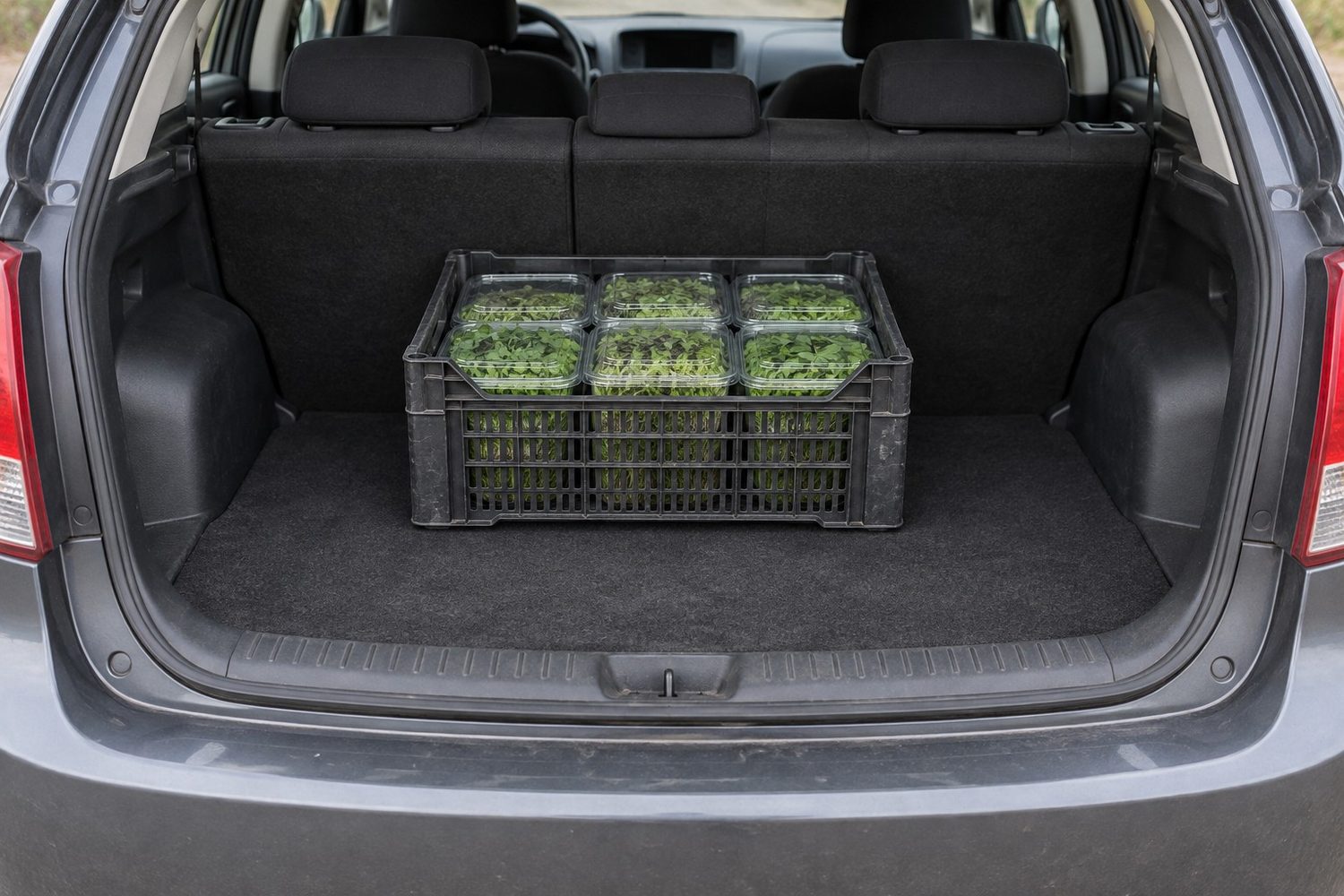
With a restaurant, ask the chef or purchasing contact in writing what limit and additional insured wording they need, and keep the reply. The guide to selling to restaurants and chefs covers pricing and standing orders.
What a certificate of insurance and "additional insured" mean
A certificate of insurance, or COI, is a one-page document your insurer or broker issues. It shows who is insured, which coverages are active, the limits, the policy dates, and often the certificate holder. It is proof that a policy exists, not the policy itself. FLIP, a farmers market insurance program, describes it as an official insurer document listing coverages, limits and additional insureds.
Being named as an additional insured is different. It means the market or buyer is added to your policy by an endorsement, so they get specified protection for claims tied to your products or your operations at their site. That usually has to be requested for each market or buyer, and the name has to match what they wrote. Nashville's rule, for example, names two public bodies, so send your agent the exact wording from the handbook rather than a shortened version.
Two limits show up on almost every certificate. The per-occurrence limit is the most the policy pays for one covered event. The aggregate limit is the most it pays for all covered claims in that category over the policy period. When a rule names both, as Urban Harvest's does, your certificate needs to show both.
What liability coverage costs: three published reference points
Premiums depend on limits, deductibles, locations and years, and each published price has its own terms. Treat them as reference points to bring to an agent, not as what you will pay.
- $299 a year: FLIP's farmers market policy starting price, paid annually, or $25.92 a month ($311.04 over 12 months), from its nationwide marketing page as read on September 12, 2026. The displayed limits are $1 million each occurrence, a $2 million general aggregate and a $2 million products-completed operations aggregate, with no liability deductible. Tools and equipment coverage and auto coverage cost extra, and FLIP says it does not sell a one-day market policy.
- $175 to $425 a year: the vendor options listed in Urban Harvest's undated Houston PDF. It lists FLIP from $299 a year for multiple markets, Campbell Risk Management at $425 a year for multiple markets, and Shahinian at $175 a year for one market plus $125 for each additional market. The PDF does not say whether each price carries the market's required limits or any deductible, so confirm both before relying on it.
- $560 a year: what Piedmont Microgreens reported paying Erie for commercial general liability in 2024, with $1 million per occurrence and $2 million annual aggregate, according to its self-report on Microgreen Manager. The post does not state the deductible, the state of the policy or its endorsements.
Your own price will move with what you ask the insurer to take on. UME's 2025 liability factsheet explains that a higher limit means the insurer accepts more risk and the premium rises, and it tells farmers to disclose operation size, employees, activities and technology when applying or renewing. The Piedmont report adds provider, industry, employee count, revenue and location as factors. To compare quotes fairly, ask for the same limits from each insurer, then write down the premium, limits, deductible, additional insured cost and policy dates side by side.
USDA's Micro Farm policy covers lost revenue, not a lawsuit
Micro Farm is a federal whole-farm revenue policy from USDA's Risk Management Agency, available since the 2022 policy year according to RMA's 2024 report to Congress. It insures lost qualifying farm revenue across all your eligible farm commodities under one policy. It will not respond to a customer's illness claim, a slip at your stall, or a market's request for a certificate.
The RMA Micro Farm 2026 FAQ sets these terms:
- Approved revenue for a first-year insured cannot exceed $350,000; carryover insureds may go up to $400,000.
- Coverage levels run from 50 to 90 percent in 5-point steps.
- No more than 50 percent of revenue can come from commodities bought for resale.
- It is listed for all 50 states and includes specialty, organic and direct or local market farms.
- You need at least three years of Schedule F history or substitute tax records, a current farm plan with expected revenue, and sales records.
- It does not offer replant coverage.
Whether your microgreens qualify is not something the FAQ answers. It does not name microgreens, and it does not make indoor crops automatically eligible; an approved insurance provider decides through underwriting and your records. If you want revenue protection, ask a crop insurance agent directly and bring your tax returns.
Two related programs are worth knowing by name. Whole-Farm Revenue Protection is RMA's broader version for farms with up to $17 million in insured revenue. For crops without federal crop insurance in your county, the Farm Service Agency's Noninsured Crop Disaster Assistance Program covers natural disaster losses; its page lists a $325 service fee per crop per county, capped at $825 per producer per county or $1,950 across counties. FSA's 2024 closing dates document includes a controlled environment crop category, but eligibility still comes down to your local FSA office.
What to tell an insurance agent
The most useful thing you can do before your next selling day is give an agent a full, current description of your operation and get written confirmation that it is covered. UME's factsheet stresses that a policy has to fit what you actually do. Have these ready:
- Every place you sell: each market by name, each store or co-op, and each restaurant.
- The exact limit and additional insured wording each one requires, copied from the handbook or email.
- Everything you sell or plan to sell: live trays, cut greens, mixes, powders.
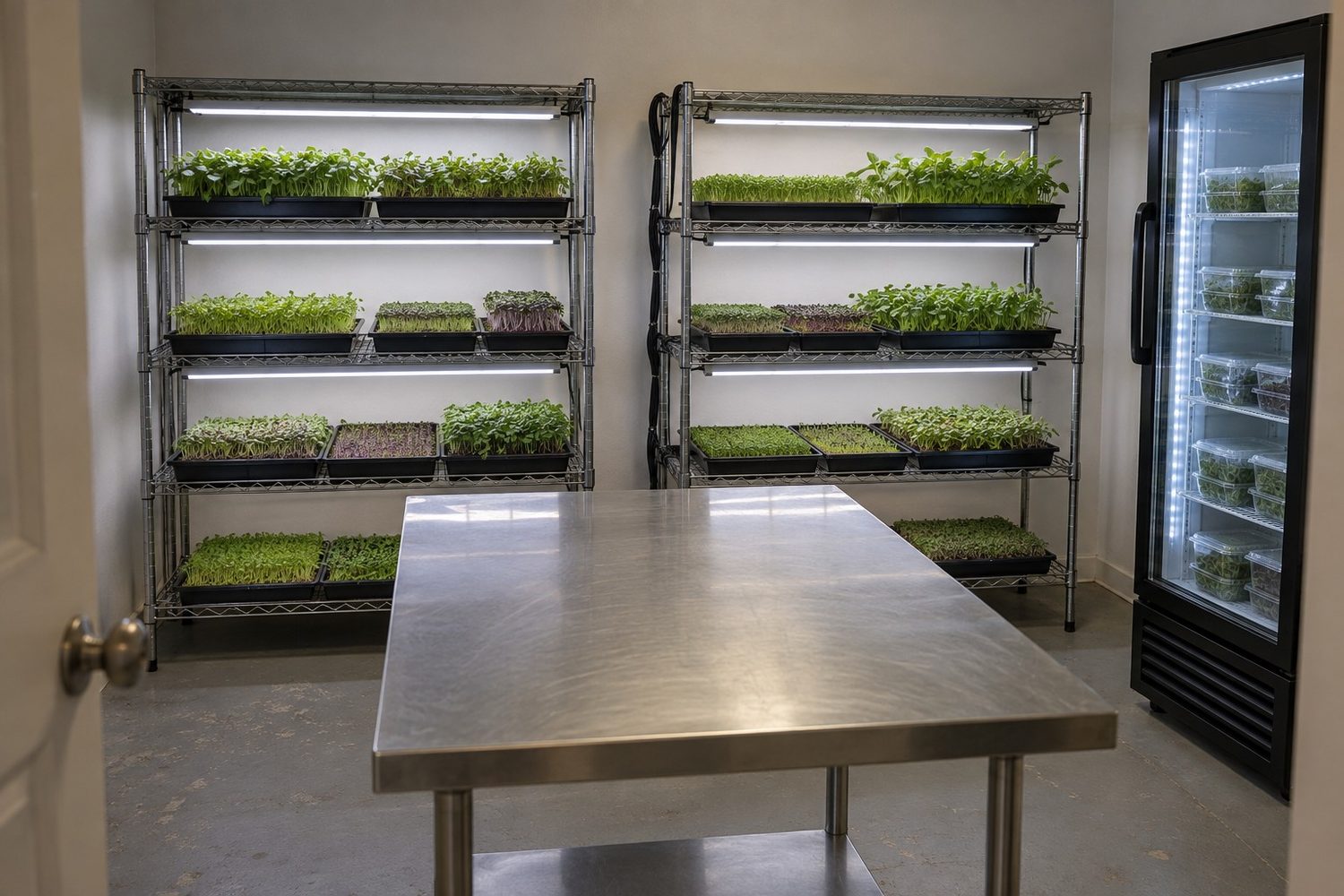
- Whether you grow at home, in a garage or in rented space, and roughly what your racks, lights and cooler are worth.
- Whether you drive orders to buyers, and in whose vehicle.
- Whether anyone helps you, paid or unpaid.
Ask for a sample certificate before you pay and check it against the market's rule. If you are still setting up the business itself, the guide to starting a microgreens business and the federal tax and business structure guide cover licensing, registration and entity questions that an insurer may also ask about.
Frequently asked questions
These are the questions that tend to come up once the market requirement is sorted.
Does my homeowners or renters policy cover microgreen sales from home?
Do not assume it does. Michigan's insurance regulator says in its home-based business bulletin that most home policies exclude regular home business activity, and a home business endorsement can add some coverage for an extra premium. Ask your agent in writing whether your growing and selling are excluded.
Will my liability policy cover me when I drive orders to a restaurant?
Usually not. The University of Maryland Extension farm-start guide says general liability usually does not cover auto accidents, and that cargo coverage is needed for the load. Tell your auto insurer you use the vehicle for business deliveries; Piedmont Microgreens reported paying Erie $2,391 for commercial auto in 2024 after buying a company vehicle.
Do I need workers' compensation if someone helps me harvest?
That depends on your state's law, not on a national rule. In Maryland, UME says a farmer with at least three full-time employees or $15,000 in annual full-time payroll is subject to the law. Check with your state's workers' compensation office before you bring on help.
Can I buy coverage for a single market day?
FLIP says it does not offer a one-day farmers market policy, and its published price is annual. Urban Harvest's vendor list includes a single-market annual option from Shahinian at $175, so if you only sell at one market, ask brokers about a one-market policy instead.
Will a food safety plan lower my premium?
Ask your agent whether a food safety plan, traceability or GAP certification earns a premium discount. Keep records of seed lot numbers and which customers got which harvest, because that is what lets you notify buyers quickly if something goes wrong, and tell your agent you do it.
Before your next market day
Get the requirement in writing from the market or buyer, send it to an agent with a full description of what you grow, sell and drive to buyers, and compare quotes at the same limits. Keep liability and crop insurance in separate columns when you think about them: one answers the certificate request and a customer's claim, and the other, if you qualify, answers a bad revenue year.
Sources
Prices, stock and specifications are as the linked pages showed them on 2026-09-12.
- University of Maryland Extension's urban farm legal guide
- 2026 vendor handbook
- merchant documents page
- vendor page
- undated market insurance PDF
- PCC Community Markets
- Oryana Community Co-op
- GO Brands supplier handbook
- ChefPax
- Microgreen Manager
- Grocery Supply Company letter
- FLIP
- 2025 liability factsheet
- RMA's 2024 report to Congress
- RMA Micro Farm 2026 FAQ
- Whole-Farm Revenue Protection
- Noninsured Crop Disaster Assistance Program
- 2024 closing dates document
- home-based business bulletin
- University of Maryland Extension farm-start guide
Keep reading
The journal
Buying a Microgreens Business for Sale: What to Check First
Thinking about a microgreens business for sale? Learn how sellers state cash flow, what SBA loans require in 2026, and what to check before you buy.
Read Buying a Microgreens Business for Sale: What to Check FirstThe journal
Growing Microgreens for Profit: A Weekly Production Plan
Plan growing microgreens for profit with tray counts per crop, a buffer from your own records, and a weekly sowing and harvest schedule you can repeat.
Read Growing Microgreens for Profit: A Weekly Production PlanThe journal
How to Write a Microgreens Business Plan Step by Step
Build your microgreens business plan section by section, from executive summary to financial plan, with startup costs itemized by scale and source.
Read How to Write a Microgreens Business Plan Step by StepThe journal
Microgreens Business Startup Costs Before Your First Sale
Microgreens business startup costs, from extension enterprise budgets to insurance rates and per-tray supplies, broken down by starter and commercial scale.
Read Microgreens Business Startup Costs Before Your First Sale