Growers Permit Rules for Selling Microgreens
Cal HewittPublished Checked
- selling microgreens
- business planning
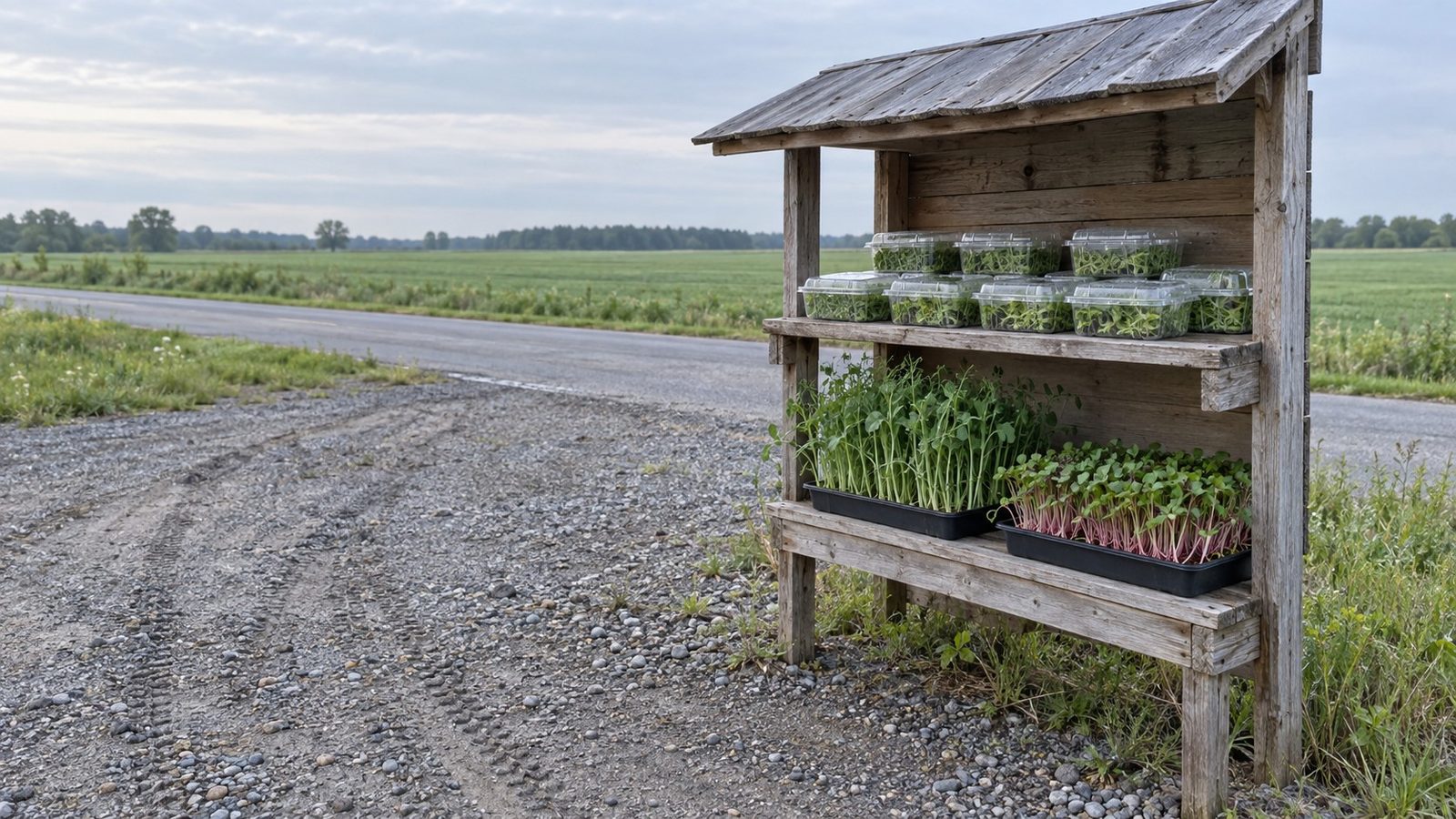
A growers permit is a produce document that shows a market, and sometimes a city, that you grew what you are selling. There is no single national form; the name, the issuing office, the cost and what it does for you change by state, and many states have no document by that name.
In Alabama it is a free permit from your county Extension office. In Florida, many markets want a Grower Permit signed by county Extension. California issues a Certified Producer's Certificate through the county agricultural commissioner. Elsewhere it may be a state certificate, a registration, a state market's farmer certification, or a license that starts at a sales figure.
Find your state below, then ask your market manager exactly which document they want on file.
What a growers permit is, and who issues it
A market manager asking for a growers permit usually wants proof that the produce on your table came from your own farm. Depending on the state, that proof comes from a county Extension office, a county agricultural commissioner, the state department of agriculture, or the office of a state-run farmers market.
Keep three kinds of paper apart. A permit or certificate is issued to you and says what you may sell and where. A registration puts your farm on a state list, sometimes with an inspection. A license tends to attach to a sales level or to what you do to the crop. A manager may use "growers permit" loosely for any of these, so ask for the market's vendor rules in writing and match the name on that list.
A produce growers permit is unrelated to hemp or cannabis grower licenses, and holding one tells an office nothing about the other.
Alabama: a free permit from your county Extension office
The Alabama Growers Permit is free, and it is the document to get before your first market day. You pick it up in person at your county Extension office; there is no online version. It lets you sell the raw produce you raise direct to consumers anywhere in Alabama without license fees or sales tax, at farmers markets, roadside stands and festivals. One permit covers every county you sell in, and you give a copy to the manager of each market.
The permit has limits. It does not cover value-added products such as jams, breads or meats, so a pesto or dressing made from your greens sits outside it. It is also your route into the Senior Farmers Market Nutrition Program, because the Extension office forwards permits to ADAI's Farmers Market Authority for growers who want to take part.
The $50 ADAI Food Safety Permit is a different permit. It is for a Food Sales Establishment handling baby food, infant formula or potentially hazardous food, and ADAI classifies raw microgreens as produce.
City business licenses can depend on the permit too, so ask your city's revenue office whether its farmer exemption requires one on file. The Alabama selling rules cover the rest.
Florida: a Grower Permit signed by county Extension
Many Florida farmers markets ask for a Grower Permit signed by the UF/IFAS Extension office in the county where the crop is grown. It is a short county form. You confirm the produce is grown by you or a family member on land you or a family member own or lease in Florida, list your crops, and the county agent signs it.
The form says it "is used to validate my status as a commercial grower," and it "expires 12 months" after it is signed. It is not a state license, but a market that asks for it will not take your grown items without it. Alachua County Extension, for one, tells market growers they "will need to have an up-to-date growers permit." Call your county Extension office before your first market to ask whether it issues one.
The local business tax receipt is a separate question, and the statute answers it. Section 205.064 says "A local business tax receipt is not required of any person for the privilege of engaging in the selling of farm ... products ... when such products were grown or produced by such person in the state." If a clerk asks for a receipt for microgreens you grew in Florida, point them to 205.064. Zoning approval and a certificate of use for the place you grow can still apply, as the Florida selling rules explain.
California: the Certified Producer's Certificate
To sell your own California production at a certified farmers market, you need a Certified Producer's Certificate, and your county agricultural commissioner issues it rather than a state agency. The market is certified through the county commissioner, and its operator checks that vendors comply. Start the application early, because it gates everything else at a certified market.
Selling boxes through a CSA is its own registration. FAC 47061 requires a producer marketing whole produce through a single-farm or multi-farm CSA to "Register annually with the department as a California direct marketing producer." CDFA's registration form sets the fee at $75 a year per CSA producer, with $25 for an amendment. Each box also needs your farm name and address, and subscribers get a list of which farm each item came from. Register before the first box goes out.
Buying and reselling other growers' produce is a separate Produce Dealer License question. The California selling rules have the county details.
Nevada: a $50 Producer Certificate
The Nevada Department of Agriculture issues a Producer Certificate for crops produced in Nevada in their natural and unprocessed state, which describes raw microgreens you grew yourself. It costs $50 the first year and $30 to renew, and the first year includes an on-site inspection of your growing area. Ask NDA on 775-353-3601 how the inspection is charged, because its fee page and FAQ describe it differently.
The certificate also takes fees off your costs. NRS 576.128(3) exempts a certificated producer from county, city and town business license taxes and fees, and from Chapter 580 health permit and inspection fees, when the certified crop is sold in its natural and unprocessed state directly to a consumer, a restaurant or a grocery store. Show it to your local business license office and health authority and ask them to apply it. At a farmers market, NAC 446.973 requires you to give the health authority a copy.
Those are fee waivers. They do not settle whether a packing setup counts as a food establishment, so get your county's written classification if you plan to wash, cut or pack. Reselling a neighbor's trays calls for a separate Produce Vendor Certificate, covered in the Nevada selling rules.
Wyoming: register as a Raw Agriculture Producer
Wyoming has raw produce growers register rather than carry a permit. WDA Consumer Health Services asks raw agricultural producers to register as a Raw Agriculture Producer, and says those producers "are required to have at least one inspection per year." The inspection looks at how the crop is transported and stored.
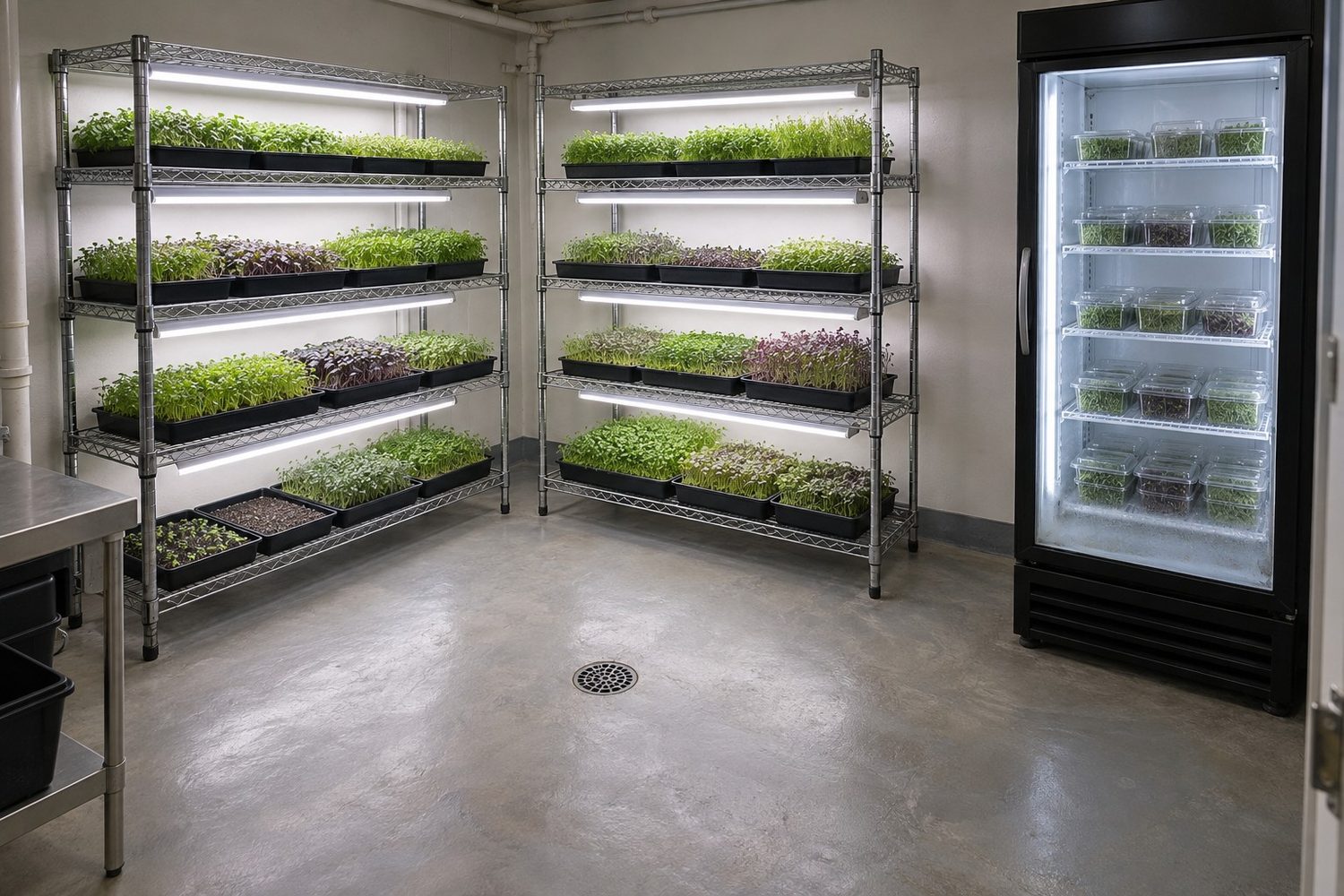
The form is the Raw Agricultural Producers plan review packet.docx%20Rev%202%20(1)_904.pdf), and its product checkbox reads "Produce, including microgreens." It asks for a floor plan and your label and goes in at least 30 days before you build. The packet says "Personal labels must be approved by WDA and lot coding must be present," so put a lot code on every package and send the label in with the packet. Call Consumer Health Services on (307) 777-7211 to confirm your case, and read the Wyoming selling rules for what else applies.
State-run markets that certify or register farmers
Some states run their own farmers markets, and those markets check that you grow what you sell. If you want a stall at one, the market's certification or registration is the document its office will ask for.
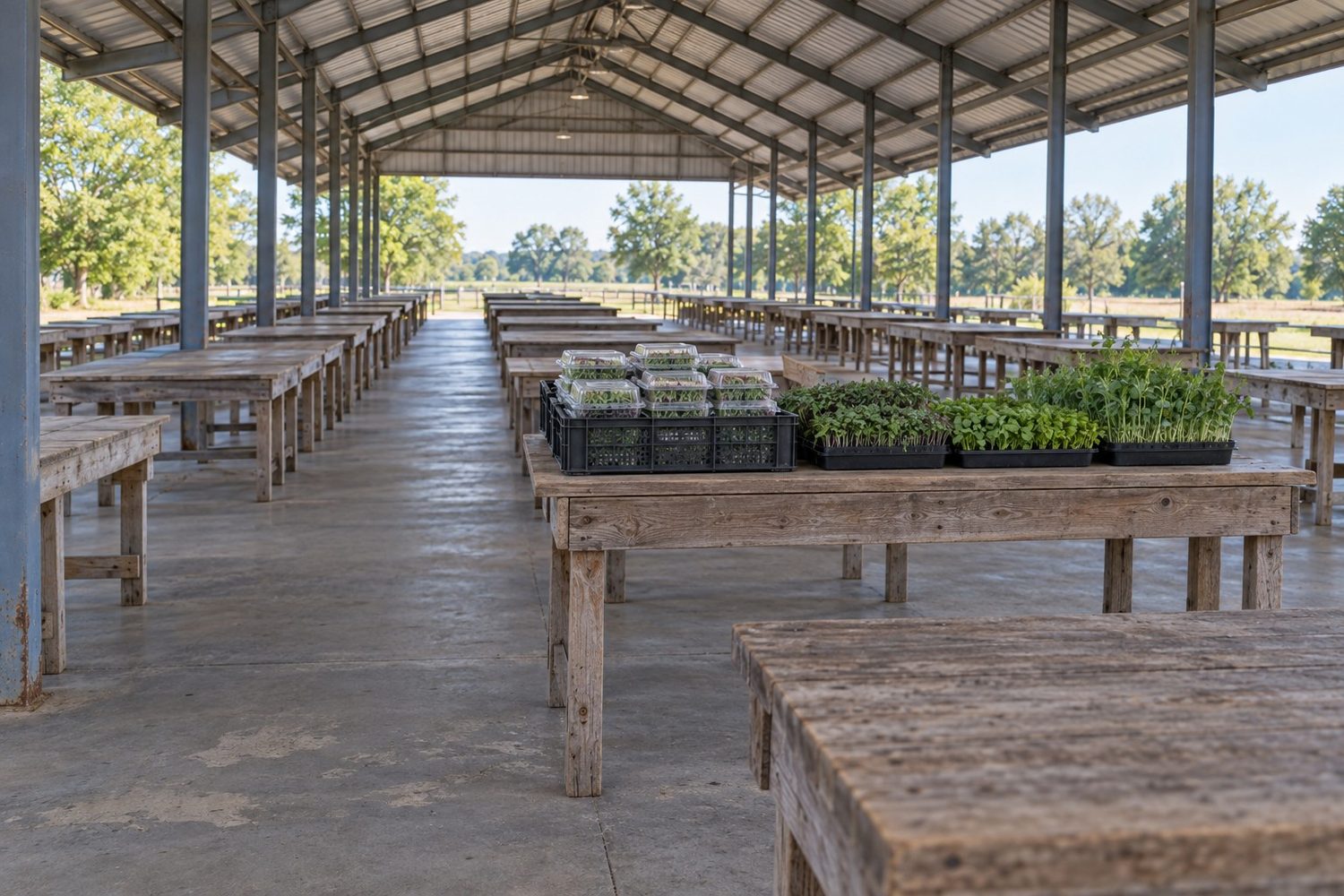
North Carolina. At the Piedmont Triad Farmers Market, a farmer vendor is approved on a vendor application plus a Farmer Certification inspection, done by market management or your county Extension agent. Approval is renewed every year, and certifications "expire on December 31st each year." The State Farmers Market in Raleigh also works on an application that expires every December 31. The inspection has to be scheduled, so ask the market office for the steps before the season, and see the North Carolina selling rules.
South Carolina. At SCDA's State Farmers Market in West Columbia, "All farmers must re-register for the current season." From April to September "produce must be grown by the registered farmer and grown predominately in the State of South Carolina." Away from the state market, S.C. Code 40-41-90 says the county peddler and hawker licensing article does not extend to vendors of vegetables or agricultural products. A city business license and a market's own rules are separate questions, set out in the South Carolina selling rules.
Rhode Island. RIDEM's Division of Agriculture runs the weekly State Farmers Markets at Fishermen's Memorial and Goddard Memorial State Parks, and "The annual application period is from January to April." You submit a vendor application in that window, and the 2026 market policy sets the terms: enroll in the RIDEM Produce Safety Program before your first market, give DEM a copy of your product liability insurance, use certified scales, grow or make more than 75 percent of what you sell, and agree to an inspection of your farm to confirm where the produce came from.
Separately, RIDEM requires annual registration from all produce farms. A late application waits a year, so put the window in your calendar and check the Rhode Island selling rules.
Mississippi. MDAC runs the Mississippi Farmers Market in Jackson. Farmers apply every year, are certified after a farm inspection, and must be registered with the Produce Safety Division. Other markets set their own terms, so ask the manager for the application, the fee and the certification status before you plant for that outlet, and read the Mississippi selling rules.
When a license or registration does the job instead
In a few states, the document that matters is tied to your sales, your product, or simply being a produce farm.
Montana. MCA 80-3-321 requires a Produce Dealer License from the Montana Department of Agriculture once your gross retail sales of produce you grew in Montana pass $25,000 a year. The license costs $50 a year, expires December 31, and is issued one per place of business, vehicles included, so one goes wherever your produce is sold. At or below $25,000 the grower exemption applies, though MDA may ask for a sworn statement. That $25,000 is a state figure. It is not the federal Produce Safety Rule cutoff of $34,324, which is a separate test covered under the federal Produce Safety Rule. The Montana selling rules have the details.
West Virginia. Under W. Va. Code 19-35-3a, a farmers market vendor applies for a WVDA Farmers Market Vendor Permit unless exempt. It costs $35 per vendor, runs from April 1 to March 31, is valid statewide once issued, and must be displayed. 61 CSR 38 section 6 lists cut produce among the products sold only if a vendor permit has been obtained, and microgreens are cut at harvest. The permit keeps a market vendor on the WVDA track instead of the local food establishment permit. A vendor selling only fresh, uncut produce is outside the vendor permit but still files an annual Produce Affidavit. The West Virginia selling rules explain both tracks.
Delaware. Every farm that grows, harvests, packs or holds produce for human consumption and sale files an annual Produce Safety registration with the Delaware Department of Agriculture, at any size and even while claiming a federal exemption. It is due April 30. The exemption application sits in the same portal, but it is a separate filing and does not replace the registration. The Delaware selling rules have the details.
If your state has no growers permit
Plenty of states issue nothing called a growers permit. In those states the requirement sits somewhere else, and your state's page on the selling microgreens hub shows what applies there instead. It usually takes one of these forms:
- A license for cut or packed greens. West Virginia's market vendor permit above is one example, triggered by selling cut produce.
- A registration. Connecticut's Produce Farm and Grower Registration applies once the federal Produce Safety Rule covers your farm, as the Connecticut selling rules explain.
- A local rule. A Kansas city may require a peddler's, vendor's or transient merchant's permit, and K.S.A. 12-1617 says "No city shall impose any fee against any producer, grower ... engaged in the sale of agricultural, farm, garden or aquacultural products grown by such growers residing within this state." The Kansas selling rules cover the rest.
Then ask the market directly what it wants to see, and get that list in writing before your first market day. The farmers market selling guide covers the rest of your table.
Frequently asked questions
These follow once the permit itself is sorted.
Can an Alabama market or city ask for more than the Growers Permit?
Yes. The market may still require a vendor application, a fee and proof of insurance, and your city or county may require a business license. Some cities, Lincoln among them, exempt farmers from their business license only when the permit is on file.
Does a Nevada Producer Certificate replace a health permit at a farmers market?
NAC 446.980 excepts a certificated producer of farm products from the health permit a farmers market food sale would otherwise need. The health authority can still restrict sampling or sale on inspection findings or an unacceptable public health risk. Sampling, prepared items, or resold and imported produce change the answer.
Is Wyoming's Raw Agriculture Producer registration a legal requirement?
WDA's wording is that raw producers "are asked to register" and "are required to have at least one inspection per year." The registration is how WDA keeps track of growers selling raw produce they grew. Call Consumer Health Services on (307) 777-7211 to confirm what applies to your operation.
Do Rhode Island farmers markets pay the state health registration fee?
Qualifying farmers markets and roadside farm stands are relieved of the RIDOH fee under R.I. Gen. Laws 21-27-10. The section exempts payment of the fee, not the registration itself. Market operators and some towns add their own terms on top.
Before your next market day
Start with the name on your market's vendor list, because it tells you which document the manager means. Open your state's page on the selling microgreens hub and check who issues it and what it costs. Then leave yourself time: Alabama's permit is picked up in person, North Carolina's state markets schedule an inspection, and Rhode Island's state markets take applications only from January to April. Keep a copy of whatever you are issued with your market paperwork.
Sources
Prices, stock and specifications are as the linked pages showed them on 2026-09-13.
- Alabama Growers Permit
- $50 ADAI Food Safety Permit
- ADAI classifies raw microgreens as produce
- county form
- Alachua County Extension
- Section 205.064
- FAC 47061
- CDFA's registration form
- Producer Certificate
- NRS 576.128(3)
- NAC 446.973
- asks raw agricultural producers to register
- Raw Agricultural Producers plan review packet
- Piedmont Triad Farmers Market
- State Farmers Market in Raleigh
- State Farmers Market in West Columbia
- weekly State Farmers Markets
- 2026 market policy
- RIDEM requires annual registration
- MCA 80-3-321
- W. Va. Code 19-35-3a
- 61 CSR 38 section 6
- annual Produce Safety registration
- Produce Farm and Grower Registration
- K.S.A. 12-1617
- Lincoln
Keep reading
The journal
Are Microgreens Profitable? What the Numbers Show
Are microgreens profitable? See what a national grower survey and federal sales data show, why gross revenue is not profit, and how to run your own numbers.
Read Are Microgreens Profitable? What the Numbers ShowThe journal
Are Microgreens Sustainable? The Published Range Is 3.34 to 63.34 kg CO2e a Kilo, and Your Grid Decides Where You Land
One modeled crop spans a 19-fold carbon range. Indoor growing beats field lettuce on land by roughly 37 times and can lose on carbon, because the answer is a property of your electricity rather than of the crop.
Read Are Microgreens Sustainable? The Published Range Is 3.34 to 63.34 kg CO2e a Kilo, and Your Grid Decides Where You LandThe journal
Buying a Microgreens Business for Sale: What to Check First
Thinking about a microgreens business for sale? Learn how sellers state cash flow, what SBA loans require in 2026, and what to check before you buy.
Read Buying a Microgreens Business for Sale: What to Check FirstThe journal
Do I Need a License to Sell Microgreens?
Do I need a license to sell microgreens at a market, to a restaurant, or to neighbors? Find your state's answer, its condition, and what would change it.
Read Do I Need a License to Sell Microgreens?