How Much Does an AeroGarden Cost? A First-Year Breakdown
Cal HewittPublished Checked
- equipment
- aerogarden
- pod gardens
- costs
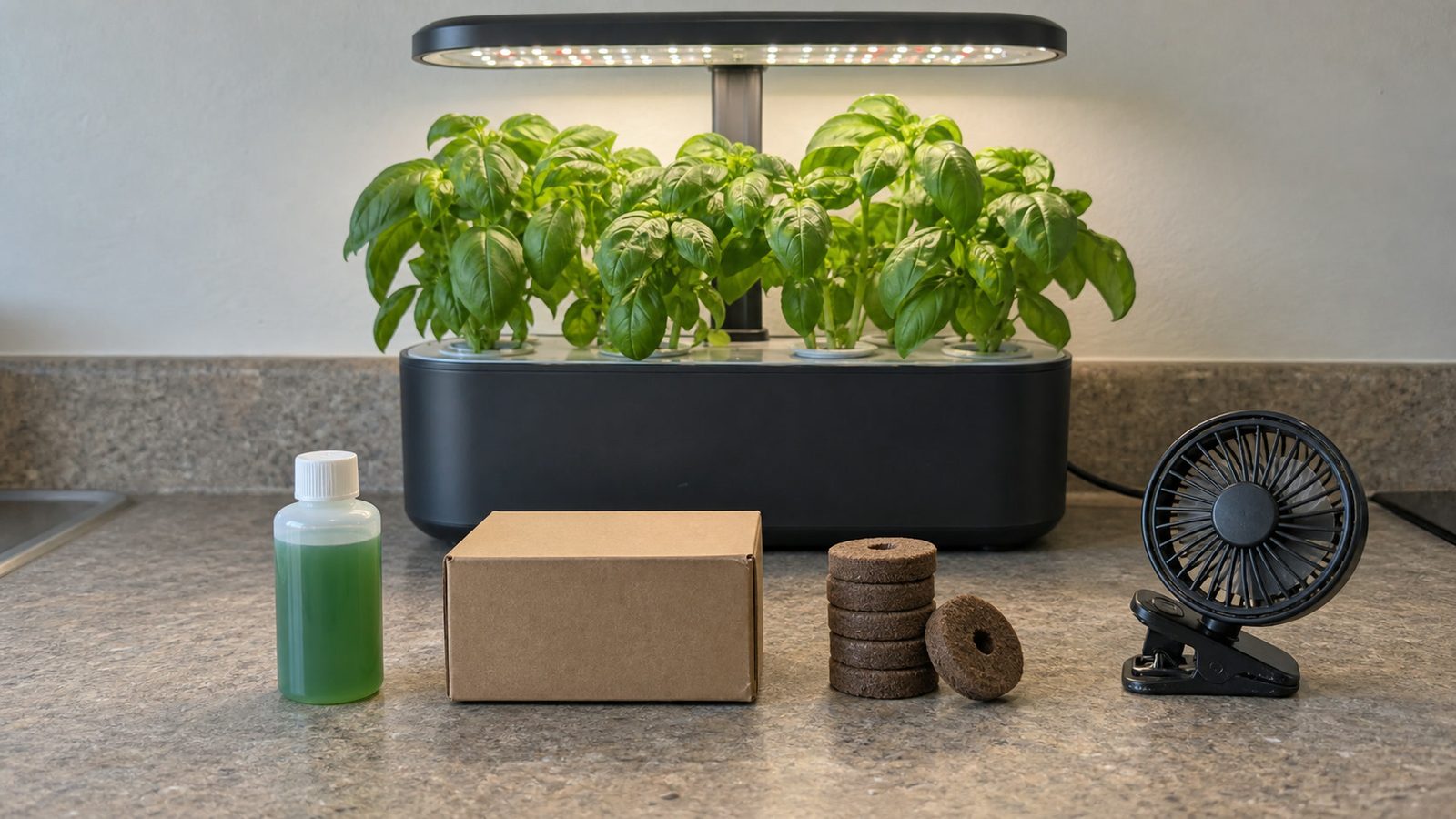
A new AeroGarden Harvest costs about $137.98 across its first full year if you buy a branded seed kit for the second planting, or $122.44 if you plant your own seed instead. A Bounty comes to $215.74 on branded pods or $195.91 on your own seed.
Every one of those totals adds up the same four pieces: the garden at the official store's sale price, a year of electricity at the US average rate, the plant food you need beyond the bottle in the box, and the cost of a second planting. Optional extras, like a clip fan, are listed separately and are not in those numbers.
What these totals assume
Every figure on this page sits on one set of assumptions, and it helps to know them before you compare your own situation. You buy one new garden at the official AeroGarden store's sale price on September 12, 2026. That was $76.97 for the Harvest (list $109.95) and $114.98 for the Bounty (list $229.95). You grow herbs in two 26-week plantings, and the first planting uses the pods that come with the garden.
The light runs every day, 15 hours on the Harvest and 16 hours on the Bounty. The box includes one 3 fl oz bottle of plant food, and you dose food the way AeroGarden's directions say. Electricity is priced at the US Energy Information Administration's June 2026 residential average of 18.34 cents per kWh.
The 26-week planting is a budgeting assumption, not an average. AeroGarden says most herbs first harvest in 3 to 4 weeks and then produce for several months, but how long you keep a planting going is up to you. Write down the date you plant and the date you pull the pods, and if your cycles run shorter, add a kit or a set of sponges for each extra planting.
Water is $0 in every total. AeroGarden's own guide says most municipal tap water works, and distilled or reverse-osmosis water is only worth buying if you have especially hard water. The line items below are rounded to the cent, and the totals are worked from the unrounded figures, so adding a column by hand can come out a penny different.
Harvest: $137.98 on branded pods, $122.44 on your own seed
The Harvest ships with the garden, a 20 W light, the power adapter, a 6-pod seed kit and a 3 fl oz bottle of liquid plant food. That covers your first planting and part of your first year of food.
Hover or tap a row to highlight it.
| Line | Branded pods | Own seed |
|---|---|---|
| Garden, official sale price | $76.97 | $76.97 |
| Electricity: 20 W x 15 h x 365 = 109.5 kWh at 18.34 cents | $20.08 | $20.08 |
| Plant food: 2 more bottles at $11.99 | $23.98 | $23.98 |
| Second planting: one official 6-pod herb kit | $16.95 | |
| Second planting: 6 sponges | $1.10 | |
| Second planting: 12 basil seeds | $0.32 | |
| First-year total | $137.98 | $122.44 |
Planting your own seed saves $15.54 in year one on these figures. Three of the four lines are identical on both routes, which is why the gap stays small.
Bounty: $215.74 on branded pods, $195.91 on your own seed
The Bounty is a 9-pod garden with a 40 W light, and its page lists a 3 fl oz food bottle and a 6-inch trellis in the box. Twice the wattage, more hours of light and more pods mean every running cost is higher than on the Harvest.
Hover or tap a row to highlight it.
| Line | Branded pods | Own seed |
|---|---|---|
| Garden, official sale price | $114.98 | $114.98 |
| Electricity: 40 W x 16 h x 365 = 233.6 kWh at 18.34 cents | $42.84 | $42.84 |
| Plant food: 3 more bottles at $11.99 | $35.97 | $35.97 |
| Second planting: one official 9-pod herb kit | $21.95 | |
| Second planting: 9 sponges | $1.64 | |
| Second planting: 18 basil seeds | $0.47 | |
| First-year total | $215.74 | $195.91 |
Your own seed saves $19.83 in year one here. Look at where the money actually goes: the garden, the electricity and the food add up to about $194 before you choose a planting route at all.
Electricity at your own rate
The electricity lines above use the national average, and your bill may be well above or below it. The same EIA table gives North Dakota as the low end at 14.12 cents per kWh and Hawaii as the high end at 52.72 cents.
Hover or tap a row to highlight it.
| Garden | kWh per year | North Dakota, 14.12 cents | US average, 18.34 cents | Hawaii, 52.72 cents |
|---|---|---|---|---|
| Harvest | 109.5 | $15.46 | $20.08 | $57.73 |
| Bounty | 233.6 | $32.98 | $42.84 | $123.15 |
To place yourself on that range, find the price per kWh on your utility bill, convert it to dollars (18.34 cents is $0.1834), and multiply it by 109.5 for a Harvest or 233.6 for a Bounty. Then swap your figure into the total in place of the average. At Hawaii's rate, a year of light on the Bounty costs more than the garden itself did on sale.
Two things to know about these kWh figures. They come from the light's rated wattage multiplied by hours, not from a plug meter, and they leave out the pump, whose draw varies by model. The hours matter too: the 15 hours for the Harvest and 16 for the Bounty are assumptions used to keep the math consistent.
The schedule is your own setting; the one example AeroGarden publishes, in its FAQ, runs a Bounty 17 hours a day, which would bring the Bounty's light to 248.2 kWh and $45.52 a year. If your garden runs a different schedule, use your own hours in the formula. If you want a measured number, a plug-in energy meter on the outlet for a month will give you one.
Plant food: why you buy more than one bottle
Official AeroGarden food was $11.99 for a 3 fl oz bottle on September 12, 2026, and the catalog labels it "1 season." Over a full year of continuous growing, you use more than that.
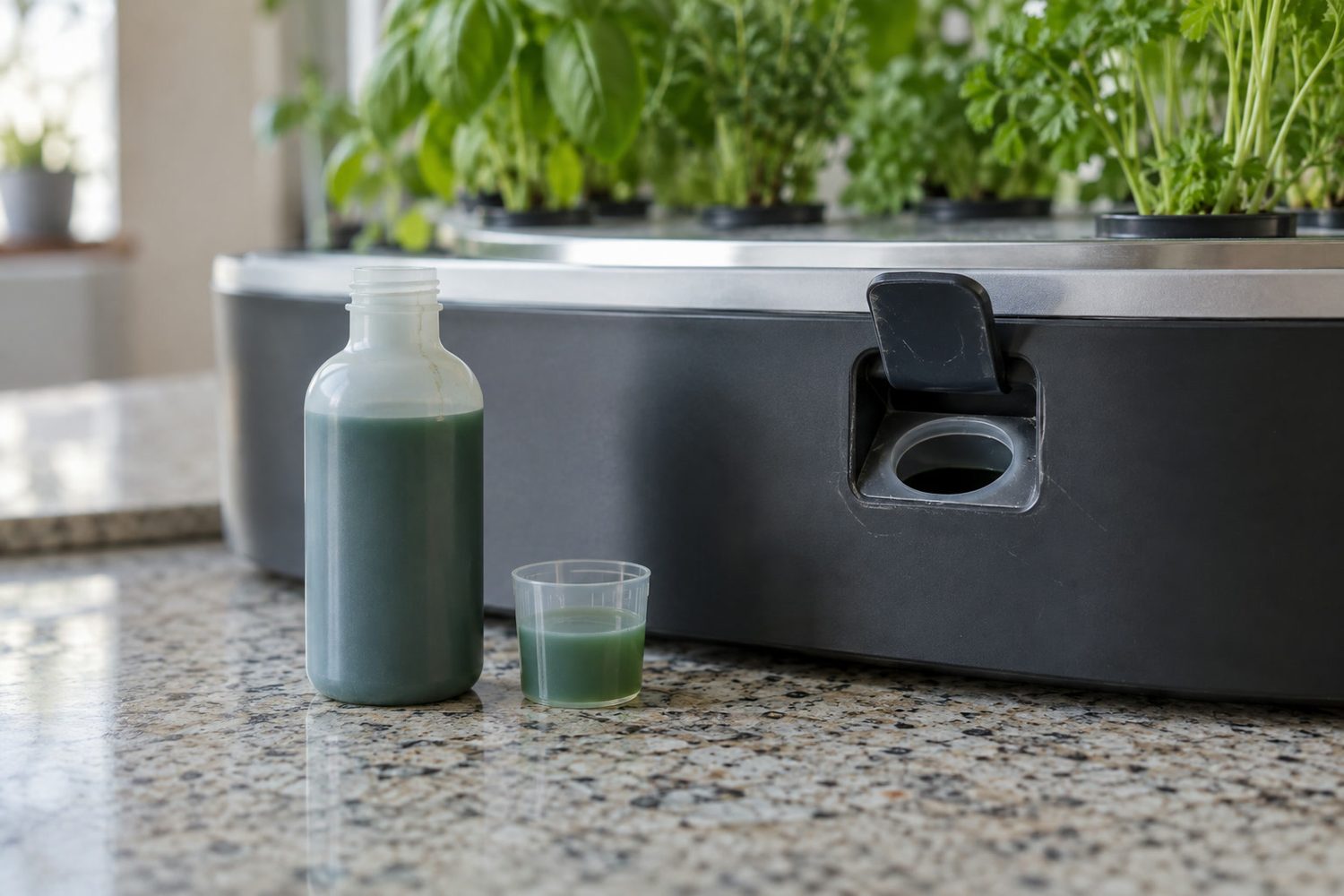
According to the dosing directions, a 6- or 7-pod garden like the Harvest gets 8 mL at planting and every two weeks after. That's 26 feedings, or 208 mL a year. A bottle holds about 88.7 mL, so you need 2.35 bottles, which means buying three. With one in the box, you buy two.
A 9-pod garden like the Bounty gets 8 mL at planting and at week two, then 12 mL at every later feeding. That comes to 304 mL a year, or 3.43 bottles, so you need four and buy three. In both cases the leftover part of the last bottle isn't wasted; it carries into your second year.
Branded pods or your own seed for the second planting
On the branded route, the official store prices each seed kit by pod count. On September 13, 2026, the Pesto Basil and Gourmet Herbs kits were $16.95 for 6 pods and $21.95 for 9, and the Grow Anything kit for your own seed cost the same at each size, with its 3-pod size at $13.95. Those are the kit prices in the tables above. Gourmet Herbs was listed as not available at both sizes that day, while Pesto Basil was in stock, so put the kit your garden takes in the cart and read the price there before you buy.
The own-seed route reuses the baskets from your first planting. The totals use Park Seed Bio Dome refill sponges at $10.95 for 60, about 18 cents each, and Johnny's Genovese basil at $5.25 for 200 seeds, sowing two seeds per pod. Keep in mind that the year-one total only counts the sponges and seeds you actually use. Your cash at the register is the whole pack of sponges and the whole packet of seed, $16.20 together, which is more than one $13.95 kit. The savings show up in later plantings, when you're drawing from what's left.
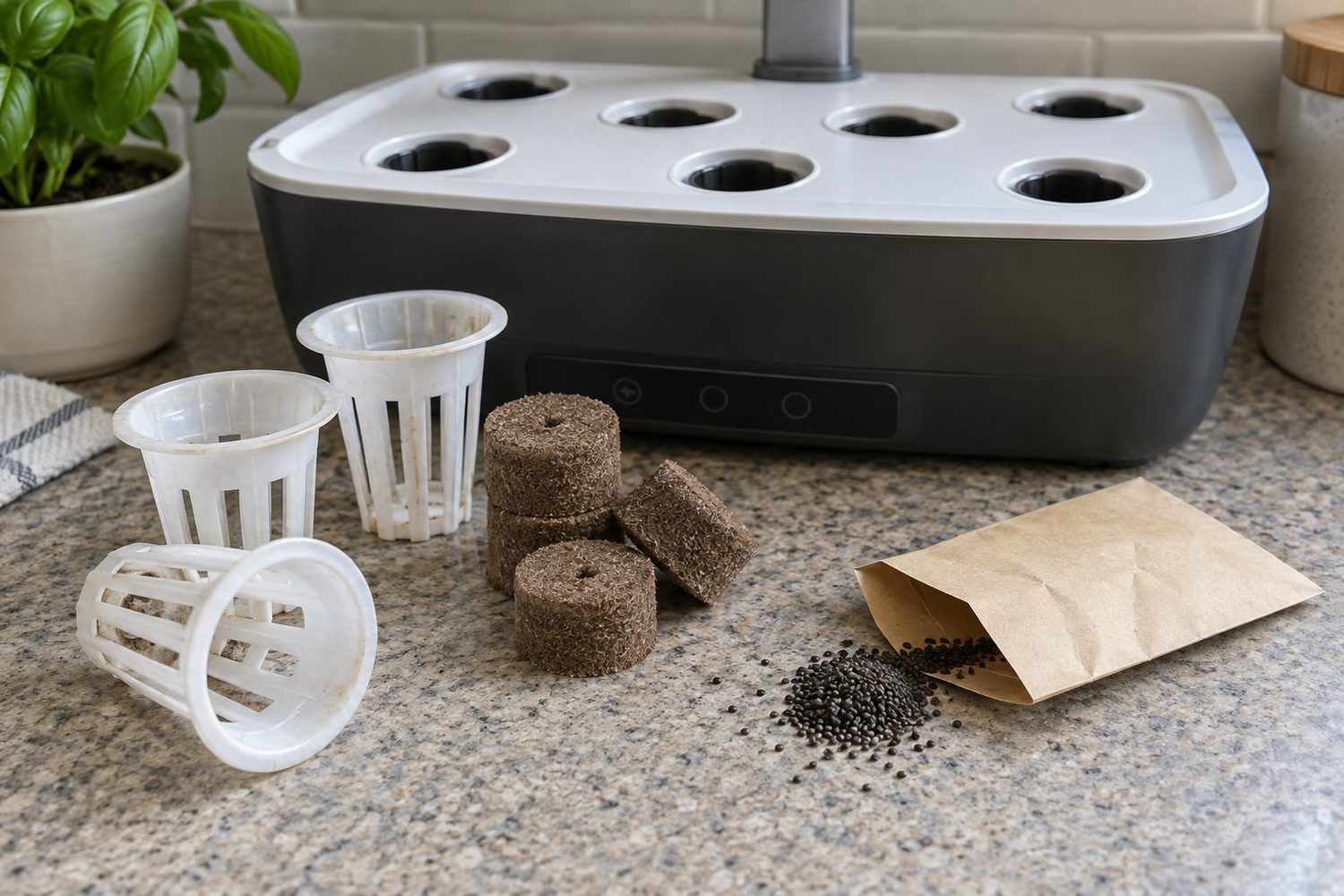
The own-seed route comes with two honest limits. AeroGarden doesn't confirm that Park Seed sponges fit its baskets; they are seed-starting sponges sold for a different product. And owner results with third-party sponges are mixed. One owner reports rot and slow growth and a paper-towel pre-sprouting workaround, and another says knock-off sponges can be rubbery and hold back germination. No one has published a side-by-side germination rate, so count how many of your pods actually sprout and factor any replants into your own total. Both routes in the totals keep AeroGarden's own plant food.
Extras owners buy that sit outside the total
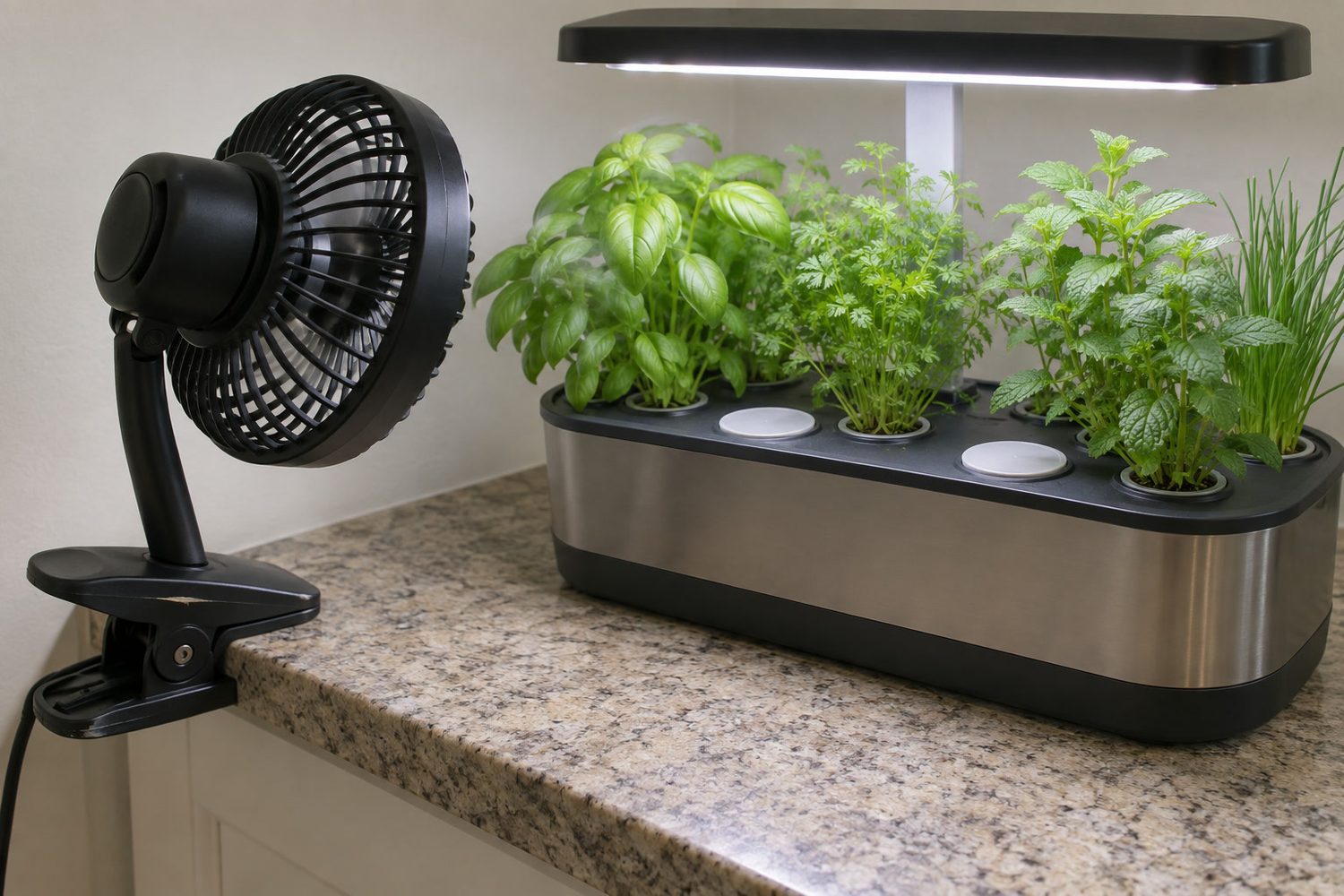
Owners report buying a handful of add-ons once they're growing. None of these are in the first-year totals, because not everyone needs them. Add only the ones you actually buy.
Hover or tap a row to highlight it.
| Extra | Price seen | What it's for |
|---|---|---|
| Mars Hydro 6-inch oscillating clip fan | $33.99 | Air movement over the plants |
| Ryobi USB clamp fan kit | $39.97 (Home Depot circular, Aug. 27 to Sep. 9, 2026) | A second fan option |
| Port covers, six-pack | $4.50 | Blocking light from unused pod holes, which the seller says helps with algae |
| Natria insecticidal soap, 24 oz | $9.99 | Listed pests on edible plants |
A pH or TDS meter is not on that list as a need. AeroGarden says its plant food is pH-buffered and doesn't tell ordinary users to buy a meter, so on the branded food it's a purchase for when something goes wrong. That changes if you switch to third-party nutrients, where owners report pH swings in difficult water. Glare from the light is another thing people spend on; one owner used a $30 silk pillowcase to contain it, which is one person's fix rather than a standard cost.
How grocery store basil compares
For a sense of scale, Kroger showed 0.5 oz packs of organic basil at $2.49. Buying two a week is $4.98 a week, or $258.96 a year.
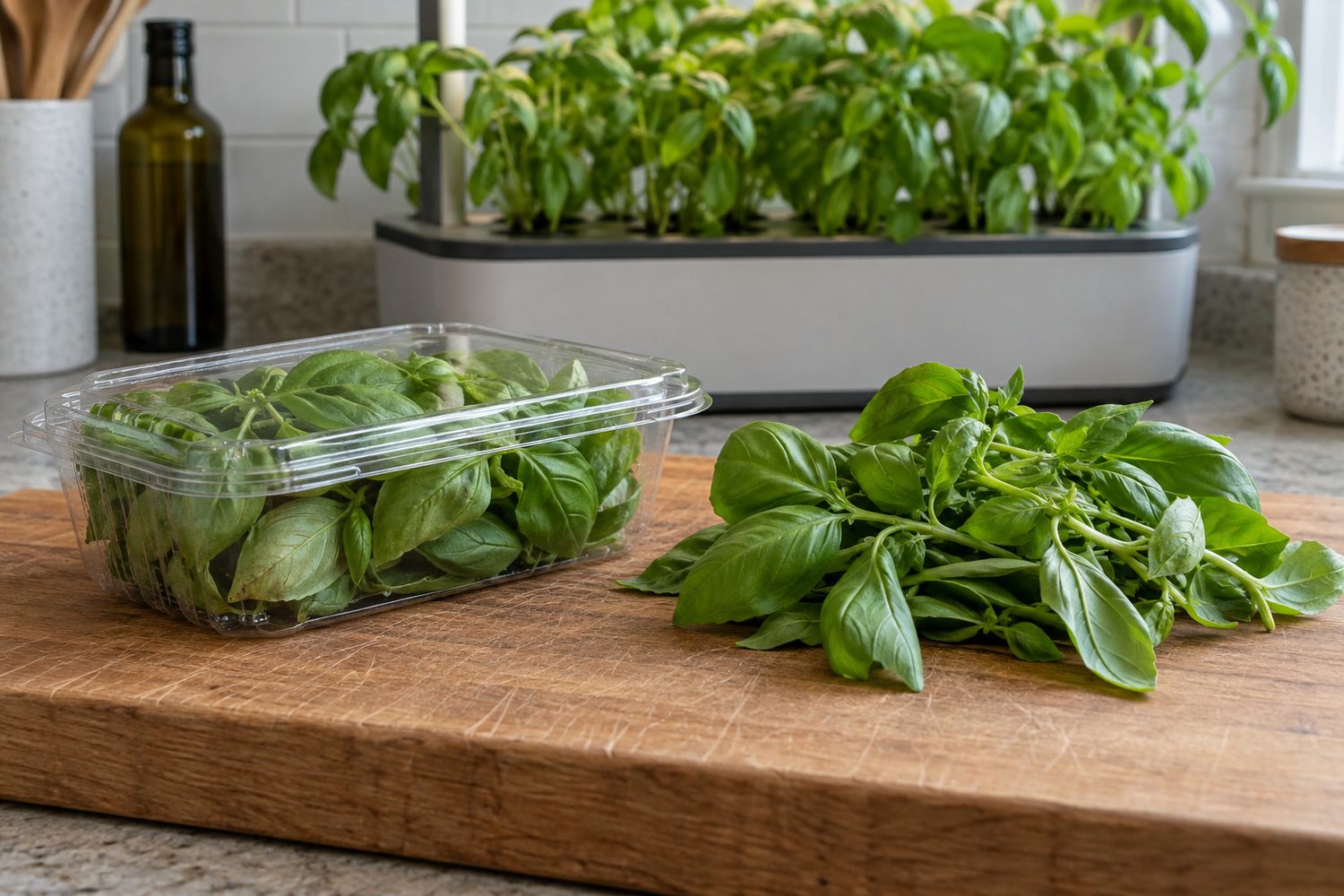
That is one data point, not a verdict. A Harvest or a Bounty may yield more or fewer ounces over a year than the totals above assume, and your kitchen may use far more or far less than a pound of herbs. If the comparison matters to you, keep a simple log: what you cut from the garden each week and what you would otherwise have bought at the store. After a couple of months you'll have your own number to set against the totals above.
Frequently asked questions
Do AeroGardens use a lot of electricity?
On rated wattage, a Harvest uses about 109.5 kWh a year and a Bounty about 233.6 kWh at the hours assumed here. One owner measured 10.8 kWh over a 30-day month on a unit running 16 hours a day and estimated about $1.50 a month at 14 cents per kWh. Another owner says the pump runs only about 10% of the light period, though no one has published a controlled measurement of pump draw.
Can you still buy AeroGarden seed pods?
Yes. On September 12, 2026, the official catalog listed Gourmet Herbs, Grow Anything and Heirloom Salad Greens kits from $13.95, and Mixed Romaine, Salsa, Cascading Petunias and Heirloom Cherry Tomato kits from $16.95. A "from" price is the smallest size: $13.95 buys a 3-pod kit. On September 13, every size of the Heirloom Salad Greens kit was listed as not available. AeroGarden says its baskets are a standard size across the Sprout, Harvest, Bounty and Farm, so its pods fit all of those models.
Does the warranty cover pods that don't sprout?
The limited warranty covers the garden for one year when it was bought from an authorized AeroGarden seller, with the original receipt, and it excludes seed kits and accessories. For gardens bought on or after November 1, 2024, AeroGarden's closing email, in an archived owner copy, announced a 90-day limited warranty in place of the one-year term, so check the terms that match the date on your receipt.
Separately, AeroGarden's pod page says to contact the company if a pod hasn't sprouted in 21 days. AeroGrow's germination warranty covers seed pod kits for 90 days from purchase: you contact customer service after 3 weeks of planting and send the original receipt, and AeroGrow may replace a pod that didn't germinate with another pod of its choosing or refund what you paid.
Is a used AeroGarden a cheaper way to start?
It can be, but plan for more than the sticker. Owners report buying a Harvest for $15 at a thrift store and units for $15 and $5 on Facebook Marketplace, and those are anecdotes, not typical prices. A used garden may be missing its pods, food or adapter, may have a worn pump, and won't carry the warranty, which doesn't transfer. Budget for new consumables and run a full test before counting it as the cheap route.
Where your own number lands
Start from the total for your model and route, then adjust three lines. Swap in your own electricity rate using the kWh figure for your garden. Check the cart price for the kit size you'd actually buy, if you're going branded. And add a planting for every extra cycle your log shows beyond two. Whatever you land on, the branded and own-seed routes will stay about $12 apart in year one, because the garden, the light and the food make up most of the cost either way. If you're still choosing between models, our countertop pod garden review covers how they compare in use.
Sources
Prices, stock and specifications are as the linked pages showed them on 2026-09-12.
- official AeroGarden store's
- 18.34 cents per kWh
- first harvest in 3 to 4 weeks
- own guide
- Harvest
- Bounty
- $11.99 for a 3 fl oz bottle
- dosing directions
- Park Seed Bio Dome refill sponges
- Johnny's Genovese basil
- reports rot and slow growth
- says knock-off sponges
- Mars Hydro 6-inch oscillating clip fan
- Ryobi USB clamp fan kit
- Port covers
- Natria insecticidal soap
- report pH swings
- used a $30 silk pillowcase
- Kroger
- measured 10.8 kWh
- baskets are a standard size
- FAQ
- limited warranty
- archived owner copy
- for $15 at a thrift store
Keep reading
The journal
AeroGarden Bounty Review: Basic, Bounty and Elite Specs
This AeroGarden Bounty review compares the Basic, Bounty and Elite by watts, features, price, stock, running cost estimates, and warranty terms.
Read AeroGarden Bounty Review: Basic, Bounty and Elite SpecsThe journal
AeroGarden Farm Review: Specs, Price and What It Grows
This AeroGarden Farm review breaks down the Plus and Basic models, last known list prices, running costs, warranty terms, and owner-reported problems.
Read AeroGarden Farm Review: Specs, Price and What It GrowsThe journal
AeroGarden vs LetPot: Specs, Warranty and Running Costs
See AeroGarden vs LetPot lined up on price, pod count, light hours, monthly power cost and warranty terms to match a garden to your kitchen and crops.
Read AeroGarden vs LetPot: Specs, Warranty and Running CostsThe journal
Can You Grow Microgreens in an AeroGarden? What Owners Do
The AeroGarden MicroGreens Kit is hard to find. Learn how owners still grow microgreens in an AeroGarden with a simple tray beside the light.
Read Can You Grow Microgreens in an AeroGarden? What Owners Do