Microgreen Prices Where You Live: A Buyer's Guide
Cal HewittPublished Checked
- selling microgreens
- price
- economics
Disclosure: Microgreens Guru may earn a commission from some links on this site, at no extra cost to you. It does not change the prices reported here.
There is no national price for microgreens, so the number you need has to come from your own market. What does exist is a handful of regional market reports and a few store shelves. Grocery prices cluster around $2.24 to $2.70 an ounce in the two regions where a store price per ounce is on record, Texas and the Seattle area, and farmers market reports run from about $1.13 to $6.00 an ounce depending on the state, the week and the label. None of these figures is a recorded sale. Treat them as a starting range, then survey your own stores, markets and buyers and set a price you can test against your costs.
If you already know your costs and want the pricing logic, how to set a price and what to charge covers that. This page is about what microgreens sell for near you and how to find out.
Three kinds of price, and why the difference matters
Before you compare any two numbers, sort them. You will run into three kinds of price, and they answer different questions.
A market report figure comes from a state agency, a university or a market organization that collects prices from several markets and publishes them as a range or an average. It tells you roughly what vendors in that area were charging that week. Most reports do not say whether the price was posted on a sign or paid at the register.
A retail asking price is what a store or seller posts: a shelf tag, a product page, a price list. It tells you what a shopper is being asked to pay, not what anyone paid.
A buyer's quote is what a chef, grocer or shopper tells you they would pay for a given pack. It is the closest thing you will get to the demand side, and it is still a quote until money changes hands.
No published source records a completed microgreens sale price, so every number below is one of the first two kinds. When you build your own survey, write down which kind each figure is, because a $5 price posted on a sign and a $5 price a chef agreed to on the phone are not the same evidence.
What regional market reports show
The reports that list microgreens are few, regional and often a single week. Here is what each one covers, converted to a price per ounce wherever the pack weight was given.
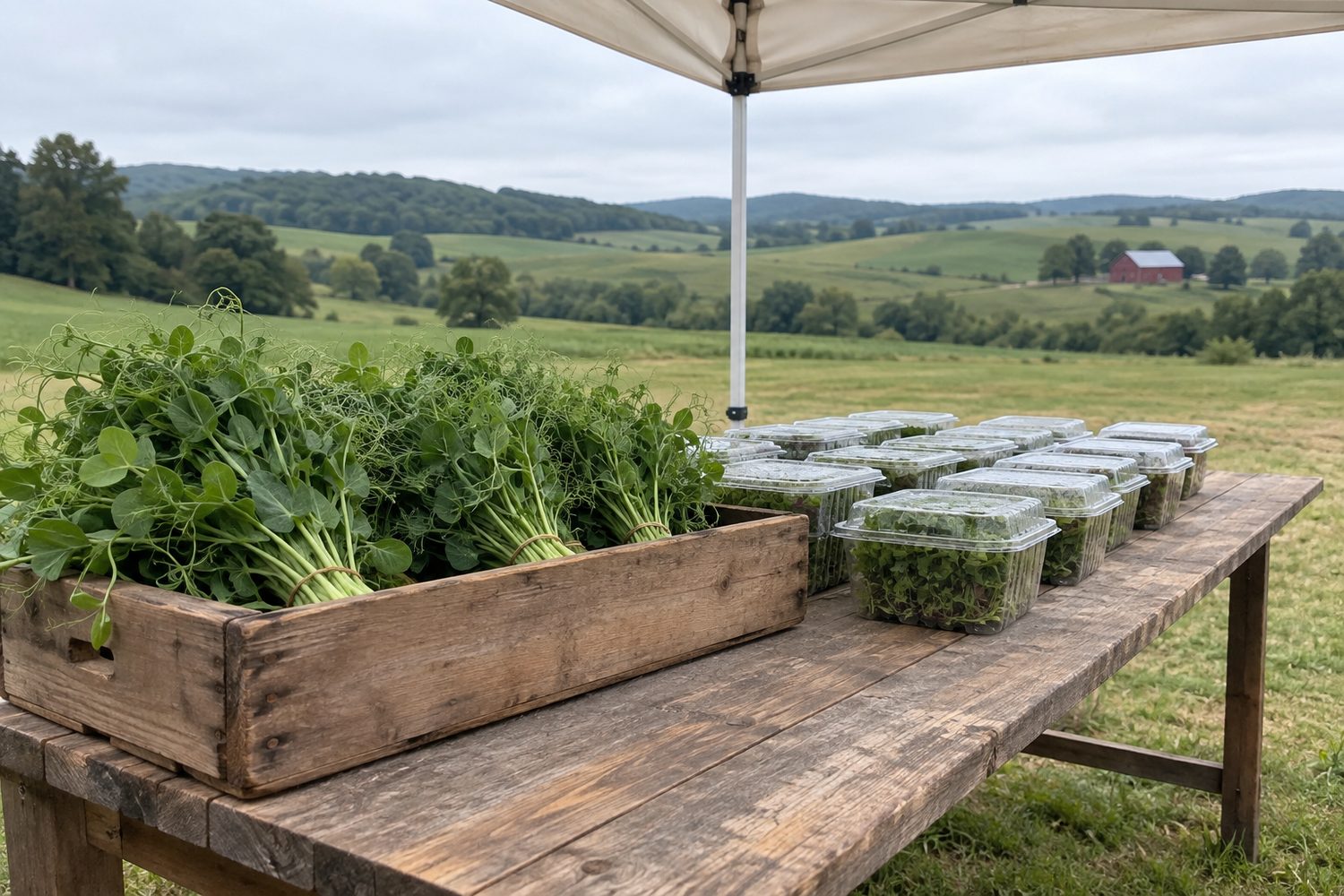
Vermont, week of August 6, 2023. The USDA Agricultural Marketing Service and Vermont Agency of Agriculture weekly farmers market report listed microgreens at $48.00 per pound in the certified organic column, with low, high and average all at $48.00. That is $3.00 per ounce ($48.00 ÷ 16). Six markets reported that week, and there was no conventional microgreens row at all. The report says its products are local to Vermont, coming from within the state or up to 30 miles past its border. It does not say how prices were collected, so read the figure as what that column shows for that week and no more. If you are in Vermont and grow without certification, this report gives you no conventional figure to compare against; check your own market's stands instead.
Virginia, August and October 2025. The Virginia Department of Agriculture and Consumer Services publishes retail farmers market price summaries, and its reports say the prices "are submitted monthly by participating farmers' market managers." The September/October 2025 summary, dated October 16, 2025, lists:
- Harrisonburg Farmers Market, Harrisonburg: $18.00 per pound, no organic label, or $1.13 per ounce ($18.00 ÷ 16).
- Lakeside Farmers Market, Richmond: organic microgreens at $5.00 per 1.5 ounces, or $3.33 per ounce ($5.00 ÷ 1.5).
- Danville Market, Danville: organic microgreens at $7.00 per pint. A pint is a volume, not a weight, so this one cannot be converted.
The August 2025 summary, dated August 31, 2025, lists Reston Market in Reston at $6.00 to $15.00 per bag and Danville again at $7.00 per organic pint. No bag weight is given, so the Reston range cannot be converted either. Notice the spread inside one state: $1.13 an ounce in Harrisonburg and $3.33 in Richmond, two months apart from the Reston listing. That spread is the reason a single "Virginia price" does not exist.
Montrose, Colorado, July 27, 2024. The Colorado State University Montrose Farmers Market report already works in ounces. Microgreens with a producer claim or specialty certification were $3.00 to $4.00 per ounce, averaging $3.50. Microgreens without a claim were $6.00 per ounce. The report says prices are averaged across all vendors selling each product and gives no vendor count, so do not read the higher uncertified price as a rule. It is one market on one day.
Kansas City, July 2 to 14, 2024. Cultivate KC's summer price report, published by the nonprofit rather than a government agency, recorded microgreens at $4.00 to $8.00 per bunch, averaging $5.44, across 8 markets and 9 vendors. Bunch weight was not reported, so there is no per-ounce figure. If you sell in Kansas City, the useful move is to weigh a bunch at a couple of those stands, or weigh the bunch you plan to sell, and do the division yourself.
Washington, DC, August 17, 2025. On the Marketspread listing for Eastern Market, the vendor Pure Micro-Greens listed microgreens such as amaranth and arugula at $5.00 to $10.00, with no pack size. That is a vendor's asking price and it cannot be converted.
If your state is not on this list, there is no published regional series to lean on. Your survey is the data.
What stores are asking
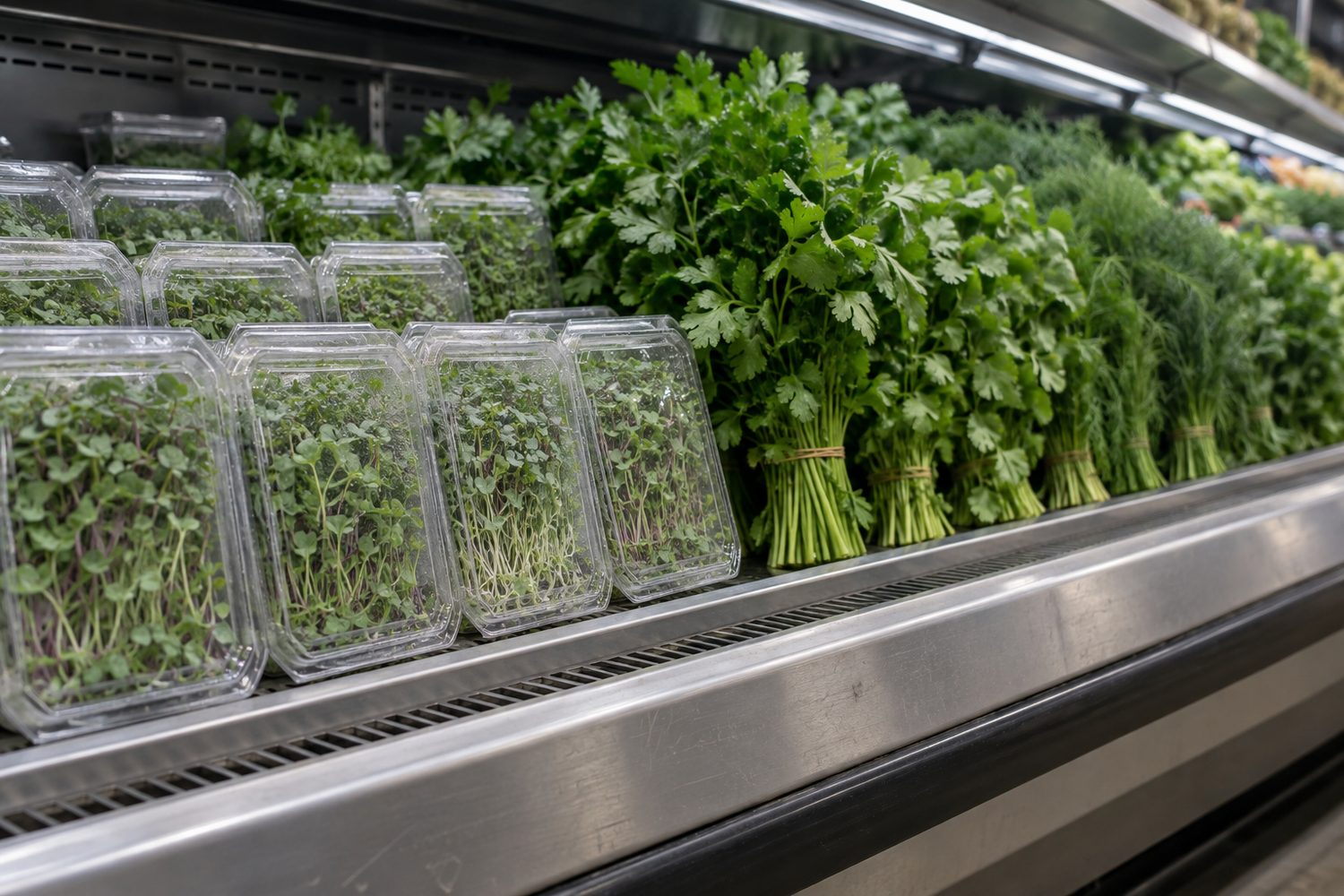
Grocery prices are easier to find and easier to convert, because packs carry a weight. They are asking prices, and online prices can differ from the shelf.
Hover or tap a row to highlight it.
| Store and place | Product | Pack | Price | Per ounce | Date |
|---|---|---|---|---|---|
| H-E-B, Texas | 80 Acres Farms arugula | 2 oz | $4.48 | $2.24 ($4.48 ÷ 2) | Read September 26, 2026 |
| H-E-B, Texas | AeroFarms micro broccoli | 2 oz | $4.48 | $2.24 ($4.48 ÷ 2) | Read September 26, 2026 |
| Sprouts, ZIP 95354, California | BrightFresh micro watercress | 1.75 oz | $4.29 | $2.45 ($4.29 ÷ 1.75) | September 26, 2026, out of stock |
| Whole Foods, Seattle area | Microgreens | Not stated | Not stated | $2.35 to $2.70 | Study dated March 1, 2026 |
| Safeway, Seattle area | Microgreens | Not stated | Not stated | $2.30 | Study dated March 1, 2026 |
| AeroFarms suggested retail, national | Micro arugula at Whole Foods | 2 oz | $4.99 | $2.50 ($4.99 ÷ 2, rounded) | Announced August 26, 2026 |
A few things about these rows change how you use them. The H-E-B pages warn that prices vary between in-store, curbside and delivery, and the arugula was not sold at the store the page was set to, while the broccoli was. The Seattle figures come from the King County Agriculture Sector Study, a county government report that used $2.50 an ounce as its working average; it does not give the date the prices were observed, the pack sizes or the specific stores. The AeroFarms $4.99 is the maker's suggested price for a national launch, not a price anyone read off a shelf in your town. The same announcement put AeroFarms micro broccoli at Costco in a 6-ounce pack for $7.99, or $1.33 an ounce, which shows how much a bigger pack pulls the per-ounce price down.
For Kroger and Wegmans there is no dated microgreens price on record, so if one of those is your local chain, go look. Write down the store, the city, the brand, the pack weight, the price and the date. For more on how store microgreens are packed and priced, see buying microgreens and why microgreens are expensive.
What growers post in their own regions
Grower price lists show what sellers in a region are offering. They are each seller's own practice, and none of them is an invoice.
- Northwest Arkansas. MicroFreshly, page read September 26, 2026, lists common crops such as sunflower, pea shoots, broccoli and radish at $15 for 4 ounces, or $3.75 an ounce ($15 ÷ 4), with a distributor price of $10.05 for 4 ounces, or $2.51 an ounce. Its pricier tiers run $20 and $25 for 4 ounces ($5.00 and $6.25 an ounce).
- Austin, Texas. OZO's restaurant page, read September 26, 2026, shows $25 a pound for sunflower and daikon radish ($1.56 an ounce, $25 ÷ 16) up to $60 a pound for green shiso ($3.75 an ounce). Its product cards show different headline figures, so confirm with the seller before you quote it.
- Durham, North Carolina. Piedmont Microgreens, as published in Microgreen Manager's pricing guide (July 2024), charged restaurants $18 for 6 ounces of common varieties ($3.00 an ounce) and wholesale buyers $14 for 8 ounces ($1.75 an ounce). The guide itself tells readers to keep their own cost of living in mind when comparing to Durham.
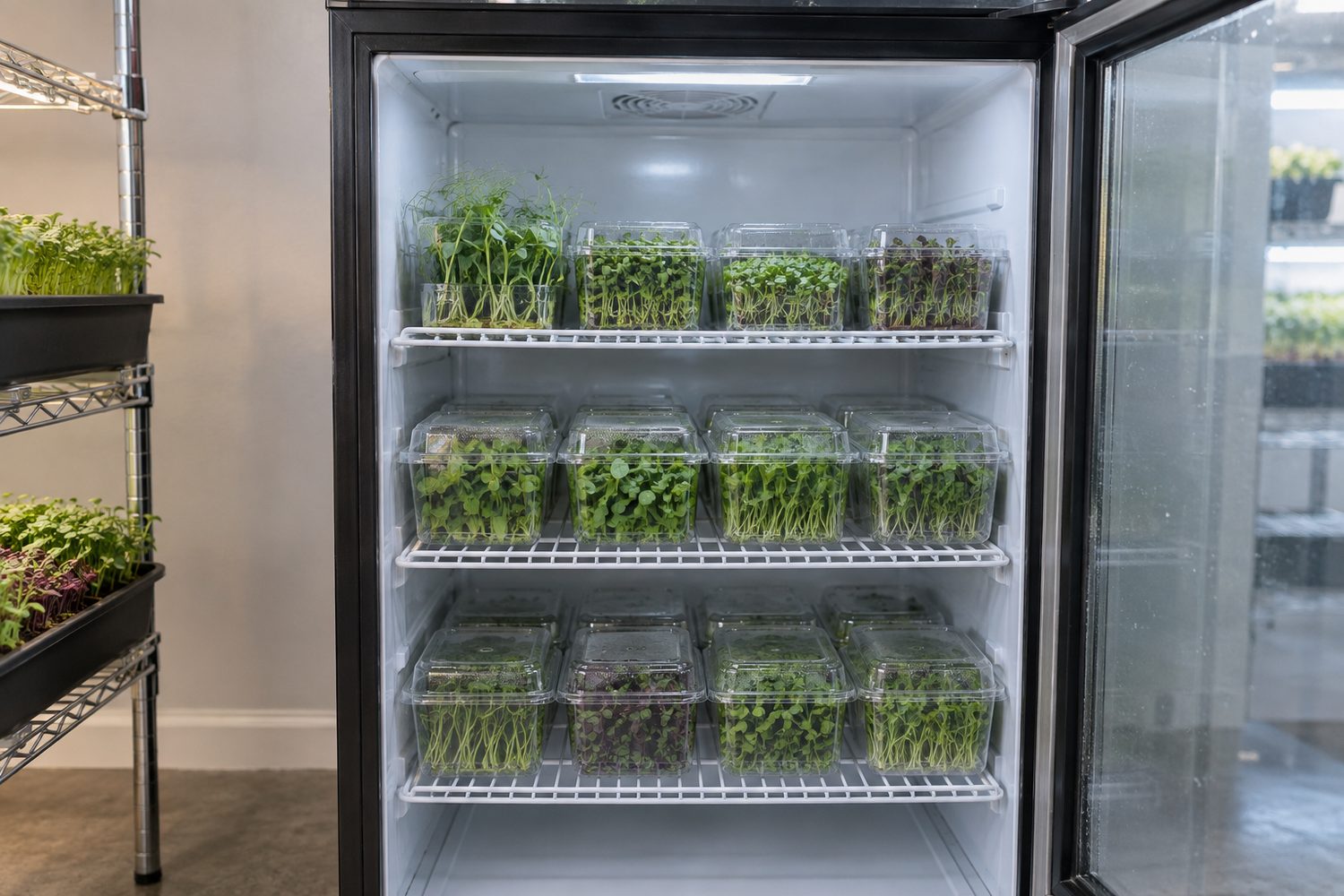
- Grand Rapids, Michigan. Fresh Coast Greens, read September 26, 2026, lists $4.50 per 2-ounce clamshell for broccoli, sunflower, pea and radish, or $2.25 an ounce.
- Amsterdam, New York. Lovin' Mama Farm, presenting at the 2024 New England Vegetable and Fruit Conference, reported selling microgreens at its farmers market stands for $5 per 1.5-ounce bag and $10 per 3-ounce bag, both $3.33 an ounce ($5 ÷ 1.5 and $10 ÷ 3), with pea and sunflower shoots at $5 per 3 ounces, or $1.67 an ounce. The farm reported averaging about $1,300 a weekend in microgreens sales. That is one farm's own figure, not a market measurement.
Restaurant accounts sit in their own lane; how much restaurants pay for microgreens goes further into that channel, and selling to grocery stores and wholesale buyers covers store accounts.
How to check prices close to home
There is no published protocol for surveying microgreens prices. The steps below are assembled from general extension guidance on pricing farm products: Oregon State University Extension frames pricing as competition, cost and customer; the University of Minnesota Extension says to shop competitors in person or online and record prices, pack size, quality and packaging; and Penn State Extension says to "Analyze the prices of similar produce at the market" and warns against price wars. None of it is written for microgreens specifically, but it fits.
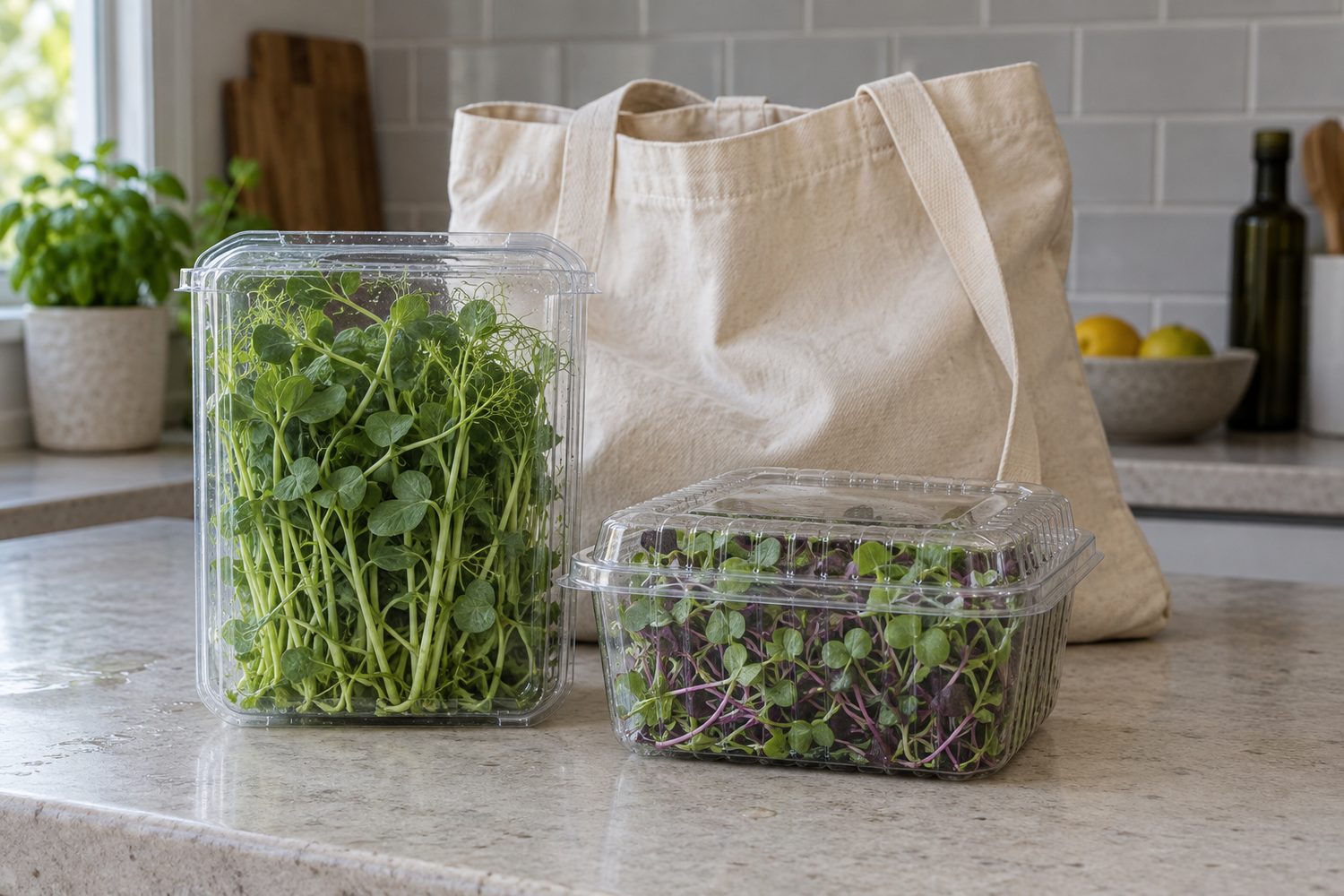
- Pick one comparable product. For example, broccoli microgreens in a 2-ounce clamshell. Write down the crop, weight, any organic or other claim, the packaging and the channel. Comparing a 2-ounce retail pack to a 4-ounce wholesale bag without converting is how people end up underpriced.
- Check the stores. Look up nearby grocery sites and visit one or two stores. Record the store, city, brand, weight, price and date, and note whether it was a shelf tag or an online listing.
- Check the markets. Walk your farmers market, or read its vendor pages, and record every comparable pack, not only the cheapest one. UMN also suggests watching which stands draw traffic and having a casual conversation with a vendor about how the market runs. The farmers markets guide covers what to look for there.
- Ask a few buyers. Contact two or three restaurants, specialty grocers or chefs and ask what pack size, delivery schedule, quality and price they want. UMN notes that restaurant and retail buyers look for consistency in ordering and product quality. Record their answers as quotes.
- Convert everything to price per ounce. Price divided by ounces. $4.48 ÷ 2 ounces is $2.24 an ounce. A price per pound divided by 16 gives the same unit. A bunch, bag or pint with no weight cannot be converted until you weigh one.
- Lay out the range. Note the low, the high and the middle, and label each figure as an asking price or a quote.
- Work out your own cost per pack. Seed, growing medium, utilities, labor, packaging, delivery, market fees and the product you expect to lose. UMN points out that short-lived products need more margin to cover waste.
- Set a test price. If the local range sits below your cost, do not follow it down without a clear reason. Otherwise pick a price inside the range, watch what sells, and repeat the check when the season changes.
Where you land inside the range depends on what you bring. Oregon State notes sellers can price above the competition for variety, certification such as organic, service and farm location, and Penn State names "organic certification, freshness, or unique varieties" under value-based pricing. As Oregon State puts it, "There isn't one right price." The one you can defend is the one your own survey and your own costs support.
Frequently asked questions
Is there a USDA price for microgreens I can use? Not a national one. The USDA-connected report that lists microgreens is Vermont's weekly farmers market report, which showed $48 a pound in the certified organic column for the week of August 6, 2023, across six markets. It covers Vermont only and does not say how prices were collected.
Do organic microgreens always sell for more? The reports do not settle it. Montrose, Colorado, recorded uncertified microgreens at $6.00 an ounce against $3.00 to $4.00 for claimed or certified ones on one day in 2024, while Virginia's organic Lakeside price was well above the unlabeled Harrisonburg price. Check how your own market treats the label.
How do I compare a bunch price to an ounce price? Weigh the bunch on a kitchen scale. Cultivate KC's $4 to $8 per bunch in Kansas City has no weight attached, so buy or weigh one at a stand, or weigh the bunch you plan to sell, and divide the price by the ounces.
Should I match the grocery store price at the farmers market? Not by default. Store prices are one reference point, and Lovin' Mama Farm in New York reported $3.33 an ounce at its stands, above the $2.24 to $2.70 an ounce store range on record. Your market's own stands and your costs matter more than a chain's shelf.
How often should I re-check local prices? Whenever customer response, competition or your costs change, because each of those moves the price you can hold. A fresh survey at each change of season is a reasonable habit, since the reports above are single weeks and single days.
Where to start
Pick one pack size, spend a Saturday checking two stores and one market, call two chefs, and convert every number to dollars per ounce. Put that range next to your cost per pack and choose a price to test. When you are ready to turn the range into a figure on your label, the pricing guide walks through the math.
Terms on this page
Tap a term to see what it means.
Asking price. A publicly posted price, with no proof a buyer completed the purchase.
Sources
Prices, stock and specifications are as the linked pages showed them on 2026-09-26.
- USDA Agricultural Marketing Service and Vermont Agency of Agriculture weekly farmers market report
- September/October 2025 summary
- August 2025 summary
- Colorado State University Montrose Farmers Market report
- Cultivate KC's summer price report
- Marketspread listing for Eastern Market
- H-E-B, Texas
- H-E-B, Texas
- Sprouts, ZIP 95354, California
- Whole Foods, Seattle area
- AeroFarms suggested retail, national
- MicroFreshly
- OZO's restaurant page
- Microgreen Manager's pricing guide
- Fresh Coast Greens
- 2024 New England Vegetable and Fruit Conference
- Oregon State University Extension
- University of Minnesota Extension
- Penn State Extension
Keep reading
The journal
How Much Do Restaurants Pay for Microgreens?
Learn what restaurants pay for microgreens, with distributor and grower offer prices, grams per plate, plate cost math and where it lands in food cost.
Read How Much Do Restaurants Pay for Microgreens?The journal
Why Microgreens Are Expensive: You Are Mostly Buying the Box
In the only full published tray budget, labels, packaging and marketing are 50 to 60 percent of what a tray costs to produce. Growing the plant is 17 to 23 percent, and the seed is under 10.
Read Why Microgreens Are Expensive: You Are Mostly Buying the BoxThe journal
Buying Microgreens: The Same $6 Buys 60 Grams or 100
Across every observed price, what a shopper can actually pay spans 2-fold while sellers quote across 8.3. Farm-direct covers almost the whole range by itself, because pack size decides the price and the channel does not.
Read Buying Microgreens: The Same $6 Buys 60 Grams or 100The journal
Are Microgreens Profitable? What the Numbers Show
Are microgreens profitable? See what a national grower survey and federal sales data show, why gross revenue is not profit, and how to run your own numbers.
Read Are Microgreens Profitable? What the Numbers Show