How Much Do Restaurants Pay for Microgreens?
Cal HewittPublished Checked
- selling microgreens
- economics
- price
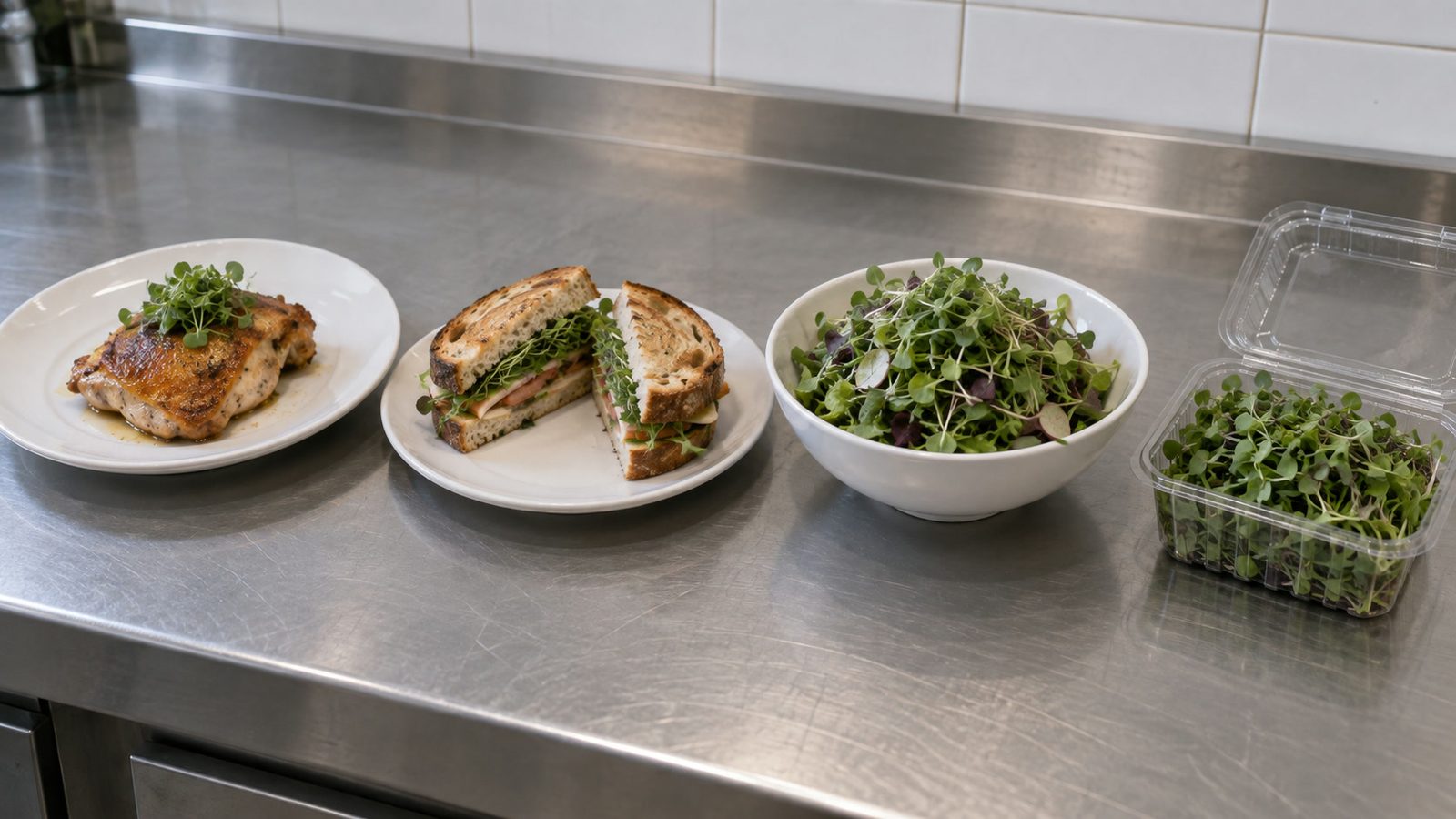
MicroFreshly in Northwest Arkansas lists a 4 oz pack of common microgreens, such as sunflower or radish, at $15.00, or $12.00 on an approved chef account. At that chef price, a 1 to 2 g garnish costs you 11 to 21 cents a plate.
Other growers charge by other units: OZO in Austin lists sunflower at $25 a pound, and Piedmont Microgreens in Durham, North Carolina, offers pea and sunflower at $14 per 8 oz (Microgreen Manager).
Every one of these figures is a supplier's offer to restaurant accounts. Use them to judge the quote in front of you, and cost your dishes from the number on your own invoice.
Offers by seller and pack size
The table puts each offer beside its seller, region, pack and date. The per-ounce column is plain division, added so packs of different sizes line up.
Hover or tap a row to highlight it.
| Seller and region | Date listed | Pack and crop | Offer | Per ounce |
|---|---|---|---|---|
| MicroFreshly, Northwest Arkansas | September 13, 2026 | 4 oz, Tier A (sunflower, pea shoots, broccoli, radish) | $15.00 base, $12.00 chef account, $10.05 distributor | $3.75, $3.00, $2.51 |
| MicroFreshly, Northwest Arkansas | September 13, 2026 | 4 oz, Tier B (afila tendril, cilantro, colorful mix) | $20.00 base | $5.00 |
| MicroFreshly, Northwest Arkansas | September 13, 2026 | 4 oz, Tier C (basil mix, shiso, amaranth) | $25.00 base | $6.25 |
| OZO, Austin, Texas | September 13, 2026 | 1 lb: sunflower and daikon $25, cilantro $35, Thai basil and red amaranth $40, green shiso $60 | Per pound as listed | $1.56 to $3.75 |
| Piedmont Microgreens, Durham, North Carolina | Published July 11, 2024 | 8 oz pea and sunflower $14; 6 oz common brassicas and radish $18; 2 oz specialty herbs $16; 1 oz sorrel $22 | Restaurant price as listed | $1.75, $3.00, $8.00, $22.00 |
| Fresh Coast Greens, West Michigan | September 13, 2026 | 2 oz clamshell $4.50; living 10 x 20 tray $15 | Wholesale price as listed | $2.25 for the clamshell |
| The Chef's Garden, Huron, Ohio | September 13, 2026 | Package, weight not stated: micro cilantro $34.00, micro thyme $47.50 | Chef-only price | Not possible without a weight |
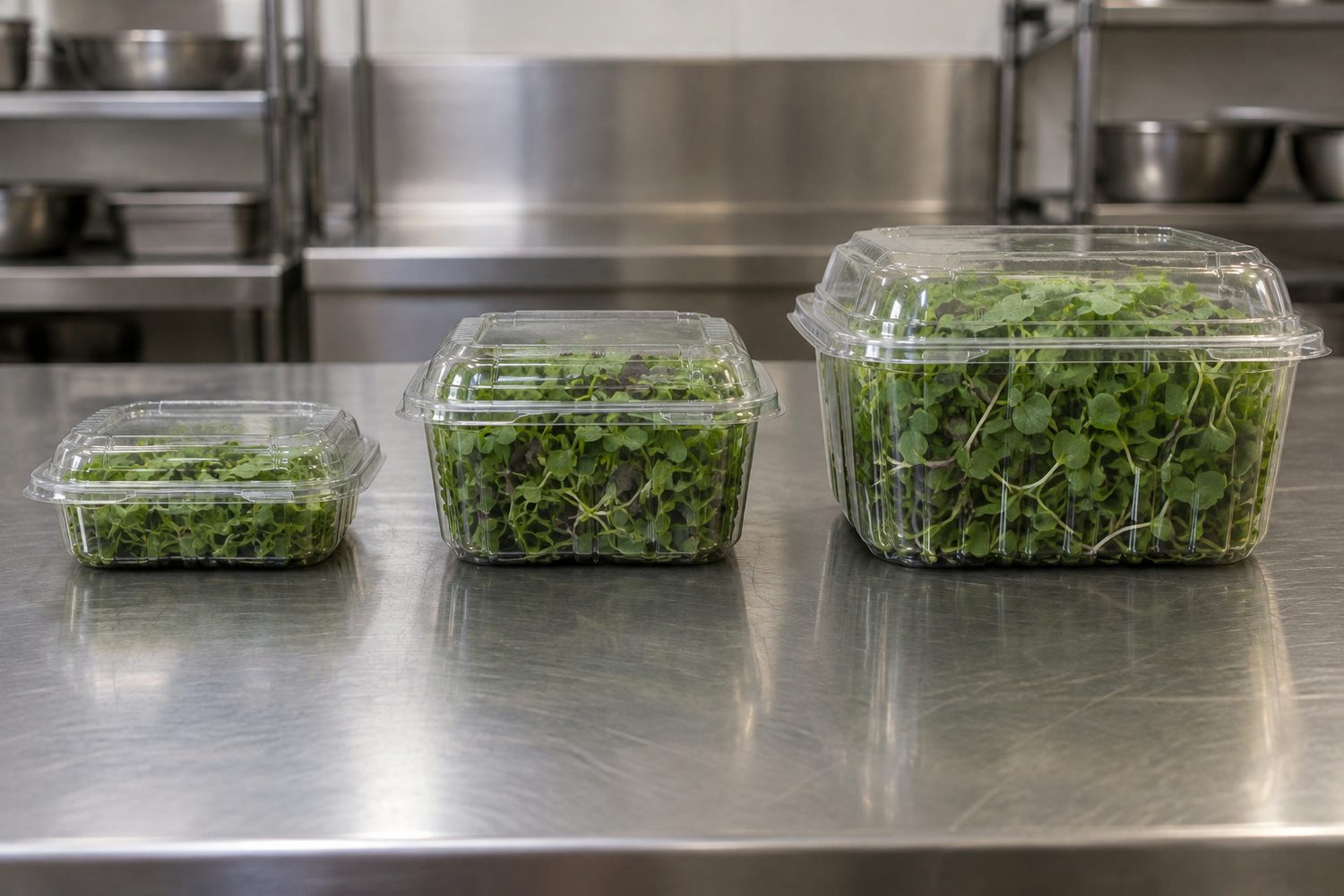
MicroFreshly prices by account type rather than by order size. Tier A also includes salad mixes, kale, red cabbage, kohlrabi, wasabi mustard and mizuna, and Tier C adds beet and chard mixes. Approved chef accounts take 20% off with a $150 order minimum, and approved distributor, wholesale or retail accounts take 33% off with a $350 minimum, which brings a Tier A pack to $10.05. That same-day spread of $15.00, $12.00 and $10.05 for one pack is also why selling microgreens to grocery and wholesale buyers starts from the account type.
OZO asks for a 2 lb a week minimum across varieties and runs Monday, Wednesday and Friday routes. Its product cards show some crops at a different figure, sunflower at $28 a pound for example, so confirm which price your account gets before you cost a menu from it.
The Piedmont figures come from Microgreen Manager's pricing guide, which gives them as that Durham farm's restaurant prices. Notice how the pack shrinks as the crop gets more specialized. Sorrel at $22 per 1 oz is $22.00 an ounce, while pea at $14 per 8 oz is $1.75 an ounce, so compare by weight, never by pack.
The Chef's Garden lists micro cilantro at $34.00 a package and micro thyme at $47.50, and both are reserved for chef accounts that log in to buy. The package weight isn't printed, so ask for it before you set those prices beside anyone else's. For every grower price above and more converted to one unit, see pricing microgreens and what to charge.
What broadline distributors list
If you buy through Sysco, US Foods, Gordon Food Service, Baldor, The Chefs' Warehouse or FreshPoint, there's no public microgreen price to check. Those prices sit behind trade accounts, and your rep quotes them. Public sheets show what's carried without the price. What Chefs Want's Central region local produce list for the week of March 22, 2026 shows local microgreens from Ohio, Kentucky, Tennessee and Indiana farms in 4 oz, 6 oz and 8 oz packs and 10 x 20 living cases, with no prices. The Midwest Foods 2025 microgreens sheet lists cases and single packs, many on 72-hour notice.
Large growers that sell through distributors leave the number to them as well. Fresh Origins says "our produce distributor partners set pricing" on its operator FAQ. To compare a distributor with a local grower, ask your rep for the pack price and the pack weight, divide one by the other in grams, and set the result beside the per-gram figures further down.
Minimums, delivery and payment terms
Terms change what a pack costs you as much as the list price does. Fresh Coast Greens in West Michigan offers its 2 oz clamshell at $4.50 and a living 10 x 20 tray at $15, sets a $50 minimum, asks 48 hours' notice for a one-off bulk order and two weeks for a custom crop, and extends Net 15 to established accounts. Net 15 means payment is due 15 days after the invoice date, and because Fresh Coast ties it to established accounts, ask what applies before your first order.
Other local growers set lower floors. Revity offers free delivery within 30 miles of Nashville on a $50 order, with a fee or a larger minimum beyond that. Teeny Greeny in Broken Arrow, Oklahoma, sets a $20 minimum with Thursday evening delivery within 30 miles. OZO's 2 lb weekly minimum sits at the other end.
For payment timing, CADE's 2024 New York Food Buyer Trends report surveyed 80 food buyers of all types, 23% of them restaurants and catering. Of the 25 buyers who reported a payment timeline, 15 paid in 30 days, 3 in 14 days, 1 in 21, 2 in 45, 1 in 60 and 3 on delivery. The table isn't split by buyer type, so it is not a restaurant-only figure. If you're a grower writing terms for a New York account, it tells you a 30-day request is the one you'll hear most.
How many grams go on a plate
No culinary school or institutional recipe sets a microgreen portion in grams, so the weighed portions available are supplier guidance. London Microgreens in southwestern Ontario gives 1 to 2 g per plated garnish, 3 to 5 g across a whole tasting menu, 10 to 20 g per sandwich or wrap, and 25 to 50 g per microgreen-forward salad.
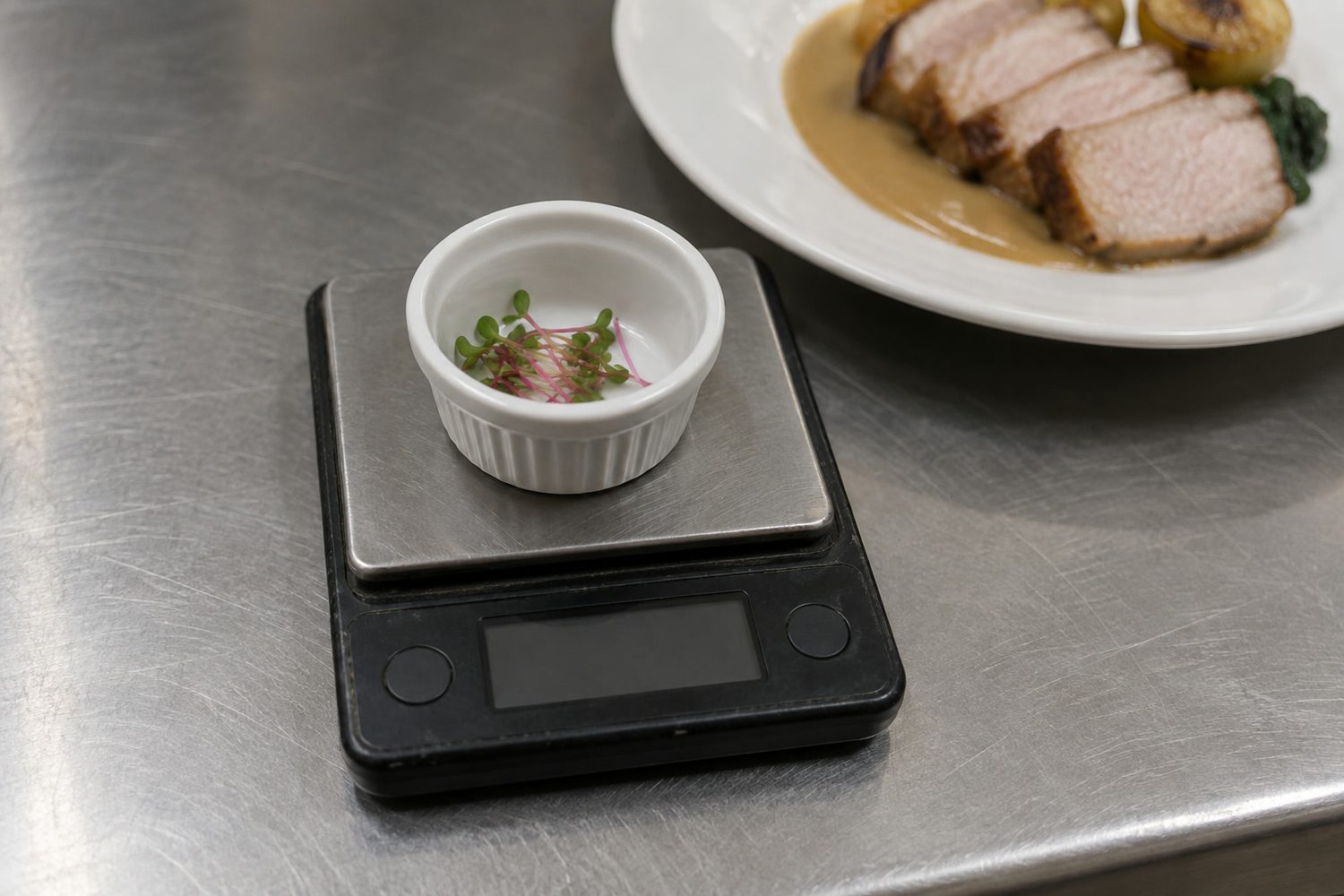
Micro'S, a Belgian producer, prints about 100 plates per 500 g for most of its mixes, which is 5 g a plate. Its Basic mix yields 70 plates and its Gastronomy mix 125, so across its mixes a plate carries 4 to 7.1 g. That's arithmetic from the producer's own claim, not a measured plating spec.
No weighed soup or cocktail portion has been published. If either is on your menu, weigh ten of your own garnishes on a gram scale, average them and write the figure on the recipe card. For a single garnish serving, 2.5 g is the figure used in microgreens serving size and cost.
Cost per plate at a chef-account price
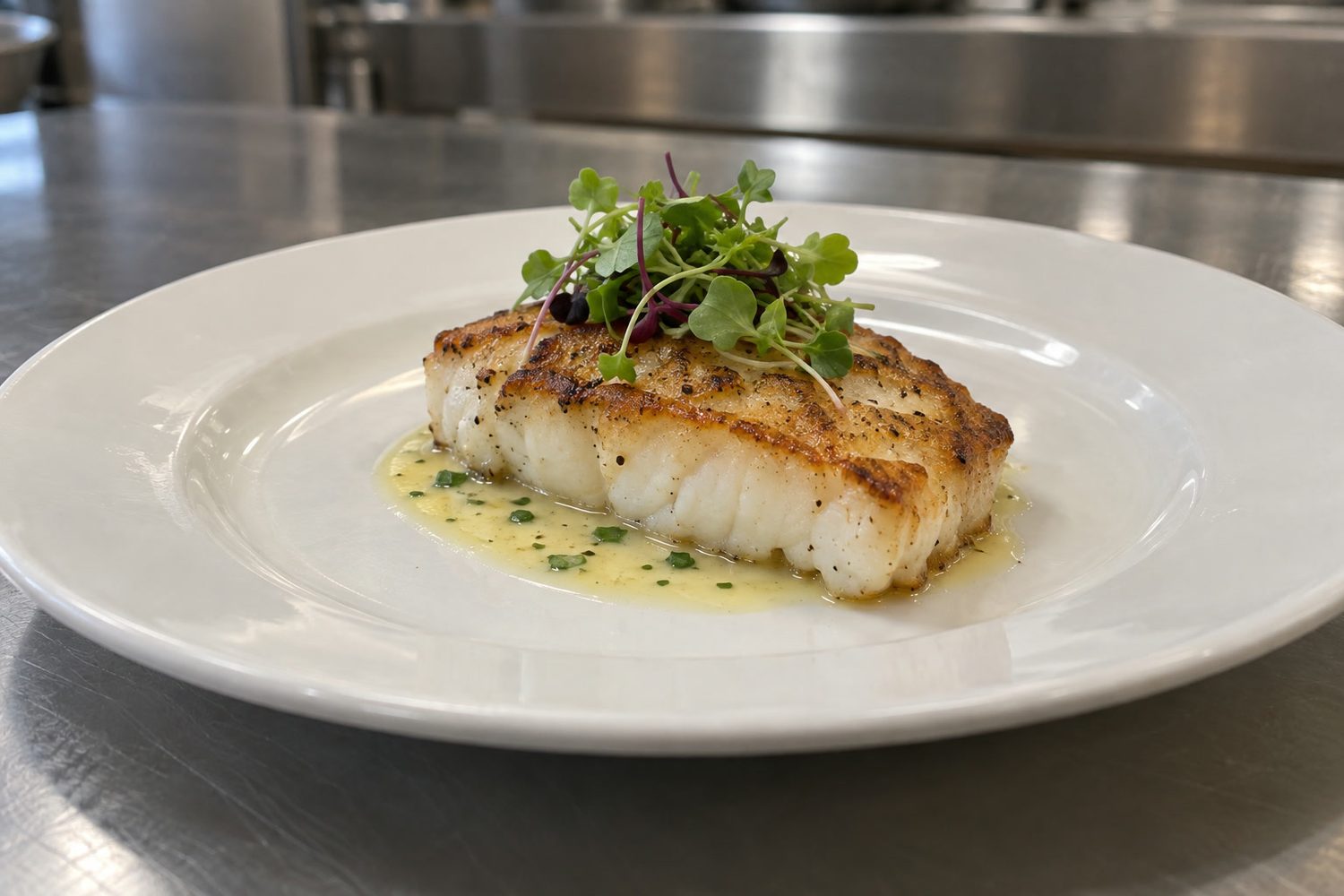
Start with the price per gram. A 4 oz pack weighs 113.4 g, so MicroFreshly's chef price is $12.00 divided by 113.4 g, which is $0.1058 a gram. Multiply that by the grams on the plate.
Hover or tap a row to highlight it.
| Use | Grams (supplier guidance) | Cost at $0.1058 a gram |
|---|---|---|
| Plated garnish | 1 to 2 g | $0.11 to $0.21 |
| Tasting menu, whole menu | 3 to 5 g | $0.32 to $0.53 |
| Micro'S mixes, per plate | 4 to 7.1 g | $0.42 to $0.75 |
| Sandwich or wrap | 10 to 20 g | $1.06 to $2.12 |
| Microgreen-forward salad | 25 to 50 g | $2.65 to $5.29 |
The same two steps work for any quote. MicroFreshly's distributor price of $10.05 per 4 oz comes to $0.0886 a gram, and OZO's $25 a pound for sunflower, over the 453.6 g in a pound, comes to $0.0551 a gram. Put your own invoice price and your own portion weight in and you have your number.
One more step makes the figure hold up. The yield method in On Cooking divides edible-portion weight by as-purchased weight. For microgreens, weigh the unopened pack, weigh what you plate from it, and divide the pack price by the grams you plated rather than by the pack weight. No trim or discard rate has been published for microgreens, so your own log is the one to use.
Where plate cost sits in food cost
The National Restaurant Association's 2025 Operations Data Abstract puts 2024 median food and nonalcoholic beverage cost at 32.4% of sales for limited-service operators and 32.0% for full-service operators. The Association calls these benchmarks, not targets. They describe a restaurant's whole food and beverage bill, and no figure exists for the share microgreens take.
Hover or tap a row to highlight it.
| Figure | Value |
|---|---|
| 2024 median food and beverage cost, limited-service | 32.4% of sales |
| 2024 median food and beverage cost, full-service | 32.0% of sales |
| Microgreens on a plated garnish, 1 to 2 g at $12.00 per 4 oz | $0.11 to $0.21 |
| Microgreens on a sandwich or wrap, 10 to 20 g | $1.06 to $2.12 |
| Microgreens on a salad, 25 to 50 g | $2.65 to $5.29 |
To see where your dish sits, divide the plate's microgreen cost by the dish's menu price and multiply by 100. That's the percentage of the dish's sales the microgreens take. Then add the microgreens to every other ingredient on the plate, divide that total by the menu price, and compare the result with the 32.0% or 32.4% median. A garnish adds cents and a salad built on 25 to 50 g adds dollars, so run the salad first.
What one account uses in a week
The one measured weekly volume among restaurants comes from Hermosillo, Sonora, Mexico. Yanes-Molina and colleagues (2019) surveyed 52 gourmet restaurants in 2018, and the roughly seven already buying microgreens used an average of 214.29 g a week. At $0.1058 a gram that's about $22.67 a week at MicroFreshly's chef price, a little under two 4 oz packs.
It's a small sample outside the US, so if you're the grower, ask a prospective account how many covers it serves and which dishes carry microgreens before you quote. For what one account is worth to a grower, see selling microgreens to restaurants and chefs.
Shelf life and spoilage
Microgreens lose quality quickly after harvest. A 2020 peer-reviewed review indexed by USDA ARS names dehydration, wilting and decay as constraints that keep prices high and keep sales local.
Supplier figures give you a range to plan around. Micro'S says its cresses keep for up to 10 days after harvest, and says keeping the unused 100 g bags in its 500 g pack sealed lengthens life by 25%. Teeny Greeny says its greens hold five to ten days in the walk-in. London Microgreens advises storing at 1 to 4°C (check it with a refrigerator thermometer) and budgets 10 to 15% for spoilage. None of these is a measured restaurant average, so date each pack when it arrives, weigh what you throw out at the end of the week, and fold that loss into your price per gram. How to store microgreens covers holding them once they're in.
Distributor, local grower or growing your own
A distributor puts microgreens on the same truck and invoice as the rest of your order, and the What Chefs Want list shows local farm packs moving that way. A local grower can grow to your menu, but Teeny Greeny notes that a standing order needs more notice than a broadline order. When 31 high-end Nevada chefs were surveyed in person in 2009, they rated product quality 4.97 out of 5, a unique product 4.48, price 4.23 and locally grown 3.94 (University of Nevada). Microgreens weren't named, but for that group quality ranked ahead of price. For the crops chefs ask growers for, see microgreens chefs buy.
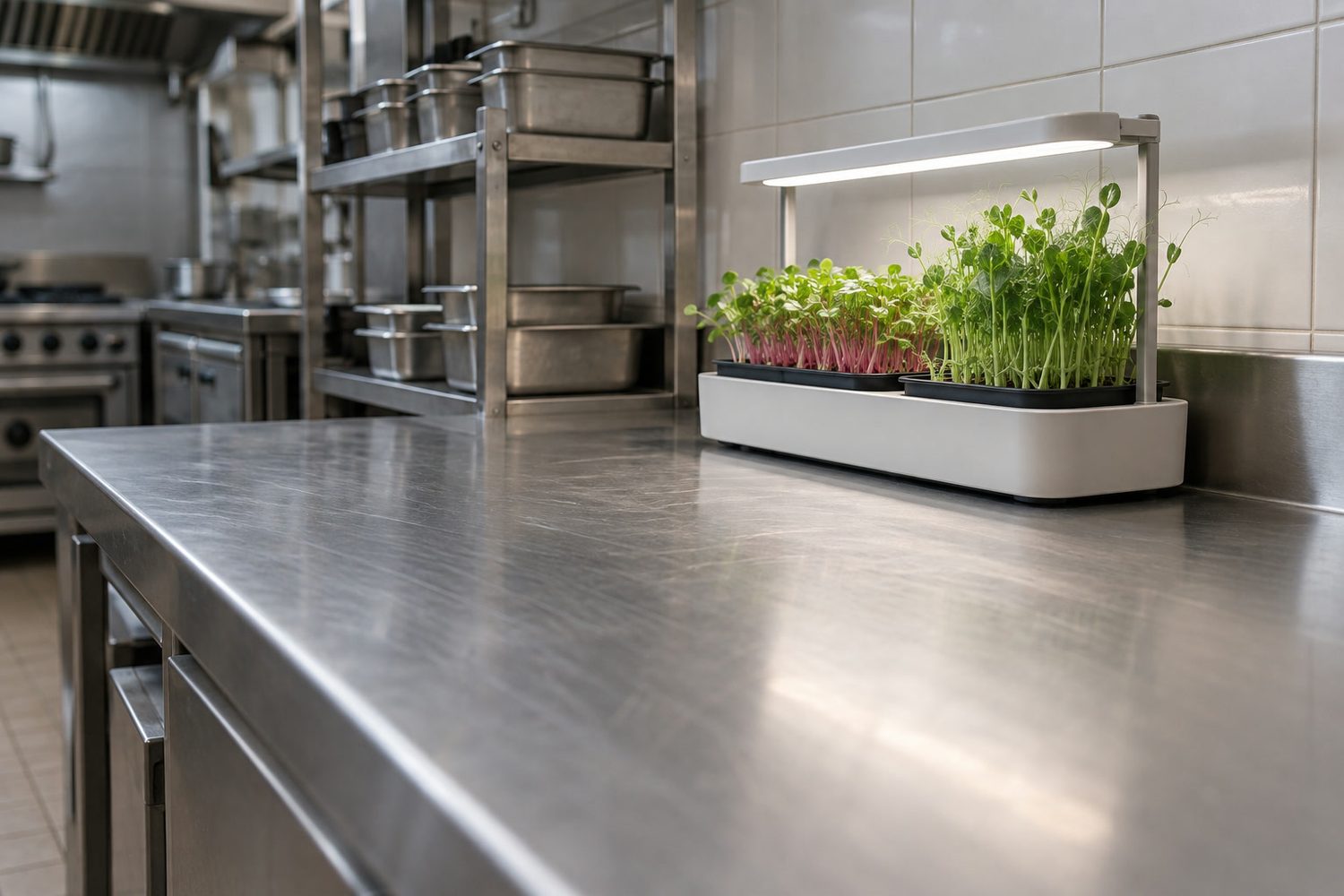
Growing in-house has its own offer prices. Fitotech's M60, a pass-side living-microgreen unit sold in Luxembourg, Belgium and France, lists at 899 euros one time or 179 euros a month, with cartridges at 10 euros, and the maker projects about 1.6 kg of radish a month per module. Raumgarten Pro, a German indoor farm for foodservice, lists at 4,998 euros including tax, with installation and support included, and its maker claims 3 to 5.5 kg of harvest a month.
Those output figures are the makers' own, so count your own hours and shelf space for equipment, labor, cleaning and food safety work, then set a unit's monthly price against your monthly invoice.
Common questions
These come up once the plate math is done.
Is there a lower bulk price by the kilo or ounce?
London Microgreens offers $30 a kilo on a 12-delivery preorder; the page prints only a dollar sign, and for an Ontario seller that is most likely Canadian dollars. Shop We Grow in Westboro, Wisconsin, lists wholesale sunflower at $1.37 an ounce and pea shoots and radish at $1.65, grown to order with two weeks' notice, on a list updated October 28, 2025. Neither says the price is for restaurants specifically.
Have microgreen prices risen along with menu prices?
Track microgreen prices on your own invoices. USDA ERS reports food-away-from-home prices up 7.6% in 2022, 7.1% in 2023 and 4.1% in 2024, then 3.8% in 2025, with 3.6% forecast for 2026. Those are consumer menu prices, not produce costs, so keep invoices for the same pack from the same seller to track your own change.
Is a living tray cheaper than cut greens?
Fresh Coast Greens offers a living 10 x 20 tray at $15, meant for cutting in your kitchen, against $4.50 for a cut 2 oz clamshell, which is $4.50 divided by 56.7 g, or about $0.079 a gram. No usable yield per tray is published. Cut and weigh one tray, divide $15 by the grams you plated, and compare the two.
Costing your next dish
Take the price on your invoice, divide it by the grams in the pack, weigh what goes on the plate and multiply. Divide that by your menu price, then set the whole plate's cost against the 32.0% full-service or 32.4% limited-service median. If you're the grower on the other side of the account, the offers above show the range kitchens are quoted, and pricing microgreens and what to charge lays every grower price out in one unit.
Sources
Prices, stock and specifications are as the linked pages showed them on 2026-09-13.
- MicroFreshly
- OZO
- Microgreen Manager
- The Chef's Garden
- micro thyme
- What Chefs Want's Central region local produce list
- Midwest Foods 2025 microgreens sheet
- operator FAQ
- Fresh Coast Greens
- Revity
- Teeny Greeny
- 2024 New York Food Buyer Trends report
- London Microgreens
- Micro'S
- On Cooking
- 2025 Operations Data Abstract
- Yanes-Molina and colleagues (2019)
- indexed by USDA ARS
- University of Nevada
- Fitotech's M60
- Raumgarten Pro
- list updated October 28, 2025
- 7.6% in 2022, 7.1% in 2023 and 4.1% in 2024
- 3.8% in 2025, with 3.6% forecast for 2026
Keep reading
The journal
Microgreen Prices Where You Live: A Buyer's Guide
Wondering what microgreen prices are near you? Compare regional market reports and retail prices, then use a step by step method to survey your own area.
Read Microgreen Prices Where You Live: A Buyer's GuideThe journal
Why Microgreens Are Expensive: You Are Mostly Buying the Box
In a Missouri Extension tray budget, labels, packaging and marketing are 50 to 60 percent of cost. Growing the plant is 17 to 23 percent and seed under 10.
Read Why Microgreens Are Expensive: You Are Mostly Buying the BoxThe journal
Buying Microgreens: The Same $6 Buys 60 Grams or 100
Across every observed price, what a shopper can actually pay spans 2-fold while sellers quote across 8.3. Farm-direct covers almost the whole range by itself, because pack size decides the price and the channel does not.
Read Buying Microgreens: The Same $6 Buys 60 Grams or 100The journal
Are Microgreens Profitable? What the Numbers Show
Are microgreens profitable? See what a national grower survey and federal sales data show, why gross revenue is not profit, and how to run your own numbers.
Read Are Microgreens Profitable? What the Numbers Show