How to Eat Microgreens Every Day: Meals, Portions and Storage
Cal HewittPublished Checked
- eating
- recipes
- storage
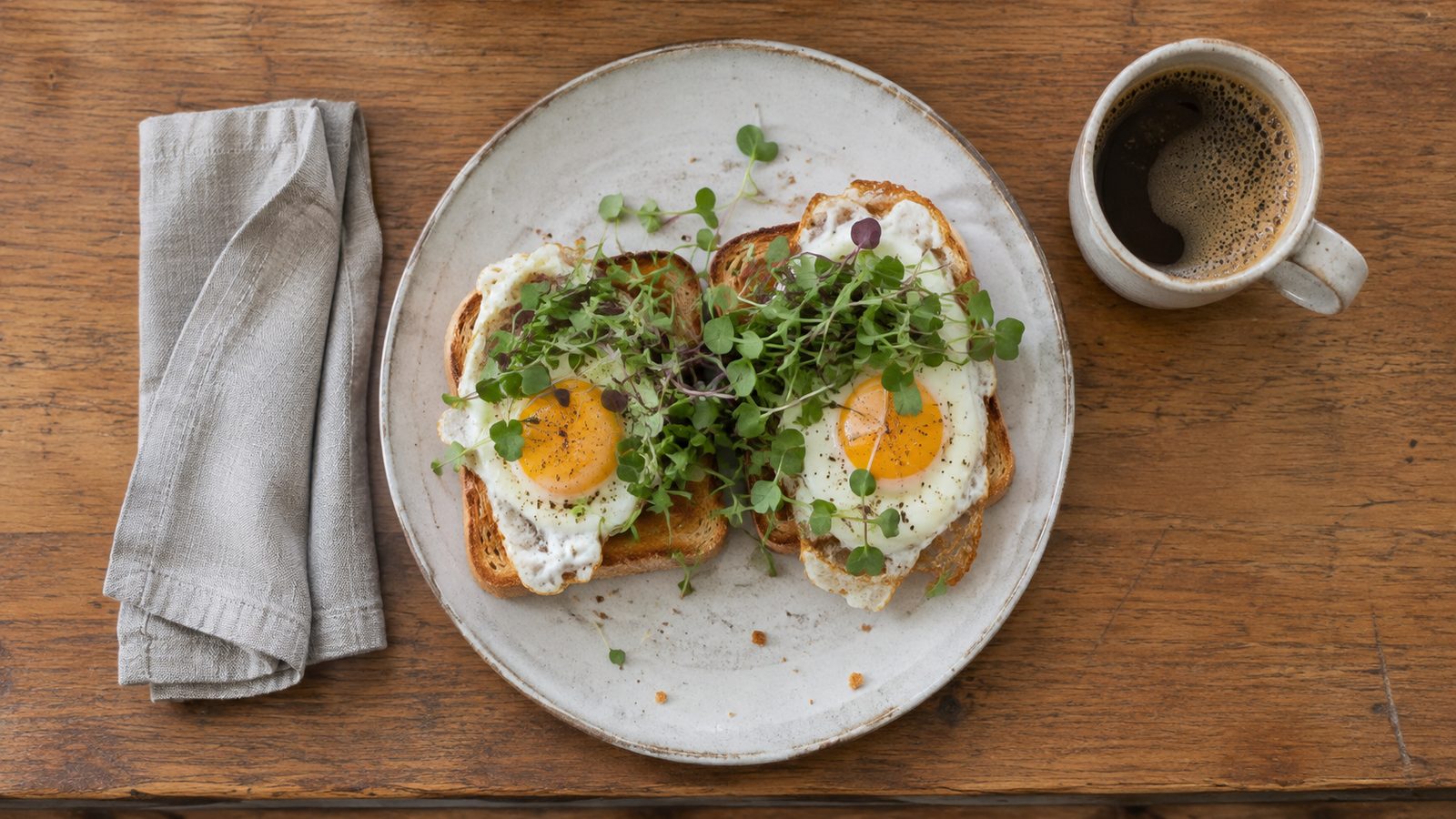
Use a large handful at a time, and add it at the end of cooking. That one habit covers eggs, sandwiches, a salad, a smoothie or a bowl of pesto pasta, and it works whether you grew the tray yourself or bought a clamshell.
If you have a container open on the counter, the rest of this page is about what goes on the plate tonight. It runs through breakfast, lunch and dinner, gives a way to set your own portion, and covers keeping the leftovers fresh until Friday.
Why a handful is the right place to start
University of Maryland Extension lists a wide range of ways to eat microgreens: wraps, paninis, sandwiches, soups, omelets, frittatas, salads, burgers, pesto, smoothies, grain and pulse dishes, dips, cocktail garnishes, or raw by themselves. University of Maryland Extension gives the list, and the NC Cooperative Extension chef recipe below says "a generous handful" or "a large handful" instead of a weight.
So, start with a large handful and add more to taste. Then do one thing that makes every later meal easier: put one portion on a kitchen scale, write the weight on a sticky note, and use that number next time. Your handful of sunflower shoots will not match someone else's handful of radish, and your own scale reading is the only figure that fits the tray in front of you.
Breakfast: a smoothie or a salad
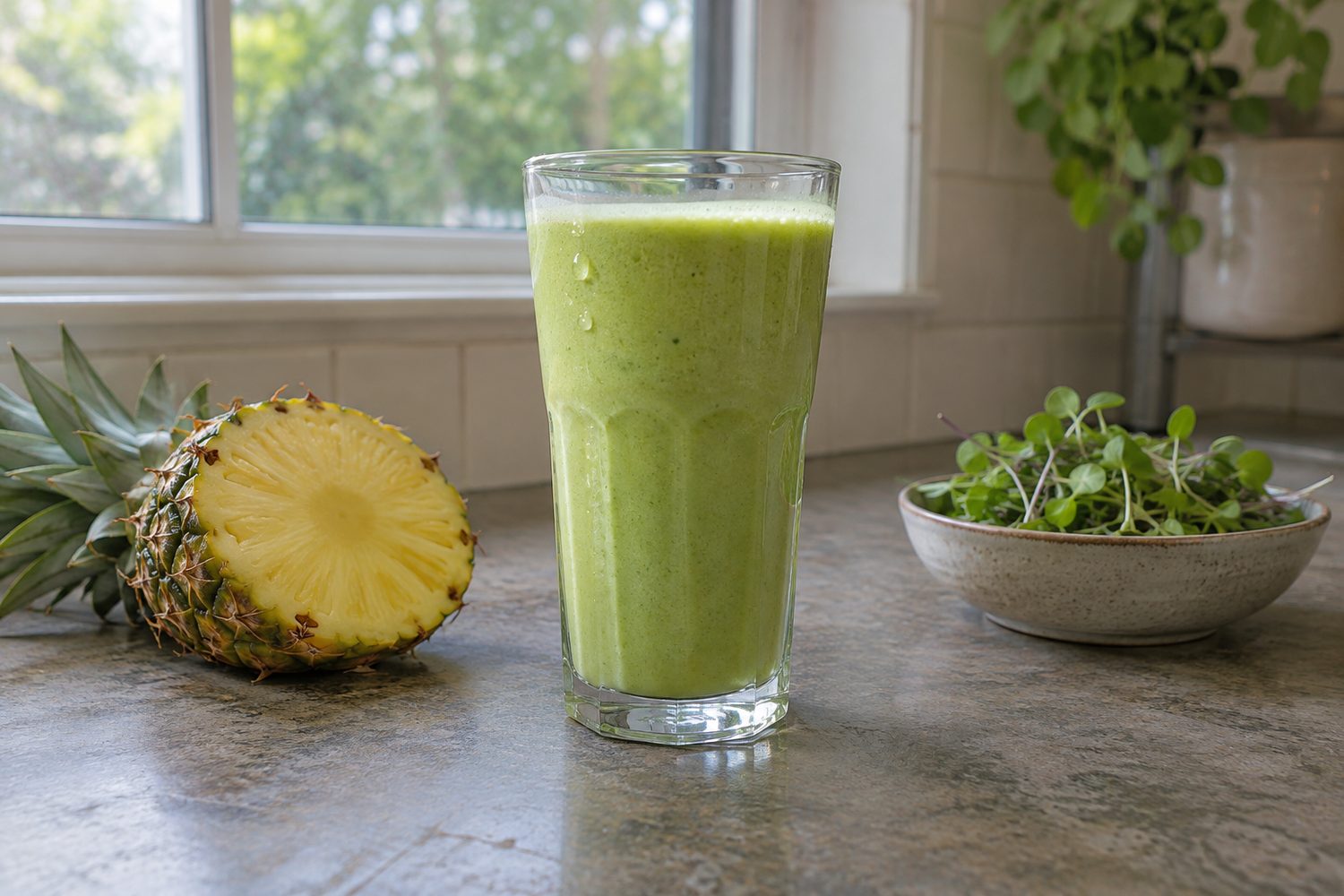
A smoothie is the fastest way to use a big handful. An NC Cooperative Extension chef recipe from June 2018 blends a generous handful of microgreens with pineapple, honey and plant milk for a breakfast or snack. The same recipe suggests wheatgrass, kale, beet, mint and parsley as the greens. The fruit and honey make it a sweet blend.
If you would rather chew your breakfast, the same NC Cooperative Extension chef recipe builds a breakfast salad from baby greens, microgreens such as broccoli, basil, radish or arugula, strawberries, walnuts and a balsamic vinaigrette. The recipe pairs the peppery crops with strawberries and walnuts.
Eggs are the simplest option of all. Garden & Acre suggests adding raw microgreens to eggs, toast, parathas, dosa and poha, and adding them to hot foods only after the heat is off. Put the greens on the plate beside a finished omelet, or fold them in once the pan is off the burner. The Garden & Acre guide was updated in September 2026.
Lunch: a salad made mostly of microgreens
A bowl of microgreens with little else in it is a real lunch, but the crop you choose decides whether you enjoy it. Garden & Acre says a bowl made only from radish or mustard can be too sharp for many people. Its advice is to pair one mild variety with one stronger variety, and ChefPax describes radish as bold and spicy while sunflower is used for texture and bulk.
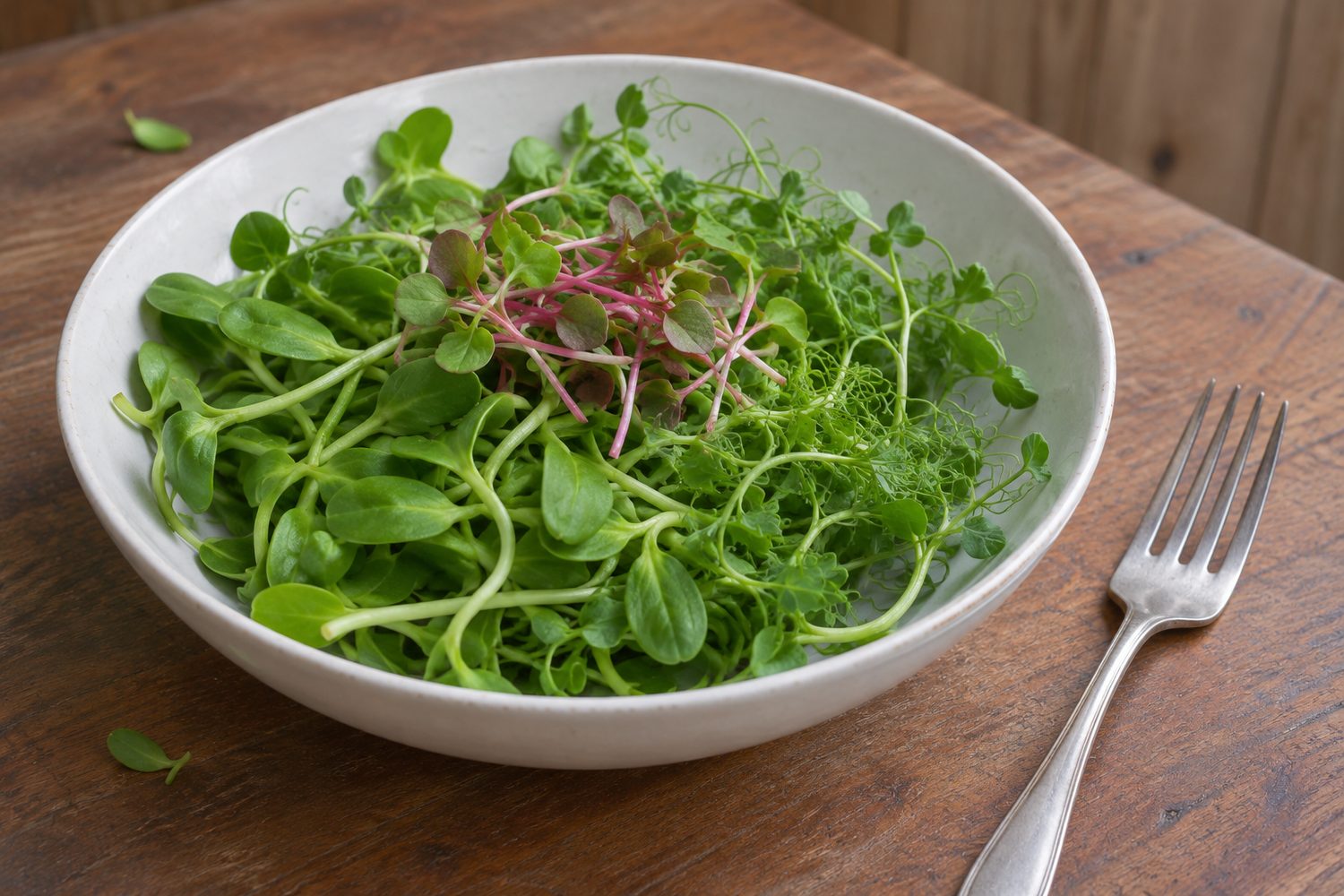
So, build the base from something mild. Sunflower is slightly sweet and nutty with a sturdy crunch, pea shoots are mild, sweet and pea-like, and amaranth is earthy, sometimes beet-like, and generally mild. Broccoli, red cabbage, beet and kale can add mild or earthy notes. Then add one strong crop for bite: a small pinch of radish or mustard, or a little cress, which is peppery and intense. Start with less than you think you want. Taste after the first forkful and add more if the bowl needs it, because how sharp a crop tastes depends on the variety, how old it was when cut, how fresh it is and what you like.
A sandwich or wrap is the other easy lunch. Lay a handful of sunflower or pea shoots under the top slice, or tuck them into a wrap; University of Maryland Extension lists both sandwiches and wraps.
Which dressing suits a salad of microgreens
Keep it light and keep it separate until you eat. Slow Larder recommends a small amount of dressing added at the end because delicate leaves soften quickly, and Garden & Acre advises the same when you pack a salad: carry the dressing in its own container and add it right before eating. The Slow Larder dressing guide lists a light vinaigrette, citrus and oil, a lightly sweet mustard dressing for radish or arugula, thinned yogurt or buttermilk, and a restrained sesame-ginger dressing.
Three recipes show how simple it can be. The NC Cooperative Extension chef recipe above uses a balsamic vinaigrette made with 2 tablespoons of vinegar and 1/4 cup of olive oil for a salad of microgreens, strawberries, walnuts and optional Parmesan. An Elmwood Stock Farm recipe from March 2022 uses 3 heaping cups of microgreens or shoots with radishes, sunflower seeds and feta, dressed with Dijon, honey, lemon juice, olive oil, lemon zest and poppy seeds. Garden & Acre keeps it plainer still: lemon juice, salt, pepper and a little oil, or lemon with chaat masala.
Fat in the dressing may help too. In a 2005 Journal of Nutrition study by Unlu and colleagues, adding 150 g of avocado or 24 g of avocado oil to a salad raised absorption of alpha-carotene, beta-carotene and lutein to 7.2, 15.3 and 5.1 times the levels seen with an avocado-free salad. A 2004 study in the American Journal of Clinical Nutrition by Brown and colleagues found carotenoids in the blood fats were essentially negligible with a fat-free dressing and substantially higher with full-fat than with reduced-fat dressing. Both studies used mature vegetables, not microgreens. So, treat oil as a good flavor choice that may also help you absorb these pigments, not as a measured microgreen effect.
Dinner: pasta, protein and grain bowls
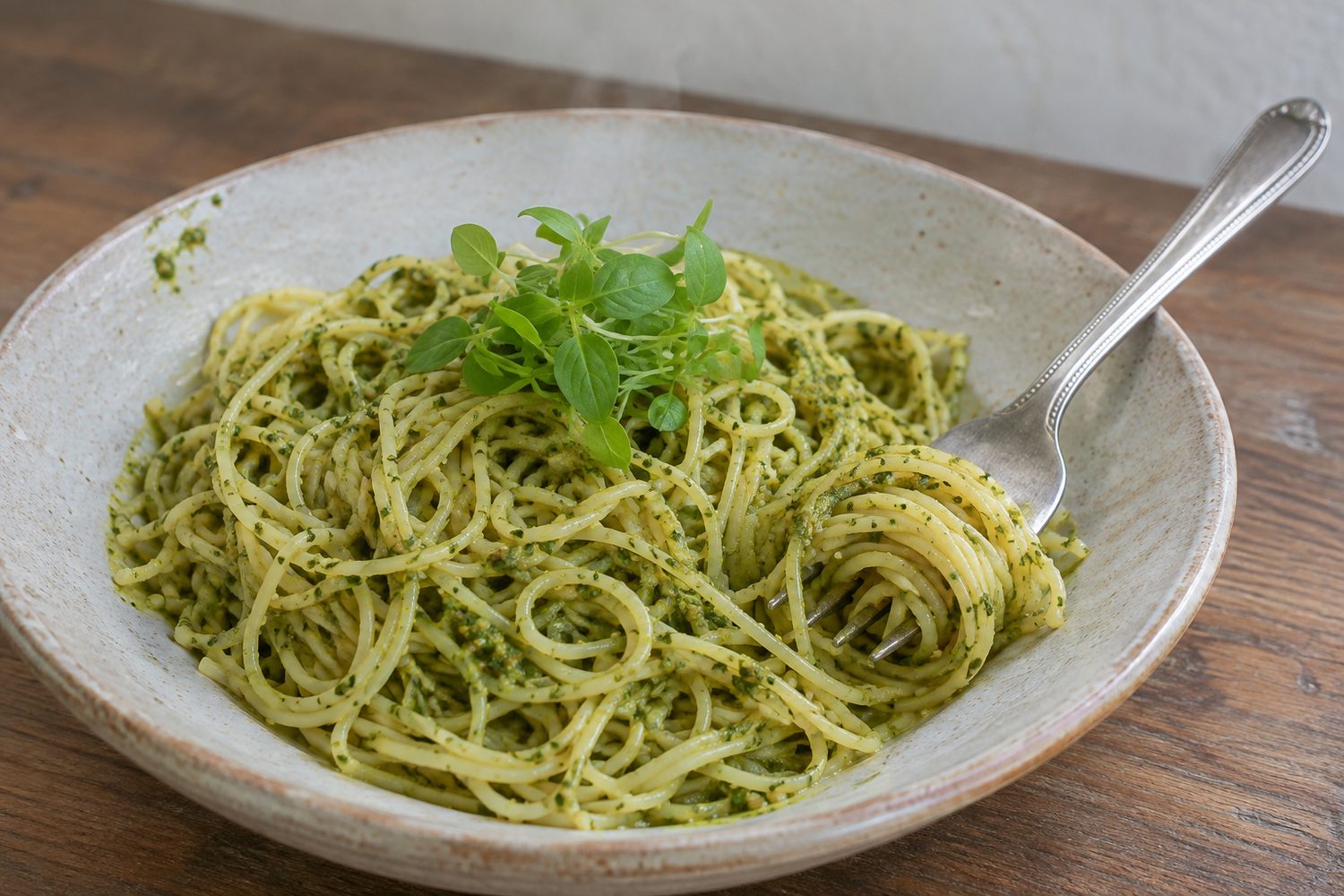
For dinner, think of microgreens as the last thing that touches the plate. The NC Cooperative Extension recipe stirs basil microgreens into pesto-based angel-hair pasta, using a large handful or more to taste. Toss them in after the pasta and sauce are off the heat, and keep the pasta itself simple.
Pairing by protein is where chefs get specific. ChefPax suggests radish with beef, salmon and pork, pea shoots with seafood, and sunflower, pea or broccoli with chicken. For vegetarian plates and garnish it points to amaranth, nasturtium or basil. Sunflower also fits steaks, other proteins, salads and grain bowls. These are cooks' pairings, a matter of taste rather than nutrition, so treat them as starting points and swap freely.
If you are unsure whether a dish is too hot for your greens, the cooking guide covers what heat does to them. The short version for dinner is to add them after the burner is off.
What heat and blending do to them
Two sets of numbers are worth knowing, along with what they cover. A 2025 Journal of Food Science study by Jauregui and colleagues dried radish microgreens in hot air at 45, 65 and 95°C and compared them with freeze-dried samples. Total phenolics fell 9% at 45°C and 21% at 65°C, glucoraphenin fell 21% at 95°C, and vitamins B2, B3 and C dropped by up to 35%, 36% and 63%, while B1 and B9 held steady. The Penn State record describes drying, not ordinary cooking, and it does not measure what happens when you stir greens into a hot bowl.
A separate 2018 study by Lee and colleagues tested mature vegetables, not microgreens, with blanching, boiling, microwaving and steaming. Vitamin C retention ranged from 0% to 91.1% across samples, usually lowest after boiling and higher after microwaving. You cannot carry that range straight over to a named microgreen.
Add them raw or once the heat is off when you want to keep texture and color, and blend them into smoothies, pesto or dips when that suits the meal, without expecting a particular nutrient result. Garden & Acre says they wilt quickly in hot dishes, which is the best everyday reason to wait. If you are curious about drinking them, the juicing post goes into it.
How much is a serving
The useful serving numbers are the ones you can borrow and then replace with your own. The USDA's general MyPlate guide counts 2 cups of leafy salad greens as 1 cup of vegetables; that is a guide for greens in general, and it is not written for microgreens. A USDA National Institute of Food and Agriculture project describes a planned red cabbage microgreen trial (report dated June 23, 2026) that assigns 1 cup a day as 15 g fresh weight and 2 cups a day as 30 g. That is a research dose for a clinical trial, so use it as a reference point and not as a target.
Household examples from Garden & Acre are easier to visualize: 10 g per plate when a 20 g pack is split between two dishes, 12.5 g per plate when a 50 g pack feeds four salad plates, and a 50 g pack for a family-size salad bowl of four. They are household examples from one source, not guidance.
The step that actually fits your tray is the scale. Weigh a large handful, write it down, and adjust up or down after you have eaten it. A tray of sunflower and a tray of radish will weigh differently at the same volume, so repeat the weigh-in for each crop you eat most.
Keeping the rest fresh through the week
Keep the greens cold, dry and unwashed until you eat them. Elmwood Stock Farm keeps its microgreens and sunflower or pea shoots in their plastic containers in the refrigerator and does not wash them until use. A 2020 review in the Journal of Food Science by Turner and colleagues says microgreens have a reported shelf life of 3 to 5 days at room temperature, that cold storage can keep quality for more than 14 days depending on the variety, and that temperatures at or below 5°C suit some varieties. Freezing below 0°C damages them. Washing lowers the starting bacteria count but adds moisture that has to be removed, and many growers skip it before packing.
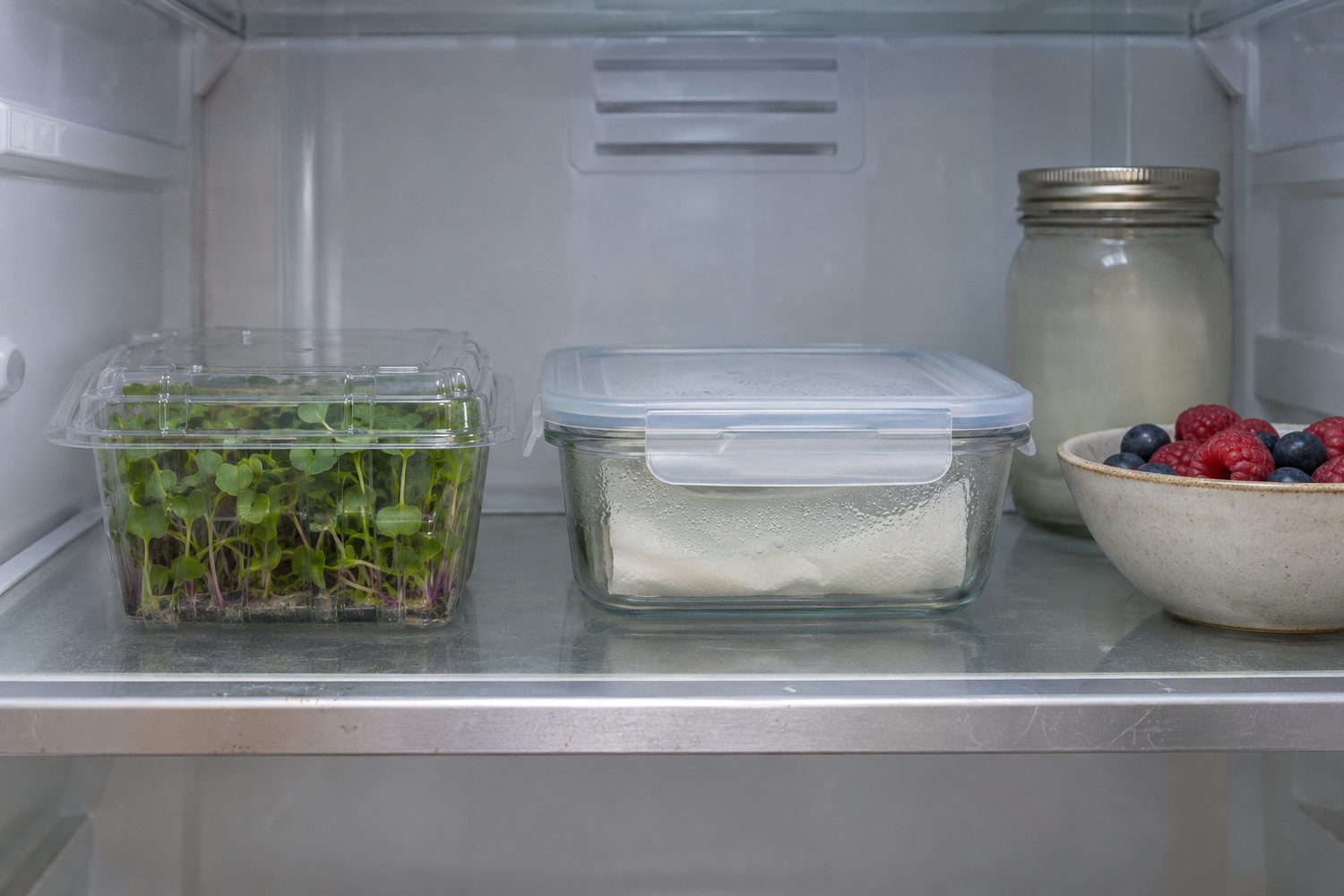
Your fridge is not a lab, so read the numbers as a range. In a 2023 study in Life by Dissanayake and colleagues, mustard microgreens were washed, drained for 15 minutes and sealed at 15 g per sample in polyethylene bags. At 5°C quality stayed acceptable for 14 days, although 25% of samples were wilted by day 14. At 10°C good quality lasted 4 days, at 15°C they spoiled after 7 days, and at 20 and 25°C they were inedible by day 2. That is one crop in one kind of bag.
For a week of meals, keep the original container if it is dry and fits in the fridge, or move the greens to a clean container that stops them being crushed and does not hold free water. Rinse with clean water right before eating and dry them gently. Throw out any that smell off, feel slimy or have turned substantially yellow. The storage guide has the longer version.
Common questions
Can I eat microgreens every day? Start with the amount you weighed and see how it sits with you; if you have a medical condition or take medication, ask your doctor before you change what you eat.
Which crop should I use if I only grow one? Garden & Acre suggests sunflower, pea and amaranth for mild uses, and ChefPax uses sunflower in salads and grain bowls. Add a few radish or mustard shoots only when a dish needs some pepper.
Should I dress the salad before I pack it? No. Carry the dressing separately and add it right before eating, because delicate leaves soften quickly once they are coated. A little lemon and oil is enough.
Does blending microgreens ruin them? A smoothie, pesto or dip is a normal way to use them, and the chef recipes do exactly that. Choose blending for convenience and taste, and do not expect a particular nutrient result.
A day of meals to try this week
You now have enough to plan three plates. Weigh a large handful of whichever crop you have first, and use that portion for all three.
- Breakfast: a smoothie with a generous handful of microgreens, pineapple, honey and plant milk, following the NC Cooperative Extension chef recipe.
- Lunch: a salad built on sunflower, pea shoots or amaranth, with a small pinch of radish or mustard and a light lemon and oil dressing added at the table.
- Dinner: pesto angel-hair pasta, with a large handful of basil microgreens stirred in at the end, or radish alongside beef or salmon, or pea shoots with seafood.
Whatever you cook, add the microgreens after the heat is off, keep the rest cold, dry and unwashed, and write down what you liked so the next tray goes straight to the plates that worked.
Sources
Prices, stock and specifications are as the linked pages showed them on 2026-11-09.
Keep reading
The journal
Can You Put Microgreens in a Smoothie? Which Crops and How Much
You can put microgreens in a smoothie. Pea shoots, sunflower greens and kale blend mildly, while radish and cilantro bring more bite. Start small.
Read Can You Put Microgreens in a Smoothie? Which Crops and How MuchThe journal
Microgreen Recipes for Dinner: Which Crop Goes in Which Dish
Microgreen recipes for dinner that go past the garnish. Learn which crop suits which dish, how much to add, and when to stir it in or scatter it on top.
Read Microgreen Recipes for Dinner: Which Crop Goes in Which DishThe journal
Can You Freeze Microgreens? What Survives Drying and Freezing, and What Does Not
A microgreen is 87 to 94 percent water, so a whole tray dries down to a couple of spoonfuls. Drying is not a kill step, freezing does not make greens keep their crunch, and only one crop has ever been measured.
Read Can You Freeze Microgreens? What Survives Drying and Freezing, and What Does NotThe journal
How Long Do Microgreens Last by Crop and Temperature
How long do microgreens last in the fridge depends on the crop and the temperature. See measured storage life by crop and what to do when no figure exists.
Read How Long Do Microgreens Last by Crop and Temperature