Save it or compost it: three different questions with three different answers
Cal HewittPublished Checked
- troubleshooting
- food safety
- mold
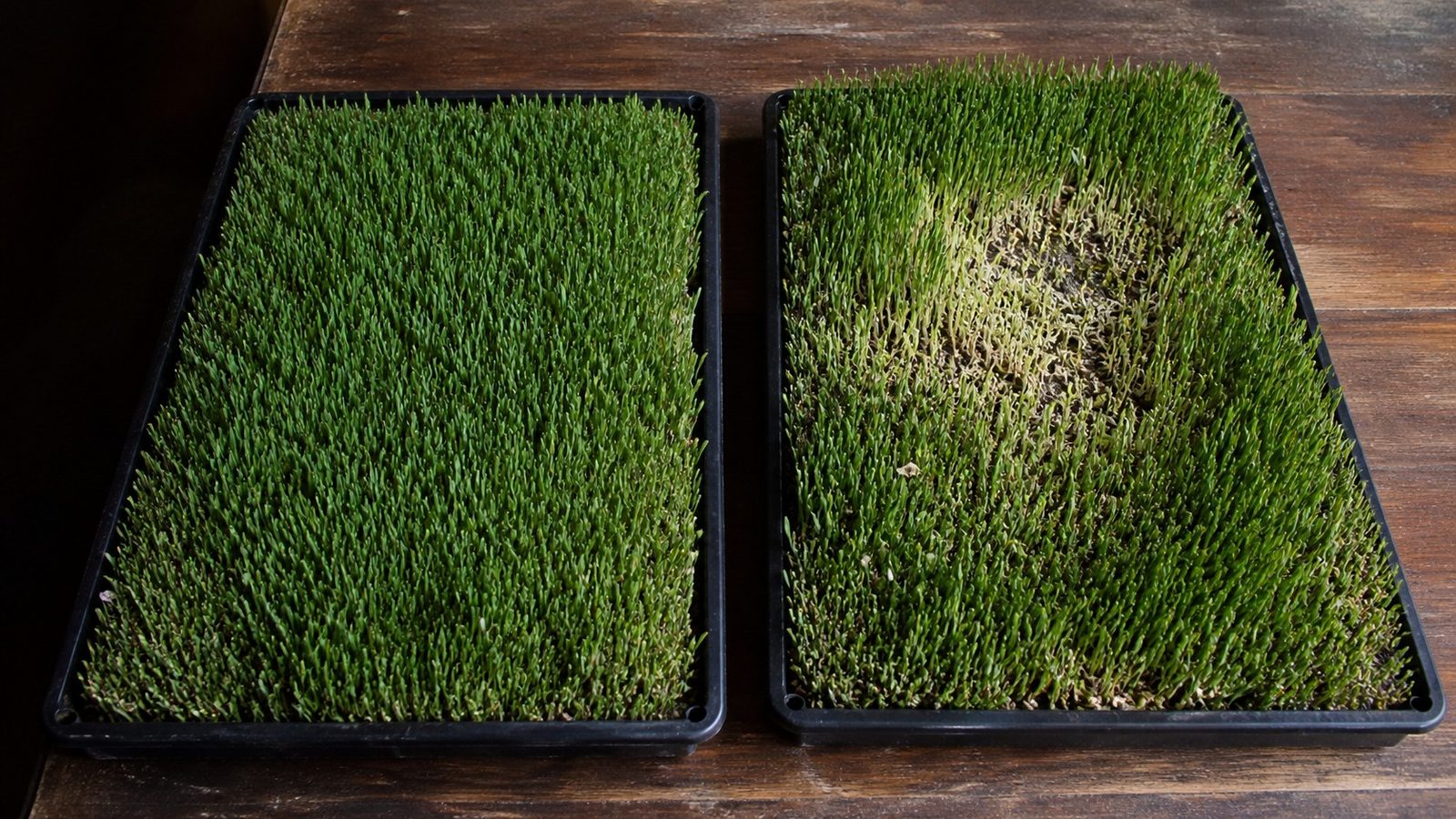
You are standing over a tray that has gone wrong and deciding what to do with it. Before anything else: "what do I do about it" is not one question.
It is three, and they have different answers:
The three questions, which is which
Hover or tap a card to highlight it.
Can I eat this myself?
A personal food-safety judgment. The honest answer is often that you cannot tell by looking, and that is the whole finding.
Can I sell this?
A commercial and regulatory question with a much lower threshold. A tray can be perfectly safe to eat and still not sellable.
Will it recover if I fix the conditions?
A growing question, and the only one of the three where the answer is sometimes yes.
Of the six readable pages checked on this subject, not one separated all three. Zero of six. They answer whichever question they feel like and the reader gets a mixed verdict about a decision that was never one decision.
What to actually do
- Confirm the diagnosis first. Mold or root hairs settles the commonest false alarm in the category.
- If it is confirmed mold, rot or slime: do not sell it, and understand that eating around it is not supported by the evidence. The safest published practice is to discard it.
- Do not wash or trim it to make it acceptable. The one microgreen-specific source on post-harvest washing says it appears ineffective and may increase risk.
- If the problem is a condition rather than a disease, fix the condition and then judge the tray on quality. That is a separate decision from safety and you are allowed to make it separately.
- Do not treat appearance or smell as proof of anything, in either direction. Pathogens leave no smell.
- Compost clean failures freely. Send a diseased tray's medium to waste, because a home bin does not reach the temperature that would matter.
- Reuse medium only from a healthy tray, and refresh it. The disease history decides this, not a rule.
- Clean, then sanitize, the tray and anything that touched it. Two steps, in that order.
- Write down what you think caused it before you throw it away. That is the only part of a failed tray with any value left in it.
Can you eat it
Start with the sentence that governs everything else. FDA is explicit that food can make somebody very sick even when it does not look, smell or taste spoiled, because the bacteria that cause illness are not the bacteria that cause spoilage.
That single fact caps how far any visual guide can go, including this one. A tray that looks fine is not thereby safe, and a tray with a small patch is not thereby dangerous. What you can see and smell is quality information, and it is being used as safety information all over this category.
On mold specifically, FDA's consumer position is conservative and clear: the safest practice is to discard moldy food.
The nuance that is true and is not a loophole. FDA's own defect handbook distinguishes defects with aesthetic significance from those with potential health-hazard significance, and says a mold defect can be either depending on the commodity and whether toxin-producing fungi are involved. So "all mold is dangerous" is not what the regulator says.
But a microgreen tray is close to the worst case for that nuance. It is raw, it is eaten without cooking, it is grown at high density where the growing surface is inches from the edible part, and confirming what a mold actually is may need a microscope. The evidence does not support looking at an un-moldy-looking section of a moldy tray and declaring it safe.
One thing that is genuinely unknown, said plainly. FDA explains that only certain fungi produce mycotoxins, and it monitors them mainly in grains, beans, dried fruit and coffee. There is no published mycotoxin measurement on a moldy microgreen tray, and no action level for one. That is an absence of data, not a clean bill of health, and anybody telling you either that your tray definitely has mycotoxins or definitely does not is inventing it.
And before any of this: make sure it is mold. The commonest mold panic in this crop is not mold. Mold or root hairs is the page for that, and settling it has saved more healthy trays than any rescue technique.
Can you sell it
This one is easier, and growers make it harder than it is.
If it is confirmed mold, rot, slime, or a known contamination event, do not sell it. There is no judgment call to agonize over. The FDA framework for produce is preventive: identify produce that is reasonably likely to be contaminated and do not harvest it. Whether the affected area is localized or wider depends on the event, and that assessment is yours to make honestly rather than optimistically.
A grower eating their own crop and a grower selling it are in different positions, and that is the reason the two answers differ. The seller has customers who did not see the tray, no way to communicate a caveat, and a regulatory duty the household grower does not have.
A tray can also be perfectly safe and simply not good enough. Leggy, pale, uneven, thin. That is a quality decision against your own standard, and it has nothing to do with safety. Keeping those two apart in your own head is most of the skill here.
Will it recover
This is the only one of the three where the answer is sometimes yes, and it depends entirely on what went wrong.
Damping-off does not recover. Illinois Extension is direct: infected seedlings usually die and nothing can be done once plants are infected. It also notes that seedlings with true leaves and more developed roots are far less likely to be infected, which is why the risk is front-loaded in the first few days.
Leggy is a condition problem, not a disease, and it is caused by delayed light, weak light, distant light or crowding. Correcting the light stops it getting worse. What is not established is whether an already-etiolated tray regains saleable stem strength and color once the light is fixed. Nobody has measured that. In practice you are deciding whether what you have is good enough, not waiting for a recovery that has been demonstrated.
A dried-out tray is the most recoverable failure and the least studied. Growers routinely report a thirsty tray standing back up after watering, and that is an observation rather than a measurement. Waterlogging is the more serious direction, because saturated medium starves roots of oxygen and causes dieback. Watering a tray covers what is and is not known about both.
The rescue everybody recommends, and what the evidence says
The standard advice is to remove the visible patch, treat it, often with food-grade hydrogen peroxide, and eat or sell the rest.
Two published findings sit against that.
Washing does not do what it is being asked to do. FDA says washing produce reduces bacteria but does not eliminate them. And the University of Nevada, Reno's microgreen fact sheet goes further and is the more specific source: post-harvest washing of microgreens appears ineffective and could increase contamination risk through tissue damage, and it advises against washing on the farm.
So, washing a suspect tray is not a correction. It is an intervention with no demonstrated benefit on this crop and a plausible mechanism for making things worse, because damaged tissue is what bacteria grow on.
Trimming around a patch is not validated either. The regulatory framework allows excluding a localized area only when the hazard assessment supports treating it as localized. It does not authorize a fixed cutting radius, and nobody has mapped how far contamination actually travels in a dense tray.
That is the honest state of it: there is no validated rescue for a confirmed contamination problem in a microgreen tray. Not washing, not trimming, not peroxide. The techniques are widely published and none has been tested with a microbial endpoint on this crop.
Which is why the useful skill is diagnosis rather than rescue. Confirming root hairs saves a good tray. Confirming mold ends the argument.
Composting it, and the medium underneath
Clean crop waste is ordinary compost material. A failed tray that failed for a condition reason, not a disease reason, has nothing wrong with it that a compost heap cares about.
A diseased tray is a different question and the honest answer is partial. Oregon State says powdery mildew survives only on a living host and composting kills it, with exceptions such as Verticillium when the material is used as mulch. That is guidance for a named disease, not a blanket finding for an unidentified microgreen mold. What is documented for managed conditions is a target: 131°F for three consecutive days in a static pile. A kitchen compost bin does not do that.
And on reusing the medium, two extension services disagree outright.
Hover or tap a row to highlight it.
| Source | Position |
|---|---|
| Maryland Extension | Screen and reuse the medium after harvest and dried roots, refreshed 50:50 with new mix |
| Illinois Extension | Do not reuse potting mix after damping-off, because pathogens can be present |
Those are reconcilable and it is worth saying how, because it is the practical answer: Maryland is describing a healthy tray and Illinois is describing a diseased one. The disease history of the tray is what decides it, not a general rule about reuse. If the tray failed from disease, the medium goes.
Clean the tray properly either way. Cleaning is the physical removal of dirt and debris. Sanitizing is reducing microorganisms on an already-clean surface with an approved sanitizer. They are two steps and the second does not work without the first.
One failed tray does not condemn the rack, but surfaces, water, hands and tools are the documented cross-contamination routes in a microgreen operation, so the sensible response is to handle the failed tray last and clean what touched it.
What nobody has measured
- Whether a moldy tray produces mycotoxins, in any amount. No measurement and no action level exist for this crop.
- How far contamination travels in a dense tray, which is what a trimming radius would have to be built on.
- Whether trimming, washing or peroxide reduces risk to any stated level on microgreens.
- Whether an etiolated tray recovers saleable stem strength and color once the light is corrected.
- How fast a dried-out tray fails, and whether it comes back.
- Whether one failed tray implicates its neighbors on the same rack.
- Whether composting kills the organisms that actually fail microgreen trays, at home-bin temperatures.
Terms on this page
Tap a term to see what it means.
Damping off. A seedling disease, often Rhizoctonia, Fusarium or Pythium, infecting at or below the medium line and collapsing the stem. Infected seedlings usually die.
Sources
Opened 2026-08-12.
- FDA, are you storing food safely? - that food can make somebody very sick without looking, smelling or tasting spoiled, and that the safest practice is to discard moldy food.
- FDA, selecting and serving produce safely - that washing reduces but does not eliminate bacteria, and the guidance on damaged and rotten produce.
- FDA, food defect levels handbook - the distinction between defects of aesthetic significance and those of potential health-hazard significance, and that a mold defect can be either.
- FDA, mycotoxins - that only certain fungi produce mycotoxins, which commodities are monitored, and the absence of any microgreen assay or action level.
- FDA, draft guidance on the Produce Safety Rule (PDF) and the FSMA FAQ - identifying and not harvesting produce reasonably likely to be contaminated, and that an affected area may be localized or wider depending on the evidence.
- University of Nevada, Reno Desert Farming Initiative, microgreen food safety, 2020 (PDF) - that post-harvest washing of microgreens appears ineffective and could increase contamination risk through tissue damage, the advice against farm washing, the seed and harvest risk factors, and the 131°F for three consecutive days managed-compost condition.
- University of Illinois Extension, troubleshooting seed-starting problems - that damping-off infected seedlings usually die and nothing can be done once infected, that more developed seedlings are far less likely to be infected, crowding as a cause of legginess, waterlogging and root dieback, and the instruction not to reuse potting mix after damping-off.
- University of Maryland Extension, growing microgreens and baby greens indoors - screening and reusing medium after harvest, refreshed 50:50 with new mix.
- North Carolina Department of Agriculture, microgreen produce safety fact sheet - the definitions of cleaning against sanitizing, when food-contact surfaces must be cleaned and sanitized, the cut height guidance, and surfaces, water, people and objects as the cross-contamination routes.
- Oregon State University Extension, composting plants with powdery mildew - that powdery mildew survives only on a living host and composting kills it, with the Verticillium exception when used as mulch. Reviewed 2024.
- Practice pages, used as practice and the source of the six-page count: Blooming Greens, Island Microgreens, which describes removing a small patch and treating it with food-grade hydrogen peroxide and also says to discard a heavily moldy, sour or slimy tray, Deliseeds on mold, Home Microgreens on mold, which expressly declines to make the discard decision for the reader, and Hydroponic Grow Guide, which says to discard an entire tray for certain visible molds.
Keep reading
Growing guides
Mold or root hair?
The white fuzz on a microgreen tray is usually root hair, and there is no test at the tray that proves it. What the mist test can and cannot tell you, and the one word that separates the two.
Read Mold or root hair?Growing guides
How to buy microgreen seed, and what the label cannot tell you
Pathogen testing of microgreen seed is a supplier practice, not a rule, food grade is not a certification, and organic makes no measured difference to the microbes. What matters is a traceable, explicitly untreated lot, and the six ways a seed search goes wrong.
Read How to buy microgreen seed, and what the label cannot tell youGrowing guides
How to harvest microgreens: where to cut, with what, and how to keep it clean
Cut height is the one harvest decision shown to change the microbiology: cutting higher above the medium measurably lowers bacterial counts. Here is where to put the blade, what to cut with, and how to keep the cut clean.
Read How to harvest microgreens: where to cut, with what, and how to keep it cleanThe journal
Should You Wash Microgreens? Yes, But Not When You Think
Wash them immediately before eating and never before storing. A plain-water rinse removes half to three quarters of the bacteria, not all of it, and every shelf-life number you have ever read for microgreens silently assumes the crop was never washed.
Read Should You Wash Microgreens? Yes, But Not When You Think