How to buy microgreen seed, and what the label cannot tell you
Cal HewittPublished Checked
- seed
- food safety
- buying
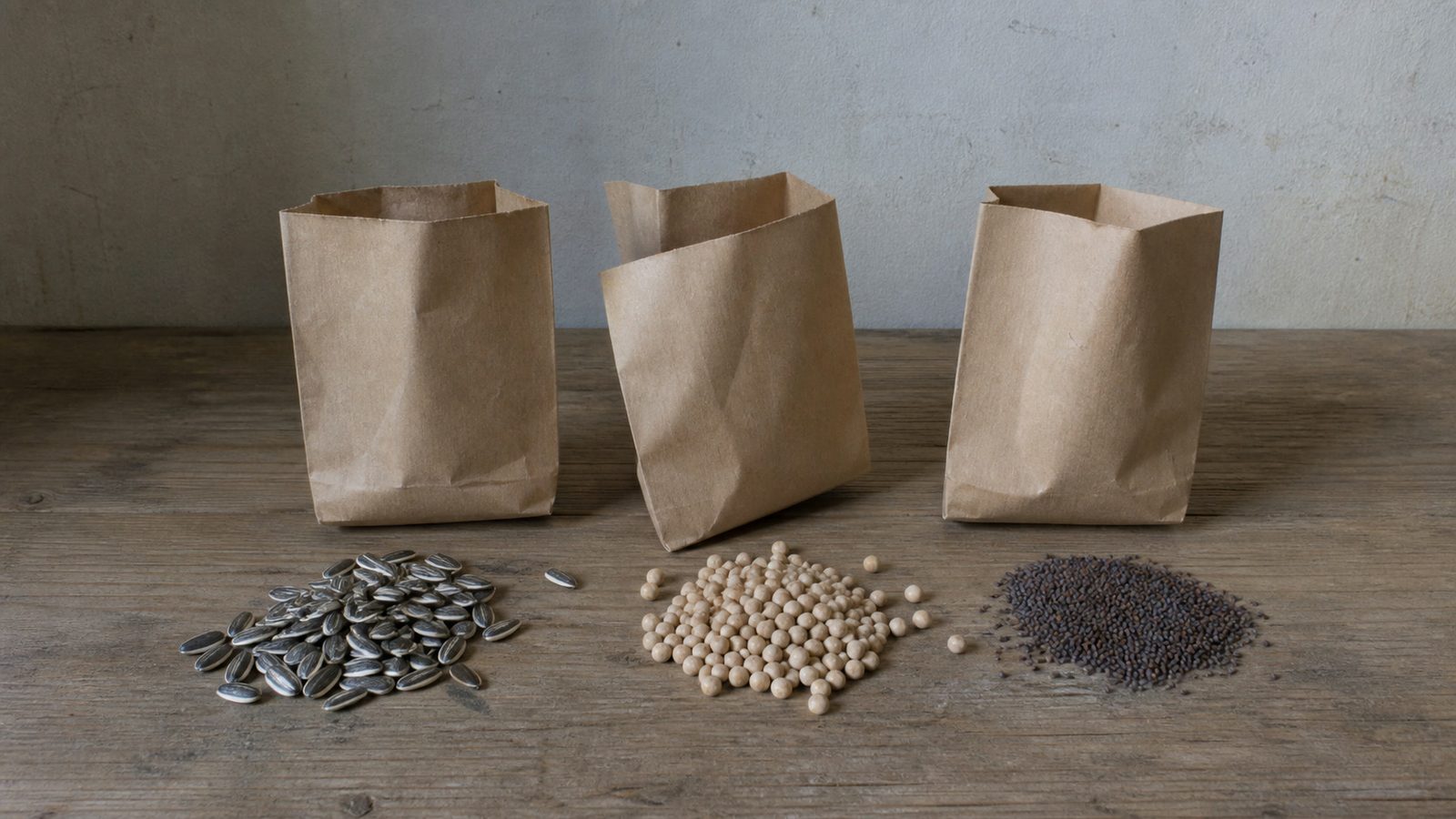
One sentence carries most of the value here: buy a traceable, explicitly untreated lot, keep the lot number, and do not mistake "organic", "food grade" or a negative test for proof that the seed is clean.
Those four things get treated as interchangeable across this whole category and they answer completely different questions. Two of them are not certifications at all.
And the part worth saying out loud: pathogen testing of seed is a supplier practice, not a requirement. Some suppliers state one: Mumm's says it samples every lot and sends it to an independent lab for Salmonella and E. coli before release, and Johnny's says its pathology tests run at certified outside labs, without naming the organisms (how the suppliers compare). Sprout seed has an FDA guidance document behind it. Microgreen seed does not, because a microgreen is cut above the seed and is regulated differently. That gap is real, and it is not the same as evidence that the seed is dirty.
"Food grade" is not a thing you can buy
This is the single most common misunderstanding on the subject, and it is worth being precise.
- "Food grade" describes the purity and authorized use of a food ingredient in US food law. It is not a seed grade, not a certification, and it names no certifier. A seller using it may mean untreated, or intended for human consumption, or nothing in particular.
- "Untreated" is a real and important claim, but it needs to be in writing and tied to a lot.
- "Organic" means organic rules were followed, including that prohibited substances were not used. It says nothing about pathogens.
- "Tested" means nothing without the organism, the method, the sample plan, the date and the lot number.
What US seed law actually requires on an interstate label is identity and purity information, germination (vegetable packets of 1 lb or less that meet the federal standard may leave it off), and disclosure of chemical treatment where present (7 CFR Part 201). That last one is the one that matters most.
The one hard refusal
Never buy dyed seed for a crop you intend to eat. Bright pink, orange, blue, green or red dust or coating is a warning color, and it normally means pesticide treatment. The official pesticide-safety position on treated seed is blunt: never consume it.
Do not reason your way around this by pointing out that you cut above the seed. The label decides what a treatment is approved for, not a tray experiment.
But the reverse does not hold: no dye is not proof of untreated. Priming, pelleting, coating and some treatments are not visible. The only reliable version is a written treatment statement, or a written "no treatment applied", attached to the lot number. Keep the packet.
Mint is where this bites hardest: its crop-specific source states outright that pink or green dyed seed is not suitable for microgreens, because mint seed is otherwise so often sold into the ornamental trade.
What the one real study of microgreen seed found
In 2023, researchers bought 102 seed samples of 14 crop types from 26 online vendors and tested them. It is the only systematic look at this question, and its central finding is not the one you would expect:
Ocho Bernal, Lyttle and Jung, 2023, on 102 microgreen seed samples
Hover or tap a card to highlight it.
Species was the significant factor
Not seller type, not organic status, not packaging. Which crop it was predicted the microbial load; where it came from did not.
Three crops carried the highest counts
Borage, carrot and onion, at 4.99 to 5.37 log CFU per gram. All three are crops people grow in trays.
Coliforms were common
Present in 49 of the 102 samples, which is close to half.
Two presumptive pathogen hits, no viable cells
One onion sample screened positive for Salmonella by PCR and one carrot sample presumptive for Listeria monocytogenes. Neither yielded recoverable live organisms.
Organic made no measured difference
To the microbes actually tested.
Read that carefully in both directions. It is not a finding that borage, carrot and onion seed is unsafe, and it is not a clean bill of health for anything either. It is a finding that the crop matters more than the shop, which is close to the opposite of how this decision is usually framed.
Microgreens have been recalled, twice on record in the sources here, both for Salmonella, in Canada in February 2022 and by a US grocer in December 2022. Neither notice attributes the contamination to seed, and the US one reports that supplied soil tested positive. There is more in every microgreen recall on record: at least eight of them, across two countries, with zero illnesses.
The six ways a seed search goes wrong
On about half the crops you might look for, the search will not return what you need, and the failures fall into a small number of shapes. Knowing which shape your crop is in tells you what to watch for before you spend anything.
Hover or tap a row to highlight it.
| Failure shape | What you actually get | Verified example |
|---|---|---|
| The crop is sold as food, not as seed | Product processed in ways that kill it | Sesame: 58 of 60 tiles were sesame, and 20 of them were disqualified by their own titles, 10 toasted and 10 hulled. Both are dead seed |
| The garden market owns the shelf | Right plant, wrong quantity, absurd price | Swiss chard: the top result was a 210 milligram packet at $1.78. That is $8.48 a gram, $3,844 a pound, and about $267 of seed for one tray |
| Nobody sells it at tray scale | Packets sized for a windowsill | Thyme: 39 thyme listings, only five state a weight at all, and the largest is half a gram |
| The agricultural market owns the shelf | Cheap seed that is not food | Turnip: 54 turnip listings, 16 of them food-plot, forage, deer or cover-crop seed, which is frequently treated |
| The search returns a different plant | The word matches, the species does not | Quinoa: 139 results, and 42 of the 60 tiles on page one were not quinoa at all |
| It works | A real size ladder in the right species | Garden cress: 171 results, 43 cress listings, 36 of them the right species, most explicitly for microgreens or sprouting |
The thing that predicts which shape you get is whether anybody sprouts the crop. Where a crop has an established sprouting audience, the seed shelf is populated, honestly labeled and sold by weight. Where it does not, the shelf belongs to whoever else wants that species: cooks, gardeners, or farmers planting a field. So, before you search, ask yourself whether people sprout this one in a jar. If they do not, expect trouble.
On a couple of crops there is essentially no microgreen seed product to find. Fennel and oregano each have about two verifiable microgreen listings from seed houses, with no published comparison between them. On those, buy the one that states its botanical identity, because that is the only distinguishing information available.
Germination: there is no standard, and you can test it yourself
There is no honest universal "microgreen seed must be X percent" figure, and anyone quoting one is quoting marketing. Germination is the share producing normal seedlings under ideal laboratory conditions, and a 95 percent broccoli lot is not a standard that onion, carrot or a dormant lot should be held to.
What to ask for is the supplier's own result for your lot: the percentage, the test date, and the method.
The home screen is genuinely easy and worth doing before you commit a schedule:
The paper-towel germination test
- 1
Count
100 seeds for a small-seeded crop, or 25 for a large one like pea or sunflower.
- 2
Wet
Lay them on a moistened paper towel, then fold or roll it.
- 3
Bag
Into a plastic bag, somewhere warm, out of direct sun.
- 4
Count again at seven days
The percentage that germinated is your number. Photograph it and keep the towel and the packet.
Two caveats worth having. Seven days undercounts a slow or dormant crop, so use the supplier's stated test conditions where you have them. And 50 percent is the practical point at which extension guidance says to plan on replacing the lot, not a legal threshold.
When a tray fails, run a split test before blaming the seed. Sow two counted samples from the new lot alongside a retained known-good lot of the same species, under identical light, temperature, density, water and tray. If only the new lot underperforms, the lot is the leading explanation. If both fail, look at the shared conditions first. A poor stand is not a diagnosis: saturation, density, sanitation and temperature all compete for the blame.
How long seed keeps, by species
Microgreen-specific seed longevity data does not exist. General vegetable-seed figures do, under ideal storage, and they vary by species by a factor of five:
Hover or tap a row to highlight it.
Onion is the crop to watch on both counts, which is a coincidence worth noticing: it has the shortest storage life of the group and it is one of the three crops the 2023 study found carrying the highest microbial counts.
Store it sealed, dry, cool, dark and labeled. A refrigerator with a desiccant is the recommended version. Do not put an opened bag back into a humid grow room, which is the most common way a good lot becomes a bad one.
Price tells you nothing about quality
Microgreen seed runs from about $3.12 a pound for wheatgrass to $351.35 for sorrel, a 113-fold spread, and mint sits above all of them at $1,394.50 while being impossible to cost at all, because nobody publishes a rate to multiply it by.
That spread tracks whether anyone farms the plant for its seed, not quality and not suitability. Chia is cheap because it is a commodity crop. Mint is dear because it is propagated from cuttings and almost nobody harvests its seed.
The price on the bag will not tell you what a tray costs. Wheatgrass has the cheapest seed going and one of the dearest trays, because it takes 450 grams. Sorrel has near the dearest seed and an ordinary $2.71 tray, because it takes 3.5. Multiply the price per pound by your own grams per tray before you judge any bag.
What to specify, and what to refuse
Ask for, in writing: crop and botanical name, intended raw microgreen or sprouting use, lot number, germination percentage with its test date and method, purity, a treatment statement, and storage history.
Refuse:
- Visibly dyed pesticide-treated seed. No exceptions.
- A seller who cannot identify the lot.
- Seed whose treatment label is incompatible with food use.
- A bulk bin or unlabeled repack with no traceability.
Do not refuse simply because a listing lacks a "food grade" badge. Ask instead for the records that the badge cannot replace.
On buying in bulk: it makes a good decision cheaper and a bad one repeat more often. One weak lot can fill a month of trays. Buy small, test, then scale, and keep the invoice, the label and a dry retained sample of every lot you run.
What nobody has measured
- Whether the seed trade tests at all. There is no representative survey of suppliers' written testing programs or lot records. The 2023 study bought product; it did not audit practice.
- Whether any recall traced to a seed lot. Microgreens have been recalled; no opened notice names the seed as the source. There is one measured home seed treatment worth knowing about, covered in what growing your own actually changes after the 2026 recalls.
- Microgreen-specific seed longevity, by species, under declared storage.
- A defensible sample size for a pre-scaling trial, which depends on seed size, expected germination and the money at risk.
- Any independent, blinded, same-lot supplier comparison. The pages that recommend suppliers are largely published by sellers, frequently with an affiliate relationship, and none of them is traceable to a trial.
Terms on this page
Tap a term to see what it means.
Lot. A traceable batch of seed sold under one identifying number. It is the record that connects your purchase to its germination, treatment and any testing.
Sources
Opened 2026-08-11. The seed prices and the search results behind the failure table were collected crop by crop by opening each search and reading the listings, and each one is dated on its own crop page.
- Ocho Bernal, Lyttle and Jung, 2023, Frontiers in Sustainable Food Systems - 102 samples, 14 crop types, 26 online vendors, bought August to November 2022. Species was the significant factor; borage, carrot and onion highest at 4.99 to 5.37 log CFU/g; coliforms in 49 of 102; one onion Salmonella-positive and one carrot presumptive Listeria by PCR with no viable cells recovered; no significant organic against non-organic difference.
- National Pesticide Information Center, treated seed - what seed treatment is, the warning dyes, and the instruction never to consume treated seed.
- USDA AMS, Federal Seed Act and seed company records guide (PDF) - interstate label requirements including identity, germination, purity and chemical treatment disclosure, and what a lot record must hold.
- USDA AMS Seed Testing Program - the definitions of germination, viability and purity, and what a laboratory test does and does not report.
- FDA, determining the regulatory status of a food ingredient - the actual meaning of food grade in US food law.
- FDA final guidance on seeds used for sprouting (PDF) and its announcement - the controls that apply to sprout seed and not to microgreen seed, and the warning that a negative test cannot guarantee an unevenly contaminated lot.
- USDA organic seeds and planting stock practice standard - what an organic seed claim covers.
- University of Maine Extension, seed viability and the home germination test - species longevity under ideal storage and the paper-towel method, including the 50 percent practical threshold.
- University of Minnesota Extension, starting seeds indoors - airtight, cool, desiccant storage and declining germination over time.
- Canadian Food Inspection Agency recall, Arcadia microgreens and FDA/Wegmans recall - the two Salmonella recalls, neither attributing the source to seed.
- Agricultural Services Association v. Ferry-Morse - a documented seed mislabeling case, where an off variety yielded about half the expected crop.
Keep reading
The journal
Best Microgreen Seed Suppliers for Every Grower Scale
Find the best microgreen seed suppliers for your crops by weighing germination, organic certification, pathogen testing, pack sizes, and shipping costs.
Read Best Microgreen Seed Suppliers for Every Grower ScaleThe journal
Bulk Microgreen Seeds: Cost Per Tray by Bag Size
Buying bulk microgreen seeds cuts cost per tray, but only if the bag gets used fast enough. Compare 5 and 25 pound prices, shipping, and weekly tray needs.
Read Bulk Microgreen Seeds: Cost Per Tray by Bag SizeThe journal
Microgreen Kit Refills: What Each Tray Actually Costs
See what microgreen kit refills cost per tray from Hamama and Back to the Roots, then compare generic seed and medium prices for the same weekly tray.
Read Microgreen Kit Refills: What Each Tray Actually CostsThe journal
Microgreen Seeds vs Regular Seeds: What the Label Must Say
Microgreen seeds vs regular seeds: garden packets, dried beans, and birdseed follow different label rules. Know what to check before you sow any bag to eat.
Read Microgreen Seeds vs Regular Seeds: What the Label Must Say