Microgreen Seeds vs Regular Seeds: What the Label Must Say
Cal HewittPublished Checked
- seed
- buying
- growing
- safety
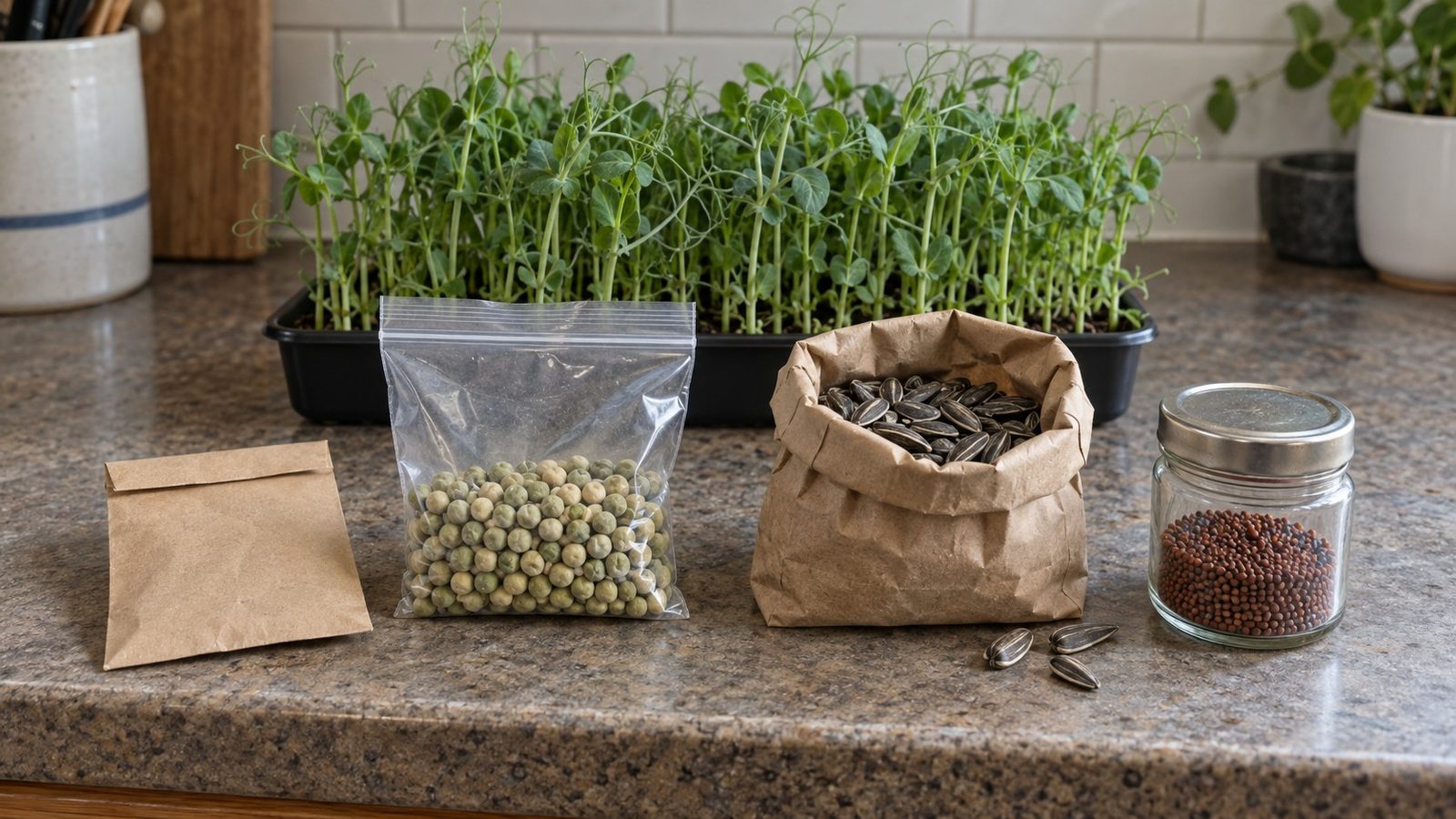
A garden packet, a bag sold as microgreen seed, a pantry bag of dried peas and a sack of birdseed can hold the same species, and many of them will sprout in a tray.
Whether a bag is fit to grow and eat depends on what its label says and what the seed is: whether it was treated and with what, whether it carries a "Do not use for food" caution, whether the seed is whole, and whether the crop is one people eat as a seedling. "Microgreen seed" and "sprouting seed" are seller descriptions of how the seed was packed and meant to be used.
They are not categories defined in the federal seed regulations, 7 CFR Part 201. The treatment, germination and lot rules are.
What "microgreen seed" and "sprouting seed" mean on a bag
The Federal Seed Act, run by USDA's Agricultural Marketing Service, governs labels on agricultural and vegetable seed shipped across state lines. Its regulations define words like kind, variety, hard seed and treated. "Microgreen seed" and "sprouting seed" are not among them. On a bag, either phrase tells you what the seller intends the seed for. The seller may also have cleaned or tested it, but the words alone do not say so.
FDA uses a functional phrase, seed "used for sprouting," and considers that seed food, which describes use rather than a label grade. The items with legal weight are the treatment statement, the caution wording, the germination percentage and the lot number, and state seed laws can add more.
What a planting seed label must show
Two parts of the federal rules matter most when you plan to eat what grows: the treatment statement, and the germination and lot information.
The treatment statement and its caution
Under 7 CFR 201.31a, treated planting seed must be labeled, in type at least 8 point, with the substance or process: "Treated with ____" or "____ treated." When a harmful substance remains, the label must also carry a caution substantially reading "Do not use for food," "Do not use for feed," "Do not use for oil purposes," or a combined form. The rule presumes the substance is harmful when the seed is in containers of more than 4 ounces. Every treated packet has to say it is treated; the automatic food, feed and oil caution is tied to containers over 4 oz.
The treated seed itself is normally exempt from EPA registration as a treated article under 40 CFR 152.25(a): "An article or substance treated with, or containing, a pesticide to protect the article or substance itself ... if the pesticide is registered for such use." The bag wording comes from the pesticide's own label. EPA's decision document for captan, a common seed fungicide, requires "Treated Seed - Do Not Use for Food, Feed, or Oil Purposes" (EPA Captan RED). If you cannot get the seed tag and pesticide label for a lot, do not grow that lot for food.
Germination, hard seed, test date and lot
For vegetable seed, container size changes what you will see. 7 CFR Part 201 says: "Each variety of vegetable seeds in containers of more than 1 pound shall be labeled to show the percentage of germination and the percentage of hard seed (if any)." Those containers must also carry a lot number. Where germination is shown, the month and year of the test must be too, normally no more than five calendar months old at interstate shipment, or 24 months for hermetically sealed seed.
A vegetable packet of 1 lb or less that meets the federal germination standard needs only the kind, the variety and the shipper; no percentage or test date. A packet below standard must say "Below Standard" and give its percentages. The federal minimums include 75% for broccoli, kale and radish, 80% for pea and 70% for garden bean. Those are planting standards, not a microgreen yield or a safety result.
Several tray staples are agricultural seeds under the rules, not vegetable seeds: sunflower, field pea, common wheat, buckwheat, mung bean, lentil, chickpea, flax and popcorn (radish is on both lists). Agricultural seed labels must show germination and the test month and year at any container size.
How to recognize treated seed
Start with the words. "Treated with" followed by an active ingredient such as captan or thiram, or the food, feed and oil caution, settles the question for food use. Color is a strong cue but not proof. EPA's rule at 40 CFR 153.155 says "Pesticide products intended for use in treating seeds must contain an EPA-approved dye to impart an unnatural color to the seed, unless appropriate tolerances or other clearances have been established under the Federal Food, Drug and Cosmetic Act for residues of the pesticide."
It also exempts products sold only to commercial seed treaters whose label has the user add the dye, at-planting and hopper-box treatments, and gaseous or fumigant products. Seed without dye is not proof it is untreated.
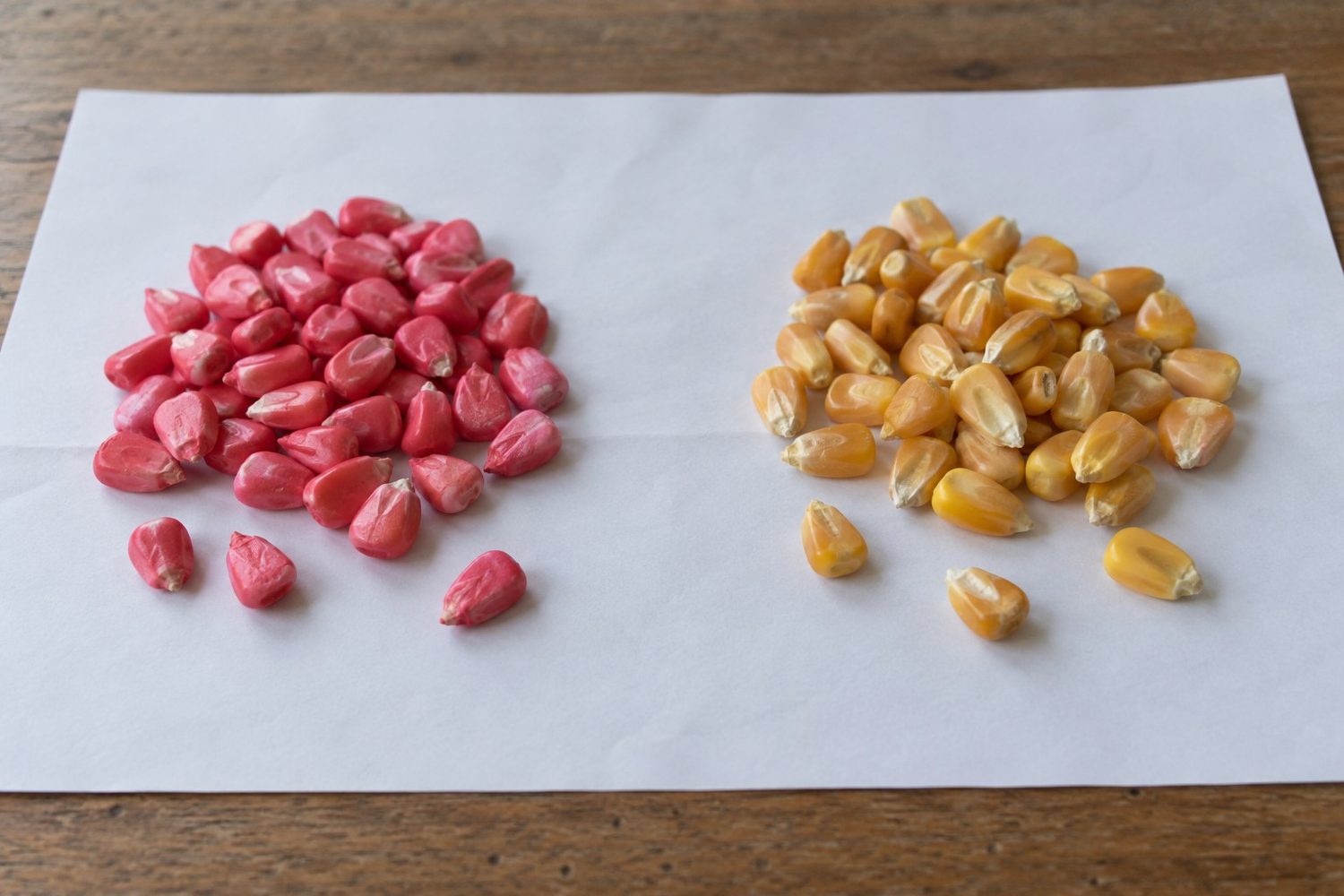
Some treatments change the look without being pest control. Pelleted seed is coated, commonly with clay, to make it larger and more uniform (AMS NOP Handbook 5029). Primed seed has had a controlled pre-germination step and may be labeled "primed," with no color to show it. Check the tag, the invoice and the seller's lot information rather than the seed's appearance.
"Untreated" is a seller statement, not a defined grade. Ask what it covers, and get a written answer naming any coatings, inoculants, fungicides or insecticides, priming and sanitizing washes, plus the lot number. Organic does not mean never treated either. Under 7 CFR 205.204, certified organic growers generally use organic seed but may use untreated nonorganic seed when equivalent organic seed is not available, and seed treated with a National List substance when neither is available. The same rule says "organically produced seed must be used for the production of edible sprouts."
Garden seed packets
A garden packet is planting seed, so the federal label rules apply. If the crop is grown as a microgreen, the packet has no treatment statement and the seed is not pelleted, it can go in a tray. Many small packets show no germination figure or lot number, which is legal at or above standard and leaves you to test an older packet yourself. Iowa State Extension gives typical viability under good storage of 5 years for broccoli and radish and 3 years for beans and peas; see also how long microgreen seeds last.
Some garden listings market the same seed for trays: Urban Farmer's Hong Vit radish is sold as garden seed and promoted as a fast microgreen. Garden seed often costs more per gram, as the price table below shows. Pelleting adds weight and size, so comparing a pelleted packet with bare seed by weight will mislead you.
Seed sold as microgreen seed
Seed sold for microgreens follows the same label rules as any planting seed of that kind. The word "microgreen" tells you the seller packed and priced it for trays, usually in larger bags of bare seed. Some sellers say the seed is shared across uses. Sproutpeople says its broccoli microgreen is "the same seed we sell for Broccoli Sprouts", at $35.53 a pound on 13 September 2026, and Gardeners Basics markets its Waltham 29 broccoli for sprouts, microgreens and mature plants.
An On The Grow reel posted 8 September 2026 goes further: a large supplier, not named, told them the seed for any given variety is the same whether sold for gardens, sprouting, microgreens or cover crop. No supplier states in writing that one lot goes out under all of those labels. A lot match takes identical lot numbers and the supplier's records, and even then it says nothing about treatment, cleaning or testing.
Germination claims on these bags are germination claims. Organo Republic's 1 lb radish advertises "Up To 90% Germination", which is not a pathogen result. A 2023 study of online microgreen seed noted that labels varied in the lot and germination details they gave. For choosing a seller, see buying microgreen seed, microgreen seed suppliers and bulk microgreen seeds.
Seed sold as sprouting seed
Sprouting seed is packed for a jar, where seed sits warm and wet and pathogens multiply. FDA reported 52 sprout-associated outbreaks and more than 2,700 illnesses from 1996 to 2020 (FDA, 2022), and its guidance says seed for sprouting likely needs a higher level of food-safety precautions than seed for other purposes (FDA guidance PDF). Commercial sprout operations must treat seed "using a scientifically valid method to reduce microorganisms of public health significance" or keep records of a supplier's treatment (FDA Produce Safety Rule).
Those sprout rules do not cover your tray. The sprout subpart excludes soil- or substrate-grown sprouts harvested without their roots (21 CFR 112.141), and FDA's 2023 sprout guidance says "Because microgreens are not sprouts, they are not subject to the requirements in Subpart M" (FDA sprout guidance PDF). See microgreens vs sprouts under Subpart M and microgreens vs sprouts.
A sprouting bag can still go in a tray, and some sellers of it state extra cleaning or testing. True Leaf says its organic hard red winter wheat is "microbial tested," a seller claim rather than a report you can read. If a seller offers a lot certificate, ask for it. For jar sprouts from the same bag, start with growing sprouts at home.
Grocery beans, peas and grains
Whole dry beans and peas can sprout. FDA's sprout guidance counts "everything that can be sprouted, including beans" as seed. A whole grocery lentil, mung bean, chickpea or dried pea may germinate if it is viable and has not been processed, but a food package promises nothing about germination.
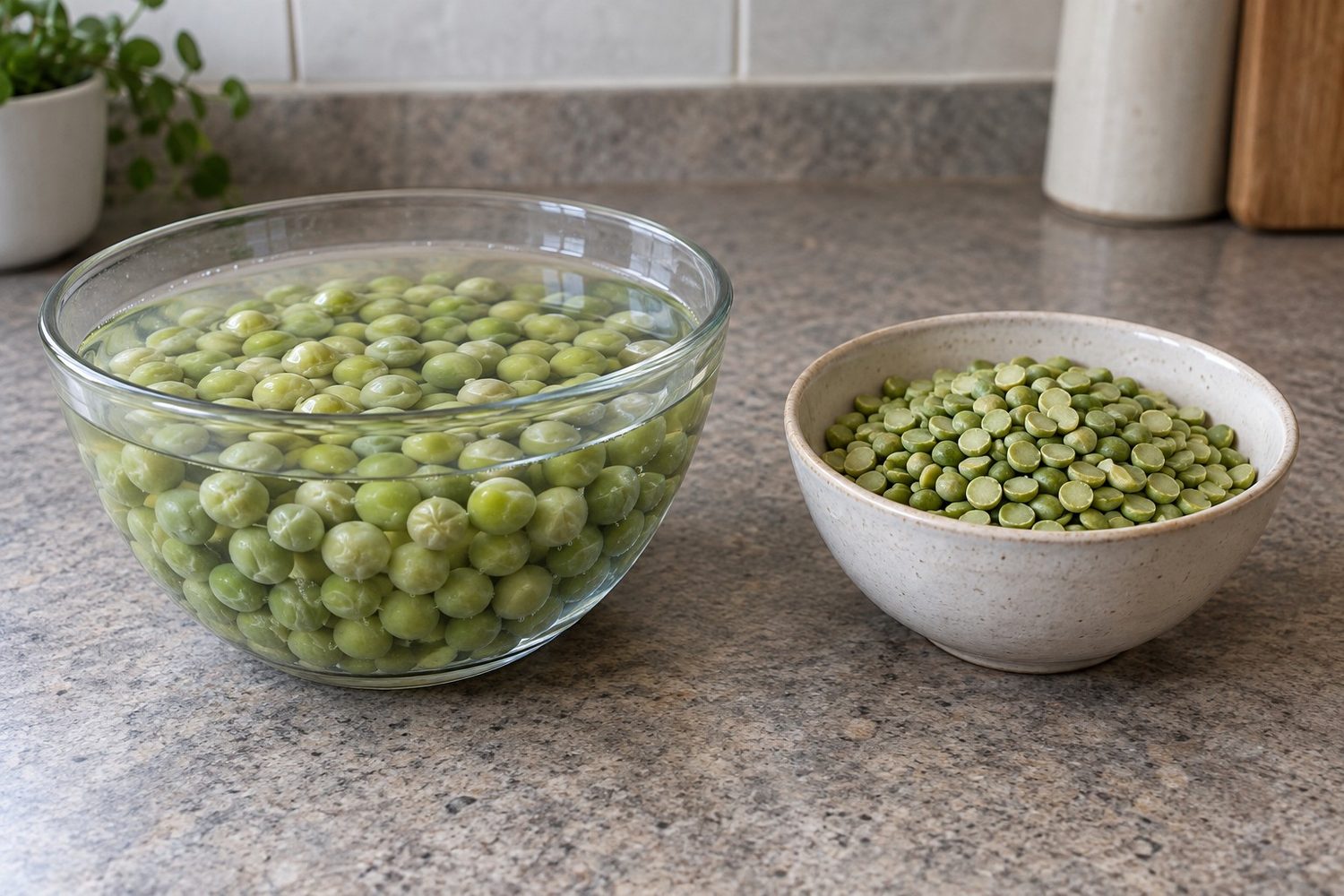
Processing is what stops growth. Dehulling, splitting, milling, roasting and high-dose sterilization destroy or remove the living embryo. Split peas are physically divided and cannot grow. A buckwheat groat is the dehulled portion of the seed and is not a reliable planting unit, and roasted kasha will not grow. Irradiation, depending on dose, can delay sprouting or sterilize food, and irradiated food should carry the Radura symbol or "Treated with radiation" where labeling is required (FDA).
Growers do use pantry peas. One grower in May 2021 grew pea shoots from 99-cent-a-pound dollar-store peas and reported close to 100% germination after a presoak. That is one grower's tray. Before filling a tray, count out a sample, presoak it (how long to presoak seed), write down how many sprout and work from that number. If few come up, poor germination covers the usual causes. A good sprout rate means the peas are alive, not that they are safe.
Birdseed and feed
Birdseed is sold as wild-bird food, not food for people, and it can contain several species with no treatment or handling history you can check. ShopRite's black oil sunflower wild bird food was $7.49 for 5 lb on 13 September 2026 and lists only black oil sunflower seed. One ingredient and a low price are not a human-food clearance. Other bags say so outright: Audubon Park black oil sunflower bird food at Wegmans and Companion black oil sunflower bird food at Martin's both read "Not for human consumption."
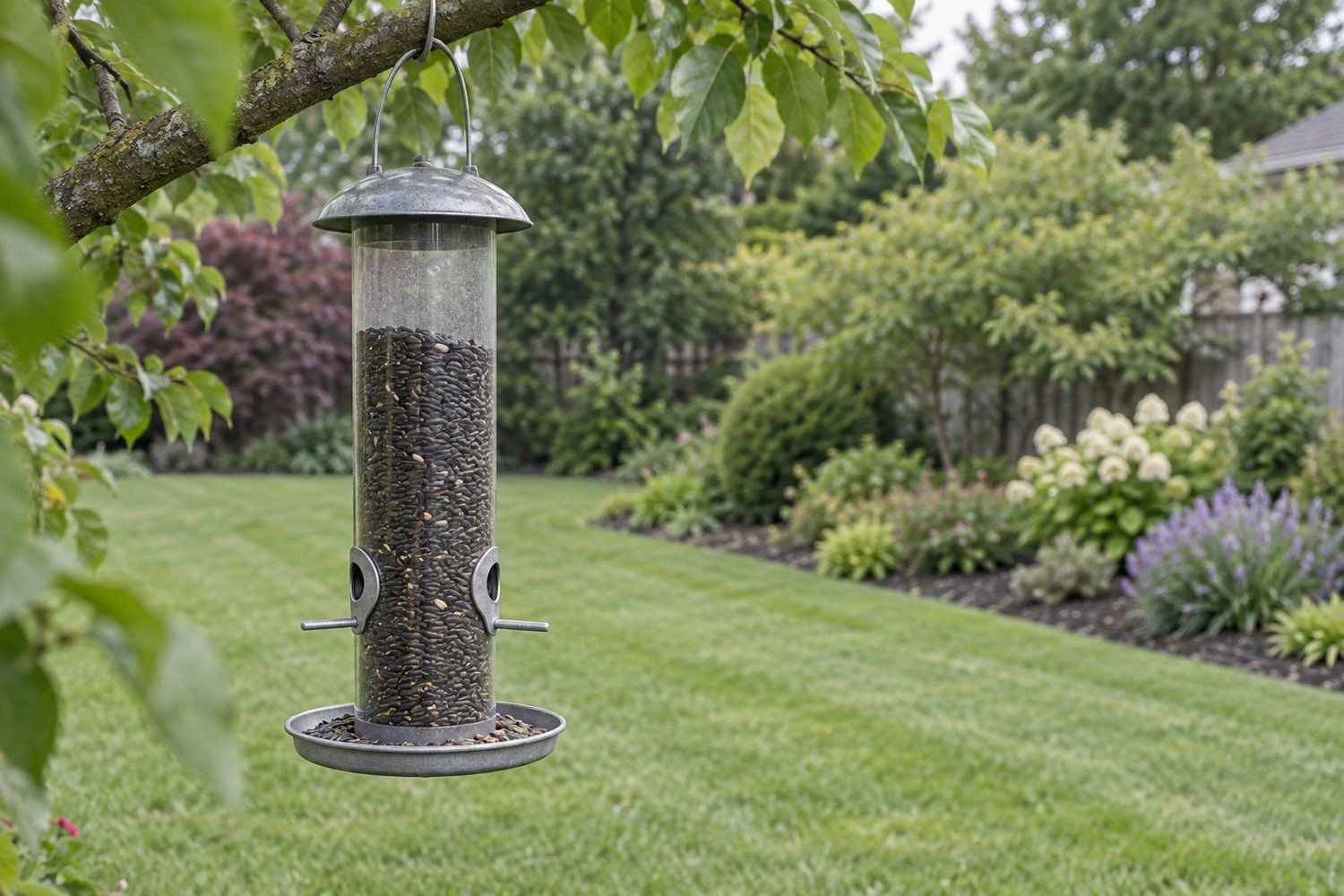
Pesticide-treated seed can carry residues seed-eating birds get to, and a peer-reviewed field study recorded birds eating treated cereal seeds and evaluated their exposure. That does not prove every birdseed bag is treated. It does show that "for birds" is not a human-food safety designation. Feed grain is the same: it is handled as animal feed. For sunflower or wheat trays, use a lot sold as human food or for edible sprouting, with a treatment and lot record, such as sunflower seed sold for microgreens or wheatgrass seed.
Crops never grown as microgreens
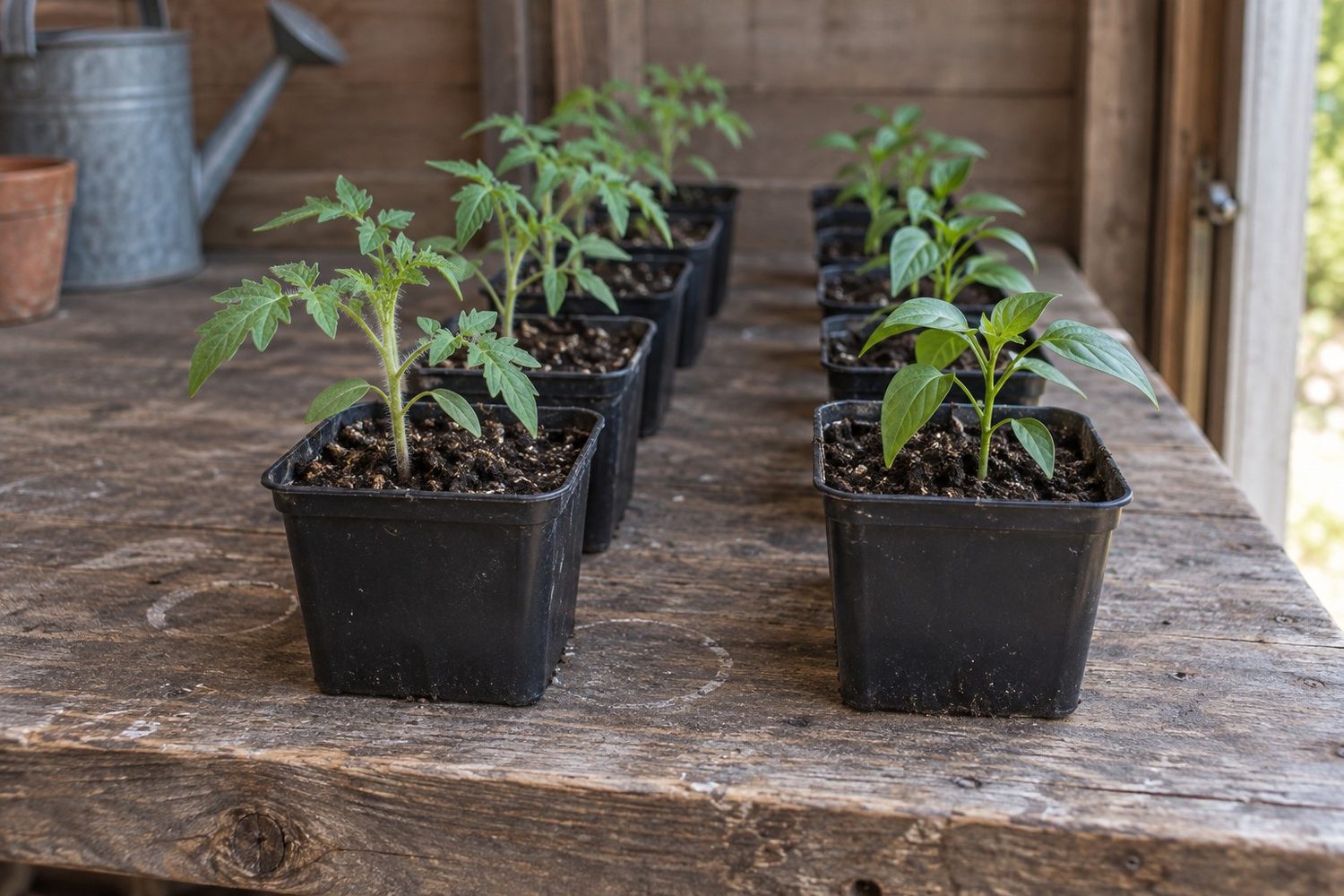
Some crops are out whatever bag they come in. University of Illinois Extension says plants in the nightshade family, "which includes tomatoes, eggplants, and peppers, should not be grown as microgreens due to toxins in the stems and foliage". Organic, untreated or microgreen branding does not change that; a packet of pepper or tomato seed belongs in the garden. For eating trays raw, see are microgreens safe to eat raw.
What each kind of seed costs per gram
The table uses prices listed on 13 September 2026, before tax and shipping, divided by 453.592 grams a pound. They are single examples, not averages.
Hover or tap a row to highlight it.
| Seed and bag type | Pack and price | Price per gram | What the listing shows |
|---|---|---|---|
| Radish, garden: Urban Farmer Hong Vit | 1 lb, $25.75 | $0.0568 | Garden seed also promoted as a microgreen |
| Radish, sprout and microgreen: Organo Republic | 1 lb, $17.99 | $0.0397 | Up to 90% germination claimed |
| Pea, garden: Afila 595 | 18 g, $3.99 | $0.2217 | Tendril pea; tips also sold as microgreens |
| Pea, garden: Afila 595 | 1 lb, $10.95 | $0.0241 | Same listing, larger bag |
| Pea, microgreen: True Leaf Dun (pea shoot seed on Amazon) | 1 lb, $7.97 | $0.0176 | Sold as microgreen seed |
| Pea, grocery: Good & Gather split green peas | 1 lb, $1.99 | $0.0044 | Dry split peas at Target |
| Wheat, food: Palouse soft white wheat berries | 5 lb, $19.95 | $0.0088 | Food wheat; no sprout testing claimed |
| Wheat, sprouting: True Leaf hard red winter | 1 lb, $10.87 | $0.0240 | Seller says microbial tested |
| Sunflower, bird food: ShopRite black oil | 5 lb, $7.49 | $0.0033 | Wild bird food |
At the same 1 lb size, the Afila garden pea costs 1.4 times as much per gram as the Dun microgreen pea. The cheapest two lines, split peas and birdseed, are the two you should not sow to eat.
Checklist before you sow any bag to eat
Run these eight checks on any new bag:
- Crop and variety. Confirm the exact crop and variety, and that it is an edible seedling crop, not a nightshade.
- Lot and seller. Note the lot number and seller. A lot number is federally required only on vegetable seed over 1 lb, so ask if it is missing.
- Treatment statement. Look for "Treated with" and the active ingredient or process.
- Warnings. Any "Do not use for food, feed or oil purposes" or "planting purposes only" wording rules the bag out for eating.
- Germination and test date. Read them where given; where missing, test a sample and write down the result.
- Whole seed. Make sure it is not split, hulled, roasted or popped.
- Raw sprouts. For jar sprouts, look for a documented food-safety program and, if claimed, a lot-specific microbial test or certificate.
- Organic status. Treat it as its own question, separate from treatment and testing.
Questions growers ask about seed bags
Does "untreated" mean the seed was tested for pathogens? No. "Untreated" says a treatment was not applied; it does not show a pathogen test, food handling or a germination result. Ask the seller in writing what it covers and for the lot number.
Can I grow microgreens from seed saved from my own garden? Yes, if it is an edible seedling crop with no treatment, but it has no germination or food-safety assurance. UMN Extension names bacterial spot, bacterial canker and black rot among diseases that can carry over on seed, so save only from healthy plants and test a sample first.
Can I hot-water treat pelleted or primed seed to clean it? No. Cornell's guidance says "Pelleted seed cannot be treated, and primed or old seed should not be treated". Buy bare, untreated seed for trays instead.
Before the bag goes in a tray
Any bag in your kitchen or seed drawer can be judged the same way: read what the label must say, notice what it leaves out, and fill the gap with a question to the seller or a small test of your own before a tray reaches the table.
Sources
Prices, stock and specifications are as the linked pages showed them on 2026-09-13.
- 7 CFR Part 201
- considers that seed food
- 7 CFR 201.31a
- 40 CFR 152.25(a)
- EPA Captan RED
- 40 CFR 153.155
- AMS NOP Handbook 5029
- 7 CFR 205.204
- 5 years for broccoli and radish and 3 years for beans and peas
- Hong Vit radish
- "the same seed we sell for Broccoli Sprouts"
- Gardeners Basics
- On The Grow reel posted 8 September 2026
- "Up To 90% Germination"
- 2023 study of online microgreen seed
- FDA guidance PDF
- FDA Produce Safety Rule
- 21 CFR 112.141
- FDA sprout guidance PDF
- hard red winter wheat
- "everything that can be sprouted, including beans"
- the dehulled portion of the seed
- FDA
- grew pea shoots from 99-cent-a-pound dollar-store peas
- black oil sunflower wild bird food
- Wegmans
- Martin's
- field study recorded birds eating treated cereal seeds
- "which includes tomatoes, eggplants, and peppers, should not be grown as microgreens due to toxins in the stems and foliage"
- Afila 595
- True Leaf Dun
- Good & Gather split green peas
- Palouse soft white wheat berries
- diseases that can carry over on seed
- "Pelleted seed cannot be treated, and primed or old seed should not be treated"
Keep reading
The journal
Can You Use Your Own Seeds in an AeroGarden?
Yes, you can use your own seeds in an AeroGarden. See current sponge and pod prices, seed counts per position, and sprouting times for your own crop.
Read Can You Use Your Own Seeds in an AeroGarden?The journal
How Long Do Microgreen Seeds Last in Storage?
How long do microgreen seeds last on the shelf? Compare sourced storage ranges by crop, learn why tables disagree, and test old seed before wasting a tray.
Read How Long Do Microgreen Seeds Last in Storage?The journal
Microgreen Seeding Rate Chart: Grams Per 1020 Tray
Find grams per 1020 tray for common crops in this microgreen seeding rate chart, plus why rates differ and how to set your own rate from a first tray.
Read Microgreen Seeding Rate Chart: Grams Per 1020 TrayThe journal
The Cheapest Microgreens to Grow, Tray by Tray
Find the cheapest microgreens to grow by seed cost per tray and per ounce of harvest, plus how small a share seed is of the full cost of a tray.
Read The Cheapest Microgreens to Grow, Tray by Tray