At a glance
Nothing is hard to do, but it is slow and wants even moisture that never turns into a saturated tray.
- Botanical name
- Taraxacum officinale
- Also sold as
- Dandelion Microgreens Seeds, Dandelion, Dandelion, Red (chicory), Italian Dandelion (chicory)
- Family
- aster
- Difficulty
- Moderate
- Days to harvest
- 16 to 25 days
- Harvest window
- Test your own tray
- Seed per 1020 tray
- 4 to 5 g
- Soak
- None
- Blackout
- 4 to 6 days
- Germination temperature
- Test your own tray
- Yield per 1020 tray
- Test your own tray
- Regrows after cutting
- Test your own tray
- Mold risk
- Test your own tray
- Hull shedding
- Test your own tray
- Shelf life
- Test your own tray
- Eaten as
- raw or cooked
- Seed cost per tray
- Test your own tray
Any field name above ranks every variety by it. Where a field has no established number, weigh or measure your own tray for it. Every figure here is sourced at the bottom of the page. Compare every variety side by side.
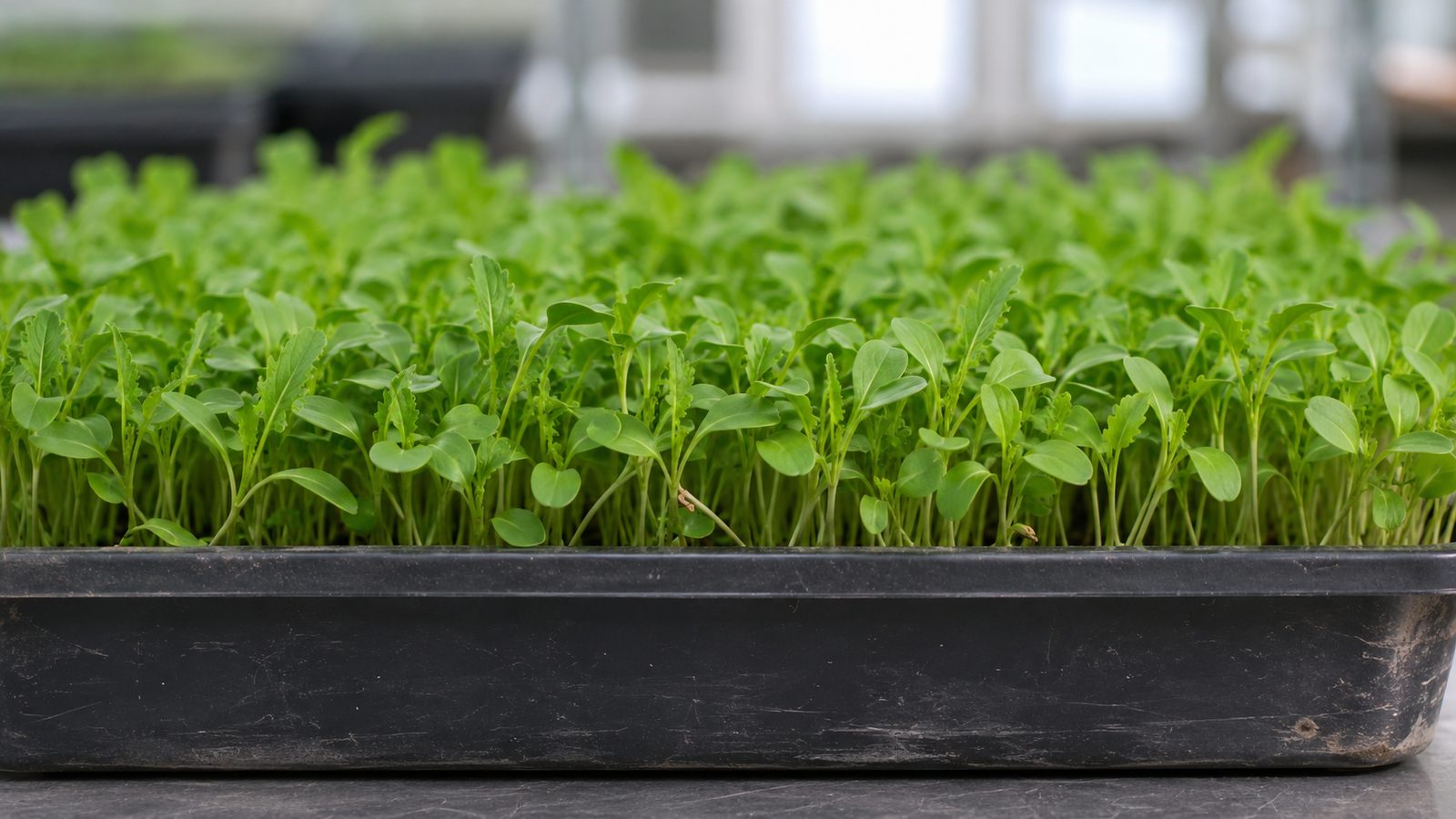
Dandelion microgreens are the young seedlings of the common dandelion, a slow crop that takes 16 to 25 days from sowing and generally gives one cut. They suit a grower who wants a mildly bitter, peppery green and does not mind waiting for it.
Read the seed packet before you pay. Some seed sold as dandelion is really chicory, which is also sold as Italian dandelion and is a different plant. Look for the Latin name Taraxacum officinale if you want the true dandelion.
A 1020 tray takes 4 to 5 grams of seed with no soak, 4 to 6 days of blackout, and medium that stays evenly damp without ever sitting wet. Dandelion belongs to the same plant family as sunflower and chicory, so anyone sensitive to that family should read the caution under nutrition first.
What it is, and how to tell you grew it right
Dandelion microgreens come from Taraxacum officinale, the common dandelion, a member of the Asteraceae family, the aster or sunflower family (Cornell University, Dandelion). That family also holds daisies and chicory. Cornell lists old names such as lion's-tooth, blowball and Irish daisy, which can turn up on a seed listing.
Cut a tray when the plants are one-half inch to two inches tall and the first true leaves have emerged, which is the range MP Seeds gives. Johnny's Selected Seeds allows a cut a little earlier, once the seed leaves are fully open or the first true leaves are just starting. So, judge by the leaf rather than the calendar: once the seed leaves are open, check the tray every day for true leaves.
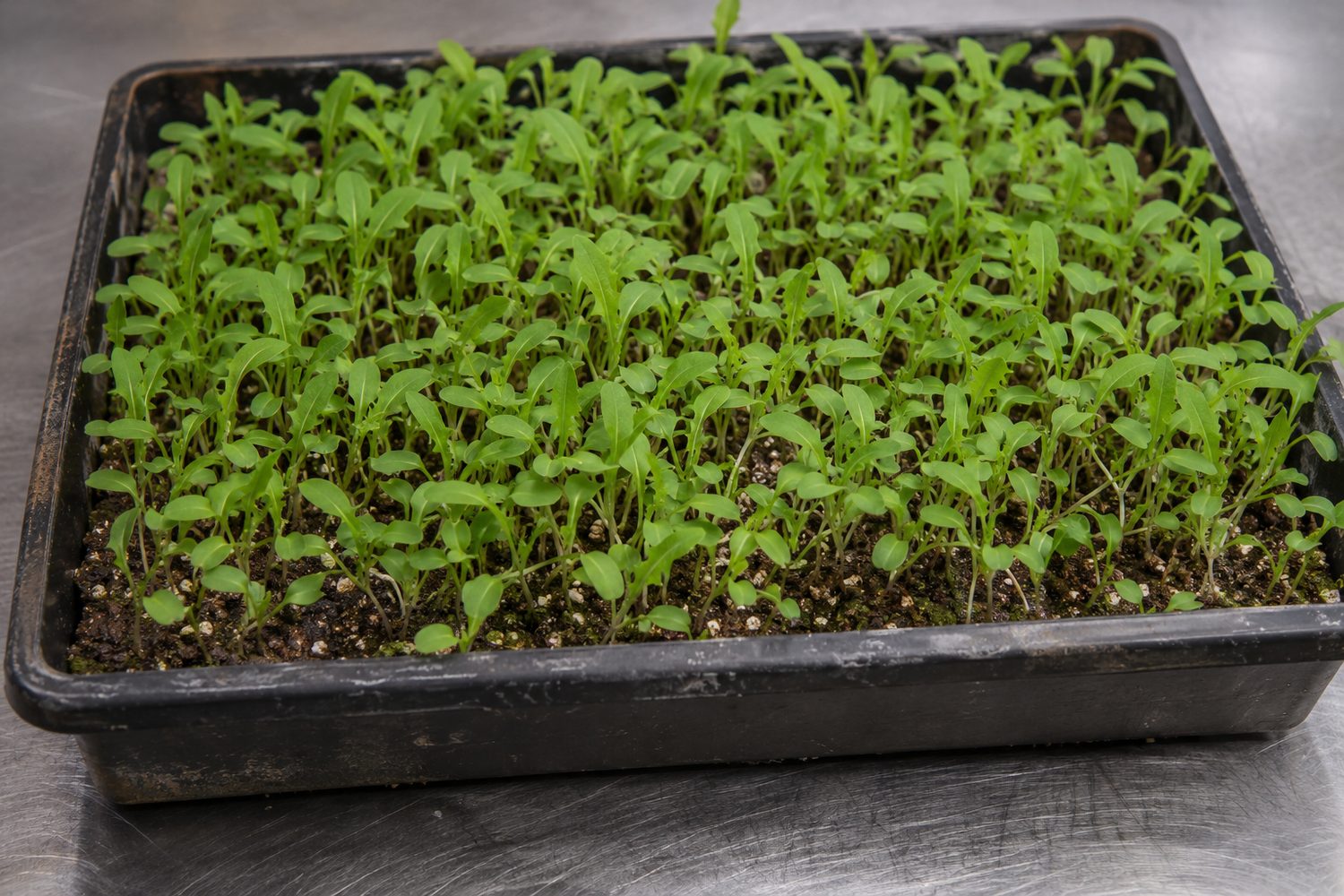
Plan for a long wait. MP Seeds gives a total growing time of 16 to 25 days, averaging 18, and Johnny's gives the same 16 to 25 day range for slow-growing microgreens. In Johnny's 2017 yield trial, the product it sells as Dandelion, Red averaged 18 days to maturity (Johnny's yield trial). That product is chicory, so treat the trial as practice for the name on the label, not as a result for true dandelion.
What it tastes like, and what to do with it
Sellers describe dandelion microgreens as mildly bitter, peppery and earthy. MP Seeds says the flavor is more subtle than the mature plant, and that some people taste it as sweet and mild. Johnny's calls its Dandelion, Red mildly bitter, and Living Towers calls its red dandelion pleasantly bitter.
How bitter it feels is personal, so taste a small pinch before you plan a whole dish around it. A mild-to-moderate bitterness with a peppery edge is the reasonable expectation.
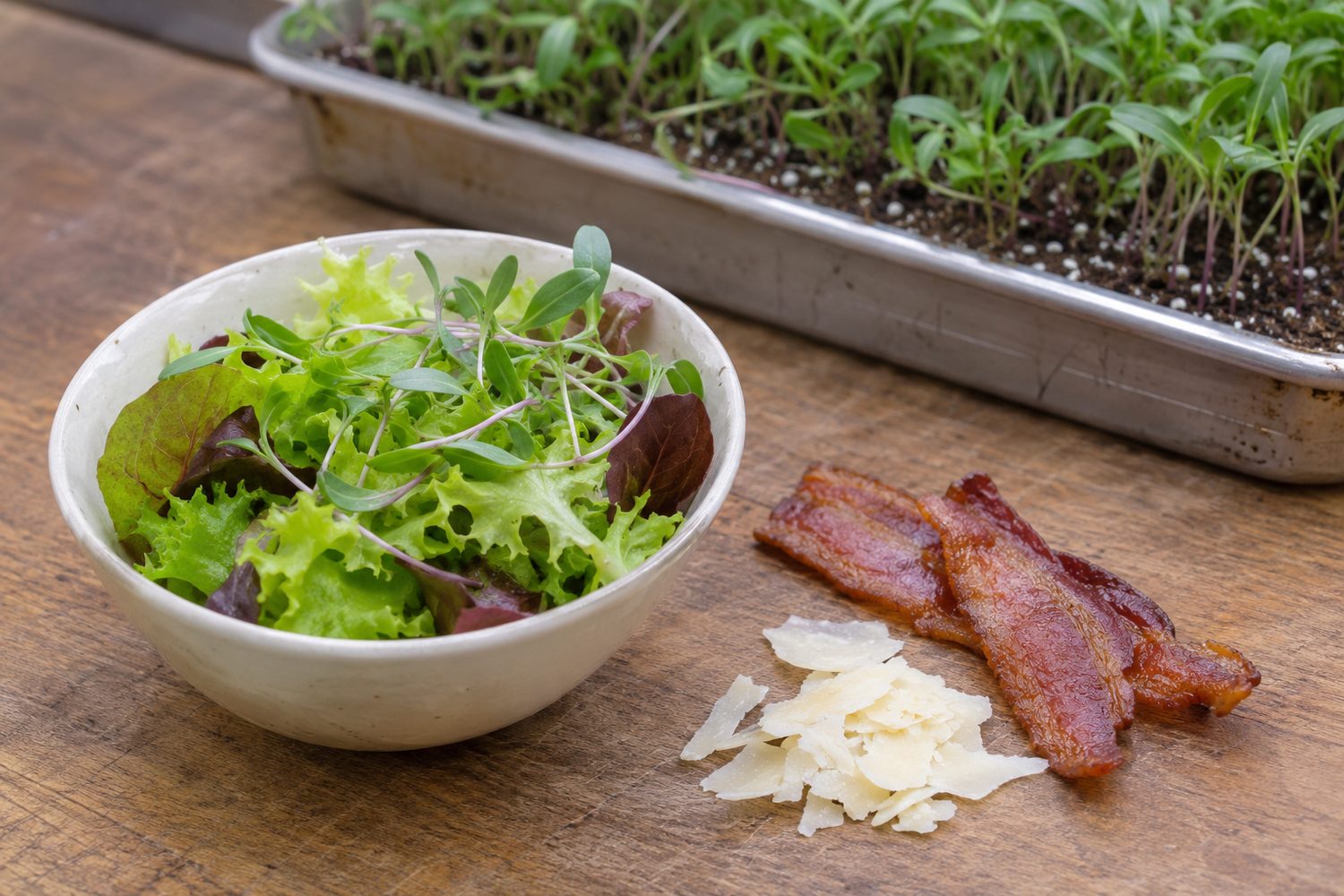
Documented uses are salads, sandwiches, wraps, smoothies, pesto and garnish. MP Seeds suggests mixing the greens with milder salad greens, pairing the bitter, peppery flavor with rich or salty foods such as bacon and pecorino, and sautéing them with garlic, onion and chili (MP Seeds, Spanish listing).
Growing it: only what differs from the standard method
Everything general about trays, medium, light and watering lives on the standard tray method for growing microgreens. What dandelion does differently:
Skip the soak. MP Seeds says soaking is not required.
Sow a light rate and start small. The sellers give slightly different rates, and they are shown here separately rather than averaged:
Hover or tap a row to highlight it.
| Seller | Seed per tray | Blackout | Days to harvest |
|---|---|---|---|
| MP Seeds, English listing (true dandelion) | 4 g per 10 by 20 tray | 4 to 6 days | 16 to 25, average 18 |
| MP Seeds, Spanish listing (true dandelion) | 5 g per standard tray | 4 to 6 days | 16 to 25, average 18 |
| Johnny's, Dandelion, Red (chicory) | 4 g per 1020 tray | Not listed | 16 to 25, 18 in its 2017 trial |
Start in the 4 to 5 gram range and adjust from how your first tray stands. Press the seed firmly onto the medium so every seed touches it.
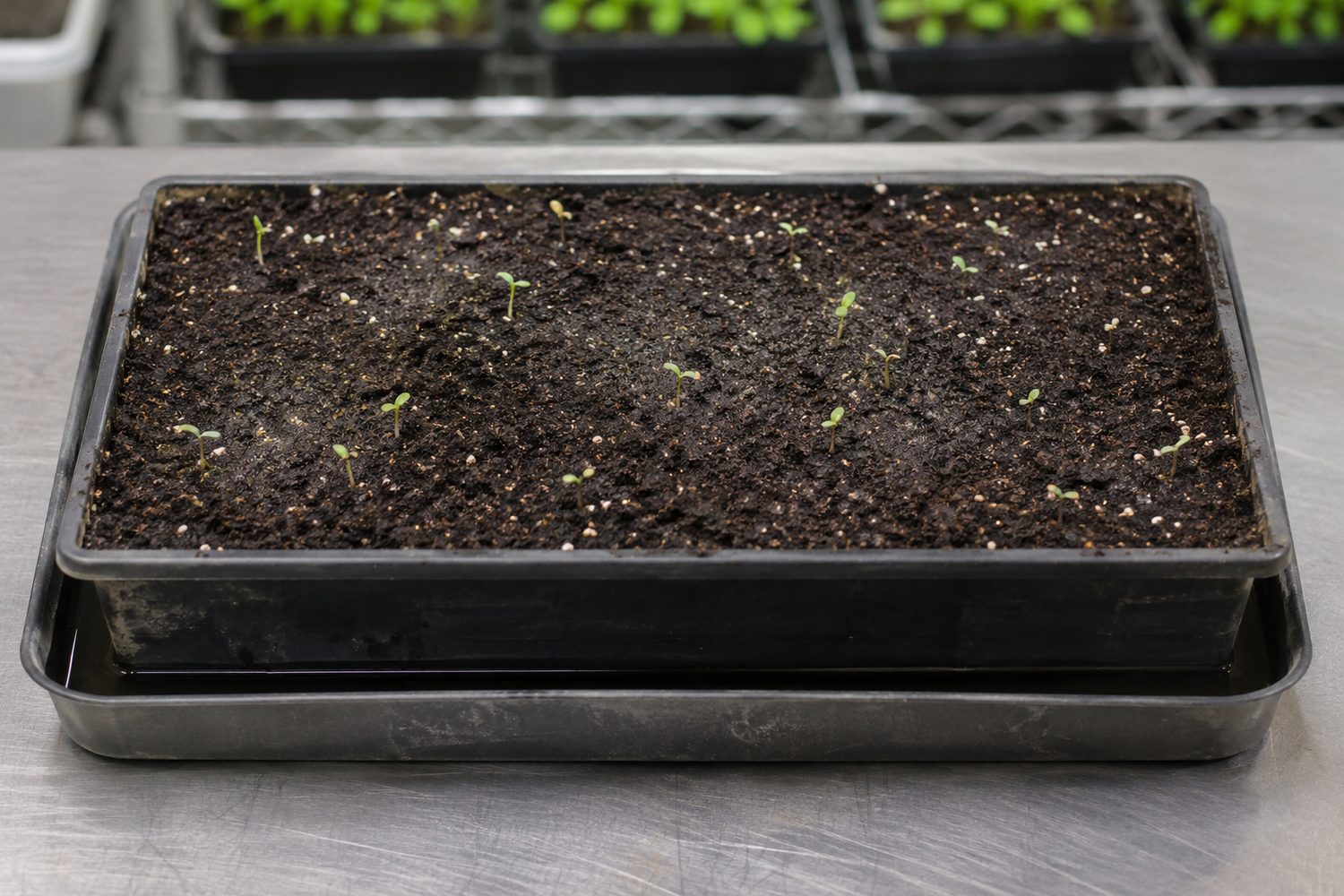
Keep moisture even, and be patient. MP Seeds describes dandelion as slow growing, with slower germination and a need for consistent moisture to help prevent disease. Its instructions call for fine misting or bottom watering, even moisture and no waterlogging. In one lab germination study, roots formed within five days while the seed leaves appeared around day ten (Marín et al., Horticulturae, 2021). Those were laboratory conditions, but they are a reason not to give up on a tray that looks bare in its first week.
Watch the temperature. Johnny's general guidance for slow-growing microgreens is soil near 75°F until germination, then 60°F, with an ambient range of 65°F to 75°F. Above 75°F disease pressure can rise and germination can be inhibited. That guidance is not written for dandelion alone, so judge your tray rather than the thermometer.
Plan on one cut. MP Seeds says dandelion microgreens generally give a single harvest and do not regrow after cutting, because they are cut before they build enough structure. Count on one harvest per tray.
Know what a tray gives. Johnny's 2017 trial of its chicory product averaged 5.5 ounces per 1020 tray from 4 grams of seed. That is a planning figure for that product, not for true dandelion, so weigh your own first tray and write the number down.
What goes wrong with dandelion specifically
Dandelion is not a fast brassica-style tray. It is slow and wants even moisture, so give the stand time to fill in rather than adding water to speed it up.
A weak or patchy stand. A peer-reviewed study of Taraxacum officinale measured 72.0% germination (plus or minus 2.9) for its seed lot, using wild-collected seed under controlled conditions (Marín et al.). It also reported that germination in natural fields can be low and that establishment can be difficult. Your seed will behave differently, so ask the seller for the current lot germination test, or sow a small test patch before you fill a whole tray. The same study's in-vitro treatments showed wide variation in germination timing, so an uneven start is plausible. Begin with a small tray and watch how evenly it comes up before you scale up.
Damping off. Johnny's names damping off as a risk in densely planted microgreens when air circulation is poor and the medium stays saturated. Seedlings collapse. Its prevention advice is air movement, clean media and water, and a sensible seeding density, and bottom watering or careful misting keeps splashing media off the seedlings. For dandelion that means a moderate rate, firm seed-to-medium contact, even moisture that is never saturated, and a fan moving air over the tray. If you spot white fuzz, the root hair or mold check shows how to tell it apart before you bin the tray.
Nutrition, and a caution for people sensitive to Asteraceae plants
A peer-reviewed study by Lenzi and colleagues, Foods, 2019 measured Taraxacum officinale cut at the microgreen stage, grown hydroponically in half-strength Hoagland solution. The figures below are means pooled across the three wild species in the study at the microgreen stage, not dandelion alone, and they come from one controlled experiment rather than a food database.
Hover or tap a row to highlight it.
| Measure | Mean, fresh weight |
|---|---|
| Calcium | 57.05 mg per 100 g |
| Magnesium | 73.39 mg per 100 g |
| Phosphorus | 63.59 mg per 100 g |
| Iron | 6.59 mg per 100 g |
| Manganese | 2.05 mg per 100 g |
| Copper | 0.16 mg per 100 g |
| Zinc | 0.43 mg per 100 g |
| Nitrate | 4,962 mg per kg |
For a modeled 20 gram serving of T. officinale microgreens, the authors estimated about 19.9% of the iron reference intake and 13.4% of the manganese reference intake, with smaller shares of magnesium (4.6%) and copper (4.2%). The authors also reported potentially concerning metal accumulation in wild greens and cautioned that growing conditions and contamination can affect food safety.
Vitamin C, vitamin K and carotenoid figures for other microgreens do not carry over to dandelion, because dandelion was not in that dataset (Xiao et al., 2012). Leave vitamin numbers out of anything you sell or share about this crop.
The caution. DermNet identifies dandelion as an Asteraceae plant and reports that its leaves and stems release latex when wounded, which may cause dermatitis in latex-sensitive people. It also reports allergic contact dermatitis after contact with dandelions and cross-reactions with other Compositae or Asteraceae plants. Sunflower and lettuce are also in the Asteraceae family; see sunflower and lettuce. If you know you are sensitive to Asteraceae plants or dandelion, avoid handling or eating it, and ask a doctor about your own allergy.
Which seed to buy
Dandelion seed is sold under several names, and not all of them are the same plant. Listings use "Dandelion," "Dandelion Microgreens," "Dandelion, Red" and "Italian Dandelion." Italian dandelion is generally Cichorium intybus, which is chicory. MP Seeds sells its product as Taraxacum officinale and says plainly that common dandelion and Italian dandelion are different.
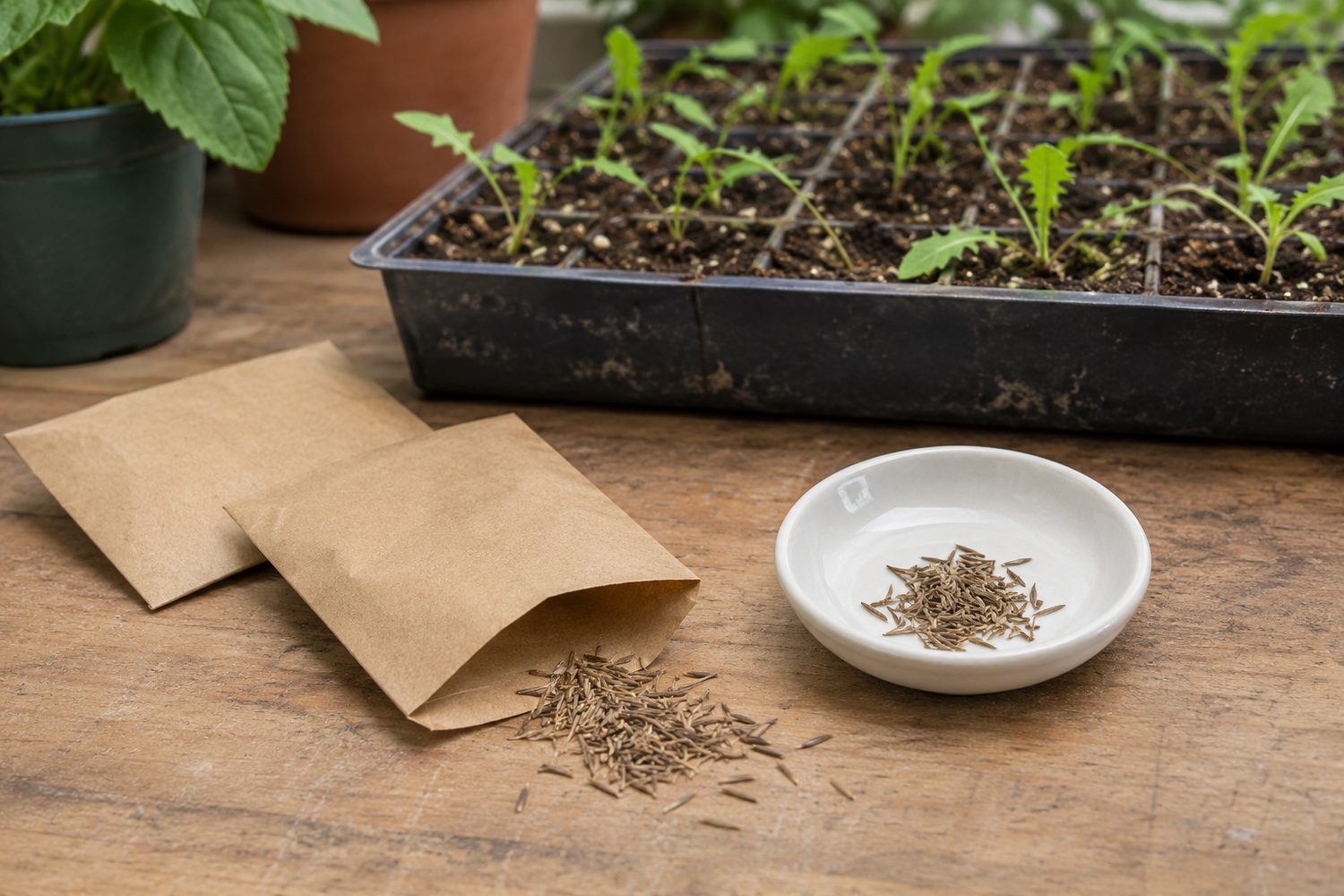
Johnny's Selected Seeds sells "Dandelion, Red" (part 3357M) as an open-pollinated, hydroponic-performing microgreen. Its page lists the Latin name Cichorium intybus, so this is chicory, not true dandelion. The prices below were listed on November 19, 2026, and move. Johnny's recommends 4 grams per 1020 tray and about 7 trays per ounce, so the per-tray cost is seed only:
Hover or tap a row to highlight it.
| Pack | Price | About, per tray |
|---|---|---|
| 1 ounce | $12.65 | $1.81 |
| 1/4 pound | $28.85 | $1.02 |
| 1 pound | $86.90 | $0.77 |
| 5 pounds | $389.30 | $0.69 |
MP Seeds sells true dandelion as "Dandelion Microgreens Seeds." Its English listing showed the product temporarily unavailable at €22.90 with no pack weight displayed. Its Spanish listing showed 25 g to 1 kg options, a price range of €6.90 to €189.95 and a lowest price per kilogram of €189.95, without tying each price to a pack size. Ask the seller for the price per gram, so you can compare it with Johnny's. When you want true dandelion, buy seed with Taraxacum officinale printed on the packet.
Is it worth growing?
Yes, for a patient grower who wants a mildly bitter, peppery accent for salads and plates and is happy to wait 16 to 25 days for one cut. Seed cost is modest at Johnny's chicory prices, about $0.69 to $1.81 a tray, and your true-dandelion cost depends on the pack price per gram you are quoted.
Choose something else if you need a fast turnaround, a second cut from the same tray, or a mild flavor that suits everyone, because the bitterness is the point. Skip it altogether if you or your customers are sensitive to Asteraceae plants.
Plan to use the harvest quickly. Johnny's gives a general 5 to 10 days for microgreens stored properly, and that range is not specific to dandelion, so check how yours hold in your own fridge before you promise a date to a buyer. If you want to compare it with other crops, the microgreen types hub lays the options out side by side.
Terms on this page
Tap a term to see what it means.
Asteraceae. The botanical family that holds asters, daisies, sunflowers, chicory and dandelion. Sensitivity to one member can cross over to others.
Sources
- Cornell University, Dandelion - Taraxacum officinale, the Asteraceae family and common names.
- DermNet, Dandelion - latex, contact dermatitis and Asteraceae cross-reactions.
- MP Seeds, Dandelion Microgreens Seeds - true dandelion product, 4 g rate, blackout, timing, flavor, uses and the single-harvest statement.
- MP Seeds, Diente de León - 5 g rate, pack-size options, price range and pairings.
- Johnny's Selected Seeds, Dandelion, Red Microgreen Seed - chicory product, prices, 4 g rate, temperature, damping off, harvest and shelf life.
- Johnny's micro greens yield trial, 2017 (PDF) - 18 average days and 5.5 ounces per tray for the chicory product.
- Johnny's slow-growing microgreen comparison chart (PDF) - flavor and general slow-growing guidance.
- Living Towers, Red Dandelion Microgreens - flavor description.
- Lenzi et al., Foods, 2019 (PDF) - microgreen-stage minerals, nitrate and modeled 20 g serving.
- Marín et al., Horticulturae, 2021 - dandelion germination rate, root and seed-leaf timing and uniformity in the lab.
- Xiao et al., 2012 (PDF) - the 25-microgreen vitamin and carotenoid dataset, which does not include dandelion.
Keep reading
The variety directory
Endive microgreens
You have about one to three days to cut it, one of only two microgreens with a published harvest window. Endive's clock runs on bitterness rather than weight, and no measured yield for it exists anywhere.
Read Endive microgreensThe variety directory
Lettuce microgreens
One of only three microgreens whose seed needs light to germinate, so it must not be blacked out. It also has the longest harvest window in the directory at four to seven days, and the best evidence anywhere that a microgreen beats its adult.
Read Lettuce microgreensThe variety directory
Basil microgreens
Basil is the slow one: 19 to 25.5 days to first true leaf against a brassica's twelve, on 6.5 g of seed, and the purple cultivars cost you another week. Three cultivars, three sets of measured numbers.
Read Basil microgreensThe variety directory
Chive microgreens
One of the few crops where somebody actually ran a density trial, and poor value per dollar of seed. It also competes with a perennial you buy once.
Read Chive microgreens