AeroGarden Herbs: Which Ones Struggle and How to Prune Them
Cal HewittPublished Checked
- aerogarden
- pod gardens
- growing
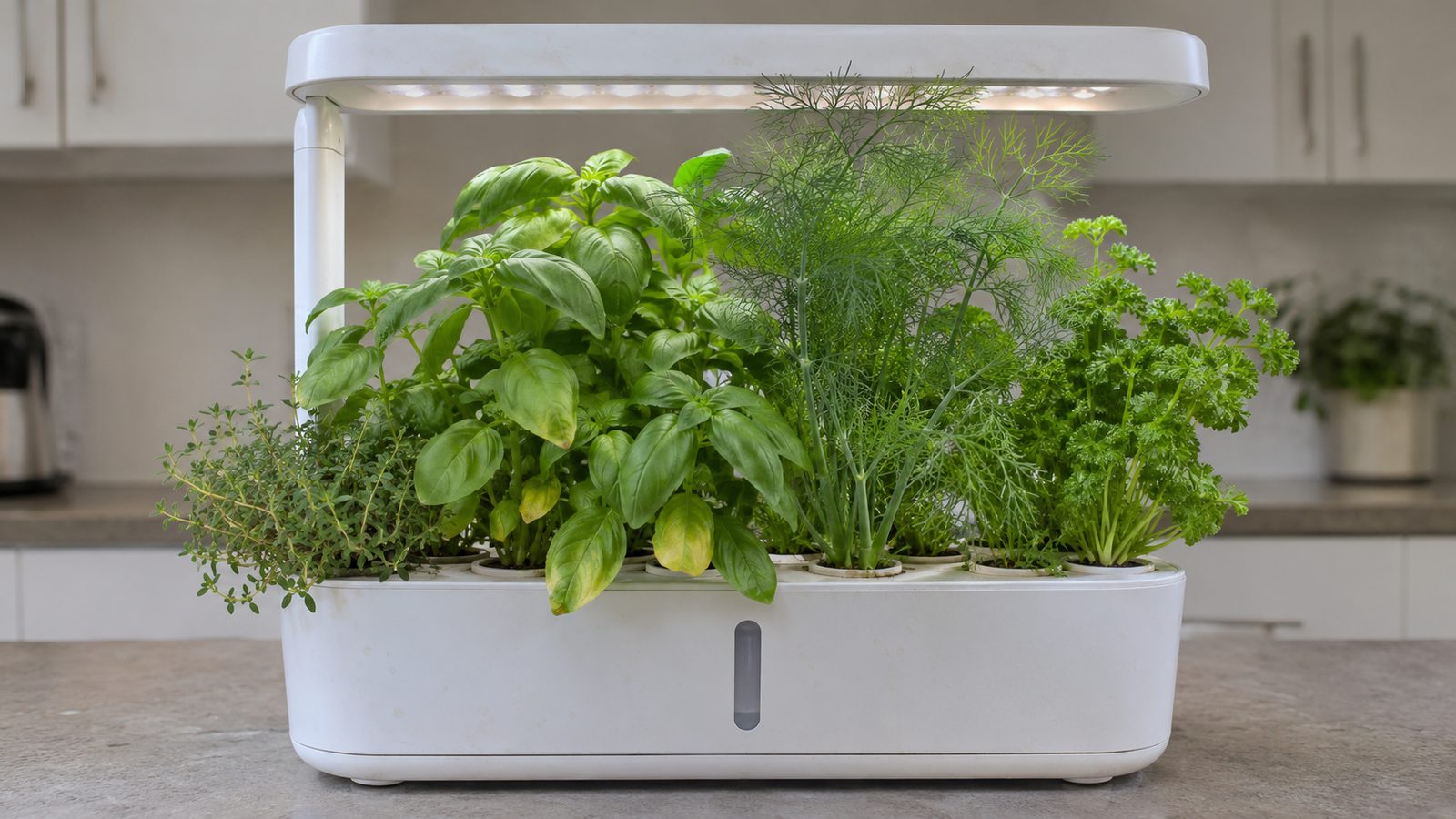
If you have just unpacked an AeroGarden herb kit, here is the short version. Plant the pods. AeroGarden says Gourmet Herbs sprouts appear in a few days (5 to 15 days is its general range for herbs), with a first small harvest in about 3 to 4 weeks for that kit and about 4 to 6 weeks in its general guidance.
Start cutting once the plants are about 2 inches tall, take no more than one-third at a time, and prune the basil from the top so it does not shade the slower herbs.
The current Gourmet Herbs kit is a six-pod set, but kit contents change, so read the label on your own package before you plan around a particular herb. Cilantro, rosemary and mint are the ones owners report trouble with. Owners describe basil, dill and chives as the easier herbs. How long a planting lasts depends on the herb: AeroGarden says up to 6 months or longer, and that is an expectation, not a promise.
What is in the kit, and what the label says
The current AeroGarden Gourmet Herb Seed Pod Kit lists six pods: Genovese basil, Thai basil, curly parsley, dill, thyme and mint (Scotts Miracle-Gro, read November 13, 2026). An older nine-pod version of the same kit had two Genovese basil pods, plus Thai basil, curly parsley, Italian parsley, dill, thyme, mint and chives. An older Italian Herbs listing described a different mix again, built around Genovese basil, Italian parsley, thyme, savory, mint and oregano.
Because the same kit name has meant different things over time, the label on your box is the list that counts.
How fast herbs sprout and when the first harvest comes
AeroGarden's general guidance gives herbs a germination range of 5 to 15 days. The Gourmet Herbs page says sprouts appear in a few days and the first small harvest is usually ready in about 3 to 4 weeks. The manufacturer's Harvest FAQ gives first harvest at about 4 to 6 weeks (read November 13, 2026). Plan on about 3 to 6 weeks.
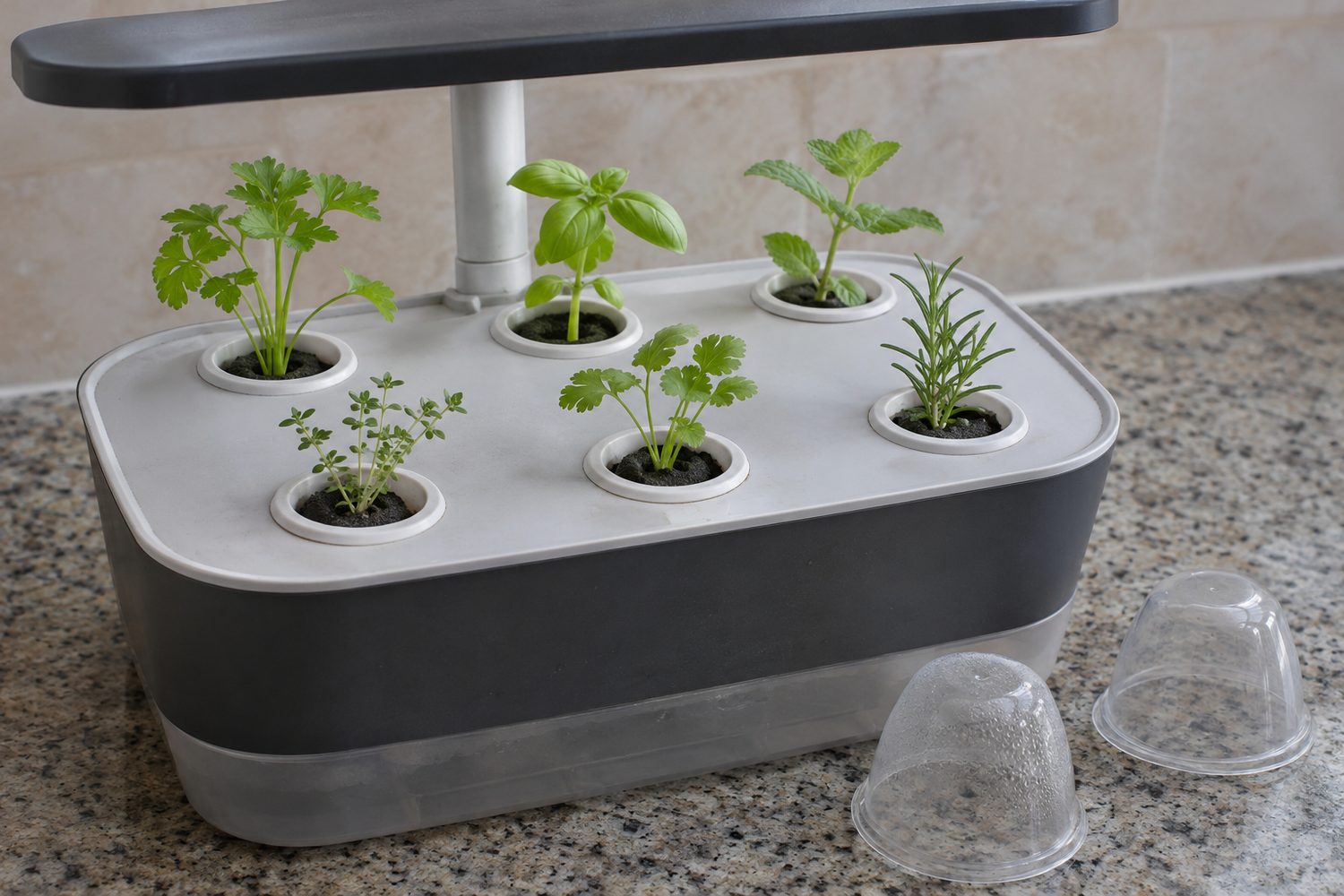
Iowa State University Extension puts fresh basil at about 6 weeks after planting in ordinary growing conditions. Go by plant size, not the calendar. When a plant is about 2 inches tall, you can start trimming.
Which herbs to expect good results from
Owners often report good results with basil, and it is the herb that most needs managing. AeroGarden calls basil fast-growing and says it can outgrow its neighbors. Owners describe dill as fast-growing too, and commonly say both need frequent cutting, and one owner reported harvesting basil repeatedly for 6 to 9 months.
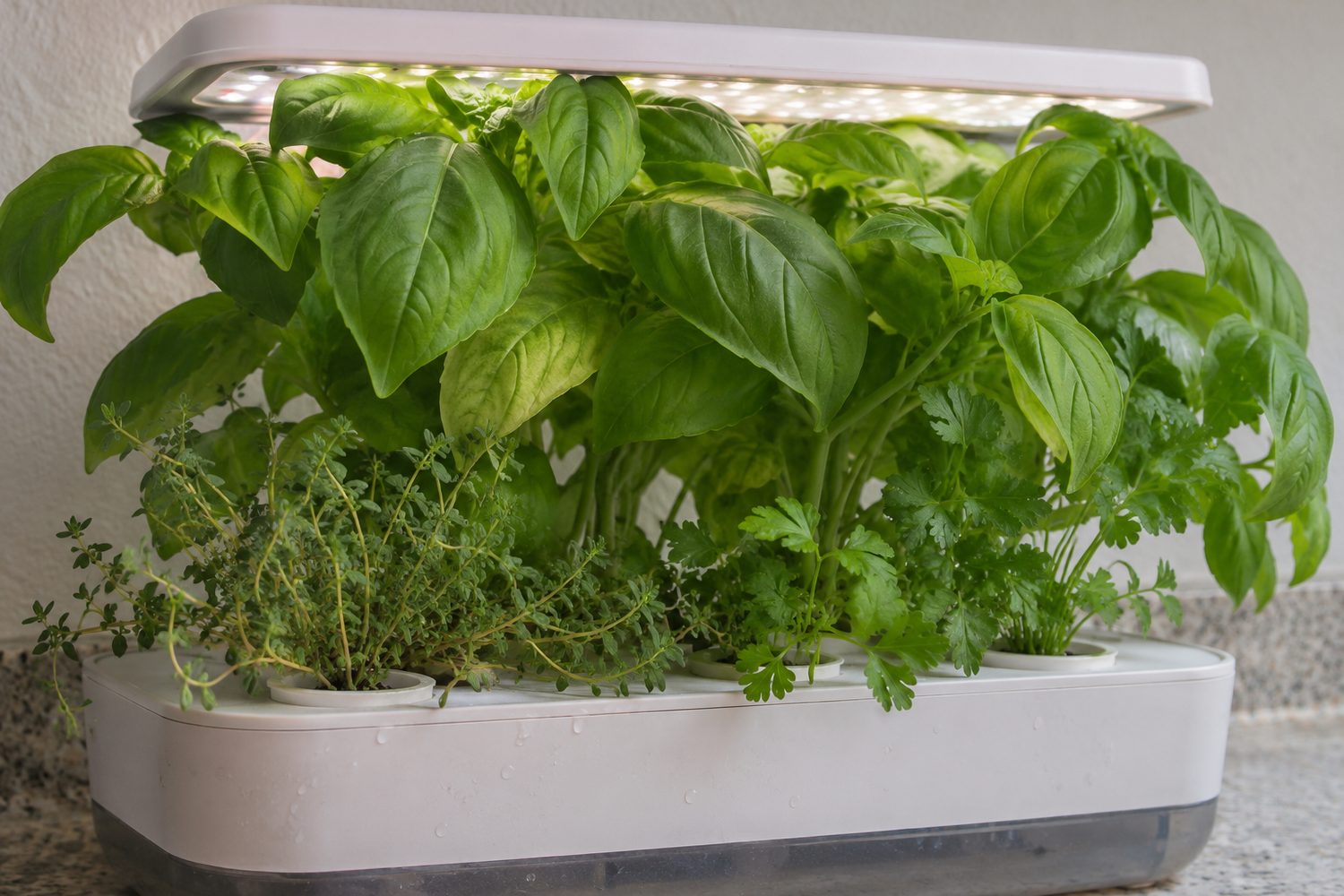
Basil and dill: fast growers that can shade the rest
The fix is the manufacturer's own advice: prune basil from the top so the light can stay low enough for the slower herbs underneath. Start at about 2 inches, take no more than one-third of the plant at a time, and cut just above a leaf pair. If flower buds show up on the basil, remove them to keep leaves coming. Dill is the same story for leaves, with one catch. If you want dill seed instead, stop cutting it back and let the seed heads turn light brown before you collect them.
Chives and mint: chives repeat well, mint needs watching
Chives can be cut close to the base throughout the growing season and regrow from the crown. Owners describe chives as repeatedly harvestable. Mint is a perennial that takes repeated cutting, again no more than the top third at a time, but it can crowd the plants next to it. Reports on mint are mixed: some owners say it was slow to germinate or delicate, others say it eventually turned vigorous. If your mint has crowded the pod beside it, cut it back before the neighbor loses its light.
Parsley and thyme: slower and more variable
Parsley is cut at the outer stems close to the base, or just above a leaf pair. Iowa State treats it as a leafy annual or biennial that can be cut back harder than perennial herbs. Thyme is a perennial, so take the leafy tips or no more than about the top third of growth. Owners describe parsley and thyme as more variable than basil or chives, so judge them by how the plant looks, not by a schedule.
Cilantro and rosemary: the two that give people trouble
Cilantro is the clearest case, and it comes from the manufacturer. AeroGarden dropped cilantro from its pre-seeded herb line because it germinates best below 70°F, while indoor temperatures often run warmer, and the company said it could not guarantee consistent results with it (AeroGarden product question and answer, dated July 4, 2024). If you want cilantro, treat it as a seed-grown herb with uneven results, and see using your own seeds in an AeroGarden for how that works.
Owners describe cilantro as quick to bolt, which means it flowers and goes to seed early. Some also report crowding, weak or blackening new growth, and sensitivity to the full nutrient dose. Those explanations are owner theories, not tested findings. A plan that works around the problem is reseeding: Illinois Extension recommends reseeding cilantro every two weeks to keep leaves coming. Harvest when plants are about 4 to 6 inches tall.
Owners repeatedly describe rosemary as slow. Their reports include about 30 days to germinate, plants still only 1 to 2 inches tall after roughly a month, and pods that never sprouted at all. Owners tend to blame rosemary's preference for drier conditions, too much moisture around the sponge, or faster neighbors blocking its light. If a rosemary pod is still bare after the first month, a fresh pod or fresh seed is a better move than waiting.
How to cut each herb
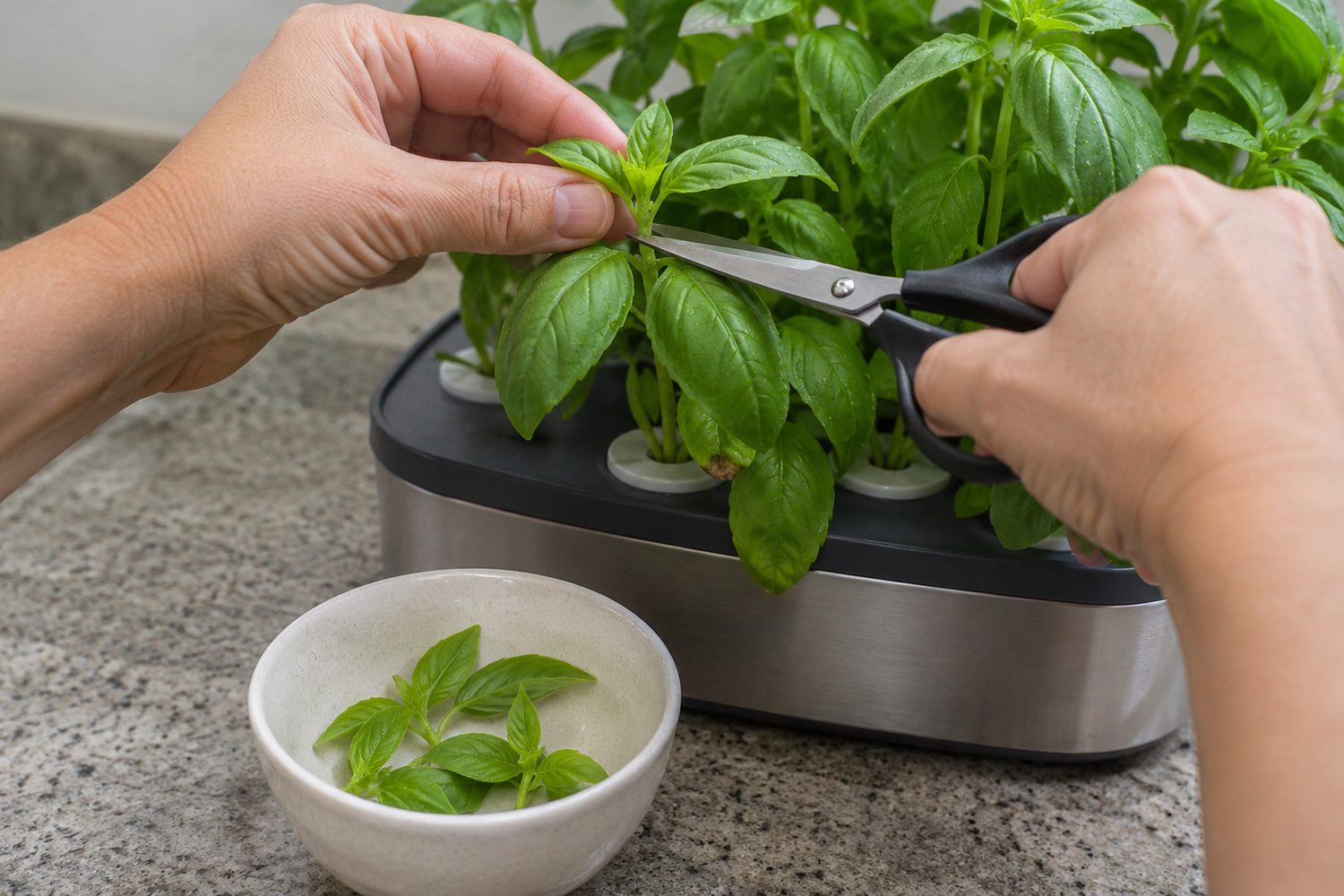
Cutting advice here comes from AeroGarden, Iowa State University Extension and Illinois Extension. The first rule for all of them is the manufacturer's: start at about 2 inches and take no more than one-third at a time.
Hover or tap a row to highlight it.
| Herb | Type | How to cut |
|---|---|---|
| Basil | Leafy annual | Just above a leaf pair, leaving about 4 to 6 inches of stem; prune from the top; remove flower buds |
| Cilantro | Annual | Harvest at about 4 to 6 inches tall; reseed every two weeks |
| Dill | Annual | Cut leaves as needed; stop cutting if you want seed |
| Parsley | Leafy annual or biennial | Outer stems close to the base, or above a leaf pair |
| Mint | Perennial | No more than the top third at a time; watch for crowding |
| Thyme | Perennial | Leafy tips, no more than about the top third |
| Chives | Perennial | Close to the base; regrows from the crown |
| Rosemary | Slow perennial | Take only some of the leafy tips; no more than the top third |
For leafy annuals, Iowa State says to cut just above a leaf or pair of leaves and leave about 4 to 6 inches of stem for regrowth. For perennials such as thyme and rosemary, it warns against cutting as hard as you would an annual. Those crop-by-crop details come from extension sources, so treat them as good practice, not an AeroGarden yield promise.
How long a herb planting keeps producing
AeroGarden says herb gardens can keep producing for up to 6 months or longer. The Gourmet Herbs page says several months. Treat that as what the manufacturer expects, not a guaranteed life span for every pod.
Iowa State advises discarding old annual herbs after several harvests and starting fresh plants from seed. That applies most directly to basil, cilantro and dill. Perennials such as mint, chives, thyme and rosemary can stay productive longer, though in a shared garden that depends on size, crowding, root growth, light and plant health.
Owner reports vary a lot, which is itself useful to know:
- One owner expected about 4 months from an herb garden, but said some plants lasted longer, with basil going 6 to 9 months and mint staying hardy.
- Another reported that everything except dill was still growing after more than 6 months.
- Another cleaned out an herb garden after about 9 months.
- One owner said rosemary survived about 1.5 years, which is a single report and not a normal figure.
A simple rule covers it. Replace annual herbs (basil, cilantro, dill) after repeated harvests, flowering or visible decline. Keep perennials while they stay healthy, productive and manageable.
How much you will actually harvest
How much you get depends on the garden model, how many pods hold herbs and which herbs they are, so measure your own. Keep a note of what you cut for a few weeks and you will have a number that fits your garden, your herbs and your cooking.
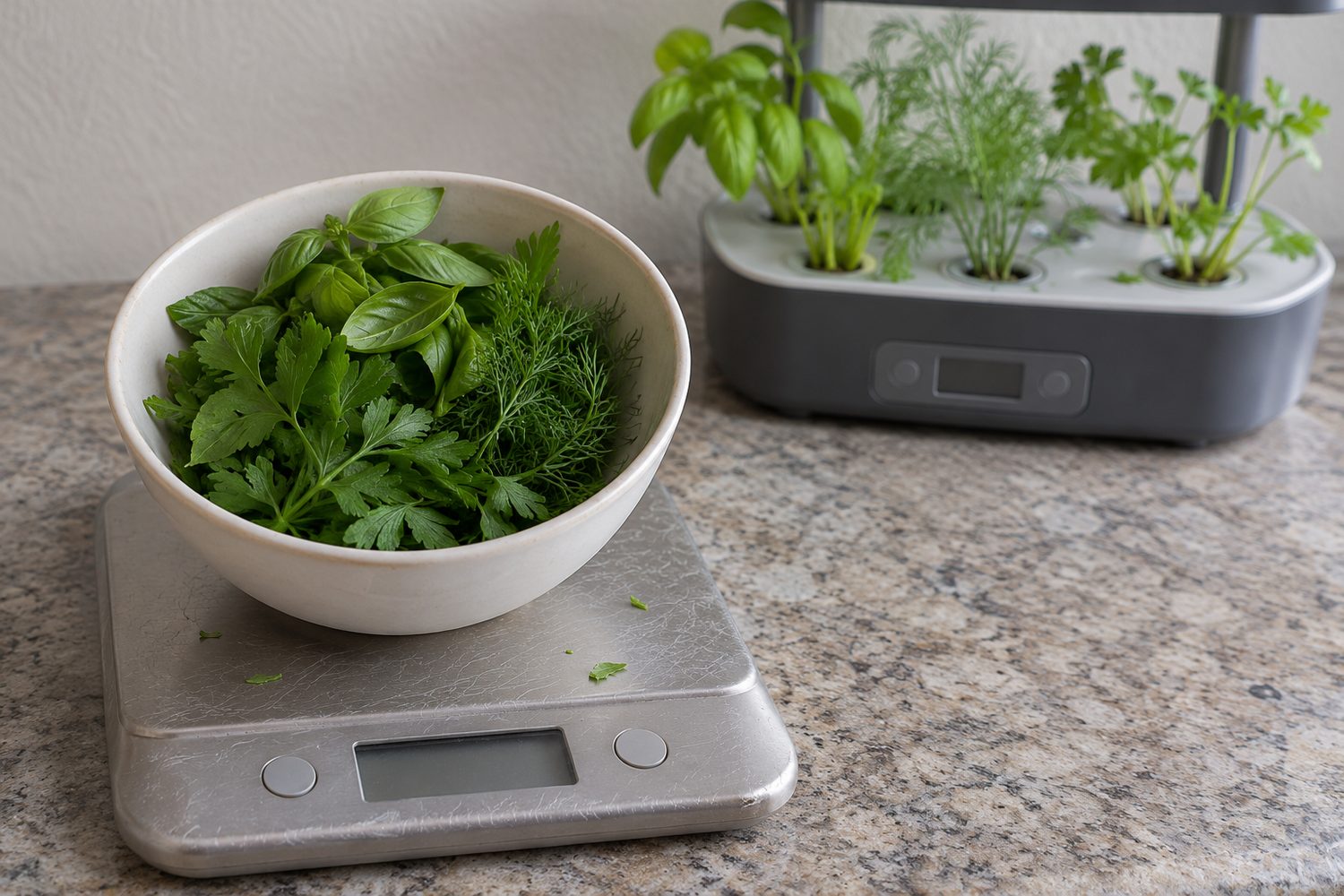
Owners do describe the ends of the range. Many report more basil than the household can use when the basil is allowed to grow vigorously. One made herb butter from surplus dill. Another said a six-pod garden planted entirely with herbs made more than the house could use. Chives, mint and basil are described as the most repeatable cuts; dill, parsley, cilantro, thyme and rosemary vary more. If basil is taking over, that is a prompt to cut it back from the top, within the one-third limit above, and to plan what you will do with the extra.
Growing your own herb seed
If the kit herbs are not the ones you cook with, you can plant your own. AeroGarden sells the Grow Anything Seed Pod Kit for this, and its guidance is one large seed or 2 to 3 small seeds per pod. The manufacturer says its germination guarantee does not apply to seed you supply, and recommends fresh seed, ideally less than a year old. Choose compact herb varieties where possible. Owners report good results with compact basil, Thai basil, Genovese basil, chives, dill and thyme, and more mixed results with cilantro and rosemary. The full walk-through is in using your own seeds in an AeroGarden.
If you want more background on the garden itself, what an AeroGarden is covers how the system works, and how much an AeroGarden costs covers the running costs. For other models, see our AeroGarden Bounty review and AeroGarden Farm review. If you are comparing it with another brand, there is a look at AeroGarden and LetPot. If you were hoping to grow microgreens instead of herbs, see growing microgreens in an AeroGarden. And if you are wondering about the company behind the kits, read whether AeroGarden is still in business.
Frequently asked questions
Which herbs come in the Gourmet Herbs kit?
The current six-pod kit lists Genovese basil, Thai basil, curly parsley, dill, thyme and mint, as read on Scotts Miracle-Gro's page on November 13, 2026. An older nine-pod version also had Italian parsley and chives. Check your package label, because contents vary by kit.
Why did my cilantro go to seed so fast?
Cilantro is an annual that bolts readily, and owners describe it going to seed early. Separately, AeroGarden says it germinates best below 70°F, and indoor temperatures are often warmer. Reseeding every two weeks, per Illinois Extension, keeps a steady supply. Harvest at 4 to 6 inches tall.
How much can I cut from my herbs at one time?
Take no more than one-third of the plant at a time, starting when plants reach about 2 inches. Leafy annuals can be cut just above a leaf pair with 4 to 6 inches of stem left. Perennials like thyme and rosemary should lose only about the top third.
How long will my herbs last before I need to replace them?
AeroGarden says up to 6 months or longer. Iowa State advises replacing old annuals such as basil, cilantro and dill after several harvests or once they flower or decline. Perennials can stay longer while they remain healthy and manageable.
Is my rosemary dead if nothing has come up after two weeks?
Not necessarily. Owners report about 30 days to germinate and only 1 to 2 inches of growth after a month. If the pod is still bare after that, start a fresh pod or fresh seed.
Your next few weeks
Prune on a schedule rather than waiting for the herbs to look overgrown. Begin cutting at 2 inches, take no more than one-third, and cut basil from the top first. Replace annual basil, cilantro and dill after repeated harvests, flowering or decline, and keep the perennials while they stay productive. Write down what you harvest so you know what your own garden gives, and treat the manufacturer's 6 months as a target, not a promise.
Annual :: An herb that completes its life cycle from germination to seed production within one growing season.
Bolting :: A plant's transition from leaf production to flowering and seed production.
Germination :: The stage when a seed sprouts and begins producing a seedling.
Grow sponge :: The soil-free growing medium inside an AeroGarden pod.
Perennial herb :: An herb capable of living and producing for multiple years under suitable conditions.
Pruning :: Selective cutting of stems or leaves to manage plant size and encourage new growth.
Seed head :: The flower structure that develops and holds mature seeds.
Sources
Prices, stock and specifications are as the linked pages showed them on 2026-11-13.
- AeroGarden Gourmet Herb Seed Pod Kit
- Harvest FAQ
- AeroGarden Grow Anything Seed Pod Kit
- Italian Herbs Seed Pod Kit product page and customer questions
- How do I harvest and use herbs grown indoors?
- Growing, harvesting and drying herbs
- Flavor your meals with low-maintenance homegrown herbs
- rosemary and cilantro
- herb lifespan
- herbs lasting past six months
Keep reading
The journal
AeroGarden Plant Food Cost: Doses and Hydroponic Alternatives
Running low on AeroGarden plant food? Hydroponic nutrients such as FloraSeries and MaxiGro have their own rates, so check the label before you switch.
Read AeroGarden Plant Food Cost: Doses and Hydroponic AlternativesThe journal
AeroGarden Seed Starting System: Which Size Fits Your Garden
AeroGarden seed starting system trays come in four versions. Match one to your garden, start seeds weeks before the last frost, then move seedlings to soil.
Read AeroGarden Seed Starting System: Which Size Fits Your GardenThe journal
AeroGarden Tomatoes, Peppers and Cucumbers: Which Model Fits
AeroGarden tomatoes call for a tall model, such as Bounty or Farm, plus some help with pollination indoors. Learn which models fit and how to shake flowers.
Read AeroGarden Tomatoes, Peppers and Cucumbers: Which Model FitsThe journal
Can You Grow Microgreens in an AeroGarden? What Owners Do
The AeroGarden MicroGreens Kit is hard to find. Learn how owners still grow microgreens in an AeroGarden with a simple tray beside the light.
Read Can You Grow Microgreens in an AeroGarden? What Owners Do