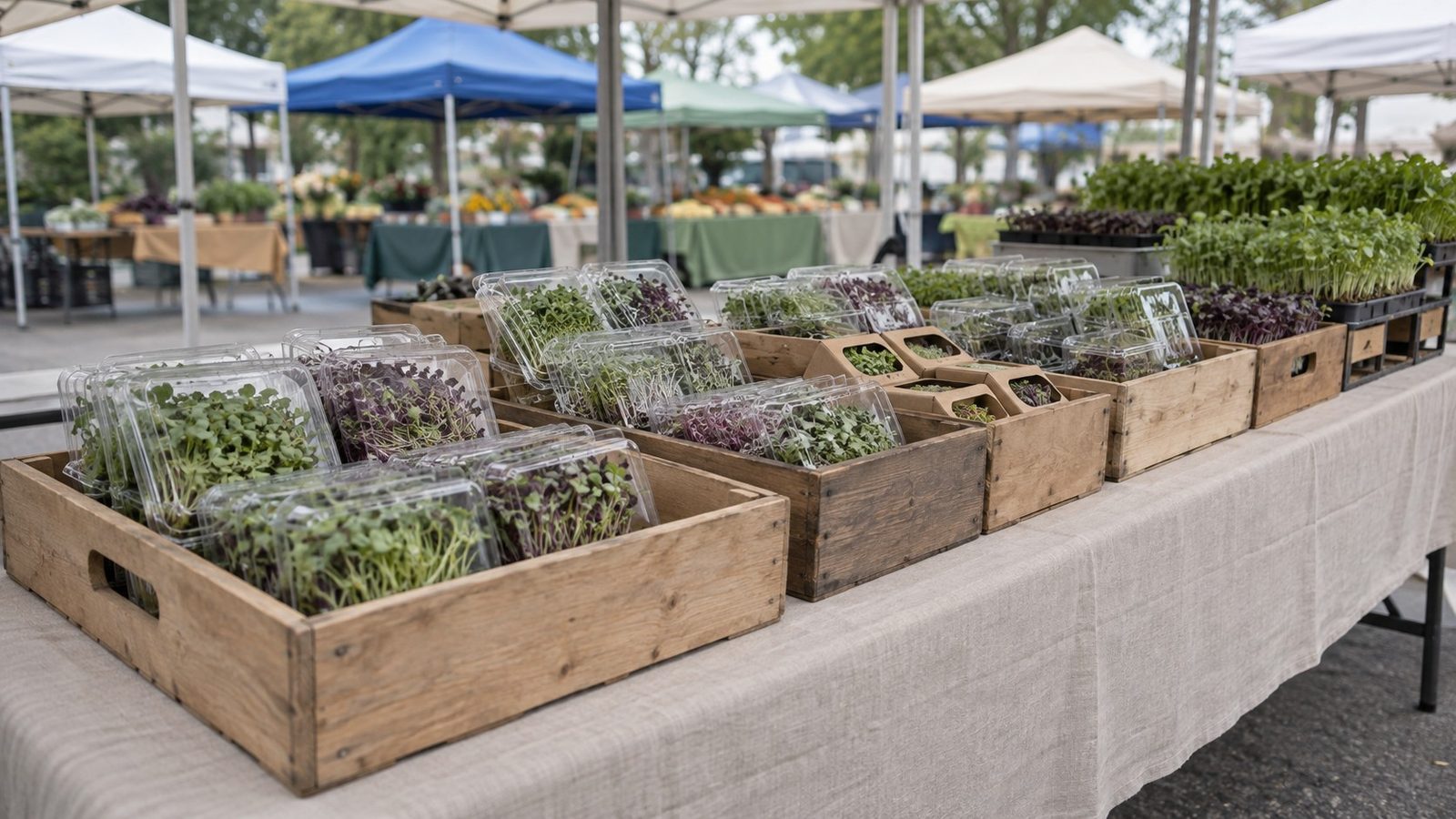
To find microgreens grown near you, start with two free national directories: the USDA Local Food Directories and LocalHarvest. Search your ZIP code in both for farms, farmers markets and CSAs that mention microgreens or greens. Then check your state agriculture department's local food program, and use social media and neighborhood groups for growers the directories miss.
Every listing is a lead, not a promise that microgreens will be there this week, so contact the market or grower to confirm. Before you pay, ask how the greens were washed, what they were grown in and where the seed came from. Everything below is about buying microgreens, not selling them.
Start with the USDA Local Food Directories
The USDA Agricultural Marketing Service (AMS) runs free directories for farmers markets, CSAs, food hubs and on-farm markets. You can search by ZIP code, by product availability and by other fields, which makes it a good first stop whether you typed in your state or your city.
Two limits matter when you read the results. AMS says each directory is voluntary and that market managers and business owners list their own businesses, and the directory does not promise a microgreens category at every market. Treat each result as a lead, then confirm current vendors and stock directly. The AMS Local Food Directory Listings page describes the scope and search fields, and the agency's local and regional food fact sheet describes the voluntary listing model.
Use the farmers market directory to find the market, then the grower
The USDA National Farmers Market Directory lets you locate markets and see directions, hours, the products sold and the payment methods accepted. What it lists is the market itself, a recurring location with two or more farm vendors, not each grower who sells there.
That changes how you use it. Find a market near you, then look for its current vendor list or call or email the market manager and ask whether a microgreens vendor is scheduled for the day you plan to go. A market that lists "vegetables" may or may not have microgreens that week. And if nothing shows up near you, that doesn't mean no local grower exists, because the listings are voluntary.
At the stall, ask whether the market is producer-only, whether this vendor grew the microgreens on the table, and when they were cut.
Search LocalHarvest for farms, stores and restaurants
LocalHarvest runs a national directory of farms, markets, restaurants and groceries. Its own 2026 About page says it has more than 40,000 listings and calls the system "grassroots," meaning members create and maintain their own listings. That makes it useful for searching "microgreens" with your ZIP code, and as with the USDA directories, a listing is a starting point rather than a check on the farm.
LocalHarvest also includes grocery, co-op and restaurant categories, so those are searchable too. At a store, ask the produce manager for the farm's name and whether the greens were grown locally or only packed locally. At a restaurant, ask which farm currently supplies the greens.
Look at CSAs if you want microgreens every week
A CSA is a subscription or membership. You pay for a share, often partly or wholly in advance, and receive farm products on a regular schedule, usually weekly, during one or more seasons. The USDA CSA Directory includes single farms and multi-farm networks, and LocalHarvest's CSA guide explains that shares are often seasonal and can mean sharing the farm's production risk.
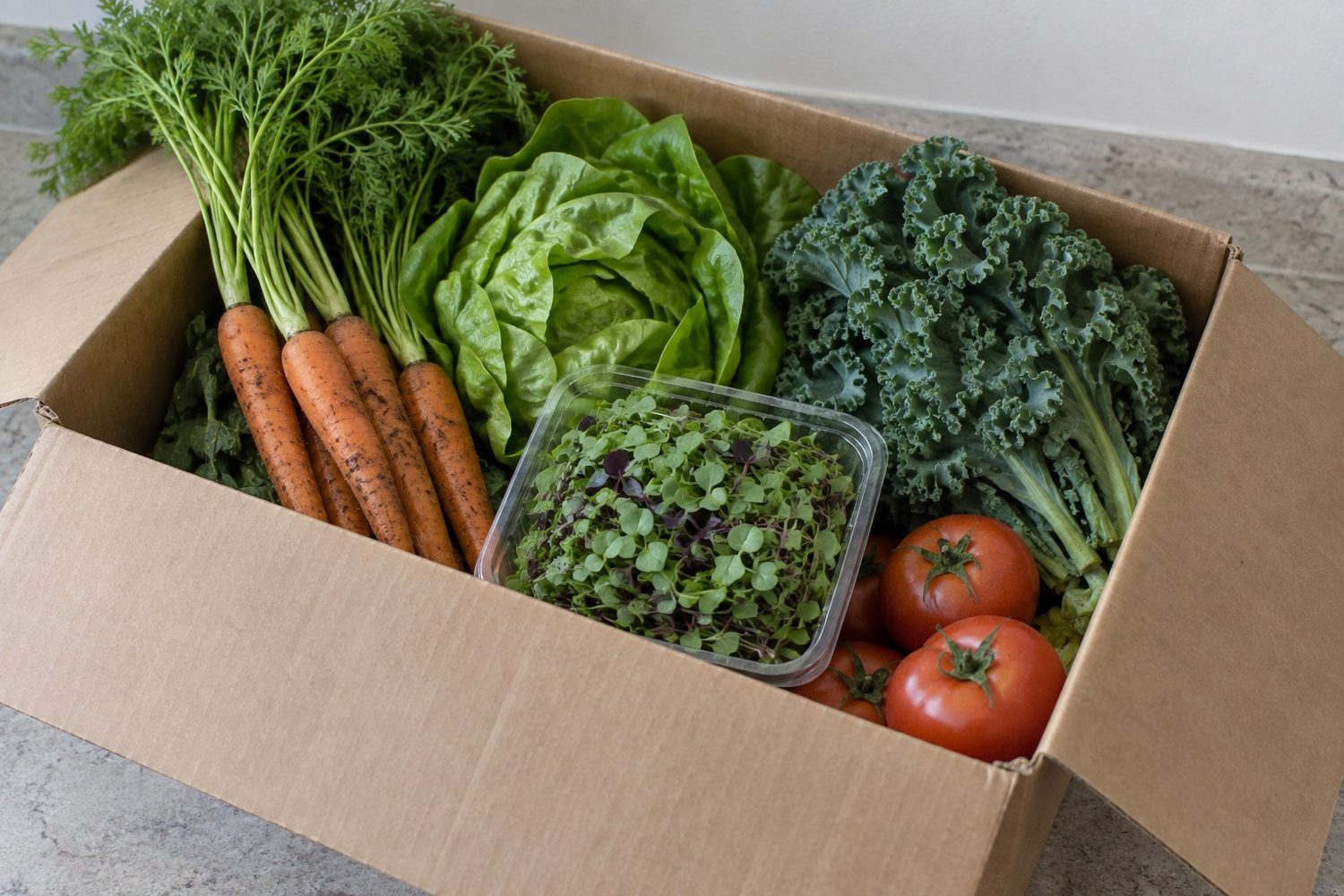
Search both for "microgreens" or "greens" with your ZIP code, then ask the farm whether microgreens are a regular part of the share, an optional add-on or an occasional crop. Before you sign up, confirm the pickup day, the minimum term, the skip and refund policy, and how the boxes are kept cold at the drop site.
Check your state's own program or farm directory
Many state agriculture departments run a local food program with a searchable directory. These are useful for finding names in your state, but each one describes its listings differently, so read what the program actually claims.
- Illinois: the Illinois Department of Agriculture Food & Agribusiness Guide says the Illinois Grown logo identifies product grown in Illinois or containing at least one Illinois-grown ingredient. For a pack of microgreens, ask where that particular crop was grown, because the logo alone doesn't tell you.
- Arizona: Arizona Grown is an Arizona Department of Agriculture program. Its home page describes a Farm to Food Finder you can filter by product, location or business type, but on September 12, 2026 the Finder page itself read "Under Construction" and described it as an upcoming tool. It describes member profiles, not a microgreens certification, so confirm the farm and its current stock.
- Georgia: Georgia Grown is a Georgia Department of Agriculture program with a member directory and a category and product search. It can point you to a farm or retailer; a listing doesn't by itself show that the member grew a given product.
- New York: the New York State Farm Directory says plainly that its data are supplied by individual farms and not checked by the agency. Use it to find a name and a contact, then confirm with the farm. Separately, NYS Grown & Certified says participating farms meet the program's food safety and environmental practice criteria.
If your state isn't listed here, check your state agriculture department for its local food program and read who can list. Either way, use at least two directories and confirm what you find.
It also helps to decide what "local" means to you. It's usually a description a seller chooses, not a national consumer label. For one AMS program, USDA defines local as produced and sold within 400 miles or within the same state or territory (AMS local food FAQ), but that's a program definition, not a rule for every seller. Ask "what town was this grown in, and how far is that from here?" instead of "are you local?"
Use maps, social media and neighborhood groups for leads
A map search for "microgreens near me" is quick, and it works well for shops with a public address and reviews. It tends to favor businesses that set up a map listing, though, so it can miss farms that sell at a market, by preorder, through a CSA, through a store, or from a home address they don't publish. Use the map to collect names, then cross-check them.
Instagram and Facebook posts, neighborhood groups and local Reddit or Facebook threads often show what formal directories don't: market dates, harvest photos, limited drops and referrals from neighbors. They can also be out of date, sponsored, anonymous, or one customer's single experience. Check the post date, find the farm's name and a contact outside the comment thread, and ask the questions you'd ask any seller. Likes, follower counts, photos and "organic" hashtags aren't a certification.
Some of the growers you find this way may be home-based. A home grower can be a real small business with less public information and no storefront. Ask the same questions, and don't press anyone to share a private home address.
What to ask a grower before you buy
A few short questions tell you a lot about how the greens were handled.
Were they washed, and are they meant to be eaten as is? Ask whether the greens were washed after harvest and whether the grower intends them to be ready to eat. Then follow the label. If there's no clear ready-to-eat instruction, rinse them gently under clean running water just before you eat them, which is what Purdue Extension advises. The University of Nevada, Reno Extension notes that washing after harvest can be ineffective and may raise contamination risk by damaging the tissue.
What were they grown in, and is it reused? Ask whether the crop grew in soil, compost, coco coir, a mat or a hydroponic setup, and whether that medium gets reused. The same UNR Extension publication covers clean growing media, so it's a fair question.
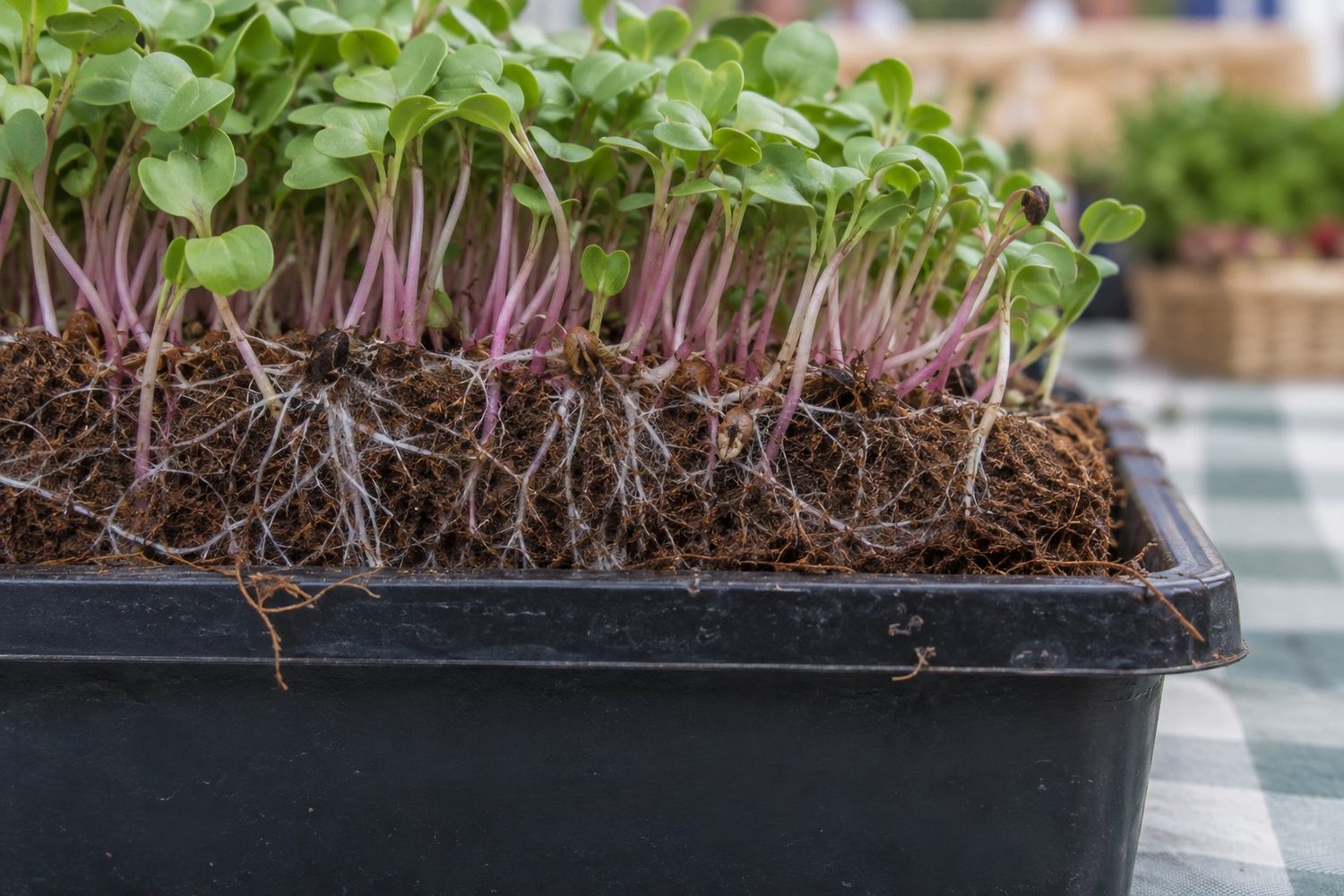
Where did the seed come from? Ask for the seed supplier, whether the seed was untreated, and whether it was sold for eating as sprouts or microgreens rather than treated for ornamental planting. UNR Extension says seeds can carry pathogens and recommends buying from a supplier with a food safety plan. Untreated seed isn't the same as pathogen-free seed, so the supplier matters more than the word.
When was it cut, and has it stayed cold? Ask the date and rough time of harvest, whether the greens were cooled right away, whether they've stayed refrigerated, and whether there's a use-by date. Purdue Extension says refrigerated, unwashed microgreens can keep 5 to 7 days (page accessed September 12, 2026). Treat that as a general range, not a promise for any particular pack, and ask for the actual harvest date rather than assuming "fresh" means cut this morning.
If you want to go further, ask about the water used for soaking and irrigation and how tools and trays are cleaned. An answer that describes a specific routine is more useful than "we're very clean." When a seller mentions a credential, ask what it covers: a GAP audit is a voluntary USDA audit of food safety practices, and you can look up the company on the USDA GAP program page.
What to check at pickup or delivery
Look at the pack first. Useful information includes the variety or mix name, the farm or business name and a way to contact it, the net weight, and a harvest, packed or use-by date if the grower provides one. The FDA Food Labeling Guide lists the name of the food, the net quantity and the name and address of the manufacturer, packer or distributor among label elements. Direct sale rules vary by state, so if something is missing, ask the grower rather than assuming a problem.
Then look at the greens. Purdue Extension says to choose crisp, fresh leaves and stems and avoid limp or wilted greens. Pass on packs that are slimy, smell strongly off, show mold, leak, are badly crushed, or feel warm when they should be cold. A pack that looks and smells normal still can't prove it's safe.
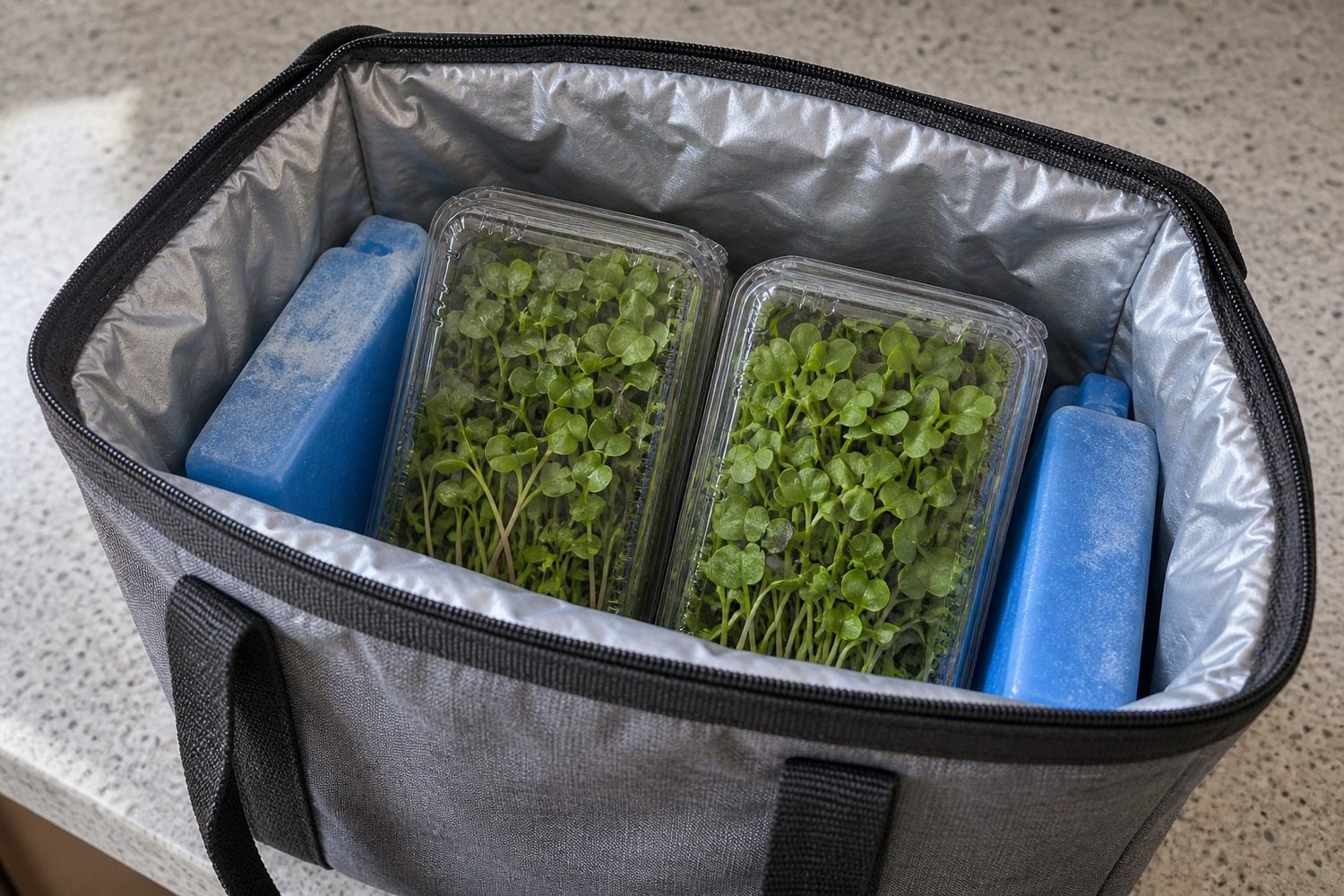
Getting them home matters as much as buying them. Bring an insulated bag or cooler with ice packs, go straight home, and refrigerate at 40°F or below. FoodSafety.gov's cold food guidance applies the two-hour rule to perishable food, shortened to one hour when it's above 90°F. For delivery, its meal kit and delivery guidance says perishables that arrive above 40°F shouldn't be eaten. That's general perishable food guidance, not a microgreens-specific figure. Before you order delivery, ask about the delivery window, insulation and ice, and what happens if the box arrives warm.
If you're buying a live tray, meaning uncut microgreens still in their growing container, ask whether it should sit on the counter or in the fridge, how to water it, when it should be ready to cut, and whether the tray goes back to the grower.
Once they're home, the how to store microgreens post covers keeping them at their best, and have my microgreens gone bad? covers what to look for if you're unsure a few days later.
Compare prices by the ounce
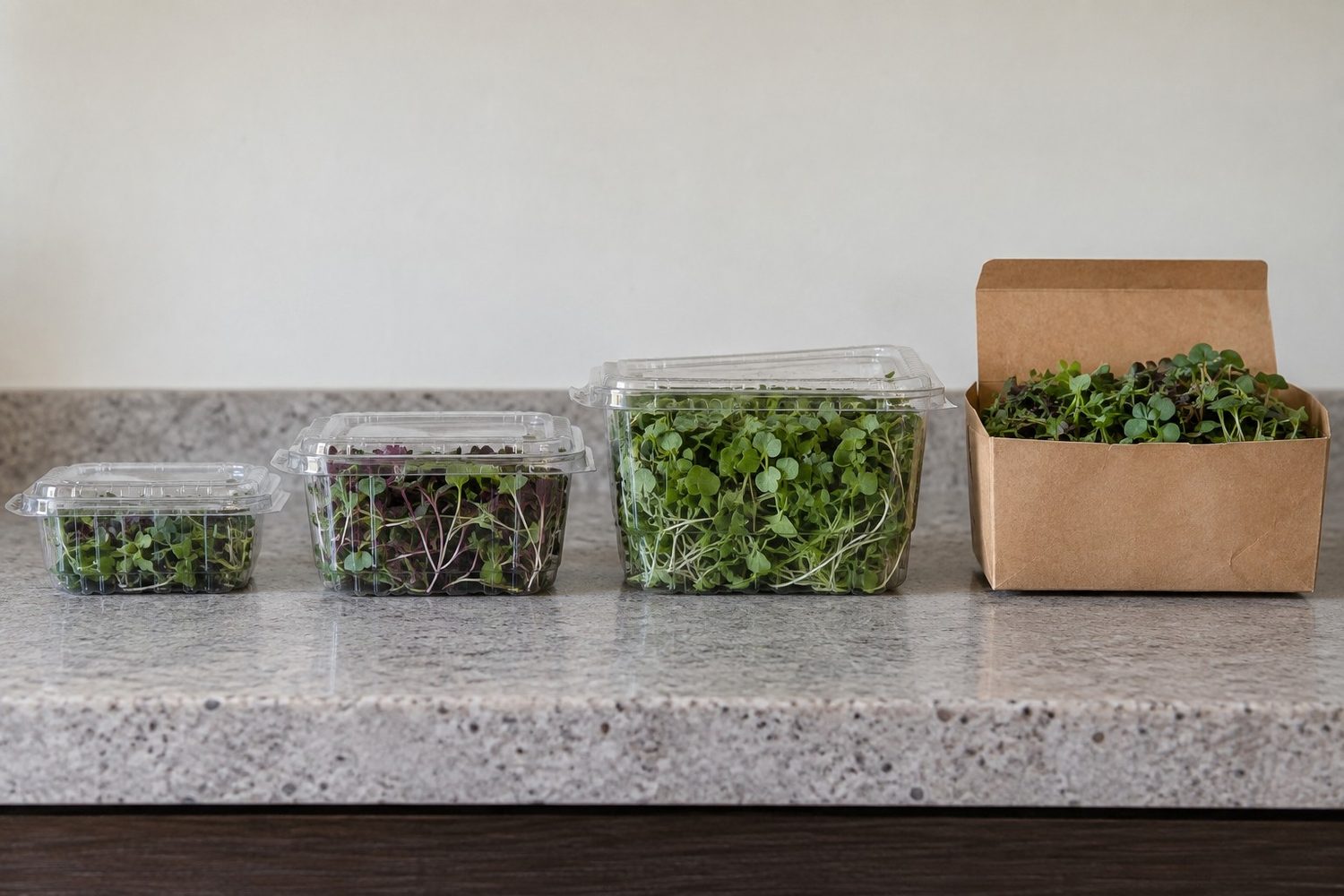
Pack sizes differ, so divide price by net weight before comparing. Some dated examples:
- The Virginia Department of Agriculture's September and October 2025 retail farmers market report lists organic microgreens at $5 for 1.5 oz, or $3.33 per ounce.
- The University of Missouri Extension's 2025 farmers market price summary reports microgreens at a $2.00 low, $2.36 average and $3.75 high per ounce, from nine observation days.
- On September 12, 2026, Austin seller OZO Microgreens listed standard 2 oz boxes from $4, or $2.00 per ounce, with its premium nasturtium at $11 for 2 oz, or $5.50 per ounce, and a tray-swap member price from $2.50 for 2 oz, or $1.25 per ounce.
Live trays vary by size and crop. If you're pricing one, ask the seller the tray size and roughly how many ounces it usually cuts, then work out the per-ounce figure yourself. For more on price, see buying microgreens.
FAQ
These come up once you start contacting growers.
Does "local" on a microgreens pack mean certified?
No. "Local" is usually a seller's description, not a national consumer certification. USDA uses 400 miles or the same state for one AMS program, and Illinois Grown can include product with at least one Illinois-grown ingredient, so ask the grower which town the crop was grown in.
Are local microgreens more expensive than supermarket ones?
There isn't enough data to say in general. On September 12, 2026, an Instacart listing showed City Roots organic kale microgreens starting at $4.99 for 2 oz, or $2.50 per ounce, which falls inside Missouri's reported $2.00 to $3.75 per ounce market range. One listing can't show a national difference, because pack contents, organic status, harvest age and promotions all vary.
Should I worry if a home grower isn't FDA registered?
Not on that basis alone. The FDA lists farms and private residences among the exemptions from facility registration, so "not FDA registered" isn't a sign of wrongdoing. If the grower says they're licensed, ask which state or local agency issued the license and check with that office.
How do I check whether a grower is certified organic?
Search the operation's name in the USDA Organic Integrity Database, narrowing by state or city if needed. The USDA Organic Integrity FAQ says the certifier is the best confirmation if you can't find an entry. Operations with organic sales of $5,000 or less per year may be exempt from certification, according to USDA's certification page, so ask which certifier issued any claimed certificate.
What should I do if I think microgreens made me sick?
Get appropriate medical advice, and keep the pack, label, receipt, any leftover product and the dates. Report it promptly to your local or state public health department. For foods like microgreens, the FDA says you can also contact a Consumer Complaint Coordinator or file a MedWatch report, as described on its reporting page.
Before you head out
Search at least two of the places above and make a short list of names. Confirm with each grower or market that they'll have microgreens on the day you plan to buy. Ask when the greens were cut, whether they were washed, what they grew in and where the seed came from. Then bring a cooler, check the pack at pickup, and get the greens into the fridge at 40°F or below as soon as you're home.
Sources
Prices, stock and specifications are as the linked pages showed them on 2026-09-12.
- AMS Local Food Directory Listings
- local and regional food fact sheet
- USDA National Farmers Market Directory
- LocalHarvest
- CSA Directory
- CSA guide
- Illinois Department of Agriculture Food & Agribusiness Guide
- Arizona Grown
- Georgia Grown
- New York State Farm Directory
- NYS Grown & Certified
- AMS local food FAQ
- Purdue Extension
- University of Nevada, Reno Extension
- USDA GAP program
- FDA Food Labeling Guide
- cold food guidance
- meal kit and delivery guidance
- retail farmers market report
- 2025 farmers market price summary
- OZO Microgreens
- City Roots organic kale microgreens
- USDA Organic Integrity FAQ
- USDA's certification page
- reporting page
Keep reading
The journal
Are Microgreens Safe From Cyclospora?
Are microgreens safe from cyclospora? Learn how the parasite spreads, what washing and cooking do and do not do, and the steps that matter at home.
Read Are Microgreens Safe From Cyclospora?The journal
Microgreens for Babies and Children: Cook Them First, and Here Is Why
Cooking is the step that addresses the pathogen risk for under-fives, and it is the one thing you can act on. No pediatric or federal body sets a starting age, so here is exactly what is established.
Read Microgreens for Babies and Children: Cook Them First, and Here Is WhyThe journal
Four Bags Labeled Kale, Two Species and a 227 Percent Price Gap: How Microgreen Seed Actually Gets Named
Federal law makes a seed packet state its kind and variety, not its species. One catalog's four kale microgreen listings span two different species and $25.73 to $84.25 a pound.
Read Four Bags Labeled Kale, Two Species and a 227 Percent Price Gap: How Microgreen Seed Actually Gets NamedThe journal
How to Tell if Microgreens Are Fresh When Buying
Wondering how to tell if microgreens are fresh at the store or market? Check color, texture, smell, and cold storage in this order before you buy them.
Read How to Tell if Microgreens Are Fresh When Buying