
Generally, yes. The CDC says that, generally, women do not need to limit or avoid specific foods while breastfeeding, and the NHS says you do not need a special diet.
If you have been reading about raw sprouts, most of what you found was written for pregnancy. That advice protects the pregnant parent and the baby before birth, and it does not carry over automatically to a healthy parent who is nursing.
Raw microgreens are still raw food, so the usual handling steps apply to you.
Pregnancy advice and breastfeeding advice are two different things
Pregnancy and breastfeeding get lumped together in search results, so it helps to separate them early. The CDC's warning about raw sprouts is aimed at pregnancy and at people at higher risk of serious illness. It is not a general rule for nursing parents. The CDC explains that raw sprouts can carry Listeria, and that washing does not remove all germs from them (see CDC, How Listeria Spread: Sprouts and Melons).
In pregnancy, Listeria is the worry because it can cross the placenta. If you are still pregnant, or you are reading for someone who is, the pregnancy question has its own page: microgreens during pregnancy.
Sprouts and microgreens are also different crops. A sprout is a seed germinated and eaten at an early stage, usually with the seed and the shoot. A microgreen is a young seedling harvested after its first leaves develop. If the difference is new to you, microgreens vs sprouts lays it out.
Can anything in microgreens pass into breast milk?
Your question probably has two parts: whether germs can pass into milk, and whether the food itself changes the milk. Start with germs.
For Listeria, a peer-reviewed review of infectious diseases and breastfeeding states that no evidence in the literature suggests Listeria is transmitted through breast milk. It describes transmission in pregnancy as happening mainly across the placenta or around delivery. Health Canada says the risk of spreading Listeria to a newborn during breastfeeding is considered low.
Salmonella is a little different. A 2003 case report in Pediatrics identified Salmonella Typhimurium in a mother's milk and in her premature twins, and molecular testing supported breast milk as the likely route. The MotherToBaby fact sheet from March 2024 says there is one report of Salmonella passing into breast milk, and that breastfeeding usually does not need to stop when the mother has Salmonella.
Getting sick from a contaminated food does not by itself mean the germ has entered your milk. The situations that raise the question are things like bacteria in the bloodstream, a breast infection, contamination while expressing or storing milk, or a documented pathogen in the milk. If you are ill, contact your own clinician and your baby's pediatrician rather than guessing.
Washing, cold storage and clean handling
Because the CDC says washing does not remove all germs from raw sprouts, treat washing as one step, not a guarantee. The same logic is a sensible way to handle any raw produce. Rinse what you are about to eat, keep the rest in the refrigerator, and use clean hands and clean boards.
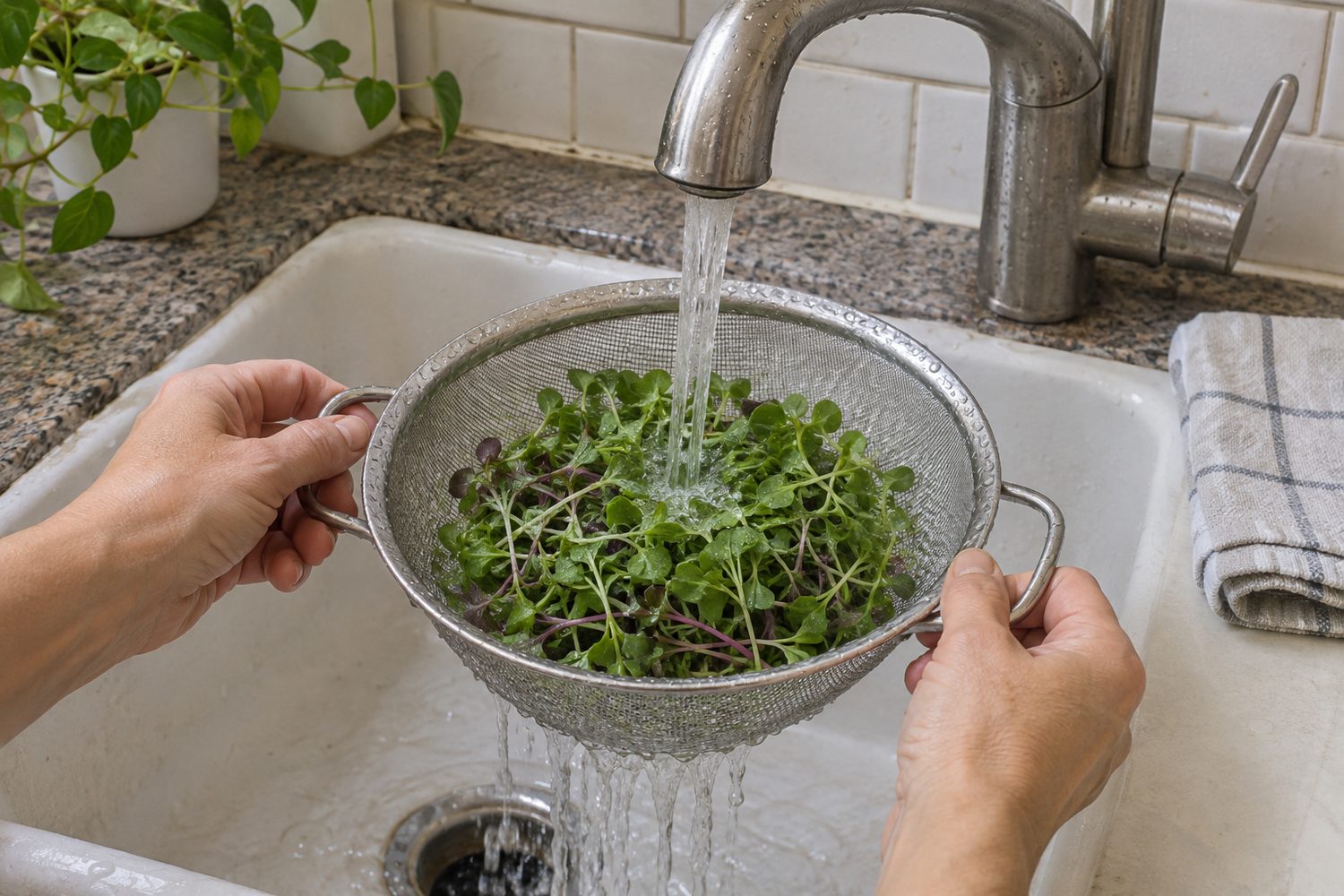
Raw microgreens call for ordinary produce habits. If you would like a lower-risk option, cook them: stir them into a hot soup or eggs at the end, or wilt them in a pan. If you eat them raw, keep to the routine above.
If you grow your own, Are microgreens safe to eat raw? covers growing and handling.
Does any microgreen change milk supply?
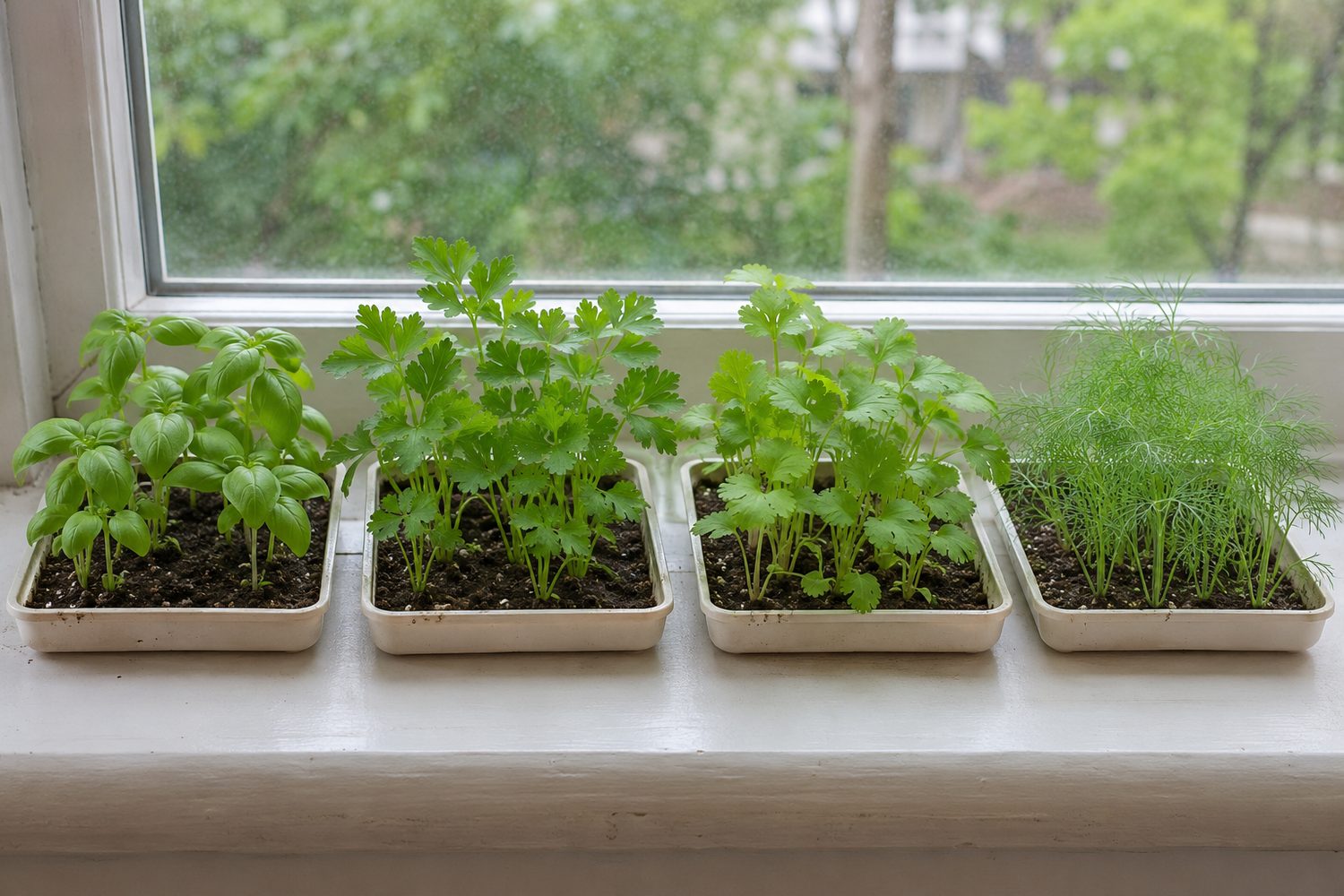
Several herbs that are grown as microgreens carry traditional claims about milk supply. Some are said to raise it, some to lower it, and a few are said to do both depending on who you ask. These are traditions. A claim that an herb changes supply is different from evidence that eating it as a food does.
LactMed, the National Library of Medicine's drug and lactation database, has an entry for each of them. What it reports for each herb follows.
For fenugreek, LactMed says one meta-analysis found a mild galactogogue effect with an unknown safety profile, while another found no good evidence that it works. Some trials used products that combined several ingredients, so a result cannot be given to fenugreek alone. LactMed also lists possible side effects, including diarrhea, flatulence, nausea, vomiting and allergic reactions, along with an interaction with the blood thinner warfarin. LactMed gives the typical supplemental dose used to try to raise supply as 1 to 6 g daily. Ask your doctor before taking fenugreek as a supplement.
For basil, LactMed says it appears to be safe during breastfeeding in the amounts found in foods, and that no scientifically valid trials support claims that it raises supply or reduces oversupply. Many sources discourage medicinal doses because of an ingredient called estragole.
For coriander (cilantro), LactMed says it is a purported galactogogue, meaning a substance claimed to increase milk production, and that no scientifically valid clinical trials support the use. It is GRAS (generally recognized as safe) as a food, though allergic reactions are reported. For dill, the same sentence applies: no scientifically valid trial supports it alone. A small dill-seed-tea study reported better lactation, but its design limits what you can conclude from it.
For parsley and sage, the traditional claim runs the other way. Parsley has been said to raise supply, and with sage to reduce milk flow, but LactMed says no scientifically valid clinical trials support those claims. For sage, LactMed reports no studies evaluating its effect on supply. Parsley essential oil should not be used.
For peppermint, LactMed reports no human trial showing it suppresses lactation. Suppression has been shown in cell culture and in mice at high exposure. Large doses can cause heartburn, nausea or vomiting.
None of this says that a microgreen changes your supply, and none of it says that one cannot. It says that the claims are tradition. If you are thinking about concentrated forms such as teas, capsules, extracts or oils, ask a lactation professional or your doctor first.
How to judge supply instead
Because an herb claim is a poor guide, watch the baby. Supply shows up in how well your baby feeds, how many wet and dirty diapers they produce, and whether they are gaining weight. These are the things a lactation professional will look at, and they are more reliable than a herb list.

If you are worried about supply, bring those observations to a GP, health visitor or lactation consultant. They can watch a feed, check weight gain and tell you whether anything needs to change. Keep a short log before the visit, with feeds, diapers and anything you ate that you suspect.
Brassicas, broccoli and a gassy baby
Many nursing parents ask about broccoli and other brassicas, which include several popular microgreens. The NHS position is the one to follow. If a food appears to affect your baby through breast milk, contact a GP or health visitor.
If a reaction seems repeatable, write down what you ate, when, and what you noticed in the baby, then take that record to the clinician before you remove nutritious foods from your diet. Some symptoms need medical attention: breathing difficulty, blood in the stool, repeated vomiting, poor feeding, fever or poor weight gain.
What microgreens add to a nursing diet
The CDC identifies vitamins A, B12, folate (B9), D, iodine and choline as nutrients to pay attention to during lactation, and recommends folate-rich legumes, dark leafy greens and vitamin A-rich vegetables. It also advises professional assessment of whether you need supplements. For adults aged 19 to 50 who are lactating, the National Academies list 120 mg of vitamin C and 500 micrograms of folate (DFE) per day, among other targets.
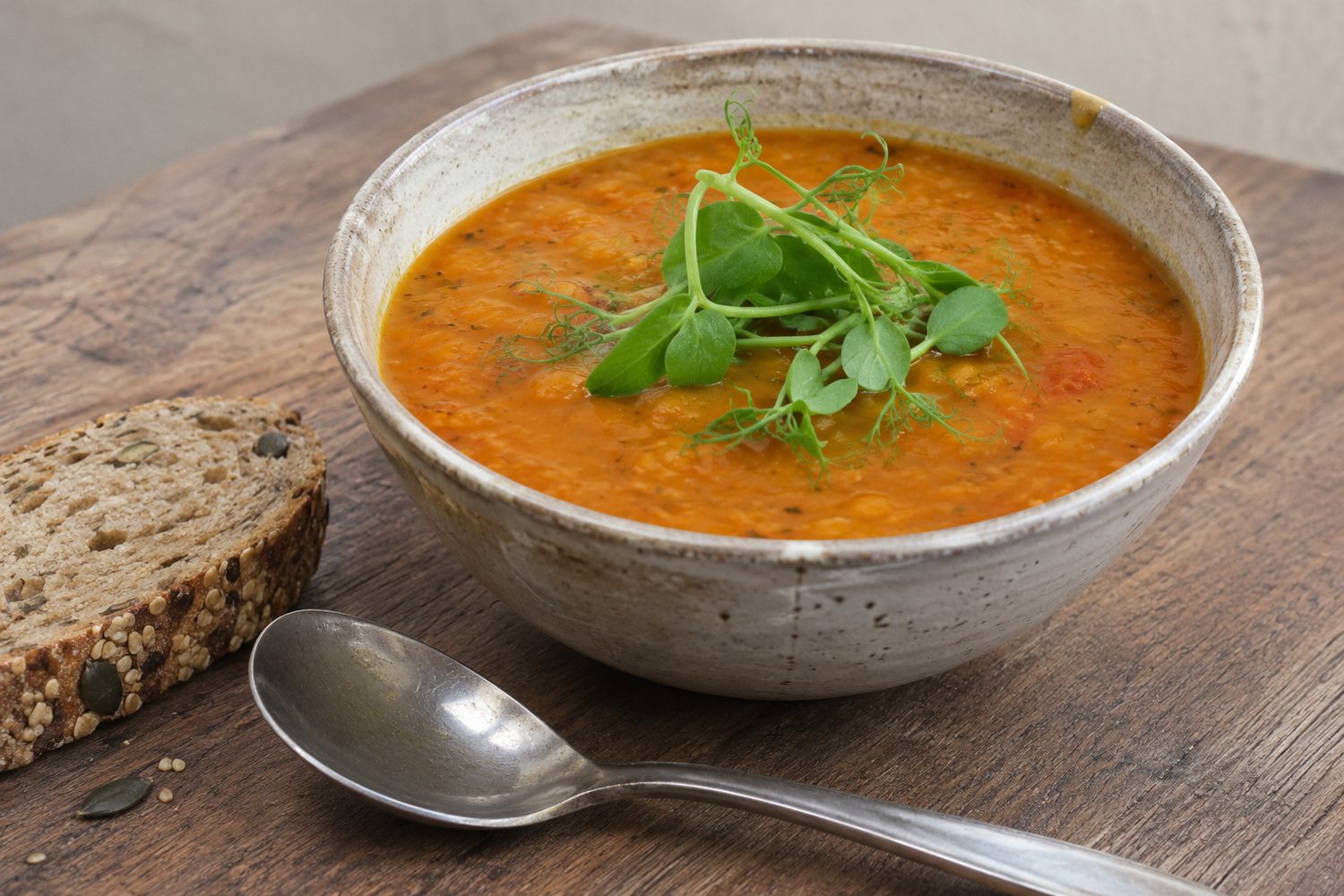
Microgreens can be one part of that. A study of 25 commercial microgreens by Xiao and colleagues in 2012 measured vitamin C from 20.4 to 147.0 mg per 100 g of fresh weight, and beta-carotene from 0.6 to 12.1 mg per 100 g. Those are laboratory figures per 100 g, so a garnish-sized pinch supplies far less. Nutrient content also varies with species, growing conditions and harvest stage.
So, think of them as a small addition to a varied plate, not as a supplement. A garnish does not stand in for a defined vitamin A dose, and the study did not measure lactation outcomes. For iodine, choline, folate and vitamin D, a clinician or registered dietitian can tell you what you actually need. ACOG's breastfeeding page also covers extra calories, fluids and low-mercury fish.
Questions nursing parents ask
Do I need to stop eating microgreens in the first weeks after birth? The CDC says women generally do not need to limit or avoid specific foods while breastfeeding, and the NHS says you do not need a special diet. Raw produce still carries a food-safety risk for whoever eats it, so wash, chill and handle it cleanly or cook it.
Is there a safe amount of raw microgreens to eat? Use ordinary produce habits: keep greens refrigerated and cook them if you prefer a lower-risk option.
Can I use microgreens or their teas to raise my supply? LactMed reports no scientifically valid trials supporting basil, coriander, parsley or dill for that purpose, and the fenugreek evidence is mixed. Talk to a lactation professional before using any concentrated herbal product.
What if I get food poisoning while nursing? A foodborne illness does not by itself mean the germ is in your milk. Contact your clinician and your baby's pediatrician, and ask them whether to keep nursing.
Where this leaves you
The CDC says women generally do not need to limit or avoid specific foods while breastfeeding. Raw microgreens need the same washing, cold storage and clean handling as any raw food, and you can cook them if you prefer. Herb claims about milk supply are traditions, so judge supply by your baby's feeding, weight gain and output instead. For anything about your baby, call a GP, health visitor or lactation professional.
Sources
Prices, stock and specifications are as the linked pages showed them on 2026-11-09.
- CDC says
- NHS says
- CDC, How Listeria Spread: Sprouts and Melons
- no evidence in the literature suggests Listeria is transmitted through breast milk
- Health Canada
- 2003 case report in Pediatrics
- MotherToBaby fact sheet from March 2024
- LactMed
- appears to be safe during breastfeeding in the amounts found in foods
- purported galactogogue
- dill
- Parsley
- sage
- peppermint
- Xiao and colleagues in 2012
Keep reading
The journal
Are Microgreens Keto? How to Count Net Carbs
Are microgreens keto? Find total carbohydrate, fiber, and sugar per crop, plus per serving net carb ceilings measured against daily keto limits.
Read Are Microgreens Keto? How to Count Net CarbsThe journal
Are Microgreens Low FODMAP? What Monash Research Shows
Are microgreens low FODMAP? Learn what Monash sprouting research shows, which crop families deserve extra caution, and how reintroduction testing works.
Read Are Microgreens Low FODMAP? What Monash Research ShowsThe journal
Best Microgreens for Kidney Health: Potassium by the Serving
See measured potassium and phosphorus for the best microgreens for kidney health, from lowest to highest, plus what your renal dietitian needs to know.
Read Best Microgreens for Kidney Health: Potassium by the ServingThe journal
High Protein Microgreens: Calories and Protein per Serving
Compare high protein microgreens by crop, with protein and calories per 100 grams and per serving, so you know exactly what ends up on your plate.
Read High Protein Microgreens: Calories and Protein per Serving