Best Microgreens for Kidney Health: Potassium by the Serving
Cal HewittPublished Checked
- health
- nutrition
- evidence
- eating
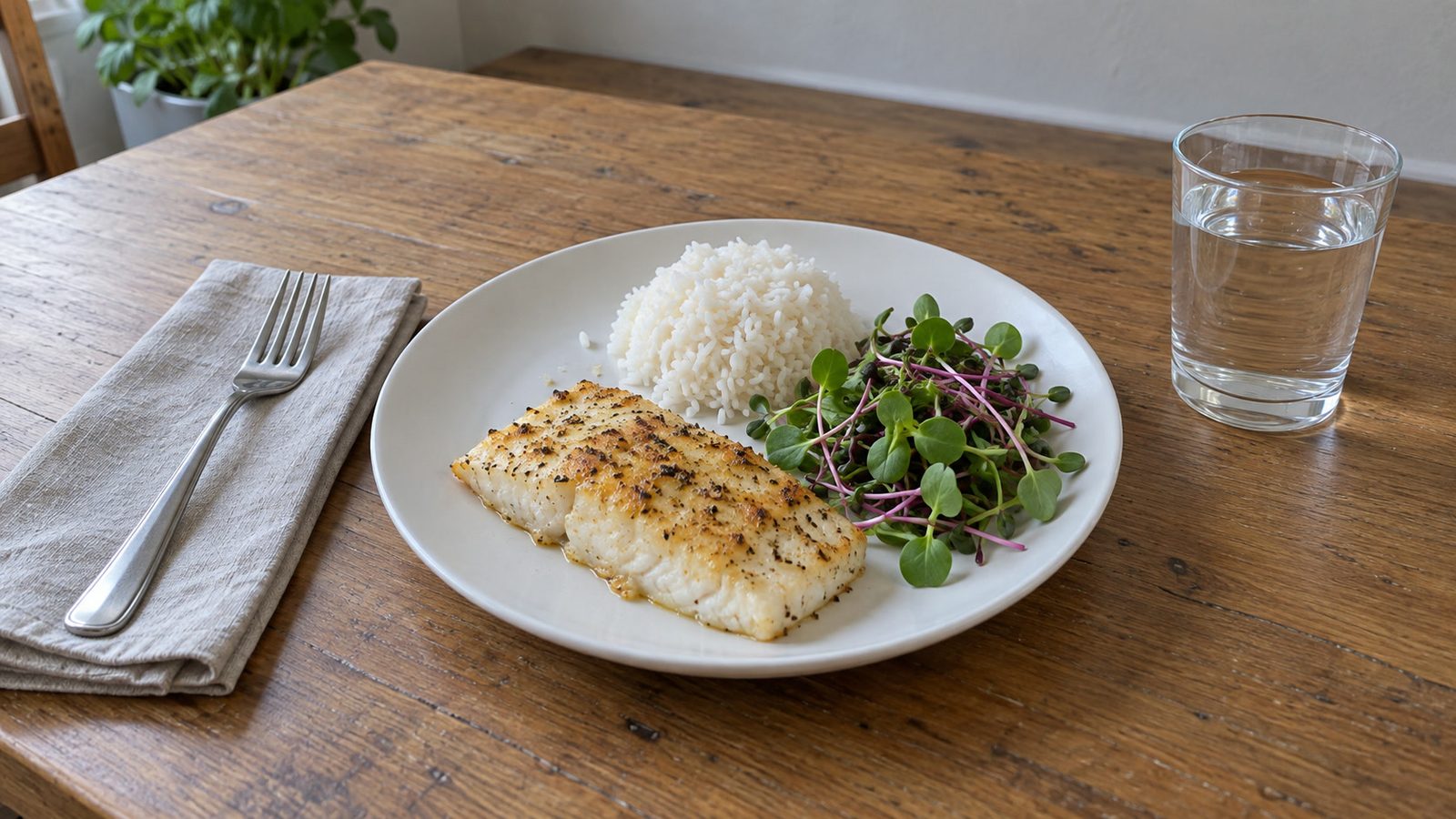
There is no single kidney diet, and no microgreen carries a potassium number that fits every limit. The KDOQI 2020 nutrition guideline ties potassium and phosphorus to your blood levels and your clinician's judgment rather than a fixed daily amount, and the National Kidney Foundation generally calls a food high in potassium at 200 mg or more per serving.
In one 2023 USDA-ARS greenhouse study, sunflower and radish microgreens measured lowest in potassium, about 101 to 104 mg per 100 g, and Bull's Blood beet and amaranth measured highest, about 500 mg per 100 g. Everything below is information to bring to your nephrologist or renal dietitian, not medical advice.
How your kidney team decides what counts as high potassium
Your potassium and phosphorus targets come from your lab work, your stage of kidney disease, your treatment and your medicines, which is why the guidance reads as a method instead of a number. The KDOQI 2020 guideline states: "In adults with CKD 3-5D or posttransplantation, it is reasonable to adjust dietary potassium intake to maintain serum potassium within the normal range."
For people whose blood potassium runs high or low, it suggests potassium intake "be based on a patient's individual needs and clinician judgment." Phosphorus follows the same pattern, with the guideline recommending "adjusting dietary phosphorus intake to maintain serum phosphate levels in the normal range." None of these statements sets a milligram limit, a point a 2023 review of the potassium guidance makes directly.
The National Kidney Foundation puts it plainly: "There is no single kidney diet that works for everyone." Its potassium food list generally treats 200 mg or more per serving as high, and for vegetables that serving is 1/2 cup unless the list says otherwise. NIDDK's nutrition page for children with CKD counts 1 cup of leafy vegetables as a serving and calls 200 mg or less lower potassium. Both organizations add a point that matters for anything you eat by the handful: a large portion of a lower-potassium food can become a high-potassium serving (NIDDK).
NKF's leafy greens page sorts familiar greens the same way. Raw green cabbage, raw kale and raw lettuce are low; raw red cabbage and raw spinach are medium; boiled spinach, beet greens and Swiss chard are high. Microgreens are not on that list, so the measured values below are what you can put in front of your dietitian instead.
Potassium in nine microgreens, lowest to highest
Start with serving size, because every number depends on it. No kidney organization sets a microgreen serving. FDA's reference amount for fresh vegetables in general is 85 g (21 CFR 101.12), and two microgreen papers, Renna et al. 2020 and Ghoora et al. 2020, used 85 g as their serving. The only weighed microgreen servings come from Lee et al. 2025, where 2 cups of Bull's Blood beet microgreens weighed 28.1 g and 2 cups of red cabbage microgreens weighed 30.4 g. That makes 85 g about three times a weighed two-cup portion. Treat the 85 g column as a reference point, and treat the grams you put on your plate as the number that counts.
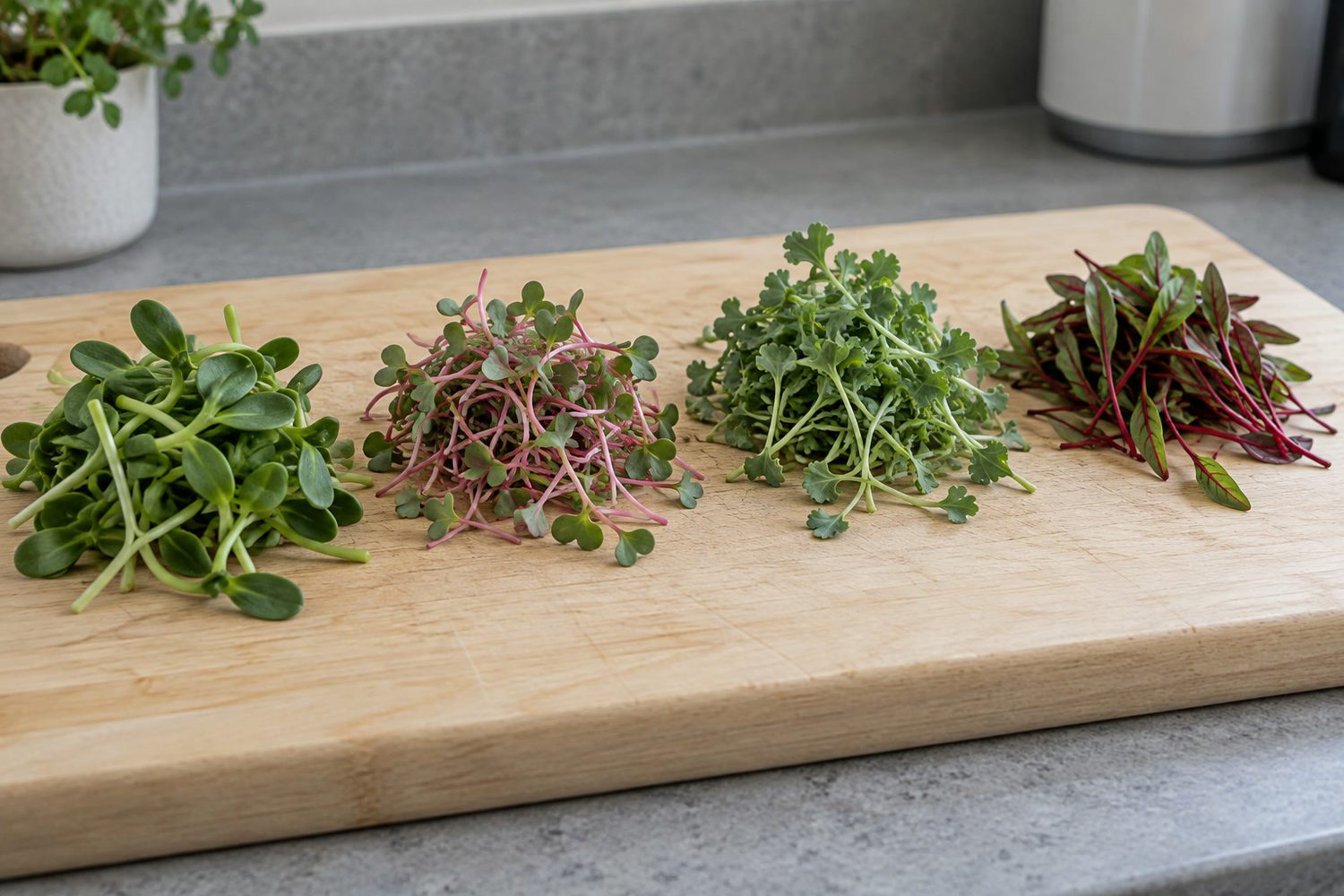
The potassium figures come from Di Gioia et al. 2023, a USDA-ARS study that grew microgreens in a greenhouse on soilless felt pads with a nutrient solution and harvested them at 10 to 19 days. The table lists potassium in milligrams per 100 g fresh weight, as measured, and per 85 g.
Hover or tap a row to highlight it.
| Microgreen (cultivar) | Potassium, mg per 100 g | Potassium, mg per 85 g |
|---|---|---|
| Black Oil sunflower | 101.31 | 86.1 |
| Red Arrow radish | 104.45 | 88.8 |
| Red Russian kale | 123.49 | 105.0 |
| Broccoli (cultivar not named) | 132.62 | 112.7 |
| Dark Opal basil | 296.41 | 251.9 |
| Arugula | 316.47 | 269.0 |
| Genovese basil | 347.79 | 295.6 |
| Garnet Red amaranth | 496.01 | 421.6 |
| Bull's Blood beet | 501.47 | 426.2 |
This is one controlled assay, not a ranking of what you'll find at a farmers market. Potassium changes with cultivar and growing conditions, including the medium, the nutrient solution and the harvest age, so a radish microgreen from a different seed or a soil tray could measure higher or lower. When you share these numbers, share the study name and conditions with them.
Smaller portions are simple arithmetic. At a 30 g portion, close to the weighed two-cup servings, sunflower works out to 101.31 x 0.30 = 30.4 mg potassium and beet to 501.47 x 0.30 = 150.4 mg. On the one weighed serving that matches a crop in the table, 2 cups of Bull's Blood beet at 28.1 g, the math is 501.47 x 0.281 = 140.9 mg potassium and 40.91 x 0.281 = 11.5 mg phosphorus. That combines composition from one study with a portion weight from another, grown differently, so it is an illustration and not a measured intake.
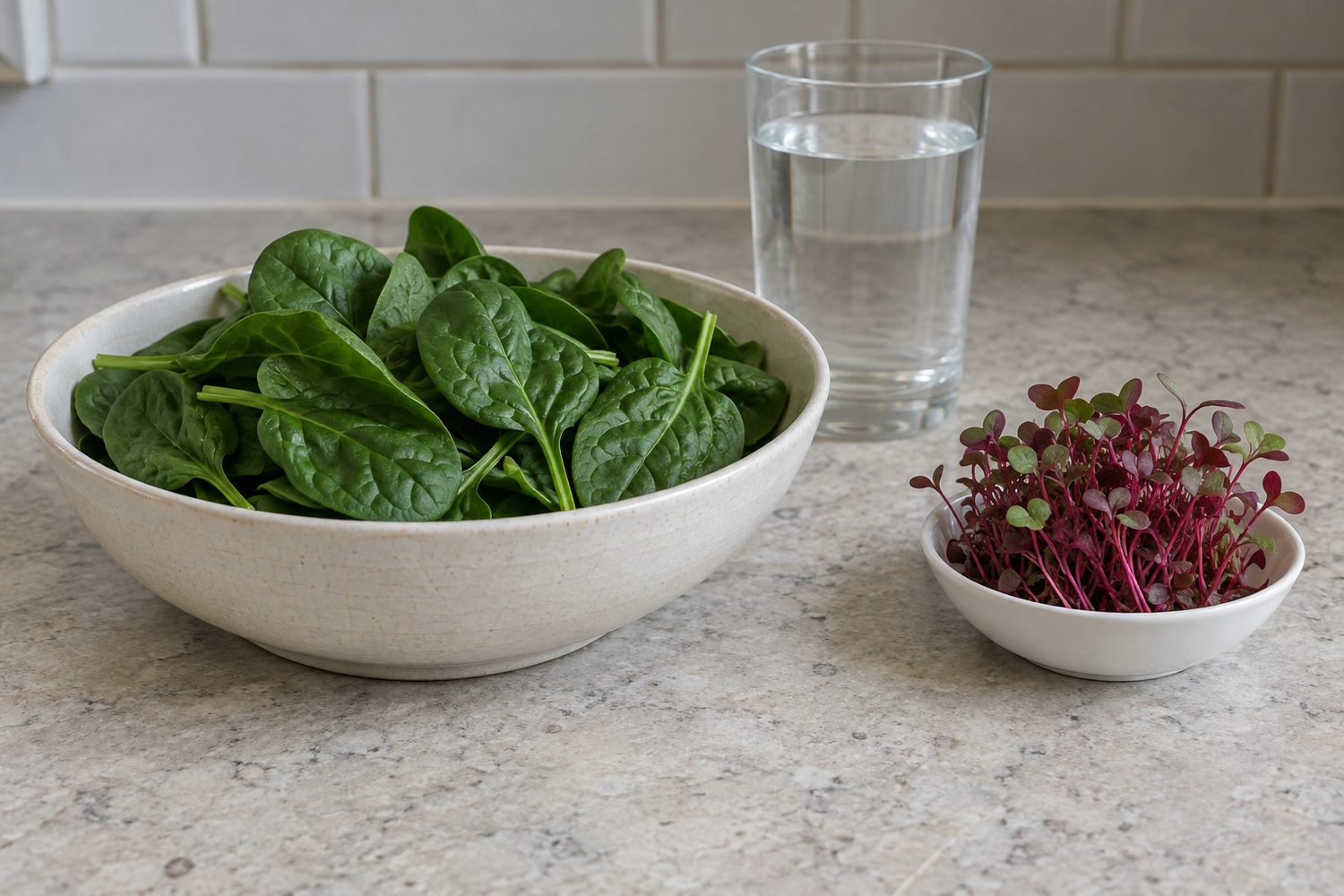
For scale, compare foods your dietitian may already use as markers, from USDA FoodData Central. Raw spinach has 558 mg potassium per 100 g. Half a cup of boiled spinach has 419.4 mg, 1 cup of shredded green leaf lettuce has 69.8 mg, and a medium banana has 422.4 mg. At 85 g, the beet and amaranth microgreens in the 2023 study land near a medium banana. At a weighed two-cup portion, the beet's 140.9 mg sits below NKF's 200 mg mark, and a double helping would pass it.
If you want the other nutrients in these crops, which microgreen is most nutritious and microgreens calories and protein cover the rest.
Phosphorus in the same nine microgreens
The same 2023 study measured phosphorus, and the order is almost reversed. Sunflower, lowest in potassium, is highest in phosphorus, while the two basils are lowest. The table lists phosphorus in milligrams per 100 g fresh weight and per 85 g, lowest to highest.
Hover or tap a row to highlight it.
| Microgreen (cultivar) | Phosphorus, mg per 100 g | Phosphorus, mg per 85 g |
|---|---|---|
| Dark Opal basil | 28.35 | 24.1 |
| Genovese basil | 36.10 | 30.7 |
| Broccoli (cultivar not named) | 37.55 | 31.9 |
| Bull's Blood beet | 40.91 | 34.8 |
| Arugula | 40.93 | 34.8 |
| Red Arrow radish | 54.25 | 46.1 |
| Red Russian kale | 55.37 | 47.1 |
| Garnet Red amaranth | 62.79 | 53.4 |
| Black Oil sunflower | 66.05 | 56.1 |
How much of that phosphorus your body takes in is a separate question. NIDDK says the body absorbs more phosphorus from animal foods than from plant foods, and the National Kidney Foundation says phosphate from food additives is completely absorbed. Neither gives a figure for microgreens, so bring the measured milligrams and let your dietitian decide how to count them.
Sodium and nitrate in microgreens
Sodium in the 2023 study averaged 7.10 mg per 100 g across species, ranging from 0.69 mg in shiso to 12.72 mg in America mizuna. The authors grew the plants with deionized water and note that sodium could be higher when the water or growing medium carries it. A 2018 trial that mixed its solutions with collected rainwater reported microgreen sodium of 13.5 to 44.5 mg per 100 g across its crops, which shows how much the water can move the number. If sodium is on your list, the grower's water source is a fair question to ask.
Nitrate in the 2023 study ranged from 458.6 mg per kg in sunflower to 4,602 mg per kg in mizuna. No kidney organization gives a nitrate target, so there is no kidney-specific line to compare against. The broader nitrate and contaminant numbers are in heavy metals and nitrate in microgreens.
Low-potassium microgreens: grown in trials, not sold
Researchers have grown microgreens with less potassium on purpose. Renna et al. 2018, at the University of Bari, grew lettuce and two chicories hydroponically with little or no potassium in the nutrient solution. Those plants carried 103 to 130 mg potassium per 100 g, against 225 to 250 mg per 100 g for the same crops grown with normal potassium, about 46 to 53% lower. The trial tracked yield, shoot height and visual quality, and nobody ate the plants.
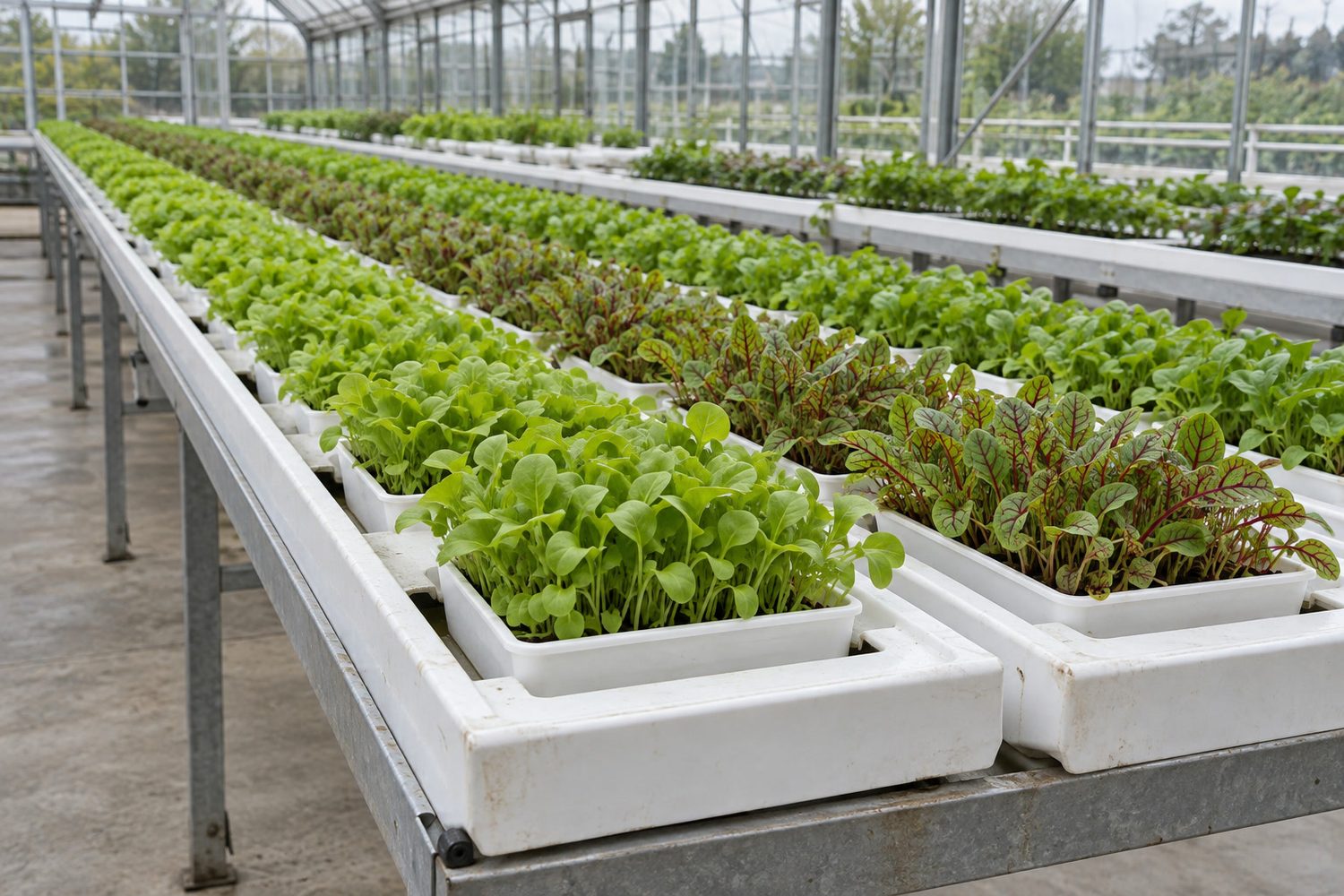
A later trial, D'Imperio et al. 2024, found that removing potassium from the solution cut potassium content an average of 45% in radish, rocket and Swiss chard microgreens. That was again a growing trial that measured plants, not people. Low-potassium microgreens are not sold as such. If a grower offers one, ask for the cultivar, how it was grown and a lab analysis of the batch, and take that paper to your appointment.
Oxalate numbers if you form calcium oxalate stones
Kidney stone prevention is its own plan, separate from CKD potassium and phosphorus, and your urologist or dietitian may be working from urine tests. A 2024 open study measured oxalic acid in microgreens from 19.16 mg per 100 g in red amaranth, the lowest, to 58.94 mg per 100 g in Sango radish, the highest. Ghoora et al. 2020 reported 14.3 to 68.2 mg per 100 g across ten culinary microgreens. Don't carry mature spinach, chard or amaranth oxalate figures over to their microgreen stages.
The American Urological Association guideline says clinicians should counsel people with calcium oxalate stones and relatively high urinary oxalate "to limit intake of oxalate-rich foods and maintain normal calcium consumption" (statement quoted here). Its calcium statements use 1,000 to 1,200 mg per day of dietary calcium. It gives no milligram target for oxalate. NKF's leafy greens page flags spinach and Swiss chard as high oxalate and tells stone formers to talk with their clinician before restricting.
Leaching, binders and dialysis type
NKF describes a leaching method for high-potassium vegetables: slice thin, soak in warm water for at least 2 hours using 10 parts water to 1 part vegetable, rinse, then cook in 5 parts water. It warns that leaching does not remove all the potassium. The method is written for vegetables you cook, not for microgreens, which most people eat raw, so ask your dietitian before you count on it.
Medicines change the math too. NIDDK explains that a potassium binder keeps some dietary potassium from reaching your blood, and phosphate binders are taken with meals to cut phosphorus absorption. Neither changes the potassium in the plant, only how much of what you eat reaches your blood, and that is a question for your care team.
Dialysis type matters as well. NKF's leafy greens page says people on hemodialysis three times a week may need to watch potassium in some greens, while daily home or nocturnal hemodialysis and peritoneal dialysis may remove more potassium, and some people on those treatments may need more potassium-rich foods. The same 100 g figure can mean different things depending on which of those describes you.
Transplant recipients and raw microgreens
FDA lists transplant recipients among the people especially vulnerable to foodborne illness. It advises washing produce under running water without soap, keeping refrigerated produce at 40 F or below (a fridge thermometer shows it), and it tells vulnerable people to avoid raw or lightly cooked sprouts. Microgreens are not sprouts, but they are usually eaten raw, and FDA's sprout advice does not name them. NKF says "People with kidney transplants should wash greens thoroughly." Ask your transplant team whether raw microgreens belong on your plate, and read are microgreens safe to eat raw for how contamination happens and what washing can and cannot do.
What to write down before your appointment
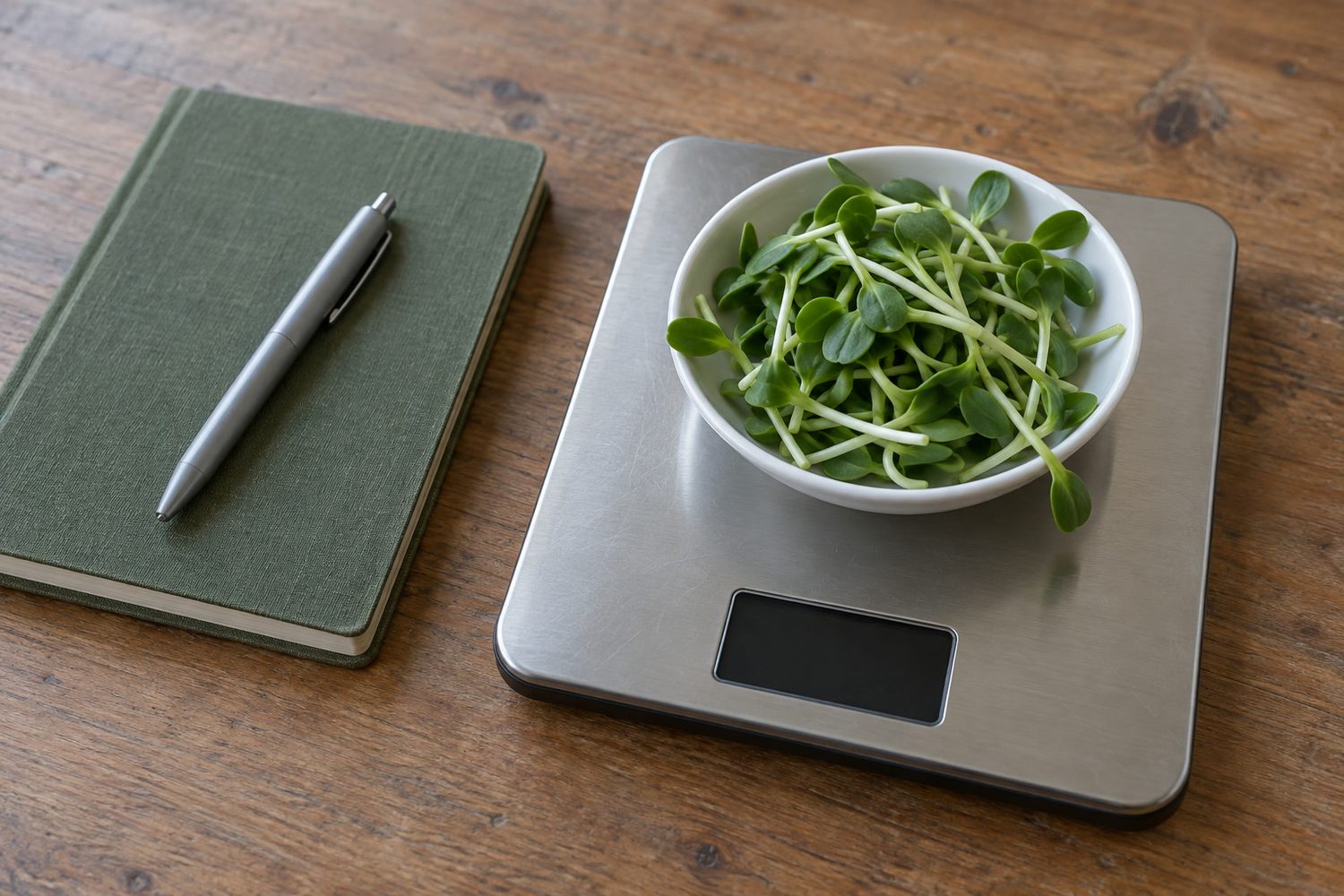
Your dietitian can work with specific numbers far more easily than with "I'd like to add microgreens." Put a kitchen scale under the portion you plan to eat and write down the grams, because only your own scale tells you what your handful weighs. Then bring:
- The crop and, if you know it, the cultivar.
- The grams per portion and how many times a week you'd eat it.
- The potassium and phosphorus per 100 g from the tables above, with the study name, Di Gioia et al. 2023, USDA-ARS, soilless felt, harvested at 10 to 19 days.
- Your own arithmetic: the per-100 g value times your grams divided by 100.
- Whether you take a potassium or phosphate binder, and your dialysis schedule if you have one.
For portion ideas and how serving weight connects to cost, see microgreens serving size and cost and how much microgreens per day. The general tradeoffs, from price to shelf life, are in downsides of microgreens.
Questions people with kidney disease ask about microgreens
These answers add figures that did not fit in the sections above.
Has anyone with kidney disease been studied eating microgreens?
The human evidence does not include microgreens fed to people with CKD, on dialysis or with a transplant, with blood potassium, phosphorus or kidney function measured. Three rat studies from one group fed barley, radish and clover microgreens to diabetic or aflatoxin-treated rats and reported improved kidney function markers. Those were not kidney disease models and say nothing about a person's portion. So, ask your kidney care team before you add microgreens to your plate.
How much potassium is in a garnish-sized pinch?
FDA's reference amount for vegetables used mainly as garnish or flavor is 4 g (21 CFR 101.12), though it is not a microgreen serving. At 4 g, the 2023 study's beet works out to 501.47 x 0.04 = 20.1 mg potassium and its sunflower to 101.31 x 0.04 = 4.1 mg. Several pinches across a day add up, so count them together.
Do any microgreens run higher in potassium than beet and amaranth?
In the 2024 D'Imperio trial, Swiss chard had the highest potassium of the four microgreen species grown, 14,096 mg per kg fresh weight, which is 1,409.6 mg per 100 g (PubMed 38092699). That is close to three times the Bull's Blood beet in the 2023 USDA-ARS study. The two trials used different growing systems, so compare them with care.
Are microgreens lower in potassium than the mature vegetable?
No single study has matched each microgreen with its mature crop grown the same way. The 2018 low-potassium paper cites other published microgreen values of 365 mg per 100 g for lettuce and 436 mg for pea (Renna et al. 2018), which is higher than several crops in the 2023 table. Ask for crop-specific numbers rather than assuming the young plant is lower.
Bringing the numbers to your kidney team
The crops that measured lowest in potassium per serving in the 2023 USDA-ARS study were sunflower and radish, and the highest were Bull's Blood beet and amaranth, with the order shifting for phosphorus. Those figures belong to one greenhouse, one set of cultivars and one harvest window. Weigh your portion, write the numbers down with the study name, and let your nephrologist or renal dietitian tell you where they fit in the plan built on your lab work.
Sources
Prices, stock and specifications are as the linked pages showed them on 2026-09-13.
- KDOQI 2020 guideline
- 2023 review of the potassium guidance
- National Kidney Foundation
- potassium food list
- NIDDK's nutrition page for children with CKD
- NIDDK
- leafy greens page
- 21 CFR 101.12
- Renna et al. 2020
- Ghoora et al. 2020
- Lee et al. 2025
- Di Gioia et al. 2023
- 558 mg potassium per 100 g
- boiled spinach
- shredded green leaf lettuce
- medium banana
- National Kidney Foundation
- 2018 trial
- D'Imperio et al. 2024
- 2024 open study
- American Urological Association guideline
- statement quoted here
- especially vulnerable to foodborne illness
- barley
- radish
- clover
Keep reading
The journal
Are Microgreens Low FODMAP? What Monash Research Shows
Are microgreens low FODMAP? Learn what Monash sprouting research shows, which crop families deserve extra caution, and how reintroduction testing works.
Read Are Microgreens Low FODMAP? What Monash Research ShowsThe journal
Are Microgreens Keto? How to Count Net Carbs
Are microgreens keto? Find total carbohydrate, fiber, and sugar per crop, plus per serving net carb ceilings measured against daily keto limits.
Read Are Microgreens Keto? How to Count Net CarbsThe journal
High Protein Microgreens: Calories and Protein per Serving
Compare high protein microgreens by crop, with protein and calories per 100 grams and per serving, so you know exactly what ends up on your plate.
Read High Protein Microgreens: Calories and Protein per ServingThe journal
Are Microgreens Anti-Inflammatory? What the Research Really Says
Inflammation has not been measured in people eating microgreens. And when researchers pooled ten broccoli sprout trials, the combined result came out at something that could be zero.
Read Are Microgreens Anti-Inflammatory? What the Research Really Says