Food, plant and carrier rules for selling microgreens online
Cal HewittPublished Checked
- selling microgreens
- business planning
- shipping
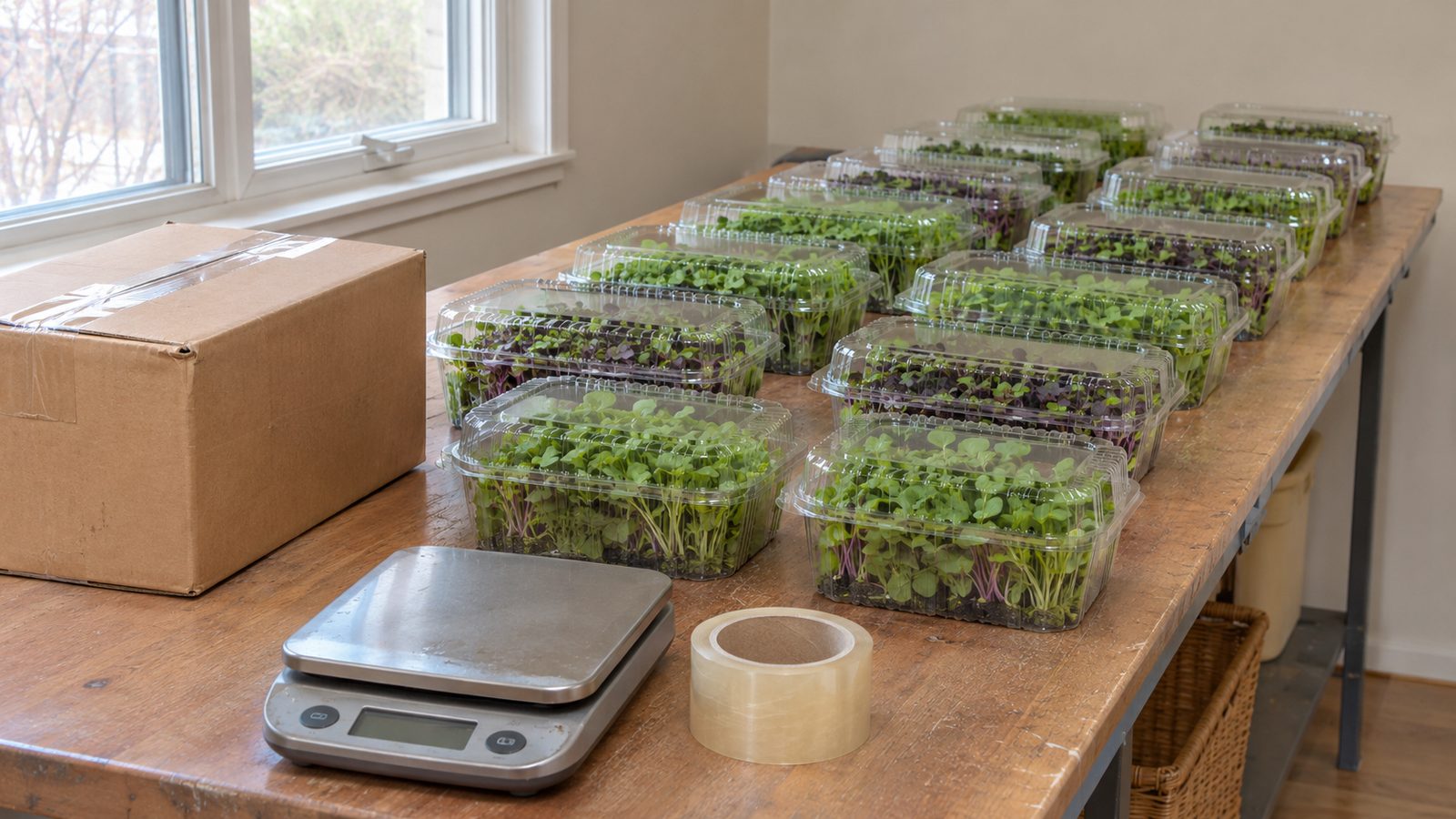
Etsy generally allows food and edible items, and its plant policy does not ban ordinary live edible plants or microgreens, so a microgreens listing can go up there when the food rules, carrier limits and plant policy are met. Facebook Marketplace needs a different answer: read Meta's current Commerce Policies before you rely on it.
Etsy has no special approval step for microgreens. You follow the same food, plant, labeling, shipping and local-sale rules that apply to any seller, and the platform does not change what your state requires of you.
The rest of this post covers what each platform asks, which ones are a poor fit for a fresh tray, and how pickup, local delivery and shipping change the licensing question. Licensing and shipping have their own pages, and you will find the links where each fits.
Etsy: food is generally allowed, and the rules stay with you
Etsy's Food and Edible Items policy says, "Selling food or other edible items is generally allowed on Etsy." The same policy puts the legal burden on the seller. You remain responsible for the government rules on who may make, package, sell and ship food, and Etsy tells sellers to check carrier restrictions. The Etsy Food and Edible Items policy was last updated May 17, 2020, so read the live page for the current wording.
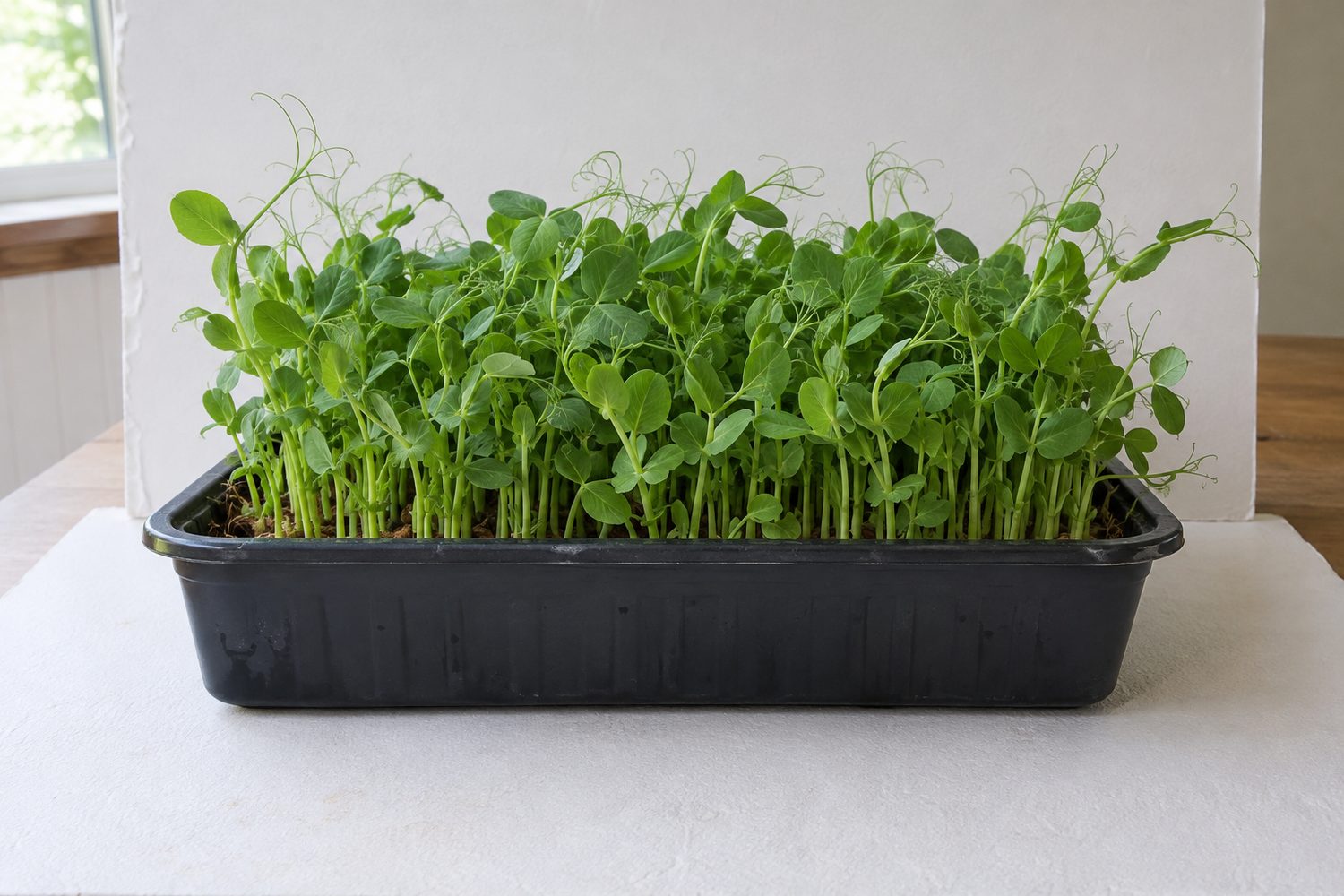
Plants are covered by a second page, the Etsy Plants, Herbs, Seeds and Soil policy. It allows some plants, seeds and plant materials and restricts others. The restricted groups include hazardous plants, invasive or noxious species, endangered species and unidentified species. The policy does not set a blanket ban on ordinary live edible plants or microgreens.
You will find fresh microgreens for sale on Etsy. One seller lists fresh organic microgreens grown to order in full or half trays, with a Star Seller badge. That shows one seller doing it. It does not show that every such listing meets Etsy policy or local food law, so treat it as an example of the format and not as permission.
Two practical points follow. First, microgreen seeds have their own place on Etsy, under the Seeds category in the microgreens seed marketplace, and a tray of living greens is a different product. When you create a listing, check which category Etsy offers you in Etsy Seller and pick the one that matches what you are actually shipping or handing over. Second, a listing that depends on a carrier carries the carrier's limits with it. Read those before you write the shipping profile, not after the first order.
Facebook Marketplace: read Meta's policy first
Meta's Commerce Policies are the source for what Marketplace allows, and the text decides whether fresh food and ordinary live plants may be listed. Read that page yourself before you build a plan around the channel. Do not assume fresh food is allowed there because other sellers appear to be doing it.
What is documented is a set of restrictions. A 2026 Meta Oversight Board decision reproduces the policy language: Meta's restricted-goods rules cover "endangered and protected species (wildlife and plants)," and its Commerce Policies prohibit animal sales on services designed for commerce, Facebook Marketplace included. That tells you protected plants and animals are out. It does not say anything either way about a tray of pea shoots.
You will see guides claiming that homemade food gets listed on Marketplace. A page like the Find Homegrown food-selling guide describes what some sellers do, which is practice and not Meta's written rule. Practice can change, and a listing that is up today can be removed under a policy you have not read.
If the policy text covers your product, the next question is the same as anywhere else: does your state let you sell fresh microgreens in the way you plan to? Marketplace does not answer that for you.
Amazon: a hard fit for a fresh tray
Amazon splits food into two policies, and fresh produce lands on the strict side. Its Food and Beverages policy asks for sealed, properly prepared packaging, full labeling with product name, manufacturer details, expiration date, net weight, ingredients, nutrition facts and allergen information, and generally a shelf life longer than 90 days. The policy expressly excludes chilled and frozen foods and fresh produce from that general rule, so a fresh tray is handled elsewhere.
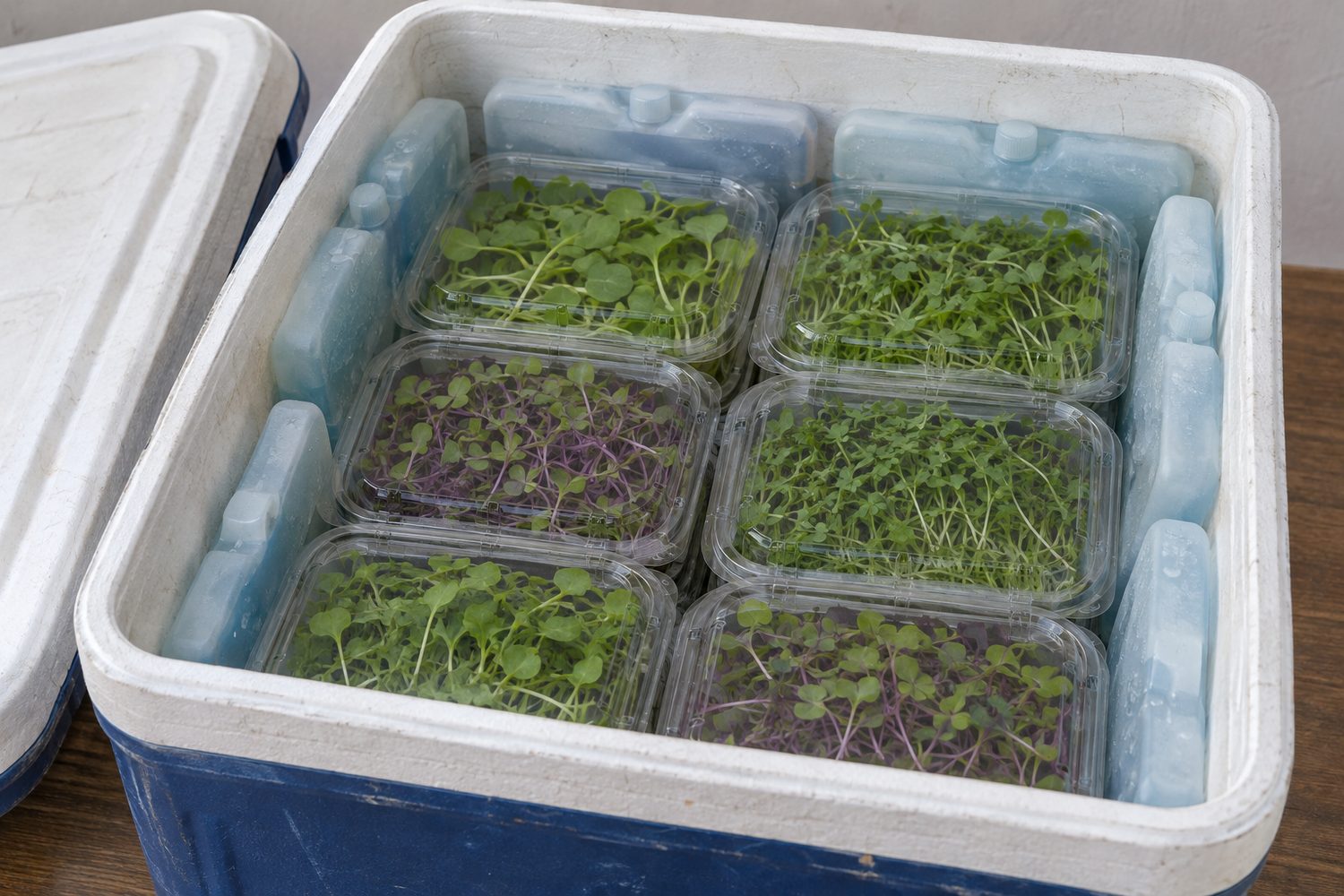
That other page is the Chilled and Frozen Foods policy. It asks for:
- A Professional Selling Plan.
- Documentation and product information when Amazon requests it.
- Fully enclosed, sealed packaging suitable for shipping.
- Packaging that holds a safe temperature through delivery, backed by a validated cold chain for worst-case conditions.
- Quality controls for raw agricultural commodities, including acceptable remaining shelf life and no mold, pests or contamination.
Amazon also says FBA does not fulfill fresh produce, chilled foods or frozen foods, and its FBA preparation guidance lists perishables such as fresh fruit or live plants, and products with a shelf life under 90 days, as unacceptable for FBA. Temperature failures can lead to suppressed offers or a suspended account. That means you would pack and ship every order yourself.
Shipping it yourself carries a performance rule. Under the Valid Tracking Rate policy, seller-fulfilled orders need a valid tracking rate of at least 95 percent at the product-category level, and falling below it can suspend seller-fulfilled listings in that category. A tray that wilts in a warm truck is a customer-condition problem on top of that.
Whether Amazon will let you list a given microgreens product is something only Seller Central can tell you. The category approval page explains the three results the Add Products tool can show: "Sell this product" means no approval is needed, "Apply to sell" means approval is required, and "Not available" means the product cannot be listed. Check your exact product there before you buy packaging.
Shopify, Square Online and Local Line
Shopify, Square Online and Local Line are storefront and order-taking tools.
Shopify's Acceptable Use Policy does not ban fresh produce. It says merchants may not use Shopify for illegal activity and must meet platform, partner and legal requirements. Its store-policy guidance treats food and food-contact products as subject to market-specific rules and makes the merchant responsible for accurate policies and legal compliance. On cost, Shopify says Shopify Payments has no monthly, hidden or setup fee beyond the subscription and card-processing fees, and that using a third-party payment provider can add a transaction fee that depends on your plan. Fees vary by plan and country, so confirm your plan, payment provider and rates before you price a tray.
Square Online offers online stores with shipping, local pickup and local delivery, and its plans page shows no blanket restriction on fresh produce. Pickup, delivery settings and shipping labels are tools; food licensing, labeling, safety and delivery rules stay with you. Square's current processing fees are on its help page, and they change.
Local Line is built for farms, food hubs and CSAs, and its pages describe produce subscriptions, pickup and delivery plans, order windows and delivery zones. Its supplier page lists current plan pricing, and a second Local Line page quotes a different starting price, so confirm the plan and the cost at signup. Local Line is software for taking orders. It is not a food license.
Does pickup, delivery or shipping change your licensing?
An online order is still an order, and a platform account does not widen what your state lets you do. A food license, registration or farm permit is not expanded by using Etsy, Marketplace, Amazon, Shopify, Square or Local Line. You still need the authorization your state requires for the product and for the way it reaches the buyer, wherever the sale, pickup, delivery or shipment happens.
The clearest way to see the difference is to look at how states treat online ordering when they regulate a related route. Most of what follows comes from cottage-food pages. Those exemptions are usually limited to an approved-food list, and fresh-cut or living microgreens may not be on a given state's list, so these are examples of how online sales and fulfillment get structured, not proof that microgreens qualify anywhere. Your state may classify the product as fresh produce, a food-establishment product, a time-and-temperature-controlled food or a plant product, and each of those has its own rules.
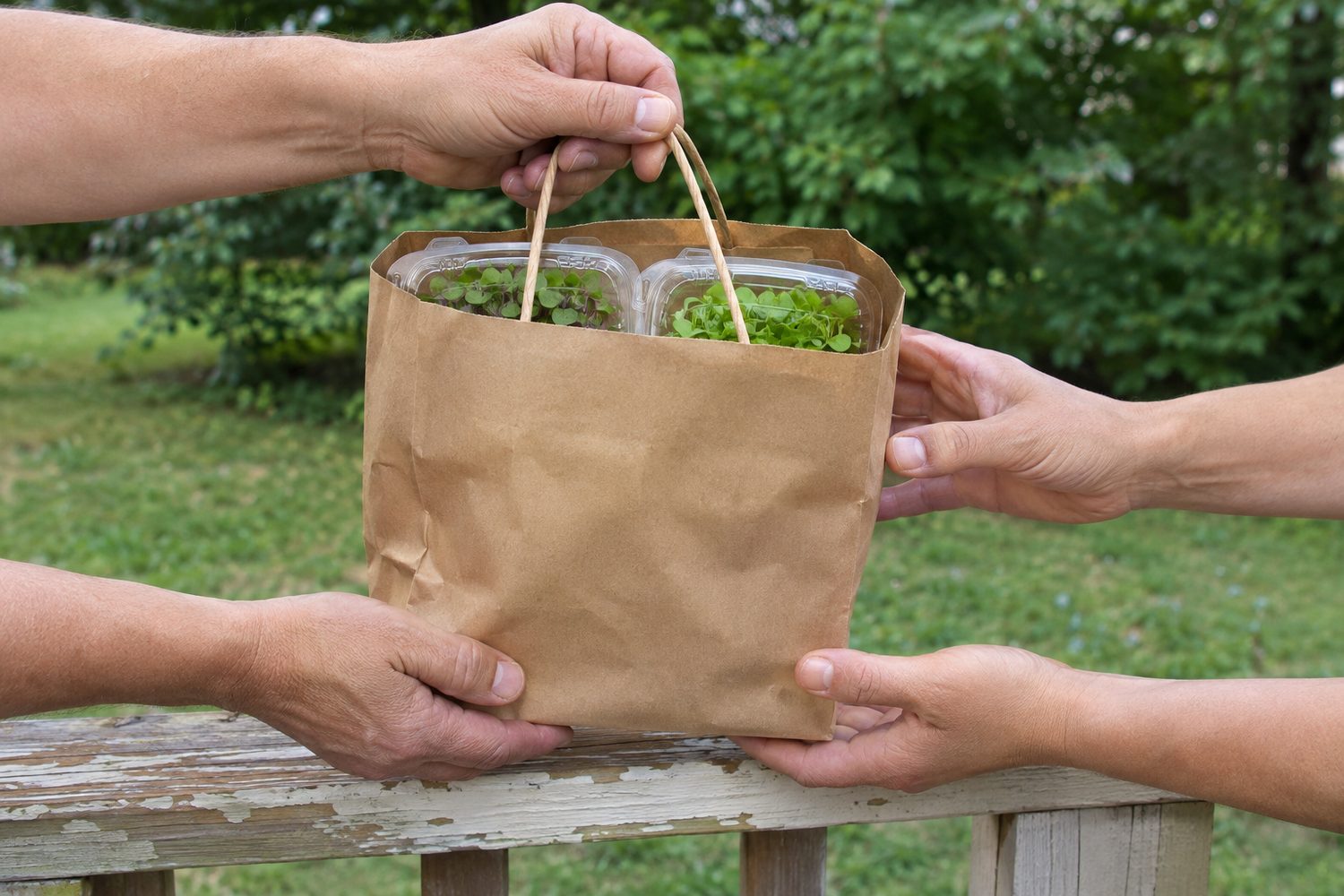
- Washington allows a website and online orders, but the sale has to be completed person to person. The Washington State Department of Agriculture says shipping, mail order, courier delivery and out-of-state sales are prohibited.
- Connecticut allows online advertising and orders, but the producer or a designee must deliver to the consumer inside the state. Per the Connecticut Department of Consumer Protection, mail, UPS, FedEx and mobile food-ordering companies may not deliver the product.
- Texas allows qualifying online sales where the operator, an employee or a household member personally delivers and the required labeling is posted on the website before payment, according to the Texas Department of State Health Services.
- Michigan allows internet and mail-order sales and third-party delivery platforms when the buyer can interact with the operation before the sale, and sales and delivery stay within the state, per the Michigan Department of Agriculture and Rural Development.
- Florida's Department of Agriculture says its approved cottage food products may be sold on a website and by mail order. Its approved list is low-risk foods such as baked goods, honey, jams, dried fruits and dry herbs. Ask the agency whether fresh microgreens count as an approved product.
Read across those states and a pattern shows. Online checkout often works as an ordering tool, while pickup or personal delivery is the event the law cares about. Shipping is where it gets harder, because the tray leaves your control and may cross a state line. Two other states point the same direction: Montana requires the sale to be face to face, and Georgia prohibits shipping cottage food across state lines. California's rules on direct sales by phone or internet should be confirmed with its public health department and your local environmental health office before you rely on them.
So, the sequence that holds up is to settle your state's classification of microgreens first, pick the fulfillment method that classification allows, and only then choose a platform. The page on whether you need a license to sell microgreens walks through that first step. If you plan to ship, shipping microgreens covers what happens to a tray in transit. Tax on shipped orders is a separate question, and the post on sales tax on microgreens takes it up.
What people selling microgreens online report
Seller reports are practice, not proof of what a platform or state allows. They are useful for the shape of the work, though. One grower on Reddit described selling locally to restaurants, cafes, caterers and the public through weekly microgreens CSAs, with pickup orders as small as one 24-ounce container and deliveries from two 32-ounce containers to ten. The same grower gave radish, mustard and arugula a turnaround of 9 to 10 days, and cilantro, chervil and fennel at least two or three weeks. A separate thread from a prospective seller asking whether microgreens could be shipped named fragility and arrival quality as the worries.
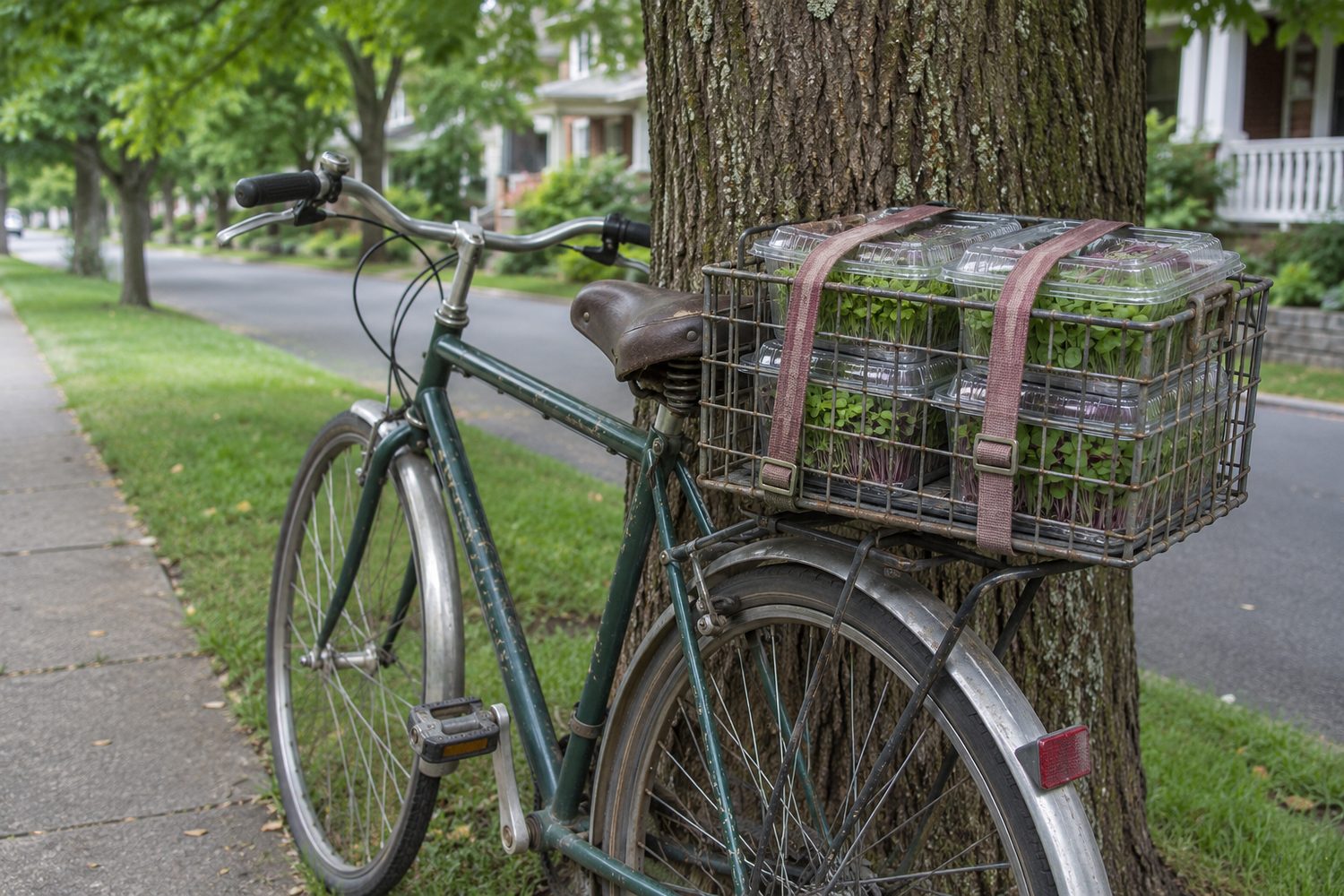
Other growers in those discussions described standing orders with restaurants and cafes, and one described the business as slow to build around recurring local accounts. Waste, inconsistent ordering and missed deliveries came up as operating problems. A published agricultural-economics abstract links online stores and social-media pages with more sales, and also lists administrative work, platform costs and labor as challenges, though it covers more than microgreens and gives no rate for any one channel.
Build your own test: add up the listing, payment, packaging, delivery, spoilage and refund costs for a small first run, write them down, and work from your real numbers.
Questions that come up
Can I use Square Online or Shopify to take orders and keep it to local pickup? Square Online offers local pickup and local delivery, and neither Square nor Shopify shows a blanket ban on fresh produce. Your state still decides whether you are allowed to sell the product that way, so check that first.
Can a small grower sell fresh microgreens on Amazon? Amazon's rules for chilled and temperature-controlled food ask for a Professional Selling Plan, sealed packaging, a validated cold chain and product quality controls, and FBA does not fulfill fresh produce. Use the Add Products tool in Seller Central to see whether your exact product reads "Sell this product," "Apply to sell" or "Not available."
Will a listing on Etsy tell me what category to use? Etsy Seller shows you the categories when you create a listing, and microgreen seeds sit under Seeds. Choose the one that matches the item you are selling, and read the plant policy if your product is a living tray.
Is a Local Line subscription a food license? No. Local Line is software for pickup, delivery and subscription orders, and your authorization to sell food still comes from your state or local agency. Ask that agency whether fresh-cut or living microgreens are an approved product under the permit or exemption you plan to use.
Before you list
Whichever platform you pick, the next step is the same. Read its current policy text and its current fee schedule before the first listing goes up: Etsy's food and plant policies, Meta's Commerce Policies, Amazon's food and chilled-food pages, or the terms of the storefront tool you chose. Then confirm your product's classification with your state agency, and move on to the pages on licensing and shipping.
Sources
Prices, stock and specifications are as the linked pages showed them on 2026-11-09.
- Etsy Food and Edible Items policy
- Etsy Plants, Herbs, Seeds and Soil policy
- fresh organic microgreens grown to order
- microgreens seed marketplace
- Commerce Policies
- Meta Oversight Board decision
- Find Homegrown food-selling guide
- Food and Beverages policy
- Chilled and Frozen Foods policy
- FBA preparation guidance
- Valid Tracking Rate policy
- category approval page
- Acceptable Use Policy
- store-policy guidance
- Shopify Payments
- plans page
- processing fees
- Local Line
- supplier page
- Washington State Department of Agriculture
- Connecticut Department of Consumer Protection
- Texas Department of State Health Services
- Michigan Department of Agriculture and Rural Development
- Department of Agriculture
- agricultural-economics abstract
Keep reading
The journal
Are Microgreens in Demand Near You? How to Check Local Buyers
Are microgreens in demand where you live? Use national market reports as a starting point, then check local restaurants and grocers before you plant.
Read Are Microgreens in Demand Near You? How to Check Local BuyersThe journal
Are Microgreens Profitable? What the Numbers Show
Are microgreens profitable? See what a national grower survey and federal sales data show, why gross revenue is not profit, and how to run your own numbers.
Read Are Microgreens Profitable? What the Numbers ShowThe journal
Are Microgreens Sustainable? The Published Range Is 3.34 to 63.34 kg CO2e a Kilo, and Your Grid Decides Where You Land
One modeled crop spans a 19-fold carbon range. Indoor growing beats field lettuce on land by roughly 37 times and can lose on carbon, because the answer is a property of your electricity rather than of the crop.
Read Are Microgreens Sustainable? The Published Range Is 3.34 to 63.34 kg CO2e a Kilo, and Your Grid Decides Where You LandThe journal
Buying a Microgreens Business for Sale: What to Check First
Thinking about a microgreens business for sale? Learn how sellers state cash flow, what SBA loans require in 2026, and what to check before you buy.
Read Buying a Microgreens Business for Sale: What to Check First