Stuck hulls: one fix has evidence, and it costs you yield
Cal HewittPublished Checked
- harvest
- troubleshooting
- sunflower
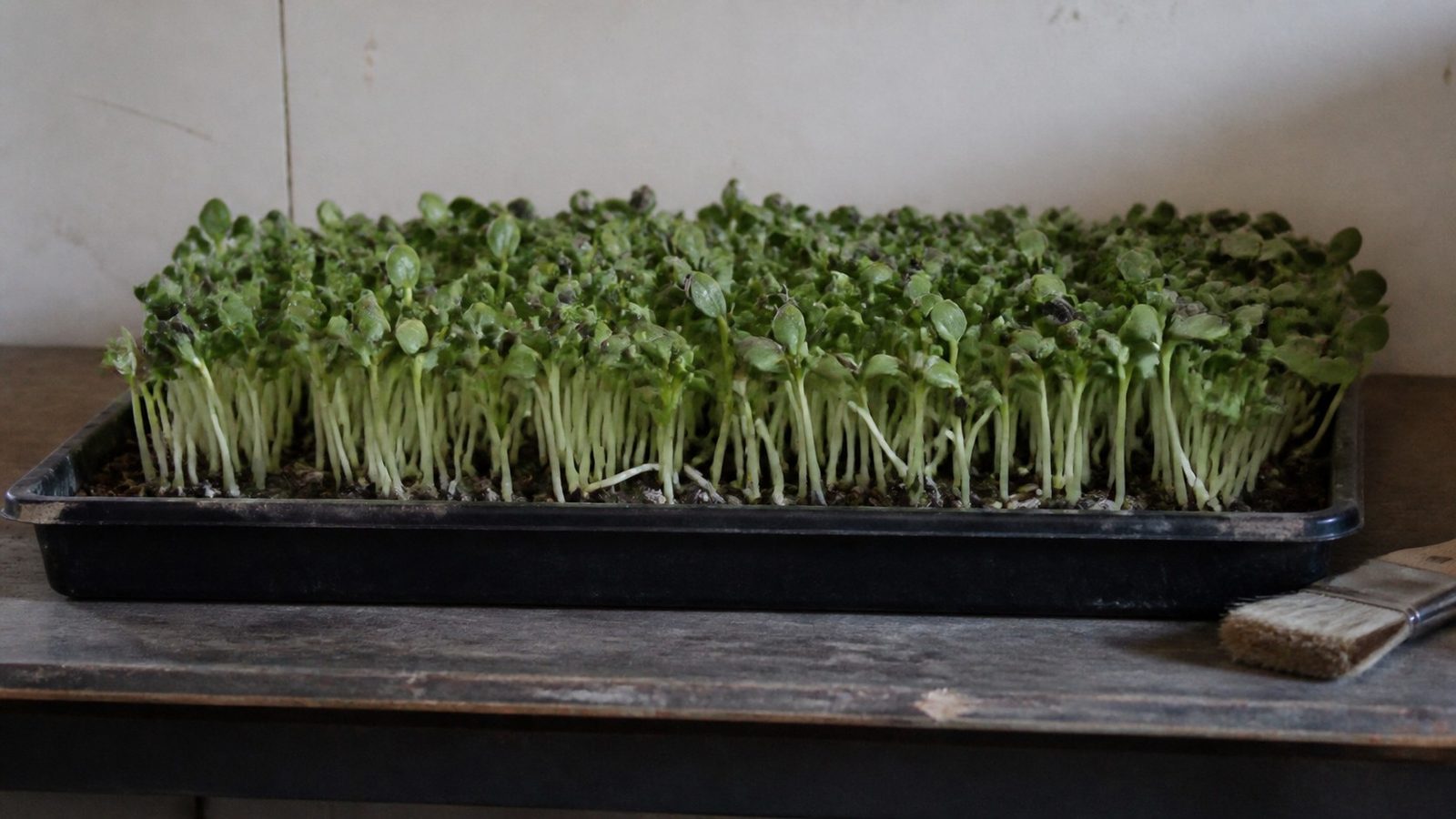
Six sunflower pages were opened for this. All six give a technique, five give a confident explanation of the cause, and not one cites a study. Two of them contradict each other outright: one calls top watering the single biggest mistake because it puts moisture right at the hull-and-leaf junction, while another tells you to spray from above to loosen the shells and a third recommends heavy misting two or three times a day.
There is exactly one controlled experiment, and it points at something none of those six leads with.
Three things worth having:
- Weight during blackout is the only fix with a measured result, and it is a trade. An unweighted dark control averaged 12 percent more attached hulls than weighted covers. More weight reduced attachment further and also reduced yield.
- Cultivar changed the outcome more cleanly than technique did. Black Oil sunflower had fewer attached hulls than Gray Striped at either cover weight.
- The thing stuck to your crop is probably not a seed coat. On sunflower it is mostly the fruit wall.
What to actually do
- Do not pull hard. Mist, wait, and brush lightly with something soft, repeated over several days. That is the documented extension method and it is deliberately gentle because forcing a resistant hull damages the crop.
- Try the other sunflower cultivar. Black Oil beat Gray Striped on attached hulls at both cover weights in the one experiment that compared them, and switching seed costs nothing to test.
- Use weight during blackout, and know what it buys. It is the only fix with a measured result, and more of it means fewer hulls and less crop. The blackout page covers the published weight range, which spans 2 to 20 pounds with none of it tested.
- Separate wetting at removal from wetting the crop. A deliberate mist before brushing is not the same as a canopy that stays wet, and conflating them is where the contradictory advice comes from.
- Check your crop's rating before assuming this is your problem. Every entry here publishes one, and 8 of the 62 are rated heavy.
- Treat it as a quality job, not a safety one. No guidance anywhere identifies a hull as a hazard.
- Run your own comparison and keep the result. Same lot, same density, one variable changed. That is more than the literature currently offers.
What is actually stuck to the plant
A sunflower "seed" is botanically an achene, which is a fruit rather than a bare seed. The hard black shell is the pericarp, the mature ovary wall. Break it open and there is a separate, much thinner true seed coat around the embryo inside.
So, the black pieces clamped onto your cotyledons are mainly fruit wall. "Seed coat" is the term everybody uses and it is the wrong one for the part causing the problem. That matters less for what you do about it than for reading the sources, because a page confidently explaining seed-coat behavior may be describing a different tissue entirely.
The mechanism itself is not established. No microscope study, force measurement or time-lapse has identified where the hull actually fails to release. The reasonable description is mechanical: the cotyledons expand but have not separated from the hydrated hull before the shoot lifts the whole assembly clear of the medium. That is a plausible account, not a finding, and it should not be turned into a claim that one moisture level or orientation causes it.
Is it actually a problem
Two separate answers, and they get merged.
On safety: no. No FDA, state or extension guidance identifies an intact seed hull as a microbial, chemical or toxicological hazard in microgreens. The documented safety controls for this crop are about water, worker hygiene, clean food-contact surfaces and keeping growing medium out of the product. A hull is not on that list.
On saleability: yes, and it is the whole reason anybody cares. Published production definitions describe the edible portion as shoots with cotyledons and early true leaves, cut above the medium. A hull is not part of that. There is no US legal grade requiring zero seed portions that could be located, so this is a market expectation rather than a rule.
On the plant: possibly, and it is unquantified. A retained hull can hold the cotyledons closed or deform them, and the one controlled study reports that manual removal itself damages plants and reduces quality and profitability. Whether an attached hull independently reduces final mass or survival has not been measured.
The one fix with evidence
A 2022 sunflower experiment grown on burlap compared two cover weights, 25 and 50 kg per square meter, against darkness with no weight at all.
Hover or tap a row to highlight it.
| What was compared | Result |
|---|---|
| Unweighted dark control against weighted covers | The control averaged 12 percent more attached hulls |
| Increasing the cover weight | Reduced attachment further, and reduced yield |
| Black Oil against Gray Striped, at either weight | Black Oil had fewer attached hulls. At 50 kg/m² it also had better quality and yield |
Read the second row carefully, because it is the whole decision. Pressing harder gets you a cleaner crop and less of it. Nobody has published where that trade turns unprofitable, so the crossover is yours to find.
And the cultivar result is the cheapest lever on this page. Changing which sunflower you buy moved hull retention without costing anything, in the one experiment that looked. That is a single small study on two seed types, so treat it as a strong hint rather than a rule, but it is a hint that costs nothing to test.
Which crops this actually affects
Every crop carries a hull-shedding rating, and the distribution is not what the sunflower-dominated conversation implies. Counted 2026-08-12:
Hull shedding across all 62 crops
Hover or tap a card to highlight it.
8 crops rated heavy
Barley grass, buckwheat, bulls blood beet, chickpea shoots, nasturtium, popcorn shoots, sunflower and Swiss chard. Sunflower is one of eight, not a category of one.
30 rated some
The large middle, where a few hulls come off with a brush and nobody writes articles about it.
2 rated none, 6 not applicable
Arugula and celosia shed cleanly. Six crops have nothing to shed.
16 unestablished
No published figure either way. That is a quarter of the directory and it is the honest state of the evidence.
Sunflower is the best-documented problem rather than the proven worst crop. The only controlled retention study is on sunflower, and a university guide singles it out as a crop whose hulls often persist, but no cross-crop comparison exists. Swiss chard and bulls blood beet are rated heavy here and have almost no coverage anywhere, which is a gap worth knowing if you grow them.
Buckwheat has a documented practical problem and no controlled study, and it is also the longest soak of any crop, at 12 to 24 hours, which is where a lot of the soaking advice below comes from.
Everything else people recommend
None of it has been tested on hull retention. That does not make it wrong, and it does mean the confidence around it is unearned.
Soaking. Maryland Extension lists pea, sunflower, chickpea, beet, Swiss chard, cilantro, mung bean and buckwheat among crops where a 6 to 12 hour soak speeds germination. That is evidence about germination speed. No same-crop randomized comparison of soak against no soak with attached-hull counts exists. The widely repeated claim that a 24 hour soak makes 90 percent of hulls fall off is not substantiated by any published source that could be located.
Misting and brushing. The most documented method comes from an extension advisory fact sheet: a gentle mist, wait 30 to 45 minutes, then a light pass with a soft-bristled brush, repeated across four days. A supplier's production notes give a similar routine, top-watering then a daily hand-brush pass from day two or three.
That is the technique to copy, because it is deliberately light and repeated rather than forceful, and because it is the version an advisory body put its name to. It is documented practice, not a measured comparison.
And the contradiction stands unresolved. Whether wetness at the hull-leaf junction loosens the hull or causes it to grip is claimed both ways with no evidence on either side. What resolves most of the apparent conflict is noticing that the sources are talking about different moments: wetting at removal time, deliberately and briefly, is a different act from keeping the canopy wet throughout the grow.
What nobody has costed
The number a commercial grower actually needs does not exist. There is no time-and-motion study giving de-hulling minutes per tray. The nearest published figure is a supplier's 5 to 10 minutes for an entire buckwheat harvest including cutting, packing and cleanup, which is not a de-hulling time and should not be quoted as one.
Nor is the loss quantified. The controlled study says manual removal damages plants and reduces quality and profitability, and does not report how many plants or how many grams.
And no mechanical de-huller for microgreens could be located in peer-reviewed, extension, government or published commercial material. The documented options are hands and brushes.
So, the two decisions a grower makes, whether to prevent retention before emergence and whether the cleanup pays, are both being made without numbers. That is the honest state of it.
What nobody has measured
- Where the hull actually fails to release. No microscopy, no force measurement, no time-lapse.
- Whether soaking reduces retention. No same-lot randomized comparison on any crop.
- Whether a retained hull harms the plant, as distinct from harming the sale.
- Minutes per tray to de-hull, on any crop, in any operation.
- How much crop is lost to removal, in damaged plants or in grams.
- Whether temperature, humidity or season change retention, holding everything else constant.
- Whether hulls change shelf life in either direction.
- A retention figure for 16 of the 62 crops.
Terms on this page
Tap a term to see what it means.
Hull. A loose production word for a hard outer covering. On sunflower it is chiefly the pericarp, not the true seed coat.
Sources
Opened 2026-08-12. The per-crop hull-shedding ratings are sourced individually on each crop's own entry, and the counts across all 62 were recounted for this page on 2026-08-12.
- George Mason University student research journal, sunflower microgreen cover weight and variety, 2022 - the only controlled hull-retention experiment located: 25 and 50 kg per square meter covers against unweighted darkness on burlap, the unweighted control averaging 12 percent more attached hulls, heavier weight reducing attachment and yield together, Black Oil beating Gray Striped at either weight with quality and yield significance reported, and the finding that manual removal damages plants and reduces quality and profitability.
- Perennia microgreens fact sheet (PDF), March 2021 - the documented removal method: gentle mist, wait 30 to 45 minutes, then a soft-bristled whisk broom, repeated across four days to remove most seed coats without damaging tissue, and the quality and labor context. Extension advisory rather than a measured comparison.
- University of Maryland Extension, growing microgreens and baby greens indoors - the 6 to 12 hour soak listed for pea, sunflower, chickpea, beet, Swiss chard, cilantro, mung bean and buckwheat as speeding germination, with no hull-retention figure attached.
- University of Saskatchewan gardening guide (PDF), 2025 - sunflower singled out as a crop whose hulls often persist.
- North Carolina Department of Agriculture, microgreen produce safety fact sheet - the documented food-safety controls for this crop, none of which concerns hulls.
- Paperpot Co sunflower growers notes (PDF), 2022 - top-watering then a daily hand-brush pass from day two or three, hand removal of the remainder, and stopping water 24 to 48 hours before harvest. Supplier practice.
- Commercial and blog pages used as practice, and the source of the six-page count: Greenery Insight on sunflower problems, which calls top watering the biggest mistake because it wets the hull and leaf junction, Grow Microgreens at Home, which recommends spraying from above to loosen the shells, Mount Victoria, which recommends heavy misting two to three times daily, Types of Microgreens on buckwheat and SowYummy on buckwheat, which gives 5 to 10 minutes for an entire harvest procedure including finger-plucking, and Aquager, which claims post-cut shaking and rinsing.
Keep reading
Growing guides
Do microgreens regrow after cutting?
A normal microgreen cut removes the growing point, so there is usually nothing left to regrow from. Roots do not make a new shoot; a surviving node does. The one documented path takes 3 to 4 weeks, about twice as long as sowing a fresh tray.
Read Do microgreens regrow after cutting?Growing guides
When to harvest microgreens
The cue is the leaf, not the calendar. Published day ranges run from 6 to 23 depending on the crop, and the one trial that actually tested harvest stage found the best result at about 75 percent true-leaf emergence, for two crops.
Read When to harvest microgreensGrowing guides
Why do my microgreens taste bitter? Usually because that crop is supposed to
Roughly three quarters of microgreen crops are described as sharp, peppery or bitter in their own tasting notes, so check the crop before you look for a fault. Plus why turning the lights down is a guess.
Read Why do my microgreens taste bitter? Usually because that crop is supposed toThe journal
Do Microgreens Help You Lose Weight? Two Claims, One Answer
One of these claims is probably true and has nothing to do with microgreens. The other was tested by injecting a compound into mice. Here is which is which.
Read Do Microgreens Help You Lose Weight? Two Claims, One Answer