Microgreens and Immunity: What the Nutrients Actually Do, and What Has Not Been Tested
Cal HewittPublished Checked
- health
- evidence
- immunity
- nutrition
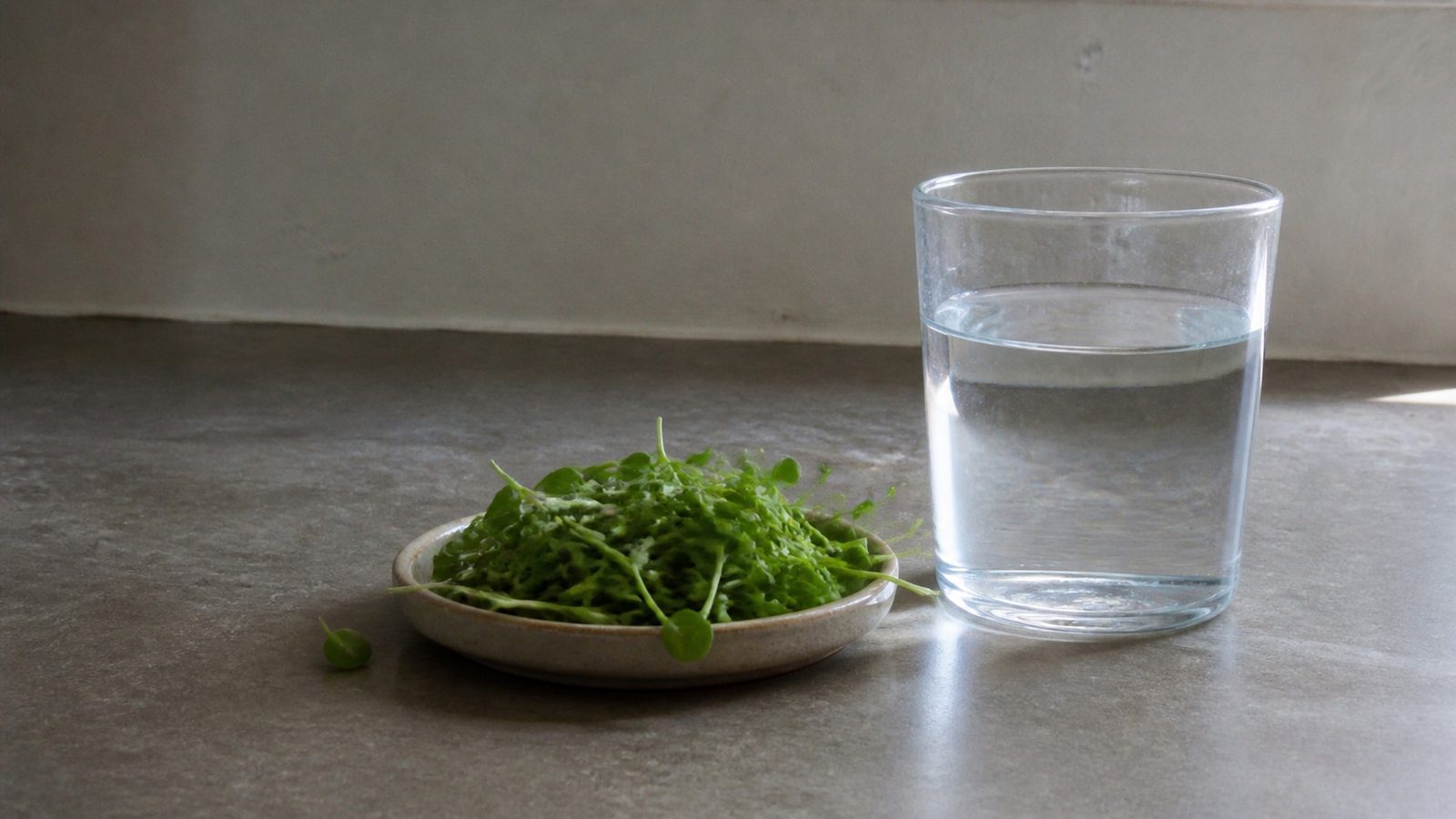
There is one real nutritional contribution here and it is vitamin C: a serving supplies a genuine 5 to 13 percent of a day's value. Zinc is not the reason to eat them, at about one percent a serving, and no study has tested whether eating microgreens makes anybody ill less often.
That gap is why the packet says what it says. "Supports the immune system" is the most marketed claim in the category and the one with the least behind it, and the wording is the tell.
What to actually do
- Eat microgreens because you like them and will actually eat them. A vegetable you eat does more for you than one you buy for a claim.
- Read "supports the immune system" as a legal category rather than a result. It was chosen because it requires no proof.
- Treat "supports resistance to infection" as a different and stronger claim, which regulators class as a disease claim for exactly that reason.
- Ask the five questions: which ingredient, how much per serving, which population, what endpoint, and whether anyone actually got ill less often.
- Do not buy microgreens for zinc. A serving supplies about one percent of a day's value.
- Do buy them for vitamin C if you enjoy them, where a serving is a real 5 to 13 percent contribution.
- If you suspect a genuine deficiency, get it tested rather than gardening at it. Correcting a measured deficiency is the one link in this chain the evidence supports.
- If you are immunocompromised, ask your clinician about raw produce, and judge the crop's handling rather than the word on the label.
"Supports the immune system" is a legal category
That phrase is not a scientific endpoint and it is not a clinical finding. It is a classification.
FDA's guidance says so directly. In US supplement law, "supports the immune system" is offered as an example of a structure or function claim that is deliberately not specific enough, by itself, to imply prevention of disease, because immunity has both ordinary functional roles and disease-fighting ones.
Cross the line and the same regulator treats it differently. "Supports the body's ability to resist infection" and "supports the body's antiviral capabilities" are disease claims, because they invoke fighting disease.
So, the sentence you read on a label was engineered. It is the strongest thing that can be said without triggering a requirement to prove anything. That is a legal classification and not a finding either way, so read the phrase as telling you what the seller is allowed to say, not what anyone measured.
In the EU the mechanism differs and the lesson is the same. An authorized list permits nutrient-specific wording such as "Vitamin C contributes to the normal function of the immune system", and only where the food actually meets the nutrient source condition. Neither system authorizes "microgreens prevent colds." EFSA's own consumer material notes that as of 2023 more than 70 percent of evaluated health claims had been rejected for insufficient evidence.
When you next meet an immune claim, ask five questions. What exact ingredient? How much is in the actual serving? What population was tested? What endpoint was measured? Was the result fewer verified infections, or only a nutrient assertion? If the answer stops at "contains vitamin C", treat it as a contribution to your nutrient intake and nothing more.
What has actually been measured in a person
No trial has measured infections, illness duration or vaccine response after anyone ate a microgreen.
The closest human study used broccoli sprouts, which are a different material. Thirteen healthy nonsmokers took a broccoli sprout homogenate and sixteen took an alfalfa sprout control, each daily shake containing about 111 g of fresh broccoli sprouts and about 100 micromol of sulforaphane, for four days, with a live attenuated influenza vaccine on day 0.
What it found, precisely:
- Stimulated peripheral NK-cell granzyme B rose on day 2.
- It did not increase the measured NK killing assay against control.
- The relationship the paper is best known for was not significant, at p=0.088.
- It did not measure a single cold, an illness duration or an antibody titre.
Put the dose in trays. The median published tray yield is 7.055 ounces, almost exactly 200 g. So 111 g a day is 0.55 of a median tray, of sprouts, for four days, to move one marker in 13 people.
A realistic garnish is 15 g, which is 7.5 percent of a tray. The study dose was 7.4 times that, of a different crop, and it still did not measure whether anyone got ill.
The nutrient argument, and where it breaks
The immune argument usually runs as a chain: microgreens contain vitamin C, vitamin A, zinc and antioxidants; those nutrients have known immune roles; therefore microgreens support immunity.
The first two links are true. The third does not follow, and the reason is published by the NIH itself.
Deficiency correction and adding more are different interventions. The NIH Office of Dietary Supplements states that clinical deficiencies of vitamins A, C, D, E, selenium and zinc weaken immunity, and that in the absence of deficiency, routine micronutrient supplementation probably does little to prevent or treat specific infections.
So, the chain requires you to be deficient. Most people are not.
Hover or tap a row to highlight it.
| Nutrient | Deficient or at risk | Not deficient |
|---|---|---|
| Vitamin A, serum below 20 mcg/dL, 2003 to 2006 | about 1% | 99% |
| Vitamin D, at risk of deficiency, 2011 to 2014 | 5% | 95% |
| Vitamin C, adults, 2017 to 2018 | 6.8% | 93% |
| Zinc, below the sufficiency cut-off, 2011 to 2014 | 8.6% of males, 8.2% of females | about 91% |
| Zinc, below the estimated average requirement, 2005 to 2016 | 15% of adults | 85% |
The global picture is different and worth stating. An estimated 29 percent of children aged 6 months to 5 years in low- and middle-income countries were vitamin A deficient in 2013. Where deficiency is common, food that supplies the nutrient matters a great deal. That is a real argument for vegetables and it is not an argument that a garnish treats immunity in a well-fed adult.
How much of anything a serving actually supplies
A 2025 assay measured six microgreens. Vitamin C ran 32.72 to 80.45 mg per 100 g fresh weight, zinc 31.92 to 129.78 micrograms per 100 g, with the highest zinc figure in the text being 956.34 micrograms per 100 g for sunflower.
Converted to a 15 g serving and to a whole tray:
Hover or tap a row to highlight it.
| Crop | Vitamin C per 15 g | Share of the 90 mg DV | A whole 200 g tray |
|---|---|---|---|
| Red beet | 4.9 mg | 5% | 65 mg, 73% |
| Black radish | 5.0 mg | 6% | 67 mg, 74% |
| Broccoli | 7.4 mg | 8% | 98 mg, 109% |
| Sunflower | 10.1 mg | 11% | 135 mg, 150% |
| Pea | 10.6 mg | 12% | 142 mg, 157% |
| Bean | 12.1 mg | 13% | 161 mg, 179% |
Vitamin C is the real one. A garnish gives 5 to 13 percent of a day's value, and a whole tray gives most of a day to nearly two days. That is a genuine dietary contribution.
Zinc is not. At the highest reported figure, 15 g of sunflower microgreens supplies 0.143 mg of zinc, which is 1.3 percent of the 11 mg Daily Value. Even eating the entire tray reaches 1.91 mg, about 17 percent.
So, if a label or product page leans on zinc, it is leaning on the nutrient the crop supplies least. A realistic serving delivers about one percent of a day's value.
And note which way vitamin C cuts. It is the nutrient microgreens genuinely supply, and roughly 93 percent of US adults already get enough of it, so for most readers the extra vitamin C adds to an intake that is already adequate.
How to check an immune claim you find online
Look for the study behind the claim, and for what it measured. "Studies show" with no citation gives you nothing to check. A study of sulforaphane and chronic disease is not a study of microgreens and infections. And a page whose case is that a nutrient has a known role in the immune system is making the chain above with its third link missing.
Notice whether the page sells a kit, seed or equipment. That does not make its claim false. It is a reason to want the study rather than the description, because a seller describing what it offers and a trial measuring an outcome are different kinds of evidence.
What would settle it
The standard is achievable, because other foods have been held to it. A 2016 double-blind placebo-controlled winter trial in healthy children tested a fermented milk or rice product for three months and reported upper respiratory infection proportions of 48.2 and 58.5 percent against 70.5 percent in placebo. That is a defined food, a season of follow-up and an infection outcome. It is not broccoli and not microgreens, and it shows the study is possible to run.
Acceptable endpoints for an immune trial are well described: protocol-defined or laboratory-confirmed infections, their severity and duration; a vaccine or challenge response such as antigen-specific antibody titre or salivary IgA; and supporting assays such as NK cytotoxicity or lymphocyte proliferation. No single marker measures the immune system, which is exactly why one cytokine or one white-cell count is not "stronger immunity".
Why immunity is harder than blood pressure. Blood pressure has a unit, a measurement method and clinical thresholds. Immune function is a distributed set of barrier, innate and adaptive responses where a higher marker can be helpful, neutral or harmful depending on timing and tissue, and where exposure to pathogens differs enormously between participants.
The trial that would settle it: adults randomized to a chemically characterized microgreen portion or a credible matched control, through at least one respiratory virus season, with PCR-confirmed symptomatic infection as the pre-registered primary outcome, plus duration, severity, adherence, nutrient status and vaccine antibody response.
One real caution, and it is not about immunity
For people with weakened immune systems the relevant risk is food safety, not a speculative immune effect. CDC lists raw sprouts as a riskier choice and cooked sprouts as safer.
Microgreens are not automatically the same product as sprouts, and they are grown and harvested differently, so that warning should not be transferred without looking at how a particular crop was produced and handled. If you are immunocompromised, that is a conversation with your clinician about raw produce generally, and this page is not it.
There is no evidence that eating microgreens suppresses immunity either. The nearest caution concerns zinc at 50 mg a day or more, usually from supplements, which can impair immune function via copper absorption. Food rarely supplies that, and a tray of the highest-zinc crop measured here reaches under 2 mg.
What nobody has measured
- Any human microgreen trial with an infection outcome, a vaccine response or an illness duration.
- Microgreen against mature vegetable at matched intake, for any immune endpoint.
- A dose-response, so there is no known useful amount and no known ceiling.
- The microbiome chain, meaning a single trial measuring a microgreen dose, a reproducible microbiome change, a validated mucosal immune endpoint and then fewer infections in the same population.
- Anything in deficient, older or immunocompromised people, who are the group most likely to benefit if the claim were true.
- Whether food-level intake could suppress immunity, which is unstudied rather than ruled out.
- The cost of running the definitive trial. No published budget exists, and inventing one would not help.
Terms on this page
Tap a term to see what it means.
Structure or function claim. A statement about a nutrient's normal role. In the US it needs substantiation and a disclaimer but no pre-approval, which is why the wording on labels is what it is.
Sources
Opened 2026-08-12. The serving and tray figures are arithmetic performed for this page on the 2025 assay below, using the median published tray yield of 7.055 oz, which is almost exactly 200 g, and a 15 g serving. Recomputing the same assay at the 25 g basis reproduces the source's own figures exactly, which is how the conversion was checked. Where a page returned a CAPTCHA or an error on opening, that is noted and no figure is used that was not visible in the accessible record.
- NIH Office of Dietary Supplements, immune function - the nutrients whose deficiency is potentially adverse to immune function, their specific roles, and the decisive statement that in the absence of deficiency routine micronutrient supplementation probably does little to prevent or treat specific infections.
- NIH ODS, zinc and the same fact sheet on high intakes - the 11 mg Daily Value, the 2011 to 2014 and 2005 to 2016 US prevalence figures, the groups at higher risk, and the caution about 50 mg a day or more impairing immune function through copper absorption.
- NIH ODS, vitamin A and vitamin D - the under 1 percent US serum retinol figure, the 29 percent estimate for children in low- and middle-income countries, and the 2011 to 2014 vitamin D risk figures.
- Balik et al., six-microgreen composition, 2025 - vitamin C at 32.72 to 80.45 mg per 100 g fresh weight by crop, zinc at 31.92 to 129.78 micrograms per 100 g with sunflower's 956.34 figure, and iron. One experiment, not a universal label value.
- Muller et al., broccoli sprout and live attenuated influenza vaccine trial, 2016 - 13 and 16 participants, about 111 g fresh broccoli sprouts and 100 micromol sulforaphane daily for four days, the day 2 granzyme B rise, the absence of an effect on the NK killing assay, the p=0.088 relationship, and the absence of any illness endpoint. The nearest thing to human evidence, and it is sprouts.
- FDA, small entity compliance guide on structure and function claims - that "supports the immune system" is not by itself specific enough to imply disease prevention, while "supports the body's ability to resist infection" and "supports the body's antiviral capabilities" are disease claims. The source of this page's opening argument.
- FDA, dietary supplement labeling guide on claims and FDA on structure/function claims for conventional foods - the required disclaimer wording, and the different treatment of conventional foods and supplements.
- Regulation (EU) No 432/2012 - the authorized wording that vitamin C and zinc contribute to the normal function of the immune system, permitted only where the food meets the source condition. The page rendered minimal text on opening.
- EFSA health claim application requirements, the general function claim glossary, the public health claims page and its 2016 immune claim guidance - the requirement that the food be characterized and supported by human efficacy studies, and the statement that more than 70 percent of evaluated claims had been rejected. These pages returned errors, a 429 and a 403 respectively, so the wording should be rechecked at source before being relied on further.
- A marker review for human nutrition intervention studies and a fermented food infection-outcome RCT in children - the classification of vaccine-specific antibodies, delayed-type hypersensitivity and salivary IgA as highly suitable endpoints with the warning that no single marker measures the immune system, and the 48.2, 58.5 and 70.5 percent infection proportions showing the standard is achievable. Both returned CAPTCHAs, so both are used as leads with their access noted.
- A 2017 to 2018 NHANES vitamin C report - the 6.8 percent adult prevalence below the serum cut-off. Returned a CAPTCHA.
- CDC, safer food choices for people with weakened immune systems - raw sprouts listed as riskier and cooked sprouts as safer. Applied here as a sprout finding, not transferred to microgreens.
- USDA ARS fruit and vegetable data brief, 2022, a USDA ERS vegetable intake chart and MedlinePlus on microgreens - the dietary pattern context, that only 14 percent of adults fully met the fruit and vegetable recommendation on the surveyed day, and the public health framing that eating vegetables in any form is worthwhile.
- Consumer pages making an immune claim, read 2026-08-12 as examples of the argument described above: Microgreens and Sprouts, PotsAlive and Gardening Know How.
Keep reading
The journal
Are Microgreens Anti-Inflammatory? What the Research Really Says
Nobody has fed a person microgreens and measured their inflammation. And when researchers pooled ten broccoli sprout trials, the combined result came out at something that could be zero.
Read Are Microgreens Anti-Inflammatory? What the Research Really SaysThe journal
Best Microgreens for Kidney Health: Potassium by the Serving
See measured potassium and phosphorus for the best microgreens for kidney health, from lowest to highest, plus what your renal dietitian needs to know.
Read Best Microgreens for Kidney Health: Potassium by the ServingThe journal
Do Microgreens Help You Lose Weight? Two Claims, One Answer
One of these claims is probably true and has nothing to do with microgreens. The other was tested by injecting a compound into mice. Here is which is which.
Read Do Microgreens Help You Lose Weight? Two Claims, One AnswerThe journal
Do Microgreens Really Have 40 Times the Nutrients?
The number is real. It belongs to one nutrient in one crop. Used for microgreens as a category it is wrong in both directions, because some pairs run far above 40 and for at least one compound the mature plant is the more concentrated of the two.
Read Do Microgreens Really Have 40 Times the Nutrients?