The Best Microgreen Growing Kit for Home Growers
Cal HewittPublished Checked
- equipment
- growing
- beginner
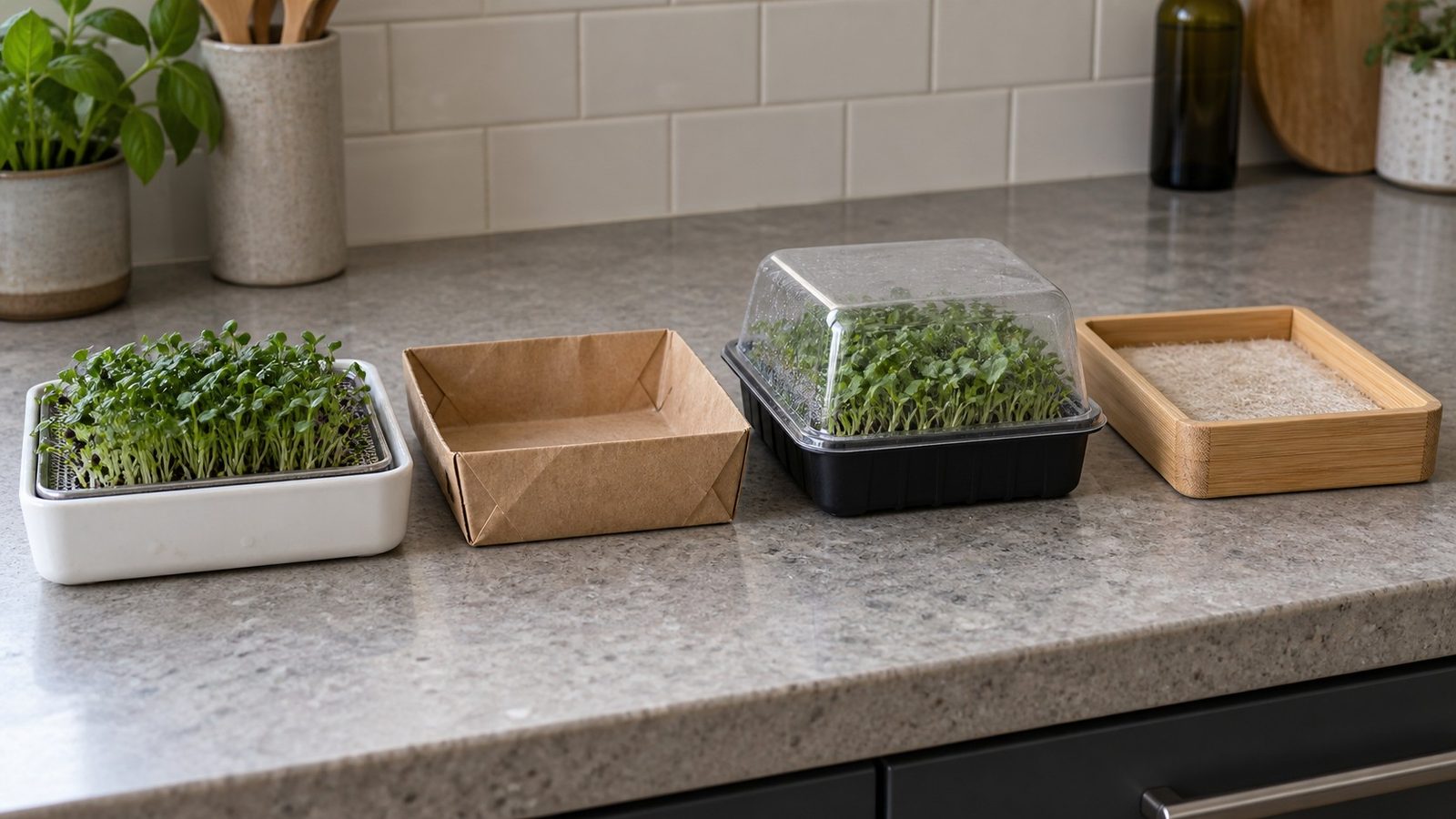
The best kit for you is the one whose box covers what your kitchen is missing, and the first thing to check is light, not brand. None of the eight kits below includes a grow light, and most leave out a cutting tool, so a bright window or a light you already own decides more than the label does.
For a cheap first try, Modern Sprout is $14.99 for one grow. For the most growing area, Honest Seed's 10 x 10-inch tray covers 100 square inches and ships with a spray bottle and seed for three grows.
If you want a harvest every week, none of these kits is sized for that, and a 10 x 20 tray gives you twice the largest one's area.
Check your light before you check the box
Six to eight hours of light a day is what Illinois Extension recommends for good growth, with a sunny south-facing window preferred and LED grow lights as a workable substitute. Its tip sheet puts the figure at 8 to 12 hours once the seeds have germinated. Hold the kits' promises against that, because the makers disagree. Modern Sprout asks for at least six hours of direct light and suggests a sunny east, west or south window or a supplemental light. Hamama says a window or regular ceiling lighting is enough, and KnowingNature says its kit works on any indoor windowsill, even with low light.
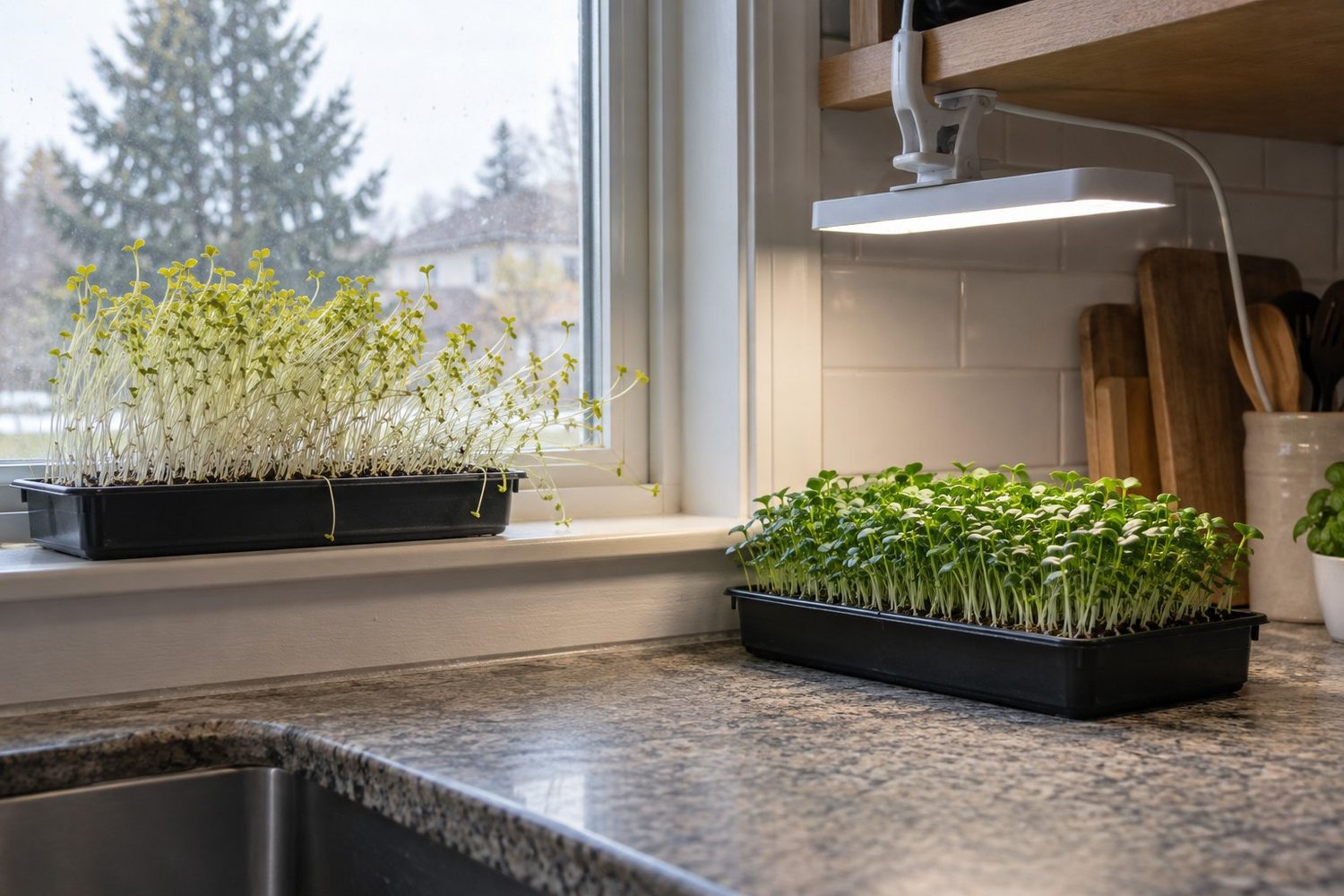
Stand at the counter where the kit would live and count the hours of direct sun it gets. If it gets only two or three, budget for a light alongside the kit. The site's grow light reviews cover the options. A dim counter defeats even a well-stocked box.
The other common gap is a way to cut the crop. Hamama's growing instructions tell you to harvest with scissors or pull, and the micro farmers also directs you to scissors, but no kit on this list includes scissors or a knife. Kitchen scissors do the job.
The eight kits at a glance
The table below lays out each kit's listed price, what you get, and what you still need to bring. Growing area is calculated from the dimensions each maker publishes; "not published" means the listing gave no tray size.
Hover or tap a row to highlight it.
| Kit | Price | Grows in the box | Growing area | You still supply |
|---|---|---|---|---|
| Hamama Grow Kit (ceramic) | US$79 | 3 Seed Quilts | 81.25 sq in | Light if needed, scissors, water |
| Back to the Roots Variety 3-Pack | US$39.99, sold out 2026-09-26 | 6 | Not published | Light if needed, cutting tool |
| Modern Sprout Pop-Up Kit | US$14.99 | 1 | Not published | Sunny window or light, cutting tool |
| Honest Seed Professional Kit | US$39.98 (sale) | 3 | 100 sq in | Light if needed, cutting tool |
| Gurney's Microgreens Growing Kit | US$19.99 | None (no seed) | Not published | Seed, light if needed, spray bottle, cutting tool |
| On The Grow 7x14 Kit | US$32.97 | None (no seed) | 91.44 sq in | Seed, light if needed, cutting tool |
| the micro farmers Small Micro Farm | C$64 | 24 | About 22.5 sq in per tray | Sunlight or a basic grow light, scissors |
| KnowingNature Kitchen Garden Kit | US$39 | 3 | 44.625 sq in | Light if needed, sprayer, cutting tool |
What each kit contains
Each entry covers what the listing says is in the box, what's missing, and the maker's harvest timeline.
Hamama Grow Kit, ceramic edition
At US$79, this is the most expensive starting price here. You get one reusable ceramic tray measuring 12.5 x 6.5 x 2 inches, instructions, and three Seed Quilts chosen from varieties such as kale, broccoli, daikon radish and salad mix. A Seed Quilt is Hamama's pre-seeded coconut-fiber pad, so there's no soil and no measuring. Hamama says most microgreens are ready in 7 to 10 days, and it markets each Quilt at about 3.5 ounces of greens. That figure is the maker's claim; no owner in this research reported a weighed Hamama harvest.
The tray is designed exclusively for Seed Quilts, according to Hamama's ceramic kit page, so refills come from Hamama. On seed labeling, the kit page says all seed is non-GMO and "most" options are certified organic, while the refill listing describes them all as organic and non-GMO. If that matters to you, check the specific Quilt before you order.
Back to the Roots Organic Microgreens Variety 3-Pack
For US$39.99 you get six complete grows: six seed packets (two each of Rainbow Mix, Mighty Mix and broccoli), six compostable trays, six expanding soil discs, six tray covers and a growing guide. That works out to $6.67 per included grow. The listing gives no tray dimensions and no seed grams, and no scissors or light are listed.
Back to the Roots says 7 days to harvest and labels the kit "100% Organic & Non-GMO." The kit page lists no refill; Back to the Roots sells a US$9.99 Mighty Mix seed refill that it says is enough for 8 grows of its Ceramic microgreens kit. When checked on September 26, 2026, both the Variety 3-Pack and the refill showed as sold out at the maker, so check stock before you plan around them.
Modern Sprout Microgreens Pop-Up Kit
This is the lowest entry price on the list at US$14.99. The box holds one biodegradable tray, certified-organic broccoli or radish seed, a natural-fiber pad, a pop-up card, instructions and optional daily texts. The listed product size is 9 x 6.25 x 1 inches, though the page doesn't label that as the tray itself. Before planting you soak the seed for four hours; Modern Sprout says the seeds sprout in two days and the kit is ready to harvest in 7 to 10 days.
It's a one-time grow, though the maker says you can split the seed into two thinner plantings. Read its light guidance closely: one part of the page mentions indirect sunlight at 70°F, while its FAQ asks for six or more hours of direct window light. Go with the brighter instruction.
Honest Seed Co. Professional Microgreen Growing Kit
Honest Seed's kit was listed at a US$39.98 sale price, and it's the most fully stocked box on this list. You get a 10 x 10-inch growing tray and a drip tray, a 30-ounce spray bottle, three 10 x 10-inch jute mats, and three pre-measured seed packs: 10 grams of broccoli, 10 grams of Basic Salad Mix and 30 grams of White Stem Radish. It lists no light and no cutting tool, and it lists no bundled refill price. Its ordinary tray and jute mats could plausibly take your own seed later, though Honest Seed publishes no compatibility statement.
Gurney's Microgreens Growing Kit
Gurney's costs US$19.99 and is hardware only: two mini propagators, one tray, two humidity domes and vermiculite. The listing says "Just add seeds," and no seed is included. It lists no light or spray bottle and publishes no dimensions.
On The Grow 7x14 Kit
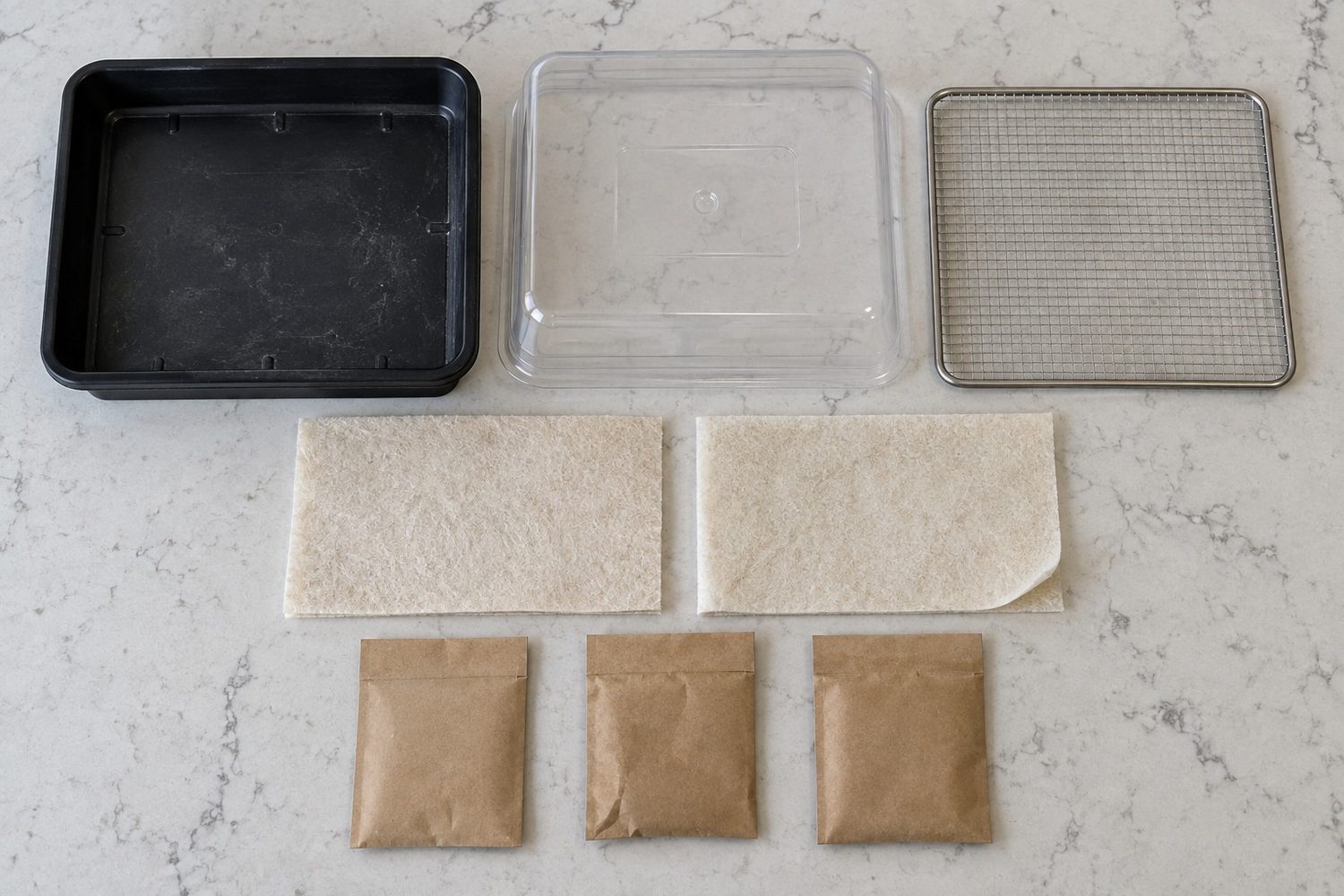
On The Grow is US$32.97 for a mesh tray, a reservoir base, a clear dome, two 7 x 14-inch silicone growing sheets, a scraper and digital instructions. The mesh tray interior is listed at 13.75 x 6.65 inches, or 91.44 square inches. The page says plainly that seed, a grow light, nutrients, soil and coir are not included. The sheets and tray are reusable, and the maker says soil or coco coir can stand in for the silicone.
the micro farmers Small Micro Farm
This Canadian kit is C$64 and holds the most plantings: six BPA-free trays, 24 hemp mats and 24 organic seed portions (eight 20-gram pea portions, eight 4-gram brassica portions and eight 5-gram radish portions), plus a booklet and support. Each tray is small, about 3.75 x 6 x 0.75 inches, or roughly 22.5 square inches. The included plantings work out to C$2.67 each. The maker says to add clean water and sunlight or a basic grow light, and it gives about 2 to 3 weeks to harvest, longer than the other makers' timelines.
KnowingNature Organic Kitchen Garden Kit
KnowingNature is US$39 for one reusable 8.5 x 5.25 x 1.8-inch planter, three organic seed portions (broccoli, salad mix and purple radish), three organic coir discs and instructions. It doesn't publish seed grams or a refill price, and no light, sprayer or cutting tool is listed. The maker says 10 days to harvest and markets the kit to beginners, children and people with limited mobility.
How much the kits actually grow on
A standard 10 x 20-inch tray is nominally 200 square inches, and the percentages below use that nominal figure; the inside floor of a shallow 1020 is about 187 square inches. Against the nominal 200, Honest Seed's tray is 50 percent of a 10 x 20, On The Grow is 46 percent, Hamama is 41 percent, KnowingNature is 22 percent, and one micro farmers tray is about 11 percent. Back to the Roots, Gurney's and Modern Sprout don't publish tray sizes.
That compares footprint, not yield, but if you want greens several times a week the ceiling is clear: the largest published kit tray is half a standard tray. The tray reviews and growing medium reviews cover the pieces for a full-size setup, and the countertop unit reviews cover pod gardens that handle light and water for you.
What refills cost after the first box
Two makers publish a clear refill path for the kits reviewed here, and Back to the Roots publishes one for its Ceramic kit. Hamama's Classic Seed Quilts are US$22 for 3, US$59 for 9, US$99 for 18 and US$169 for 36, which is US$4.69 per Quilt at the largest pack. Its subscription is US$17 a month for three Quilts, or US$204 over a year for 36, so buying 36 at once costs US$35 less than a year of the subscription at the prices listed.
The micro farmers' C$42 refill brings a planting to C$1.75. Back to the Roots' US$9.99 Mighty Mix refill is stated as 8 grows of its Ceramic kit, about US$1.25 a grow, and was sold out on September 26, 2026.
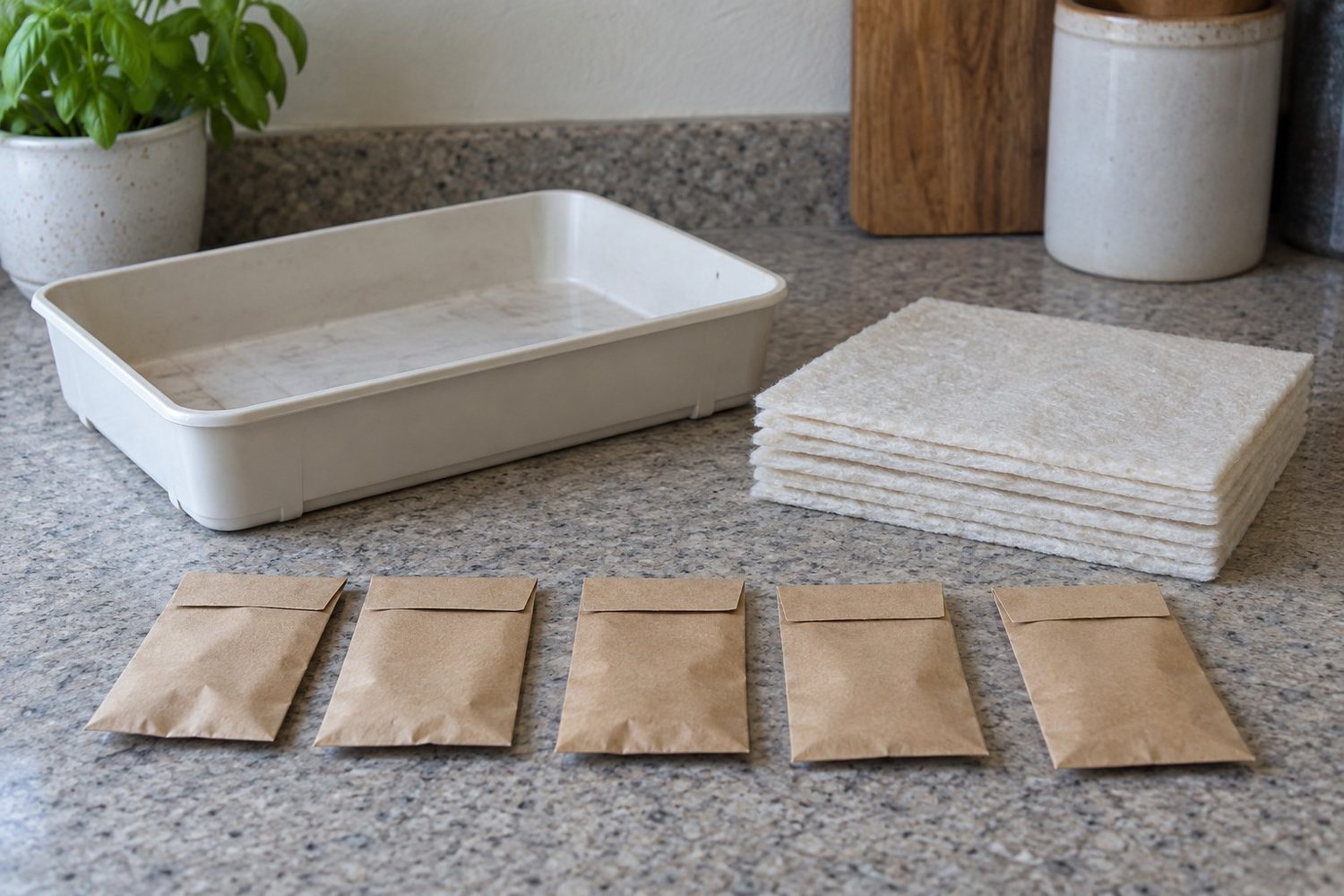
For the rest, you either buy a new kit or put your own seed and medium into the hardware, which Gurney's and On The Grow expect from day one. Back to the Roots, Modern Sprout and KnowingNature publish no guidance on using ordinary seed. If running cost is the deciding question, the site's grow kits against DIY cost comparison works through the numbers for a tray you assemble yourself.
What no one has measured yet
Compare kits on the things you can check yourself: tray size, light output in watts and refill cost. Every "easy" and every yield figure on a listing is the maker's claim, including Hamama's 3.5 ounces per Quilt and Modern Sprout's "over a month" of greens.
The clearest owner report located was one r/microgreens user who said a ZestiGreens kit, which isn't among the eight here, took twice its promised time and gave a "pitiful" yield, with no weight or setup details given (Reddit thread). That's one person's experience. Whatever kit you buy, weigh your first harvest, write down the date you planted and where the tray sat, and judge the refill cost against your own number.
Which kit fits your situation
A first try on a sunny windowsill. Modern Sprout at $14.99 is the smallest commitment, as long as the window gives it the six hours it asks for. Back to the Roots' Variety 3-Pack gives you six grows in one order if you already know you'll want a second and third round, but it showed as sold out at the maker on September 26, 2026, so check stock first.
A gift or a kid's project. Modern Sprout markets its kit as a family STEM activity, and KnowingNature names kids and beginners directly. Both come with seed and medium portioned out, so there's nothing to measure.
The most complete box. Honest Seed includes a spray bottle, three mats, pre-measured seed and the largest tray here. You'd still add scissors and, depending on your window, a light.
Soil-free and low mess. Hamama and On The Grow both use a water reservoir. Hamama's pre-seeded Quilts are simplest but tie you to its refills; On The Grow asks you to source seed and leaves the choice open.
You already grow and buy seed. Gurney's propagators with domes or On The Grow's reusable tray make sense, since you pay for hardware, not seed portions.
You want weekly harvests or several trays. Skip the kits. A 10 x 20 tray setup, with a light if your counter needs one, gives you double the area of the biggest kit here. The beginner microgreens guide walks through starting one.
Frequently asked questions
Will a kit give me a second harvest from the same greens?
No. University of Maryland Extension says microgreen seedlings don't regrow after cutting, and Hamama tells you to compost a used Quilt and start a new one (University of Maryland Extension). Maryland does allow reusing dried medium, screened and mixed 50:50 with fresh mix, for a new planting.
Does organic kit seed mean it's free of bacteria?
No. University of Nevada, Reno notes that seeds can carry pathogens whether the crop comes from a kit or a DIY tray, and it advises clean media and water, sanitized surfaces and handwashing (University of Nevada, Reno). Canada's CFIA recalled one kit, the Terrafibre Microfarmer Kit, Broccoli, lot 090821, for Salmonella in a notice dated November 10, 2021 (CFIA recall). None of the eight listings here says its seed is untreated or publishes a pathogen-test specification.
How warm does my kitchen need to be?
Illinois Extension says microgreens grow best around 70°F, with 70 to 75°F as the ideal air temperature, and they'll tolerate 50°F with slower growth (Illinois Extension tip sheet). A cool room will stretch any kit's promised harvest time.
Is a kit safe for a child to run alone?
None of the eight listings publishes a formal age or supervision requirement. Modern Sprout says its kit is for indoor use only and involves a four-hour seed soak. Plan to supervise the seed soak, the scissors at harvest and handwashing before anyone eats the greens.
How do I keep a kit from going moldy?
Keep the medium moist rather than sopping wet, check it every day, and switch to bottom watering after the seeds germinate, according to Illinois Extension. Don't leave water puddled in the tray. It applies to mat and soil kits alike.
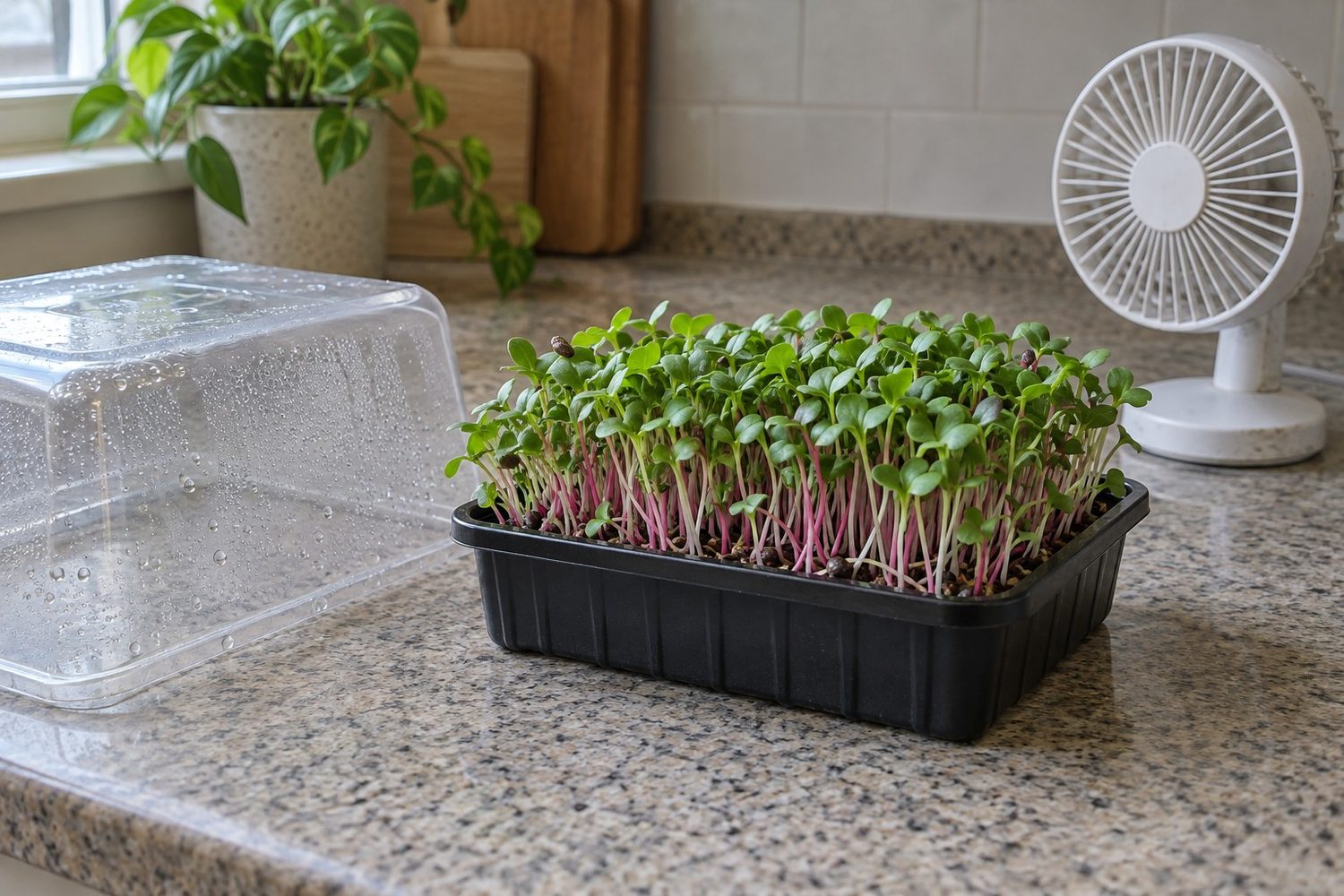
Before you order
Count the hours of light at the spot where the kit will sit, set out a pair of scissors, and then pick the box that covers the rest. A small kit is a fair way to find out whether you like growing microgreens. Once you know, weigh what that first tray gave you and compare it with a full-size tray before you buy the next refill.
Sources
Prices, stock and specifications are as the linked pages showed them on 2026-09-12, except where the text gives a later check date.
Keep reading
The journal
Growing Microgreens Without a Grow Light on a Windowsill
A sunny windowsill can grow microgreens without a grow light for many crops, though stems run longer and paler. Learn which window and crops work best.
Read Growing Microgreens Without a Grow Light on a WindowsillThe journal
Are Grow Lights a Fire Hazard? A Checklist for Tonight
Wondering if your grow lights are a fire hazard? Add up the actual watts and amps on your rack, then check them against your circuit and timer limits tonight.
Read Are Grow Lights a Fire Hazard? A Checklist for TonightThe journal
Best Potting Soil for Microgreens: Cost per Tray
Compare the best potting soil for microgreens by ingredients, bag size, trays filled per bag, and cost per tray, plus problems to expect from each mix.
Read Best Potting Soil for Microgreens: Cost per TrayThe journal
Can You Grow Microgreens in an AeroGarden? What Owners Do
The AeroGarden MicroGreens Kit is hard to find. Learn how owners still grow microgreens in an AeroGarden with a simple tray beside the light.
Read Can You Grow Microgreens in an AeroGarden? What Owners Do