Microgreens for Seniors: Nutrition, Safety, and Serving Size
Cal HewittPublished Checked
- health
- nutrition
- food safety
- evidence
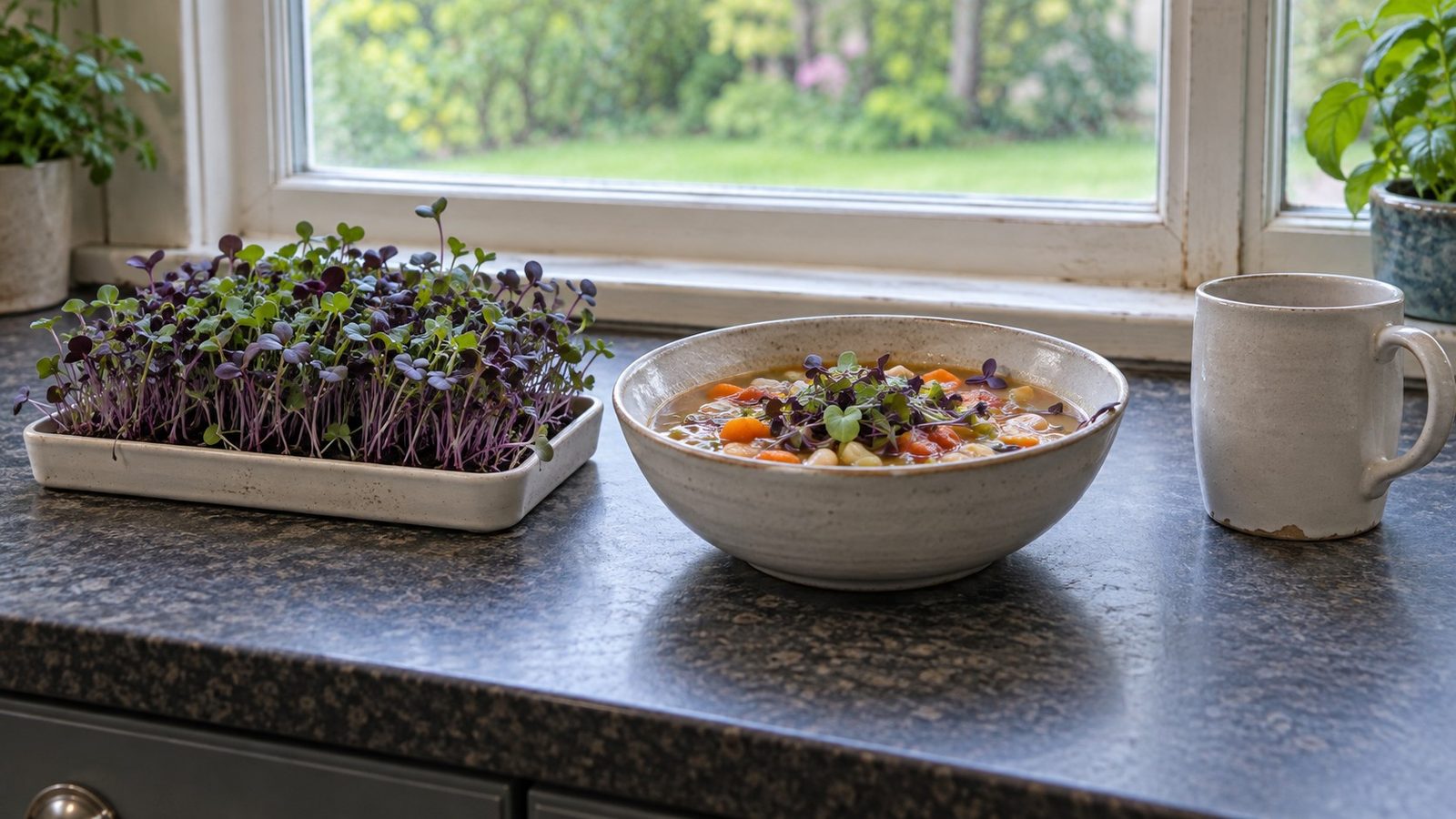
Microgreens can earn a place in an older adult's meals if you treat them as a vegetable with known numbers, not a cure. In the one completed feeding trial built around middle-aged and older adults, people aged 45 to 70 ate 2 cups a day, about 30 grams, for two weeks at a time, and almost all of them kept it up.
That amount of red cabbage microgreens carries roughly half the vitamin C a man over 50 needs in a day. After 65, food safety, medicines and swallowing matter more, and each has a clear next step. This page is information, not medical advice; your doctor, pharmacist or speech-language pathologist has the final word on your situation.
What the 2025 feeding trial tested, and who it left out
The study to know is Lee et al. 2025, published in Nutrients on 28 January 2025 and registered as NCT04239898. It was a randomized, open-label, two-period crossover trial. Twenty-six healthy adults aged 45 to 70 enrolled and 24 finished; those 24 averaged 57 years old, 9 men and 15 women. Each ate 2 cups a day of Bull's Blood beet or red cabbage microgreens, raw and spread through the day, for two weeks, took a two-week break, then ate the other crop for two weeks.
The trial answered a narrow question: can people eat this much, day after day? Feasibility was measured as retention and compliance. Retention was 24 of 26, and reported compliance was 95.6%. The authors also tracked stomach symptoms, bowel movements, blood pressure and blood flow readings, and gut bacteria, and reported that "There were no changes in bowel movement quality, hemodynamic parameters, or on alpha or beta diversity of the gut microbiota." The full paper is plain about the limit: "The study was not designed or powered to evaluate potential benefits." The amount was eaten and tolerated for two weeks. That is the finding, and it is not a health benefit.
The trial excluded anyone with cardiovascular disease, high blood pressure, diabetes or kidney disease, and anyone taking medicine for cholesterol, triglycerides or blood sugar. Nobody over 70 was eligible. If you are over 70, frail, or on one of those medicines, the results describe a younger, healthier group than you. One detail for the shopping list: participants found the beet microgreens bitter.
The authors measured a 2-cup serving on a scale three times and averaged it: 30.4 g for red cabbage and 28.1 g for Bull's Blood beet. A USDA-funded trial planned for 2026 through 2029 defines 1 cup as 15 g and 2 cups as 30 g. Those two crops are the only ones with published cup weights, so for anything else, put your usual portion on a kitchen scale once, write the number down, and work from that. Daily amounts are covered in how much microgreens per day, and portion prices in microgreens serving size and cost.
How much vitamin C and vitamin K a serving gives after 50
The crop numbers come from Xiao et al. 2012, which measured 25 commercial microgreens. The table uses vitamin C values from the paper's crop tables, per 100 g and for a 5 g garnish.
Hover or tap a row to highlight it.
| Microgreen | Vitamin C per 100 g | Vitamin C per 5 g garnish |
|---|---|---|
| Red cabbage | 147.0 mg | 7.35 mg |
| Garnet amaranth | 131.6 mg | 6.58 mg |
| China Rose radish | 95.8 mg | 4.79 mg |
| Bull's Blood beet | 46.4 mg | 2.32 mg |
| Arugula | 45.8 mg | 2.29 mg |
At the trial's serving weight, 30.4 g of red cabbage microgreens gives about 44.7 mg of vitamin C. NIH's Office of Dietary Supplements sets the RDA for adults 51 and over at 90 mg for men and 75 mg for women, so that serving covers about 50% of a man's target and 60% of a woman's. People who smoke need 35 mg more. The 28.1 g beet serving gives 13.0 mg, and a 5 g red cabbage garnish gives 7.35 mg, under a tenth of either target. The trial didn't analyze its own crops, so these figures use Xiao's commercial samples, and your tray will vary with seed, growing conditions and storage.
To check your own plate, multiply the milligrams per 100 g by the grams you eat, divide by 100, and compare with your RDA. That tells you what is on the fork, not whether your vitamin C status needs help. Vegetables in general run short at every adult age: in CDC data from 2019, only 10.0% of US adults met the recommendation of 2 to 3 cup-equivalents a day, and 12.5% of adults 51 and older did.
Vitamin K1 is the other large number. The same per-gram values put 30.4 g of red cabbage microgreens at about 85 mcg, which is 71% of the 120 mcg adequate intake for men and 95% of the 90 mcg adequate intake for women 51 and over (NIH ODS). The beet serving comes to about 56 mcg. A 5 g garnish gives 20.5 mcg of garnet amaranth, 14.0 mcg of red cabbage or 10.0 mcg of Bull's Blood beet. That matters most if you take warfarin, covered below. For side-by-side crop comparisons, see which microgreen is most nutritious.
What microgreens won't cover: vitamin D, B12 and protein
The Dietary Guidelines for Americans, 2025 to 2030, released in January 2026, replaced the 2020 to 2025 edition. They say some older adults "require equal or greater amounts of key nutrients such as protein, vitamin B12, vitamin D, and calcium," and set a general protein goal of 1.2 to 1.6 g per kg of body weight a day.
Microgreens do little for that list. The Xiao study measured vitamin C, vitamin E, vitamin K1 and carotenoids, not vitamin D or B12, so the study gives no amount of either to count. Protein is small: Kowitcharoen et al. 2021 listed red cabbage microgreens at 1.88 g per 100 g, about 0.57 g in the trial's 30.4 g serving. For a 70 kg person aiming at 1.2 g per kg, or 84 g a day, that is under 1%. Protein, B12 and vitamin D have to come from the rest of the plate, and kidney disease can change the protein target, so ask your doctor or dietitian what yours is.
Food safety after 65: the numbers and the steps that matter
The CDC (2 May 2024) says nearly half of people 65 and older with a lab-confirmed Salmonella, Campylobacter, Listeria or E. coli illness are hospitalized. Its Listeria page explains that with age the immune system has a harder time clearing harmful germs, and there is less stomach acid to kill them.
Listeria shows the age gap most clearly. A CDC FoodNet analysis of 1996 to 2012 (Scallan et al. 2015) recorded Listeria at 1.4 cases per 100,000 people 65 and older, against 0.1 at ages 5 to 64, in its age tables. Of Listeria patients 65 and older, 21.9% died, rising from 14.7% at 65 to 69 to 25.2% at 85 and older.
The CDC's page dated 24 September 2025 says more than half of Listeria infections are in people 65 and older, and 1 in 6 older adults with Listeria die. The two death figures cover different years and case definitions, and both describe people who were already sick. Neither tells you the odds that a given serving will make you ill.
The CDC's list for adults 65 and older puts raw or undercooked sprouts and unwashed fresh produce, including leafy greens, among the foods to take care with; washed produce is safer, and washed and cooked is safest. The FDA says people at higher risk should avoid raw or lightly cooked sprouts of any kind and should wash produce under running water, which lowers bacteria without removing all of it.
Neither agency names microgreens. They are grown and harvested differently from sprouts, so sprout rules don't carry over automatically, but raw greens of any kind carry some risk. The FDA's model Food Code 2022 treats raw seed sprouts and cut leafy greens as time and temperature control foods, meaning they have to stay cold to stay safe.
For someone 65 or older, that comes down to a few habits:
- Keep microgreens refrigerated from the store or tray to the plate.
- Wash them under running water just before eating.
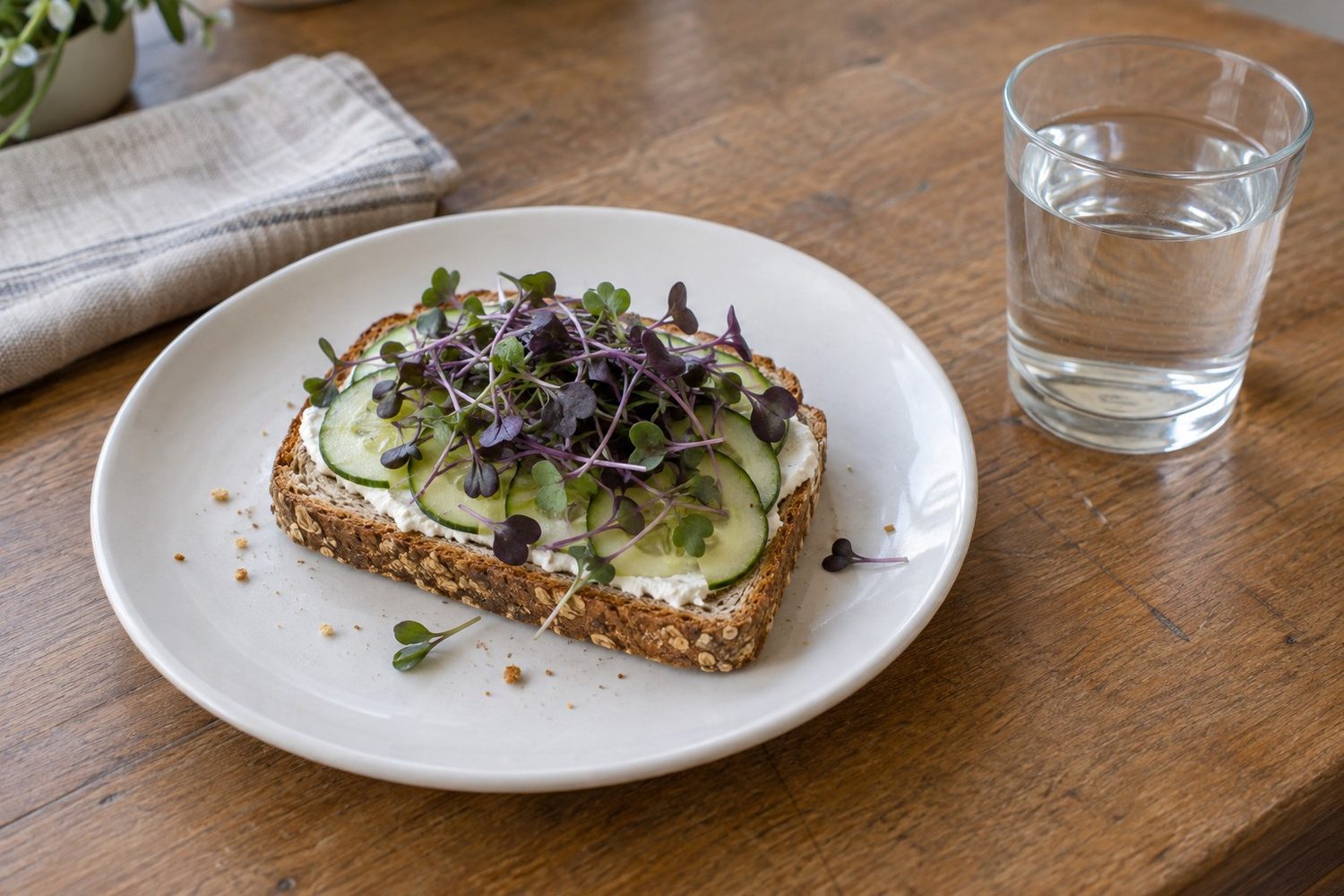
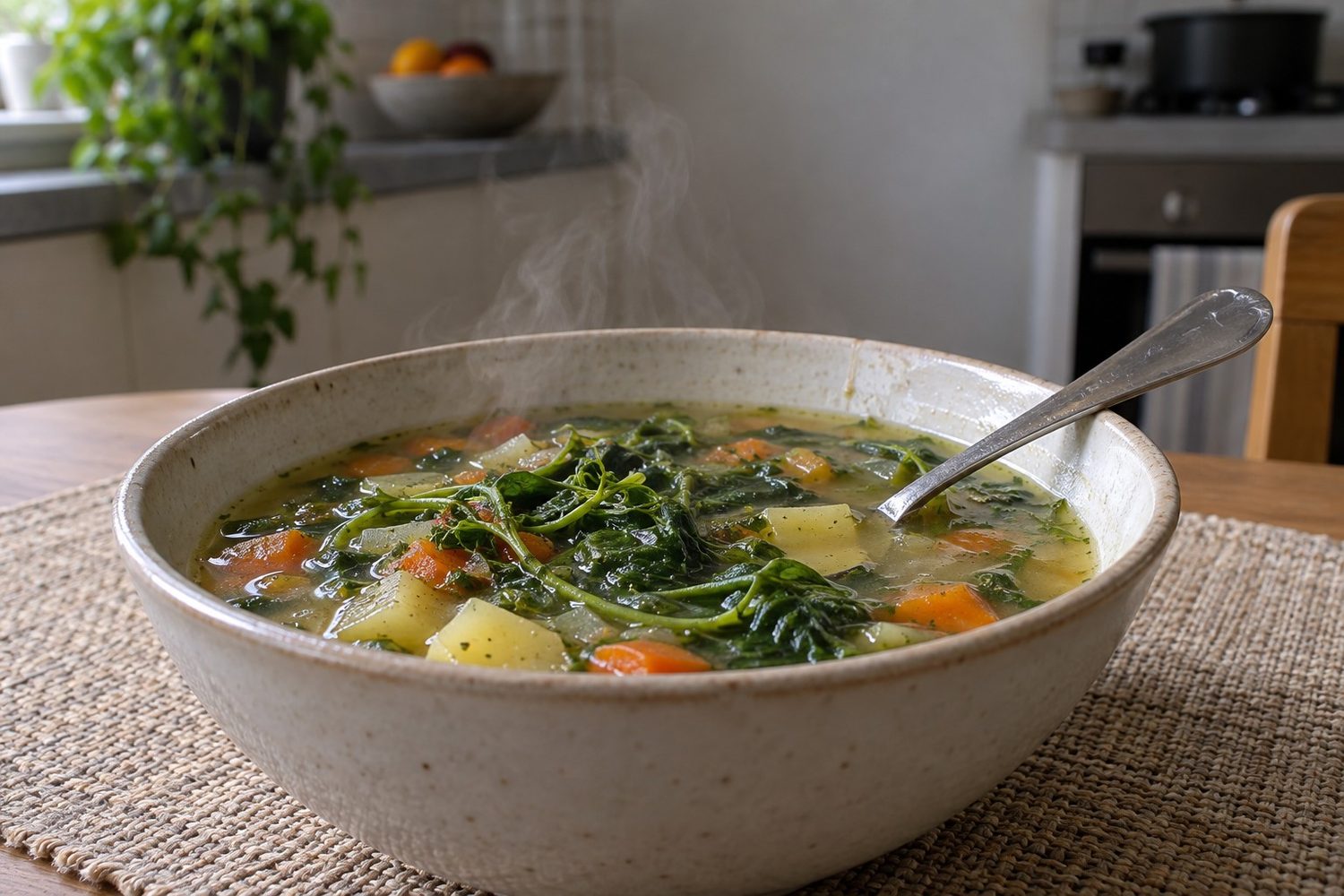
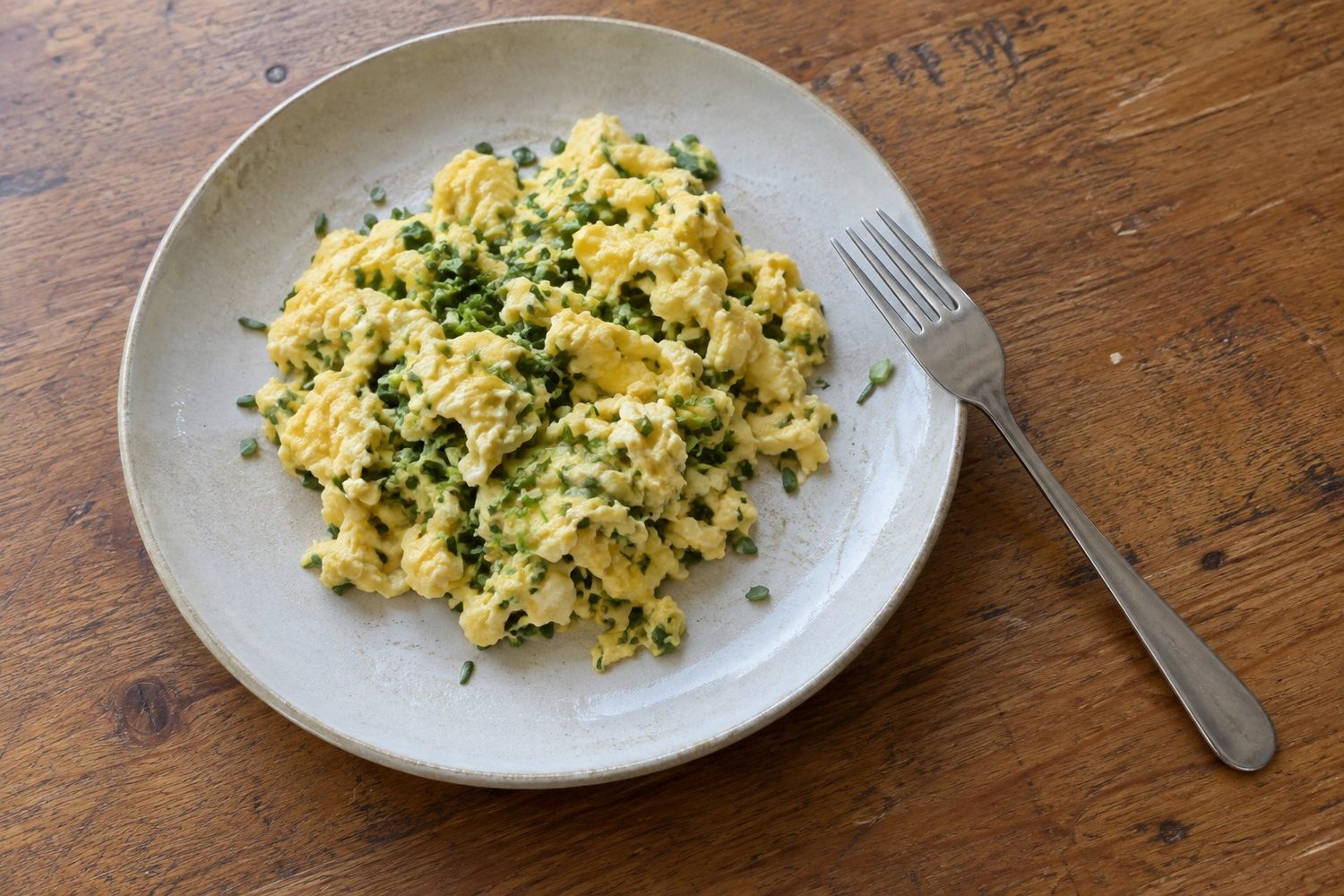
- Cook them into soups, eggs or sauces if a doctor has told you to avoid raw produce. The FDA also names people with cancer, diabetes, HIV/AIDS or an organ transplant as especially vulnerable. Can you cook microgreens covers what heat does to them.
- Follow recalls on anything you buy; produce recalls and growing your own covers that side, and are microgreens safe to eat raw covers raw eating in general.
Blood thinners, thyroid medicine and kidney disease: questions to bring
If you take warfarin, the NHS (reviewed 9 September 2024) says of vitamin K foods: "You can still include these in your diet while taking warfarin, as the clinic will adjust your dose accordingly, but it's important to be consistent in the amount you eat." A daily red cabbage serving near 85 mcg is the kind of change to raise with your anticoagulation clinic first, and the vitamin K detail is in microgreens and bone health. The same NHS page says these food restrictions don't usually apply to apixaban, dabigatran, edoxaban or rivaroxaban, and still tells you to check with your clinic or pharmacist.
Two more points apply to vegetables generally, not microgreens in particular. Mayo Clinic says dietary fiber may reduce how much levothyroxine you absorb, and that medicines containing calcium or iron should be taken at least 4 hours apart from it; ask your pharmacist about timing if your meals around that pill change. The National Kidney Foundation says "most people with CKD do not have to limit leafy greens because of potassium," while a doctor or kidney dietitian may discuss amounts if your potassium runs high or you are on hemodialysis.
Chewing and swallowing small, floppy leaves
Small doesn't automatically mean easy to swallow. IDDSI, the international body that sets food texture levels for people with swallowing difficulty, states in its 2019 texture standards: "Floppy textures are a choking risk because if they are not chewed into small pieces they become thin and wet and can form a covering over the opening of the airway." Its examples are lettuce, thin sliced cucumber and baby spinach leaves. IDDSI doesn't assign microgreens a texture level.
If you or the person you cook for is on a texture-modified diet, raw microgreens are a question for the speech-language pathologist who set that diet. Our reasoning, not a study: tiny leaves may be easier for some people and harder for others, since stem length, stringiness, moisture, amount and dressing all change how they behave in the mouth. The clinician who knows your swallow should decide.
Flavor matters too. The National Institute on Aging notes that aging, dental problems and some medicines can change taste and smell, which affects appetite, and suggests herbs, spices or lemon to add flavor. Start small with any microgreen, since bitterness put some trial participants off the beet.
Whether growing a tray is worth your time and money
Growing and eating have separate evidence. For gardening as an activity, a 2024 review (Giang et al.) pooled 27 horticultural therapy studies with 1,629 adults 60 and older without dementia and reported small improvements in self-efficacy, self-esteem, aerobic endurance and agility. The authors rate that evidence themselves: "the certainty of this evidence is very low due to the quasi-experimental design and potential bias in outcome measurements." Those were gardening programs, not microgreens, so take up a tray because you'd enjoy it, not for promised results.
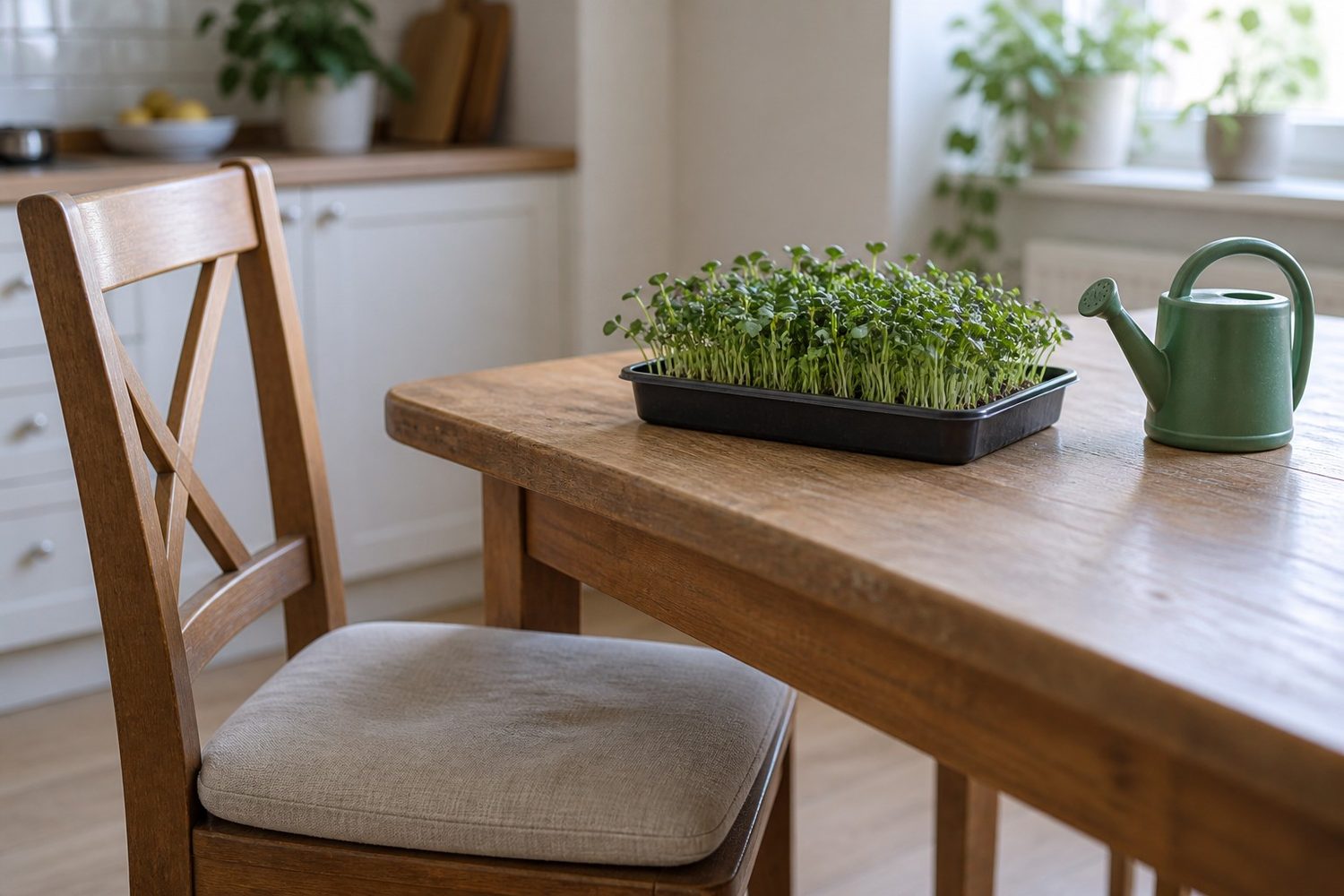
Our reasoning, again not a study: even a countertop tray means carrying water, lifting filled trays, reaching, and fine hand work at sowing and harvest. A University of Georgia Extension post from September 2026 says most gardening injuries come from heavy lifting and repetitive motion, and suggests 20 to 30 minute work blocks, lightweight tools and a seat or cart. For microgreens, that points to small light trays at a comfortable height and help moving anything heavy; an occupational therapist's advice comes first. Windowsill and jar setups are in small spaces and jars.
On cost, Vermont's USDA market report for the week of 6 August 2023 listed certified organic microgreens at $48.00 per pound, against $14.60 for organic specialty mixed greens and an average of $11.95 for organic baby-leaf lettuce. That is one state and one week, but buying them daily adds up. Growing isn't free either: seed, growing medium, trays, light and time all count, and a kitchen scale tells you what each tray yields.
Common questions
A few practical questions about benefits, care homes and new studies.
Can SNAP benefits pay for microgreen seeds?
USDA's SNAP eligible foods list includes seeds and plants that produce food for the household to eat, so edible microgreen seeds fall within that rule. Whether a store accepts SNAP for a given product still depends on the retailer and the label.
Can a nursing home kitchen serve raw microgreens?
The FDA Food Code bars ready-to-eat raw seed sprouts in places serving a highly susceptible population, but it does not name microgreens, and each facility follows its state or local code. CMS allows nursing home gardens and says residents may benefit from fresh foods if foodborne illness dangers are addressed and harvests are handled safely.
Is anyone studying microgreens and blood pressure in older adults?
The USDA-funded project at Florida State University, running January 2026 to December 2029, plans to enroll 105 adults aged 45 to 75 with above-normal blood pressure for eight weeks of 1 cup (15 g), 2 cups (30 g) or no red cabbage microgreens a day. It excludes anyone who used warfarin in the prior three months, and no results have been published.
Deciding whether microgreens fit your routine
The feeding trial shows that about 30 g a day was eaten and tolerated for two weeks by healthy adults aged 45 to 70, and nothing about benefits, people over 70, or people on common heart and blood sugar medicines. That red cabbage serving gives about half of a man's vitamin C target and 60% of a woman's; a garnish gives far less, and neither does much for vitamin D, B12 or protein. After 65, keep microgreens cold, wash them under running water, and cook them if raw produce is off your list.
Before making them a daily habit, bring your questions to the right person. Ask your anticoagulation clinic about a steady vitamin K amount if you take warfarin, and your pharmacist about timing if you take levothyroxine. Ask your doctor or kidney dietitian if you have kidney disease. Ask your speech-language pathologist if you follow a texture-modified diet. If the answers are clear, a small, steady portion on foods you already enjoy is a reasonable start, and a light tray on the counter is a hobby worth trying on its own merits.
Sources
Prices, stock and specifications are as the linked pages showed them on 2026-09-13.
- Lee et al. 2025
- NCT04239898
- full paper
- USDA-funded trial planned for 2026 through 2029
- Xiao et al. 2012
- paper's crop tables
- NIH's Office of Dietary Supplements
- CDC data from 2019
- NIH ODS
- Dietary Guidelines for Americans, 2025 to 2030
- 2020 to 2025 edition
- Kowitcharoen et al. 2021
- CDC (2 May 2024)
- Listeria page
- Scallan et al. 2015
- age tables
- FDA
- Food Code 2022
- NHS
- Mayo Clinic
- National Kidney Foundation
- 2019 texture standards
- National Institute on Aging
- Giang et al.
- University of Georgia Extension post
- market report
- SNAP eligible foods list
- CMS
Keep reading
The journal
Are Microgreens Anti-Inflammatory? What the Research Really Says
Inflammation has not been measured in people eating microgreens. And when researchers pooled ten broccoli sprout trials, the combined result came out at something that could be zero.
Read Are Microgreens Anti-Inflammatory? What the Research Really SaysThe journal
Best Microgreens for Kidney Health: Potassium by the Serving
See measured potassium and phosphorus for the best microgreens for kidney health, from lowest to highest, plus what your renal dietitian needs to know.
Read Best Microgreens for Kidney Health: Potassium by the ServingThe journal
Do Microgreens Help You Lose Weight? Two Claims, One Answer
One of these claims is probably true and has nothing to do with microgreens. The other was tested by injecting a compound into mice. Here is which is which.
Read Do Microgreens Help You Lose Weight? Two Claims, One AnswerThe journal
Do Microgreens Really Have 40 Times the Nutrients?
The number is real. It belongs to one nutrient in one crop. Used for microgreens as a category it is wrong in both directions, because some pairs run far above 40 and for at least one compound the mature plant is the more concentrated of the two.
Read Do Microgreens Really Have 40 Times the Nutrients?