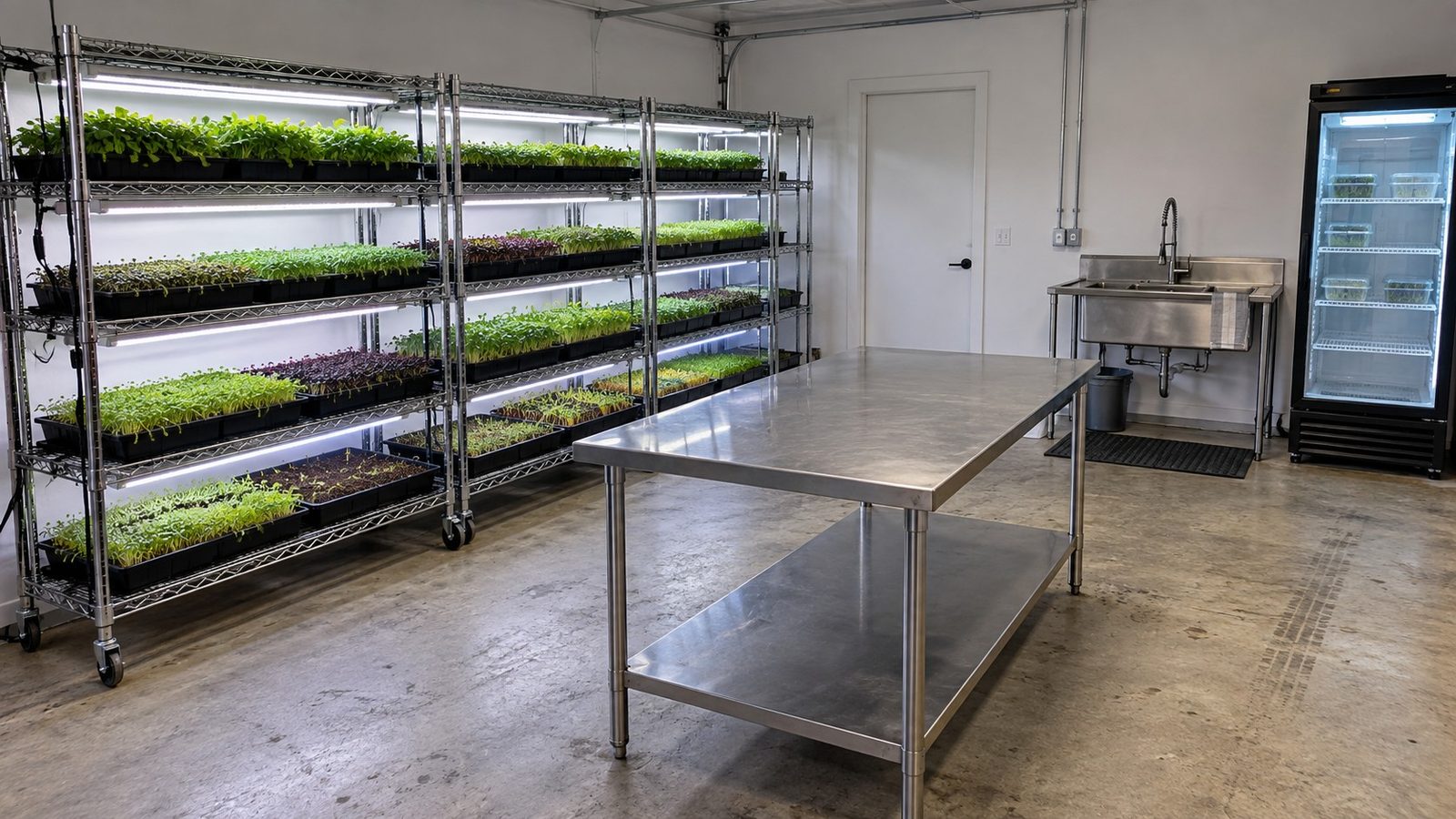
Buying a Microgreens Business for Sale: What to Check First
Thinking about a microgreens business for sale? Learn how sellers state cash flow, what SBA loans require in 2026, and what to check before you buy.
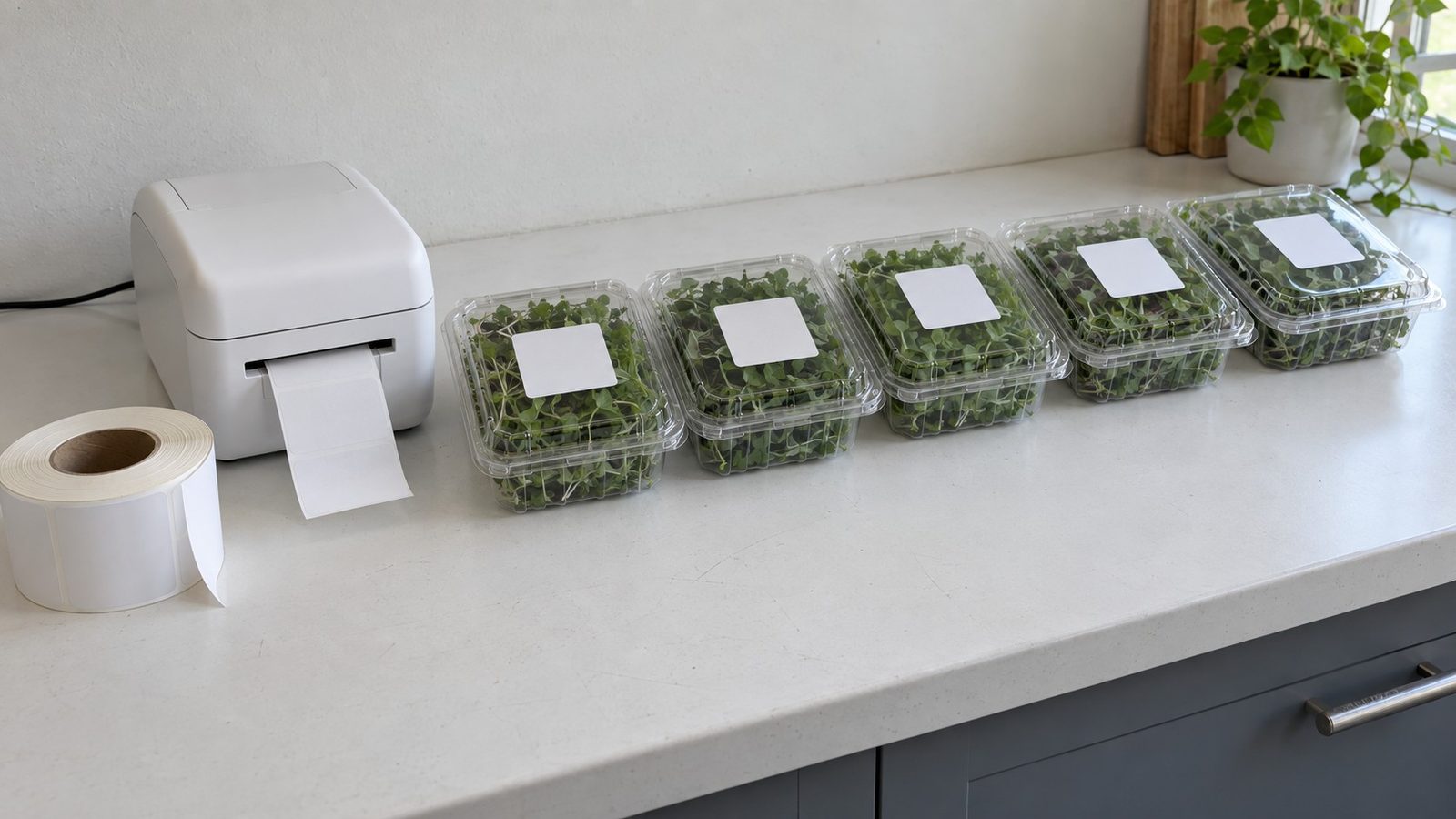
Microgreen Labels: Printers, Cost, and Cold Storage
Compare direct thermal, thermal transfer, color inkjet, and printed rolls for microgreen labels, with cost per label, adhesive tips, and barcode fees.
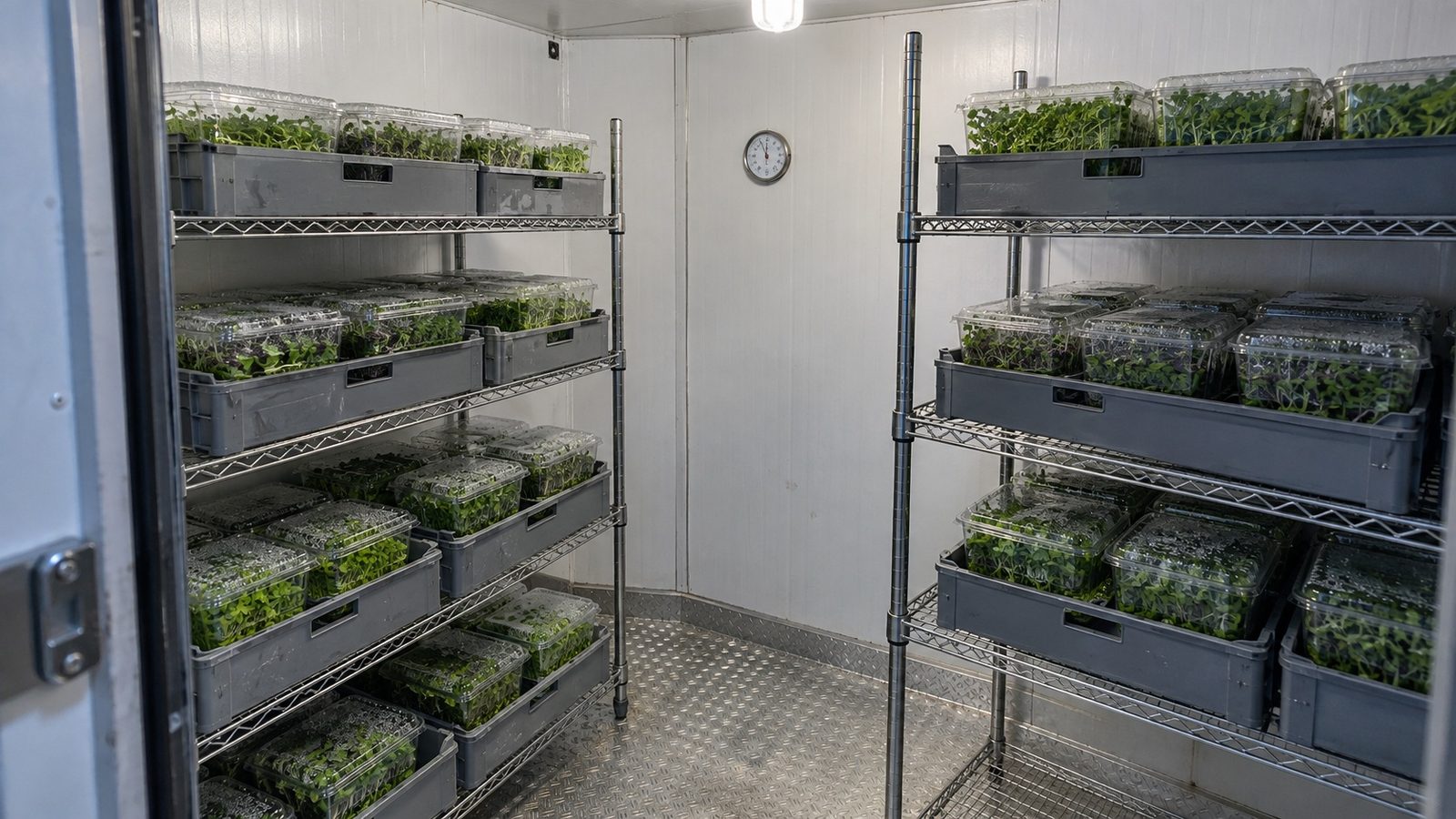
Are Microgreens Profitable? What the Numbers Show
Are microgreens profitable? See what a national grower survey and federal sales data show, why gross revenue is not profit, and how to run your own numbers.
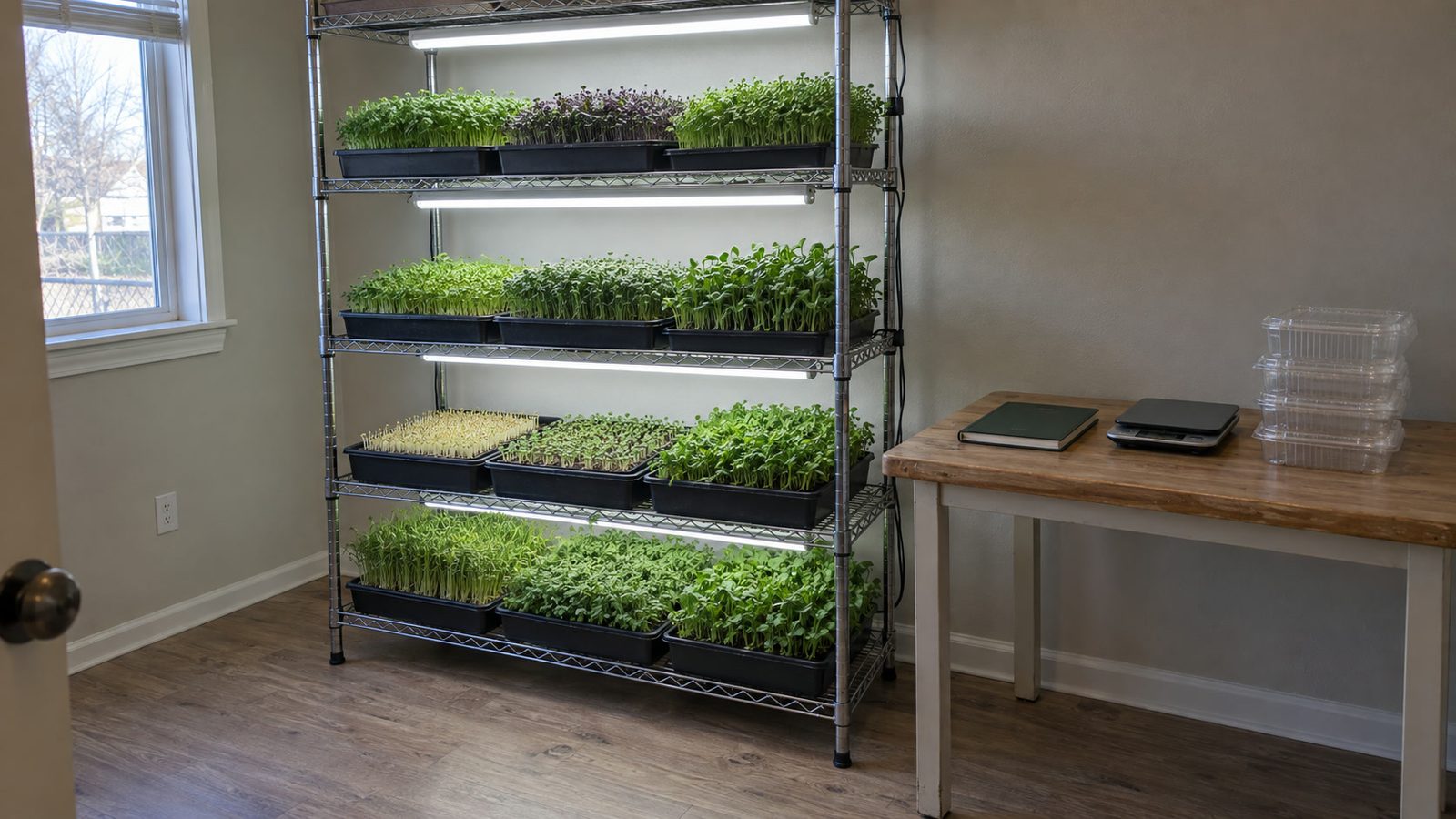
How to Write a Microgreens Business Plan Step by Step
Build your microgreens business plan section by section, from executive summary to financial plan, with startup costs itemized by scale and source.
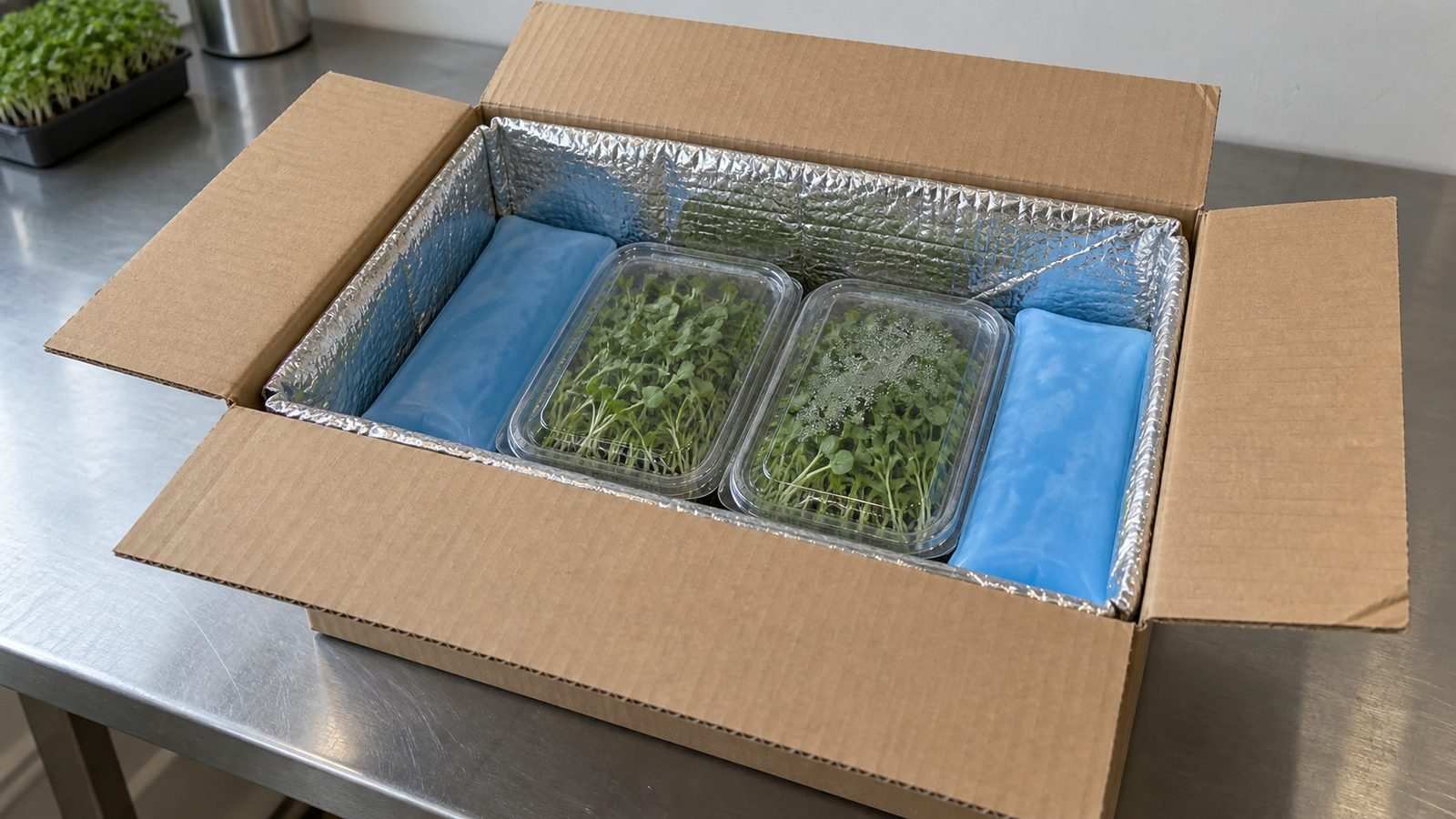
Sell Microgreens Online: Choosing a Carrier and Packing the Box
Learn how to sell microgreens online: pick a carrier and service, pack and cool the box, price the shipment, and follow the rules for mailing food.
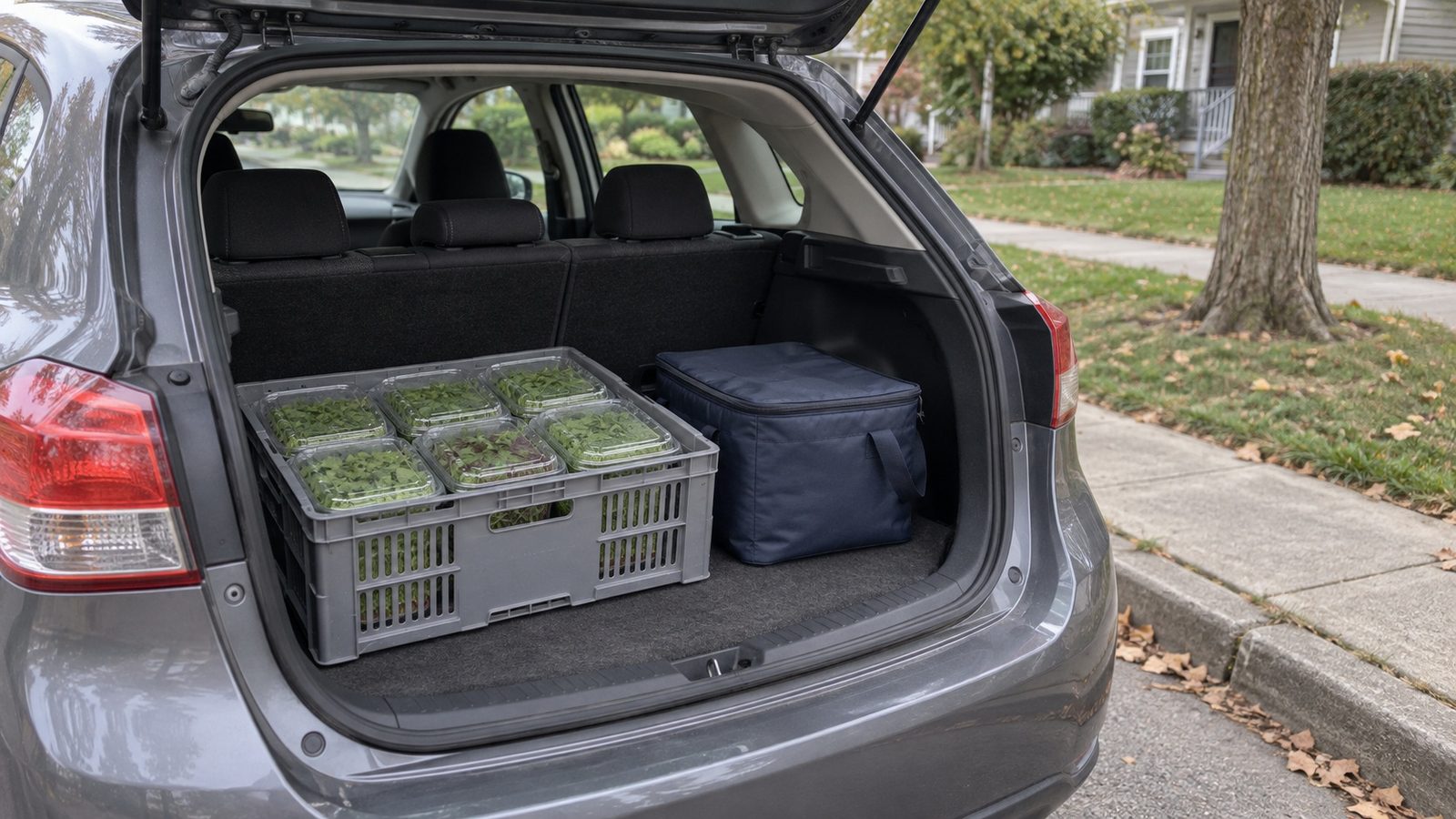
Where to Sell Microgreens: Every Channel Beyond the Market
See where to sell microgreens beyond the farmers market, from restaurants and grocers to food hubs and online farm stores, plus what each buyer expects.
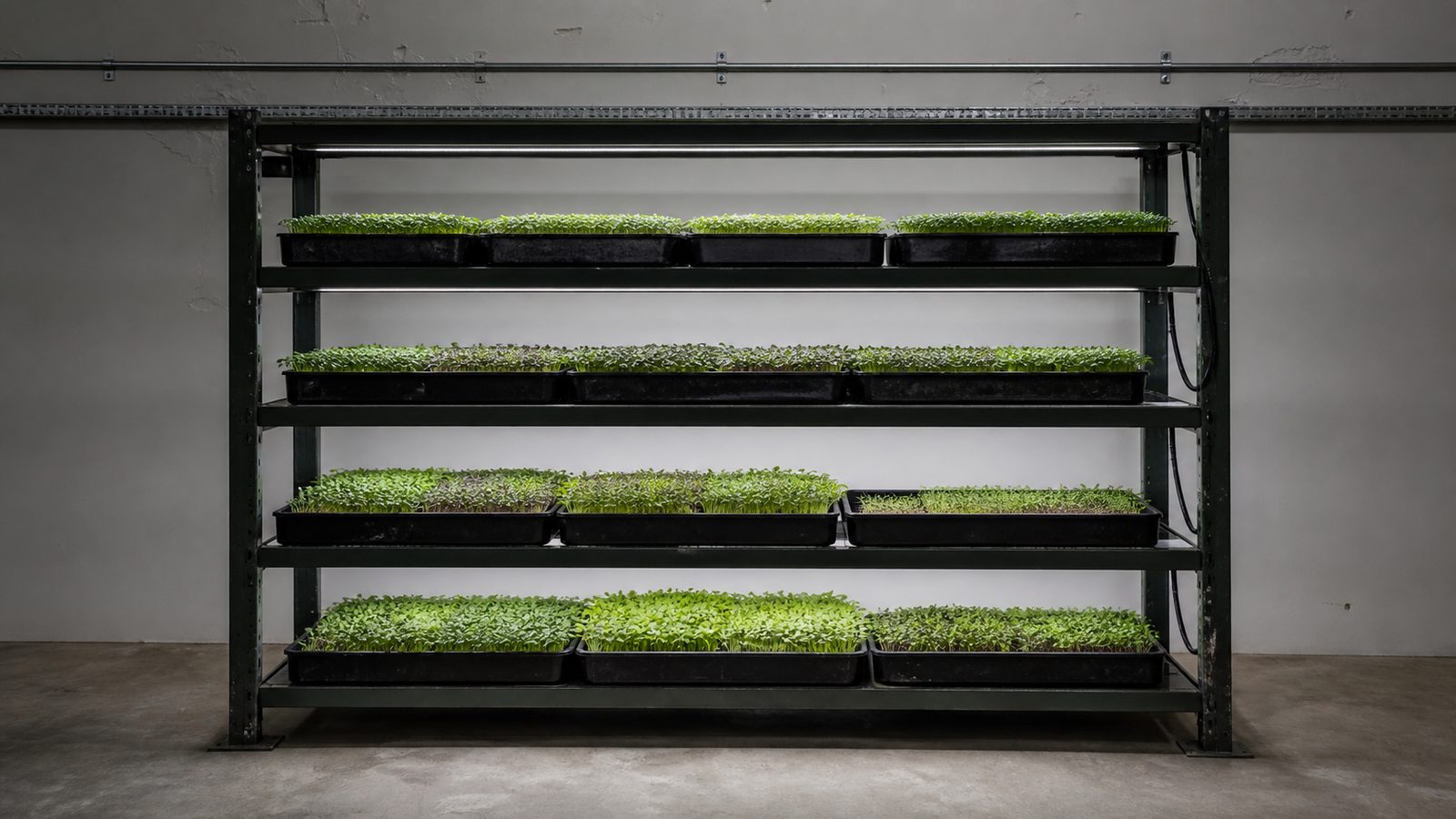
Are Microgreens Sustainable? The Published Range Is 3.34 to 63.34 kg CO2e a Kilo, and Your Grid Decides Where You Land
One modeled crop spans a 19-fold carbon range. Indoor growing beats field lettuce on land by roughly 37 times and can lose on carbon, because the answer is a property of your electricity rather than of the crop.
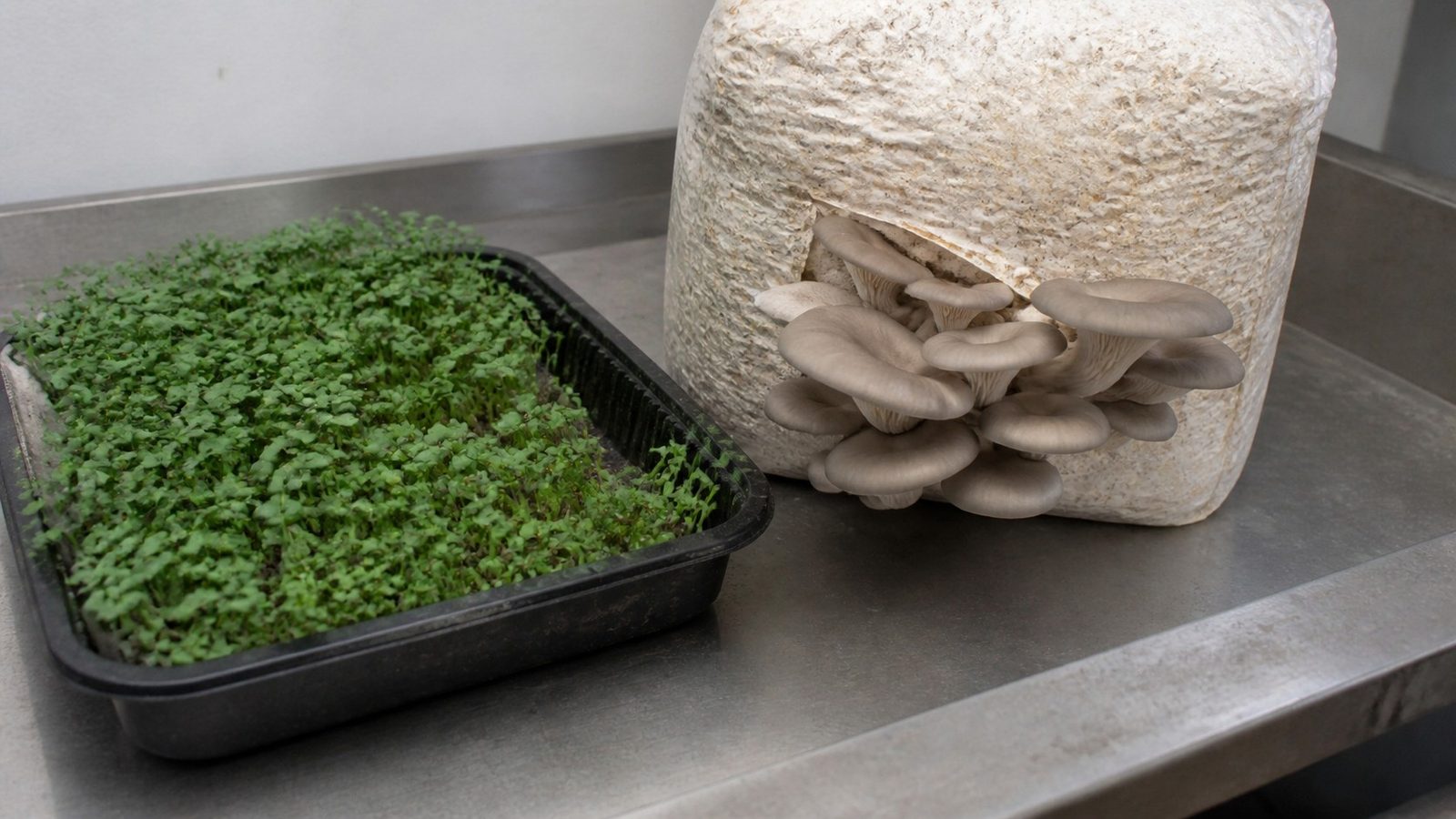
Microgreens vs Mushrooms: On Labor Per Pound the Two Overlap, and the Farm-to-Farm Spread Is 10.9-Fold
Put both crops on labor hours per pound and they land on top of each other. The variation between mushroom farms is 10.9-fold, which is larger than any gap between the crops, so the operator decides this and not the crop.
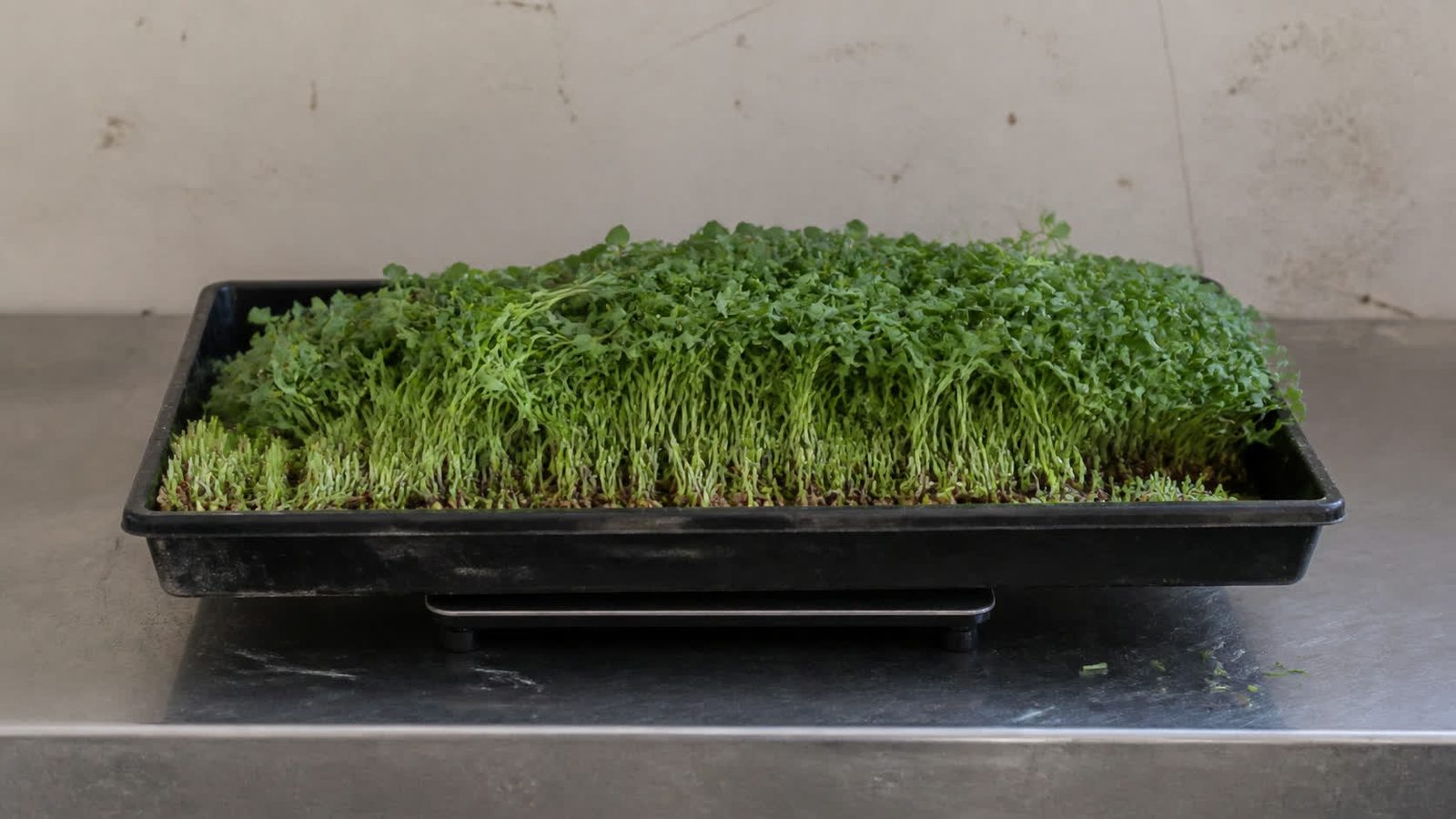
What Does a Tray Actually Yield? The Range Is 18-Fold and the Reason Is Not the Crop
Published yields for 39 of 62 crops run from 1.00 oz to 18.77 a tray. A seed catalog's range is only 2.7-fold, because the commercial world has already selected out the low yielders.