The Most Popular Microgreens, Ranked by Different Measures
Cal HewittPublished Checked
- varieties
- growing
- buying
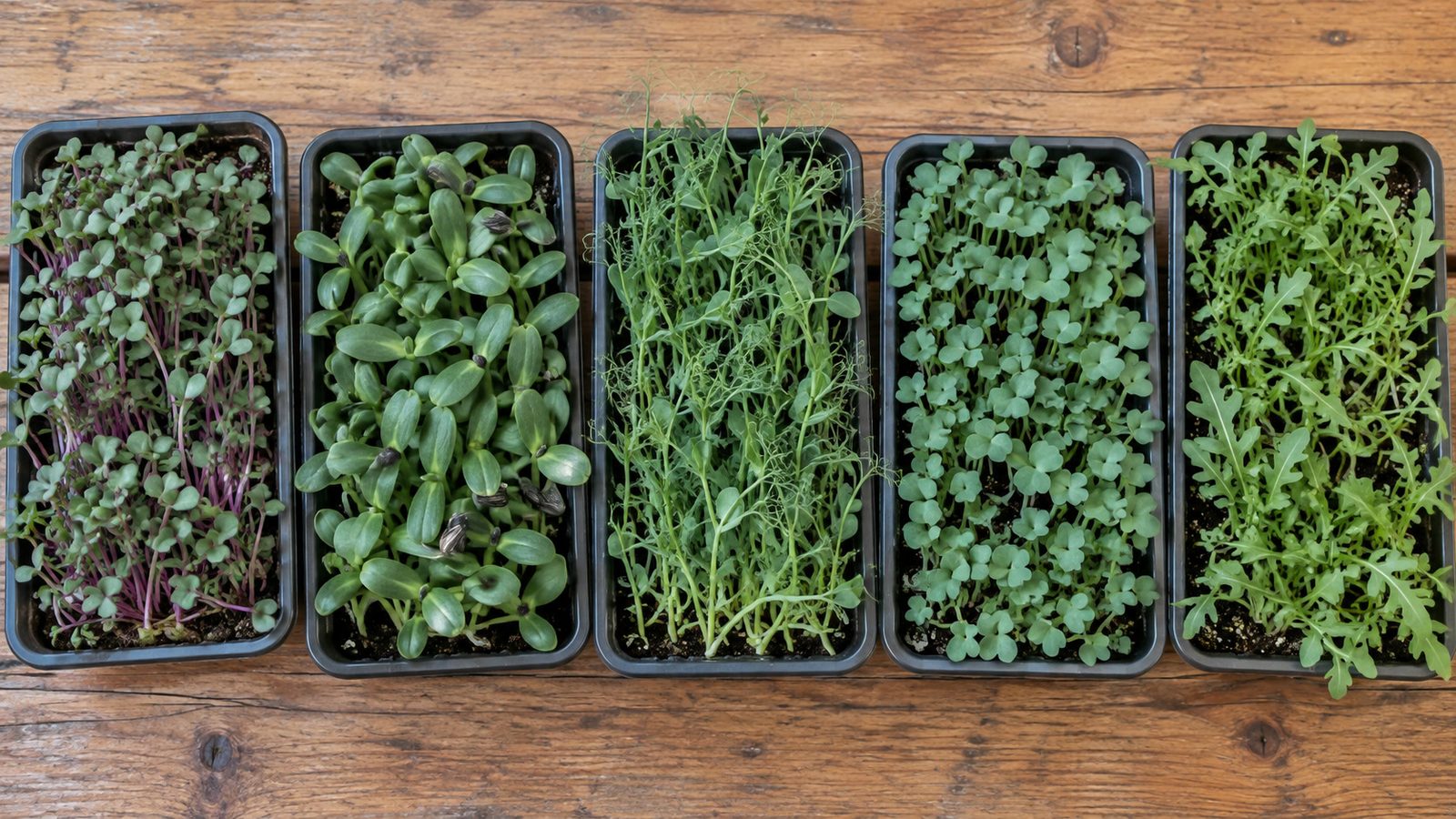
Radish, sunflower and pea shoots are the microgreens US growers produce most often, according to the one published national crop survey of growers. Broccoli and arugula join them once you add a market report's revenue estimate and a seed seller's best sellers.
There is no single official ranking, because each published source counts something different: how many growers produce a crop, how much revenue a publisher estimates it earns, or what one shop sells most. If you want a place to start, those five crops keep turning up whichever measure you use.
Popularity depends on what you count
A crop can be called popular because many growers plant it, because it brings in the most money, because a seller moves a lot of it, or because tasters like it. Those are different questions, and the published numbers answer only some of them. National seed sales, restaurant orders and supermarket scanner sales by crop are not among them.
So, what you can actually work from is a grower survey, a government census with no crop split, a market report's estimate, seller catalogs, a couple of taste studies and what growers report in forums. Each one is set out below with whose numbers it is, so you can judge how far to lean on it.
What US growers actually grow
The clearest crop-by-crop data comes from a national survey of US microgreen growers, run online in 2018 to 2019 and published by Misra and Gibson in January 2021. It had 176 respondents, and 143 of them answered the question about which crops they produce. Growers could choose up to five crops in their answer, so the percentages add up to far more than 100.
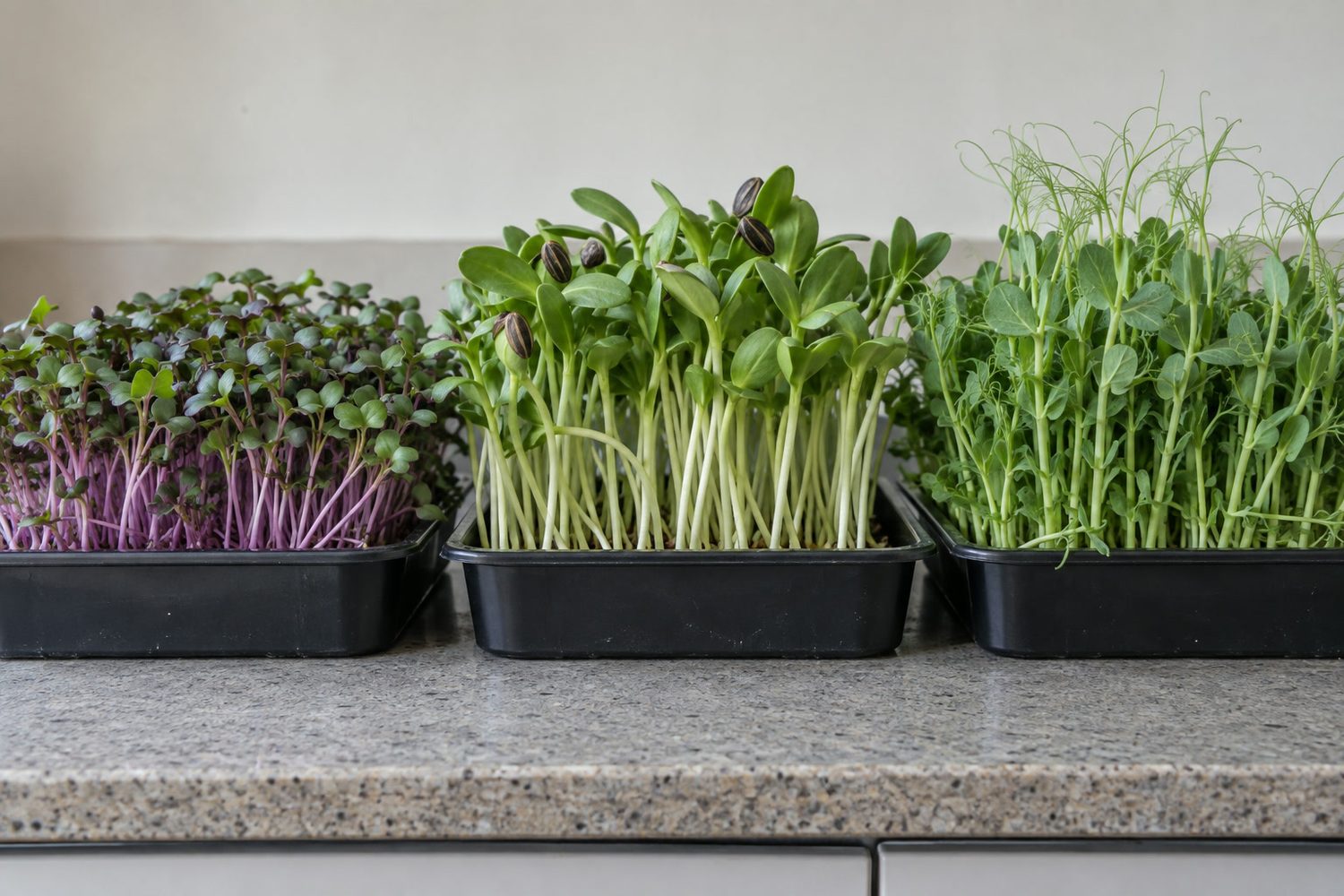
Among the 143 growers who answered the crop question, these crops came out on top:
- Radish: 29 percent (42 growers)
- Sunflower: 28 percent (40 growers)
- Pea shoots: 27 percent (39 growers)
- Arugula: 18 percent (26 growers)
- Broccoli: 16 percent (23 growers)
- Kale: 15 percent (21 growers)
- Mustard: 11 percent (16 growers)
- Basil: 9 percent (13 growers)
- Daikon: 8 percent (12 growers)
- Pea tendrils and cabbage: 7 percent each (10 growers each)
Every one of those percentages is a share of the 143 growers who answered the crop question, not of all 176 people who took the survey. Further down the same table, mizuna, beet and amaranth each came in at 5 percent (7 growers), cilantro at 4 percent (6), and nasturtium, kohlrabi and popcorn at 3 percent (5) each.
Keep two limits in mind when you use those numbers. First, this is prevalence: the share of growers who produce a crop, not how many trays, pounds or dollars of it they sell. A grower with one radish tray counts the same as a grower with a rack full of them. Second, the survey was online and self-selected, and it pooled home, indoor commercial and greenhouse growers into one set of results, so it can't tell you whether hobby growers and market growers choose differently.
The survey authors suggest a reason the top three lead: ease, a short crop time, low seed cost and a high yield of fresh greens. They present that as their interpretation, not as something the survey proved. Even so, those are sensible things to look for when you are choosing your own first crop.
What the USDA counts
The USDA does track microgreens, but only as one combined category. Its 2024 Census of Horticultural Specialties, which covers the 2024 calendar year and was issued in February 2026, counts 516 operations growing microgreens under protection, with $86.378 million in sales: $77.070 million wholesale and $9.309 million retail (USDA Table 15).
It does not break those figures down by crop. The census tells you the size of the category, but there is no USDA ranking of radish against broccoli or sunflower to cite.
A market report's revenue estimate
The market research publisher IMARC puts a different kind of number on popularity: an estimated share of global 2025 revenue by crop type. Its published figures are broccoli at 27.2 percent, arugula at 13.1 percent, peas at 12.6 percent and radish at 10.5 percent, with "others" at 4.6 percent. Those named shares do not add up to 100 percent, so read them as a partial list from the publisher, not a complete split of the market.
This is a publisher's estimate, not a grower survey. The public page summarizes the method as more than 45 structured interviews plus secondary sources and top-down and bottom-up models, but it doesn't show the transactions behind the figures or how the inputs were combined, so you can't check the math yourself. It is also a global figure, where the grower survey is American.
A 2022 review article in the journal Plants repeats an older commercial ordering from 2019 that also puts broccoli first, followed by arugula, cabbage, cauliflower, others, peas, basil, radish and cress. Neither of these lines up neatly with the grower survey. A revenue estimate and a head count of growers measure different things, so they were never going to match.
What seed sellers list as best sellers
Seed catalogs give you a third signal, and it's the one you'll run into most while shopping. True Leaf Market's best-selling microgreen seeds collection, checked September 12, 2026, displays broccoli, pea, Basic Salad Mix, radish, sunflower, arugula, cabbage, amaranth, daikon, beet, basil, chard, kohlrabi, carrot, cilantro, nasturtium and buckwheat. That is the seller's own list of its top sellers. It gives no sales units and no time period, so it tells you what sells well at that one shop, not across the market.
The Basic Salad Mix on that list is broccoli, kale, kohlrabi, arugula and red cabbage, with red tatsoi or cauliflower sometimes swapped in by season. The seller describes those as popular salad microgreens that grow well together, without giving a sales figure. Mountain Valley's 12-variety sampler, chosen by YouTube grower and educator Mike VanDuzee of Keep on Growin', describes its set as "popular, exotic, and colorful": broccoli, purple radish, spicy mix, beet, nasturtium, cilantro, cress, sunflower, pak choi, shiso, orach and pea. A kit like that is handy for trying several crops at once, but it is a seller's selection, not a count of what people buy.
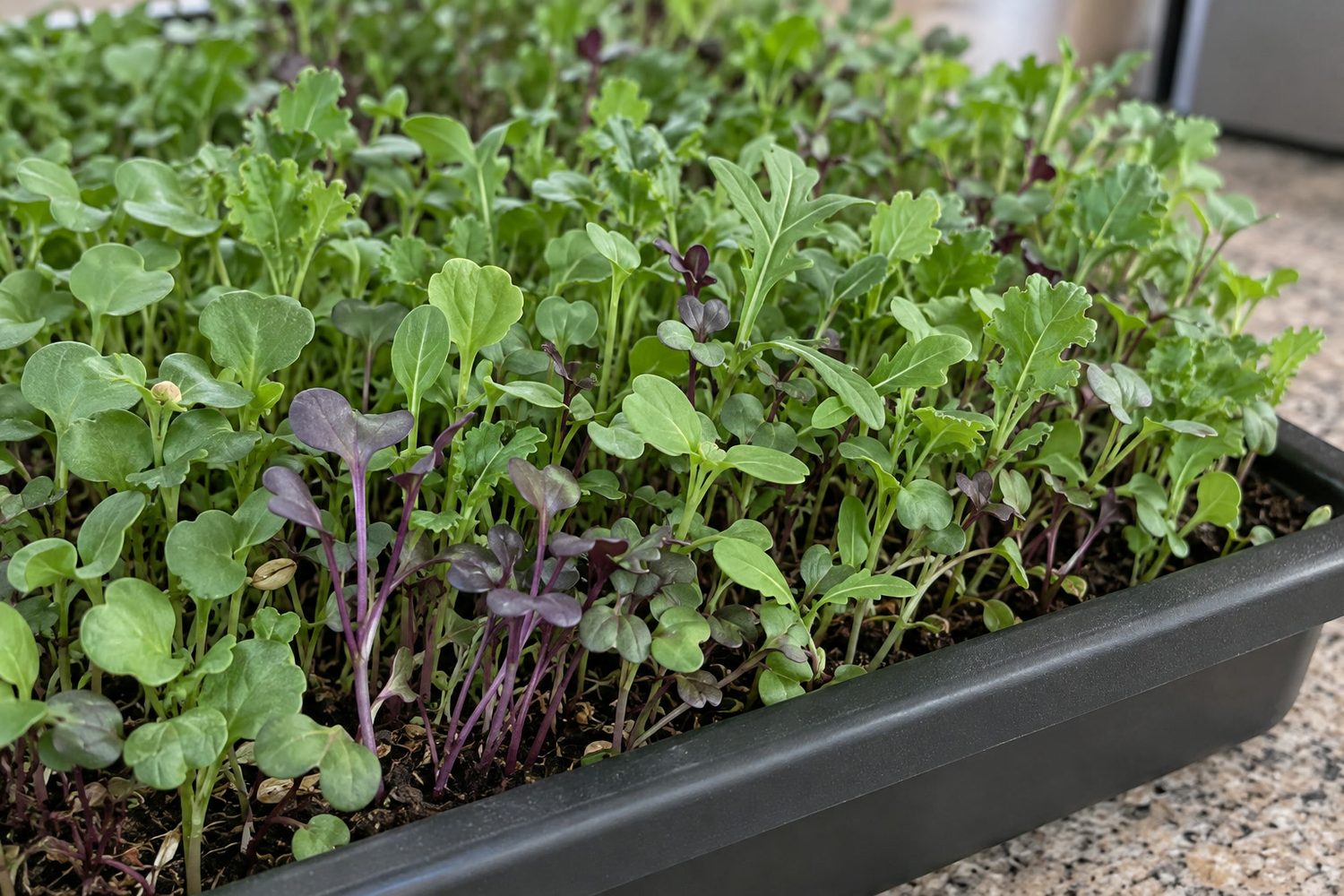
If you are buying microgreens rather than growing them, a grocery app gives a rough view of what's for sale. When checked on September 12, 2026, Instacart listed 110 microgreens products available same day, and the category repeatedly showed mixes plus broccoli, radish, kale, cilantro, basil, beet and pea tendril products. That assortment changes with your location, and a product being listed doesn't mean it sells well.
What growers report in forums
Growers on the r/microgreens forum describe their own experience, which is worth hearing but comes from unknown locations, volumes and customers. In a thread about three months old, a grower reports that radish, sunflower and peas are very popular. A thread from about two months ago describes a broccoli, pea, radish and popcorn sampler selling out.
Older threads point the same way. One from about three years ago reports mostly sunflower and red radish nearly selling out at one market, and a five-year-old thread calls pea shoots, red radish and cilantro staples. These are individual growers' reports about their own sales, not a count of anyone else's.
Popular is not the same as best liked
If flavor matters more to you than head counts, taste studies measure something else again. In a 2020 study of 99 consumers, Michell and colleagues had people rate arugula, broccoli, bull's blood beet, red cabbage, red garnet amaranth and tendril pea, and all six landed somewhere between slightly acceptable and highly acceptable.
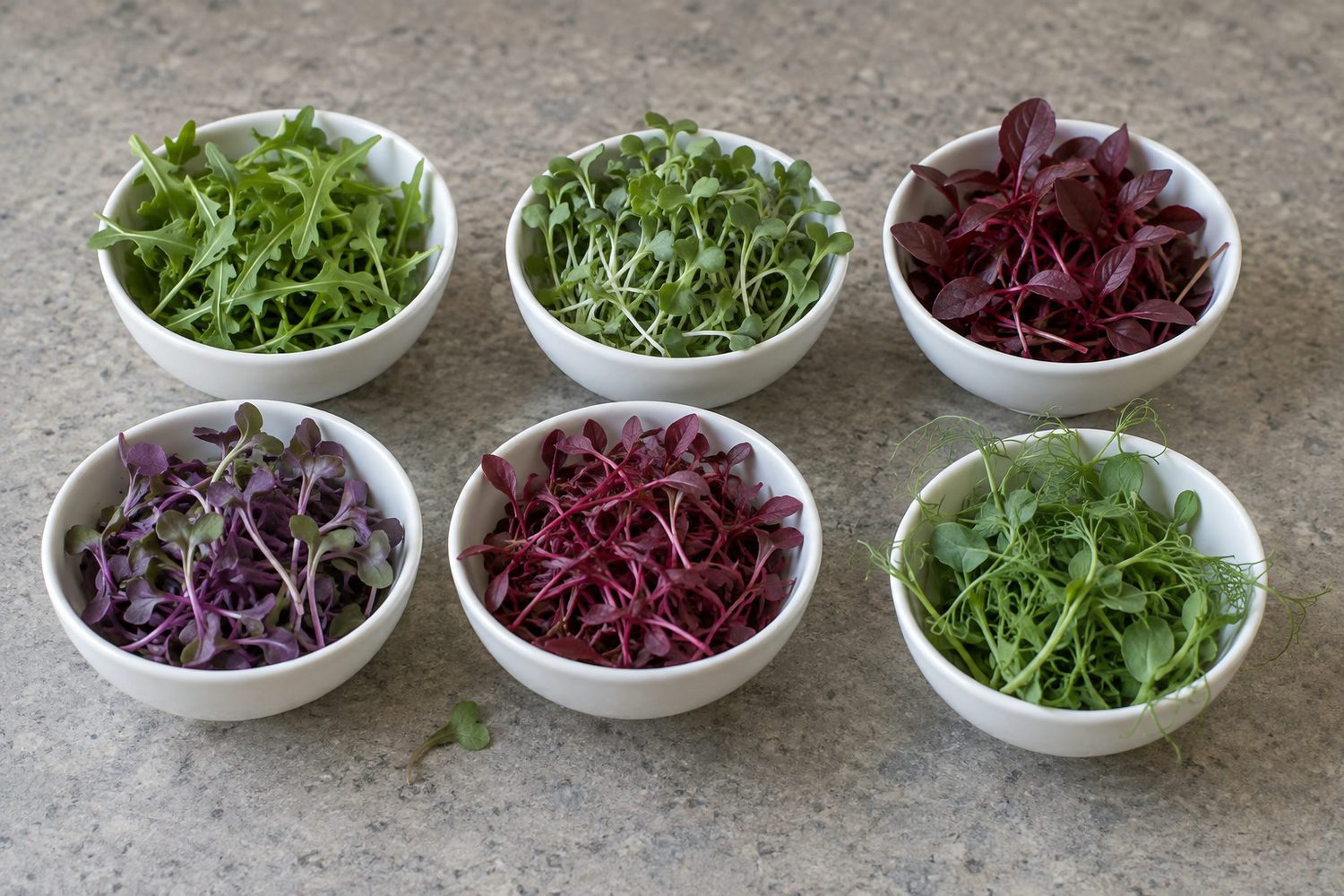
A separate 2020 study of 12 species, summarized in the Plants review, found Swiss chard and coriander the most appreciated and mibuna and cress the least, with lower bitterness, sourness and astringency lining up with liking. Neither study measured purchases, and Swiss chard and coriander don't lead the grower survey. If taste is your deciding factor, the best-tasting microgreens post covers that side.
Where the lists agree
Put the measures side by side and the overlap is narrow, but it is there:
- Radish, sunflower and pea shoots are the top three in the US grower survey, and all three appear in True Leaf's best-seller collection.
- Broccoli sits fifth in the grower survey at 16 percent, but it leads IMARC's revenue estimate, heads the 2019 commercial ordering, appears in True Leaf's collection and shows up in Instacart's assortment.
- Arugula is fourth in the grower survey at 18 percent, second in IMARC's estimate and in the 2019 commercial ordering, and part of True Leaf's collection.
- Peas turn up on every list, from pea shoots at 27 percent of the 143 surveyed growers to peas at 12.6 percent in IMARC's estimate.
The differences are just as useful to know. Radish and sunflower look much stronger among US growers than in the 2019 commercial ordering, where radish sits near the bottom and sunflower isn't named at all. No crop comes out on top on every measure, and the data that might settle it, chef orders and store sales by crop, isn't published. What you get instead is a shortlist worth testing: radish, sunflower, pea shoots, broccoli and arugula.
Picking your first trays from the shortlist
If you are growing at home, the shortlist is a reasonable place to begin because so many growers already produce these crops. Pick two or three, grow a tray of each, and see which ones you actually eat. The crop pages for radish, sunflower, pea shoots, broccoli and arugula cover how each one grows, and the beginner microgreens post looks at the question from the first-tray angle. The full microgreen types directory has the rest, including kale, which sits just behind broccoli in the grower survey.
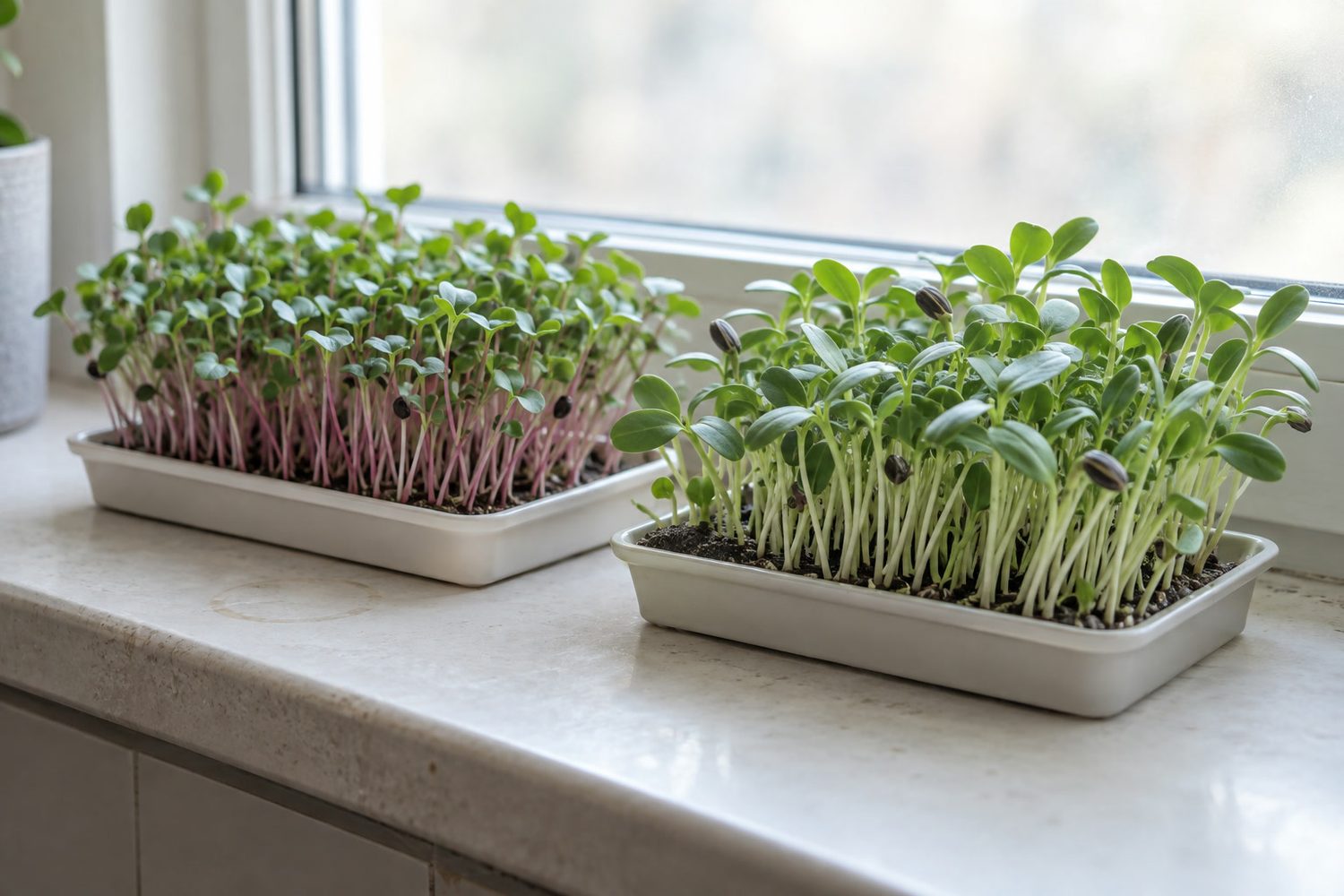
If you plan to sell, remember that the grower survey tells you what other growers produce, not what your buyers want. Which crop will sell in your town is something only your buyers can tell you. Grow small batches of the shortlist, write down what you harvest from each tray and what sells, and work from your own numbers. The which crops to sell guide walks through that decision in more detail.
Frequently asked questions
These questions come up once you have the shortlist in hand.
Are pea shoots and sunflower getting more popular?
That isn't established. One grower survey from 2018 to 2019 and today's seed catalogs can't show a rise over time; only the same survey repeated year after year could. Rather than planning around a supposed rise, track your own trays and sales from one season to the next.
Do home growers and commercial growers choose different crops?
The US survey does not split them. It included residential, indoor commercial and greenhouse growers, but it reported their crop choices pooled together. If you are a home grower, read the survey list as a view of growers in general, not of hobby growers specifically.
Which microgreens do chefs order most?
Johnny's Selected Seeds' microgreens brochure says chefs value red-leaf contrast, "loft," flavor and texture, but it gives no sample or order count. If you want to sell to restaurants, ask the chefs you plan to approach what they buy now.
Does the most popular microgreen change by region?
The US grower survey did not report crop choices by region, so you can't tell from it whether radish leads in one part of the country and broccoli in another. Your local farmers market and your own buyers are the closest thing to regional data you will have.
Why do shoppers pick one microgreen over another?
A consumer study by Michell and colleagues links familiarity, cost, access, freshness and shelf life with purchase decisions. It describes influences on buying, not national sales by crop.
Where to start
The most popular microgreens depend on what you count. By grower prevalence it's radish, sunflower and pea shoots; by a publisher's revenue estimate it's broccoli, then arugula; by one seller's best sellers it's a long list that includes all five. Start with a few trays from that group, keep notes on what you grow and what gets eaten or sold, and let your own results decide what comes next.
Sources
Prices, stock and specifications are as the linked pages showed them on 2026-09-12.
- Misra and Gibson
- USDA Table 15
- IMARC
- Plants
- True Leaf Market's best-selling microgreen seeds collection
- Basic Salad Mix
- 12-variety sampler
- Instacart
- thread about three months old
- thread from about two months ago
- about three years ago
- five-year-old thread
- Michell and colleagues
- Johnny's Selected Seeds' microgreens brochure
Keep reading
The journal
The Most Expensive Microgreens to Buy and Grow
Bronze fennel, red sorrel, and shiso can cost far more than common crops. See which are the most expensive microgreens to buy or grow, with dated prices.
Read The Most Expensive Microgreens to Buy and GrowThe journal
Best Potting Soil for Microgreens: Cost per Tray
Compare the best potting soil for microgreens by ingredients, bag size, trays filled per bag, and cost per tray, plus problems to expect from each mix.
Read Best Potting Soil for Microgreens: Cost per TrayThe journal
Grow or Buy Microgreens? The Answer Is an Hourly Rate, and It Is $23.64
Seed alone makes home growing look eleven times cheaper. Add medium, power, a failure rate and your own time at $20 an hour and the saving against the cheapest retail is 8 percent.
Read Grow or Buy Microgreens? The Answer Is an Hourly Rate, and It Is $23.64The journal
Herb Microgreens: Slower and Harder, and They Use Less Seed Than Everything Else
Herb-family crops take a median 19 days against 11.5 for everything else, and 8 of the 9 hardest crops are herbs. They also sow lighter, so the premium is bench time, not seed.
Read Herb Microgreens: Slower and Harder, and They Use Less Seed Than Everything Else