The journal
Journal
Page 9 of 12
Eating series, part 1 of 5
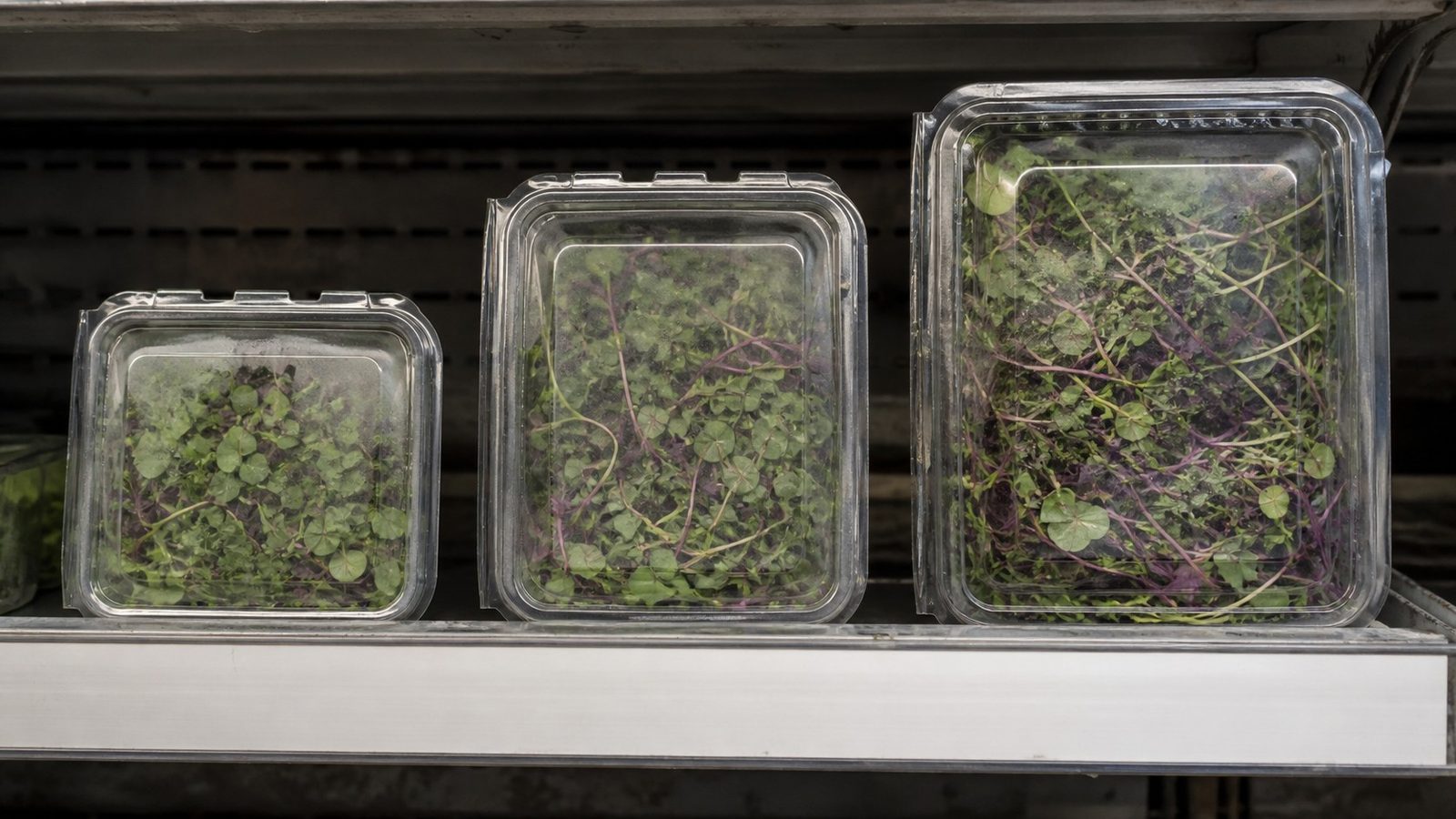
Buying Microgreens: The Same $6 Buys 60 Grams or 100
Across every observed price, what a shopper can actually pay spans 2-fold while sellers quote across 8.3. Farm-direct covers almost the whole range by itself, because pack size decides the price and the channel does not.
Comparison series, part 5 of 7
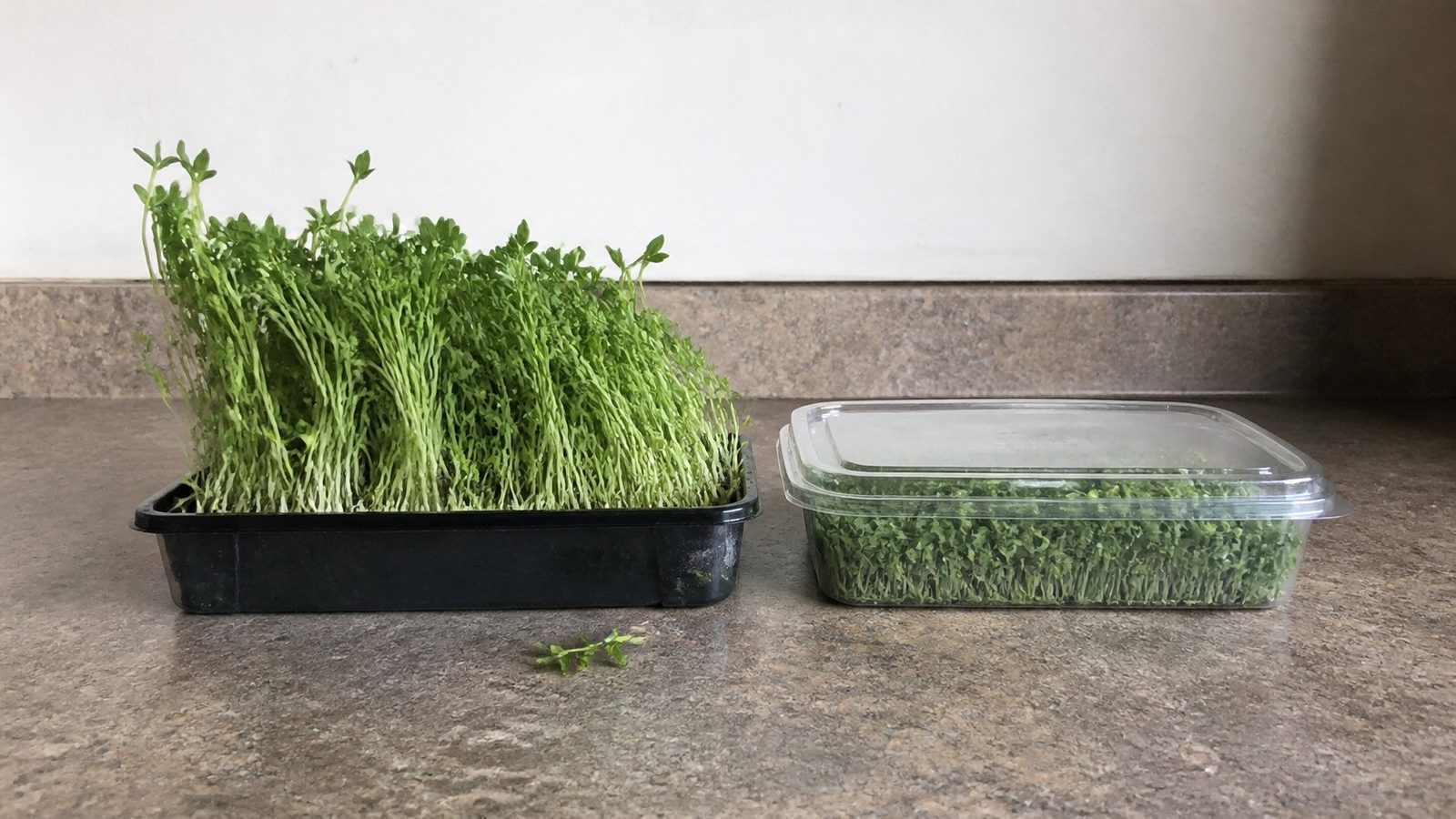
Grow or Buy Microgreens? The Answer Is an Hourly Rate, and It Is $23.60
Seed alone makes home growing look eleven times cheaper. Add medium, power, a failure rate and your own time at $20 an hour and the saving against the cheapest retail is 8 percent.
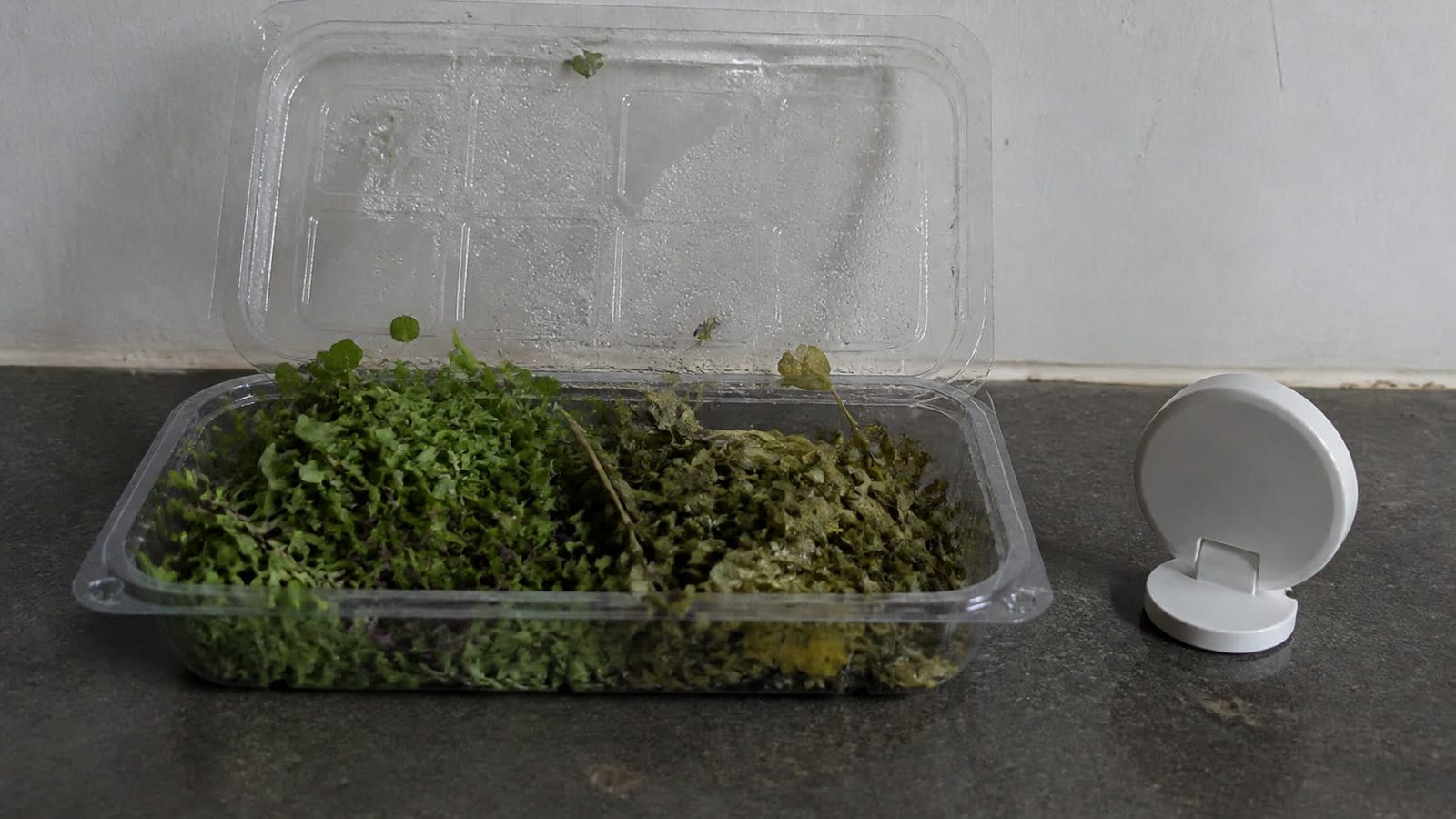
Have These Gone Bad? Judging a Box of Microgreens in the Fridge
A warm fridge costs days: arugula, radish and red cabbage lost a week of quality at 10C against 4C, and one mustard study lost ten. And no visible sign has ever been validated as a safety test.
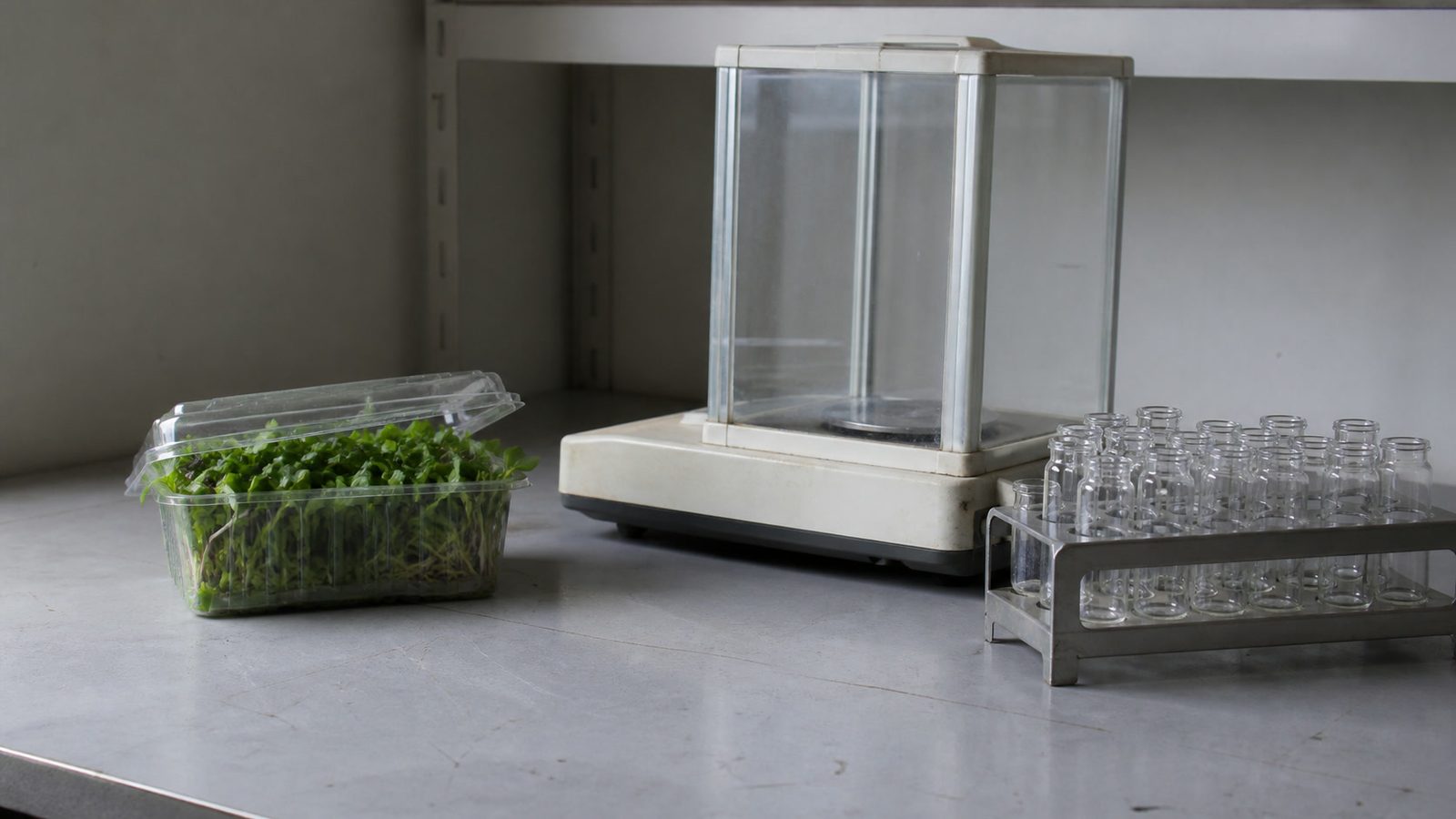
Heavy Metals and Nitrate in Microgreens: What Has Actually Been Measured
The nitrate figures circulating for microgreens are dry weight, and the legal limits are fresh weight. Convert the same published result and it lands anywhere from 1,045 to 11,307 mg/kg depending on the crop. Three species have been assayed for metals.
Eating series, part 3 of 5
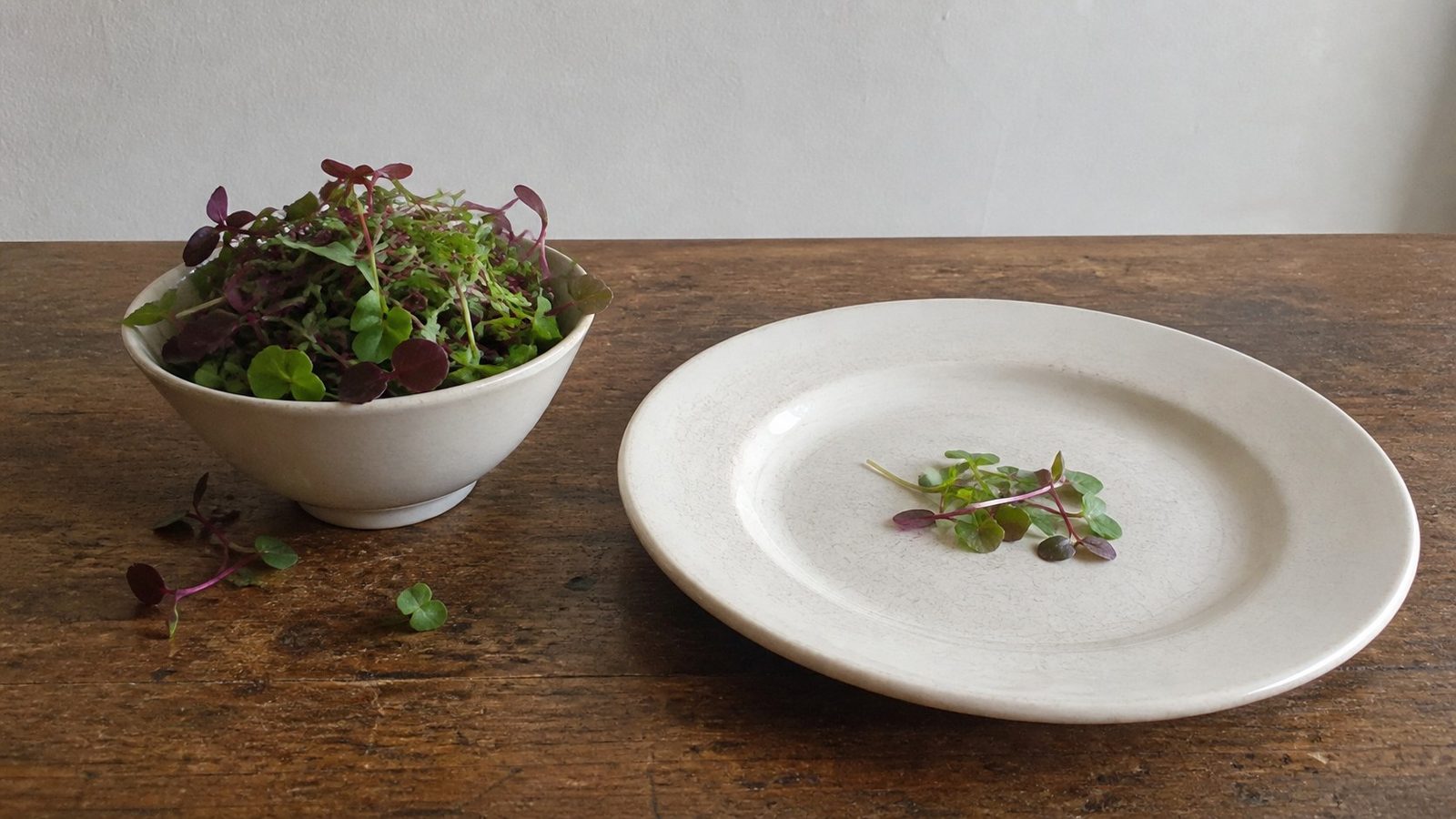
How Much Microgreens a Day? A Serving and a Dose Differ by Twelve Times
No regulator anywhere sets a daily microgreen intake. The only weighed serving published is 2.5 grams; the only daily-feeding trials used 28 to 30. Nobody has reconciled those two numbers.
Eating series, part 4 of 5
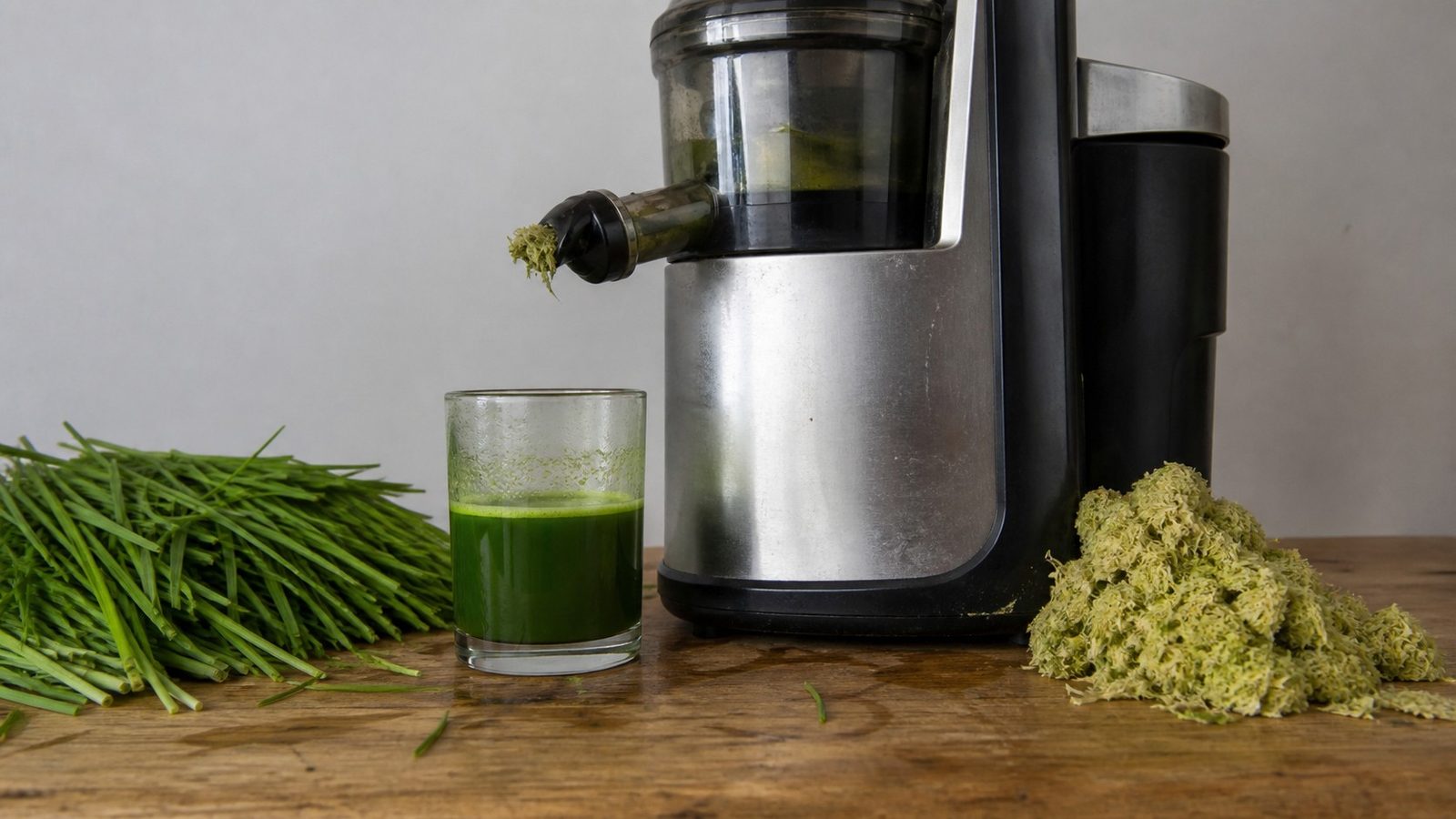
Juicing Microgreens: One Glass Is Three Quarters of a Tray
Nobody has measured how much juice a microgreen tray gives. The one published figure is a seller's, for wheatgrass, on a tray 23 percent larger than a 1020. Rescaled, a 240 mL glass is three quarters of a tray.
Comparison series, part 6 of 7
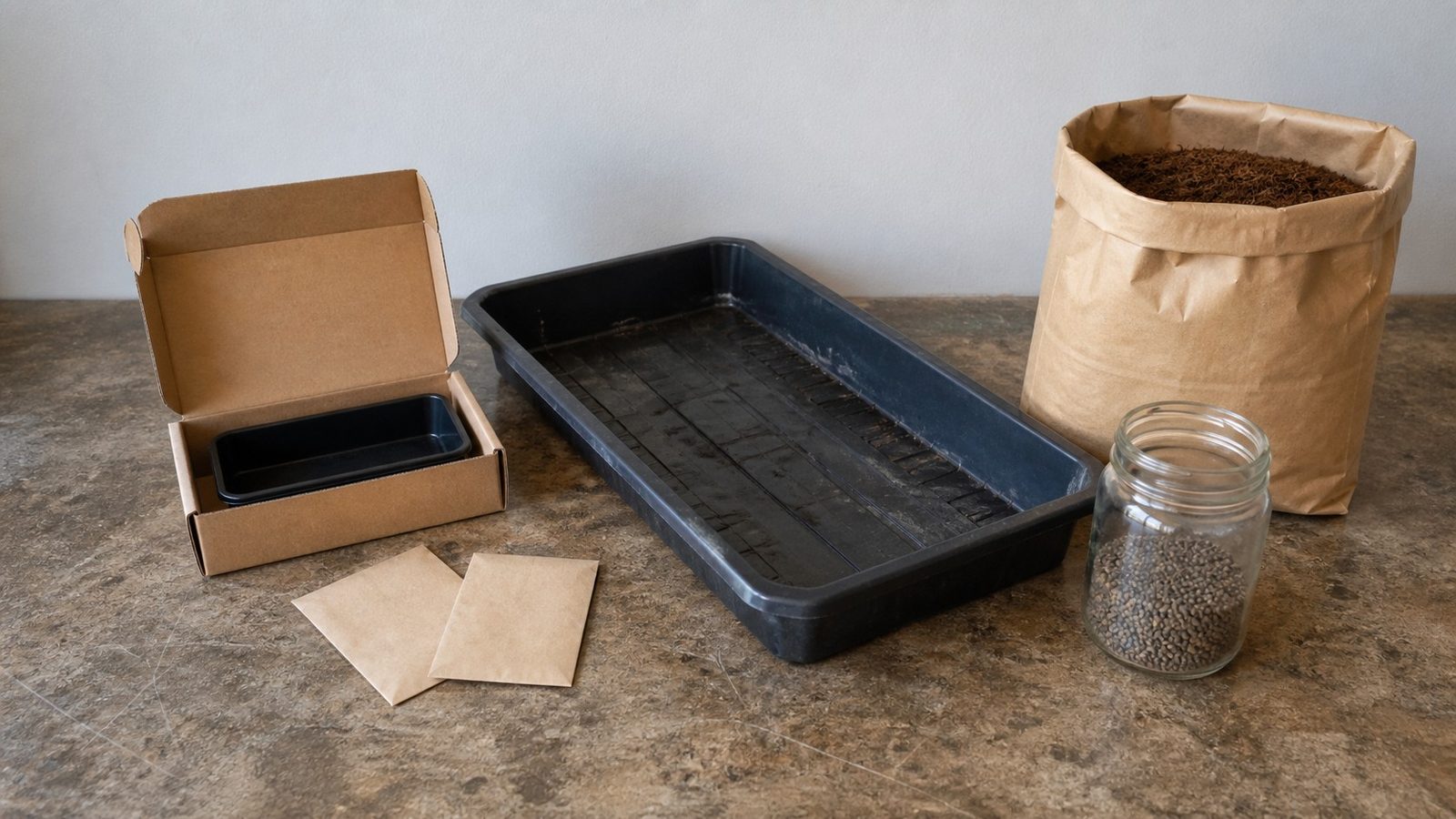
Microgreen Grow Kits Against DIY: The Cheapest Kit Is the Most Expensive
Priced per unit of growing area, the ranking inverts: the $60 kit is the cheapest and the $20 kit is nearly the dearest. Against assembling it yourself, the sample runs 6 to 40 times.
Comparison series, part 7 of 7
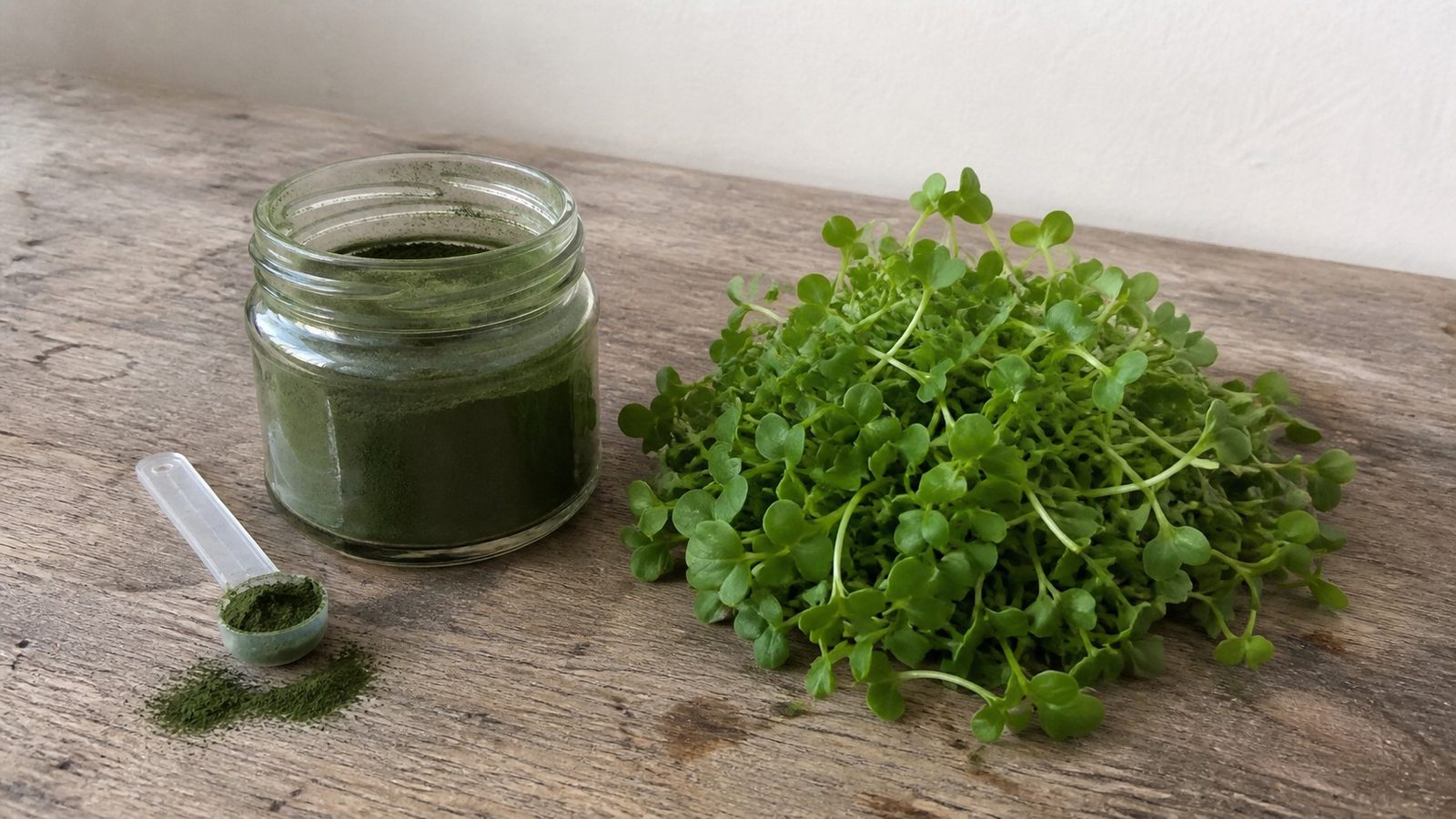
Microgreen Powder Against Fresh: What You Gain, What You Lose, and What Nobody Can Tell You
Sellers claim 80, 85, 95 percent or negligible loss. In the one broccoli study, retention ran from 4.42 percent for chlorophyll to 97.86 for potassium, a 22-fold spread. One number cannot describe that.
Health series, part 12 of 12
Microgreens and Allergies: Four Crops Are Regulated Allergens
Sesame, mustard, buckwheat and celery are all grown as microgreens and all carry allergen labeling law somewhere. And not one published case report names a cut microgreen as the food eaten.