The variety directory
Types of microgreens: the full list, compared
All 65 types and varieties, every one answering the same questions in the same units, so you can compare them instead of reading a separate article for each that tells you its crop is the best one. Sort by whatever is actually deciding your choice: how forgiving the crop is, how long it holds a tray, how much seed it costs you, or how much it gives back.
The comparison table
Click any column heading to sort. Seed rates and yields are per standard 10 by 20 tray. Days to harvest assume an ordinary warm room; a cold room adds to every one of them.
| Alfalfa | Moderate | 4 to 6 | Not applicable | 4 to 12 hours | Not applicable | Not applicable | Test your own tray | 60 to 70 | High | some | 7 days | Not applicable | raw | legume |
|---|---|---|---|---|---|---|---|---|---|---|---|---|---|---|
| Amaranth microgreens | Moderate | 11 to 18 | 7.5 | None | 2 to 7 days | 6.5 | Test your own tray | 68 to 77 | High | some | 1 to 10 days | no | raw | amaranth |
| Arugula microgreens | Beginner | 6 to 19 | 10 | None | 2 to 5 days | 10 | Test your own tray | 65 to 75 | Medium | none | 10 to 14 days | no | raw | brassica |
| Barley grass | Moderate | 6 to 12 | 175 to 220 | 8 to 12 hours | 3 to 5 days | Test your own tray | Test your own tray | Test your own tray | High | heavy | 7 days | no | juiced | grass |
| Basil microgreens | Moderate | 12 to 26 | 5 to 6.5 | None | 4 to 7 days | 5.5 to 7.5 | Test your own tray | 75 | High | some | 1 to 10 days | no | raw | mint |
| Beet microgreens | Moderate | 10 to 14 | 20 to 30 | 4 to 8 hours | 4 to 5 days | Test your own tray | Test your own tray | 65 to 85 | Medium | some | Test your own tray | Test your own tray | raw | amaranth |
| Borage microgreens | Moderate | 10 to 21 | 24.6 to 36 | None | 2 to 5 days | 8.05 | Test your own tray | 65 to 75 | High | some | 5 to 10 days | Test your own tray | raw | borage |
| Broccoli microgreens | Beginner | 7 to 15 | 13 | None | 2 to 4 days | 11.5 | Test your own tray | 65 to 75 | Medium | some | 5 to 14 days | no | raw | brassica |
| Broccoli raab microgreens | Beginner | 7 to 12 | 12 to 37 | None | 2 to 3 days | 5.29 to 8.82 | Test your own tray | 64 to 72 | Medium | some | 13 days | Test your own tray | raw | brassica |
| Buckwheat microgreens | Moderate | 6 to 12 | 91.4 | 12 to 24 hours | 3 to 4 days | Test your own tray | Test your own tray | Test your own tray | Medium | heavy | 21 days | Test your own tray | raw or cooked | knotweed |
| Bull's Blood beet microgreens | Moderate | 16 to 23 | 23 | None | 2 to 5 days | 7.5 | Test your own tray | 75 | Medium | heavy | Test your own tray | Test your own tray | raw | amaranth |
| Cabbage, green microgreens | Beginner | 8 to 12 | Test your own tray | None | 3 to 5 days | Test your own tray | Test your own tray | Test your own tray | Medium | Test your own tray | 5 to 7 days | Test your own tray | raw | brassica |
| Cabbage, red microgreens | Beginner | 8 to 15 | 10.5 | None | 3 to 6 days | 8.5 | Test your own tray | 65 to 75 | Medium | some | 5 to 14 days | Test your own tray | raw | brassica |
| Cantaloupe microgreens | Moderate | 8 to 12 | 28 to 30 | 4 to 8 hours | 3 to 4 days | Test your own tray | 1 to 2 days | 70 to 85 | High | heavy | Test your own tray | no | raw | cucurbit |
| Carrot microgreens | Difficult | 14 to 25 | 6.2 to 9.4 | Test your own tray | 3 to 5 days | 2 | Test your own tray | 65 to 75 | High | Test your own tray | 5 to 10 days | Test your own tray | raw | herb |
| Catnip microgreens | Difficult | Test your own tray | Test your own tray | None | None | Test your own tray | Test your own tray | 60 to 70 | High | Not applicable | Test your own tray | Test your own tray | raw | herb |
| Cauliflower microgreens | Beginner | Test your own tray | Test your own tray | None | 2 to 3 days | Test your own tray | Test your own tray | 60 to 70 | Medium | Test your own tray | Test your own tray | Test your own tray | raw | brassica |
| Celery microgreens | Difficult | 21 to 30 | 1.1 to 4.4 | None | 7 to 14 days | Test your own tray | Test your own tray | 70 to 77 | High | some | 5 to 10 days | partial | raw | herb |
| Celosia microgreens | Moderate | 10 to 15 | 8 | None | 4 to 5 days | 3.4 | Test your own tray | 65 to 75 | Medium | none | 5 to 10 days | Test your own tray | raw | amaranth |
| Chervil microgreens | Moderate | 9 to 21 | 18.9 to 20 | None | 3 to 4 days | 3 to 5 | Test your own tray | 65 to 75 | Medium | Test your own tray | 7 to 10 days | Test your own tray | raw | herb |
| Chia microgreens | Moderate | 6 to 12 | 26.3 to 28.35 | None | 2 to 4 days | Test your own tray | Test your own tray | Test your own tray | High | some | 3 to 5 days | Test your own tray | raw | mint |
| Chickpea shoots | Moderate | 9 to 14 | 123 to 165 | 6 to 12 hours | 3 days | Test your own tray | Test your own tray | 59 to 77 | High | heavy | Test your own tray | yes | raw | legume |
| Chive microgreens | Moderate | 14 to 30 | 19.4 to 38.7 | None | 6 to 14 days | 3.8 to 5.6 | Test your own tray | 60 to 70 | High | some | 5 to 7 days | no | raw | allium |
| Cilantro microgreens | Moderate | 13 to 25 | 20 to 26 | 4 to 8 hours | 6 days | 6 | Test your own tray | Test your own tray | High | some | 7 to 10 days | no | raw | herb |
| Clover microgreens | Beginner | 9 to 13 | 20 | None | 3 to 4 days | 3 to 5 | Test your own tray | Test your own tray | Medium | some | 7 to 10 days | no | raw | legume |
| Collard microgreens | Beginner | 7 to 15 | 28.35 | None | 3 days | Test your own tray | Test your own tray | Test your own tray | Test your own tray | Test your own tray | 5 days | no | raw | brassica |
| Cucumber microgreens | Moderate | 7 to 12 | Test your own tray | None | Test your own tray | Test your own tray | Test your own tray | Test your own tray | Test your own tray | Test your own tray | Test your own tray | Test your own tray | raw | cucurbit |
| Dill microgreens | Moderate | 12 to 25 | 10 | None | 3 to 5 days | 3 to 5 | Test your own tray | 65 to 75 | High | some | 5 to 10 days | Test your own tray | raw | herb |
| Endive microgreens | Moderate | 8 to 15 | 15 to 28 | None | 3 to 5 days | Test your own tray | 1 to 3 days | 60 to 68 | Medium | some | 7 days | no | raw | aster |
| Fennel microgreens | Difficult | 16 to 25 | 28.3 to 43 | 0 to 6 hours | 3 to 4 days | 1 | Test your own tray | 65 to 75 | High | some | Test your own tray | no | raw | herb |
| Fenugreek microgreens | Moderate | 6 to 12 | 25 to 62 | 0 to 8 hours | 2 to 3 days | 3.9 to 4.3 | 2 to 3 days | Test your own tray | Medium | some | Test your own tray | Test your own tray | raw | legume |
| Flax microgreens | Moderate | 5 to 14 | 35 | None | 3 to 5 days | 5 to 7 | Test your own tray | 61 to 77 | High | some | 7 to 9 days | Test your own tray | raw | flax |
| Garden cress microgreens | Beginner | 8 to 15 | 10.5 | None | 3 to 5 days | 8 | Test your own tray | 60 to 72 | High | Not applicable | 2 to 3 days | Test your own tray | raw | brassica |
| Kale microgreens | Beginner | 8 to 15 | 10 to 10.5 | None | Test your own tray | 11 | Test your own tray | 65 to 75 | Medium | Test your own tray | 5 to 10 days | no | raw | brassica |
| Kohlrabi microgreens | Beginner | 10 to 16 | 9.5 | None | 4 to 6 days | 11 | Test your own tray | 65 to 75 | Medium | Test your own tray | 5 to 10 days | no | raw | brassica |
| Komatsuna microgreens | Beginner | 8 to 12 | 10 to 24 | None | 2 to 4 days | 10.6 to 13.4 | Test your own tray | 64 to 75 | Medium | Test your own tray | Test your own tray | Test your own tray | raw | brassica |
| Leek microgreens | Moderate | 10 to 25 | 23 to 50 | None | 3 to 8 days | 5.64 | Test your own tray | 65 to 85 | Medium | some | Test your own tray | Test your own tray | raw | allium |
| Lentil microgreens | Beginner | 8 to 12 | 19.1 to 28.7 | 6 to 12 hours | 3 to 4 days | 6.1 to 8.4 | Test your own tray | Test your own tray | High | some | 7 days | Test your own tray | raw | legume |
| Lettuce microgreens | Moderate | 8 to 16 | Test your own tray | None | 0 to 1 days | Test your own tray | 4 to 7 days | 50 to 80 | Medium | Not applicable | 4 to 6 days | Test your own tray | raw | aster |
| Magenta spreen microgreens | Beginner | 10 to 16 | 15 to 25 | None | 2 to 3 days | Test your own tray | Test your own tray | 60 to 80 | Medium | none | Test your own tray | Test your own tray | raw | leafy |
| Mint microgreens | Difficult | 10 to 18 | Test your own tray | None | None | Test your own tray | Test your own tray | 68 to 75 | High | Not applicable | 7 days | Test your own tray | raw | mint |
| Mizuna microgreens | Beginner | 8 to 15 | 9.5 | None | 2 days | 10 | Test your own tray | 65 to 75 | Medium | Not applicable | 5 to 10 days | no | raw | brassica |
| Mung bean shoots | Moderate | 7 to 12 | 200 to 215 | 8 to 12 hours | 3 to 4 days | Test your own tray | Test your own tray | Test your own tray | High | some | 4 to 10 days | Test your own tray | raw | legume |
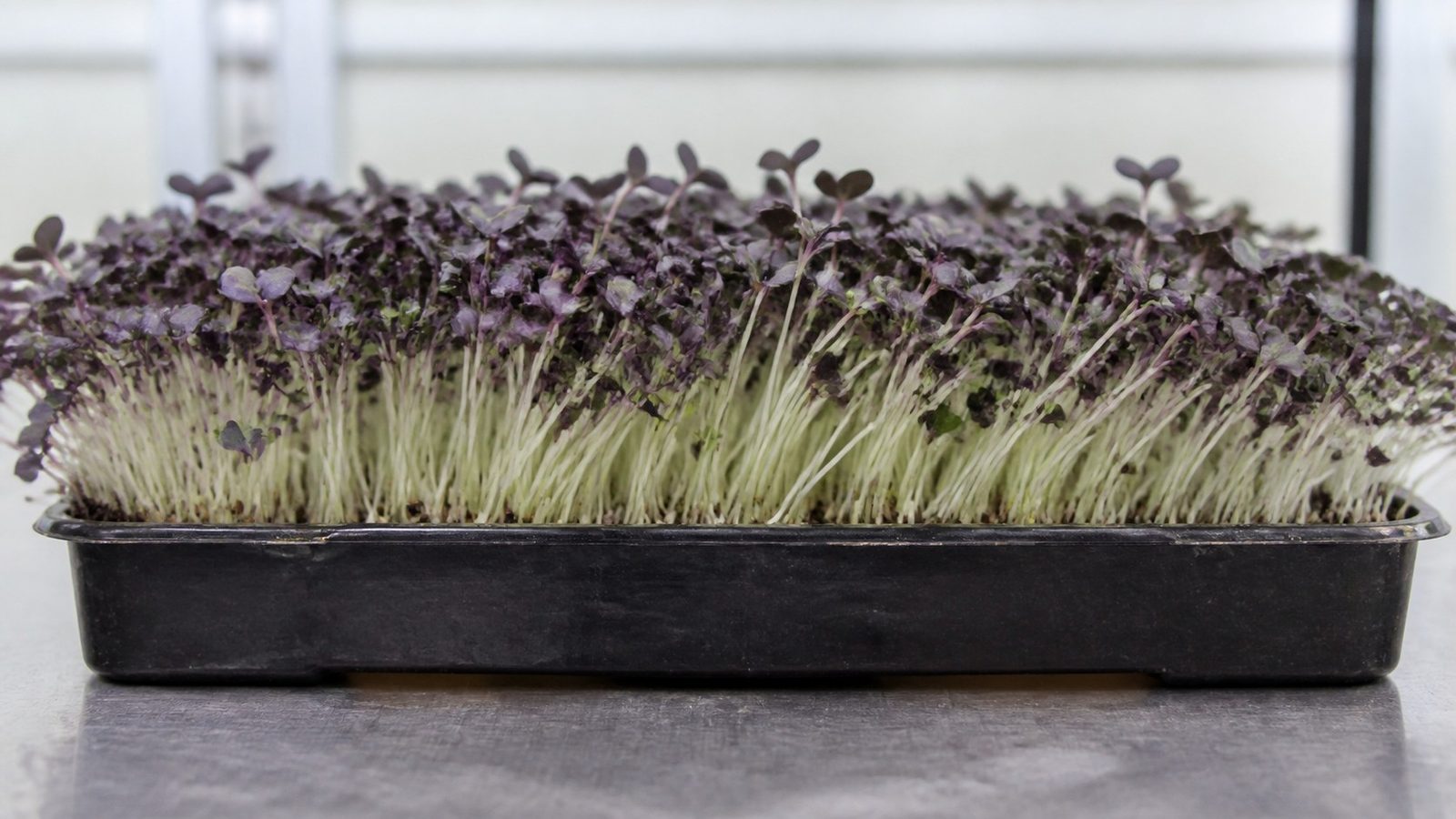
| Mustard microgreens | Beginner | 10 to 15 | 8 | None | Test your own tray | 9.5 | Test your own tray | 65 to 75 | Medium | Not applicable | 4 to 14 days | no | raw | brassica |
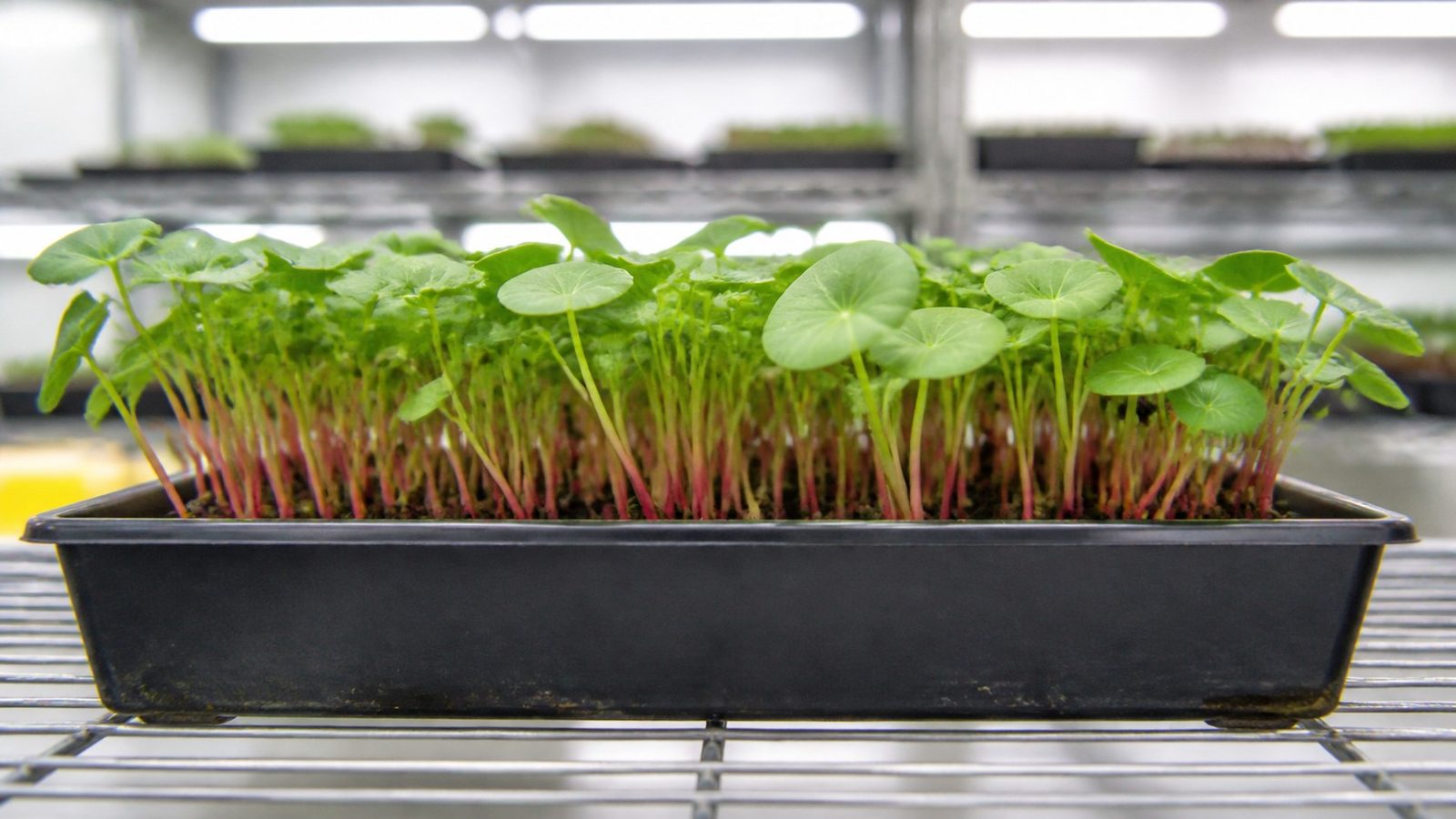
| Nasturtium microgreens | Moderate | 12 to 21 | 133 | 0 to 6 hours | 3 to 4 days | 5.64 | Test your own tray | 65 to 70 | High | heavy | 5 days | partial | raw | nasturtium |
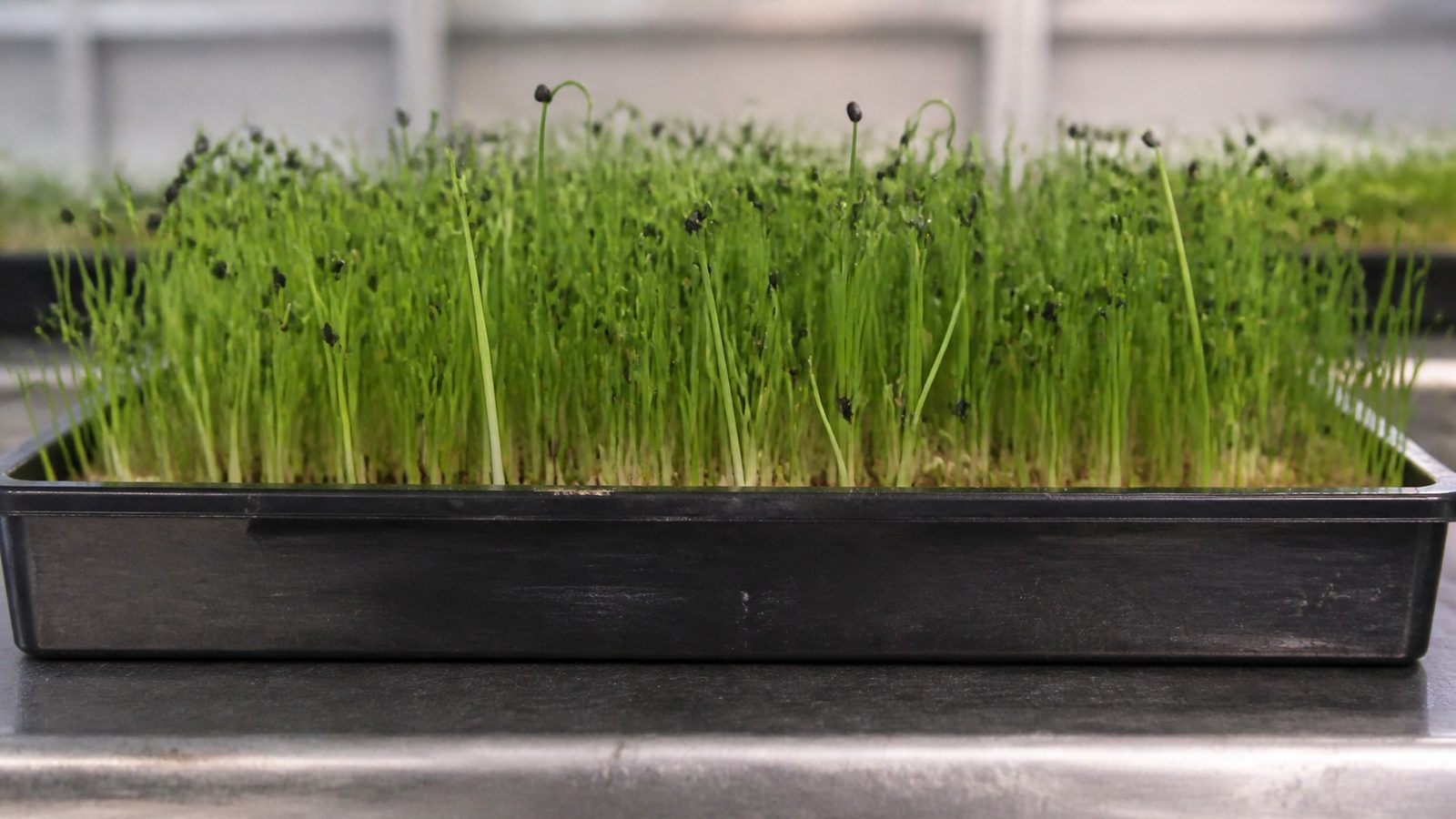
| Onion microgreens | Moderate | 10 to 21 | 4.8 | Test your own tray | 2 to 3 days | 1.29 | Test your own tray | 60 to 70 | Medium | some | Test your own tray | Test your own tray | raw | allium |
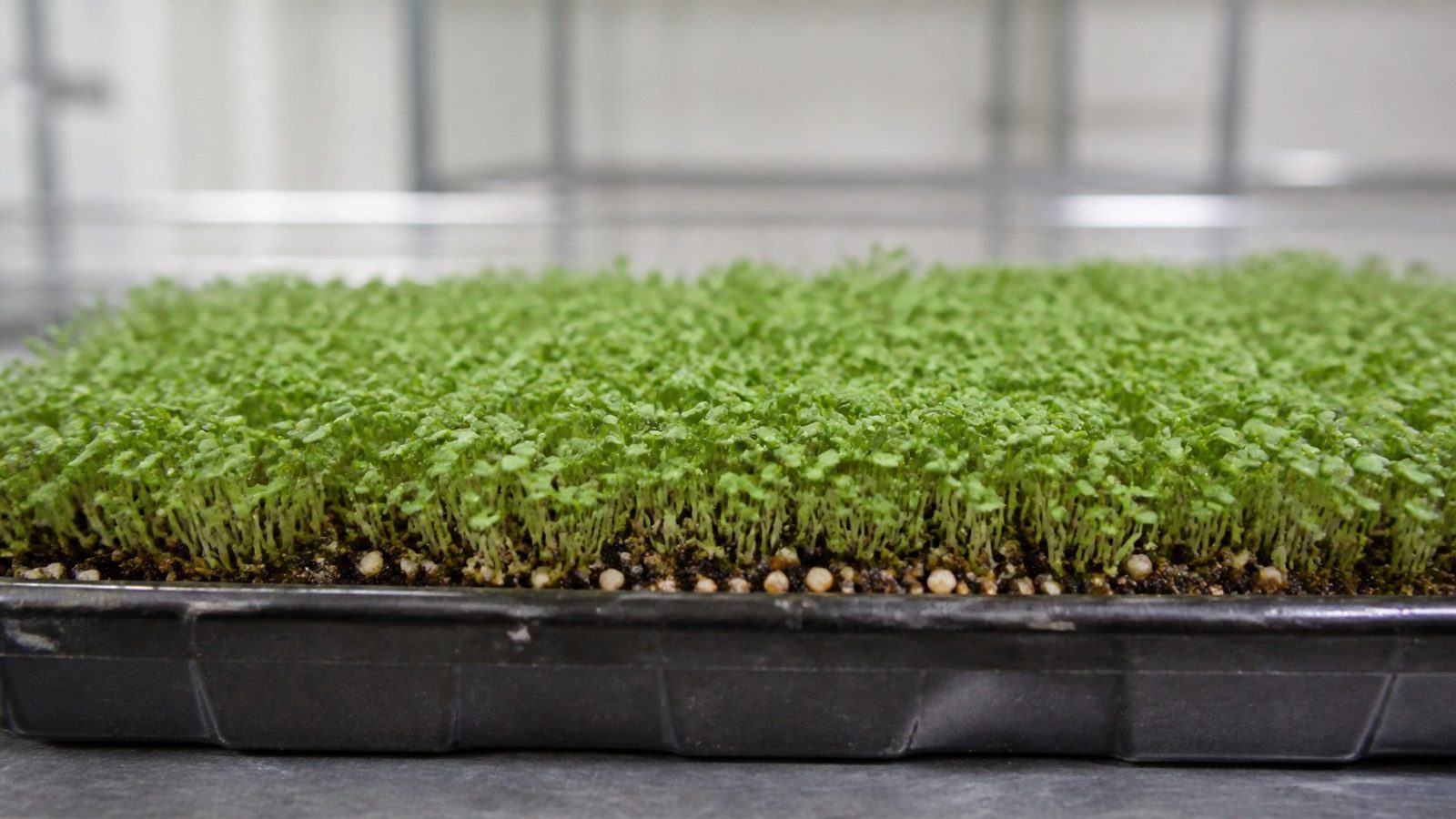
| Oregano microgreens | Difficult | 16 to 25 | Test your own tray | None | Test your own tray | Test your own tray | Test your own tray | Test your own tray | High | Not applicable | Test your own tray | no | raw | mint |
| Pak choi microgreens | Beginner | 8 to 13 | 10.5 | None | 3 to 4 days | 11 | Test your own tray | 60 to 70 | Medium | some | Test your own tray | Test your own tray | raw | brassica |
| Parsley microgreens | Difficult | 21 to 35 | 15 to 20 | None | 4 to 5 days | 6.25 | Test your own tray | 60 to 75 | High | some | Test your own tray | Test your own tray | raw | umbellifer |
| Pea shoots | Moderate | 8 to 14 | 150 | 6 to 8 hours | 2 to 3 days | 8 | Test your own tray | Test your own tray | High | some | Test your own tray | partial | raw or cooked | legume |
| Popcorn shoots | Moderate | 6 to 14 | 142 to 227 | 8 to 12 hours | 6 to 14 days | Test your own tray | Test your own tray | 65 to 72 | High | heavy | 10 to 14 days | Test your own tray | raw | grass |
| Purslane microgreens | Moderate | 8 to 25 | Test your own tray | None | 0 to 1 days | Test your own tray | Test your own tray | 60 to 75 | High | Test your own tray | Test your own tray | partial | raw | purslane |
| Quinoa microgreens | Moderate | 7 to 14 | Test your own tray | None | 2 to 3 days | Test your own tray | 3 to 5 days | 68 to 72 | High | Test your own tray | 5 to 7 days | Test your own tray | raw | chenopod |
| Radish microgreens | Beginner | 6 to 10 | 22.5 to 28.5 | None | 2 to 4 days | 8 to 11.5 | 1 to 3 days | 65 to 75 | Medium | some | 14 to 21 days | no | raw | brassica |
| Sesame microgreens | Moderate | 5 to 10 | Test your own tray | 0 to 6 hours | 3 days | Test your own tray | Test your own tray | 73 to 77 | Test your own tray | Test your own tray | Test your own tray | Test your own tray | raw or cooked | sesame |
| Shiso microgreens | Moderate | 16 to 30 | 11.5 | 0 to 8 hours | 4 to 11 days | 6.5 | Test your own tray | Test your own tray | Medium | Test your own tray | 6 to 7 days | no | raw | mint |
| Sorrel microgreens | Difficult | 17 to 30 | 3.5 | None | None | 6.5 | Test your own tray | 60 to 75 | Medium | Test your own tray | Test your own tray | Test your own tray | raw | dock |
| Spinach microgreens | Difficult | 7 to 25 | 60 | 0 to 12 hours | 4 to 7 days | 7.2 to 8.8 | Test your own tray | Test your own tray | High | some | 7 days | no | raw | chenopod |
| Sunflower microgreens | Moderate | 9 to 12 | 48 to 250 | 4 to 12 hours | 2 to 4 days | 18.77 | Test your own tray | 70 to 74 | High | heavy | Test your own tray | no | raw | aster |
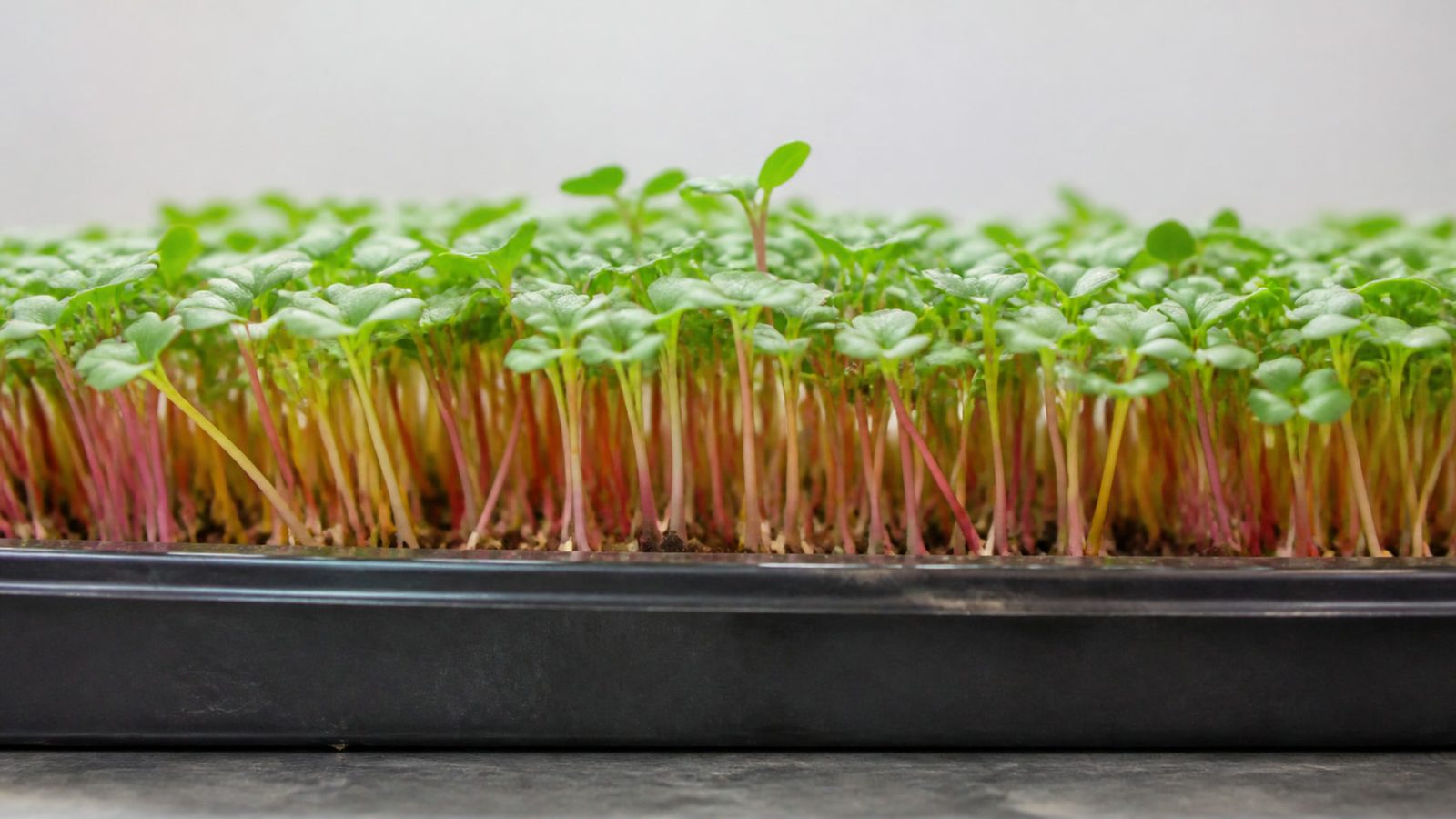
| Swiss chard microgreens | Moderate | 16 to 19 | 31.5 | None | Test your own tray | 9.5 | Test your own tray | Test your own tray | High | heavy | Test your own tray | Test your own tray | raw | chenopod |
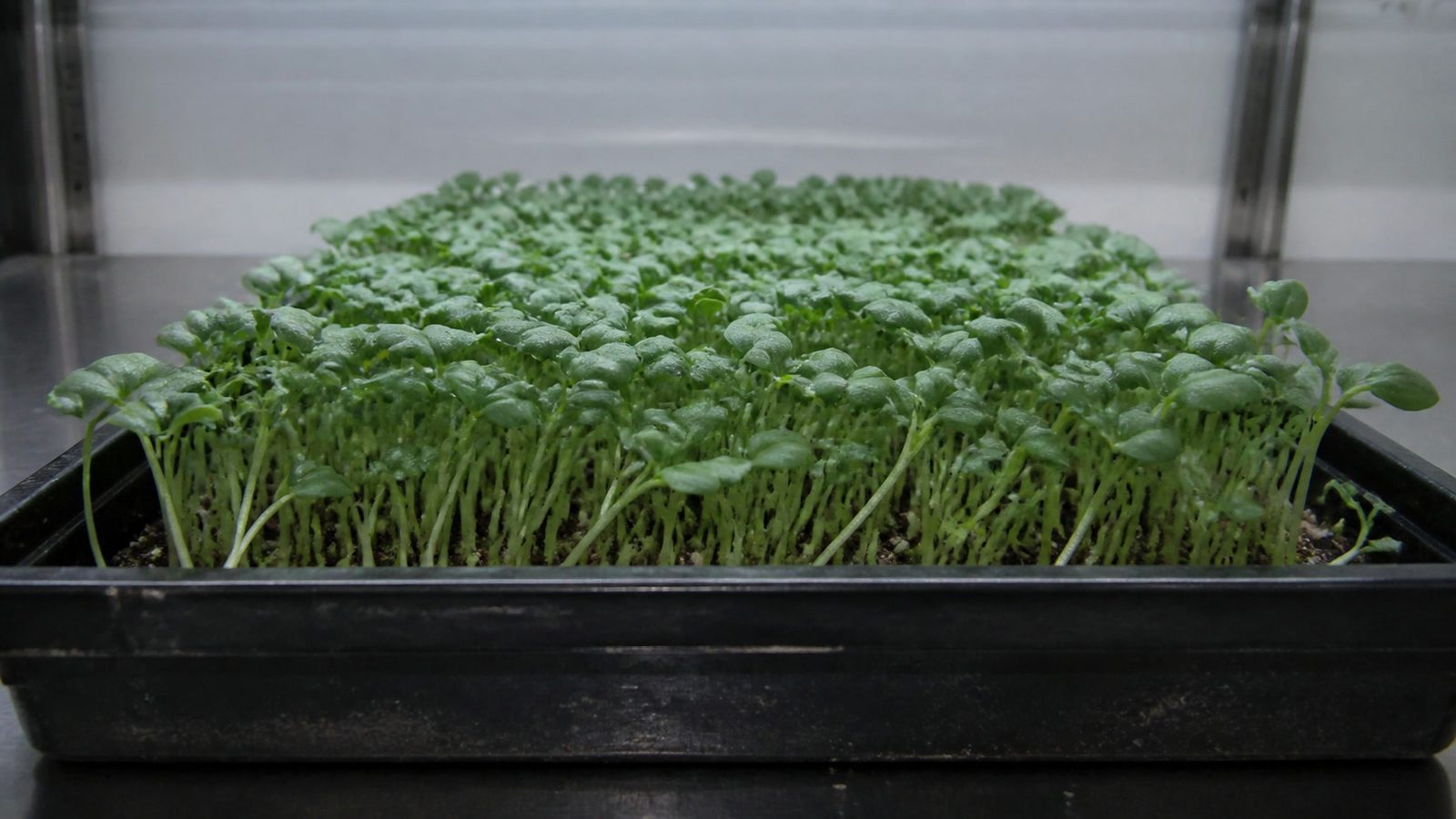
| Tatsoi microgreens | Beginner | 8 to 15 | 7.5 | None | 2 to 5 days | 8.5 | Test your own tray | 65 to 75 | Medium | some | Test your own tray | Test your own tray | raw | brassica |
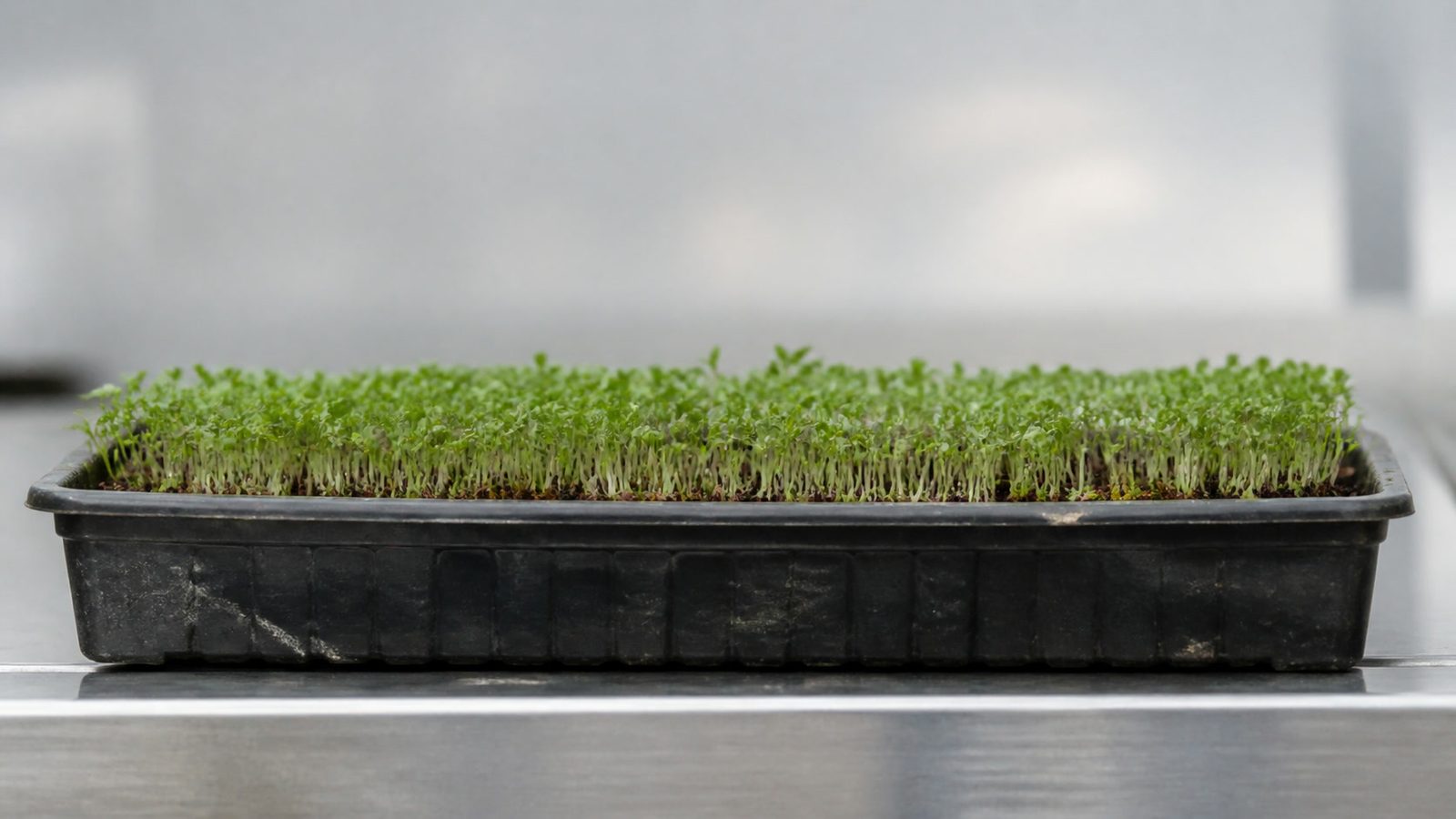
| Thyme microgreens | Difficult | 20 to 35 | 31 | Test your own tray | Test your own tray | 3.3 | Test your own tray | 72 to 82 | High | Test your own tray | Test your own tray | Test your own tray | raw | mint |
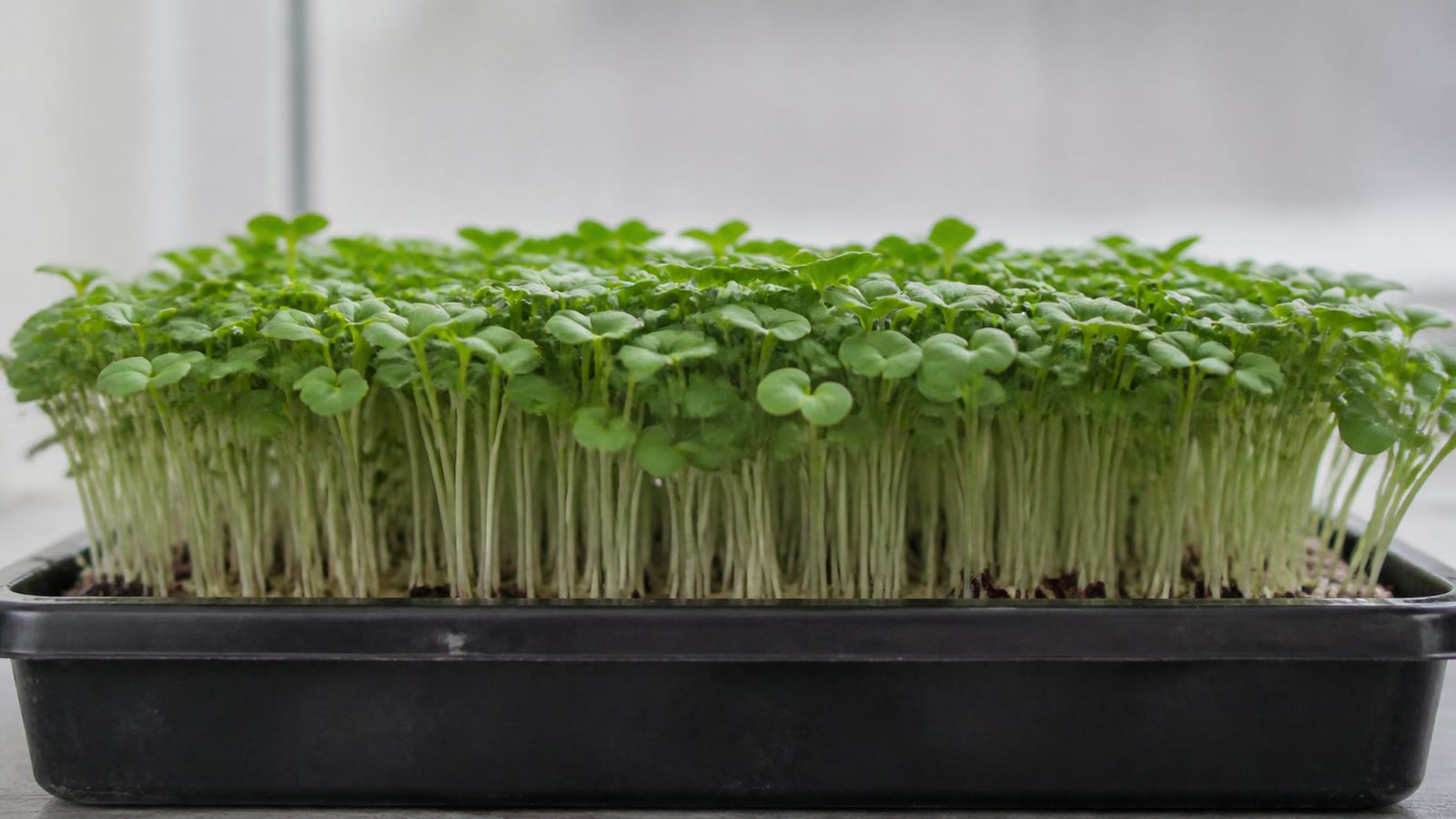
| Turnip microgreens | Beginner | 7 to 12 | 10 | None | 2 to 4 days | Test your own tray | Test your own tray | 64 to 72 | Medium | some | 3 days | Test your own tray | raw | brassica |
| Watercress microgreens | Moderate | 7 to 25 | Test your own tray | None | 4 to 5 days | Test your own tray | Test your own tray | Test your own tray | High | Test your own tray | Test your own tray | Test your own tray | raw | brassica |
| Wheatgrass | Beginner | 7 to 12 | 450 | 4 to 8 hours | 2 to 3 days | Test your own tray | Test your own tray | Test your own tray | High | some | Test your own tray | partial | juiced | grass |
How to choose, in the order that actually matters
Most variety lists are sorted by how good the writer thinks each crop is. That is not a useful order, because the right choice depends on which constraint is binding for you, and there are only three that usually are.
If you are learning, sort by difficulty. The gap between a forgiving crop and an unforgiving one is much wider than the gap between two flavors. A tray that germinates evenly and shows you its problems early teaches you the method. A crop that is slow, uneven and mold-prone teaches you that microgreens are hard, which is the wrong lesson and an easy reason to quit after two trays.
If you are selling, sort by yield and then by days to harvest. A tray is a unit of rack space for a fixed number of days, so what matters is what it returns per slot, not what it returns per tray. A crop that yields well but holds the rack for three weeks can be worth less than a lighter crop that turns over twice in the same time. The seed column is the other half of that arithmetic, because the varieties that yield most are also the ones that eat the most seed by weight.
If you are growing for your own kitchen, sort by flavor and ignore the rest. At one or two trays the economics do not exist, and the only failure mode that matters is growing something you do not want to eat. Strong brassicas divide people sharply, and so does cilantro. Taste before you commit a rotation to a crop.
The thing worth saying that most of these lists will not: several of these varieties are not worth your tray unless you specifically want them. Where that is true, the variety’s own entry says so.
The easiest microgreens to grow
Sorted by how much a crop punishes a mistake, not by how fast it is. The verdicts are allowed to be negative, because a directory that recommends everything recommends nothing.
- Radish microgreensBeginner
- Broccoli raab microgreensBeginner
- Turnip microgreensBeginner
- WheatgrassBeginner
- Cabbage, green microgreensBeginner
- Komatsuna microgreensBeginner
- Lentil microgreensBeginner
- Pak choi microgreensBeginner
- Broccoli microgreensBeginner
- Clover microgreensBeginner
- Collard microgreensBeginner
- Cabbage, red microgreensBeginner
- Garden cress microgreensBeginner
- Kale microgreensBeginner
- Mizuna microgreensBeginner
- Tatsoi microgreensBeginner
- Arugula microgreensBeginner
- Mustard microgreensBeginner
- Kohlrabi microgreensBeginner
- Magenta spreen microgreensBeginner
- Cauliflower microgreensBeginner
- AlfalfaModerate
- Sesame microgreensModerate
- Barley grassModerate
- Buckwheat microgreensModerate
- Chia microgreensModerate
- Fenugreek microgreensModerate
- Cucumber microgreensModerate
- Flax microgreensModerate
- Mung bean shootsModerate
- Cantaloupe microgreensModerate
- Popcorn shootsModerate
- Quinoa microgreensModerate
- Sunflower microgreensModerate
- Pea shootsModerate
- Chickpea shootsModerate
- Endive microgreensModerate
- Beet microgreensModerate
- Lettuce microgreensModerate
- Celosia microgreensModerate
- Amaranth microgreensModerate
- Chervil microgreensModerate
- Borage microgreensModerate
- Onion microgreensModerate
- Watercress microgreensModerate
- Nasturtium microgreensModerate
- Purslane microgreensModerate
- Leek microgreensModerate
- Swiss chard microgreensModerate
- Dill microgreensModerate
- Basil microgreensModerate
- Cilantro microgreensModerate
- Bull's Blood beet microgreensModerate
- Chive microgreensModerate
- Shiso microgreensModerate
- Mint microgreensDifficult
- Spinach microgreensDifficult
- Carrot microgreensDifficult
- Fennel microgreensDifficult
- Oregano microgreensDifficult
- Sorrel microgreensDifficult
- Celery microgreensDifficult
- Thyme microgreensDifficult
- Parsley microgreensDifficult
- Catnip microgreensDifficult
The fastest microgreens, by days to harvest
Days from sowing to a normal first cut in a warm room. A cold room adds to every one of these.
- Alfalfa4 to 6 days
- Sesame microgreens5 to 10 days
- Radish microgreens6 to 10 days
- Barley grass6 to 12 days
- Buckwheat microgreens6 to 12 days
- Chia microgreens6 to 12 days
- Fenugreek microgreens6 to 12 days
- Broccoli raab microgreens7 to 12 days
- Cucumber microgreens7 to 12 days
- Flax microgreens5 to 14 days
- Mung bean shoots7 to 12 days
- Turnip microgreens7 to 12 days
- Wheatgrass7 to 12 days
- Cabbage, green microgreens8 to 12 days
- Cantaloupe microgreens8 to 12 days
- Komatsuna microgreens8 to 12 days
- Lentil microgreens8 to 12 days
- Popcorn shoots6 to 14 days
- Pak choi microgreens8 to 13 days
- Quinoa microgreens7 to 14 days
- Sunflower microgreens9 to 12 days
- Broccoli microgreens7 to 15 days
- Clover microgreens9 to 13 days
- Collard microgreens7 to 15 days
- Pea shoots8 to 14 days
- Cabbage, red microgreens8 to 15 days
- Chickpea shoots9 to 14 days
- Endive microgreens8 to 15 days
- Garden cress microgreens8 to 15 days
- Kale microgreens8 to 15 days
- Mizuna microgreens8 to 15 days
- Tatsoi microgreens8 to 15 days
- Beet microgreens10 to 14 days
- Lettuce microgreens8 to 16 days
- Arugula microgreens6 to 19 days
- Celosia microgreens10 to 15 days
- Mustard microgreens10 to 15 days
- Kohlrabi microgreens10 to 16 days
- Magenta spreen microgreens10 to 16 days
- Mint microgreens10 to 18 days
- Amaranth microgreens11 to 18 days
- Chervil microgreens9 to 21 days
- Borage microgreens10 to 21 days
- Onion microgreens10 to 21 days
- Spinach microgreens7 to 25 days
- Watercress microgreens7 to 25 days
- Nasturtium microgreens12 to 21 days
- Purslane microgreens8 to 25 days
- Leek microgreens10 to 25 days
- Swiss chard microgreens16 to 19 days
- Dill microgreens12 to 25 days
- Basil microgreens12 to 26 days
- Cilantro microgreens13 to 25 days
- Bull's Blood beet microgreens16 to 23 days
- Carrot microgreens14 to 25 days
- Fennel microgreens16 to 25 days
- Oregano microgreens16 to 25 days
- Chive microgreens14 to 30 days
- Shiso microgreens16 to 30 days
- Sorrel microgreens17 to 30 days
- Celery microgreens21 to 30 days
- Thyme microgreens20 to 35 days
- Parsley microgreens21 to 35 days
The highest yielding microgreens per 1020 tray
Ounces at a normal first cut. This is the least published number in the category, and it is the one that decides what a commercial grower actually plants.
- Sunflower microgreens18.77 oz
- Komatsuna microgreens10.6 to 13.4 oz
- Broccoli microgreens11.5 oz
- Kale microgreens11 oz
- Kohlrabi microgreens11 oz
- Pak choi microgreens11 oz
- Arugula microgreens10 oz
- Mizuna microgreens10 oz
- Radish microgreens8 to 11.5 oz
- Mustard microgreens9.5 oz
- Swiss chard microgreens9.5 oz
- Cabbage, red microgreens8.5 oz
- Tatsoi microgreens8.5 oz
- Borage microgreens8.05 oz
- Garden cress microgreens8 oz
- Pea shoots8 oz
- Spinach microgreens7.2 to 8.8 oz
- Bull's Blood beet microgreens7.5 oz
- Lentil microgreens6.1 to 8.4 oz
- Broccoli raab microgreens5.29 to 8.82 oz
- Amaranth microgreens6.5 oz
- Basil microgreens5.5 to 7.5 oz
- Shiso microgreens6.5 oz
- Sorrel microgreens6.5 oz
- Parsley microgreens6.25 oz
- Cilantro microgreens6 oz
- Flax microgreens5 to 7 oz
- Leek microgreens5.64 oz
- Nasturtium microgreens5.64 oz
- Chive microgreens3.8 to 5.6 oz
- Fenugreek microgreens3.9 to 4.3 oz
- Chervil microgreens3 to 5 oz
- Clover microgreens3 to 5 oz
- Dill microgreens3 to 5 oz
- Celosia microgreens3.4 oz
- Thyme microgreens3.3 oz
- Carrot microgreens2 oz
- Onion microgreens1.29 oz
- Fennel microgreens1 oz
What each microgreen tastes like
Taste is the most searched thing about a named variety and it is usually answered with one adjective. One honest line each, including the ones people dislike.
- AlfalfaMild and nutty with a delicate fresh crunch, and none of the pepper or mustard heat of a brassica.
- Amaranth microgreensMild and earthy rather than peppery, and very tender: this crop is color on the plate more than flavor in the mouth.
- Arugula microgreensTender and nutty-green with a real peppery heat: the pungency is the point, and it is far stronger than a mild brassica like broccoli or kale.
- Barley grassMild, grassy and slightly earthy, and it is a juice flavor rather than a salad one: past its window the stems turn fibrous and bitter and the juice darkens.
- Basil microgreensConcentrated sweet-spicy basil aroma, closer to a seasoning than a salad green, and strong enough to take over a delicate plate.
- Beet microgreensEarthy beet and spinach with a mild sweet edge, milder than the root but not neutral, and one extension review simply calls beet microgreens sour.
- Borage microgreensMild, juicy, unmistakably cucumber, on a leaf with fine bristly hairs that you notice in the mouth.
- Broccoli microgreensMild, fresh brassica with a faint bite: none of radish or arugula's pepper, and none of the sulfur note cooked mature broccoli carries.
- Broccoli raab microgreensSavory brassica with a real, deliberate bitterness: this is rapini, stronger and less sweet than broccoli, and the bitterness is the product rather than a defect.
- Buckwheat microgreensMild and lettuce-like, juicy and crisp, with a tangy citrus edge that keeps it from reading as plain.
- Bull's Blood beet microgreensMild and earthy in the way a beet is earthy, crisp and juicy rather than peppery, and it does not disappear into a dish.
- Cabbage, green microgreensMild, clean and slightly sweet cabbage with very little peppery heat, which is the whole difference from the red type.
- Cabbage, red microgreensMild, crisp cabbage with a small peppery edge: gentler than the mature head, and more recognizably cabbage once the true leaves advance.
- Cantaloupe microgreensMild, sweet and faintly melon-like, and mostly texture: the stem is thick and crisp, closer to a cucumber stem than to a salad leaf.
- Carrot microgreensMild and sweet, recognizably carrot top rather than carrot root, with a fine feathery texture like dill and none of dill's flavor.
- Catnip microgreensFor a cat the point is aroma rather than flavor; brewed as a tea by people it is mild, grassy and faintly minty, without the sharpness of peppermint.
- Cauliflower microgreensMild cabbage and cauliflower, fresh brassica without any of radish's heat, with enough crunch and substance to work as a base green rather than a garnish.
- Celery microgreensConcentrated aromatic celery, recognizably the vegetable but sharper and stronger than the stalk, closer to a seasoning than to a salad green.
- Celosia microgreensMild and earthy with a spinach-like green note and no heat at all: this crop is bought with the eyes, not the tongue.
- Chervil microgreensDelicate mild sweet anise, closer to parsley and tarragon than to licorice candy, and it only really arrives once the first curled true leaves do.
- Chia microgreensMinty and herbal with a real bitter, almost spicy edge, and the bitterness sharpens if you leave it past the cotyledon stage.
- Chickpea shootsMildly sweet and nutty in a clearly leguminous way, with a small tart zest at the front and no heat anywhere in it.
- Chive microgreensDelicate mild onion-herb, noticeably gentler than onion microgreens or garlic chive, and it fades rather than sharpens as the blade grows on.
- Cilantro microgreensBright, citrusy and unmistakably cilantro: the herb itself rather than a generic green, and it gets stronger the longer you leave it.
- Clover microgreensMild and light with a gentle grassy sweetness, closer to a salad volume green than to anything with a bite, and it turns noticeably bitter if held past its early window.
- Collard microgreensA crisp, mild cabbage bite with a slightly bitter edge and a little sweetness behind it, and none of the pepper that mustard or radish brings.
- Cucumber microgreensA refreshing cucumber note without bitterness, on thick dark green shoots: cooling rather than flavor-forward, and nothing like a peppery brassica.
- Dill microgreensMild at this stage but unmistakably dill: sweet and citrusy, an aromatic pickle-and-fresh-herb note rather than anything peppery.
- Endive microgreensMildly bitter at the cotyledon cut and distinctly more bitter once true leaves start, and the bitterness is the product rather than a fault.
- Fennel microgreensSweet, unmistakable anise, mild at the cotyledon stage and intensifying after the first true leaf, with (E)-anethole carrying most of the aroma.
- Fenugreek microgreensConcentrated earthy methi bitterness with a curry note, mildest at days 6 to 8 and noticeably bitter past day 10, and a little goes a long way.
- Flax microgreensLight, tender and close to neutral rather than peppery, and the texture is the point: soft and faintly slick, not crisp.
- Garden cress microgreensMustardy on the tongue and then a warm pepper heat that climbs into the nose like horseradish, sharpest at the cotyledon cut.
- Kale microgreensMild, gently earthy brassica with no heat in it at all: recognizably kale, without the toughness or the bitterness of the mature leaf.
- Kohlrabi microgreensMild, slightly sweet cabbage, with markedly less pepper than radish or mustard: the color is louder than the flavor.
- Komatsuna microgreensMild, slightly sweet mustard-spinach with a gentle brassica bite, and it sharpens as the leaves darken rather than staying put.
- Leek microgreensMild sweet onion, gentler than a mature leek but concentrated enough that a heavy handful takes over the plate.
- Lentil microgreensMild, sweet and nutty with a juicy snap, closer to fresh pea than to anything peppery, and it turns woody and faintly bitter if left too long.
- Lettuce microgreensMild, softly sweet and close to neutral: a tender salad base rather than a flavor, and slightly bitter only if you leave it too long.
- Magenta spreen microgreensMild, clean and spinach-like with a faint mineral edge, and it is bought for the fuchsia bloom on its growing tips rather than for the flavor.
- Mint microgreensSweet, cooling spearmint with less of peppermint's harsh menthol: an aromatic finish measured in leaves, not a green you eat by the handful.
- Mizuna microgreensMild mustard with a light peppery bite and a little sweetness, nothing like the heat of a hot mustard.
- Mung bean shootsMild, nutty and faintly earthy with a juicy bean-sprout crunch: volume and texture rather than flavor.
- Mustard microgreensPeppery to pungent rather than merely green, with a mustard heat that arrives in the nose: Garnet Giant is described as only mildly spicy, and Wasabina is sold as sweet and spicy.
- Nasturtium microgreensStrong peppery horseradish, close to wasabi, with a brief sweetness in front of the heat.
- Onion microgreensConcentrated fresh onion and scallion, strong enough that a few strands season a plate: seasoning rather than salad.
- Oregano microgreensConcentrated resinous oregano, the pizza-herb note undiluted: a seasoning in leaf form rather than a green.
- Pak choi microgreensMild, faintly sweet Chinese cabbage with a gentle brassica edge, carried by a crisp juicy stem rather than any heat.
- Parsley microgreensMild, clean, recognizably parsley: subtler than the mature herb, with a crisp young texture and none of its bitterness.
- Pea shootsMildly sweet and recognizably like a fresh garden pea, with a crisp watery stem and no brassica pepperiness.
- Popcorn shootsIntensely sweet juicy corn with a crisp snap, closer to a dessert note than to a vegetable, and it turns fibrous and bitter if left tall.
- Purslane microgreensMild and spinach-like with a crisp succulent bite and a faint sourness: texture and water rather than heat.
- Quinoa microgreensVery mild, soft and grassy-nutty, closer to baby spinach than to anything peppery, with almost no aroma and an intensity the crop guide itself rates 2.5 out of 10.
- Radish microgreensA crisp, juicy radish bite, peppery enough to season a sandwich rather than merely taste green, and it sharpens as the true leaves advance.
- Sesame microgreensThe sources do not agree: one supplier calls it mildly sweet and subtle, another calls brown sesame spicy, and the one guide that compares eating quality says it tastes better cooked.
- Shiso microgreensA subtle licorice and anise herb with mint, basil and cinnamon notes rather than a salad green, and it turns spicier and more basil-minty as the tray ages.
- Sorrel microgreensBright, sharp, lemon-tangy acid rather than a green flavor: an acidifier you use by the leaf, not a salad base you eat by the handful.
- Spinach microgreensMild, sweet and unmistakably spinach, with less of the bitterness the mature leaf carries: tender leaves on juicy stems.
- Sunflower microgreensMild, nutty and noticeably crunchy, closer to a fresh sunflower seed than to anything peppery.
- Swiss chard microgreensMild, spinach-like and lightly earthy-sweet, with none of a brassica's pepper: the colored stem does the work, not the flavor.
- Tatsoi microgreensMild and lightly sweet with a subtle nutty edge, well short of arugula's pepper or a hot mustard: a leafy brassica you can eat by the handful.
- Thyme microgreensIntense thyme with pine and mint behind it, concentrated into a very small leaf: a herb you use by the pinch, not a green you eat.
- Turnip microgreensCrisp and mild-sweet, cabbage and turnip with a light pepper finish rather than a mustard bite.
- Watercress microgreensA sharp peppery brassica bite, closer to mustard or radish than to a salad green, on a tender small leaf.
- WheatgrassMildly sweet with a pleasant bitterness and an unmistakably grassy finish: a juice flavor rather than a salad one.
Microgreens that need no soaking
Fine seed sown dry. Soaking these makes them clump and germinate less evenly, so the step is not optional in reverse.
- Amaranth microgreensSow dry
- Arugula microgreensSow dry
- Basil microgreensSow dry
- Borage microgreensSow dry
- Broccoli microgreensSow dry
- Broccoli raab microgreensSow dry
- Bull's Blood beet microgreensSow dry
- Cabbage, green microgreensSow dry
- Cabbage, red microgreensSow dry
- Catnip microgreensSow dry
- Cauliflower microgreensSow dry
- Celery microgreensSow dry
- Celosia microgreensSow dry
- Chervil microgreensSow dry
- Chia microgreensSow dry
- Chive microgreensSow dry
- Clover microgreensSow dry
- Collard microgreensSow dry
- Cucumber microgreensSow dry
- Dill microgreensSow dry
- Endive microgreensSow dry
- Flax microgreensSow dry
- Garden cress microgreensSow dry
- Kale microgreensSow dry
- Kohlrabi microgreensSow dry
- Komatsuna microgreensSow dry
- Leek microgreensSow dry
- Lettuce microgreensSow dry
- Magenta spreen microgreensSow dry
- Mint microgreensSow dry
- Mizuna microgreensSow dry
- Mustard microgreensSow dry
- Oregano microgreensSow dry
- Pak choi microgreensSow dry
- Parsley microgreensSow dry
- Purslane microgreensSow dry
- Quinoa microgreensSow dry
- Radish microgreensSow dry
- Sorrel microgreensSow dry
- Swiss chard microgreensSow dry
- Tatsoi microgreensSow dry
- Turnip microgreensSow dry
- Watercress microgreensSow dry
Microgreens that regrow after cutting
Whether a tray is one crop or two. Nobody else publishes this.
- Amaranth microgreensno
- Arugula microgreensno
- Barley grassno
- Basil microgreensno
- Broccoli microgreensno
- Cantaloupe microgreensno
- Celery microgreenspartial
- Chickpea shootsyes
- Chive microgreensno
- Cilantro microgreensno
- Clover microgreensno
- Collard microgreensno
- Endive microgreensno
- Fennel microgreensno
- Kale microgreensno
- Kohlrabi microgreensno
- Mizuna microgreensno
- Mustard microgreensno
- Nasturtium microgreenspartial
- Oregano microgreensno
- Pea shootspartial
- Purslane microgreenspartial
- Radish microgreensno
- Shiso microgreensno
- Spinach microgreensno
- Sunflower microgreensno
- Wheatgrasspartial
Every variety guide
Each guide covers what the crop looks like when you have grown it right, what it tastes like, where it departs from the standard tray method, and what goes wrong with that variety in particular. All 62 of them are written: the table carries 65 crops, and the other 3 are older pages we kept for their rankings rather than guides still to come. Those 3 stay in the comparison above rather than being left out of it.
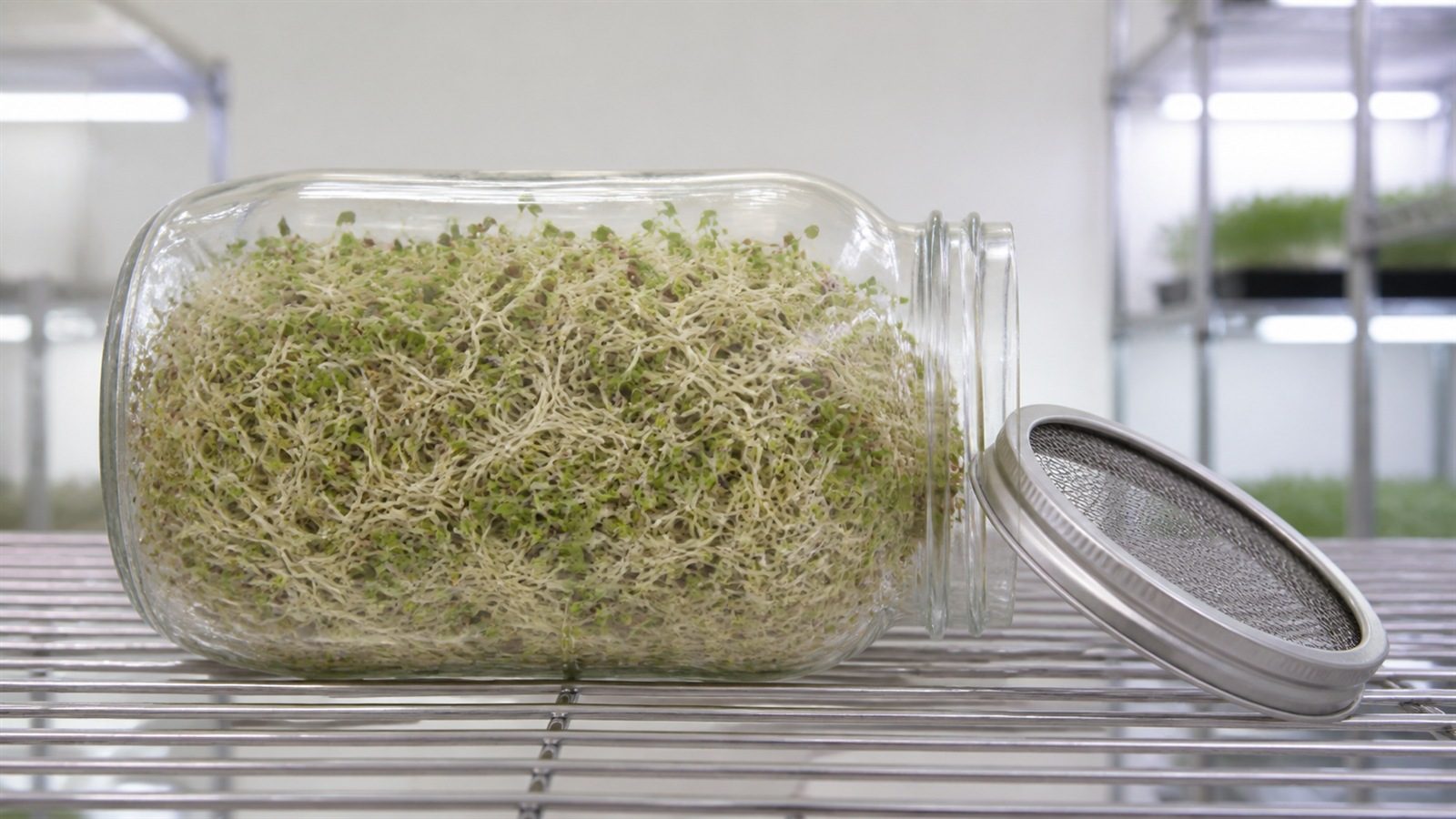
Alfalfa
Moderate · 4 to 6 days
Mild and nutty with a delicate fresh crunch, and none of the pepper or mustard heat of a brassica.
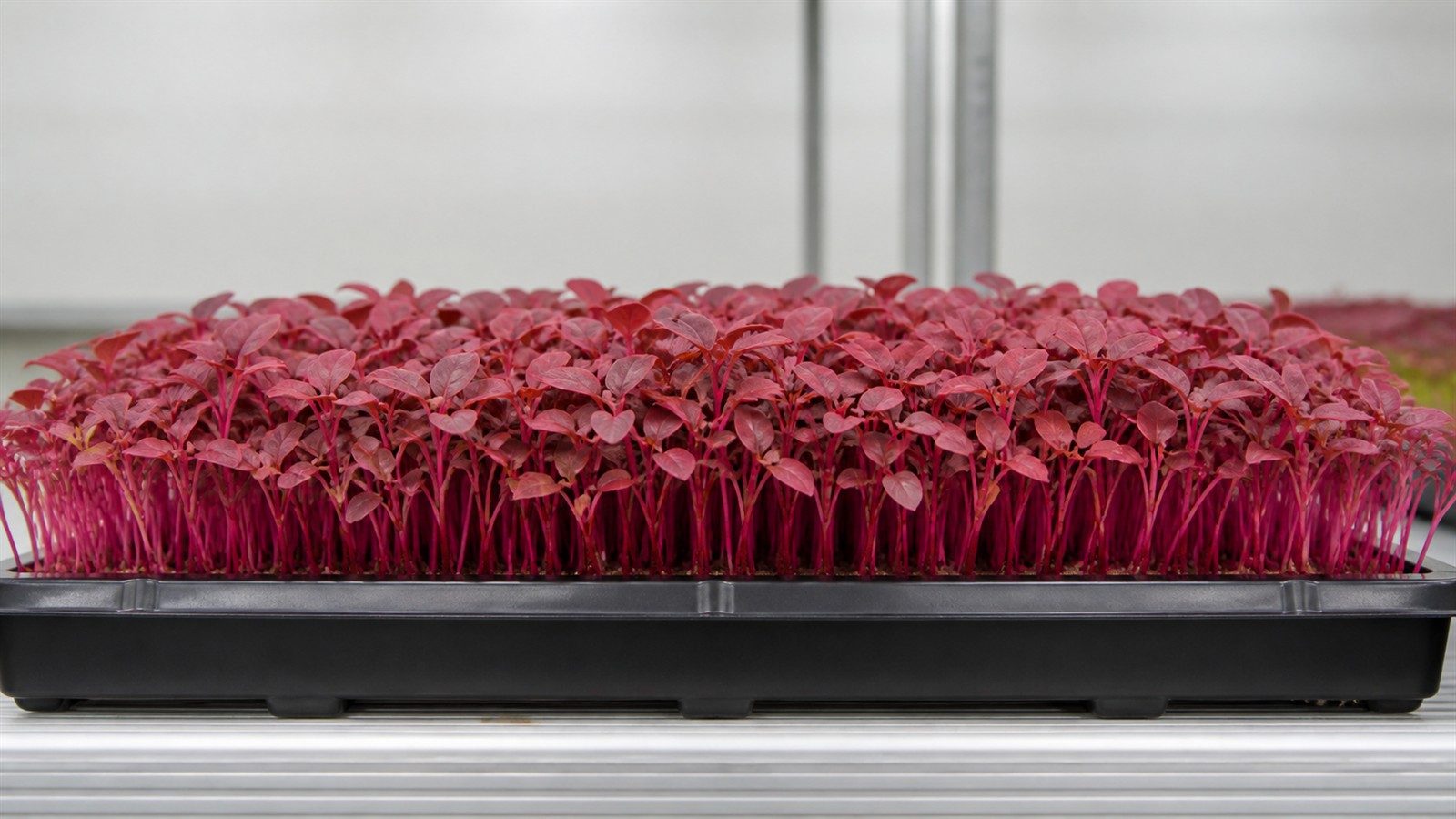
Amaranth microgreens
Moderate · 11 to 18 days
Mild and earthy rather than peppery, and very tender: this crop is color on the plate more than flavor in the mouth.
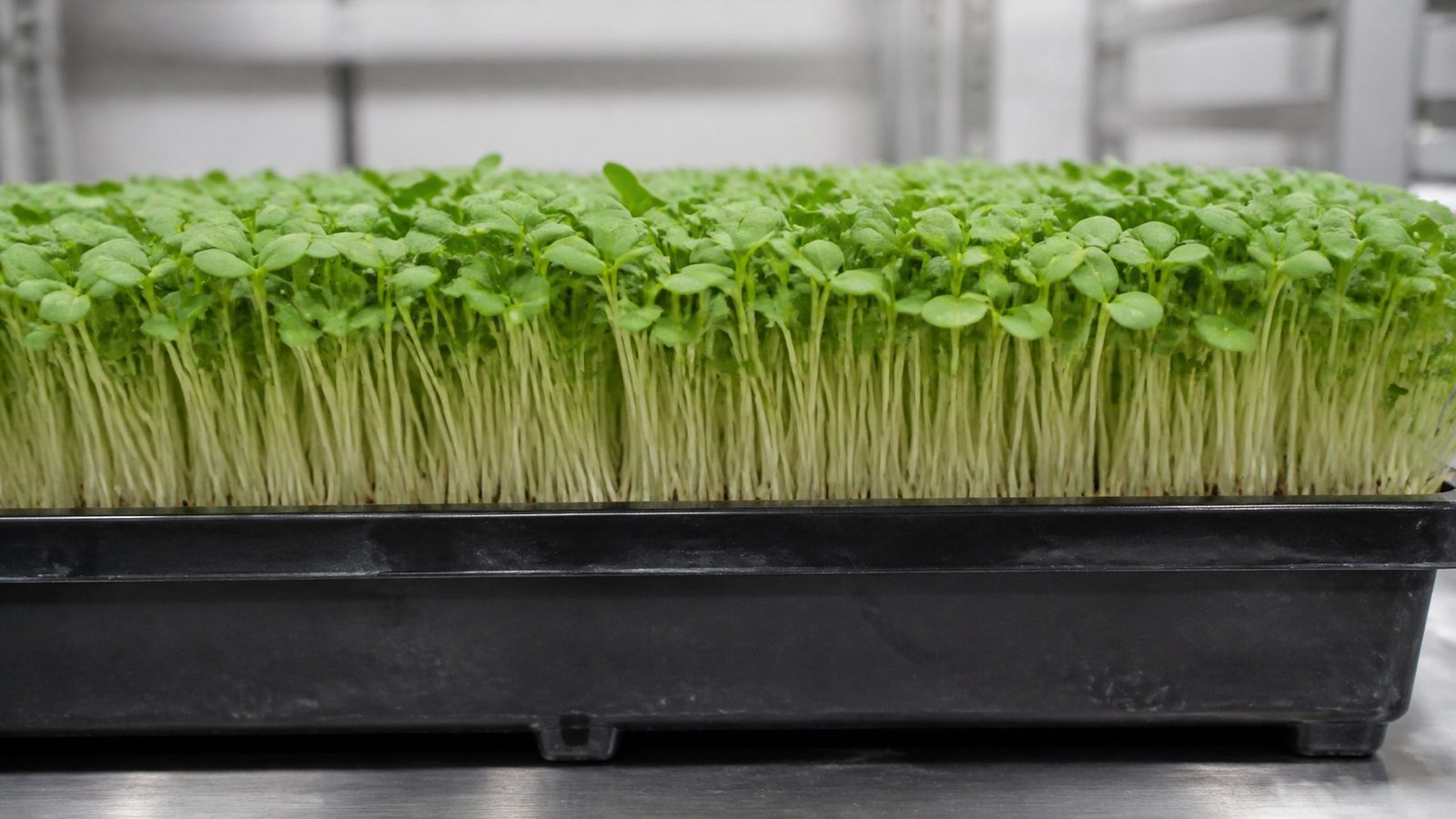
Arugula microgreens
Beginner · 6 to 19 days
Tender and nutty-green with a real peppery heat: the pungency is the point, and it is far stronger than a mild brassica like broccoli or kale.
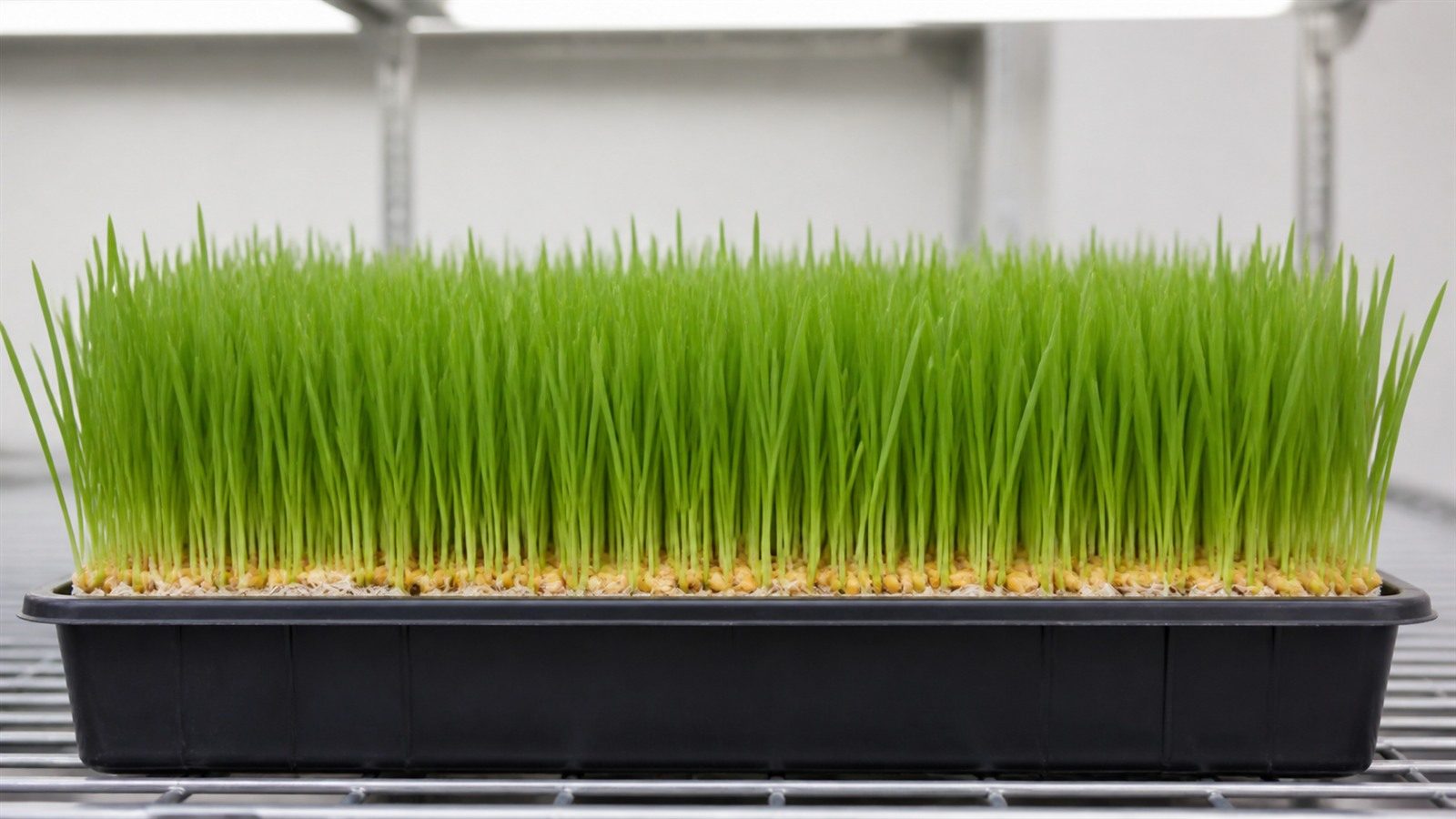
Barley grass
Moderate · 6 to 12 days
Mild, grassy and slightly earthy, and it is a juice flavor rather than a salad one: past its window the stems turn fibrous and bitter and the juice darkens.
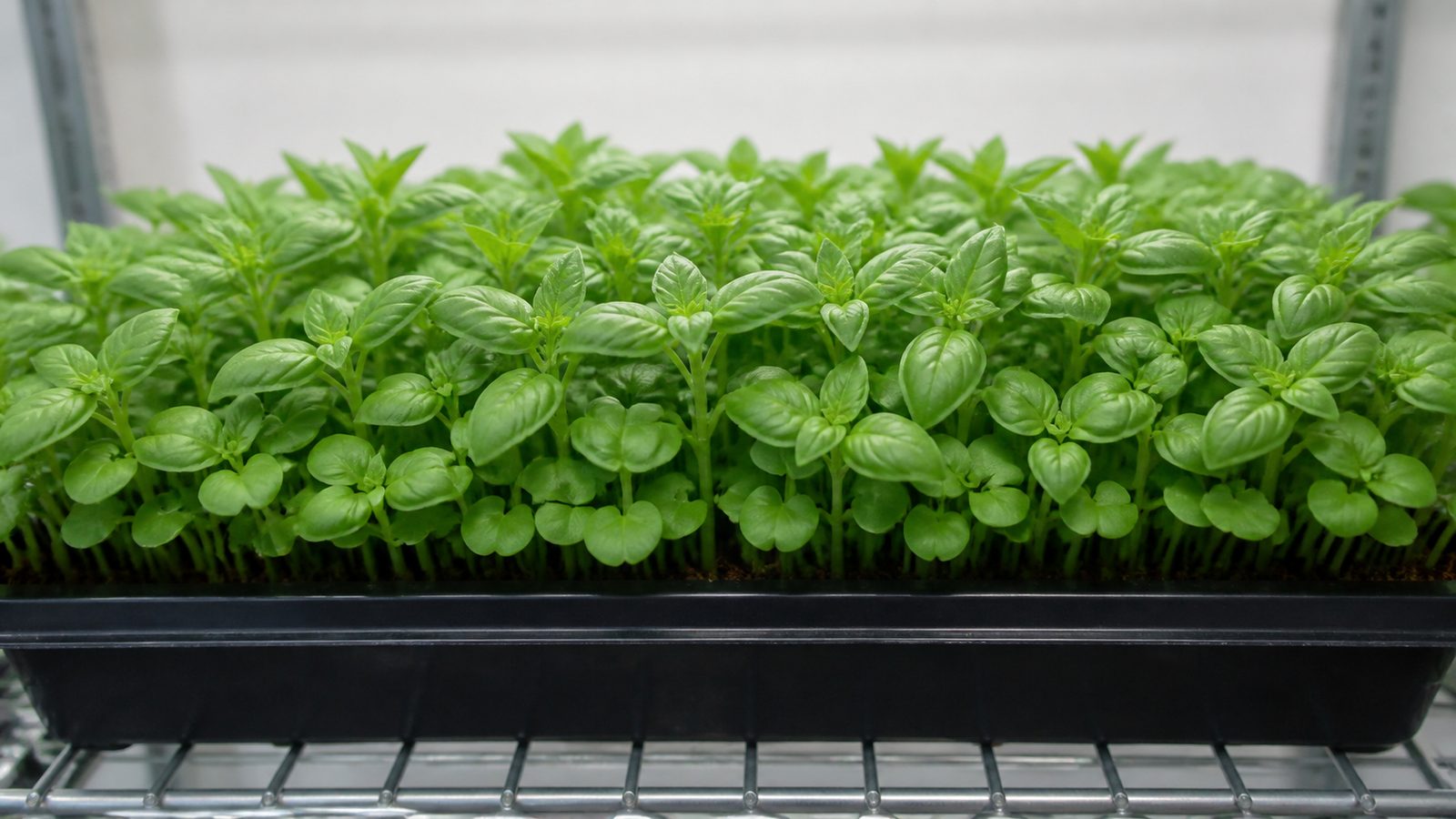
Basil microgreens
Moderate · 12 to 26 days
Concentrated sweet-spicy basil aroma, closer to a seasoning than a salad green, and strong enough to take over a delicate plate.
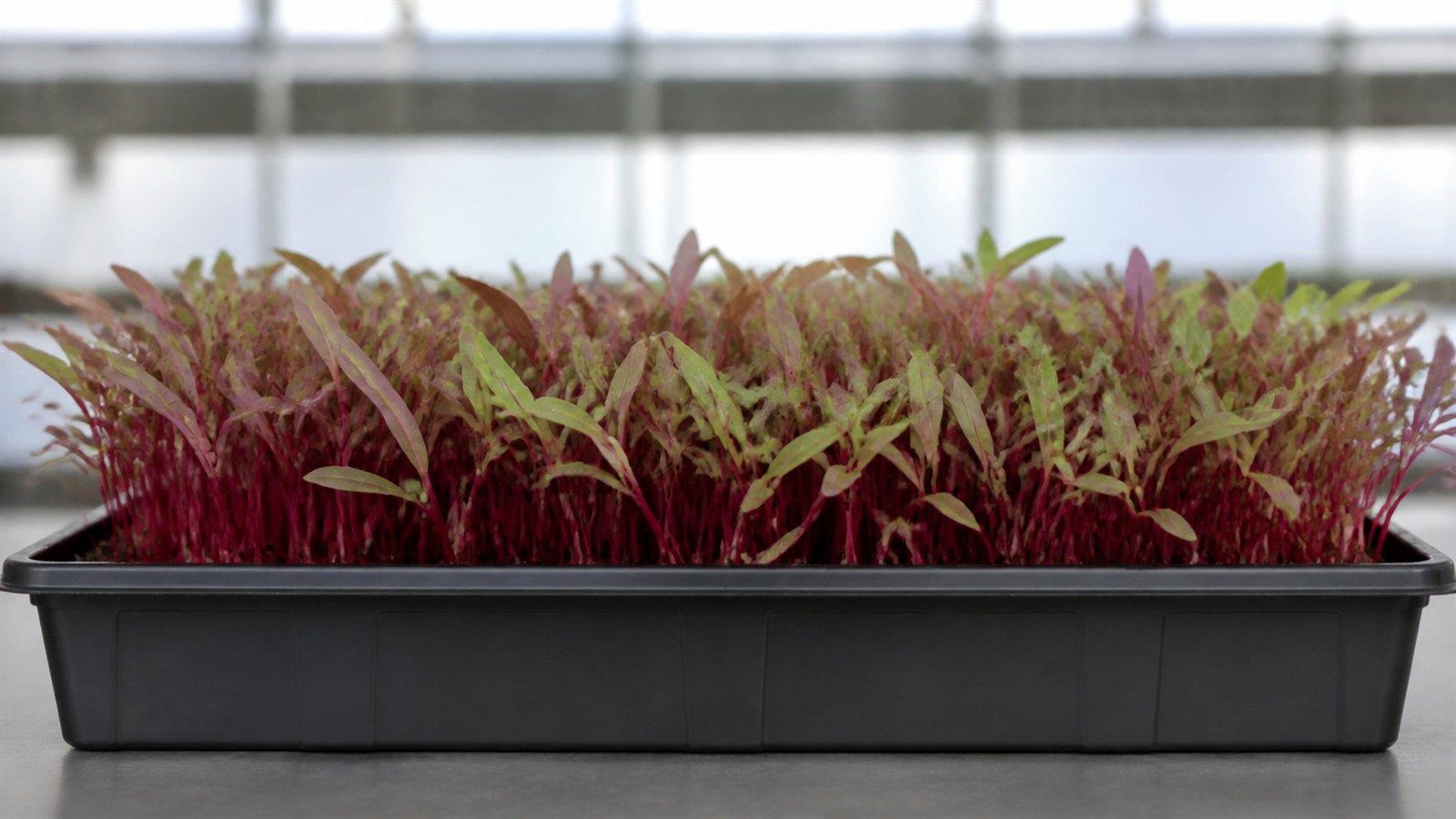
Beet microgreens
Moderate · 10 to 14 days
Earthy beet and spinach with a mild sweet edge, milder than the root but not neutral, and one extension review simply calls beet microgreens sour.
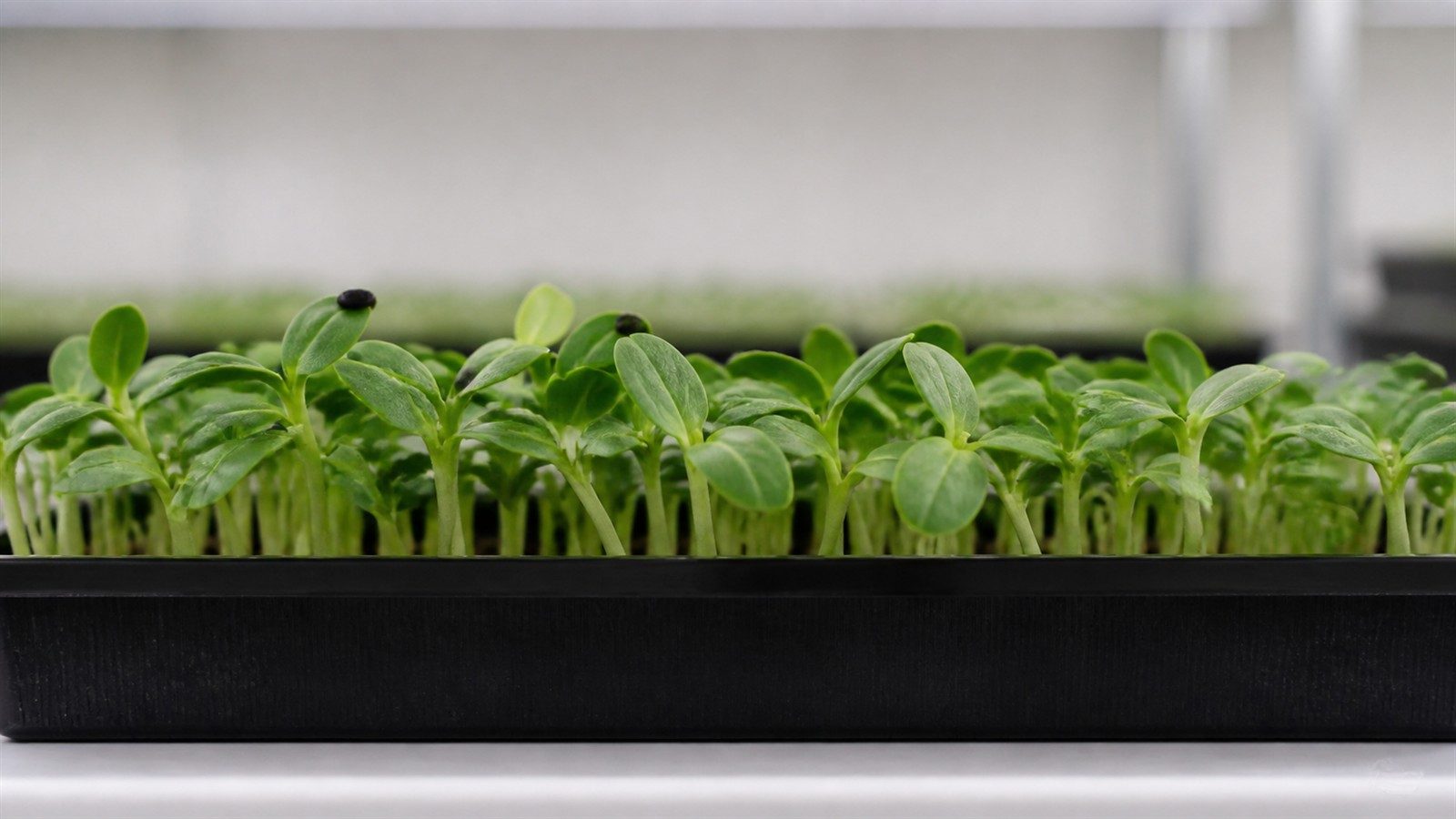
Borage microgreens
Moderate · 10 to 21 days
Mild, juicy, unmistakably cucumber, on a leaf with fine bristly hairs that you notice in the mouth.
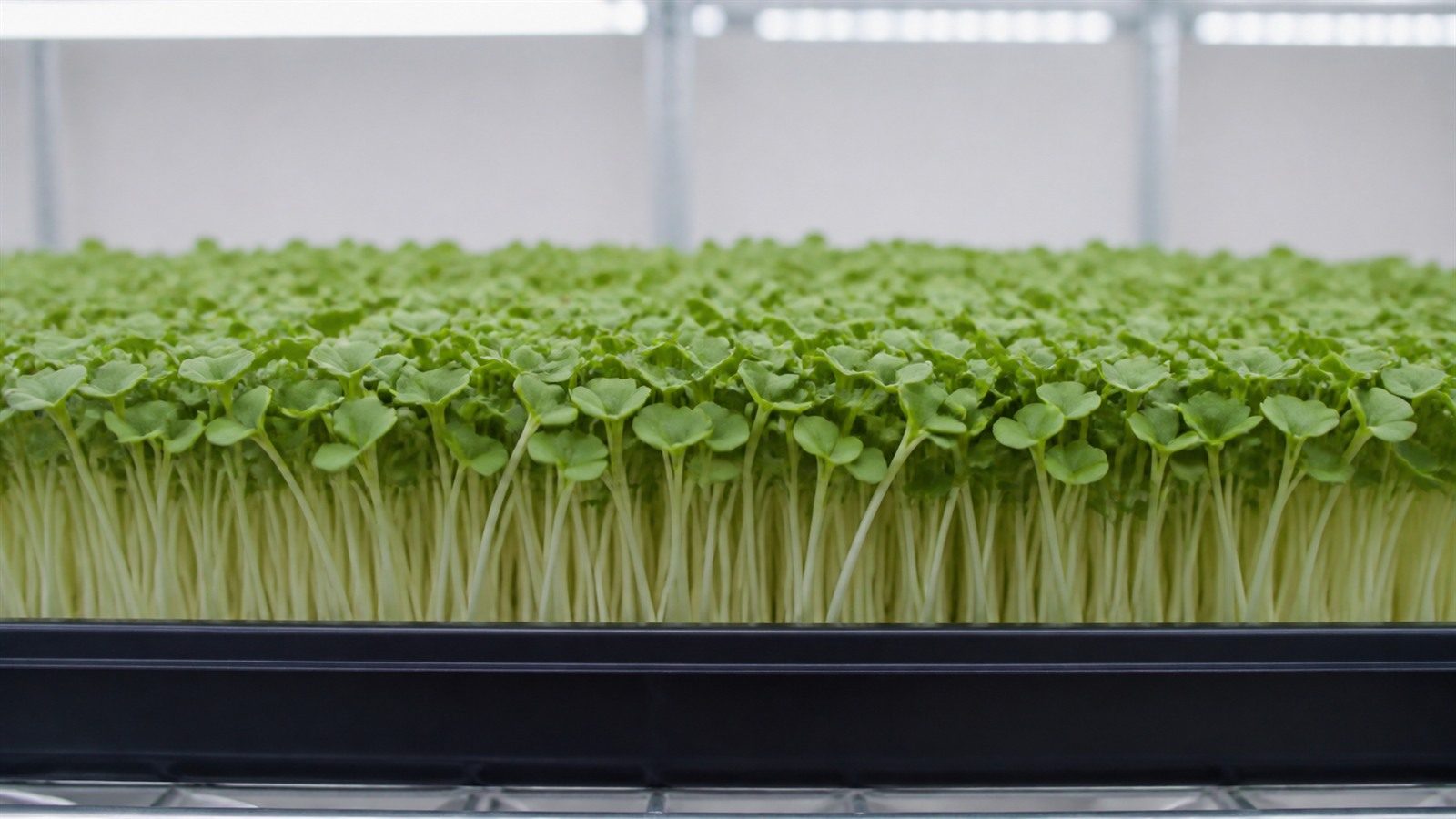
Broccoli microgreens
Beginner · 7 to 15 days
Mild, fresh brassica with a faint bite: none of radish or arugula's pepper, and none of the sulfur note cooked mature broccoli carries.
Broccoli raab microgreens
Beginner · 7 to 12 days
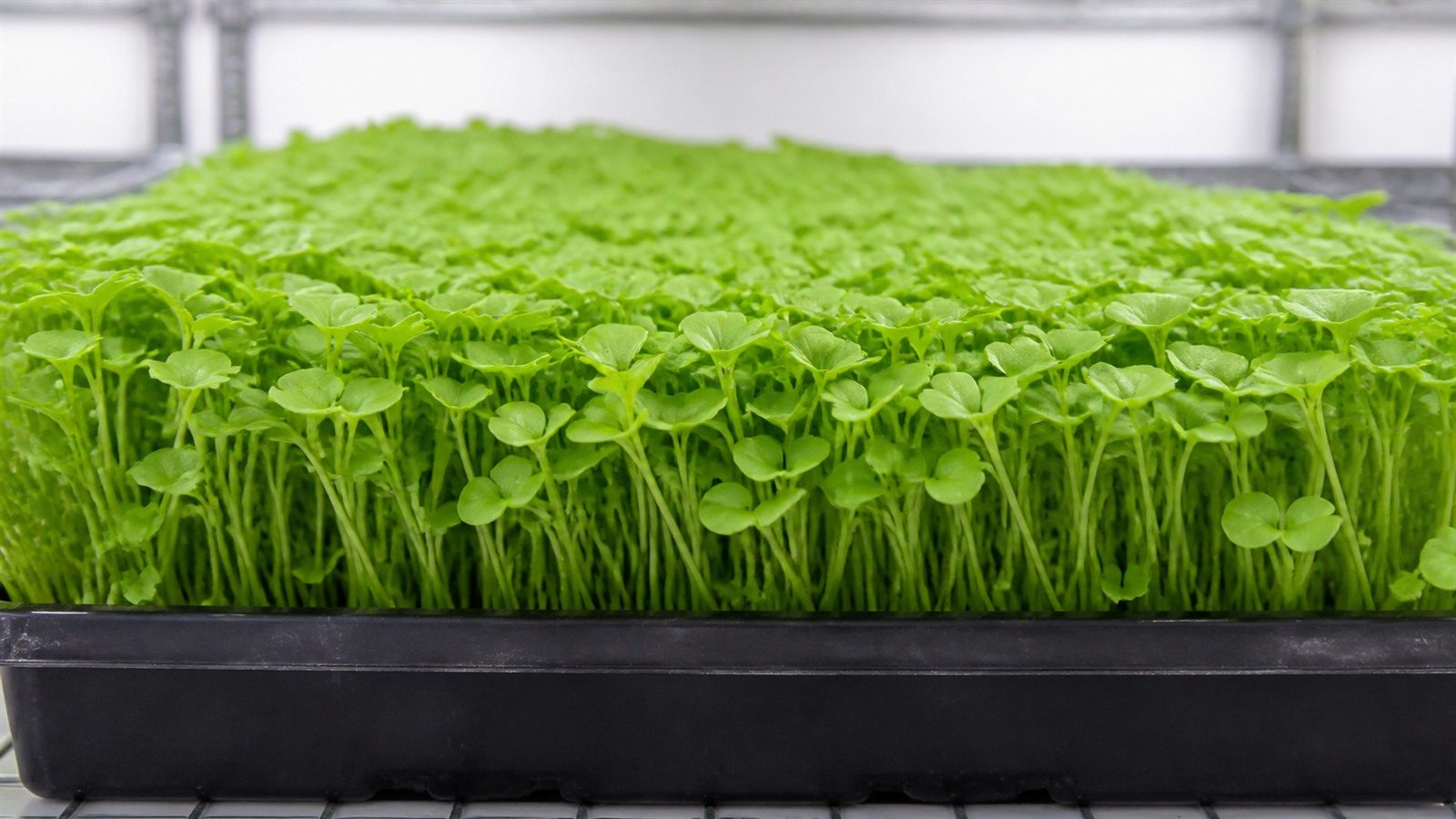
Savory brassica with a real, deliberate bitterness: this is rapini, stronger and less sweet than broccoli, and the bitterness is the product rather than a defect.
Buckwheat microgreens
Moderate · 6 to 12 days
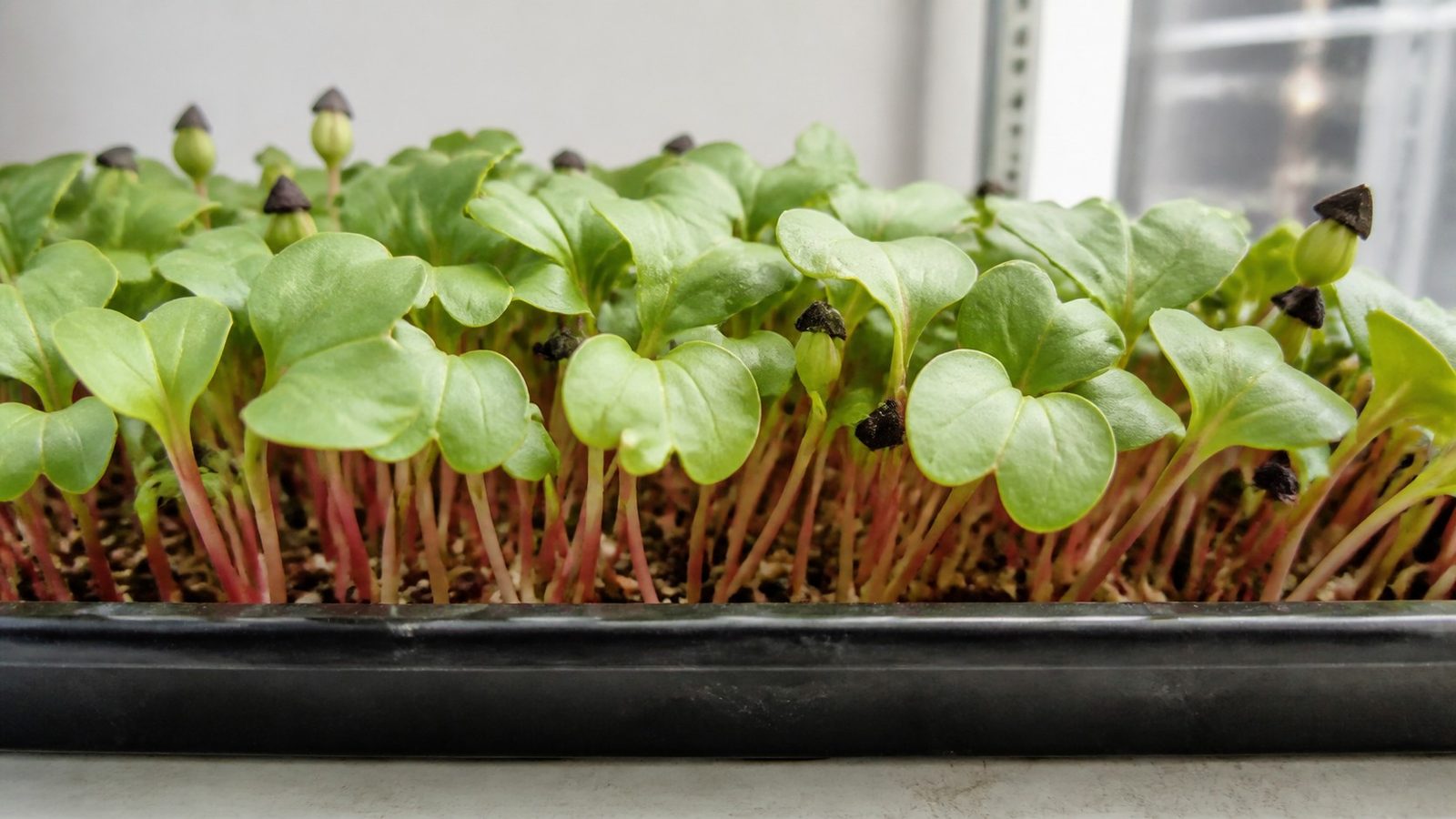
Mild and lettuce-like, juicy and crisp, with a tangy citrus edge that keeps it from reading as plain.
Bull's Blood beet microgreens
Moderate · 16 to 23 days
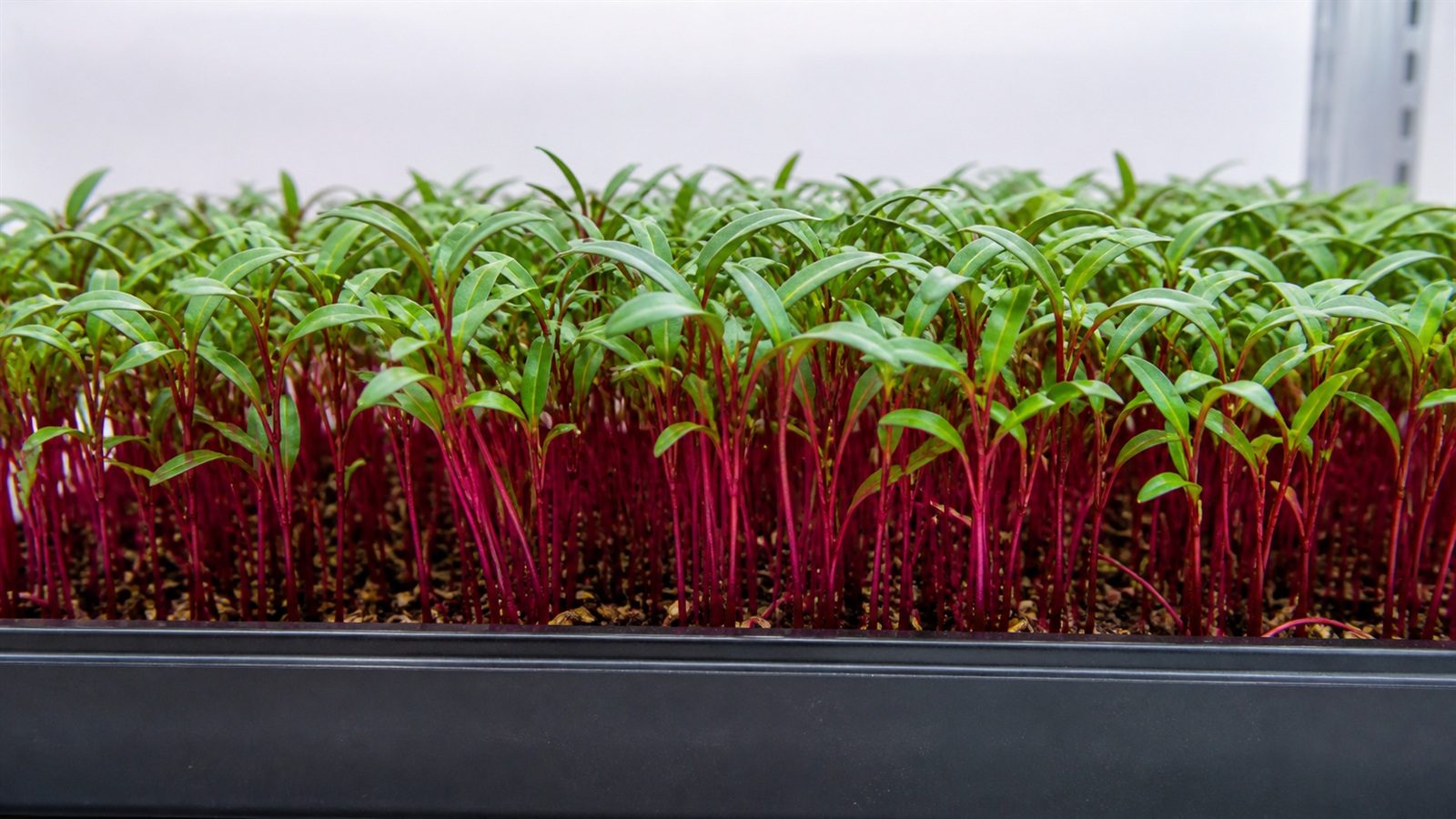
Mild and earthy in the way a beet is earthy, crisp and juicy rather than peppery, and it does not disappear into a dish.
Cabbage, green microgreens
Beginner · 8 to 12 days
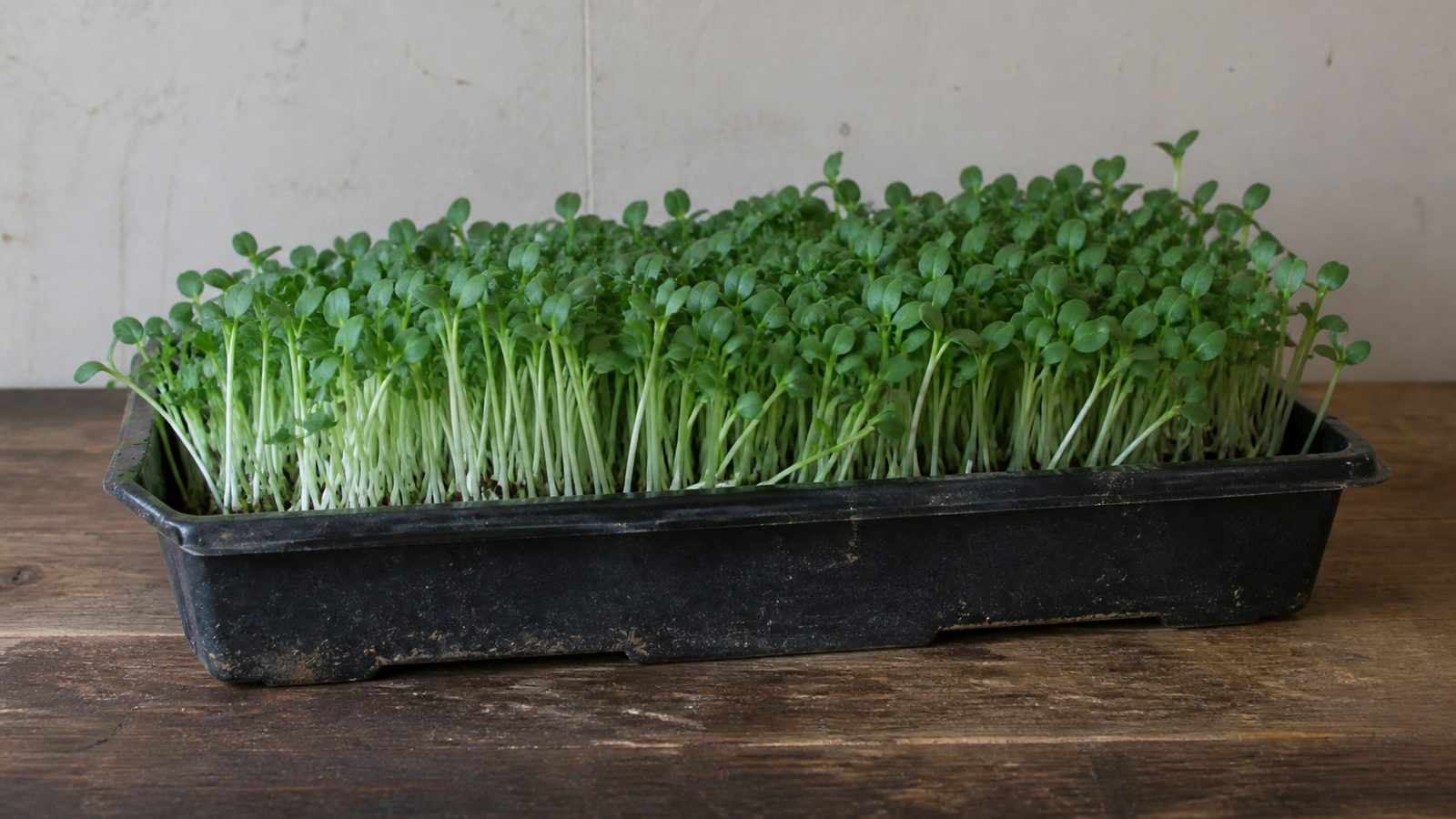
Mild, clean and slightly sweet cabbage with very little peppery heat, which is the whole difference from the red type.
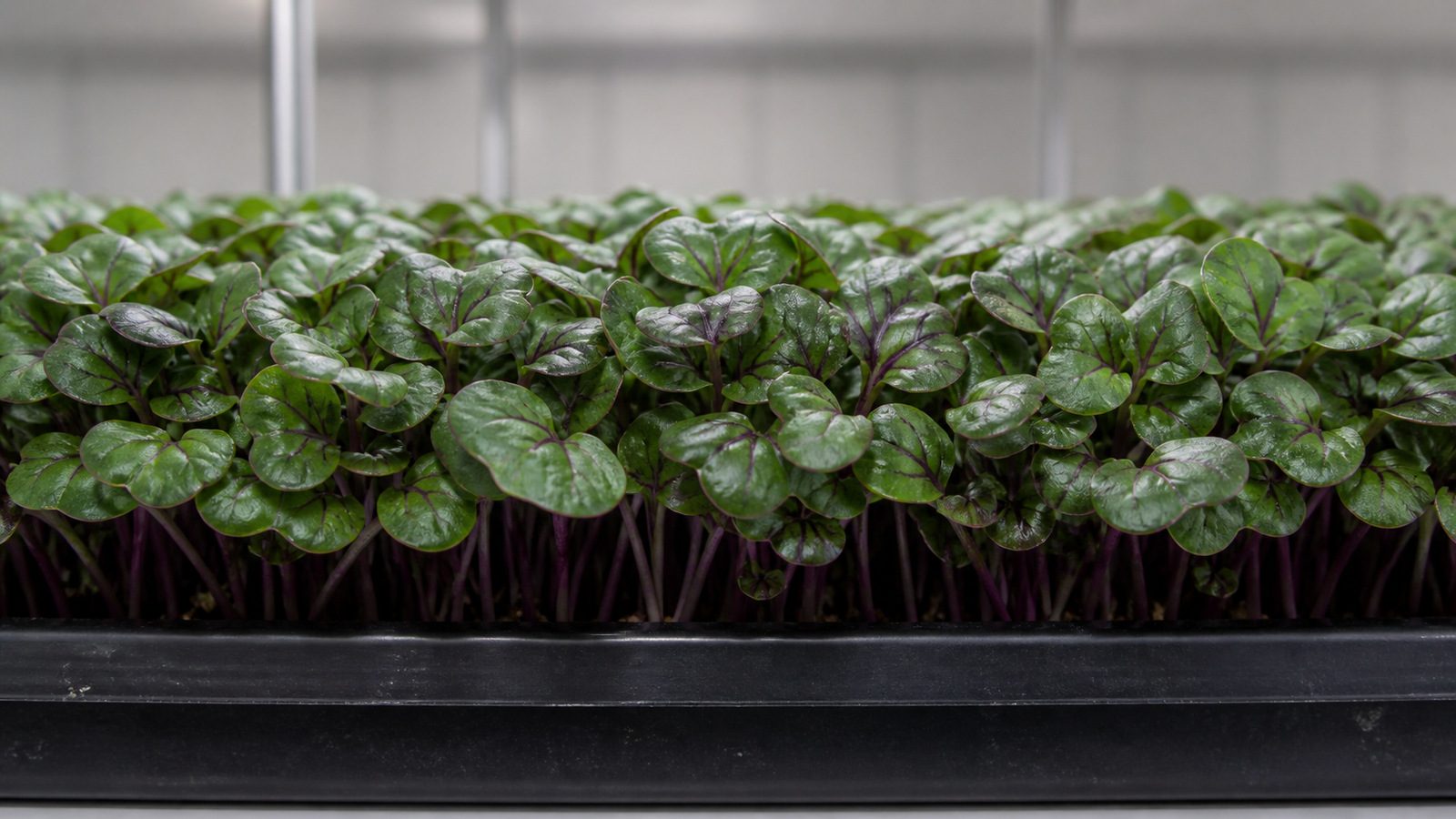
Cabbage, red microgreens
Beginner · 8 to 15 days
Mild, crisp cabbage with a small peppery edge: gentler than the mature head, and more recognizably cabbage once the true leaves advance.
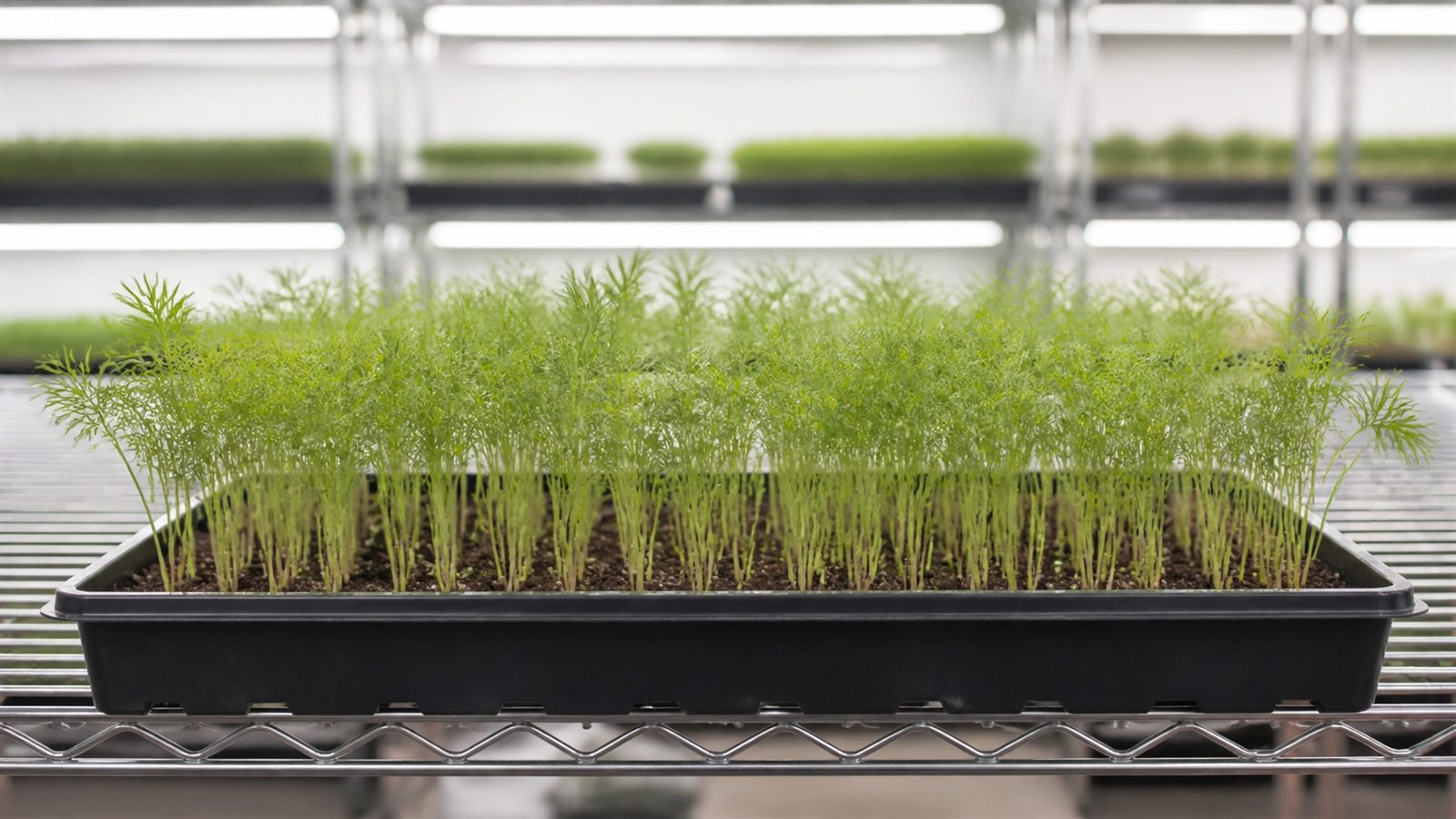
Carrot microgreens
Difficult · 14 to 25 days
Mild and sweet, recognizably carrot top rather than carrot root, with a fine feathery texture like dill and none of dill's flavor.
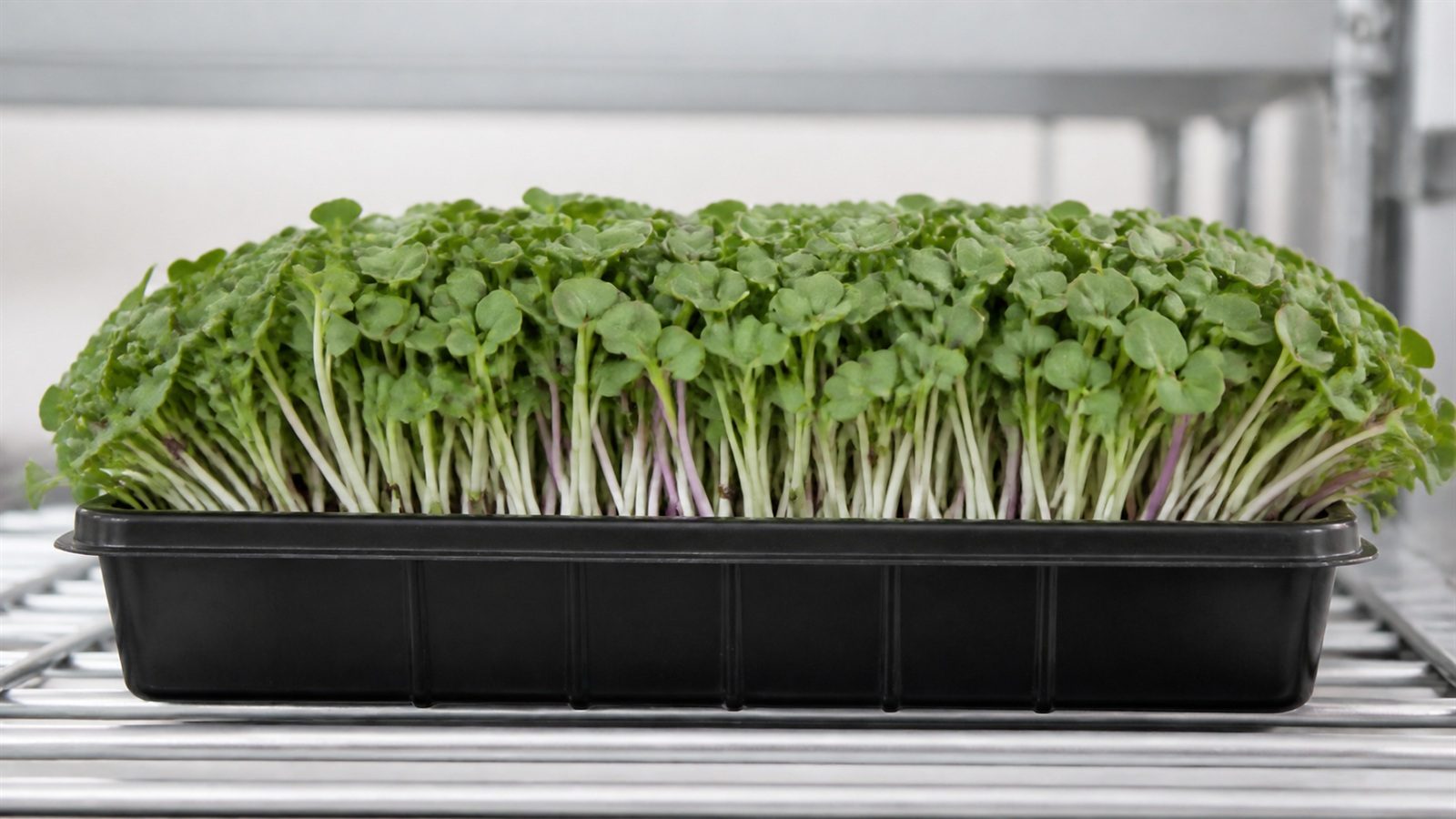
Cauliflower microgreens
Beginner
Mild cabbage and cauliflower, fresh brassica without any of radish's heat, with enough crunch and substance to work as a base green rather than a garnish.
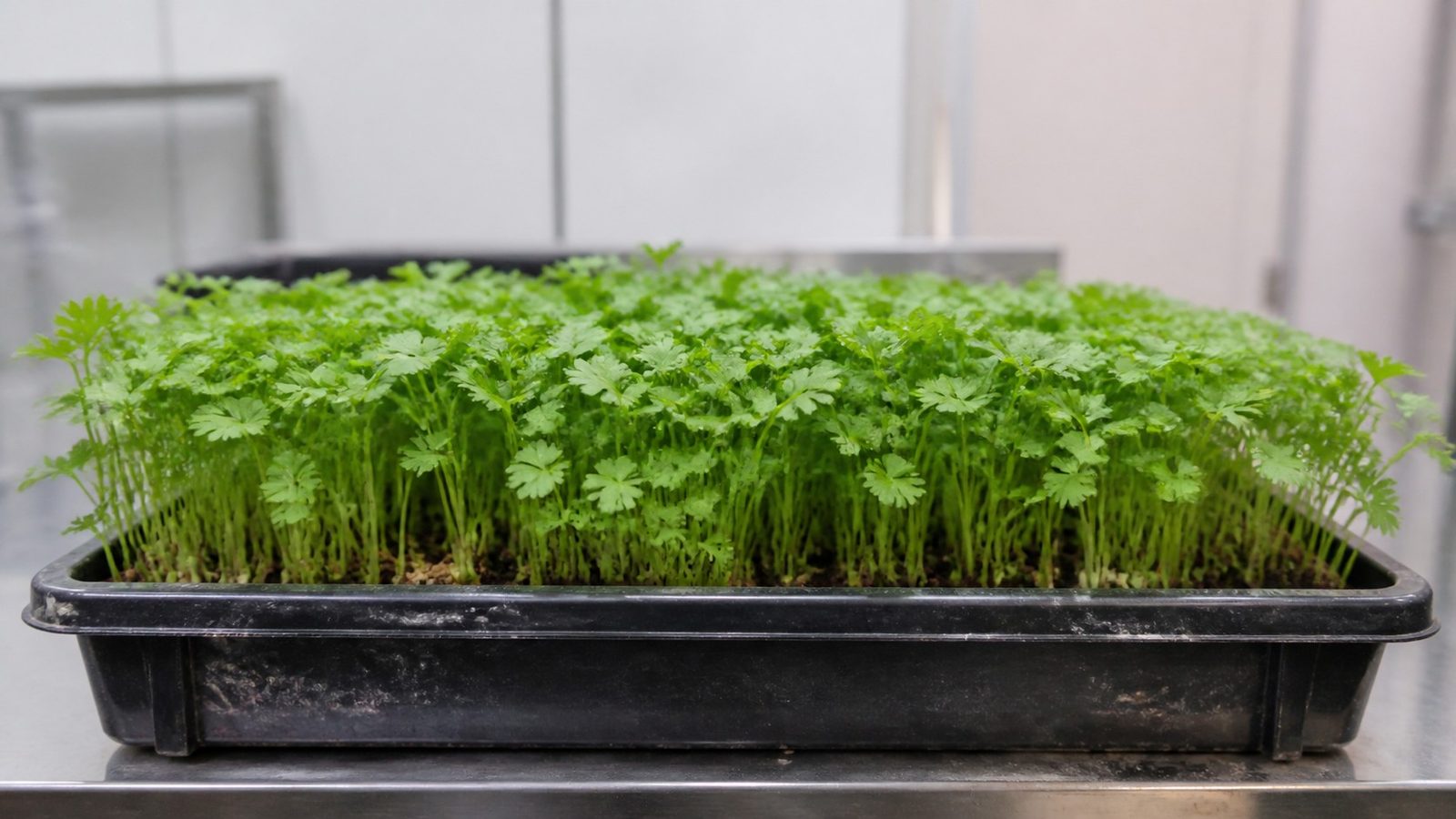
Celery microgreens
Difficult · 21 to 30 days
Concentrated aromatic celery, recognizably the vegetable but sharper and stronger than the stalk, closer to a seasoning than to a salad green.
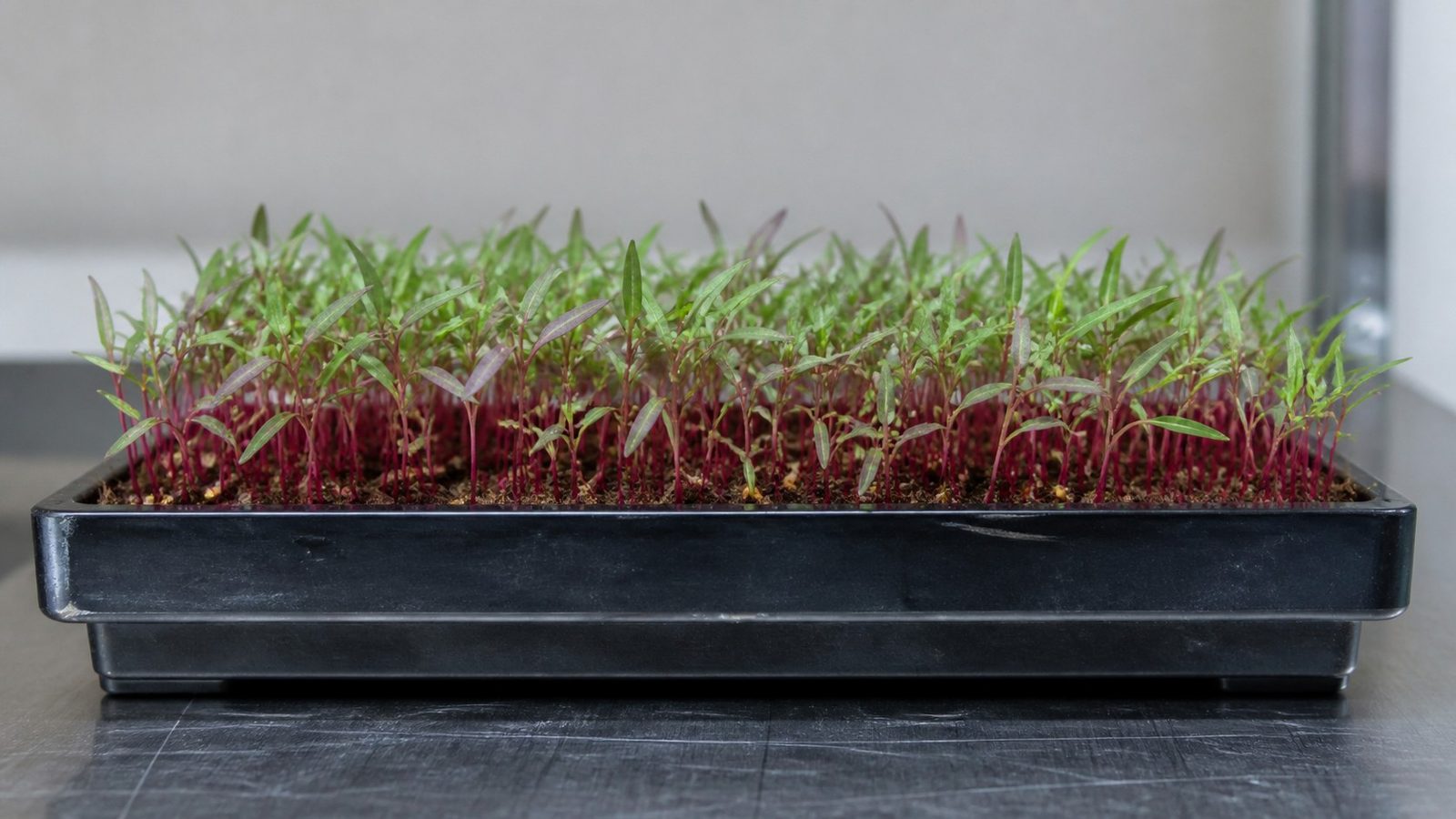
Celosia microgreens
Moderate · 10 to 15 days
Mild and earthy with a spinach-like green note and no heat at all: this crop is bought with the eyes, not the tongue.
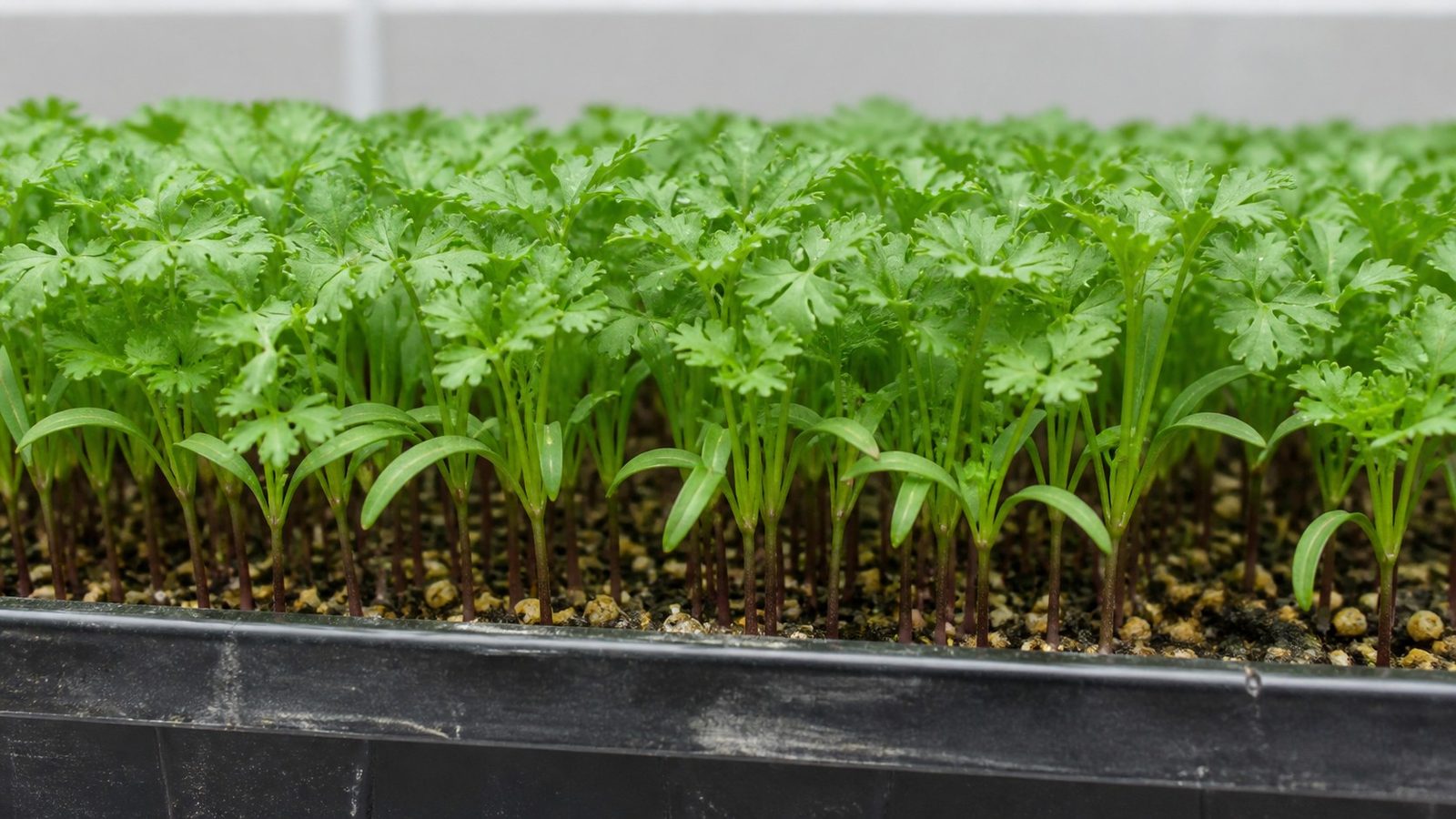
Chervil microgreens
Moderate · 9 to 21 days
Delicate mild sweet anise, closer to parsley and tarragon than to licorice candy, and it only really arrives once the first curled true leaves do.
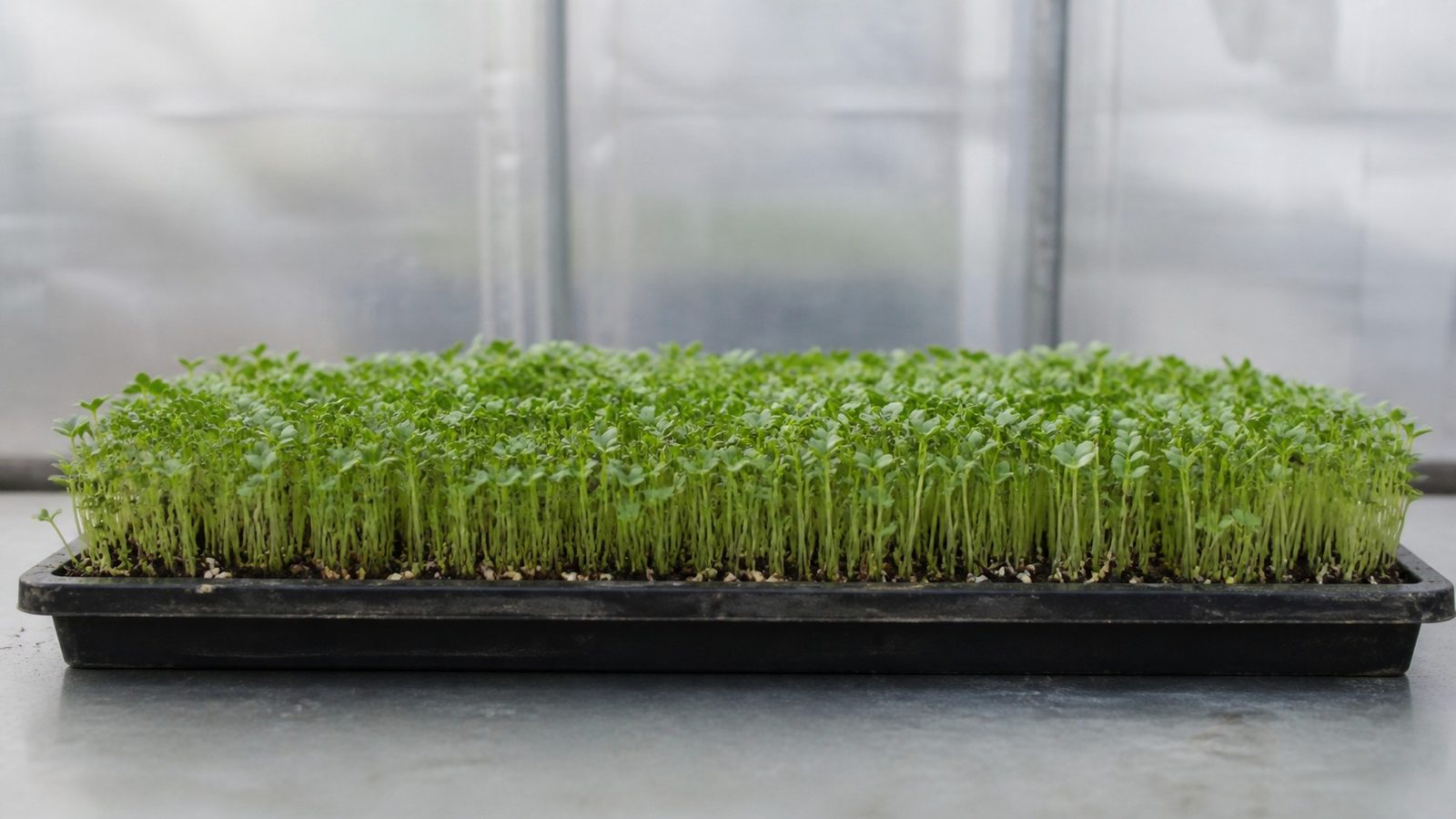
Chia microgreens
Moderate · 6 to 12 days
Minty and herbal with a real bitter, almost spicy edge, and the bitterness sharpens if you leave it past the cotyledon stage.
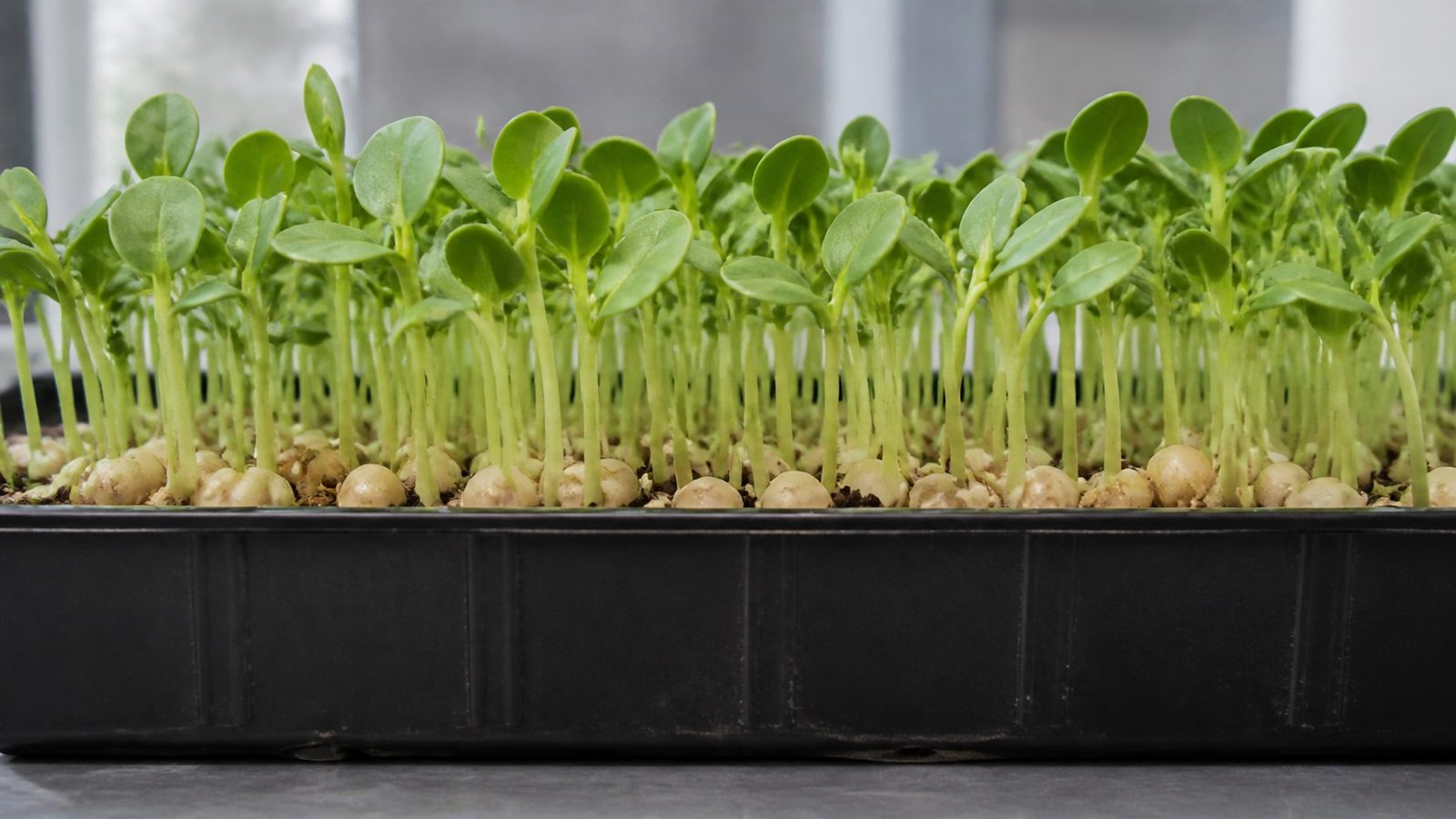
Chickpea shoots
Moderate · 9 to 14 days
Mildly sweet and nutty in a clearly leguminous way, with a small tart zest at the front and no heat anywhere in it.
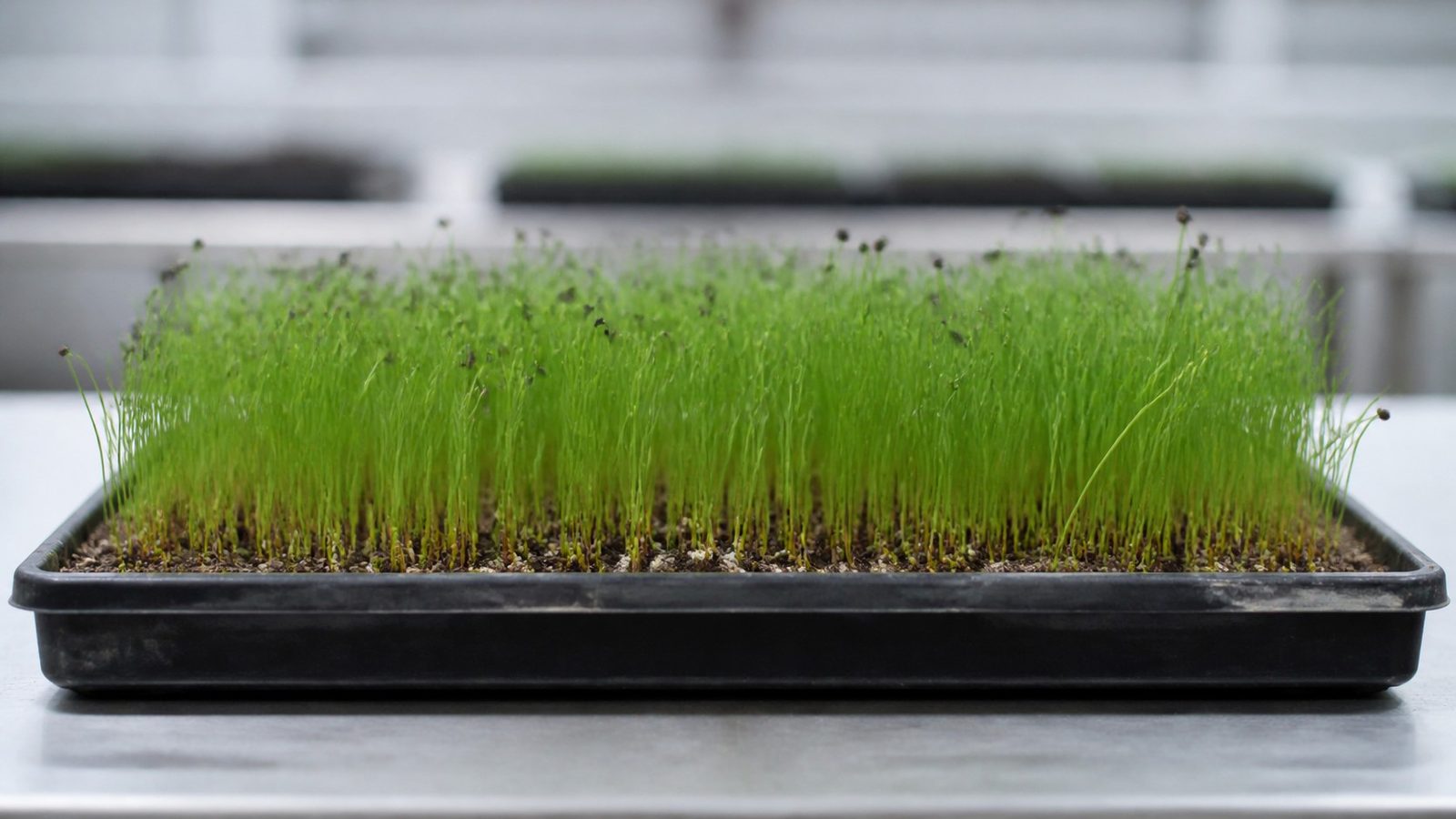
Chive microgreens
Moderate · 14 to 30 days
Delicate mild onion-herb, noticeably gentler than onion microgreens or garlic chive, and it fades rather than sharpens as the blade grows on.
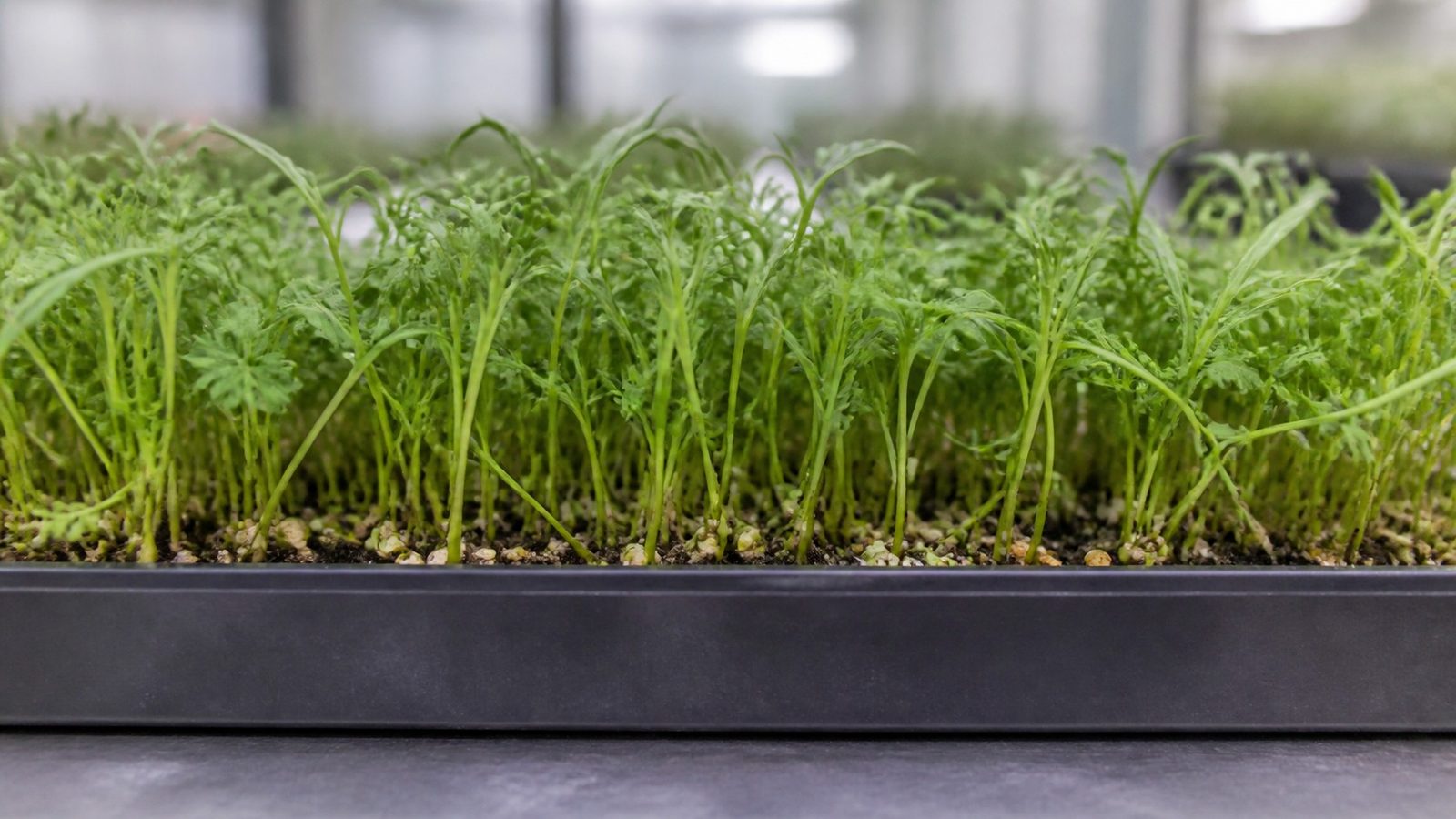
Cilantro microgreens
Moderate · 13 to 25 days
Bright, citrusy and unmistakably cilantro: the herb itself rather than a generic green, and it gets stronger the longer you leave it.
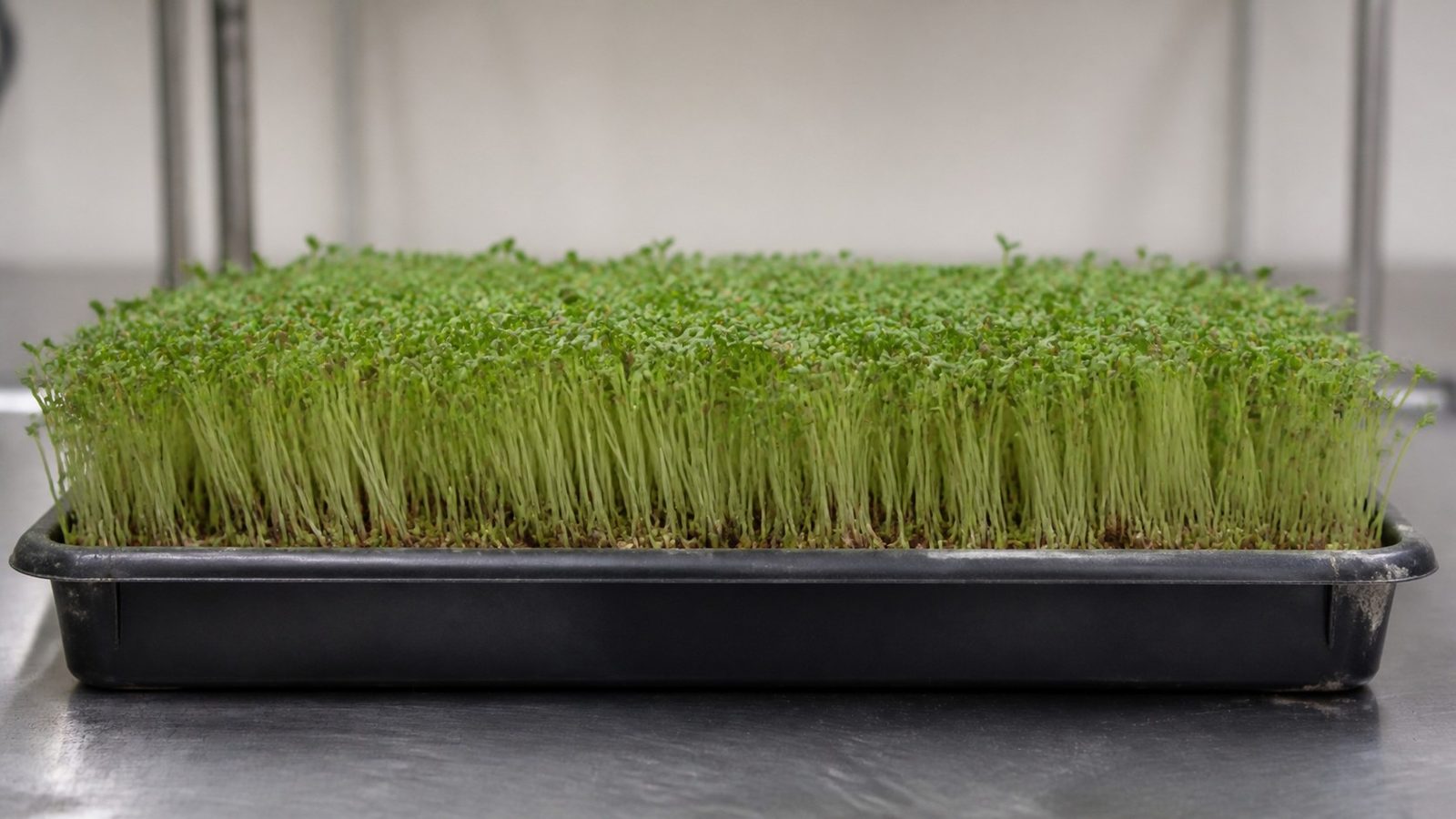
Clover microgreens
Beginner · 9 to 13 days
Mild and light with a gentle grassy sweetness, closer to a salad volume green than to anything with a bite, and it turns noticeably bitter if held past its early window.
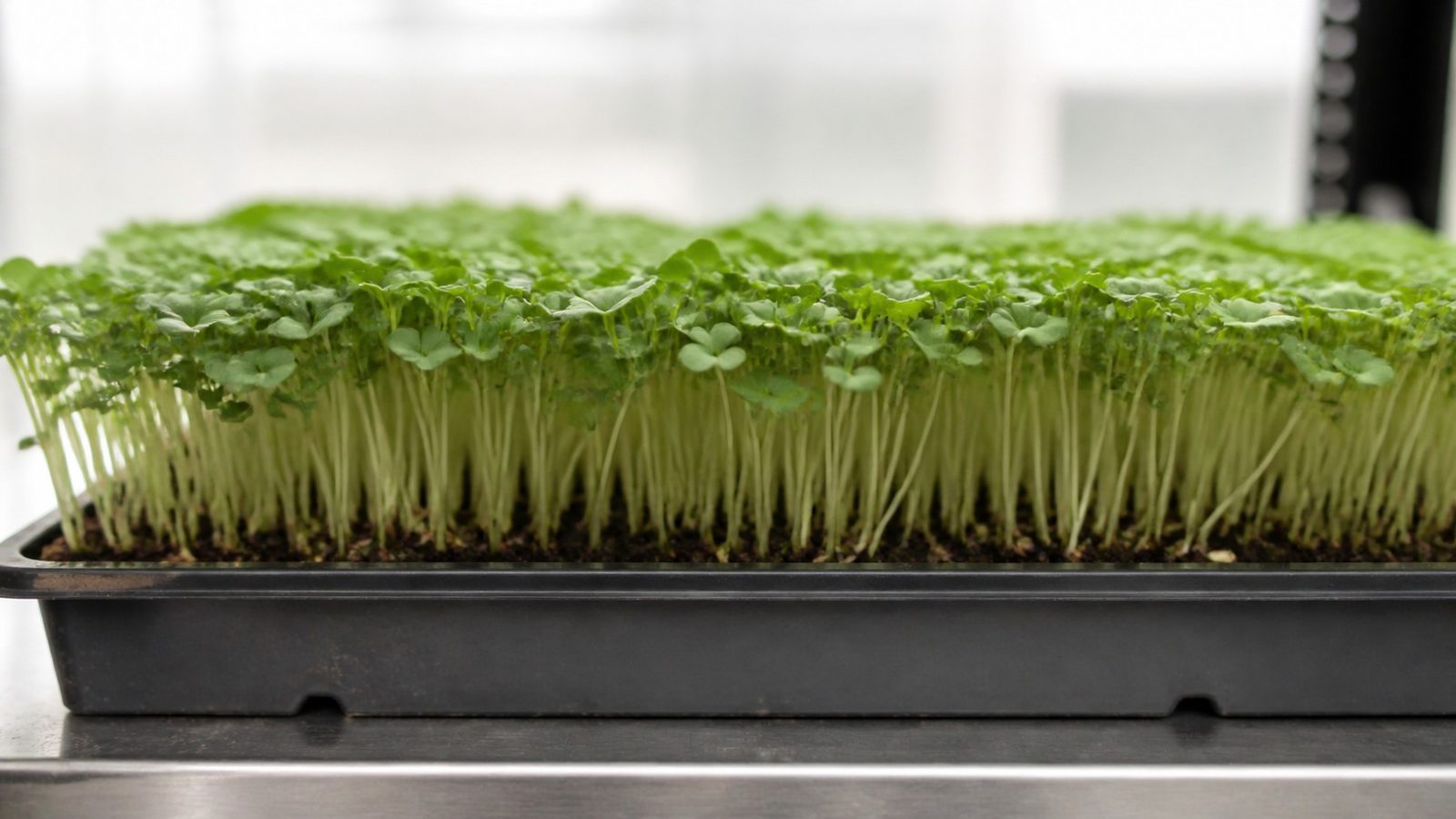
Collard microgreens
Beginner · 7 to 15 days
A crisp, mild cabbage bite with a slightly bitter edge and a little sweetness behind it, and none of the pepper that mustard or radish brings.
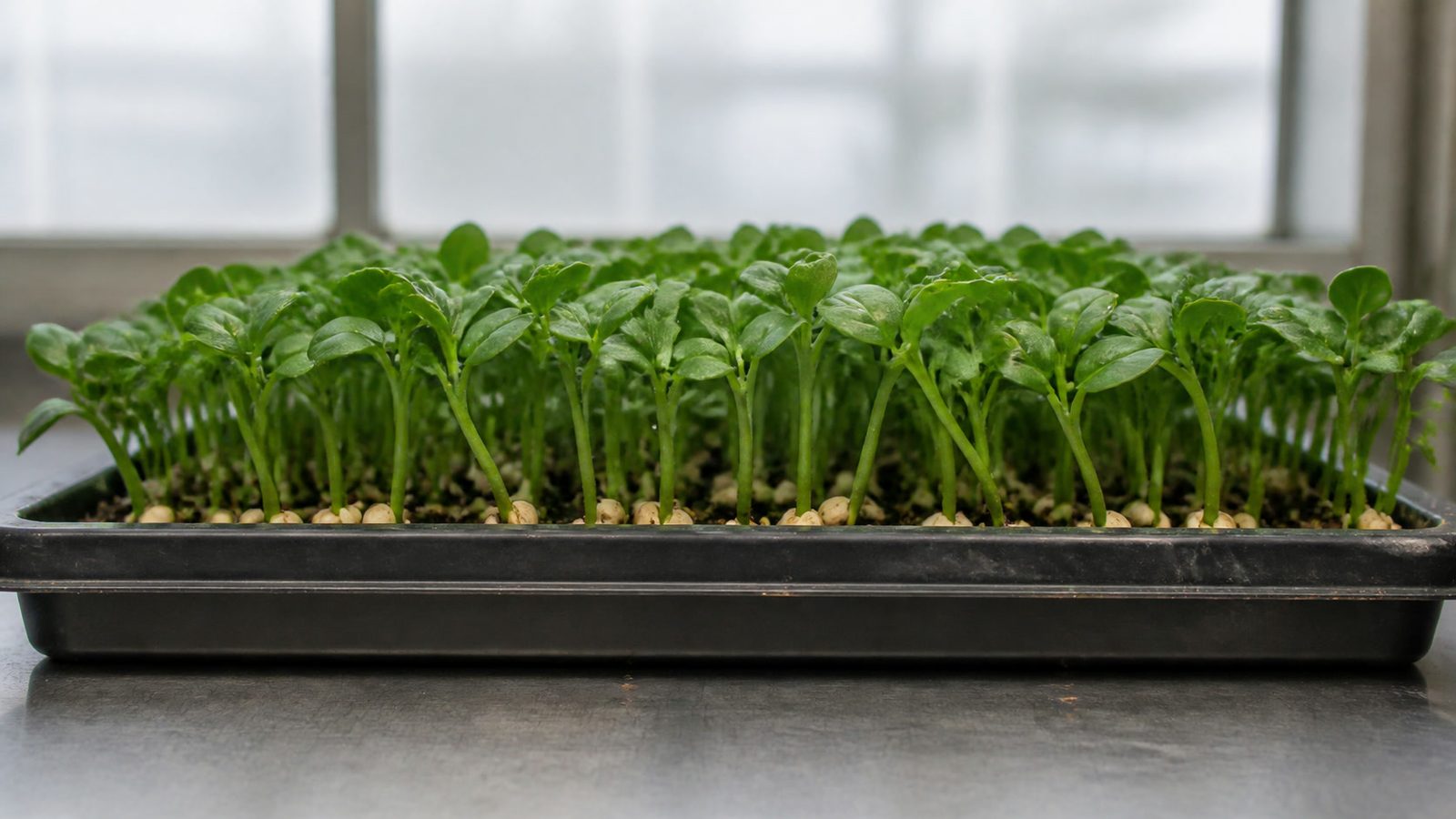
Cucumber microgreens
Moderate · 7 to 12 days
A refreshing cucumber note without bitterness, on thick dark green shoots: cooling rather than flavor-forward, and nothing like a peppery brassica.
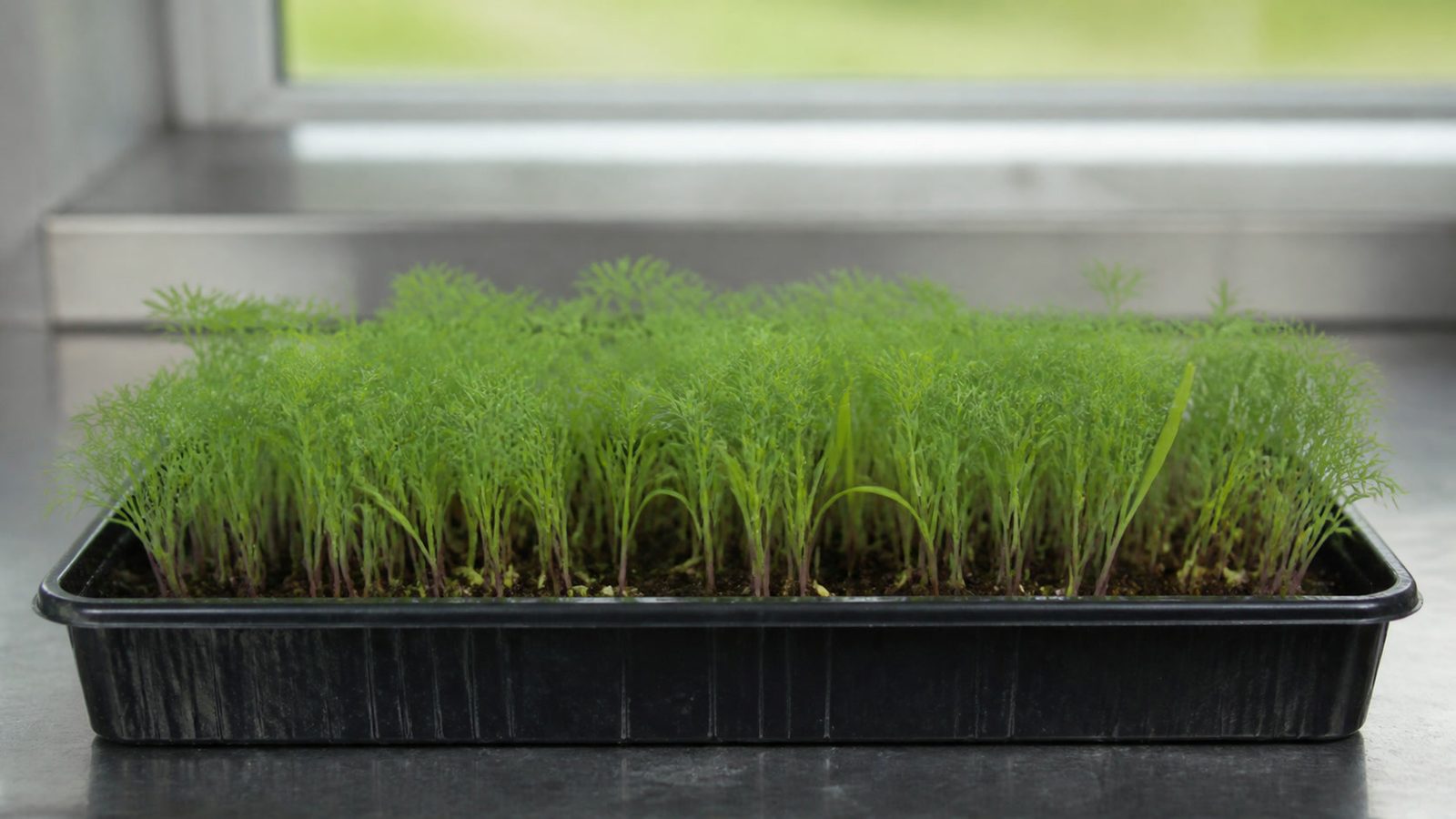
Dill microgreens
Moderate · 12 to 25 days
Mild at this stage but unmistakably dill: sweet and citrusy, an aromatic pickle-and-fresh-herb note rather than anything peppery.
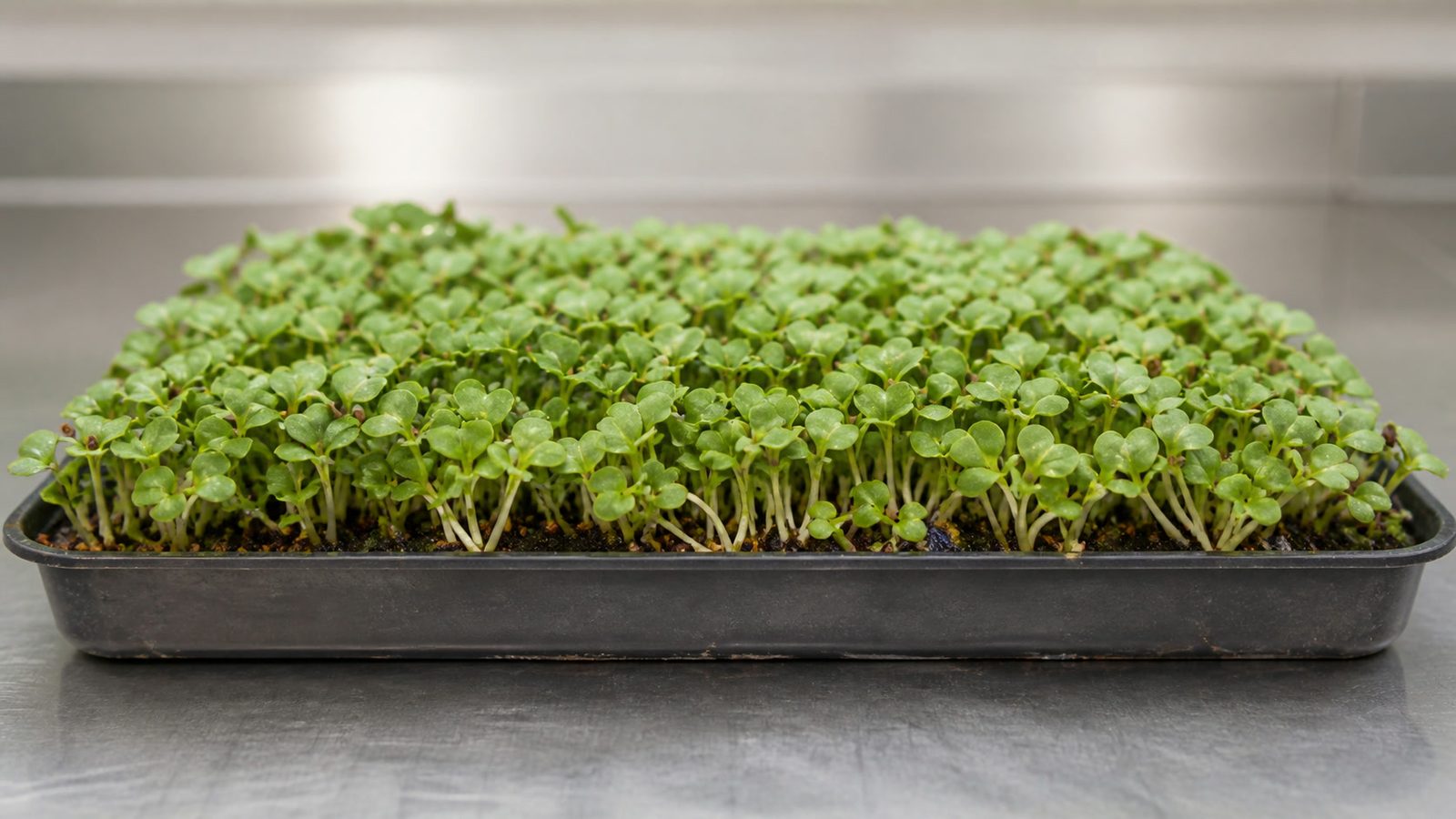
Endive microgreens
Moderate · 8 to 15 days
Mildly bitter at the cotyledon cut and distinctly more bitter once true leaves start, and the bitterness is the product rather than a fault.
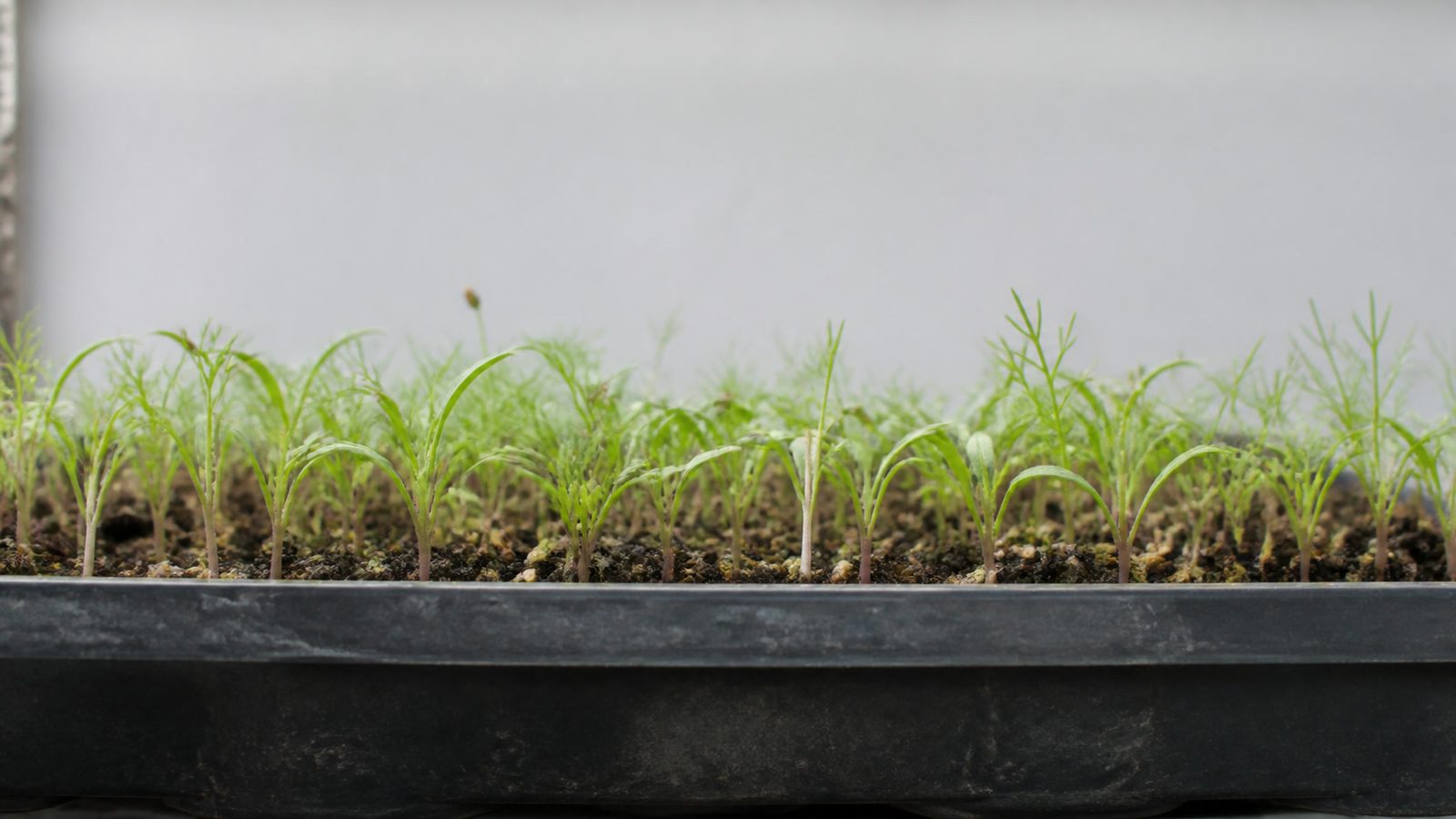
Fennel microgreens
Difficult · 16 to 25 days
Sweet, unmistakable anise, mild at the cotyledon stage and intensifying after the first true leaf, with (E)-anethole carrying most of the aroma.
Fenugreek microgreens
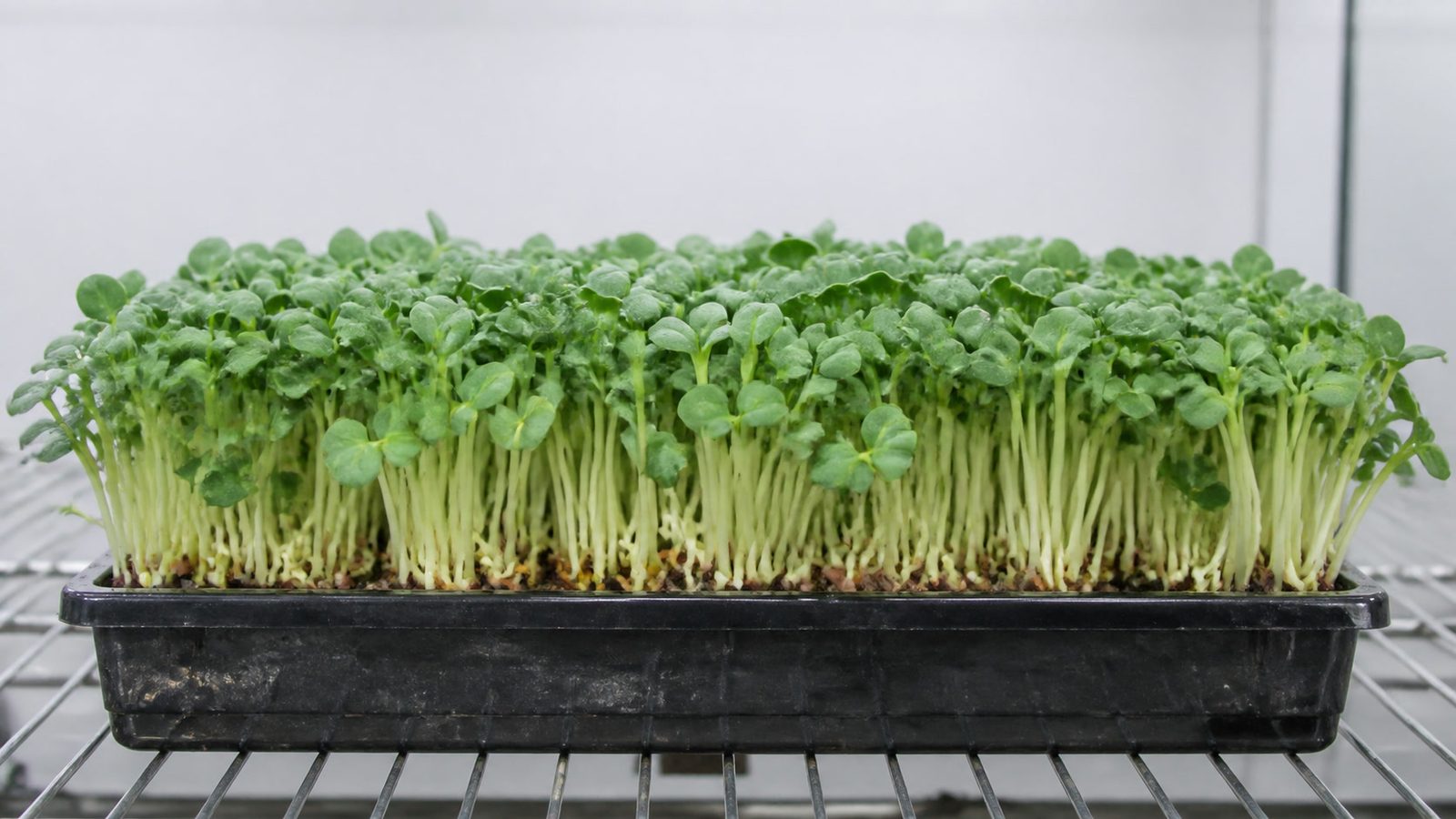
Moderate · 6 to 12 days
Concentrated earthy methi bitterness with a curry note, mildest at days 6 to 8 and noticeably bitter past day 10, and a little goes a long way.
Flax microgreens
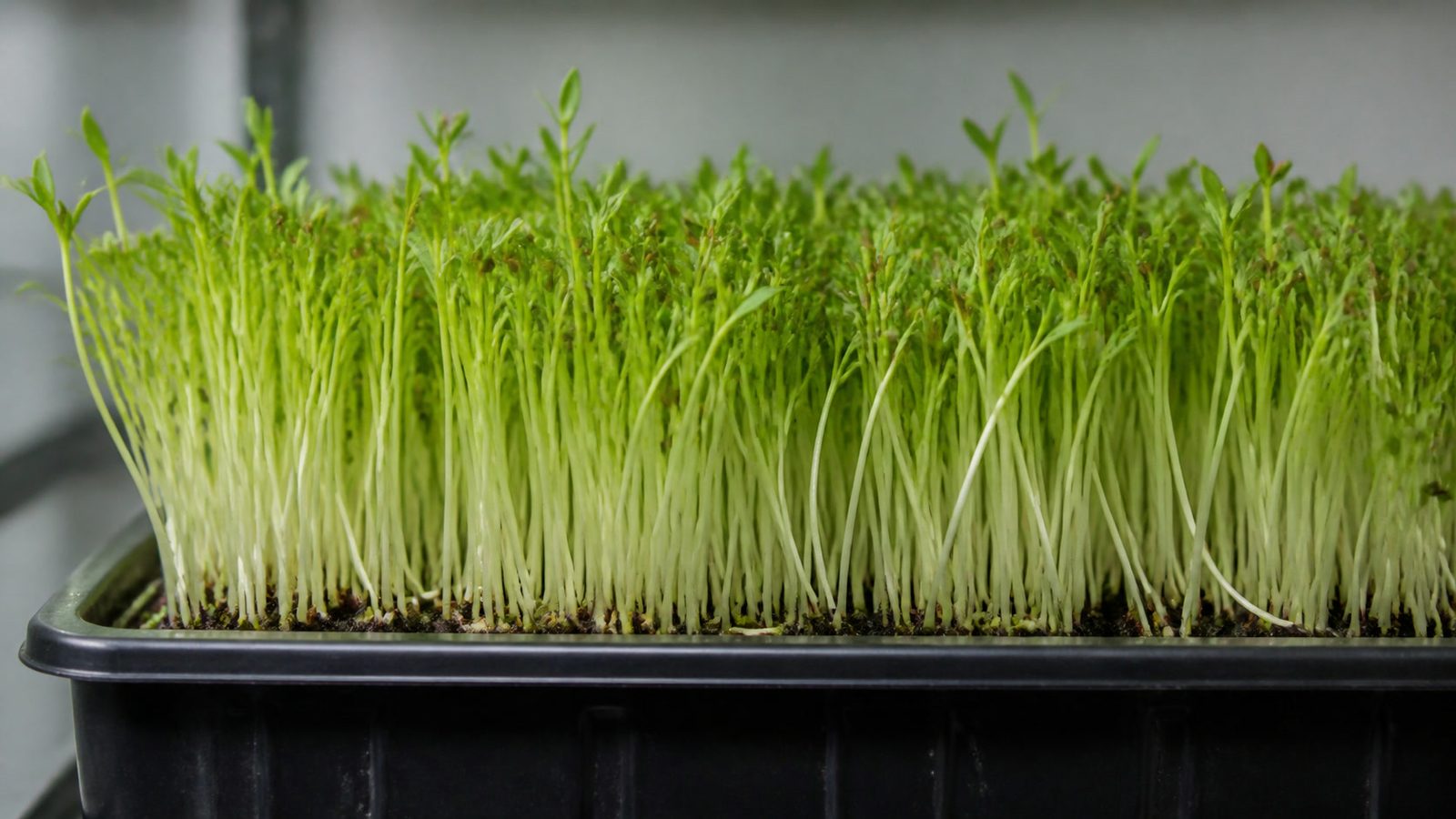
Moderate · 5 to 14 days
Light, tender and close to neutral rather than peppery, and the texture is the point: soft and faintly slick, not crisp.
Garden cress microgreens
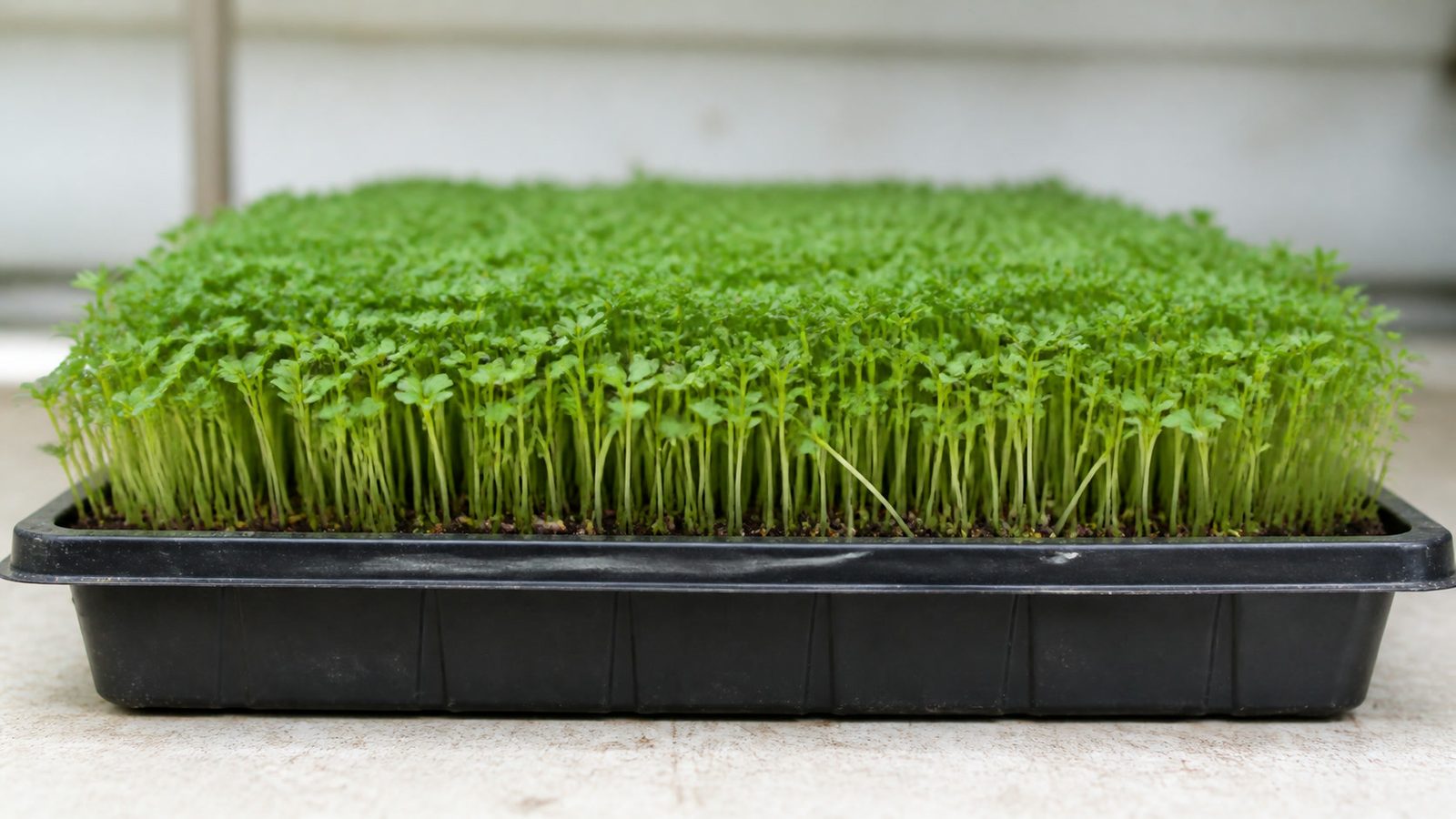
Beginner · 8 to 15 days
Mustardy on the tongue and then a warm pepper heat that climbs into the nose like horseradish, sharpest at the cotyledon cut.
Kale microgreens
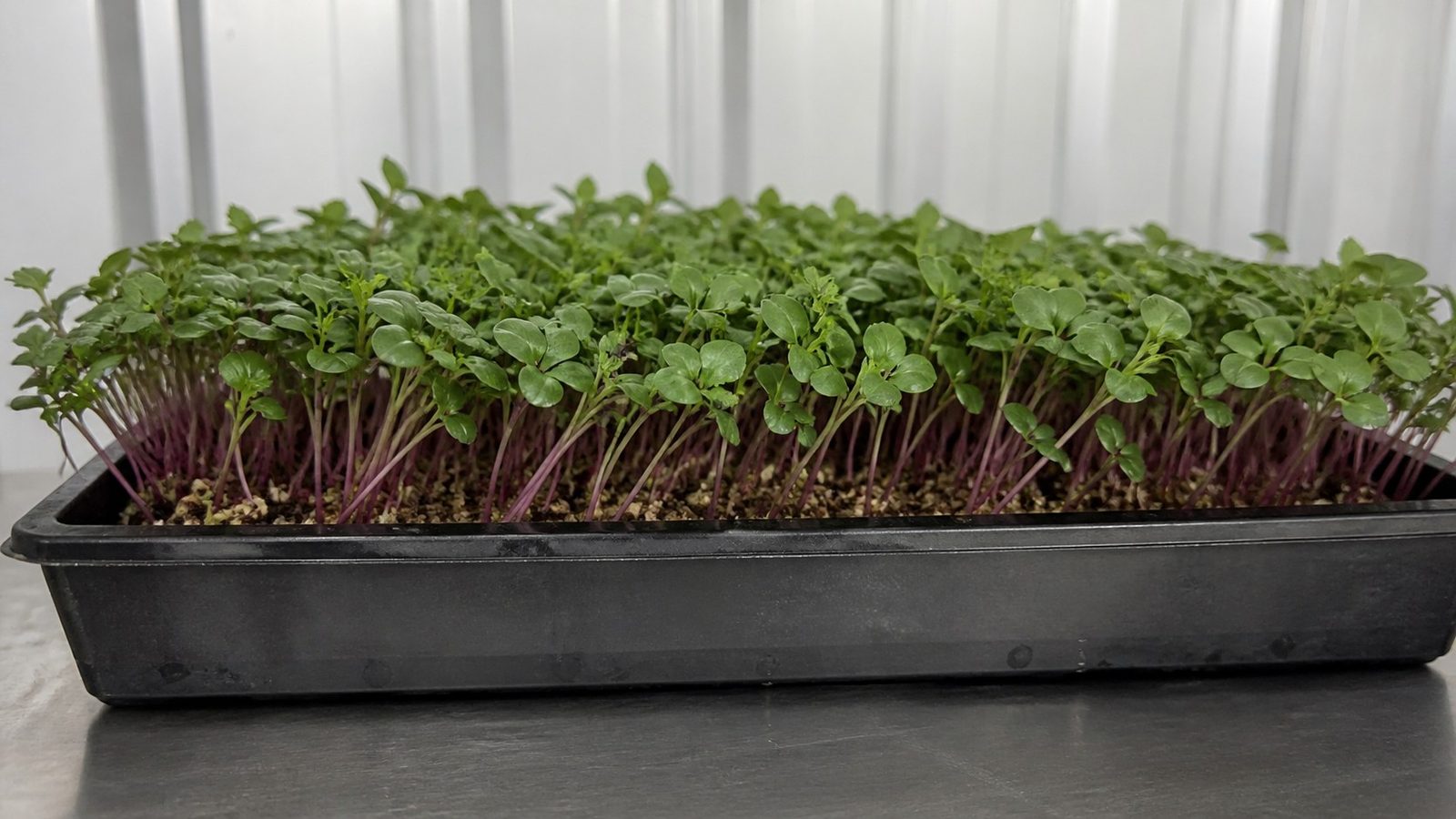
Beginner · 8 to 15 days
Mild, gently earthy brassica with no heat in it at all: recognizably kale, without the toughness or the bitterness of the mature leaf.
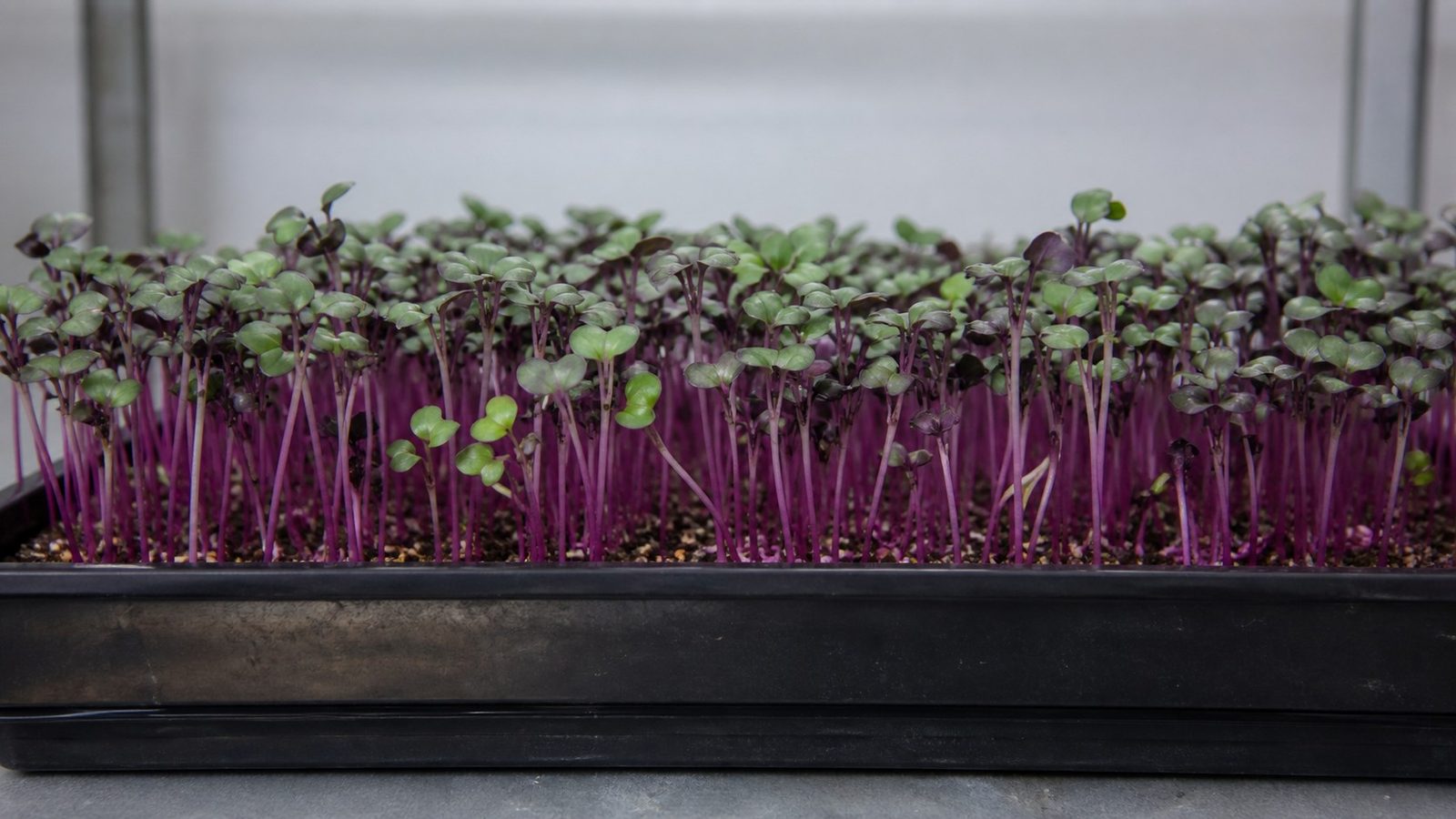
Kohlrabi microgreens
Beginner · 10 to 16 days
Mild, slightly sweet cabbage, with markedly less pepper than radish or mustard: the color is louder than the flavor.
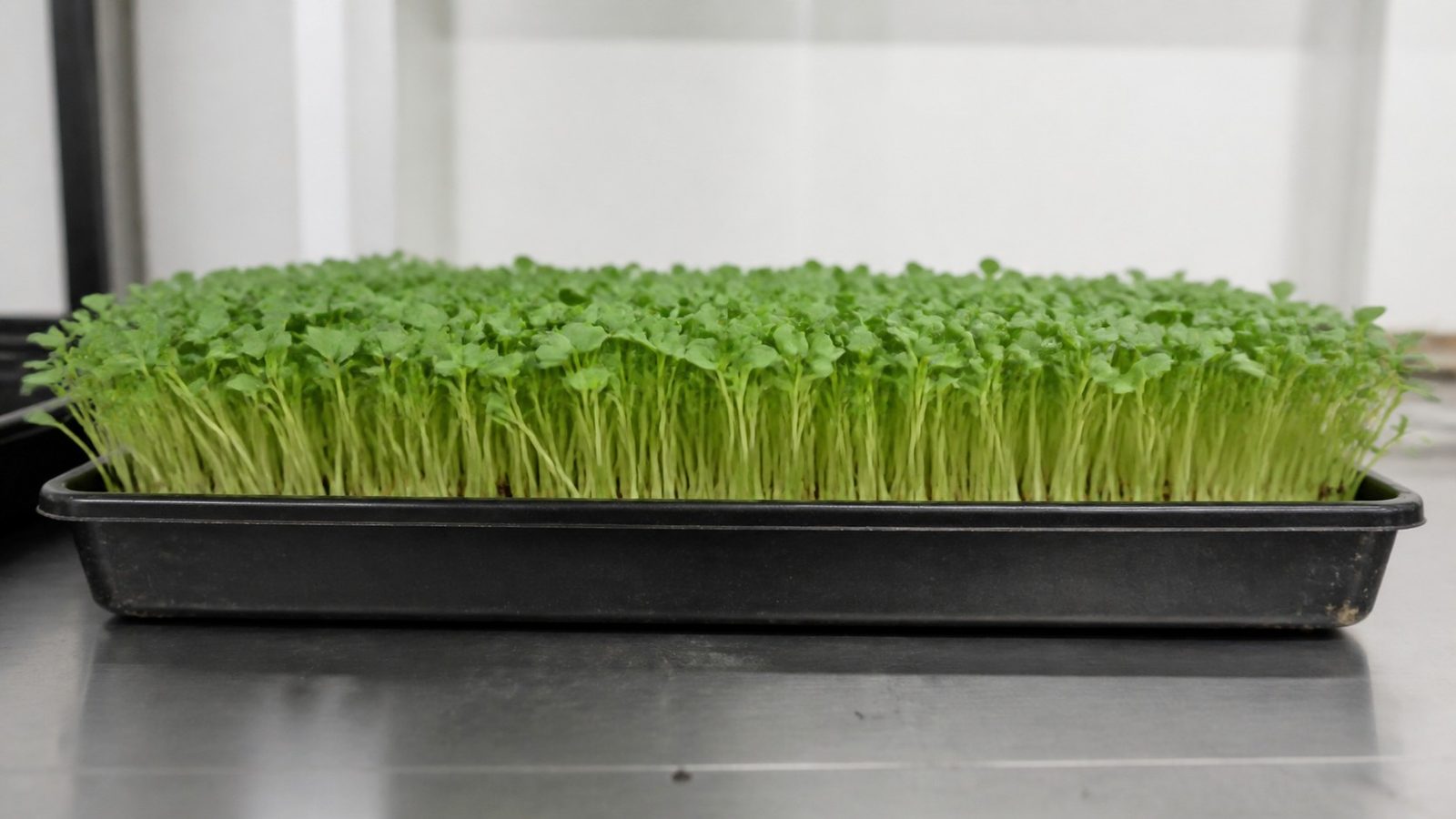
Komatsuna microgreens
Beginner · 8 to 12 days
Mild, slightly sweet mustard-spinach with a gentle brassica bite, and it sharpens as the leaves darken rather than staying put.
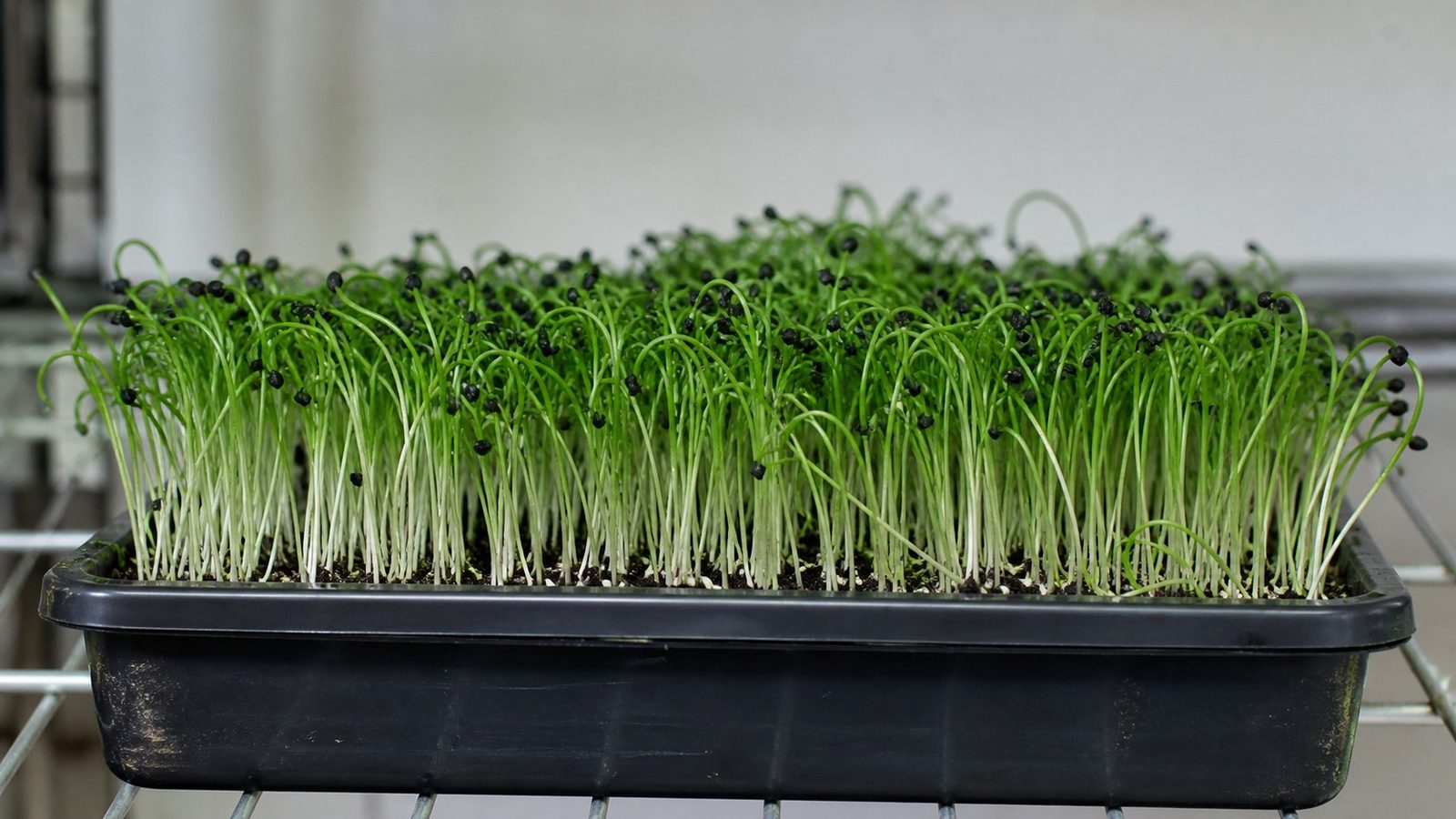
Leek microgreens
Moderate · 10 to 25 days
Mild sweet onion, gentler than a mature leek but concentrated enough that a heavy handful takes over the plate.
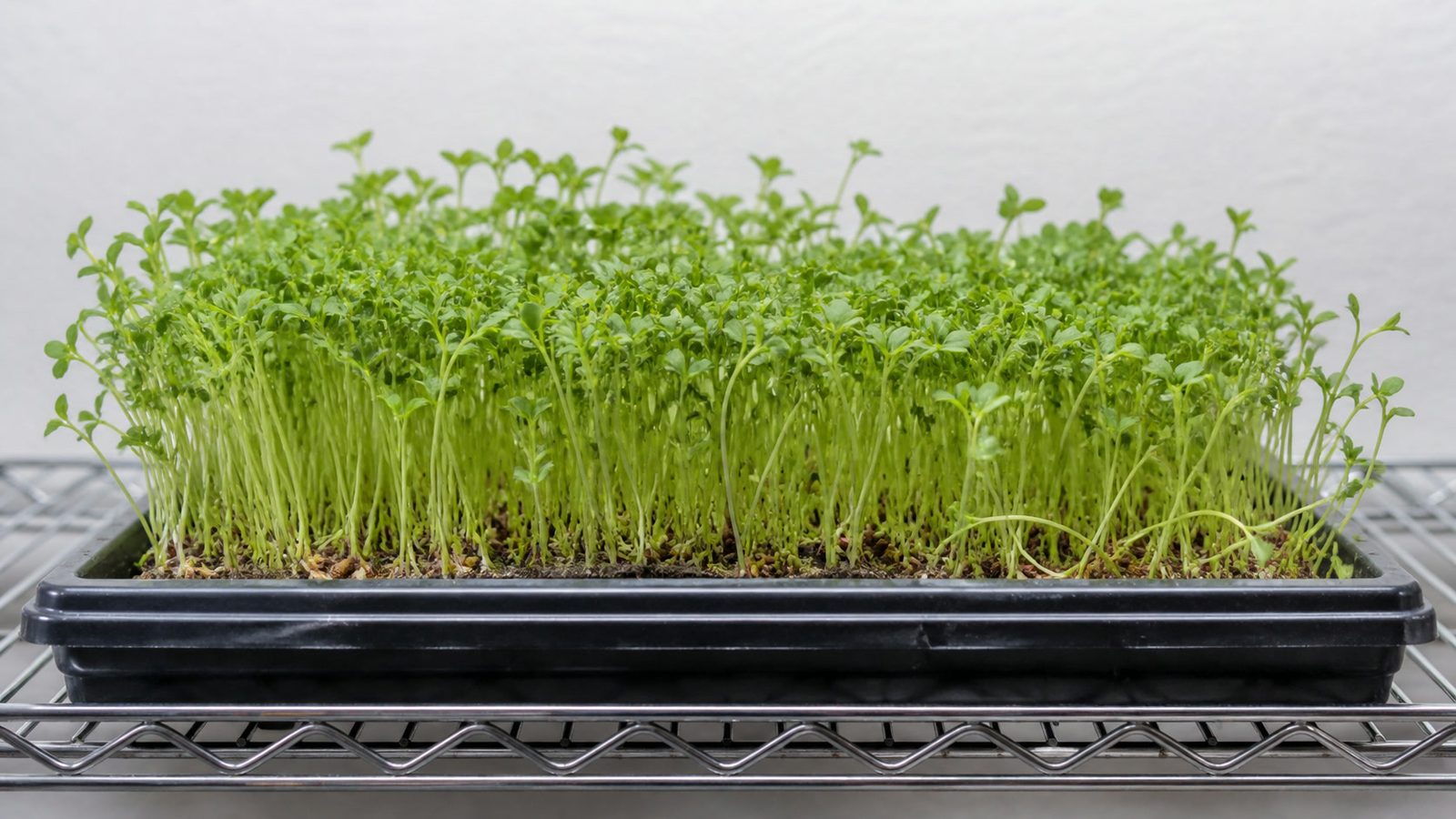
Lentil microgreens
Beginner · 8 to 12 days
Mild, sweet and nutty with a juicy snap, closer to fresh pea than to anything peppery, and it turns woody and faintly bitter if left too long.
Lettuce microgreens
Moderate · 8 to 16 days
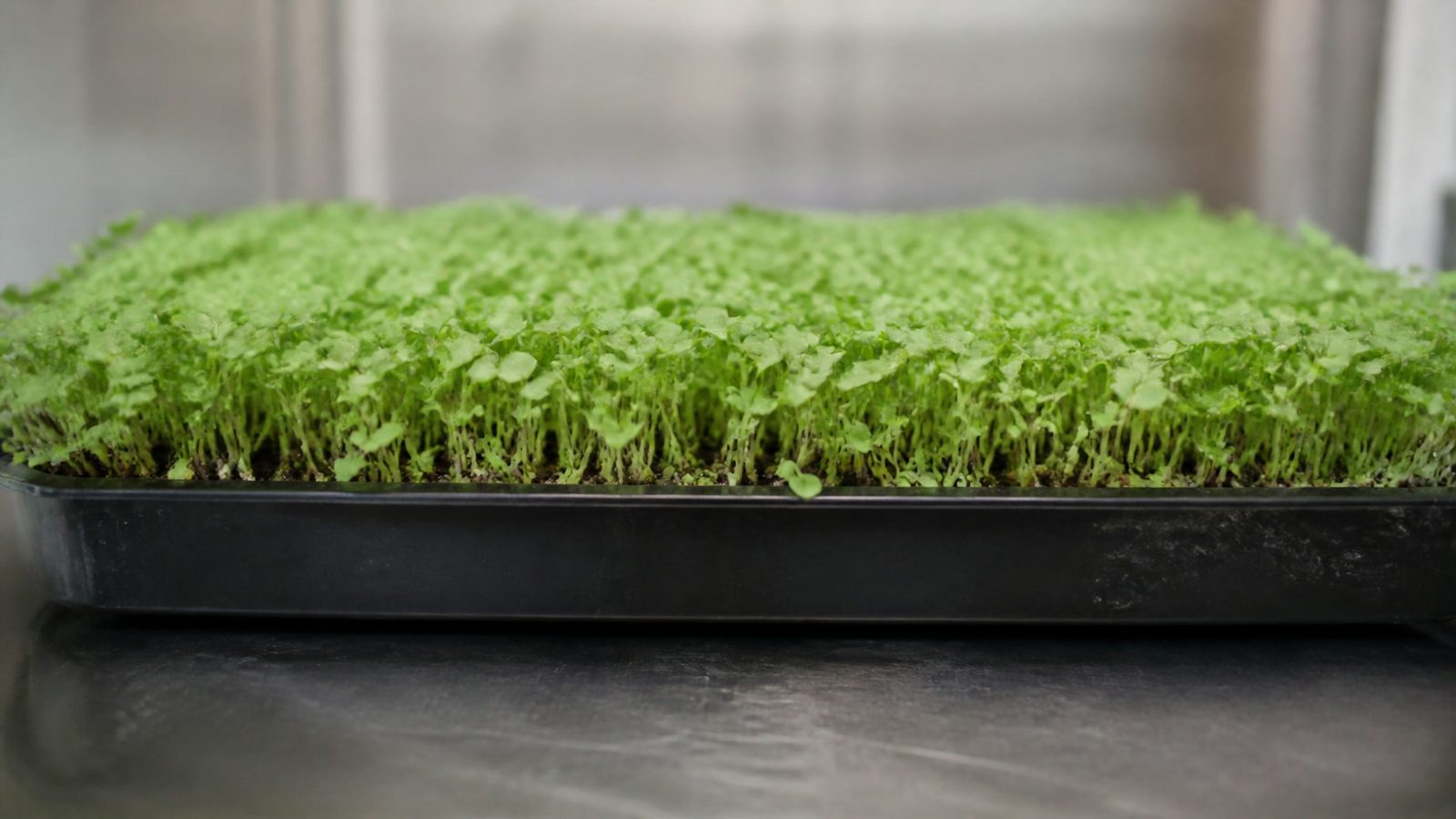
Mild, softly sweet and close to neutral: a tender salad base rather than a flavor, and slightly bitter only if you leave it too long.
Mint microgreens
Difficult · 10 to 18 days
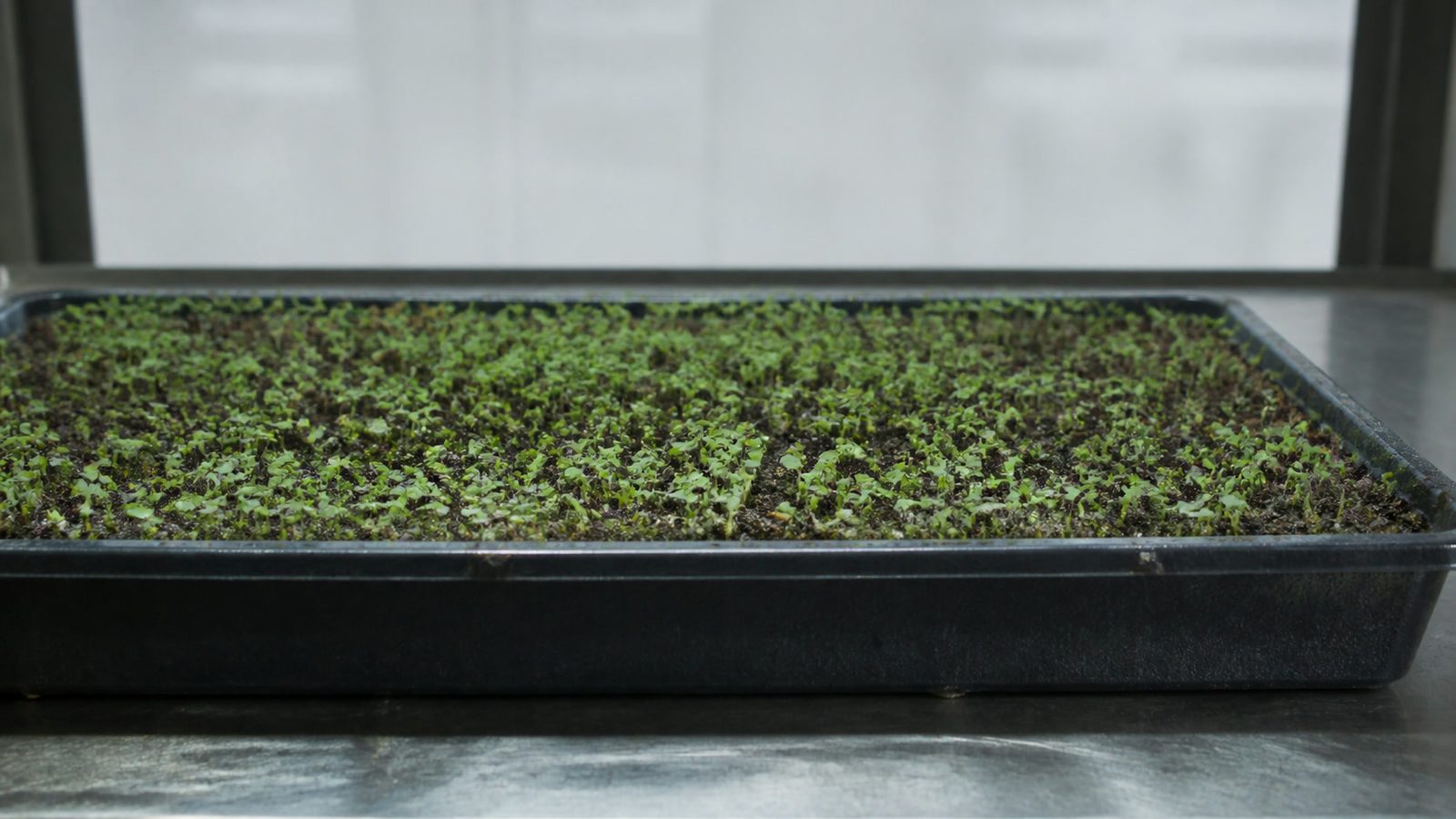
Sweet, cooling spearmint with less of peppermint's harsh menthol: an aromatic finish measured in leaves, not a green you eat by the handful.
Mizuna microgreens
Beginner · 8 to 15 days
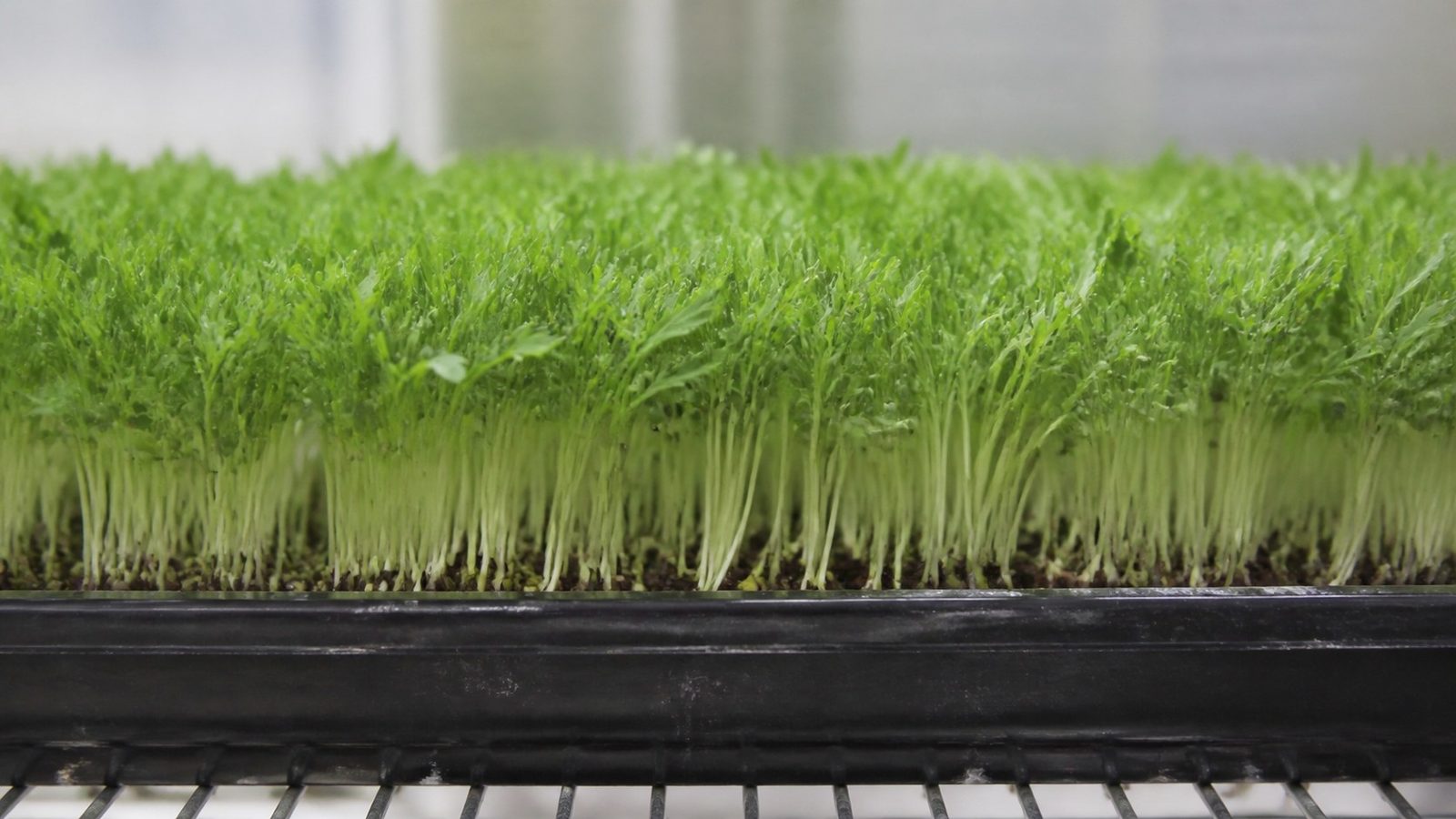
Mild mustard with a light peppery bite and a little sweetness, nothing like the heat of a hot mustard.
Mung bean shoots
Moderate · 7 to 12 days
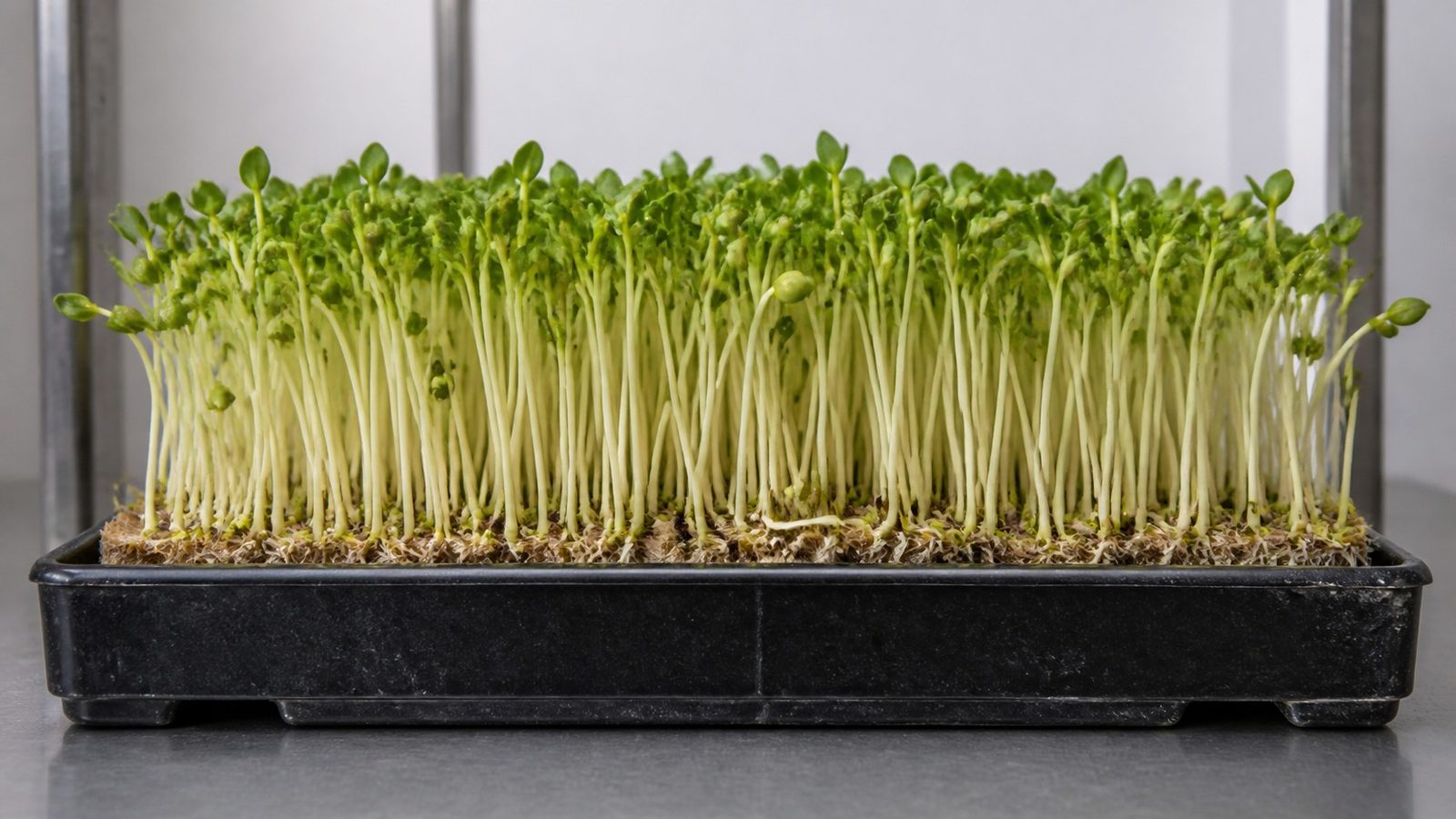
Mild, nutty and faintly earthy with a juicy bean-sprout crunch: volume and texture rather than flavor.
Mustard microgreens
Beginner · 10 to 15 days
Peppery to pungent rather than merely green, with a mustard heat that arrives in the nose: Garnet Giant is described as only mildly spicy, and Wasabina is sold as sweet and spicy.
Nasturtium microgreens
Moderate · 12 to 21 days
Strong peppery horseradish, close to wasabi, with a brief sweetness in front of the heat.
Onion microgreens
Moderate · 10 to 21 days
Concentrated fresh onion and scallion, strong enough that a few strands season a plate: seasoning rather than salad.
Oregano microgreens
Difficult · 16 to 25 days
Concentrated resinous oregano, the pizza-herb note undiluted: a seasoning in leaf form rather than a green.
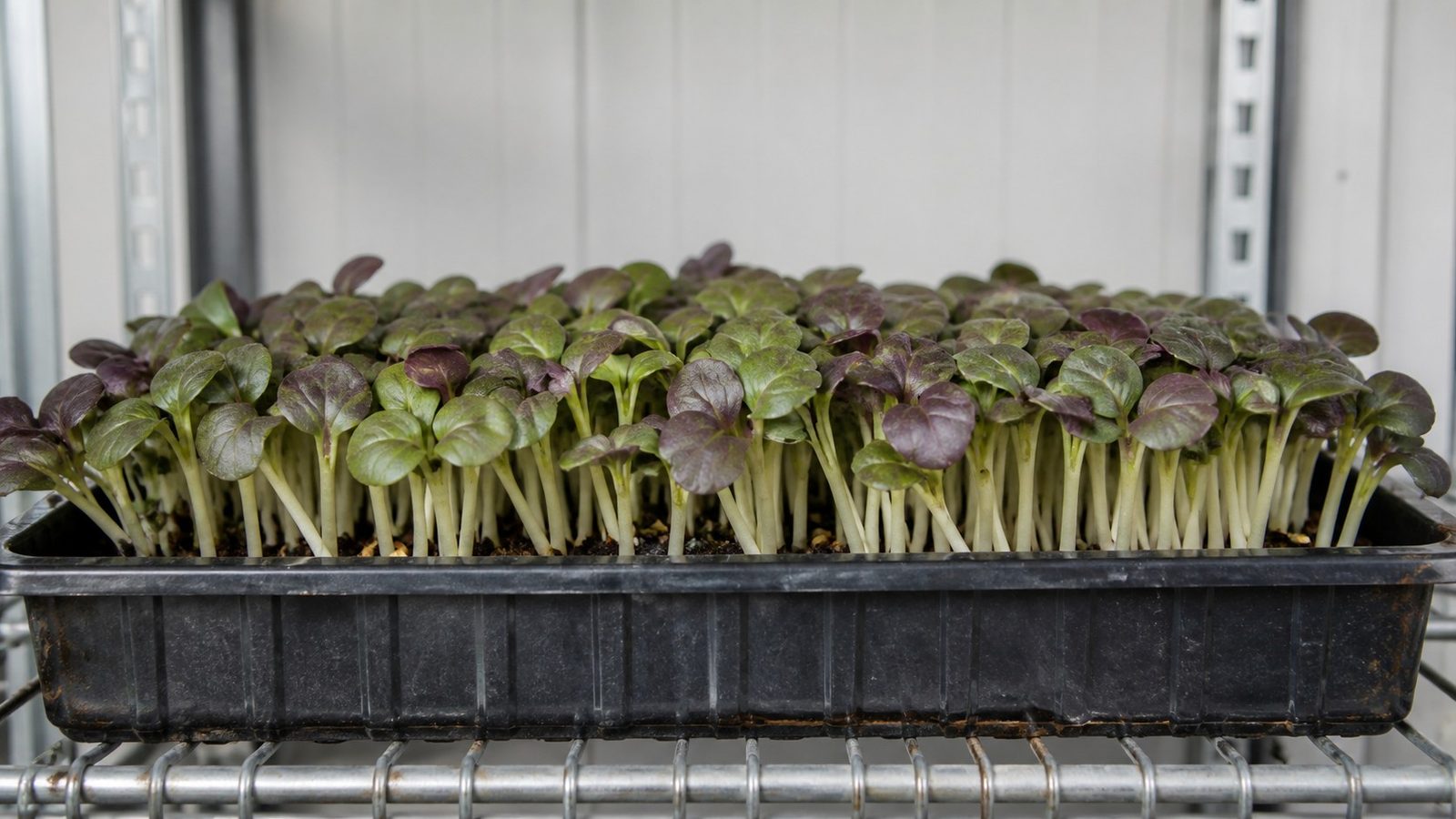
Pak choi microgreens
Beginner · 8 to 13 days
Mild, faintly sweet Chinese cabbage with a gentle brassica edge, carried by a crisp juicy stem rather than any heat.
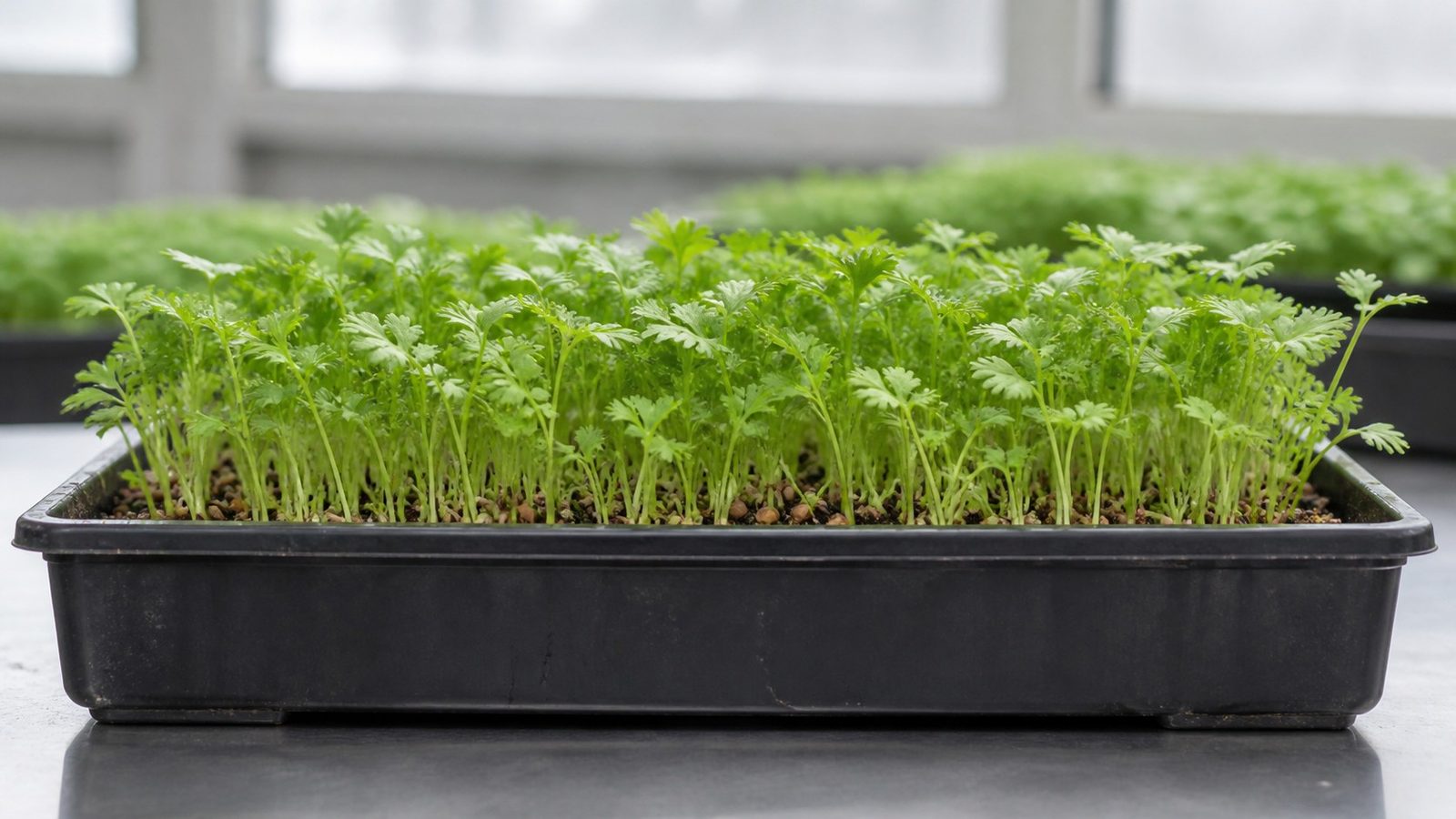
Parsley microgreens
Difficult · 21 to 35 days
Mild, clean, recognizably parsley: subtler than the mature herb, with a crisp young texture and none of its bitterness.
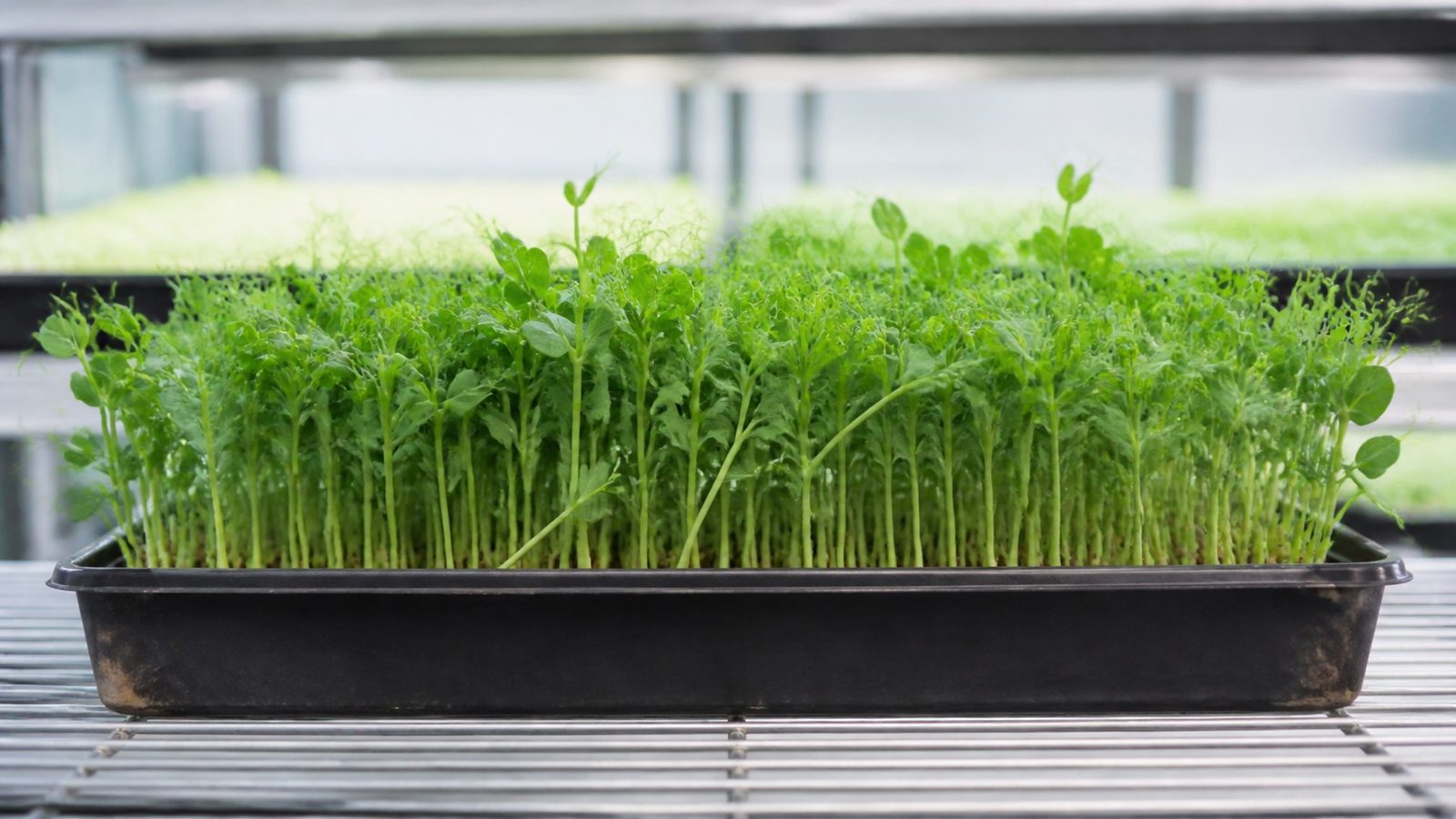
Pea shoots
Moderate · 8 to 14 days
Mildly sweet and recognizably like a fresh garden pea, with a crisp watery stem and no brassica pepperiness.
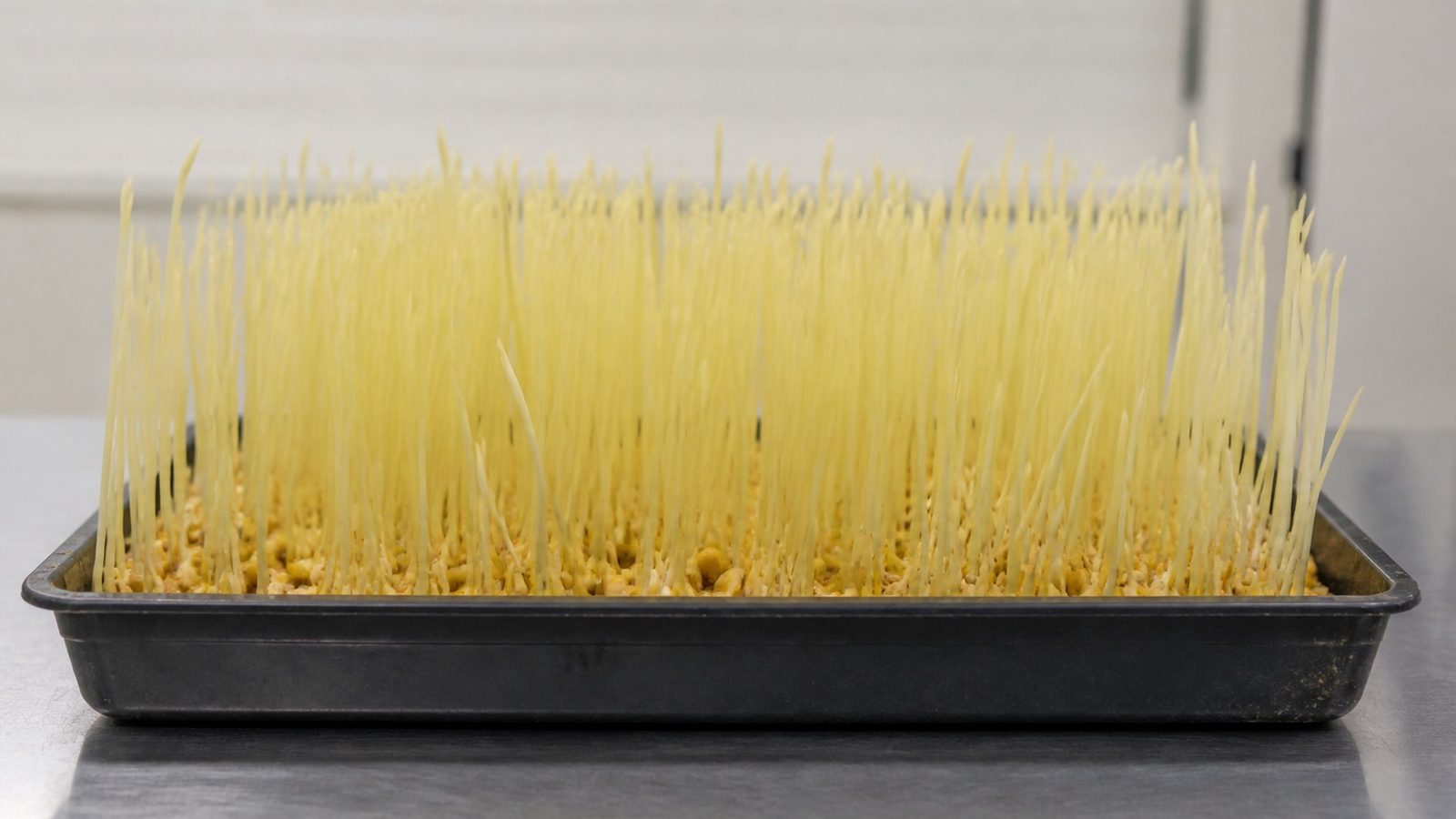
Popcorn shoots
Moderate · 6 to 14 days
Intensely sweet juicy corn with a crisp snap, closer to a dessert note than to a vegetable, and it turns fibrous and bitter if left tall.
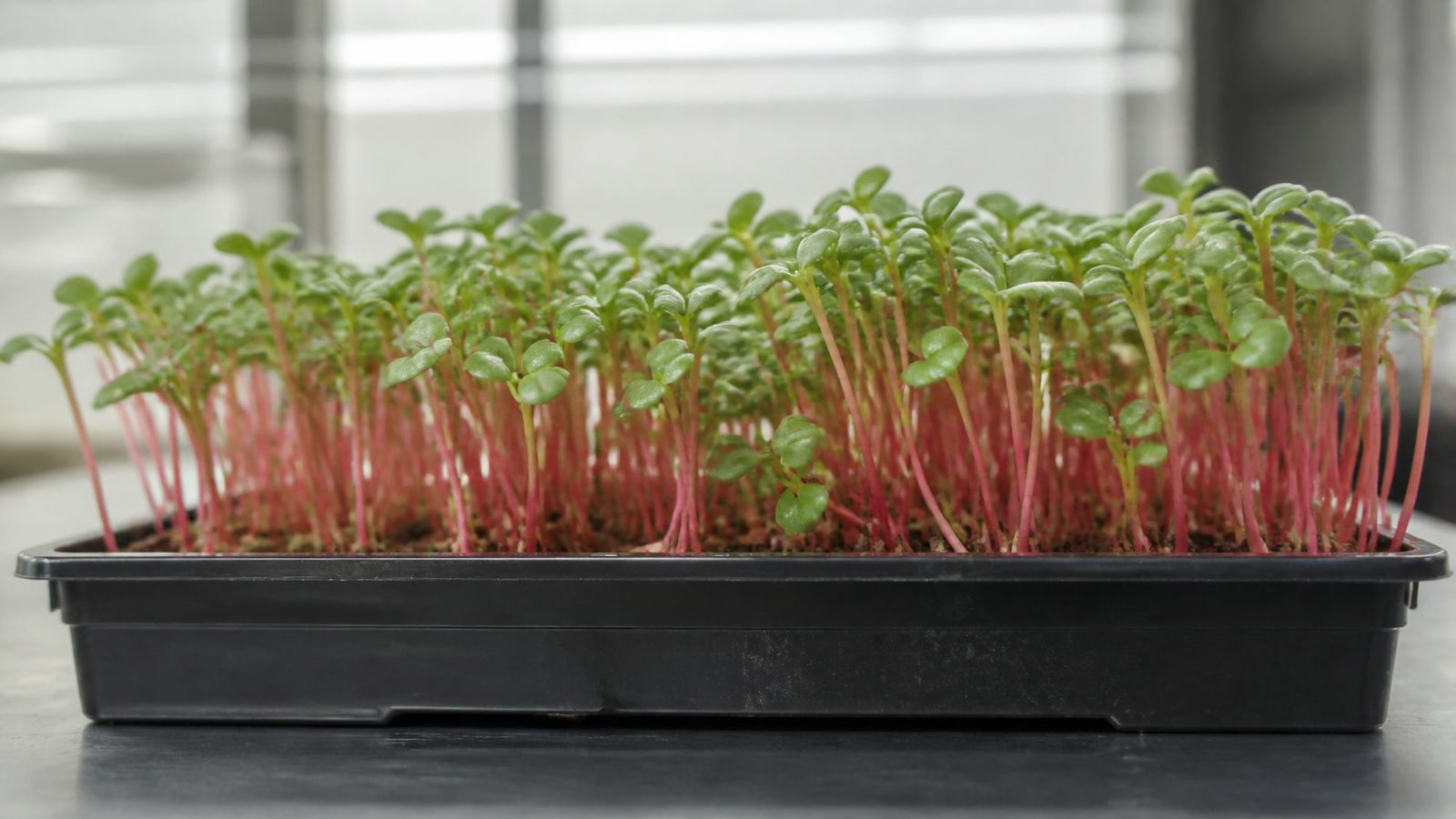
Purslane microgreens
Moderate · 8 to 25 days
Mild and spinach-like with a crisp succulent bite and a faint sourness: texture and water rather than heat.
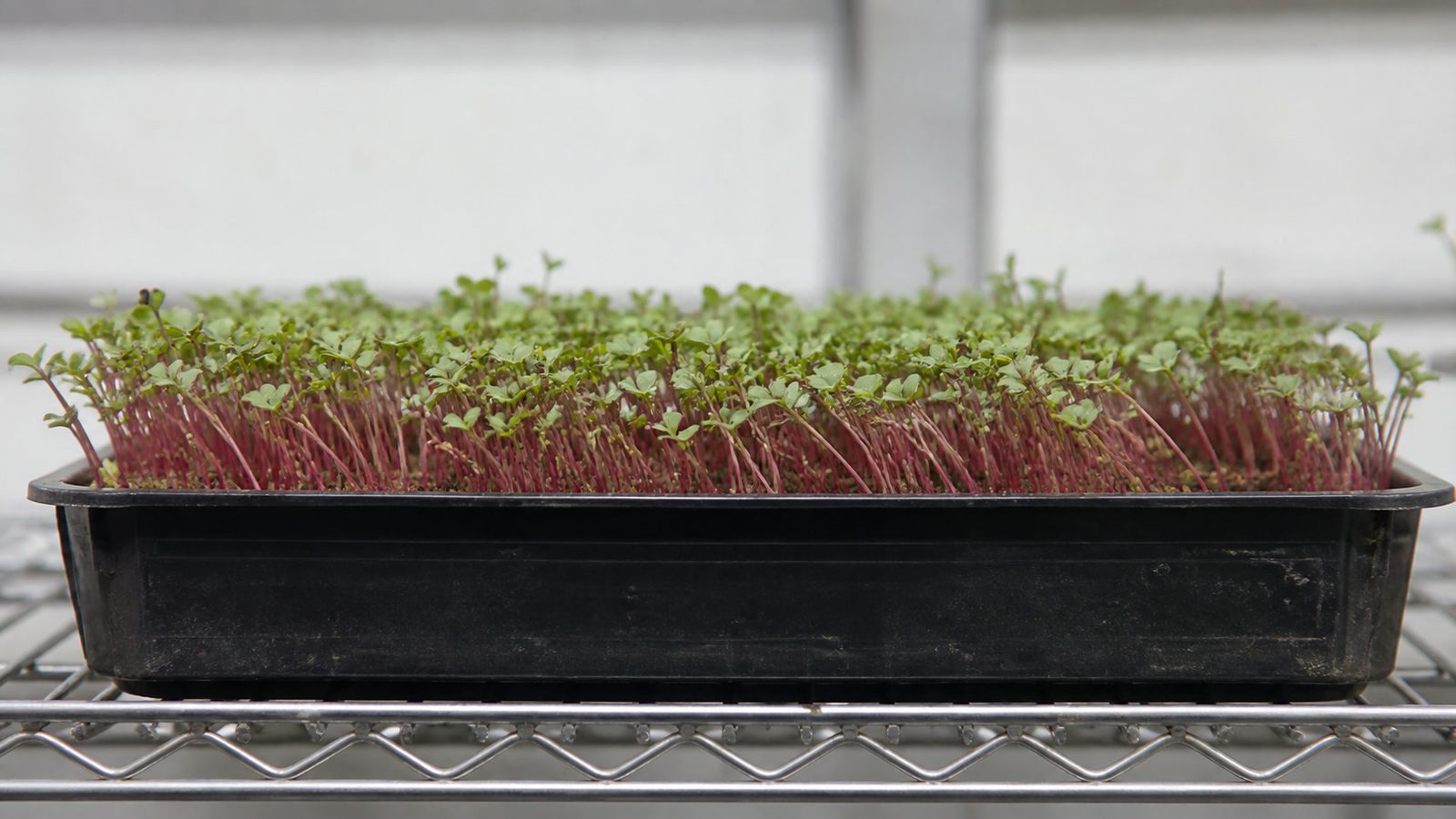
Quinoa microgreens
Moderate · 7 to 14 days
Very mild, soft and grassy-nutty, closer to baby spinach than to anything peppery, with almost no aroma and an intensity the crop guide itself rates 2.5 out of 10.
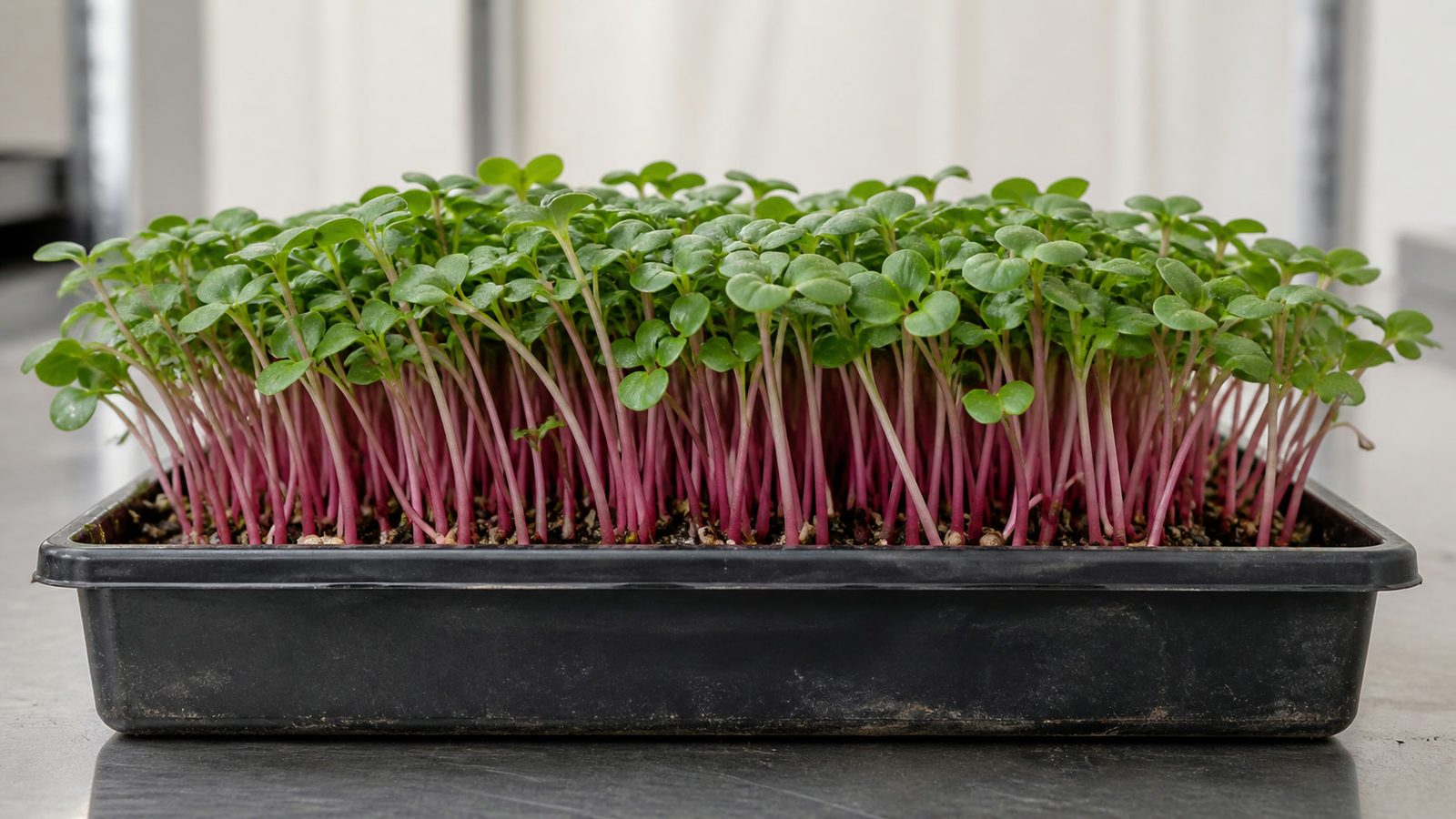
Radish microgreens
Beginner · 6 to 10 days
A crisp, juicy radish bite, peppery enough to season a sandwich rather than merely taste green, and it sharpens as the true leaves advance.
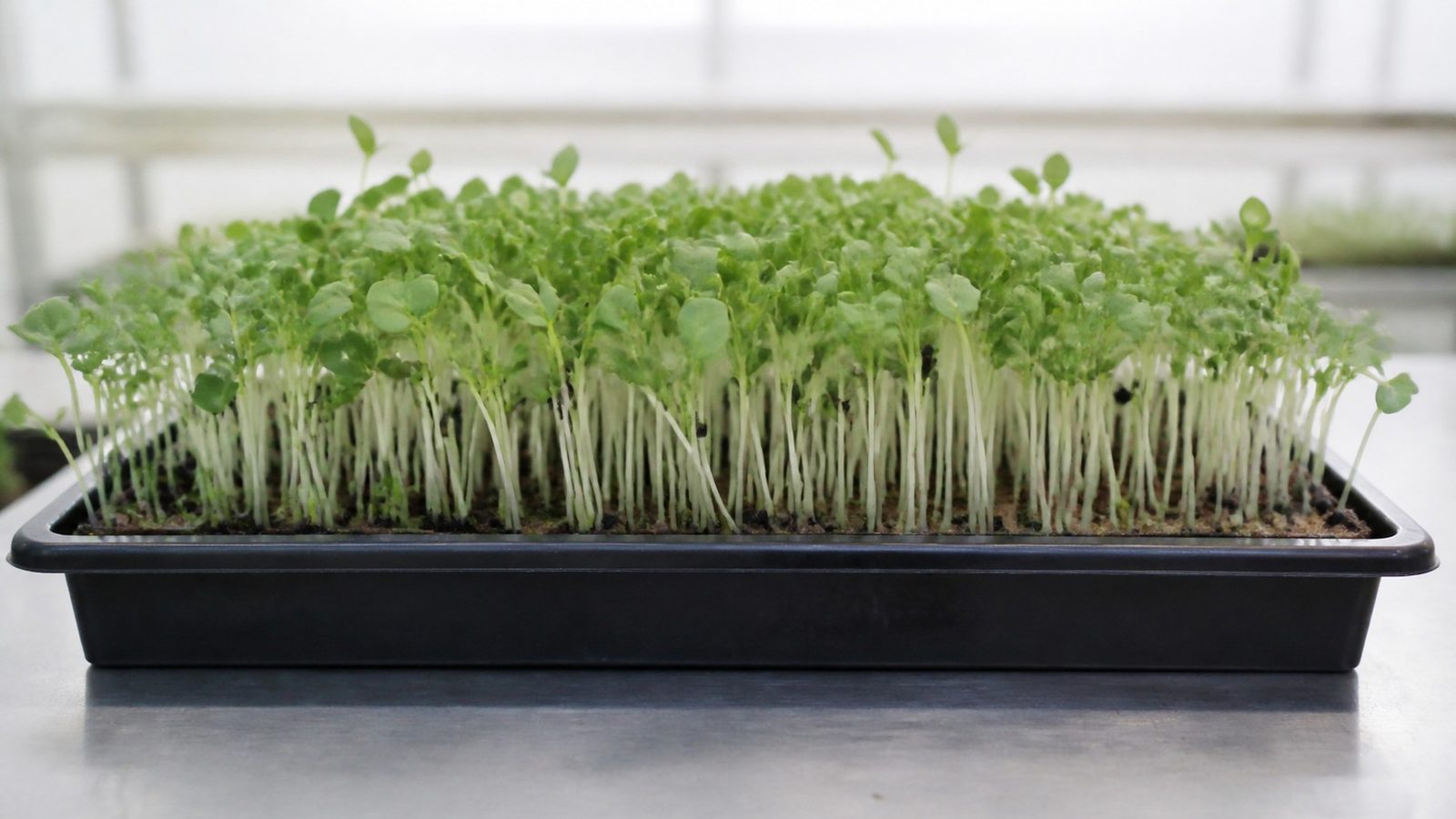
Sesame microgreens
Moderate · 5 to 10 days
The sources do not agree: one supplier calls it mildly sweet and subtle, another calls brown sesame spicy, and the one guide that compares eating quality says it tastes better cooked.
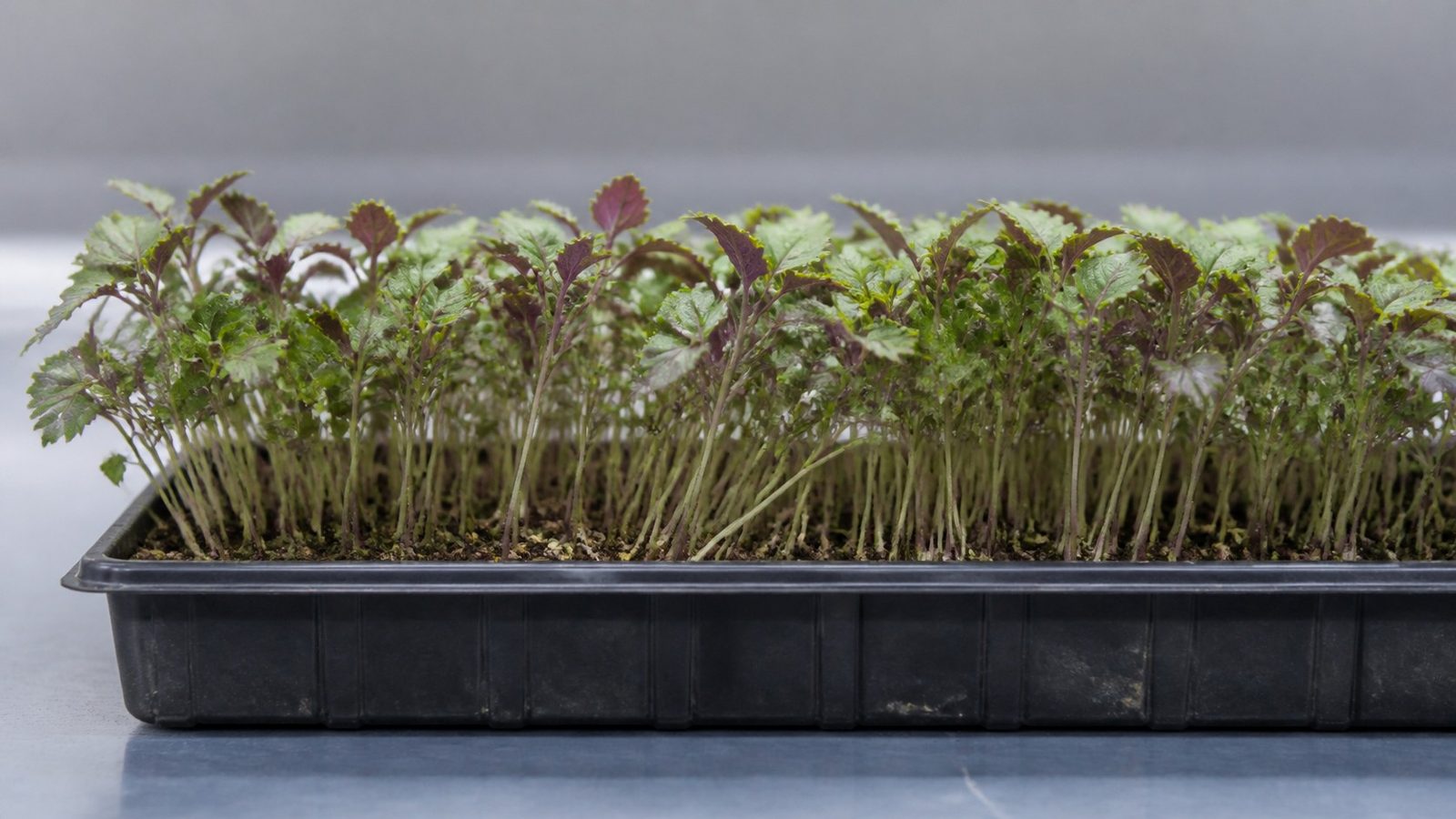
Shiso microgreens
Moderate · 16 to 30 days
A subtle licorice and anise herb with mint, basil and cinnamon notes rather than a salad green, and it turns spicier and more basil-minty as the tray ages.
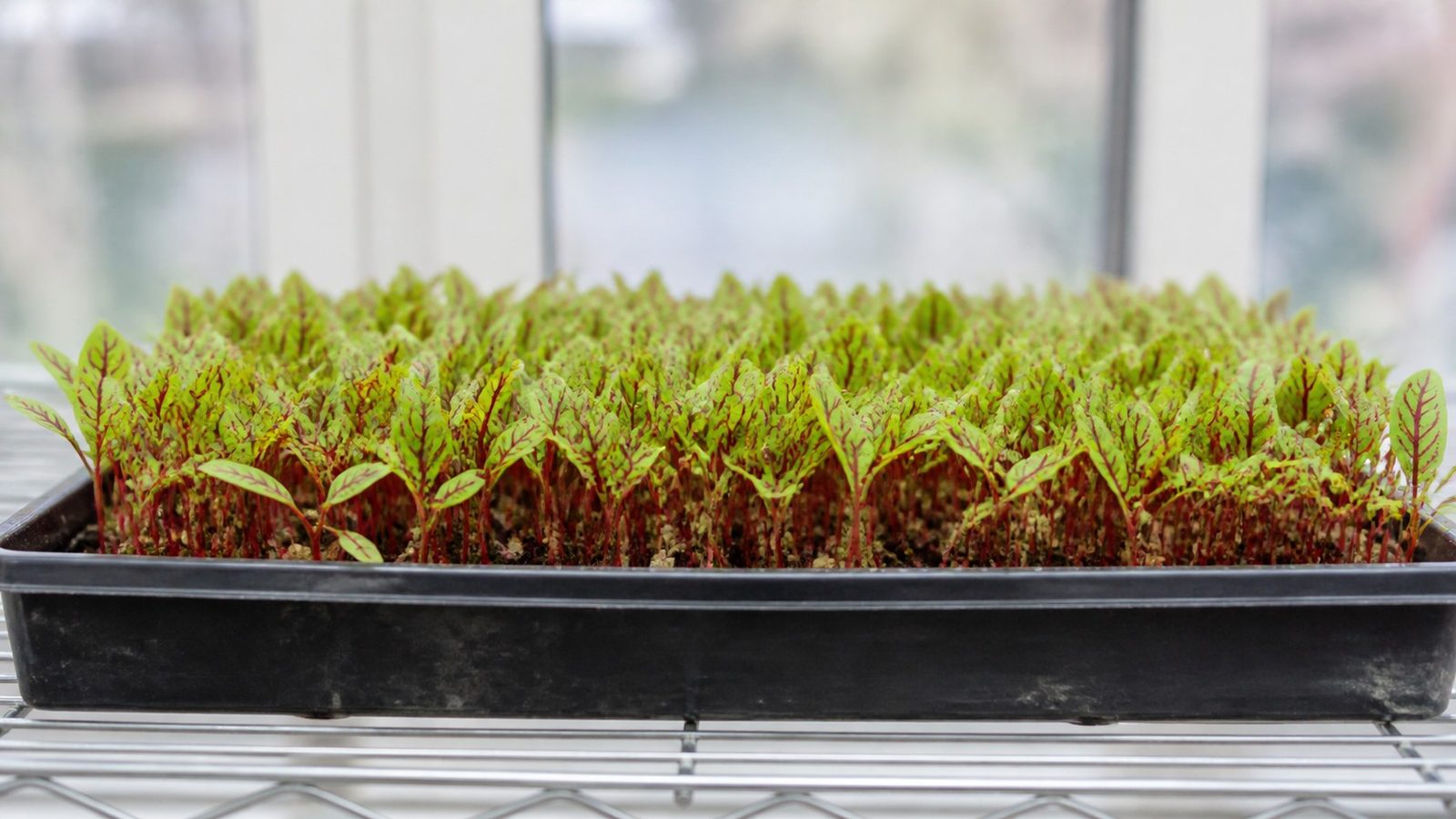
Sorrel microgreens
Difficult · 17 to 30 days
Bright, sharp, lemon-tangy acid rather than a green flavor: an acidifier you use by the leaf, not a salad base you eat by the handful.
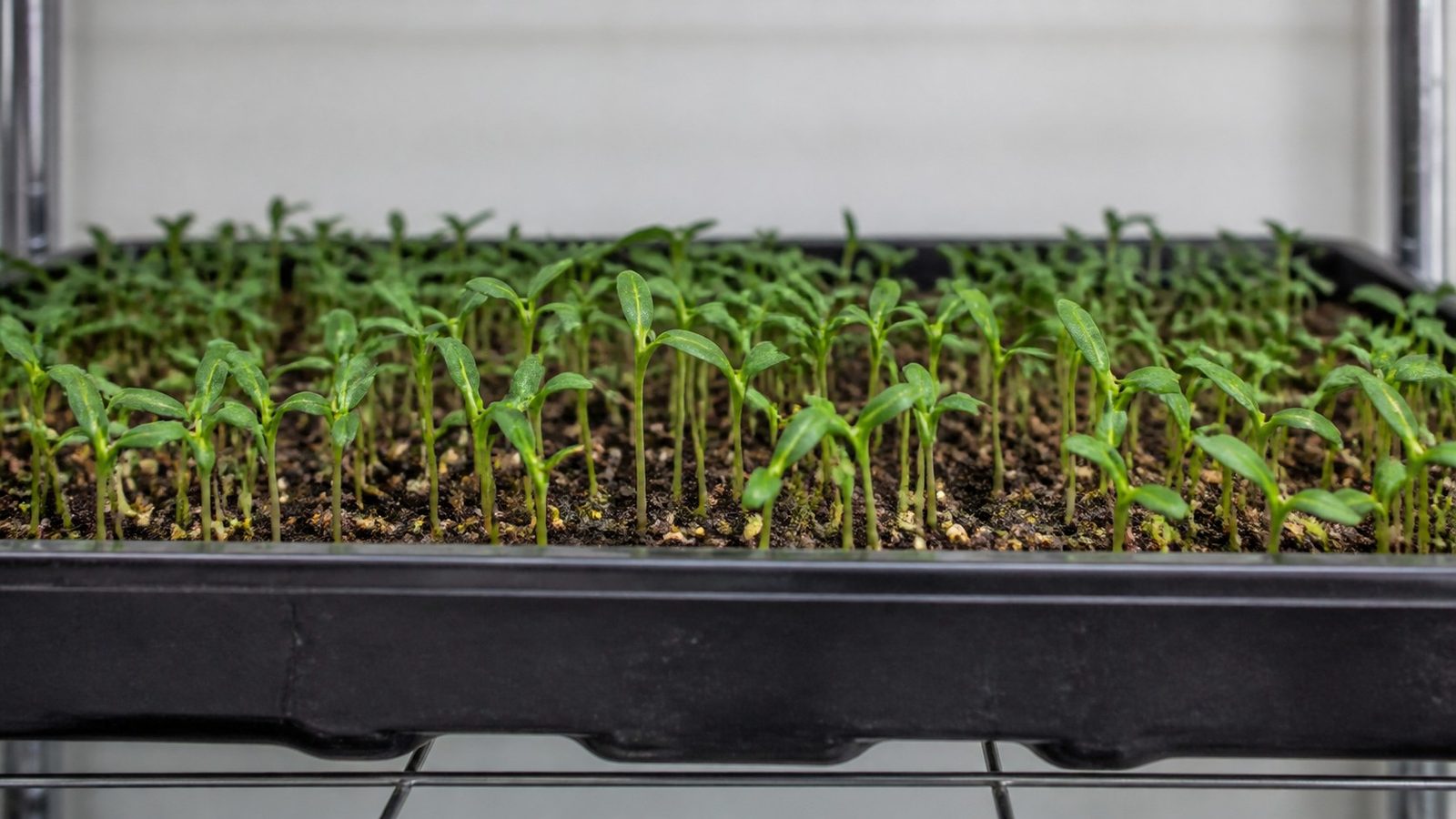
Spinach microgreens
Difficult · 7 to 25 days
Mild, sweet and unmistakably spinach, with less of the bitterness the mature leaf carries: tender leaves on juicy stems.
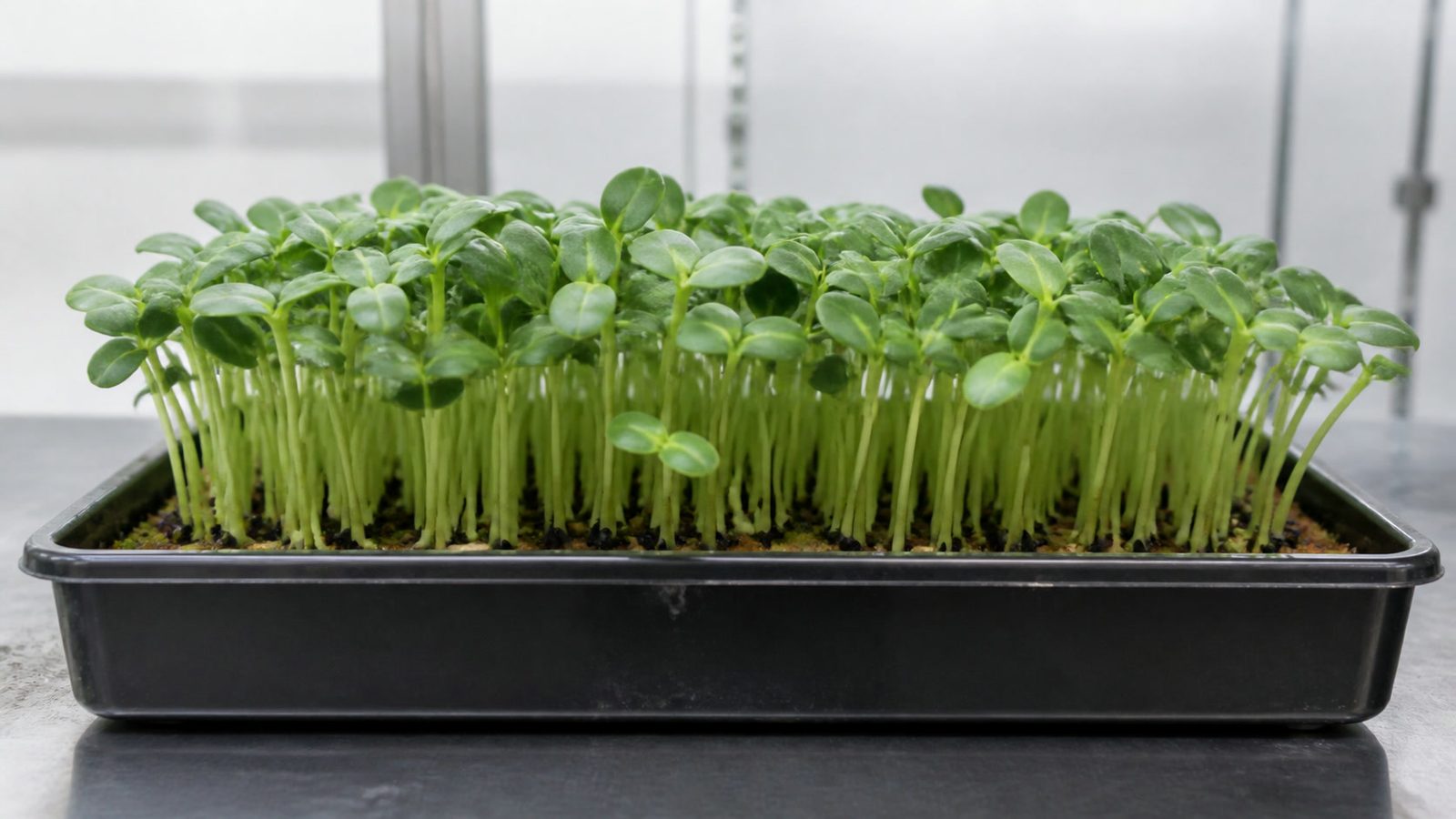
Sunflower microgreens
Moderate · 9 to 12 days
Mild, nutty and noticeably crunchy, closer to a fresh sunflower seed than to anything peppery.
Swiss chard microgreens
Moderate · 16 to 19 days
Mild, spinach-like and lightly earthy-sweet, with none of a brassica's pepper: the colored stem does the work, not the flavor.
Tatsoi microgreens
Beginner · 8 to 15 days
Mild and lightly sweet with a subtle nutty edge, well short of arugula's pepper or a hot mustard: a leafy brassica you can eat by the handful.
Thyme microgreens
Difficult · 20 to 35 days
Intense thyme with pine and mint behind it, concentrated into a very small leaf: a herb you use by the pinch, not a green you eat.
Turnip microgreens
Beginner · 7 to 12 days
Crisp and mild-sweet, cabbage and turnip with a light pepper finish rather than a mustard bite.
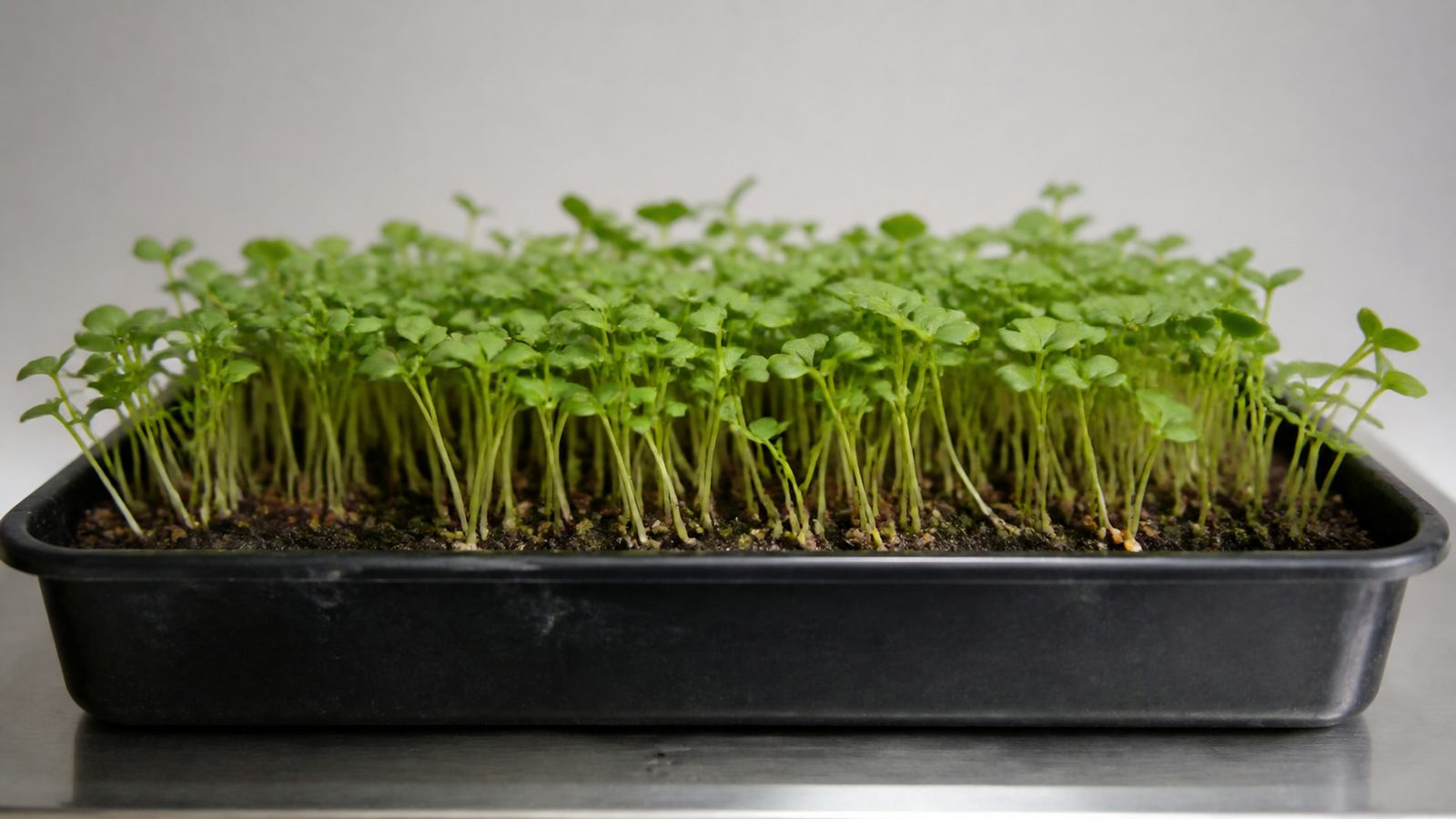
Watercress microgreens
Moderate · 7 to 25 days
A sharp peppery brassica bite, closer to mustard or radish than to a salad green, on a tender small leaf.
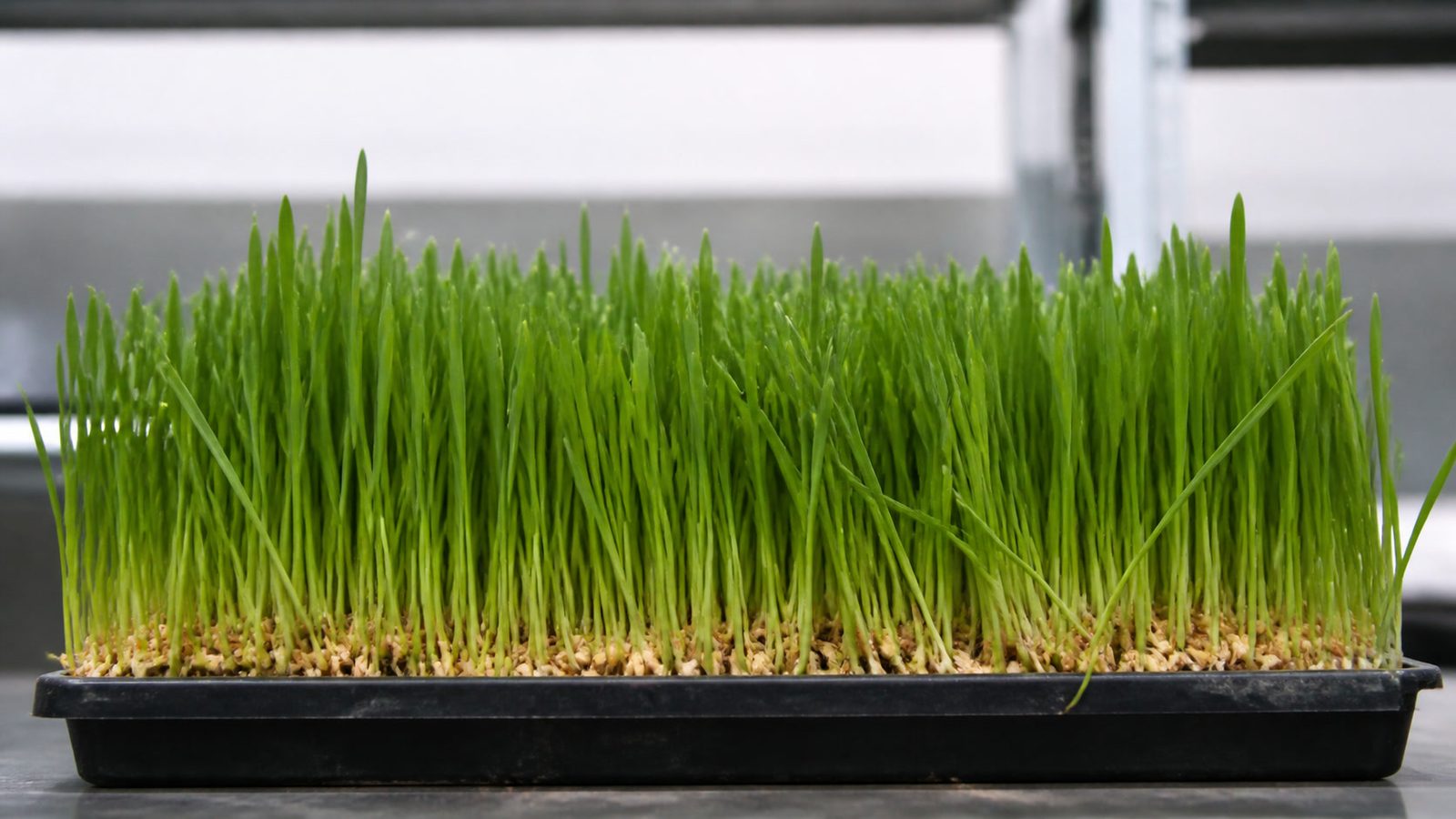
Wheatgrass
Beginner · 7 to 12 days
Mildly sweet with a pleasant bitterness and an unmistakably grassy finish: a juice flavor rather than a salad one.